基金

Search documents
诺安精选价值混合型证券投资基金招募说明书、基金产品资料概要(更新)的提示性公告
Xin Lang Cai Jing· 2026-02-08 18:30
Group 1 - The core viewpoint of the article is the announcement of the updated prospectus and product summary for the Noan Selected Value Mixed Securities Investment Fund, which will be disclosed on February 9, 2026 [1] - The fund manager commits to managing and utilizing the fund assets with honesty and diligence, but does not guarantee profits or minimum returns [1] - Investors are encouraged to fully understand the risk-return characteristics of the fund before making investment decisions [1] Group 2 - The MACD golden cross signal has formed, indicating that certain stocks are experiencing a good upward trend [1]
宝盈策略增长混合型证券投资基金恢复大额申购、转换转入、定期定额投资公告
Xin Lang Cai Jing· 2026-02-08 18:30
公告送出日期:2026年2月9日 2.其他需要提示的事项 敬请广大投资者提前做好交易安排。如有疑问,请拨打宝盈基金管理有限公司服务热线:400-8888-300 (免长途费),或登录宝盈基金管理有限公司网站www.byfunds.com获取相关信息。 宝盈基金管理有限公司 1.公告基本信息 2026年2月9日 ■ MACD金叉信号形成,这些股涨势不错! 风险提示:基金管理人承诺以诚实信用、勤勉尽责的原则管理和运用基金资产,但不保证基金一定盈 利,也不保证最低收益。销售机构根据法规要求对投资者类别、风险承受能力和基金的风险等级进行划 分,并提出适当性匹配意见。投资者在投资基金前应认真阅读《基金合同》和《招募说明书》等基金法 律文件,全面认识基金产品的风险收益特征,在了解产品情况及听取销售机构适当性意见的基础上,根 据自身的风险承受能力、投资期限和投资目标,对基金投资作出独立决策,选择合适的基金产品。 特此公告。 ...
浦银安盛普华66个月定期开放债券型证券投资基金第一个开放期开放申购、赎回、转换及定期定额投资业务的公告
Shang Hai Zheng Quan Bao· 2026-02-08 17:56
登录新浪财经APP 搜索【信披】查看更多考评等级 公告送出日期:2026年2月9日 1公告基本信息 ■ 2 日常申购、赎回、转换及定期定额投资业务的办理时间 2.1开放日及开放时间 本基金办理基金份额的申购、赎回等业务的开放日为开放期内的每个工作日,具体办理时间为上海证券 交易所、深圳证券交易所的正常交易日的交易时间,但基金管理人根据法律法规、中国证监会的要求或 基金合同的规定公告暂停申购、赎回时除外。本基金封闭期内不办理申购与赎回业务,也不上市交易。 本基金基金合同于2020年8月10日生效。本基金的第一个封闭期为自基金合同生效之日(包括该日)起 至66个月后的月度对日的前一日(包括该日)为止。首个封闭期结束之后第一个工作日(包括该日)起 进入首个开放期,下一个封闭期为首个开放期结束之日次日(包括该日)起至66个月后的月度对日的前 一日为止,以此类推。本基金办理申购与赎回业务的开放期为本基金每个封闭期结束之后第一个工作日 (包括该日)起不少于5个工作日且不超过20个工作日的期间。 本基金首个开放期定为:2026年2月10日-2026年3月17日,共计20个工作日。 基金合同生效后,若出现新的证券/期货交易市 ...
从“固收+”到“多元配置” 公募FOF乘风而起
Shang Hai Zheng Quan Bao· 2026-02-08 17:48
Group 1 - The core viewpoint of the articles highlights the significant growth and popularity of FOF (Fund of Funds) products in the A-share market, driven by strong demand from bank clients for diversified asset allocation in a low-interest-rate environment [1][6][7] - Since the beginning of 2026, FOF products have seen a surge in issuance, with many products being sold out in just one day, indicating a robust market interest [2][3] - The total issuance scale of new FOF products in 2026 has reached approximately 300 billion yuan, a substantial increase compared to 61.29 billion yuan in the same period of 2025 [2][3] Group 2 - Major banks are actively promoting FOF products, with several banks creating FOF preferred pools to enhance product visibility and growth [4][5] - The collaboration between banks and fund companies has led to significant increases in FOF product sizes, with some products reaching nearly 100 billion yuan in scale [5][6] - The shift from "fixed income +" to "multi-asset allocation" reflects a broader trend in the FOF market, as new products increasingly incorporate diverse asset classes, including equities and commodities [6][7] Group 3 - The unique advantage of FOF products lies in their ability to diversify investments and improve the risk-return profile, making them attractive in the current market environment where traditional fixed-income assets are underperforming [7] - FOF products are positioned as essential tools for investors seeking stable returns and wealth preservation in uncertain market conditions [7][8] - The focus for FOF management in 2026 will be on diversified allocation to mitigate risks rather than solely pursuing returns from individual asset classes [7]




资金流向逆转 新发ETF纷纷上市
Shang Hai Zheng Quan Bao· 2026-02-08 17:31
Group 1 - The reversal of significant net outflows from stock ETFs occurred, with a net inflow of 6.965 billion yuan on February 3, marking the first net inflow since January 14 [1] - From February 3 to 6, multiple broad-based ETFs saw substantial net inflows, including 2.549 billion yuan into the Huaxia Science and Technology Innovation 50 ETF and 1.763 billion yuan into the Huaxia CSI A500 ETF [1] - Conversely, resource-themed ETFs experienced notable outflows, with the Huaxia Nonferrous Metals ETF seeing a net outflow of 4.364 billion yuan [1] Group 2 - A total of 10 new ETFs were launched from February 2 to 6, with an additional 6 ETFs set to list between February 9 and 11, contributing to market liquidity [2] - Significant investments in newly launched ETFs were made by entities such as China Shipbuilding Group, which purchased 100 million yuan worth of shares in the Fortune CSI Selected Shipbuilding Industry ETF [2] - The ETF market is expected to continue expanding, with numerous new products being reported by fund companies, including the Hang Seng A-share Power Grid Equipment ETF [2]
A股节前最后一周!六大机构研判来了
Zhong Guo Zheng Quan Bao· 2026-02-08 15:02
Group 1: Market Outlook - The A-share market is expected to maintain a range-bound fluctuation before the Spring Festival, with a recommendation for balanced allocation [1][5] - After the Spring Festival, market focus may shift back to growth sectors with industrial catalysts and performance certainty, such as AI applications, high-end manufacturing, and new energy [1][5] Group 2: Commodity Market - International gold prices continue to experience wide fluctuations, with increased volatility suggesting that gold should be part of asset allocation rather than a speculative tool [1][9] - The People's Bank of China has increased its gold reserves for the 15th consecutive month, reaching 74.19 million ounces as of January 2026, with a month-on-month increase of 40,000 ounces [3] Group 3: Investment Strategies - Various institutions suggest focusing on three main areas: overvalued technology sectors, sectors with favorable economic conditions like energy storage and lithium battery chains, and commercial aerospace along with advanced technologies [6][7] - The market sentiment is expected to improve, with the "Spring Festival effect" potentially creating a favorable environment for holding stocks during the holiday [7] - There is an emphasis on cash flow certainty and sectors directly influenced by supply and demand, such as upstream resources and chemical price increases [8]
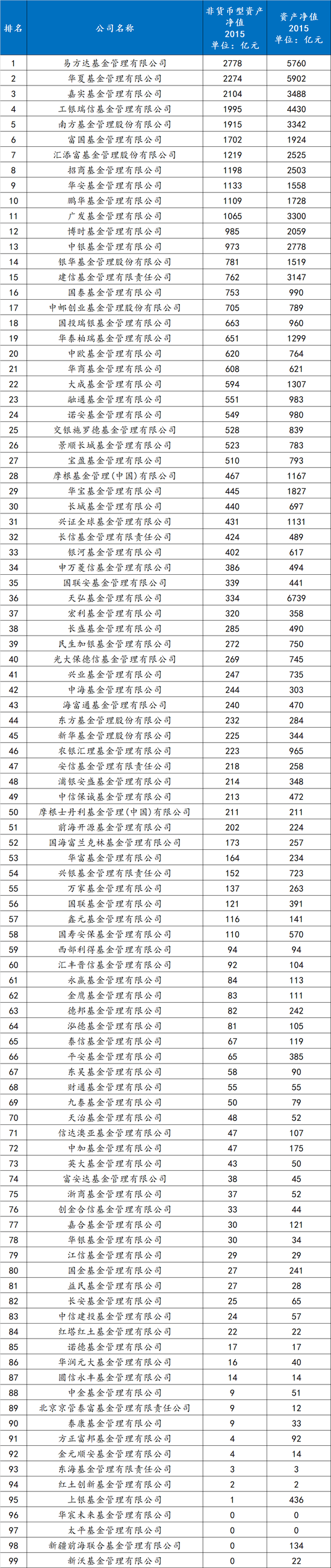
十年前的公募基金行业排名
Xin Lang Cai Jing· 2026-02-08 14:12
Core Insights - The asset management industry has experienced significant changes over the past decade, with some companies rising to prominence while others have faded from view [3][18] - Strong management and market mechanisms can lead to dramatic shifts in fund company rankings, while poor leadership can result in declines [2][16] Group 1: Fund Company Rankings - The top fund management companies by non-monetary asset net value in 2015 included: - E Fund Management Co., Ltd. with 277.8 billion CNY - Huaxia Fund Management Co., Ltd. with 227.4 billion CNY - Harvest Fund Management Co., Ltd. with 210.4 billion CNY [4][19] - Tianhong Fund, driven by the success of Yu'ebao, had a total scale of 673.93 billion CNY, with over 95% being monetary funds [6][22] Group 2: Industry Evolution - Many well-known names from the past have either seen their rankings decline or have become less prominent in the market [7][22] - Companies like E Fund and Huaxia have maintained strong positions, while others like GF Fund and Xingquan Fund have experienced significant changes in their market presence [10][24] - The rankings from 2015 serve as a snapshot of the industry, highlighting the impact of technological advancements, regulatory changes, and market dynamics on company performance [14][27] Group 3: Future Prospects - Some companies that are now industry leaders were not prominent in the rankings ten years ago, indicating potential for future growth among currently lesser-known firms [10][26] - The survival of smaller companies is often characterized by a focus on bond or monetary products, with many struggling to establish a foothold in equity products [14][27] - The next decade may bring further changes to the rankings, emphasizing the need for continuous effort and adaptation in the asset management industry [14][27]

广发、信澳、华夏等多家公司核心基金经理近期变动
Xin Lang Cai Jing· 2026-02-08 14:12
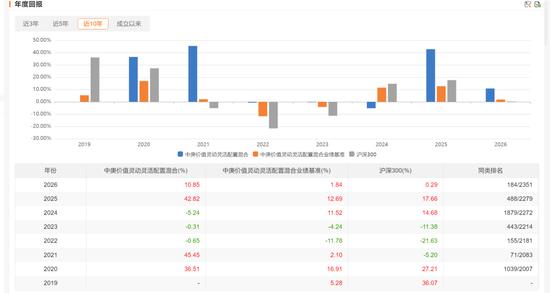
Group 1 - Wu Chenggen from Zhonggeng Fund has moved to GF Fund, previously co-managing the Zhonggeng Value Flexible Allocation Fund, which achieved a 5-year return of 166% with good drawdown control [2][26][28] - Wu's investment strategy focuses on low valuation value investing, aiming for absolute returns while strictly controlling drawdowns, and emphasizes fundamental and comprehensive factor analysis [7][30][31] - GF Fund has been lacking in absolute return fund managers, making Wu's addition a strategic complement to their offerings [10][34] Group 2 - Liu Xiaoming from Xin'ao Fund is also planning to leave, having managed the Xin'ao Performance-Driven Mixed Fund since 2022, achieving a return of 78.77% with an annualized rate of 18.3% [12][36] - Liu's management style has shown high turnover and flexible adjustments, with significant shifts in portfolio focus from liquor to technology stocks [39][41] - The fund's scale increased dramatically from 200 million to nearly 4.6 billion due to strong performance [40] Group 3 - He Jiaqi, a key member of Huaxia Fund for 14 years, has left, managing over 15 billion in assets, with notable performance in the Huaxia Dingli fund, which achieved a return of 103% since 2016 [20][45][47] - The Huaxia Dingli fund's scale grew from just over 10 million to over 9.6 billion under He’s management, indicating strong investor confidence [22][47] - The new management team for Huaxia Dingli includes Sun Meng and Liu Mingyu, who are known for their quantitative investment strategies [49]
每日钉一下(指数基金也有分红吗?)
银行螺丝钉· 2026-02-08 13:39
Core Viewpoint - The article discusses the concept of fund advisory services, highlighting their role in addressing the issue where funds generate profits but investors do not benefit from them [4]. Group 1: Fund Advisory Services - Fund advisory services are designed to help investors achieve better returns by providing expert guidance [4][5]. - The article compares fund advisors to other professionals, such as doctors and lawyers, who provide specialized advice in their respective fields [6]. Group 2: Fund Types and Dividends - Not all funds are required to distribute dividends; some funds do, while others do not [8]. - Dividend-paying index funds are categorized into three main types: 1. Dividend index funds, which select stocks based on high dividend yields [10]. 2. Value style index funds, which focus on stocks with high dividend yields [12]. 3. Large-cap broad-based index funds, such as the CSI 300 and Hang Seng Index [13]. - The dividend yield from index funds is typically slightly lower than the index's overall dividend yield due to factors like dividend taxes and transaction costs [15].

[2月8日]美股指数估值数据(全球股票、商品深V反弹;全球指数星级更新)
银行螺丝钉· 2026-02-08 13:39
Group 1 - The global stock and commodity markets experienced significant volatility this week, with a 1.5% decline in the global stock index and a 4% drop in the Nasdaq 100 index [3][4][5]. - Commodity prices also saw large fluctuations, with gold dropping by 10% and silver experiencing even larger declines [6][7]. - However, by Friday evening, global markets rebounded sharply, with the global stock index rising over 2% and commodities like gold and silver also increasing significantly [10][11][12]. Group 2 - The initial market volatility was attributed to concerns over the uncertainty surrounding the Federal Reserve's interest rate cuts, especially following Trump's nomination of a hawkish candidate for the Fed [15][16]. - This uncertainty led to a tightening of liquidity, adversely affecting leveraged investors and growth-style stocks, which are sensitive to liquidity changes [17][23]. - The Fed's recent comments indicating a potential decrease in inflation helped alleviate short-term liquidity concerns, contributing to the market rebound on Friday [18][20][22]. Group 3 - The tightening of liquidity this year has been particularly unfavorable for leveraged investors and growth/small-cap stocks, leading to potential short-term volatility [23][24]. - Despite this, the Fed is expected to cut rates again in 2026, and there is currently ample liquidity in both USD and RMB markets [25][27]. - Attention should be paid to the trends in USD interest rates in the second half of the year, as the Fed's rate cycle typically lasts 3-5 years [28][30]. Group 4 - A star rating chart for the global stock market indicates that the market was undervalued in previous years (2018, 2020, 2022) and has recently returned to a rating of around 4.1-4.2 stars after a significant drop in April 2025 [32]. - Currently, the global stock index is rated around 2.9 stars, suggesting it is not particularly cheap [32]. - The star rating system indicates that a 4-5 star rating represents relatively low valuation, while a 1-2 star rating indicates a high valuation [33]. Group 5 - There are global stock index funds available in overseas markets, with a total scale exceeding one trillion USD, but there are currently no such funds available in mainland China [35]. - The company has launched a "Global Index Advisory Portfolio" that diversifies investments across various stock markets, including US, UK, Hong Kong, and A-shares [36]. - Interested investors can engage with the advisory service to simulate similar investment effects [37][39]. Group 6 - The new book "Dividend Index Fund Investment Guide" has been released and quickly topped sales charts on platforms like JD.com [41]. - This book aims to address common questions about dividend products and is designed to be accessible for beginners, allowing for quick reading and understanding [43][44].