数码

Search documents
优化消费品以旧换新政策 实施推动商品消费扩容升级
Zheng Quan Ri Bao· 2026-01-12 17:18
Core Viewpoint - The national business work conference has outlined key tasks for 2026, with a focus on implementing consumption stimulation actions and enhancing the "Buy in China" brand, particularly through optimizing the old-for-new policy for consumer goods [1] Group 1: Policy Implementation - The Ministry of Commerce reports that in 2025, sales related to the old-for-new policy exceeded 2.6 trillion yuan, benefiting over 360 million people [1] - Specific figures include over 11.5 million vehicles, 129 million home appliances, 9.1 million digital products, and 12 million home renovation items exchanged under the policy [1] - A joint notice from the Ministry of Commerce and six other departments has been issued to enhance the implementation of the old-for-new policy in 2026, with continued funding support from central and local governments [1] Group 2: Subsidy Optimization - The 2026 policy will optimize subsidy standards and ranges, transitioning from fixed subsidies to percentage-based subsidies based on vehicle prices for both new energy and fuel vehicles [2] - Consumers purchasing energy-efficient home appliances will receive a 15% subsidy based on the product's sales price, with an expansion to include new categories like smart glasses [2] - The central government will continue to allocate long-term special treasury bond funds, with local governments providing matching funds to enhance the efficiency of subsidy distribution [2] Group 3: Market Expansion and Consumer Experience - The 2025 old-for-new policy has significantly increased sales and promoted the adoption of high-quality products, laying a foundation for the 2026 upgrades [3] - Experts suggest expanding consumer categories, optimizing the consumption environment, and innovating consumption models to further stimulate consumption [3] - Recommendations include supporting traditional sectors like automotive and home appliances while also expanding to emerging fields like smart devices [3] Group 4: Enhancing Supply and Experience - The focus will be on improving the consumption supply system, supporting the development of AI and low-carbon products, and encouraging personalized goods [4] - Enhancements to consumer experience will involve upgrading offline commercial facilities and improving rural consumption networks [4] - Strengthening the consumption ecosystem includes improving recycling systems for old goods, enhancing quality and price regulation, and optimizing payment and after-sales services to alleviate consumer concerns [4]
汽车家电数码全涵盖!2026郑州以旧换新补贴来了
Xin Lang Cai Jing· 2026-01-12 07:42
Core Viewpoint - Zhengzhou Municipal Bureau of Commerce announced the launch of a subsidy program for the replacement of consumer goods, including automobiles, home appliances, and digital smart products, as part of the 2026 old-for-new policy [1]. Group 1: Automotive Sector - The subsidy for scrapping and updating automobiles will follow the guidelines set by the Ministry of Commerce and other departments, with applications submitted through the national automotive circulation information management system or the "Old-for-New Car" mini-program [1]. - Consumers can retain relevant proof materials for vehicle replacement subsidies until the application system for Henan Province is launched [1]. Group 2: Home Appliances and Digital Smart Products Home Appliances - Consumers purchasing specific home appliances such as refrigerators, washing machines, televisions, air conditioners, computers, and water heaters will receive a subsidy of 15% of the final sales price for energy-efficient products, with a maximum subsidy of 1,500 yuan per item [2]. - Each consumer is eligible for one subsidy per product category [2]. Digital Smart Products - For digital smart products like smartphones, tablets, smartwatches, and smart glasses, consumers will receive a subsidy of 15% of the final sales price, capped at 500 yuan per item, provided the single item price does not exceed 6,000 yuan [3]. - Each consumer can claim one subsidy per product category [3]. Group 3: Participation Method - Consumers can access the subsidy program through the Cloud Flash Payment APP by searching for the "Henan Province Consumer Goods Old-for-New Service Platform" mini-program and completing personal information and real-name authentication [4]. - Subsidy vouchers are valid for the day of issuance and can be reissued if not used [4]. - Necessary information such as delivery address, product serial numbers, and activation evidence must be provided to the merchants [4].
2026年“国补”来了
Xin Lang Cai Jing· 2026-01-11 18:13
Core Insights - The notification regarding the implementation of large-scale equipment updates and consumer goods trade-in policies in 2026 was released on December 30, 2025, outlining the support scope, subsidy standards, and work requirements for the "Two New" policies. Group 1: Equipment Updates - The support scope for equipment updates has been expanded to include the installation of elevators in old residential communities and equipment updates in elderly care institutions, as well as updates for fire rescue and inspection equipment in the safety sector [1]. - The subsidy for updating old residential elevators will be adjusted from a fixed amount to a tiered subsidy based on the number of elevator floors [3]. - Priority will be given to supporting the replacement of old operational trucks with electric trucks in the subsidy program [4]. Group 2: Consumer Goods Trade-in - The focus will be on enhancing the coverage and impact of key consumer goods by improving the "subsidy rate" [2]. - For automobile trade-ins, the subsidy will be adjusted from a fixed amount to a percentage of the vehicle price, maintaining the upper limit for subsidies [5]. - For scrapping eligible old vehicles and purchasing new energy passenger cars, a subsidy of 12% of the new car sales price (up to 20,000 yuan) will be provided [5]. - For scrapping eligible fuel passenger cars and purchasing fuel passenger cars with an engine size of 2.0 liters or less, a subsidy of 10% (up to 15,000 yuan) will be provided [5]. - For purchasing eligible new energy passenger cars, a subsidy of 8% (up to 15,000 yuan) will be provided [6]. - For purchasing eligible fuel passenger cars, a subsidy of 6% (up to 13,000 yuan) will be provided [6]. - The subsidy for home appliances trade-in will be adjusted to 15% of the selling price for products meeting the 1st-level energy efficiency or water efficiency standards, with a maximum subsidy of 1,500 yuan per item [7][10]. - The subsidy standards for digital and smart products will remain unchanged, with a subsidy of 15% for items priced under 6,000 yuan, capped at 500 yuan per item [11][12]. Group 3: Implementation Mechanism - The project application mechanism and review process for equipment updates will be optimized to lower the investment threshold for applications, increasing support for small and medium-sized enterprises [12]. - The funding allocation method will be improved, and detailed implementation rules will be established to combat fraudulent claims and illegal practices such as "price hikes before subsidies" [12].
视频丨2026“两新”政策落地 各地消费热度持续攀升
Xin Lang Cai Jing· 2026-01-11 07:56
Group 1 - The core viewpoint of the article highlights the implementation of a large-scale equipment update and trade-in policy in 2026, which aims to stimulate consumption across various sectors including automobiles, home appliances, and digital smart products [3][5] - Since the New Year, local markets have been actively leveraging the benefits of the new policy, resulting in a surge in consumer spending, particularly in Jiangsu where government funds exceeding 115 million yuan have driven sales of 890 million yuan [5][3] - New product categories such as smartwatches and smart glasses have been included in the subsidy program for the first time, enhancing consumer interest and participation in the trade-in activities [3][5] Group 2 - In Anhui, the trade-in policy has sparked renewed consumer enthusiasm, with many residents visiting car dealerships to explore options for electric vehicles, benefiting from substantial national subsidies [7] - In Hebei, consumers are actively inquiring about trade-in services as the national subsidy program has commenced, indicating a strong market response [7] - Essential items like air conditioners and refrigerators have seen significant sales increases, with reports of over 600 units sold in a single day, which is more than ten times the usual weekend sales [9]

新国补落地:普通人省钱攻略大揭秘,手把手教你薅羊毛!
Sou Hu Cai Jing· 2026-01-11 07:11
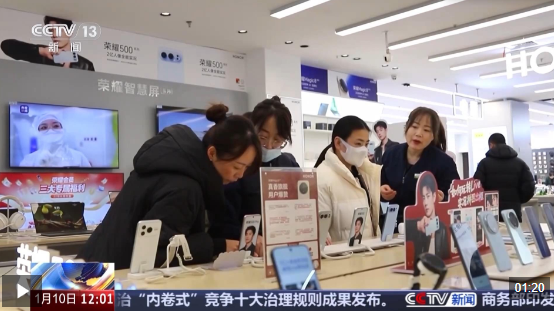
Core Insights - The new round of "trade-in" subsidy policy in China has been implemented with an initial allocation of 62.5 billion yuan, covering various consumer goods from home appliances to digital devices and automobiles [2][8] - The policy aims to stimulate consumption and promote energy-efficient products, with specific focus on first-level energy efficiency appliances and new energy vehicles [10] Home Appliance Upgrade - The subsidy for home appliances focuses on six core products: refrigerators, washing machines, televisions, air conditioners, computers, and water heaters, with a maximum subsidy of 1,500 yuan per item and a total potential savings of up to 9,000 yuan [2][3] - Sales of first-level energy-efficient appliances surged by 320% in the first week of the policy implementation, indicating strong consumer demand [3] Digital Device Upgrade - The subsidy now includes AI glasses for the first time, allowing consumers to save up to 500 yuan on eligible products priced under 6,000 yuan [4][5] - The digital subsidy covers smartphones, tablets, smartwatches, and smart glasses, with a 15% subsidy rate [4] Automotive Replacement - The policy favors new energy vehicles, offering a maximum subsidy of 20,000 yuan for scrapping old fuel vehicles, significantly reducing the effective purchase price [5][6] - The subsidy structure differentiates between scrapping and replacing vehicles, with varying rates for new energy and fuel vehicles [6] Policy Highlights - A unified national subsidy standard has been established, enhancing the benefits for consumers in regions with previously lower subsidies [8] - The policy is designed to encourage green consumption and accelerate the transition to low-carbon products, as evidenced by a 210% increase in green appliance sales and a 45% rise in new energy vehicle sales in the first week [10] Consumer Caution - Consumers are advised to be vigilant against price manipulation and fraudulent claims, with strict monitoring in place to prevent abuse of the subsidy system [9] - The policy includes specific timelines for subsidy claims, emphasizing the need for timely verification and submission of required documents [9]


各地抢抓政策红利 持续激活消费市场
Yang Shi Wang· 2026-01-10 23:00
Group 1 - The core viewpoint of the article is that a large-scale equipment update and trade-in policy for consumer goods will be implemented in 2026, covering various sectors such as automobiles, home appliances, and digital smart products [1] - Since the New Year, local areas have been actively seizing the benefits of the new policy, continuously stimulating the consumer market [1] - New product categories like smartwatches and smart glasses have been included in the subsidy scope for the first time, leading to a sustained increase in consumer enthusiasm [1]
“缺钱时代”已至?5个生活变化超真实,省钱比赚钱更重要
Sou Hu Cai Jing· 2026-01-10 11:53
Core Insights - The article discusses the shift in consumer behavior towards more frugal spending, emphasizing that the "money shortage era" is characterized by rational consumption rather than a lack of income. Group 1: Changes in Consumer Behavior - Consumers are prioritizing discounts and subsidies, opting for cost-effective options while maintaining quality, such as choosing products eligible for government subsidies [3] - The trend of "rational consumption" is evident as consumers focus on maximizing value, such as utilizing trade-in programs for vehicles and waiting for subsidy periods to purchase electronics [3] Group 2: Employment Trends - There is a noticeable decline in the trend of migrant workers moving across provinces, with local job opportunities in midwestern regions offering competitive salaries, making local employment more appealing [4] - The rise of flexible employment options is becoming popular, with over 200 million people engaged in various forms of gig work, allowing for multiple income streams [4] Group 3: Debt Management - Younger generations are becoming more cautious with debt, avoiding credit card debt and focusing on essential loans like auto and home loans, reflecting a shift towards financial prudence [5] - Families are adopting strategies to minimize debt, such as opting for longer loan terms to reduce monthly payments and prioritizing full payments over loans [6] Group 4: Government Policies - The government is responding to the public's need for cost savings by implementing various subsidies, such as free education for preschoolers and significant reductions in medication costs [6] - These policies are designed to alleviate financial burdens on families, making essential services more affordable [6] Group 5: Skills Development - The labor market is increasingly favoring skilled workers, with demand for technical skills rising as automation reduces the need for manual labor [7] - There is a growing emphasis on skill training programs supported by government initiatives, enabling individuals to enhance their employability and income potential [7]

2026年以旧换新政策全面落地 多领域补贴激活新年消费
Yang Shi Wang· 2026-01-10 08:53
Group 1 - The national policy for large-scale equipment updates and trade-in for consumer goods officially launched in 2026, covering multiple sectors including automobiles, home appliances, and digital smart products [1][3] - Since the New Year, various regions have been leveraging the new policy to stimulate the consumer market, with a notable increase in demand for smart watches and smart glasses, which are now included in the subsidy program [1][3] - In Jiangsu, the government has issued over 115 million yuan in subsidies, leading to sales of 890 million yuan, indicating a strong market response to the trade-in policy [3] Group 2 - In Anhui, the trade-in policy has significantly boosted automobile consumption, with many consumers actively visiting car dealerships [4][6] - In Hebei, the launch of the new round of national subsidies has resulted in a surge in consumer activity at shopping malls, with many customers inquiring about trade-in services [8]
2025年深圳以旧换新“成绩单”出炉!
Shen Zhen Shang Bao· 2026-01-10 04:23
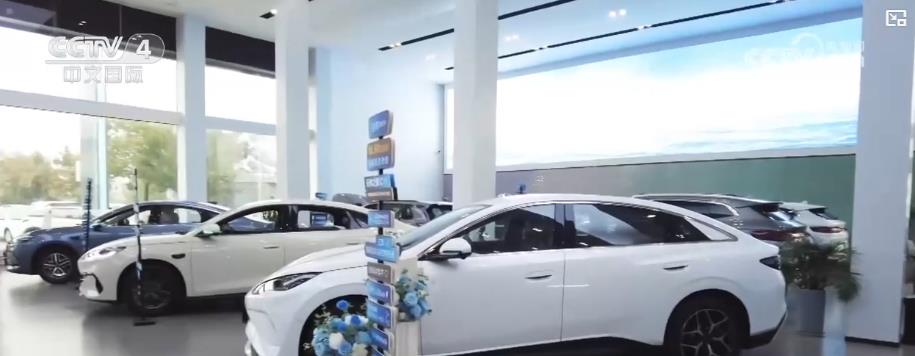
Core Insights - In 2025, Shenzhen's old-for-new consumption policy achieved significant results, with a total sales volume of 87.5 billion yuan, benefiting 17.8 million consumers [1] Group 1: Policy Implementation - Shenzhen fully promoted the old-for-new program for automobiles, smart home appliances, home renovation, and electric bicycles in 2025 [1] - The program included the replacement of 190,000 cars, 7.97 million home appliances, 4.32 million digital products, 5.23 million home renovation items, and 90,000 electric bicycles [1] Group 2: Market Participation - Over 1,000 offline merchants participated in the old-for-new program in the home appliance, digital, and home renovation sectors, with more than 11,000 stores involved [1] - The policy also extended to cover residents from Hong Kong, Macau, Taiwan, and foreign nationals, with over 20,000 individuals benefiting from subsidies [1] Group 3: Market Response - The new consumption policy was launched on January 1, 2026, covering automobiles, six categories of home appliances, and four categories of digital products, providing substantial discounts to citizens [1] - The market response was rapid, with some stores experiencing a more than 150% increase in foot traffic and over 200% increase in transaction rates during the New Year period compared to the previous week [1]
政府补、企业让,百姓乐享“焕”新!“真金白银”实惠助推跨场景消费再掀热潮
Yang Shi Wang· 2026-01-10 04:09
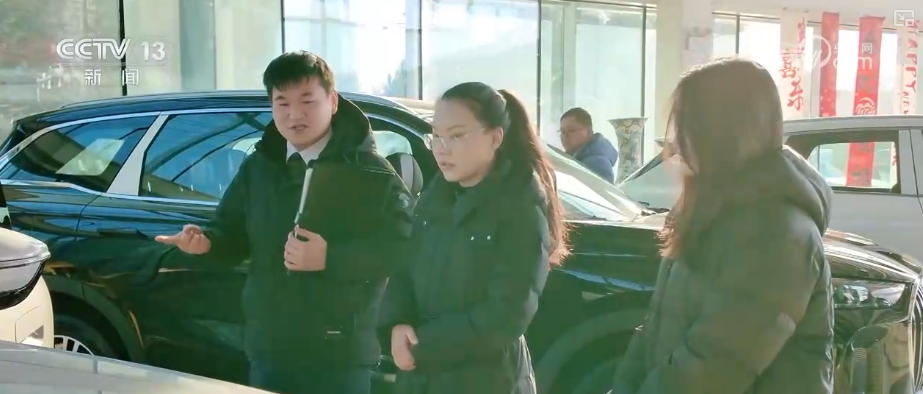
Core Viewpoint - The implementation of the "old-for-new" policy in Anhui has sparked a consumption boom across various sectors, including automobiles, home appliances, and digital products, providing consumers with significant savings [1] Group 1: Policy Impact - The "old-for-new" policy has led to a surge in consumer activity, with many residents actively seeking to replace old vehicles and appliances [1][11] - The policy has resulted in a total sales volume of 3.92 trillion yuan, benefiting approximately 494 million people [16] - The automotive sector has seen over 18.3 million vehicles replaced under the "old-for-new" initiative, with nearly 60% being new energy vehicles [18][20] Group 2: Consumer Savings - Consumers like Hu Jing have reported savings of over 20,000 yuan when factoring in government subsidies and manufacturer discounts for new energy vehicles [5] - Another consumer, Ou Panpan, anticipates savings of around 15,000 yuan through various subsidies for replacing her old vehicle [9] Group 3: Market Trends - The shift towards new energy vehicles has contributed to a doubling of sales in the domestic market for these vehicles [20] - The trend of replacing old appliances has also seen a significant increase, with over 1.92 billion home appliances replaced [18] - The sales of high-efficiency products in the home appliance sector have reached over 90% [20] Group 4: Economic and Environmental Benefits - The "old-for-new" policy is promoting a green economic transition, with an average increase of over 45% in the recycling of scrapped vehicles and a reduction of approximately 44 million tons of carbon emissions [23] - The policy has also stimulated cross-industry consumption, with areas around appliance replacement stores seeing a more than 30% increase in consumer spending [24]