
科技研发

Search documents
“两业融合”出实招 双轮驱动谱新篇
Xin Hua Ri Bao· 2025-09-30 06:57
Core Insights - Jiangdu District is leveraging the national and local push for the integration of advanced manufacturing and modern services, utilizing high-end technology, big data, and industrial internet to enhance business connections and expand industry chains [1][4] Group 1: Industrial Foundation - Jiangdu District has a solid manufacturing base and a thriving modern service sector, making it well-positioned for deep integration trials of the two industries [2] - In 2024, the district's industrial invoiced sales are projected to reach 157.3 billion, with 87 new industrial enterprises added, bringing the total to 1,002, the highest in the city [2] - The district has seen the emergence of 26 new enterprises with invoiced sales exceeding 100 million, and 19 enterprises exceeding 1 billion [2] Group 2: Industry Clusters - Jiangdu is actively developing five major industrial clusters: high-end equipment, high-tech ships and marine engineering, automotive and components, new materials, and new-generation information technology [2] - The district is also fostering ten emerging industrial chains, including robotics, smart grids, and new energy materials, while enhancing modern logistics and technology R&D services [2] Group 3: Development Dynamics - During the 14th Five-Year Plan, Jiangdu has over 600 high-tech enterprises, leading the city in this regard [3] - The district has established 47,000 square meters of technology complexes and four provincial-level incubators, along with 59 new provincial and municipal enterprise service centers [3] Group 4: Policy Framework - Jiangdu has implemented a comprehensive policy framework to support the deep integration of advanced manufacturing and modern services, focusing on high-quality economic development [4] - The district has established a "two-industry integration" work mechanism to clarify tasks and measures for implementation [4] Group 5: Talent and Training - The district is building a reserve of manufacturing enterprises based on revenue and market share, while also identifying service enterprises that focus on R&D and marketing [5] - Regular expert training and business guidance are provided to encourage enterprises to move towards high-end, intelligent, digital, and branded development [5] Group 6: Future Outlook - Jiangdu aims to construct a high-quality and efficient "6+3" service industry system, enhancing integration across organization, services, and industries [6]
抖音在深圳成立深空引擎科技公司
Zheng Quan Shi Bao Wang· 2025-09-30 01:51
Core Viewpoint - Shenzhen Pingshan Deep Space Engine Technology Co., Ltd. has been established with a registered capital of 10 million yuan, indicating a strategic move into various research and development sectors by the company behind it, Douyin Ltd. [1] Group 1 - The newly established company focuses on natural science research and experimental development [1] - It also engages in engineering and technology research and experimental development [1] - The company is involved in agricultural science research and experimental development [1] Group 2 - Medical research and experimental development is part of the company's operational scope [1] - Douyin Ltd. holds full indirect ownership of Shenzhen Pingshan Deep Space Engine Technology Co., Ltd. [1]
全民共享的科学盛宴
Ren Min Ri Bao Hai Wai Ban· 2025-09-29 22:57
Core Points - The first National Science Popularization Month has successfully engaged the public with numerous activities across the country, promoting scientific knowledge and innovation [2][8] - The event showcased various scientific achievements and innovations, including a desktop 4D printer and wearable electronic fabrics, highlighting the integration of technology and education [3][4] - The China Association for Science and Technology (CAST) reported a significant increase in public participation in science activities, with a focus on expanding the reach and impact of science education [8][9] Group 1: Science Popularization Activities - The National Science Popularization Month featured over 100,000 activities nationwide, encouraging participation from all age groups [2] - Events included interactive exhibits at the China Science and Technology Museum, where children could engage with scientific concepts through hands-on experiences [3][5] - The "Science Night" event combined science and art, offering immersive experiences that sparked interest in scientific exploration [4] Group 2: Technological Innovations - The introduction of a desktop 4D printer at the China Science and Technology Museum allowed visitors to see the transformation of materials into soft robots, demonstrating advanced manufacturing techniques [3] - Wearable electronic fabrics showcased the potential for smart clothing, capable of lighting up and performing various functions, marking a significant advancement in textile technology [4] Group 3: Educational Initiatives - Educational programs during the Science Popularization Month included activities like designing parachutes for Mars landings, blending exploration with practical learning [7] - The Beijing Science Center organized a series of events, including a science carnival and collaborative performances between scientists and artists, to enhance public engagement with science [8] Group 4: Achievements in Science Education - The proportion of Chinese citizens with scientific literacy reached 15.37% in 2024, surpassing the 2025 target, indicating a growing public understanding of science [8] - CAST plans to expand science museum coverage to rural areas and enhance the quality of original science resources, aiming to make scientific knowledge more accessible [9]


多项黑科技亮相科博会:走进长虹工厂揭秘大国重器背后的故事
Xin Jing Bao· 2025-09-29 07:12
Core Viewpoint - Changhong is diversifying its product offerings beyond traditional television, showcasing advanced technologies at the China (Mianyang) International Science and Technology Expo, including AI home appliances and quantum dynamic absolute gravimeters [1] Group 1: Product Innovations - Changhong presented a full range of AI home appliances, indicating a shift towards smart technology integration in consumer products [1] - The company showcased highly encrypted data spaces, highlighting its focus on data security and privacy in technology [1] - Changhong introduced power supply technology used in high-speed trains, demonstrating its capabilities in transportation technology [1] Group 2: Research and Development - The event included a tour of Changhong's R&D factory, emphasizing the company's commitment to innovation and development of advanced technologies [1] - The presentation of a quantum dynamic absolute gravimeter for earthquake measurement reflects Changhong's investment in cutting-edge scientific research [1]

龙湖如何用Agent重塑地产与物业的运营方式?
虎嗅APP· 2025-09-29 00:19
Core Viewpoint - The article emphasizes the transformative role of AI, specifically through the implementation of Agent intelligent systems, in enhancing operational efficiency and decision-making processes within the real estate and property management sectors, particularly for Longfor Group [5][6]. Group 1: AI Implementation and Impact - Longfor Group has integrated AI to address traditional inefficiencies, such as lengthy pricing approval processes that previously took 1-2 weeks, now reduced to a few hours with the use of intelligent agents [5][10]. - The introduction of Agent systems has significantly improved the efficiency of parking lot management, reducing manual audits from 100% to 17%, resulting in an 83% increase in audit efficiency and preventing millions in potential losses annually [15][13]. - The company has developed over 180 digital employees across various scenarios, including pricing models, contract reviews, and risk management, forming a comprehensive digital workforce [6][9]. Group 2: Specific Use Cases - The first successful application of an Agent was in pricing adjustments, where it simulated various pricing scenarios and provided recommendations, thus avoiding potential losses of millions [10][11]. - In property management, the Agent system has automated the identification of abnormal parking lot entries, leading to significant labor cost savings and improved compliance [15][16]. - The contract review process has been enhanced by Agents that automatically identify risks in complex commercial contracts, allowing staff to focus on critical issues [20][17]. Group 3: Challenges and Solutions - The primary challenge in implementing Agent technology is the need for a well-prepared knowledge base within the company, as the complexity of real estate rules and processes requires clear standard operating procedures (SOPs) [21][22]. - Data quality is crucial for the successful deployment of Agents, necessitating a unified digital framework to ensure high-quality data availability [21][22]. - The company has adopted a dual-role team approach, pairing AI product managers with business experts to ensure both technical feasibility and business relevance in project execution [28]. Group 4: Future Directions - Longfor Group plans to expand the use of Agents in internal management, commercial operations, and customer service, focusing on data-driven decision-making and enhanced user experiences [33][34]. - The company is also exploring multi-agent collaboration for complex tasks, demonstrating the potential for creating a virtual employee team that streamlines operations across departments [26][24].


全国首部自贸试验区立法完成修订,上海明确下一步开放新举措
Di Yi Cai Jing· 2025-09-26 09:51
Core Points - The revised "Regulations on the China (Shanghai) Pilot Free Trade Zone" will officially take effect on September 29, 2025, marking the 12th anniversary of the Shanghai Free Trade Zone [1] - The revision aims to provide a solid legal guarantee for the development of a higher-level Shanghai Free Trade Zone, reflecting the need for comprehensive updates due to significant changes in the zone's coverage, management system, and external environment over the past decade [2][3] Summary by Sections Legislative Background - The original regulations, implemented in August 2014, played a crucial role in promoting innovative reforms and served as a model for other free trade zones across the country [2] - The legislative update is seen as a systematic integration of over a decade's worth of reform and innovation measures [2] Key Features of the Revised Regulations - The regulations solidify mature institutional experiences such as foreign investment negative list management, overseas investment filing management, customs facilitation, and the construction of an international trade "single window" [3] - New institutional arrangements are made for emerging trade formats, cross-border trade digitization, and pilot projects for mandatory product certification exemptions [3] Financial and Economic Development - The regulations support the development of technology finance, green finance, and digital finance, tailored to the characteristics of the Shanghai Free Trade Zone [3] - They outline the development direction for key industries such as biomedicine and artificial intelligence [3] Data and Digital Economy - A data security compliance mechanism combining negative lists and operational guidelines will be established to facilitate cross-border data flow [3] - The regulations aim to enhance the digital economy's advantages by promoting data product intellectual property registration and building an international data economic industrial park [6] Business Environment Optimization - The regulations clarify institutional measures in government procurement, intellectual property protection, and ecological environmental protection to improve the business environment [3] - They align with the latest World Bank assessment indicators for the business environment [3] Future Directions - The Shanghai Free Trade Zone will deepen investment openness and trade facilitation, including the implementation of a national and pilot version of the cross-border service trade negative list [4][5] - There will be a focus on developing new trade formats and promoting trade transformation and upgrading [5] - The zone aims to enhance the gathering and radiating capabilities of strategic elements, particularly in the financial sector [5][6] Innovation and Industry Development - The regulations encourage foreign investment in R&D centers and support multinational companies in establishing regional headquarters with R&D functions [7] - They emphasize the importance of integrating innovation across the entire industry chain, particularly in key sectors like integrated circuits and high-end manufacturing [7]
量子计算金融领域里程碑:汇丰测试显示交易效率提升34%
Hua Er Jie Jian Wen· 2025-09-25 12:26
Core Insights - HSBC and IBM have achieved a milestone in quantum computing applications in finance, indicating significant potential for improving trade execution efficiency on Wall Street [1] - The quantum tool tested by HSBC showed a 34% increase in efficiency for predicting trade execution probabilities compared to traditional methods, based on historical data from the European corporate bond market [1][2] - HSBC's quantum technology head emphasized that this is a tangible proof of the proximity to extracting value from quantum computing in financial services [1][2] Summary by Sections Quantum Tool Efficiency - The quantum computing tool developed by IBM has demonstrated a significant 34% improvement in predicting the likelihood of trade execution compared to conventional methods [1][2] - The analysis was based on over 1 million quote requests involving more than 5,000 bonds from September 2023 to October 2024 [2] - Quantum computing utilizes quantum bits (qubits) to process information in a broader and more dynamic space than classical systems [2] Competitive Landscape - Major technology companies, including IBM and Google, are competing for leadership in the quantum computing field, aiming to produce industrial-scale quantum computers by the end of the decade [2] - Quantum computing is expected to drive breakthroughs not only in finance but also in scientific research areas such as drug development [2] Risks and Considerations - While quantum computing presents opportunities for efficiency in financial transactions, it also poses risks to existing encryption technologies widely used for sensitive data, including those in financial institutions [3]


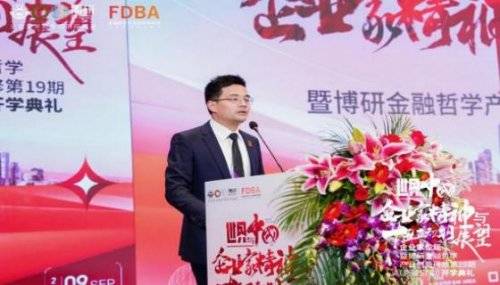
世界与中国:“企业家精神与十五五规划展望”企业家论坛成功举办
Sou Hu Cai Jing· 2025-09-23 10:52
Group 1: Forum Overview - The "World and China: Entrepreneurial Spirit and the 14th Five-Year Plan Outlook Forum" was successfully held in Guangzhou, gathering nearly 200 entrepreneurs from the Greater Bay Area along with renowned scholars and policymakers [1][2] - The forum focused on exploring the integration of entrepreneurial spirit with economic transformation, policy direction, and philosophical thinking in the context of global asset patterns [1][2] Group 2: Entrepreneurial Spirit and Philosophy - The president of the Bo Yan Philosophy Business School, Ouyang Qing, emphasized the importance of integrating science, philosophy, and religion in entrepreneurial spirit, highlighting that true entrepreneurs embody these three aspects [2][4] - Former Director of the Civil Aviation Administration of China, Li Jiaxiang, discussed the significance of entrepreneurial spirit in facing uncertainties and the necessity of aligning ideals with scientific thinking for sustained success [4][6] Group 3: Roundtable Discussions - A roundtable dialogue on "The Resilience and Inheritance of Entrepreneurial Spirit" featured discussions on mindset, practical actions, future foresight, and core values among a diverse group of entrepreneurs [6] - Participants included investors, traditional industry upgrade advocates, and pioneers of emerging industries, sharing insights from their experiences [6] Group 4: New Class Introduction - The opening ceremony for the 19th Financial Philosophy Industry Innovation Class highlighted the gathering of elite students from prestigious institutions, emphasizing the importance of philosophical thinking in navigating future challenges [8][10] - New student representative Li Zehang expressed the desire to explore global opportunities and achieve personal and corporate growth through the Bo Yan platform [10] Group 5: Keynote Speeches and Insights - The ceremony featured a keynote speech by Professor Wang Jun on "AI Civilization: The Twilight or New Dawn of Human Values," discussing the philosophical foundations of artificial intelligence and its implications for the future [13][17] - Economic commentator Fu Peng provided insights on the global economic transformation, emphasizing the impact of ideological divisions on economic models and the need for strategic asset allocation [17][19] Group 6: Conclusion and Future Outlook - The forum served as a platform for rich discussions on entrepreneurial spirit, innovation, and the implications of the 14th Five-Year Plan, providing valuable learning opportunities for participants [19]

香港特区政府《行政长官2025年施政报告》解读:夯实增长引擎,巩固枢纽角色
工银亚洲· 2025-09-23 05:39
Group 1: Economic Development Strategies - The 2025 Policy Address aims to enhance Hong Kong's status as an international financial center, focusing on offshore RMB business, fintech innovation, and green finance[3] - Hong Kong is the largest offshore RMB market, with an average daily trading volume of USD 196.5 billion in October 2024 and RMB deposits totaling approximately RMB 938.23 billion by July 2025[8] - The asset management sector in Hong Kong grew by 13% in 2024, reaching HKD 35.1 trillion (approximately USD 4.51 trillion)[14] Group 2: Infrastructure and Connectivity - The Northern Metropolis development plan includes establishing a dedicated committee and legislative framework to accelerate infrastructure projects, with a focus on cross-border connectivity[30] - The Hong Kong International Airport is projected to handle 120 million passengers and 10 million tons of cargo by 2035, enhancing its position as a global aviation hub[25] - The report emphasizes the establishment of a "super contact" role for Hong Kong, facilitating connections between mainland enterprises and international markets[34] Group 3: Social Welfare and Housing - The government plans to build 189,000 public housing units over five years, including 30,000 "simple public housing" units by the end of 2025[41] - Measures to support small and medium-sized enterprises (SMEs) include extending the loan guarantee scheme and reducing operational costs through fee waivers[44] - Initiatives to enhance social welfare include increased support for elderly care and family services, with a focus on encouraging childbirth through tax incentives and childcare services[46]
首开股份(600376.SH):盈信公司间接持有的宇树科技股权比例约为0.3%,持股比例很低
Ge Long Hui A P P· 2025-09-22 11:40
Group 1 - The company Shouka Co., Ltd. (stock code: 600376.SH) announced that according to Tianyancha, the fund holds a 4.7683% stake in Yushu Technology [1] - Based on this calculation, Yingxin Company indirectly holds approximately 0.3% of Yushu Technology's equity, indicating a very low shareholding ratio [1] - Yingxin Company's investment in the fund is purely financial, with no control or influence over the fund's decision-making and operations [1]
