Funds

Search documents
低利率时代,货基的挑战与应对 | 宏观经济
清华金融评论· 2025-06-17 12:19
Core Viewpoint - The recent reduction in deposit rates by major banks in China, with the one-year fixed deposit rate falling below 1%, poses challenges for money market funds and cash management products, prompting a need for strategies to adapt to this low-yield environment by learning from overseas experiences [2][3]. Group 1: Overview of Low-Interest Rate Environments - In the U.S., the money market fund (MMF) yield entered the "1%" era during three periods: 2003-2004, 2009-2017, and 2020-2021, with significant capital outflows during low yield periods [5][6][7]. - The Eurozone experienced a decline in MMF scale during low-interest periods, but saw an increase during negative interest rates due to the relative attractiveness of MMFs compared to other rates [9][10][11][12]. - Japan's MMFs faced extinction in a negative interest rate environment, with the money reserve fund (MRF) becoming dominant due to its association with securities accounts [14][16]. Group 2: Factors Influencing MMF Scale Changes - The elasticity of nominal interest rates to policy rate changes leads to different behaviors in fund flows, with MMFs showing higher sensitivity compared to bank deposits [21][22]. - The different approaches to negative interest rate policies in Europe and Japan resulted in contrasting outcomes for MMFs, with European funds expanding while Japanese funds contracted [42][43][45]. - Inflation impacts real interest rates, influencing market preferences for low-risk assets, with higher real rates encouraging savings and benefiting MMFs [48][49]. Group 3: Strategies for Fund Managers - Fund managers in low-interest environments often reduce fees to enhance client returns, as seen in the U.S. during the 2003-2004 period [51][56]. - Seeking yield through credit and liquidity premiums becomes crucial, with U.S. MMFs increasing allocations to commercial paper and corporate notes during low yield periods [52]. - Building product ecosystems and increasing overseas investments are strategies employed by fund managers to maintain competitiveness in challenging environments [54][58]. Group 4: Regulatory Responses - Overseas regulators have generally moved towards net asset value (NAV) reform for MMFs to ensure industry health in low-rate environments, with Europe implementing market value-based valuations [61]. - Japan's earlier reforms in MMF valuation have set a precedent for adapting to low-interest conditions, allowing for more flexible investment strategies [61]. Group 5: Implications for China - China's dual-track interest rate system means that the relationship between money market rates and deposit rates is influenced by both market and policy factors, with recent trends showing deposit rates adjusting more rapidly [63][64]. - The future of MMFs in China will depend on whether money market rates fall significantly below deposit rates, with current trends suggesting a continued advantage for MMFs [70]. - A potential decline in inflation could further elevate real interest rates, benefiting low-risk assets like MMFs [71].

东海基金股权三度流拍,年均30%业绩增长目标考验市场信心?公司回应|基·本面
Hua Xia Shi Bao· 2025-06-17 09:56
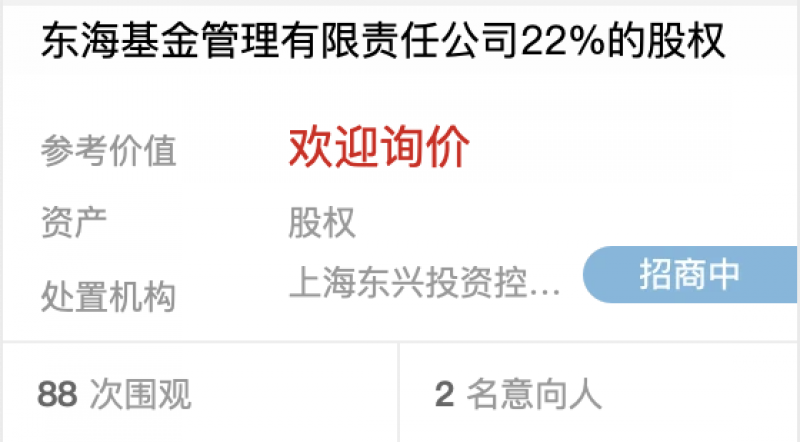
Core Viewpoint - Donghai Fund's 22% equity is being auctioned again after multiple failed attempts, raising concerns about its financial health and future profitability predictions [3][4][6]. Group 1: Auction Details - Donghai Fund's 22% equity is currently listed for auction on Alibaba's judicial auction platform, with the bidding period from June 3, 2025, to November 30, 2025 [6]. - This is the fourth attempt to find a buyer for this equity, which has previously failed to sell three times on JD's asset trading platform, with the price dropping from 37.7352 million yuan to 30.18816 million yuan [6][7]. - The auction is a result of a debt dispute involving Shenzhen Pengbo Industrial Group, which had its 27.3053% stake frozen by the Shenzhen Intermediate Court [6][7]. Group 2: Financial Performance and Predictions - In 2024, Donghai Fund is projected to have a net loss of 4.36 million yuan, while the auction documents predict a net profit of 37 million yuan by 2029 [5][9]. - The company expects an average annual revenue growth rate of approximately 30% over the next six years, with a projected revenue of around 150 million yuan by 2029 [9][10]. - Despite recent losses, Donghai Fund's management believes that once it surpasses key asset thresholds of 10 billion and 20 billion yuan, growth will accelerate significantly [10]. Group 3: Management and Growth - Donghai Fund has seen its public fund management scale grow significantly, reaching 26.147 billion yuan by Q1 2025, a 131.33% increase from the end of 2022 [12][13]. - The company has improved its ranking in public fund management, moving from 128th place at the end of 2020 to 93rd place by Q1 2025 [13]. - Donghai Fund's fixed-income products have performed well, ranking in the top 9% for excess returns in the industry over the past three years [13][14].
来了!基金开辟“新战场”
Zhong Guo Ji Jin Bao· 2025-06-17 04:23
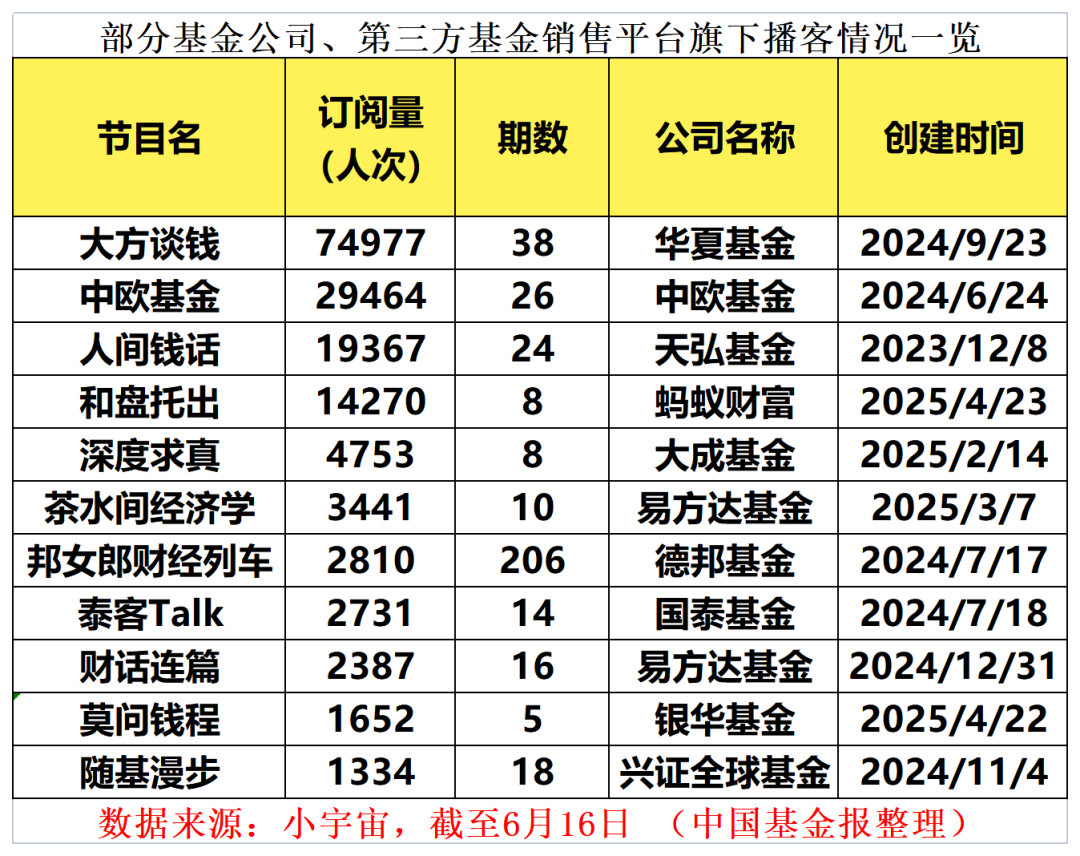
Core Insights - The podcasting initiative by over 20 fund companies has emerged as a new channel for engagement, allowing them to connect with various audience segments through audio content [1][2] - This year-long experiment has shown both hesitance and surprising success, positioning podcasts as a valuable dialogue tool for investment empowerment [1] Fund Companies' Podcast Engagement - More than 20 fund companies have entered platforms like Ximalaya and Xiaoyuzhou, creating content that makes financial data and insights more relatable [2] - Notable podcasts include "Dafang Talks Money" by Huaxia Fund with nearly 75,000 subscribers and "Zhongou Fund" with over 29,000 subscribers, showcasing significant audience engagement [2][3] Audience Interaction and Content Strategy - Podcasts have high listener engagement, with many listeners providing feedback and suggestions in comment sections, enhancing content development [4] - Fund companies like Zhongou Fund emphasize the importance of addressing audience curiosity and confusion, aiming to provide valuable insights through diverse perspectives [4][6] Multi-Platform Strategy - Fund companies are developing differentiated content strategies across various platforms, including Xiaohongshu and video platforms, to enhance brand communication [6][7] - Zhongou Fund utilizes podcasts as a foundational content source, repurposing episodes into articles and short videos for broader reach [6] Challenges in the Podcasting Landscape - Fund companies face challenges in content direction and platform algorithm pressures, necessitating a focus on high-quality, brand-aligned content [8] - The competition for listener attention is intense, with rising costs for acquiring new users and the need for continuous high-quality content to maintain listener loyalty [8]
【读财报】债基5月表现:约八成产品浮盈 中海基金、华商基金旗下产品收益率居前
Xin Hua Cai Jing· 2025-06-16 23:21
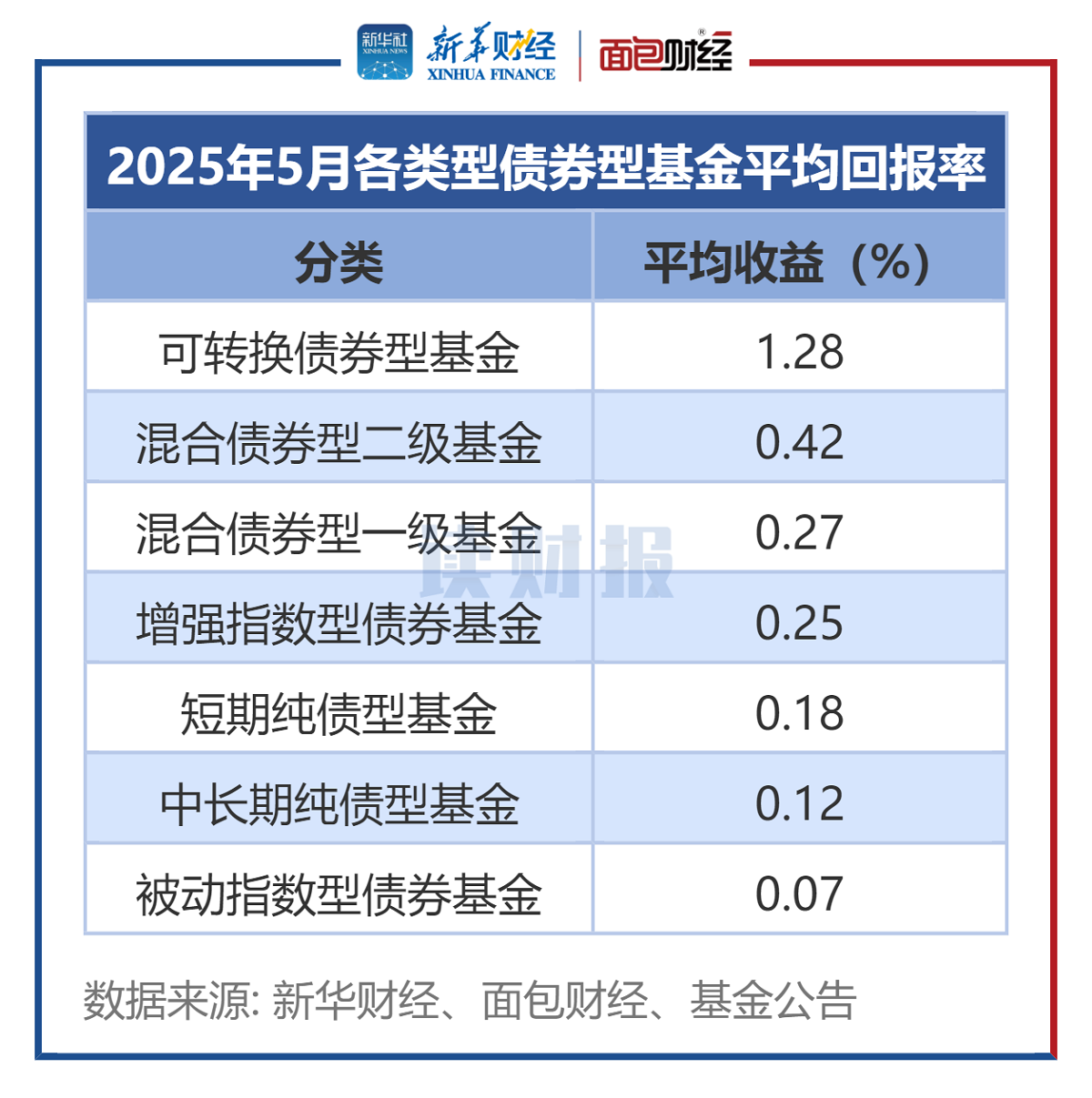
Core Insights - The average yield of bond funds in the public market for May was 0.19%, with approximately 80% of the products showing floating profits [2][8] - Convertible bond funds performed well, with an average return of 1.28% in May, while passive index bond funds lagged behind with a mere 0.07% increase [3][4] Performance Analysis - Top-performing funds included Zhonghai Convertible Bond A and Huashang Convertible Bond Selection A, with returns of 4.72% and 3.09% respectively [5][7] - A total of 600+ bond funds experienced floating losses in May, with Jin Ying Yuan Feng A and He Xu Zhi Yuan Xin Yue Li Rate Bond A showing significant declines of 1.95% and 1.69% [8][10] Fund Details - Zhonghai Convertible Bond A utilized a quantitative approach for style selection and invested in undervalued convertible bonds [7] - Jin Ying Yuan Feng A's significant drop was attributed to its heavy investments in stocks and bonds that underperformed in the market [8][10]
每日钉一下(创新有哪些类型,普通人如何抓住创新机会呢?)
银行螺丝钉· 2025-06-16 14:00
Group 1 - The core concept of fund advisory is to serve as an investment consultant for funds [1] - Fund advisory emerged to address the issue where "funds make money, but investors do not" [4] - Fund advisory has advantages in helping investors achieve better returns through its dual role of "advising" and "investing" [5] Group 2 - Various industries utilize consultants, especially those with high specialization [2] - The article suggests that just as one needs a doctor for medical issues or a lawyer for legal problems, fund advisory serves a similar purpose in investment [7]

融通基金合规风波:基金经理能不能看空?
阿尔法工场研究院· 2025-06-16 13:05
Core Viewpoint - The contradiction between the "publicity demand" and "speech restriction" faced by fund managers constitutes a real dilemma in their professional behavior [2][28]. Group 1: Recent Events - Recent comments by Wan Minyuan, a fund manager at Rongtong Fund, regarding the risks in the innovative drug sector sparked significant discussion within the market and the fund company [3][4]. - Wan Minyuan expressed concerns that much of the data in the innovative drug sector is speculative and that many companies may have already reached their peak valuations [4][5]. Group 2: Compliance Challenges - Fund companies are increasingly emphasizing compliance management due to the challenging public opinion environment, with market performance under pressure and frequent fund liquidations [8][9][10]. - The reputation of fund companies is under unprecedented scrutiny, especially concerning "star" fund managers whose actions can easily trigger media and investor discussions [11]. Group 3: Regulatory Framework - In response to the growing importance of reputation risk management, the Asset Management Association of China issued guidelines in 2022 requiring fund management companies to incorporate reputation risk management into their overall risk management systems [12]. - The guidelines specify that violations can lead to various disciplinary actions, highlighting the seriousness of compliance in the industry [12]. Group 4: Communication Restrictions - Fund companies have different approaches to managing employee communications on social media, with some having explicit rules while others rely on verbal agreements [13][15]. - Many public funds adopt a combination of "pre-emptive reminders and post-event monitoring" to manage reputation risks effectively [17]. Group 5: Dilemma of Fund Managers - The incident involving Wan Minyuan illustrates the tension between the need for fund managers to communicate risks and the pressure to avoid non-compliant communication [19][20]. - Fund managers face a dilemma where their professional duty to alert the market about potential risks may conflict with compliance requirements, leading to a culture of silence during critical moments [20][27]. Group 6: Conclusion - The collision between the principle of "freedom of speech" and the reality of potential public opinion crises creates a paradox for fund companies [30]. - Balancing effective reputation risk management while allowing fund managers to express their professional opinions remains a significant challenge for the industry [30].
招行系人事大变动,有何玄机?
Hu Xiu· 2025-06-16 11:43
Group 1 - Recent personnel changes at China Merchants Group's financial institutions, including the appointment of Zhu Jiangtao as president of China Merchants Securities [1][2] - Zhu Jiangtao's background includes significant experience in risk management and leadership roles within China Merchants Bank [6][26] - The restructuring reflects China Merchants Bank's strategy to enhance its wealth management business amid competitive pressures [4][12] Group 2 - China Merchants Bank's wealth management revenue has faced challenges, with a reported decline in fees and commissions by 22.70% year-on-year in 2024 [8][14] - The bank's wealth management strategy is under scrutiny, particularly in light of competition from Ant Group, which has significantly outperformed in fund management [10][11] - The appointment of Wang Xiaoqing as executive director indicates a continued focus on wealth management within the bank's strategic priorities [12][17] Group 3 - China Merchants Fund has experienced management changes, with new leadership aimed at revitalizing its performance in the competitive fund management landscape [18][24] - The fund's assets under management have stagnated, with a current non-monetary management scale of 550 billion yuan, ranking ninth in the industry [23] - The new general manager, Zhong Wenyue, faces challenges in enhancing the fund's equity product offerings and addressing the ETF market gap [20][25] Group 4 - China Merchants Securities remains a top player in the brokerage industry, ranking ninth with a revenue of 20.9 billion yuan in 2024 [26][27] - The firm has seen a decline in its investment banking revenue, which dropped by 34% year-on-year, indicating a need for strategic adjustments [27] - The integration of leadership from China Merchants Bank into China Merchants Securities aims to strengthen collaboration and enhance overall business performance [28][29]


贝莱德原副总洪霞入职永赢基金担任高级顾问
news flash· 2025-06-16 11:13
智通财经6月16日电,据渠道人士透漏,洪霞确已入职永赢基金,目前担任公司高级顾问。今年2月14 日,洪霞因个人原因卸任贝莱德基金副总,并不再转任公司其他岗位。资料显示,洪霞2021年加入贝莱 德基金担任销售总监,2023年4月升任副总。此前,洪霞曾任原上投摩根渠道业务总监兼国际业务部总 监、海富通业务管理部总经理、富国基金高级渠道经理、农业银行上海市分行客户服务主管等职务。 (智通财经记者 封其娟) 贝莱德原副总洪霞入职永赢基金担任高级顾问 ...
债市利好因素增多,年内已有八成债基净值创新高,节奏或向利率债行情切换
Sou Hu Cai Jing· 2025-06-16 09:19
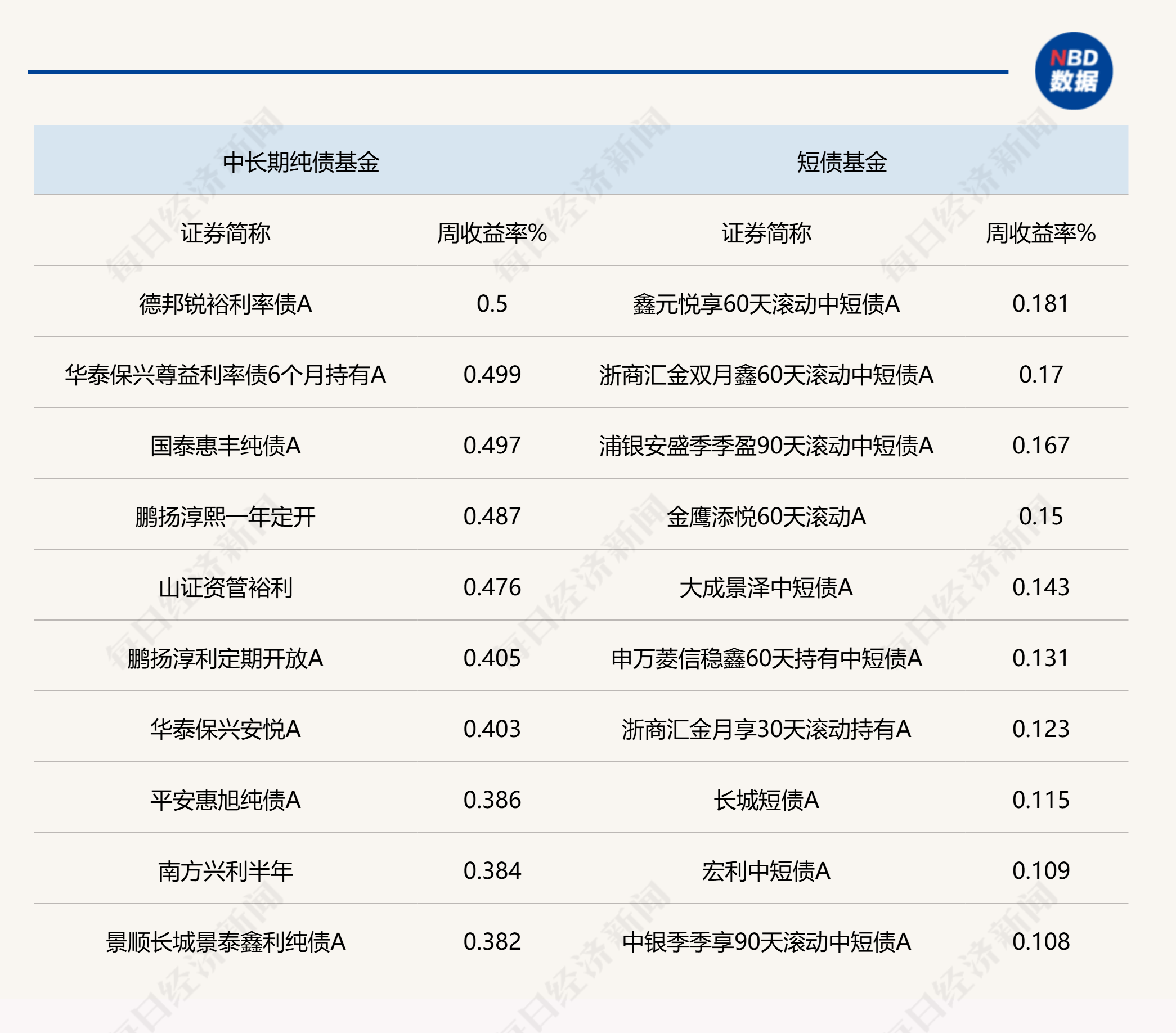
上周,债市延续窄幅震荡,资金面保持适度宽松,但整体上依然难以突破近期债市的困顿局面。不过,国内外利好债市的因素逐渐增多,有机构认为,债市 节奏或向利率债行情切换,仍有做多窗口期。事实上,今年以来,债基表现依然稳健,纯债基金当中已有超过八成的产品净值创下新高。 债基市场重拾升势,大批纯债基金创新高 上周(6.9-6.15),国内债市表现相对平淡,但已有大批债券基金创下年内新高。在业内看来,资金持续宽松与配置需求旺盛共同驱动了债市走牛,而资金 面的宽松也为债券收益率的下行创造了条件。 今年以来,债券市场先经历深度调整然后企稳回升。进入6月,债券市场迎来一波强势上涨行情,带动债券基金净值显著修复。以纯债型基金为例,Wind数 据显示,截至6月13日,全市场4431只纯债型基金中(统计所有份额),已有3520只基金的复权单位净值于6月创下历史新高,占比达八成。 上周,纯债基金当中,中长期纯债基金头部产品业绩出众。Wind统计显示,德邦锐裕利率债A单周收益率达到0.50%,是所有纯债基金中单周业绩最好的一 只。从头部业绩来看,中长期纯债基金普遍优于短债基金,单周收益率达0.2%以上的有88只,短债基金达到这一成绩的产品 ...
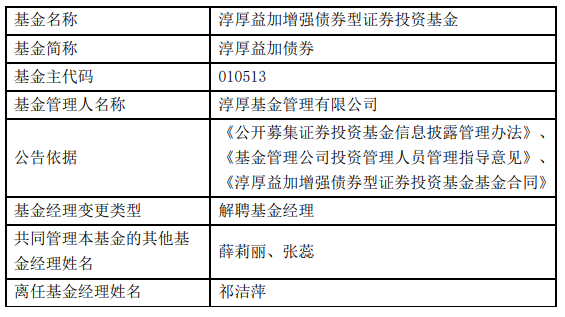
淳厚基金祁洁萍离任4只债券基金
Zhong Guo Jing Ji Wang· 2025-06-16 07:55
Core Viewpoint - The announcement from Chunhou Fund Management Co., Ltd. regarding the departure of Qi Jieping from multiple bond funds indicates a significant change in the management structure of these investment products, which may impact their performance and investor confidence [1][3][4]. Fund Performance Summary - Chunhou Yijia Bond A and C, established on December 30, 2020, reported a year-to-date return of 4.48% and 4.29%, respectively, with cumulative returns since inception of 19.23% and 17.14%, and net asset values of 1.1923 and 1.1714 [1]. - Chunhou Short-term Bond A and C, launched on March 26, 2020, showed a year-to-date return of 0.26% and 0.15%, with cumulative returns of 15.42% and 13.92%, and net asset values of 1.1491 and 1.1356 [1]. - Chunhou Stable Ning 6-Month Open-End Bond, initiated on February 15, 2021, achieved a year-to-date return of 0.28% and a cumulative return of 8.62%, with a net asset value of 1.0838 [1]. - Chunhou Anxin 87-Month Open-End Bond, established on November 26, 2020, reported a year-to-date return of 1.93% and a cumulative return of 21.16%, with a net asset value of 1.1956 and a fund size of 8.131 billion [2]. Management Changes - Qi Jieping has been dismissed as the fund manager for Chunhou Yijia Bond, Chunhou Short-term Bond, Chunhou Stable Ning 6-Month Open-End Bond, and Chunhou Anxin 87-Month Open-End Bond, indicating a shift in management strategy [3][4]. - Other co-managers for these funds include Xue Lili, Zhang Rui, and Jiang Wenjun, suggesting continuity in management despite the departure [3][4].