
化工

Search documents
超4400只个股上涨
第一财经· 2026-02-03 03:47
Market Overview - The A-share market showed positive performance at midday, with the Shanghai Composite Index up 0.38%, the Shenzhen Component Index up 0.93%, and the ChiNext Index up 0.76% [2] - The total trading volume in the Shanghai and Shenzhen markets reached 1.6 trillion yuan, a decrease of 38.5 billion yuan compared to the previous trading day, with over 4,400 stocks rising [4] Sector Performance - The photovoltaic industry chain led the market gains, while sectors such as commercial aerospace, CPO, deep-sea technology, and humanoid robots were also active [3] - Gold and oil & gas stocks experienced a pullback, and the banking and brokerage sectors showed weak performance [3] Notable Stock Movements - The Hang Seng Technology Index fell over 3%, with Baidu Group down more than 6%, Tencent Holdings down nearly 6%, and Alibaba down over 4% [5] - The commercial aerospace sector saw significant gains, with stocks like Jili Suojue and Runbei Aerospace hitting the daily limit [10] - Chemical stocks experienced a short-term surge, with Hongbaoli hitting the daily limit and Meibang Technology rising over 10% [10] Commodity Prices - The main contract for lithium carbonate saw an intraday increase of 6.6%, currently priced at 150,880 yuan per ton [11] - Spot silver prices rose significantly, increasing by 7% to $84.83 per ounce [14]


A股震荡拉升,创业板指半日涨0.76%,全市场超4400只个股上涨
Feng Huang Wang Cai Jing· 2026-02-03 03:46
市场热度:74 ◎ 50 100 0 两市成交额:1.6万亿 较上一日: - 385亿 凤凰网财经讯 2月3日,市场早盘冲高回落后,又再度震荡拉升。三大指数盘中翻绿,创业板指此前一 度涨超2%。截至午间收盘,沪指涨0.38%,深成指涨0.93%,创业板指涨0.76%。沪深两市半日成交额 1.6万亿,较上个交易日缩量385亿。 | | | | | 沪深京重要指数 | | | | | --- | --- | --- | --- | --- | --- | --- | --- | | 名称 *● | 最新 | 涨幅% | | 涨跌 涨跌家数 | | 息手 | 别于 金额 | | 上证指数 | 4031.07 | 0.38 | 15.32 | 1820/460 | 0.13 | 4.00 7. | 75 6967.41 7. | | 深证成指 | 13952.38 | 0.93 | 128.03 | 2437/427 | 0.15 | 4.96 Z | 705 9072.73亿 | | 北证50 | 1532.90 | 2.16 | 32.47 | 225/59 | 0.08 | 492 7 | 1286 130.0 ...


CA Markets:A股黑色星期一资源股跌停,你的钱袋子受影响了吗?
Sou Hu Cai Jing· 2026-02-03 03:44
Core Viewpoint - The sudden drop in A-shares on February 2, referred to as "Black Monday," significantly impacted resource stocks, leading to widespread losses among investors, including those holding related funds and gold investments [1][3]. Group 1: Market Reaction - On February 2, resource stocks experienced a sharp decline, with many stocks hitting the daily limit down, causing panic among investors [3][4]. - The gold sector saw multiple stocks, including Sichuan Gold and Zhaojin Gold, hit the limit down, while leading companies in the non-ferrous sector, such as Zijin Mining, faced declines exceeding 8% [3][4]. - Investors in stock funds reported a drop in net value by over 4%, leading to concerns about whether to redeem their investments [5]. Group 2: Causes of the Drop - The primary cause of the drop was the cooling of international commodity prices, particularly due to rising expectations of interest rate hikes by the Federal Reserve, which led to a sell-off in commodities like gold and copper [6][7]. - Large institutional investors began to sell off their holdings in resource stocks to lock in profits, contributing to a chain reaction of selling pressure in the market [7][8]. - The breach of key technical support levels, particularly the 3850-point mark on the Shanghai Composite Index, triggered automated selling by algorithmic trading systems, exacerbating the market's decline [9]. Group 3: Impact on Investors - Investors directly holding resource stocks faced immediate risks of further declines, with recommendations to set stop-loss limits to mitigate potential losses [10][11]. - Those invested in resource-heavy funds could expect a normal decline in net value of 4%-8%, with advice against panic selling, as the long-term value of resource sectors remains intact [11][12]. - Investors in gold-related financial products were advised to remain calm, as the recent price drop was attributed to short-term fluctuations rather than a loss of gold's inherent value [12]. Group 4: Future Outlook - Experts have differing views on the market's future, with some suggesting that the recent drop is a short-term adjustment and that the market may rebound as conditions stabilize [13]. - Caution is advised regarding potential "black swan" events, such as unexpected rate hikes or geopolitical tensions, which could further impact commodity prices and the stock market [13]. - A recommended investment strategy is the "three-three" approach, which involves diversifying investments to mitigate risks associated with market volatility [14][15].


A股午评:沪指涨0.38%、创业板指涨0.76%,商业航天概念股爆发,光伏及AI应用概念股活跃,贵金属及有色金属板块普跌
Sou Hu Cai Jing· 2026-02-03 03:44
Market Overview - The A-share market experienced a mixed performance with the Shanghai Composite Index rising by 0.38% to 4031.07 points, the Shenzhen Component Index increasing by 0.93% to 13952.38 points, and the ChiNext Index up by 0.76% to 3289.03 points, while the Sci-Tech 50 Index fell by 0.27% to 1446.93 points. The total trading volume in the Shanghai and Shenzhen markets reached 1.6 trillion yuan, a decrease of 38.5 billion yuan compared to the previous trading day [1] Sector Highlights - The commercial aerospace sector saw significant gains, with multiple stocks hitting the daily limit, including Jili Suoj, Tongyu Communication, and Shenjian Co. [1] - The photovoltaic sector continued to strengthen, with stocks like Shuangliang Energy and Aotewi reaching the daily limit [1] - The chemical sector also experienced a rally, with Hongbaoli achieving two consecutive limit-ups and Wanfeng Co. hitting four consecutive limit-ups [1] - The AI application sector remained active, with stocks such as Zhejiang Wenlian and Huamei Holdings showing notable increases [1] Key Concepts - The computing power hardware stocks, particularly CPO, continued to perform well, with companies like Robot Co. and Tianfu Communication rising over 10% and reaching historical highs. The report from Guosheng Securities indicates a high prosperity cycle in the computing power industry, predicting a significant capacity release in the optical module industry by Q1 2026 [2] - The space photovoltaic concept saw a surge, with Shuangliang Energy and Aotewi hitting the daily limit. Guosheng Securities' report suggests that the demand for space energy is expected to explode, driven by the restructuring of the supply chain between China and the U.S. [3] - The AI application sector saw renewed activity, with several domestic model manufacturers updating their models, leading to increased visibility and interest in Chinese models on international platforms [4] - The Beijing-Tianjin-Hebei concept stocks collectively opened strong, with companies like Jingtou Development and Chengjian Development hitting the daily limit. The central government's new urban planning aims to build a world-class metropolitan area centered around the capital [5] Institutional Insights - Guotai Junan believes that after a significant market drop, there are opportunities for stabilization and recovery, with a focus on domestic demand driving economic prospects and asset returns [6] - Huatai Securities views the recent market adjustment as primarily technical and emotional, suggesting that once technical indicators stabilize, an upward trend may resume [7] - CITIC Securities indicates that the current adjustment period for the liquor industry may soon reach a turning point, presenting a bottoming opportunity for capital market investments in the liquor sector [7]
赢创高管:阿根廷需制定长期工业化战略
Zhong Guo Hua Gong Bao· 2026-02-03 03:28
Group 1 - The core viewpoint is that despite the stabilization of Argentina's macroeconomic situation under President Javier Milei, the country lacks a long-term vision for industrial development, which hinders the transformation of its abundant Vaca Muerta shale resources into high-value manufacturing capacity and substantial job creation [1][2] - The chemical industry in Argentina has faced significant challenges, with production output declining even as the overall economic situation improves, highlighting the need for a clear and long-term industrial policy [1] - Major chemical companies, including Dow and local firm Rio Tercero, have shut down production facilities due to poor operational performance, indicating a troubling trend in the sector [1] Group 2 - The president of Evonik in Mexico emphasized that Argentina should not limit itself to being a commodity exporter but should develop a long-term industrial strategy to leverage the competitive energy from the Vaca Muerta shale project for the growth of the chemical industry and other manufacturing sectors [2] - There is a growing concern within Argentina's industrial sector that the aggressive economic transformation under Milei's government has not addressed structural unemployment and industrial decline, which are critical issues for sustainable growth [2]
印欧自贸协定面临绿色壁垒
Zhong Guo Hua Gong Bao· 2026-02-03 03:25
Core Insights - The India-EU Free Trade Agreement (FTA) is described as the largest in history, reshaping trade dynamics and creating new opportunities in the global energy and chemical sectors [1][2] - The agreement covers 2 billion people and accounts for 25% of the global economy, addressing US tariff threats while adjusting tariffs and market access rules [1] Group 1: Tariff Adjustments - India will gradually eliminate or reduce tariffs on 22% of EU chemical products, enhancing the competitiveness of EU high-end chemical materials in the Indian market [1] - The reduction in tariffs is expected to significantly boost the price competitiveness of EU chemical products, meeting the demand for high-end materials in India's manufacturing sector [1][2] Group 2: Export Opportunities for India - The EU has committed to gradually eliminate or reduce tariffs on 99.5% of Indian goods over seven years, opening up export channels for India's traditional chemical products [2] - India's capacity advantages in basic chemical raw materials and pesticide intermediates will allow it to gain price advantages in the EU market, leading to increased market share and job creation [2] Group 3: Green Trade Barriers - The EU's Carbon Border Adjustment Mechanism (CBAM), effective from January 1, imposes carbon costs on high-emission products, impacting India's energy and chemical sectors [2] - Indian fertilizer and chemical industries, heavily reliant on coal and fossil fuels, face additional costs of approximately $290 per ton when exporting to the EU, which may weaken their competitiveness [2] - The existence of carbon border taxes is pushing Indian energy and chemical companies to invest more in green technology and clean energy alternatives [2] Group 4: Overall Impact - The implementation of the India-EU FTA presents new development opportunities for the global energy and chemical industries while raising the bar for green development [2]
印欧自贸协定面临绿色壁垒
Zhong Guo Hua Gong Bao· 2026-02-03 03:15
Core Insights - The India-EU Free Trade Agreement (FTA), described as the largest in history, aims to reshape trade relations and has significant implications for the global energy and chemical industries [1][2] - The agreement covers 2 billion people and accounts for 25% of the global economy, addressing US tariff threats while creating new opportunities through tariff adjustments and market access rules [1] Group 1: Tariff Adjustments - India will gradually eliminate or reduce tariffs on 22% of EU chemical products, enhancing the competitiveness of EU high-end chemical materials in the Indian market [1] - The reduction in tariffs is expected to meet the demand for high-end chemical materials in India's manufacturing sector and accelerate technological innovation among local chemical companies [1] Group 2: Market Opportunities - The EU will progressively eliminate or reduce tariffs on 99.5% of Indian goods over seven years, providing a pathway for Indian traditional chemical products to enter the EU market [2] - India's capacity advantages in basic chemical raw materials and pesticide intermediates will allow its products to gain price advantages in the EU, leading to significant growth in exports and boosting domestic industry capacity and employment [2] Group 3: Green Trade Barriers - The EU's Carbon Border Adjustment Mechanism (CBAM), effective from January 1, imposes carbon costs on high-emission products, impacting India's energy and chemical sectors [2] - Indian fertilizer and chemical industries, heavily reliant on fossil fuels, face additional costs of approximately $290 per ton for exports to the EU, which may weaken their competitiveness [2] - The existence of carbon border taxes compels Indian energy and chemical companies to invest more in green technology and pursue energy-saving and clean energy alternatives [2] Group 4: Overall Implications - The implementation of the India-EU FTA presents new development opportunities for the global energy and chemical industries while raising the bar for green development standards [2]
中金:黄金巨震,A股如何反应?
Xin Lang Cai Jing· 2026-02-03 03:14
Market Performance - The A-share market showed weakness today, with the Shanghai Composite Index falling by 2.5% [1][5] - Major indices experienced declines, including the CSI 300 down 2.1%, the STAR 50 down 3.9%, and the ChiNext Index down 2.5% [1][5] - The trading volume today was 2.6 trillion yuan, a decrease of approximately 0.26 trillion yuan compared to the previous trading day [1][5] External Factors - The adjustment in the A-share market is primarily attributed to increased external uncertainties, including the nomination of Kevin Walsh as the next Federal Reserve Chairman, which has affected expectations for U.S. monetary policy [2][6] - Global commodity prices have sharply declined, impacting market sentiment and risk appetite, with significant drops in gold and other commodities [2][6] Investment Strategy - The current market volatility presents opportunities for bottom-fishing, as the underlying positive factors such as ample liquidity and improving performance remain unchanged [3][7] - The market is expected to continue supporting Chinese assets in 2026, driven by the restructuring of international order and domestic industrial innovation trends [3][7] Sector Focus - Suggested areas for investment include: 1. Growth sectors such as AI technology, cloud computing, and innovative pharmaceuticals, which are entering a growth cycle [4][8] 2. Export-oriented sectors, particularly in home appliances, engineering machinery, and gaming, which are seen as stable growth opportunities [4][8] 3. Cyclical sectors like chemicals and renewable energy, which may benefit from improving supply-demand dynamics [4][8] 4. High-dividend stocks, which are attractive for long-term investors seeking stable cash flow [4][8]
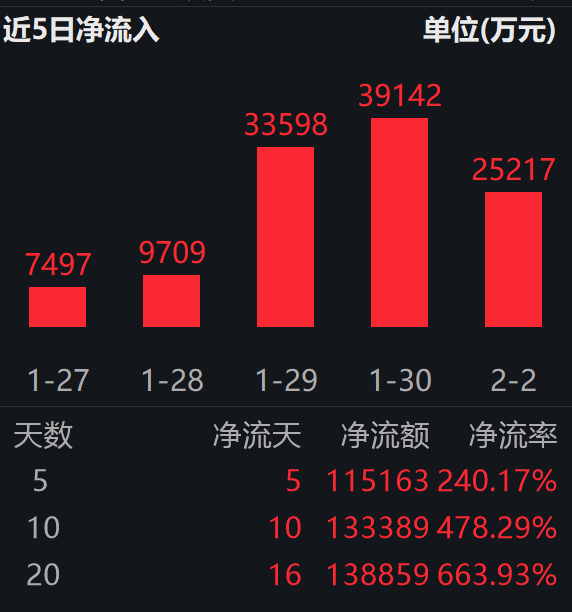
石油煤炭加工1月价格指数迎改善;化工行业ETF易方达(516570)连续10日“吸金”合超13亿
Sou Hu Cai Jing· 2026-02-03 02:48
Group 1 - The China Petroleum and Chemical Industry Index (H11057) increased by 1.63%, with key stocks such as Wanhua Chemical, Yilong Co., Cangge Mining, Hualu Hengsheng, and Yuntianhua rising over 2% [1] - As of February 2, the index has risen by 41.19% over the past year [1] - The E Fund Chemical Industry ETF (516570), which tracks the index, has seen a net inflow of over 1.3 billion in the last 10 days, with its latest fund size reaching 1.537 billion [1] Group 2 - In January, the production index and new orders index for the petroleum, coal, and other fuel processing industries were both below the critical point, indicating a slowdown in market demand and a decline in production [3] - The main raw material purchase price index and the factory price index were 56.1% and 50.6%, respectively, with increases of 3.0 and 1.7 percentage points from the previous month, marking the factory price index's first rise above the critical point in nearly 20 months [3] - Guosheng Securities stated that the supply structure has improved, leading to a valuation recovery in the chemical industry, with continuous growth since the "anti-involution" trend began in July 2025 [3]


第三批产品碳足迹核算团标清单发布
Zhong Guo Hua Gong Bao· 2026-02-03 02:41
Core Viewpoint - The Ministry of Industry and Information Technology, the Ministry of Ecology and Environment, the National Development and Reform Commission, and the State Administration for Market Regulation jointly released a notification on February 2, announcing the third batch of recommended group standards for carbon footprint accounting rules for industrial products, totaling 73 items [1] Group 1: Carbon Footprint Standards - The recommended group standards cover various industrial products including tires, synthetic ammonia, hydrogen, methanol, hexamethylenediamine salt, gypsum and gypsum products, fiber-reinforced composite materials, graphite and graphite products, modified polypropylene plastics for automotive use, plastic packaging products, photovoltaic cells and silicon materials, and recycled materials for lithium-ion batteries [1] - The purpose of this list is to accelerate the improvement of carbon footprint management levels for industrial products, establish a sound carbon footprint management system, and promote the green and low-carbon transformation of the industry [1] - The formation of this list involved recommendations from relevant standardization organizations, expert reviews, and public announcements [1]