水泥

Search documents
中邮证券:化债政策持续加码 关注内需预期加强的防水、水泥等行业
智通财经网· 2025-09-16 03:17
Group 1: Economic Outlook - The expectation for domestic demand is strengthening due to intensified debt reduction policies and a backdrop of overseas interest rate cuts [1][2] - The government aims to establish a debt management mechanism that aligns with high-quality development, focusing on reducing existing hidden debts while promoting economic stability [2] Group 2: Cement Industry - The cement industry is expected to see a gradual recovery in demand as it enters the peak season in September, although growth remains limited [2] - The implementation of policies to restrict overproduction is anticipated to enhance capacity utilization in the medium term, with current low demand and prices [2] - Key companies to watch include Conch Cement and Huaxin Cement [2] Group 3: Glass Industry - The glass industry currently lacks fundamental support, with supply-demand imbalances persisting and limited improvement in downstream demand [3] - The industry is expected to experience bottom-level price fluctuations, with environmental regulations likely to accelerate the pace of industry upgrades [3] - Key company to monitor is Qibin Group [3] Group 4: Fiberglass Industry - The fiberglass sector is experiencing a surge in demand driven by the AI industry, with a notable increase in both volume and price for low dielectric products [3] - The industry is expected to see explosive growth in demand alongside AI advancements [3] - Key companies to focus on include China Jushi and China National Building Material [3] Group 5: Consumer Building Materials - The consumer building materials sector has reached a profitability bottom, with no further downward price pressure expected [3] - The sector is experiencing strong calls for price increases and profitability improvements, with several product categories issuing price increase notices [3] - Key companies to watch include Oriental Yuhong, Skshu Paint, Beixin Building Materials, and Rabbit Baby [3]
广东塔牌集团股份有限公司关于首次回购股份的公告
Zhong Guo Zheng Quan Bao - Zhong Zheng Wang· 2025-09-16 02:16
Core Viewpoint - Guangdong Tapai Group Co., Ltd. has approved a share repurchase plan to use its own funds for employee stock ownership, with a total repurchase amount not exceeding 100 million yuan and not less than 50 million yuan, at a price not exceeding 10 yuan per share, within a period of 6 months from the board's approval [1]. Summary by Sections Share Repurchase Details - The company conducted its first share repurchase on September 15, 2025, buying back 563,800 shares, which accounts for 0.0473% of the total share capital, at a maximum price of 8.96 yuan per share and a minimum price of 8.86 yuan per share, totaling 5,019,840 yuan (excluding transaction fees) [1]. Compliance with Regulations - The share repurchase timing, quantity, and method comply with the established repurchase plan and relevant legal regulations, ensuring that the repurchase does not occur during periods that could significantly impact the company's stock price [2][3]. Future Implementation - The company will continue to implement the repurchase plan according to market conditions and will fulfill its information disclosure obligations regarding the progress of the share repurchase [3].

8月基建投资同比降幅边际收窄,继续关注中西部区域基建投资机会 | 投研报告
Zhong Guo Neng Yuan Wang· 2025-09-16 01:05
Group 1 - The core viewpoint of the report indicates a marginal narrowing of the year-on-year decline in infrastructure investment, with a recommendation to focus on investment opportunities in the central and western regions of China [2][3] - From January to August 2025, real estate development investment decreased by 12.9%, while narrow infrastructure and broad infrastructure investments increased by 2% and 5.4% respectively [2][3] - In August 2025, the year-on-year decline in real estate development investment was 19.9%, with narrow infrastructure and broad infrastructure investments declining by 5.9% and 6.4% respectively [2][3] Group 2 - The cumulative new special bonds issued from January to August 2025 reached 32,641.37 billion yuan, representing a year-on-year increase of 26.9% [2] - The report highlights that the issuance of special bonds is expected to accelerate in the second half of the year to support major engineering projects [2] - The real estate sector continues to show weakness, with a year-on-year decline in sales area of 4.7% from January to August 2025 [3] Group 3 - Cement production from January to August 2025 was 1.105 billion tons, a year-on-year decrease of 4.8% [4] - In August 2025, the average cement price increased to 349 yuan per ton, although it remains 38 yuan lower than the previous year [5] - The report notes that the demand for cement is expected to improve seasonally, which may lead to a gradual recovery in the profitability of cement companies [5] Group 4 - The production of flat glass from January to August 2025 was 64,818 million weight cases, down 4.5% year-on-year [6] - The report indicates that there is a potential for demand improvement in the glass market as inventory levels are being digested [6] - The overall operating rate of the flat glass industry was reported at 82.04% as of the end of August 2025 [6]
时报观察丨行业自律是产业治理重要抓手
Zheng Quan Shi Bao· 2025-09-16 00:16
Group 1 - The core viewpoint of the articles emphasizes the importance of precise governance and execution in the automotive industry, particularly in the context of the "60-day payment commitment" initiative launched by the China Automobile Industry Association [1][2] - The initiative aims to address pain points in the payment process by establishing a comprehensive guideline that includes key aspects such as order confirmation, delivery acceptance, payment settlement, and contract duration [1] - Seventeen major automotive companies, including Dongfeng, SAIC, Chery, and BYD, have committed to actively implement the payment norms, signaling a strong commitment to industry self-discipline [1][2] Group 2 - The initiative reflects a significant transformation in industry governance, demonstrating that self-regulation can be practical and effective rather than merely theoretical [2] - Other industries, such as solar energy, cement, steel, and semiconductors, are also witnessing a call for self-regulation to combat low-price competition and maintain market order, indicating a positive trend in industry self-discipline [2] - Industry associations are expected to play a broader role in maintaining supply chain stability, building technology innovation platforms, and safeguarding market order under the guidance of relevant authorities [2]
行业自律是产业治理重要抓手
Zheng Quan Shi Bao· 2025-09-16 00:10
Group 1 - The core viewpoint emphasizes the importance of precise governance and execution in the automotive industry for maintaining stability and vitality in the supply chain [1] - The China Automobile Industry Association released a proposal focusing on the "60-day payment term commitment," addressing pain points in its implementation and establishing comprehensive guidelines for key processes such as order confirmation, delivery acceptance, payment settlement, and contract duration [1] - Seventeen major automakers, including Dongfeng, SAIC, Chery, and BYD, have committed to actively implement the payment term standards outlined in the proposal [1] Group 2 - The proposal not only sets a "hard benchmark" for automakers to adhere to payment term commitments but also signals a strong message for enhanced industry self-discipline [2] - The initiative reflects a significant transformation in industry governance concepts, demonstrating that self-regulation can be practical and effective [2] - Recent calls from industry associations in sectors like photovoltaics, cement, steel, and semiconductors to resist low-price competition indicate a positive trend towards industry self-discipline [2]
时报观察丨行业自律是产业治理重要抓手
证券时报· 2025-09-16 00:08
Core Viewpoint - The article emphasizes the importance of precise governance and execution in the automotive industry during its transition to high-quality development, highlighting the release of the "60-day payment term commitment" initiative by the China Automobile Industry Association as a significant step towards enhancing industry self-discipline and operational efficiency [1][2]. Group 1 - The China Automobile Industry Association released a guideline focusing on the "60-day payment term commitment," addressing key processes such as order confirmation, delivery acceptance, payment settlement, and contract duration [1]. - Seventeen major automotive companies, including Dongfeng, SAIC, Chery, and BYD, have committed to actively implementing this payment term initiative, indicating a collective effort to improve industry standards [1]. - The initiative aims to transform macro policies into actionable industry norms, thereby facilitating the execution of policies and addressing the challenges faced by the supply chain [1][2]. Group 2 - The article draws parallels with the banking sector, where the China Banking Association has been working since 2010 to establish standards and resolve financial consumer disputes, thereby reinforcing the importance of governance in maintaining industry health [1]. - Industry associations are portrayed as crucial links between the government, enterprises, and the market, playing a vital role in maintaining order and facilitating development across the entire industry chain [1]. - The article suggests that the recent calls for self-discipline from various industry associations, including those in solar energy, cement, steel, and semiconductors, indicate a positive trend towards improved market order and cooperation among industries [2].

新一轮“反内卷”显效 行业产品价格开始温和回升
Bei Jing Qing Nian Bao· 2025-09-15 18:41
Core Insights - The article discusses the increasing concern over "involutionary" competition in emerging industries such as photovoltaics, lithium batteries, new energy vehicles, and e-commerce platforms, prompting multiple government departments to emphasize the need for regulation to restore healthy market dynamics [2][3] - Recent economic data indicates that the Producer Price Index (PPI) has shown signs of stabilization, with a month-on-month change from a decline to flat in August, marking the first halt in decline this year [2][4] - The article highlights the detrimental effects of "involutionary" competition, which leads to low-quality, repetitive competition that does not enhance efficiency or technological advancement, ultimately harming industry profitability and hindering innovation [2][3] Industry Analysis - The "involution" phenomenon is not new, having previously affected traditional industries like steel and cement, but it has now permeated emerging sectors, particularly the new energy vehicle industry, where price wars have become prevalent [3][4] - In the new energy vehicle sector, a significant number of models have seen price reductions ranging from thousands to tens of thousands of yuan, with some reductions exceeding 30% [3] - The photovoltaic industry, recognized for its international competitive advantage, is experiencing severe price declines across all production stages due to irrational low-price competition and supply-demand mismatches [3][4] Policy and Regulatory Response - The central government has acknowledged the issue of "involutionary" competition, with recent meetings emphasizing the need for industry self-regulation and the elimination of low-price, disorderly competition [3][4] - Various government departments and industry associations are actively promoting "anti-involution" measures, aiming to shift industries from disorderly competition to high-quality development [3][4] - New regulatory frameworks are being developed to standardize market pricing behavior and prevent predatory pricing practices that disrupt normal business operations [4] Economic Impact - The recent stabilization of the PPI and improvements in supply-demand relationships in certain industries suggest that "anti-involution" policies are beginning to yield positive effects [4] - The article notes that the core Consumer Price Index (CPI) has shown an upward trend, particularly in sectors previously affected by "involution," indicating a potential recovery in consumer confidence and spending [4] - Experts suggest that while the initial effects of "anti-involution" policies are visible, the sustainability of these improvements will depend on restoring consumer confidence and stabilizing income expectations [4]

时报观察 行业自律是产业治理重要抓手
Zheng Quan Shi Bao· 2025-09-15 18:34
Group 1 - The core viewpoint of the articles emphasizes the importance of precise governance and execution in the automotive industry, particularly in the context of the "60-day payment commitment" initiative launched by the China Automobile Industry Association [1][2] - The initiative aims to address pain points in the payment process by establishing comprehensive guidelines that cover key aspects such as order confirmation, delivery acceptance, payment settlement, and contract duration [1] - Seventeen major automotive companies, including Dongfeng, SAIC, Chery, and BYD, have committed to actively implement the payment norms, signaling a strong commitment to industry self-discipline [1][2] Group 2 - The initiative reflects a significant transformation in industry governance, demonstrating that self-regulation can be practical and effective rather than merely theoretical [2] - Other industries, such as solar energy, cement, steel, and semiconductors, are also witnessing similar calls for self-regulation to combat low-price competition and maintain market order, indicating a positive trend in industry self-discipline [2] - Industry associations are expected to play a broader role in maintaining supply chain stability, building innovation platforms, and safeguarding market order under the guidance of relevant authorities [2]
欧洲议会决定对小型企业免征欧盟边境税
Shang Wu Bu Wang Zhan· 2025-09-15 16:03
Core Points - The European Parliament has voted overwhelmingly (617 votes in favor, 18 against) to exempt over 90% of small and medium-sized enterprises (SMEs) from the EU carbon border adjustment tax [1] - This tax is levied on imports based on the estimated carbon footprint of specific goods such as steel and cement, and will enter a transitional phase starting October 2023 [1] - From 2026, importers will be required to report the carbon footprint of their goods and pay duties where applicable [1] - Following the exemption from the EU border tax, SMEs will not need to report the carbon emissions associated with imports of steel, cement, aluminum, fertilizers, electricity, or hydrogen into the EU [1]
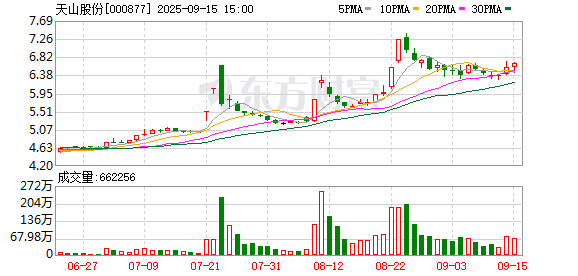
天山股份:关于超短期融资券获准注册的公告
Zheng Quan Ri Bao· 2025-09-15 14:07
Group 1 - The company, Tianshan Co., has received a registration notice from the National Association of Financial Market Institutional Investors, allowing it to register for a super short-term financing bond [2] - The registration number for the notice is SCP264, issued in 2025 [2] - This development indicates the company's ability to access short-term financing options in the interbank market [2] Group 2 - The announcement was made on the evening of September 15 [2] - The approval for the financing bond is a significant step for the company in managing its financial resources [2] - The move reflects the company's strategy to enhance liquidity and support its operational needs [2]