工业机器人

Search documents
埃斯顿预计2025年业绩扭亏为盈,二次递表冲刺港股“工业机器人第一股”
Jin Rong Jie· 2026-01-22 08:18
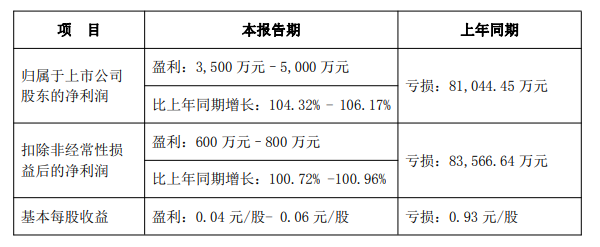
Core Viewpoint - Estun is expected to achieve a net profit of 35 million to 50 million yuan for the fiscal year 2025, marking a significant turnaround from a loss of over 810 million yuan in the previous year, representing a year-on-year growth of 104.32% to 106.17% [1][2] Financial Performance - The net profit attributable to shareholders is projected to be between 35 million and 50 million yuan, compared to a loss of 810.44 million yuan in the same period last year, indicating a growth of 104.32% to 106.17% [2] - The net profit after deducting non-recurring gains and losses is expected to be between 6 million and 8 million yuan, a significant improvement from a loss of 835.67 million yuan last year, reflecting a growth of 100.72% to 100.96% [2] - Basic earnings per share are anticipated to be between 0.04 yuan and 0.06 yuan, recovering from a loss of 0.93 yuan per share in the previous year [2] Business Growth Drivers - The turnaround in performance is attributed to robust revenue growth in core business areas, particularly in high-demand sectors such as automotive, electronics, and lithium batteries, which have driven domestic revenue growth [3] - A significant reduction in asset impairment provisions, which amounted to approximately 466 million yuan in the previous year, has also positively impacted net profit, with no major asset impairment expected for 2025 [3] Market Position and Strategy - Estun has become the leading domestic company in the industrial robot solutions market in China, surpassing foreign brands in terms of shipment volume in the first half of 2025 [4] - The company ranks sixth globally in the industrial robot market, with a market share of 1.7% worldwide and 2.0% in China, based on 2024 revenue [4] - Estun's multi-brand strategy, including brands like "Estun," "Cloos," "Trio," and "M.A.i," enhances its technological capabilities and product offerings, covering a wide range of 96 robot models [6] IPO and Future Plans - The upcoming Hong Kong IPO aims to raise funds for expanding global production capacity, forming strategic alliances, investing in R&D for next-generation industrial robot technologies, upgrading global service systems, repaying existing loans, and supplementing working capital [7]


索菲丝智能2026年技术创新发布会在沪举行
Jing Ji Wang· 2026-01-22 07:44
索菲丝正从技术提供商向"产业智能化赋能者"战略升级。杜玲在会上表示:"'表面无界'意味着打破 传统行业边界。我们愿意开放核心能力,与合作伙伴共同成长。" 1月21日,以"智赋新生,表面无界"为主题的索菲丝技术创新发布会在上海成功举办。会上,索菲 丝全国首发了基于"脑-眼-手"一体化架构的AI智能打磨技术及"匠心智脑"具身智能平台,并正式启动旨 在赋能产业链协同升级的"灯塔工厂"计划。此次发布标志着工业表面处理正式从"自动化"迈入"自适应 智能化"阶段,为制造业智能化升级提供了跨越式的AI技术支撑,描绘出以AI驱动、生态协同为核心的 未来工业新图景。 在《智赋新生:一场关于表面、人与未来的革命》主题演讲中,索菲丝创始人兼CEO杜玲指出, AI表面处理的本质是"将老师傅的手感转化为可量化、可迭代的数据模型",从而让机器人拥有"眼 睛"与"大脑"。这不仅大幅提升生产一致性与效率,更推动劳动力结构升级——将工人从重复劳累的作 业中解放,转向更高价值的岗位,实现真正的"智赋新生"。 传统机器人打磨依赖预设程序,缺乏实时感知与调整能力,难以应对工件差异与复杂工况。索菲丝 CTO尤分一在会上剖析了此类"盲人"机器人的根本局 ...
南京:开启“十五五” 科创“打头阵”
Xin Hua She· 2026-01-22 07:16
金陵之冬,创意满城。 紫金山科技城开启"6G迎新派对",机甲麒麟在繁华商圈"赛博"起舞,牛首山2026架无人机绘出马年元 素……辞旧迎新之际,南京举办128场跨年活动,刷新地铁单日运力纪录,带动元旦旅游消费增长显 著。 被科技点亮的夜空,不仅映照城市温度、治理精度,更展现烟火寻常、活力日常。"创新敢为才能破圈 出彩。"一位网民在"南京发布"留言。 立足产业强市之要,南京做好"转强增育"四篇文章,构筑新质生产力主导的产业高地。 ——"转"型攀峰,传统产业固本开新。入选国家首批领航级智能工厂的南京钢铁集团,上万个传感器如 同"智能神经元"遍布产线。一笔耐磨钢订单刚录入系统,"元冶·钢铁大模型"30秒内即算出最佳生产方 案。"从'经验炼钢'钢花飞溅到'智慧炼钢'数据奔流,铁水罐周转率提升5%,每吨铁水降本200元,仅此 一项每年就节省上亿元。"南钢副总裁朱平说。 面向"十五五",南京将实施传统产业攀峰计划,推动石化、钢铁等产业向价值链中高端迈进,力争 到"十五五"末,化工新材料占石化产业40%,优特钢占钢铁制造超80%。 ——登高做"强",新兴产业集群跃升。20世纪60年代,东南大学的查礼冠教授团队,仅凭两张机器人 ...
优势产业“强筋健骨”脱颖而出 供需两端发力打造新支柱产业为经济注入新动能
Yang Shi Wang· 2026-01-22 04:20
Group 1 - The core viewpoint is that the Ministry of Industry and Information Technology will implement actions to develop and strengthen emerging industries during the "14th Five-Year Plan" period [1] - A number of competitive industries such as new energy vehicles, photovoltaics, low-altitude equipment, and marine engineering equipment have accelerated their development [5] - The added value of industries like integrated circuits and electronic materials increased by 26.7% and 23.9% year-on-year, respectively, while industrial robot production rose by 28% and new energy vehicle sales reached 16.49 million units, up 28.2% year-on-year [9] Group 2 - The Ministry will implement actions to create national demonstration bases for emerging industry development and accelerate the cultivation of new pillar industries [13] - Future industry initiatives will include the implementation of strategic major technology projects and the establishment of future industry pilot zones, supported by increased government investment [17]
科技创新和产业创新深度融合 工业和信息化发展呈现新特点
Jin Rong Shi Bao· 2026-01-22 02:07
Group 1: Industrial Growth and Manufacturing - In 2025, the industrial added value of large-scale industries is expected to grow by 5.9% year-on-year, with the manufacturing sector maintaining a stable share of GDP, and the manufacturing scale likely to remain the largest globally for 16 consecutive years [1] - The added value of equipment manufacturing and high-tech manufacturing is projected to increase by 9.2% and 9.4% year-on-year, respectively, surpassing the growth rate of large-scale industries by 3.3 and 3.5 percentage points [1] - The added value of industries such as integrated circuits and electronic materials is expected to grow by 26.7% and 23.9% year-on-year, with industrial robot production increasing by 28% and new energy vehicle sales reaching 16.49 million units, a year-on-year increase of 28.2% [1] Group 2: Robotics and AI Development - The humanoid robot industry is anticipated to see significant innovation and iteration, with over 140 domestic companies and more than 330 humanoid robot products expected to be released by 2025, marking it as the year of mass production for humanoid robots [2] - The focus will be on continuous technological innovation and iteration in humanoid robots, enhancing safety standards, and building a supportive ecosystem for the industry [2] Group 3: Digital Industry Growth - By the end of 2025, the revenue from China's digital industry is projected to reach approximately 38.3 trillion yuan, with profits of 3.1 trillion yuan, representing cumulative growth of about 39.5% and 48.4% since 2020 [3] - Key provinces contributing to this growth include Guangdong, Jiangsu, Beijing, and others, which together account for over 90% of the national digital industry revenue growth [3] Group 4: Consumer Goods Industry Development - The added value of the consumer goods industry is expected to grow by 3.7% year-on-year in 2025, accounting for 26.1% of the total industrial output [4] - Various promotional activities will be organized to stimulate consumption, including the "Foodie Season" and "Elderly Care Shopping Season," alongside the release of numerous innovative products [4] Group 5: Support for SMEs - The added value of small and medium-sized enterprises (SMEs) in large-scale industries is projected to grow by 6.9% year-on-year in 2025, with a continuous expansion in the SME export index [5] - The government aims to enhance the development environment for SMEs, focusing on policy support, quality improvement, and fostering specialized and innovative enterprises [6][7]
5%和140万亿背后,经济增长的N个密码
2 1 Shi Ji Jing Ji Bao Dao· 2026-01-22 02:07
2025年我国经济总量突破140万亿元,经济发展实现新跨 越。这不仅是五年连跨四个10万亿级台阶的稳健轨迹,更是"十 四五"规划收官之年交出的硬核答卷。 回望"十四五"时期,我国发展成色更足、动能更劲,在多 个领域取得重大进展,创新发展取得新突破,全球百强科技创新 集群数量,我国已经连续3年位居世界第一;改革开放迈出新步 伐,全国统一大市场建设纵深推进,营商环境持续优化,制度型 开放"含金量"持续提升;绿色转型展现新面貌,我国构建起了 全球最大、发展最快的可再生能源体系,建成了全球最大最完整 的新能源产业链;民生改善取得新成效,全球规模最大的教育、 医疗和社会保障体系持续巩固。 新 省 10 >> 140万亿GDP背后的中国经济底气 2025年,中国国内生产总值首次跃上140万亿元新台阶,五 年间连续迈过110万亿、120万亿、130万亿、140万亿元四个关 键关口,以年均5.4%的增速在全球主要经济体中持续领跑,对世 界经济增长的贡献率预计达到30%左右,成为世界经济增长的主 要动力源。 5 F C 南方财经全媒体集团 21世纪经济报道 20 21财经 0 五年连破4个 10万亿级台阶 IT HIS 202 ...

2025年工作回顾 向上势头不断巩固 向新动能持续增强 向好质态加速提升
Nan Jing Ri Bao· 2026-01-22 01:36
1月21日上午,市十七届人大五次会议在南京人民大会堂开幕。代市长李忠军代表市人民政府向大会报 告工作。 报告回顾了2025年工作,总结了"十四五"发展成效,提出了"十五五"目标任务,部署了2026年重点工 作,并对2026年民生实事候选项目作了说明。 □ 南京日报/紫金山新闻记者 邹伟 祝东秀 整理 过去一年,全市上下坚持以习近平新时代中国特色社会主义思想为指导,全面贯彻党的二十大和二十届 历次全会精神,认真学习贯彻习近平总书记对江苏工作重要讲话精神,深入落实党中央国务院决策部署 和省委省政府工作要求,在市委的领导下,完整准确全面贯彻新发展理念,服务构建新发展格局,扎实 推进高质量发展,聚力打好"三大关键仗""三大攻坚仗",较好完成了市十七届人大三次会议确定的主要 目标任务。 一 顶压前行、砥砺奋进,"向上"的势头不断巩固 预计全年地区生产总值增长5.2%左右,增速比2024年提高0.7个百分点左右。 工业投资增速达12.1%、居全省第一,在固定资产投资中占比提高4.3个百分点。 二 蓄势发力、攻坚突破,"向新"的动能持续增强 软件和信息服务业成为首个万亿级产业,智能电网产业规模超五千亿元。 新增国家制造业单 ...
工业和信息化领域对经济增长贡献超四成 人工智能产业亮点纷呈
Ren Min Ri Bao· 2026-01-22 00:02
Core Insights - In 2025, China's industrial added value is expected to grow by 5.9% year-on-year, with the manufacturing sector maintaining a stable share of GDP, and the manufacturing scale likely to remain the largest globally for 16 consecutive years [1] Group 1: Industrial and Economic Growth - The industrial and information technology sectors are projected to contribute over 40% to economic growth [1] - The added value of integrated circuits and electronic materials increased by 26.7% and 23.9% respectively, while industrial robot production rose by 28% [3] - New energy vehicle sales reached 16.49 million units, marking a year-on-year growth of 28.2% [3] Group 2: Technological Advancements - The global AI technology is accelerating innovation and integration across various industries, with significant advancements in materials like perovskite and permanent magnet materials [2] - New products such as intelligent robots and biomanufacturing products are rapidly entering the market, supported by new scenarios like "5G+" and "industrial internet+" [2] Group 3: Smart and Green Transformation - The first batch of 15 leading factories has been showcased, achieving an average production efficiency increase of 29% and a reduction in product defect rates by 47% [4] - The average renewable energy utilization rate for national green computing facilities is expected to exceed 70% by 2025 [5] Group 4: Digital Economy Integration - By the end of 2025, China's digital industry revenue is projected to reach approximately 38.3 trillion yuan, with profits of 3.1 trillion yuan, reflecting growth rates of 39.5% and 48.4% respectively compared to 2020 [6] - The number of connected industrial devices has surpassed 100 million, with significant improvements in production capacity and quality due to the integration of digital technologies [7] Group 5: Consumer Goods Sector - The added value of the consumer goods industry is expected to grow by 3.7% year-on-year, accounting for 26.1% of total industrial output [8] - Initiatives to enhance supply and meet consumer demand have led to the release of numerous innovative products and the establishment of a quality safety traceability system for infant formula [8][9]
工业和信息化部:创建国家新兴产业发展示范基地 加快培育新兴支柱产业
Zheng Quan Ri Bao· 2026-01-21 16:26
Core Insights - The development of the industrial and information sector in China by 2025 is characterized by four key features: stability, progress, new momentum, and vitality [1] Group 1: Industrial Growth - The added value of industrial enterprises above designated size is expected to grow by 5.9% year-on-year in 2025, with the manufacturing sector maintaining a stable share of GDP [1] - The added value of equipment manufacturing and high-tech manufacturing is projected to increase by 9.2% and 9.4% year-on-year, respectively, outpacing the overall industrial growth by 3.3 and 3.5 percentage points [1] - The production of industrial robots is anticipated to rise by 28% year-on-year, while new energy vehicle sales are expected to reach 16.49 million units, reflecting a year-on-year growth of 28.2% [1] Group 2: Emerging Industries - The added value of industries such as integrated circuits and electronic special materials is forecasted to grow by 26.7% and 23.9% year-on-year, respectively [1] - The government plans to implement actions to develop and strengthen emerging industries, including the establishment of national demonstration bases for emerging industry development [1] Group 3: Support for SMEs - The government aims to optimize the business environment for small and medium-sized enterprises (SMEs) by implementing a development plan for SMEs during the 14th Five-Year Plan period [2] - A three-year action plan will be initiated to cultivate more specialized and innovative SMEs, along with the establishment of specialized empowerment centers [2] - The government will enhance public services for SMEs, focusing on market expansion, digital empowerment, financing, talent development, management improvement, and international cooperation [2]
拓斯达冲刺“A+H”上市:营收承压之下,海外市场已成新增长极
2 1 Shi Ji Jing Ji Bao Dao· 2026-01-21 14:53
Core Viewpoint - Guangdong Tuosida Technology Co., Ltd. is officially pursuing a dual listing on both A-share and H-share markets to enhance its global development strategy and brand influence while expanding financing channels [1][5]. Company Overview - Tuosida is recognized as a leader in the full-stack industrial robot sector in mainland China and a pioneer in embodied intelligence [1]. - The company has transformed from a supporting player in the supply chain to a "chain master," providing comprehensive solutions from single machines to entire factory setups [2]. Financial Performance - The company's revenue for 2023, 2024, and the first three quarters of 2025 is reported as RMB 45.53 billion, RMB 28.72 billion, and RMB 16.88 billion respectively [2][8]. - Net profit figures show significant volatility: RMB 1.06 billion in 2023, a loss of RMB 2.39 billion in 2024, and a profit of RMB 0.47 billion in 2025 [8]. - The revenue from the smart energy and environmental management system, previously a major revenue source, dropped over 50% in 2024, contributing to the net loss [8][9]. Strategic Initiatives - Tuosida is accelerating its entry into the humanoid robot market, with plans to launch a working humanoid robot equipped with AI capabilities by September 2025 [3]. - The company aims to establish local sales and marketing teams in international markets, enhancing its overseas sales network [5][7]. Market Position - As of 2025, Tuosida has established 27 offices in mainland China and expanded its overseas sales network to over 50 countries, serving nearly 1,000 international clients [7]. - Despite its growth, Tuosida's market share in the domestic industrial robot sector remains relatively low, ranking fifth with a market share of 0.9% in 2024 [9]. Challenges - The company faces challenges during its transformation phase, including revenue pressure and fluctuations in net profit due to strategic adjustments [8][9]. - Supply chain risks are significant, with raw material and component costs accounting for over 92% of total sales costs [10]. - Governance issues have arisen, including regulatory warnings related to revenue recognition and cost accounting practices [10][11].