
租赁和商务服务业

Search documents
GDP同比增长5.5% 上海2025年前三季度经济数据出炉
Zhong Guo Xin Wen Wang· 2025-10-22 03:50
Economic Growth - Shanghai's GDP for the first three quarters of 2025 reached 40,721.17 billion yuan, with a year-on-year growth of 5.5%, surpassing the national average by 0.3 percentage points [1][2] - The primary industry added value was 64.26 billion yuan, growing by 0.9%; the secondary industry added value was 8,448.67 billion yuan, growing by 3.9%; and the tertiary industry added value was 32,208.24 billion yuan, growing by 5.9% [1] Industrial Performance - The industrial added value in Shanghai increased by 5.2% year-on-year, with the total output value of above-scale industries growing by 5.7%, an increase of 0.1 percentage points compared to the first half of the year [1] - The three leading industries in manufacturing saw an output value growth of 8.5%, outpacing the overall growth of above-scale industrial output value by 2.8 percentage points [1] Tertiary Sector Insights - The tertiary sector's added value grew by 5.9% year-on-year, with significant contributions from the information transmission, software, and IT services sector, which saw a 15.5% increase in added value [1] - The financial sector's added value reached 6,965.27 billion yuan, growing by 9.8%, while transportation, storage, and postal services increased by 5.2% [1] Investment and Consumption - Fixed asset investment in Shanghai increased by 6.0% year-on-year, while the total retail sales of social consumer goods reached 12,302.77 billion yuan, growing by 4.3%, with an acceleration of 2.6 percentage points compared to the first half of the year [2] - The average urban survey unemployment rate in Shanghai was 4.2% [2] Financial Market and Budget - The transaction volume in major financial markets in Shanghai grew by 12.7% year-on-year [2] - Local general public budget revenue was 6,555.68 billion yuan, a 1.0% increase, while expenditures rose by 8.0% to 6,876.39 billion yuan [2]
前三季度四川经济平稳运行
Si Chuan Ri Bao· 2025-10-22 00:22
Economic Overview - Sichuan's GDP for the first three quarters of 2025 reached 49,322.2 billion yuan, with a year-on-year growth of 5.5% [1] - The primary industry grew by 3.5%, the secondary industry by 5.2%, and the tertiary industry by 6.0% [1] Agricultural Production - Vegetable and edible fungus output increased by 4.4%, fruit output by 6.1%, and tea output by 5.2% [1] - The number of pigs slaughtered reached 45.671 million, a year-on-year increase of 1.2%, while aquatic product output was 1.396 million tons, up by 5.2% [1] Industrial Production - The added value of large-scale industries grew by 7.1%, with state-owned enterprises increasing by 8.2% and foreign-invested enterprises by 16.7% [2] - Notable growth in specific sectors included automotive manufacturing at 18.3% and electrical machinery at 14.9% [2] - High-tech manufacturing saw an 11.6% increase, with aerospace manufacturing up by 21.6% [2] Investment Trends - Fixed asset investment (excluding rural households) grew by 0.4%, with the primary industry seeing a 13.1% increase, while the tertiary industry declined by 3.0% [2] Real Estate Development - Real estate development investment decreased by 6.6%, with new housing construction area down by 12.2% [3] Consumer Market - The total retail sales of consumer goods reached 21,170.5 billion yuan, growing by 5.8% year-on-year [4] - Online retail sales from key enterprises increased by 26.3% [4] Economic Sentiment - The economic sentiment index stood at 103.9, indicating a stable economic environment [4] - The production index was at 103.4 and the sales index at 104.5, reflecting positive trends in production and sales [4]
前三季度四川经济运行平稳,体现“稳”“新”“好”三个特点
Sou Hu Cai Jing· 2025-10-21 10:57
Core Viewpoint - Sichuan's economy has shown stable growth in the first three quarters of 2023, with a GDP of 49,322.2 billion yuan, reflecting a year-on-year increase of 5.5% [3] Economic Performance - The economic foundation is solid, with stable production and supply, expanding market demand, and improving livelihood guarantees [3] - Agricultural output increased by 3.5%, while social retail sales grew by 5.8% [3] - Industrial output maintained a growth rate of over 7%, with high-tech manufacturing value added increasing by 11.6% [6][8] Investment and Consumption - Investment in the primary and secondary industries grew by 13.1% and 6.9% respectively [4] - Retail sales of essential goods increased, with food retail up by 12.4% and luxury goods like jewelry and cosmetics rising by 24.5% and 9.1% respectively [4] Employment and Income - Urban employment remained stable, with over 800,000 new jobs created and an average urban unemployment rate of 5.3% [4] - Per capita disposable income for urban and rural residents grew by 4.5% and 5.5%, respectively, indicating a narrowing income gap [4] New Growth Drivers - New production capabilities are being cultivated, with significant growth in high-tech manufacturing and green industries [6] - The internet sector saw a revenue increase of 20.5% from January to August [6] Policy and Market Dynamics - The effectiveness of policies aimed at stimulating demand and production is becoming evident, with significant growth in equipment investment and consumer goods sales [8] - The business environment is improving, with industrial profits rising by 5.8% year-on-year, surpassing the national average [8] Infrastructure and Financial Support - Infrastructure development is being accelerated, enhancing resource allocation and economic operation [9] - Financial services are robust, with a double-digit growth in loans supporting the real economy [9]


《2025年前三季度宏观政策“三策合一”研究报告》发布
Zhong Guo Jing Ji Wang· 2025-10-21 07:36
Core Viewpoint - The report highlights the resilience and positive development of China's industrial economy in the first three quarters of 2025, emphasizing the need for coordinated macroeconomic policies to support growth and innovation [1][2][4]. Economic Performance - In the first three quarters of 2025, the industrial added value grew by 6.2%, surpassing the growth rates of 2023 and 2024 by 1.6 and 0.4 percentage points respectively [2]. - The equipment manufacturing and high-tech manufacturing sectors saw added value growth of 9.7% and 9.6%, respectively, exceeding the overall industrial growth by 3.5 and 3.4 percentage points [2]. - The service sector also experienced rapid growth, with a 5.4% increase in added value, 0.4 percentage points higher than in 2024 [2]. - Notably, the information transmission, software, and IT services sector achieved an impressive growth rate of 11.2% [2]. R&D and Innovation - China's R&D investment intensity rose from 1.91% in 2012 to 2.68% in 2024, indicating a strong commitment to innovation [3]. - The proportion of basic research funding within total R&D expenditures increased from below 5% (2012-2014) to 6.91% in 2024, highlighting a focus on foundational research [3]. - China's global innovation index ranking improved from 34th in 2012 to 11th in 2024, marking a significant advancement in overall innovation capabilities [3]. Policy Recommendations - The report suggests enhancing the proportion of basic R&D investment and improving the coordination of stability, structural, and growth policies to address potential impacts on employment and economic structure [3]. - It emphasizes the need for a comprehensive macroeconomic policy package in the fourth quarter, focusing on optimizing investment, industrial, and income distribution structures to balance supply and demand [4].
生产强于需求,转型与温差共存
SINOLINK SECURITIES· 2025-10-21 05:58
Economic Growth - The cumulative growth rate for the first three quarters is 5.2%, establishing a solid foundation for achieving the annual target of 5%[3] - The minimum GDP growth requirement for the fourth quarter is set at 4.6% to meet the annual goal[3] Policy Measures - Continuous and stable policies will be maintained, with potential for monetary policy adjustments such as interest rate cuts if pressures increase[3] - Fiscal policy may involve increasing the scale of policy financial tools and utilizing government bond balances to support growth[3] GDP Performance - In Q3, GDP at constant prices grew by 4.8% year-on-year, down from 5.2%, while nominal GDP growth was 3.7%, also lower than the previous 3.9%[5] - Q3 fixed asset investment (FAI) saw a significant decline of 6.6%, while retail sales growth dropped to 3.4%[5] Economic Disparities - The gap between constant price GDP growth and nominal GDP growth indicates a disparity in economic performance, with nominal GDP growth at its lowest for 2023[8] - The GDP deflator index has shown negative growth for ten consecutive quarters, reflecting ongoing price pressures in the economy[8] Sectoral Insights - Industrial value added increased by 5.8% year-on-year in Q3, with high-tech manufacturing growing by approximately 9.6%[12] - Service sector value added rose by 5.4%, with information technology services leading at 11.2% growth[12] Investment Dynamics - Despite a decline in fixed asset investment, capital formation contributed positively to GDP growth, adding 0.9 percentage points[19] - The performance of intangible asset investments, particularly in software, has been relatively strong, benefiting from advancements in artificial intelligence[19] Future Outlook - Economic growth may slow in Q4 due to high base effects, particularly in consumer goods, with automotive retail showing negative growth[21] - Policy efforts will focus on boosting service consumption and fixed asset investment, with an estimated 2.2 percentage point support from new fiscal measures[21] Risk Factors - Risks include US-China trade tensions, tariff increases, and global supply chain adjustments, which may impact exports and corporate profits[4] - Ongoing geopolitical changes and international market fluctuations could affect commodity prices and related industries[4]
经济运行保持平稳
Jing Ji Ri Bao· 2025-10-21 04:20
Core Viewpoint - The national economy of China has shown overall stability in the first three quarters, with a solid advancement in high-quality development under the strong leadership of the central government [1] Economic Performance - In the first three quarters, China's GDP reached 10,150.36 billion yuan, with a year-on-year growth of 5.2% [2] - The primary industry added value was 580.61 billion yuan, growing by 3.8%, contributing 4.7% to economic growth [2] - The secondary industry added value was 3,640.20 billion yuan, with a growth of 4.9%, contributing 34.6% to economic growth [2] - The tertiary industry added value was 5,929.55 billion yuan, growing by 5.4%, contributing 60.7% to economic growth [2] - In the third quarter, GDP was 354.50 billion yuan, with a year-on-year growth of 4.8% [3] Production and Supply - All sectors showed stable growth, with agriculture increasing by 4.0%, contributing 0.3 percentage points to economic growth [3] - Industrial production grew by 6.1%, contributing 1.8 percentage points to economic growth [3] - The service sector showed steady improvement, with significant contributions from information transmission, software, and IT services, which grew by 11.2% [3] Domestic Demand and Trade - Final consumption expenditure contributed 53.5% to economic growth, adding 2.8 percentage points to GDP [4] - Capital formation contributed 17.5% to economic growth, adding 0.9 percentage points to GDP [5] - Net exports contributed 29.0% to economic growth, adding 1.5 percentage points to GDP [5] Market Dynamics and New Growth Drivers - The digital economy has shown significant support, with revenue from the information transmission, software, and IT services sector growing by 12.1% from January to August [6] - The manufacturing sector is undergoing rapid transformation, with equipment manufacturing and high-tech manufacturing growing by 9.7% and 9.6% respectively [6] - Investment in high-tech services grew by 6.1%, surpassing the overall fixed asset investment growth rate [6]
服务业实现较快增长
Jing Ji Ri Bao· 2025-10-21 03:20
Group 1 - The service industry has shown significant growth, contributing 60.7% to the national economic growth, with a value added of 592,955 billion yuan, representing a year-on-year increase of 5.4% [2] - The proportion of service industry value added in GDP reached 58.4%, an increase of 0.8 percentage points compared to the same period last year [2] - The modern service industry is thriving, with information transmission, software, and IT services growing by 11.2%, and leasing and business services increasing by 9.2% year-on-year [3] Group 2 - The new momentum in the service industry is evident, with strategic emerging service industries and high-tech service industries seeing revenue growth of 10.6% and 9.4% respectively from January to August [3] - Digital technology application industries have also experienced a revenue increase of 11.7% during the same period [3] - Service consumption has improved, with service retail sales growing by 5.2%, outpacing the growth of goods retail sales by 0.6 percentage points [3] Group 3 - The service industry maintains an expansionary trend, with a business activity index of 50.1% in September, indicating growth [4] - Certain sectors, such as postal, telecommunications, and financial services, have business activity indices above 60.0%, reflecting robust growth [4] - The business activity expectation index for the service industry stands at 56.3%, indicating stable and optimistic expectations for industry development [4]
消费市场稳健有力、向上向好 服务业“压舱石”作用显效
Yang Shi Wang· 2025-10-21 03:19
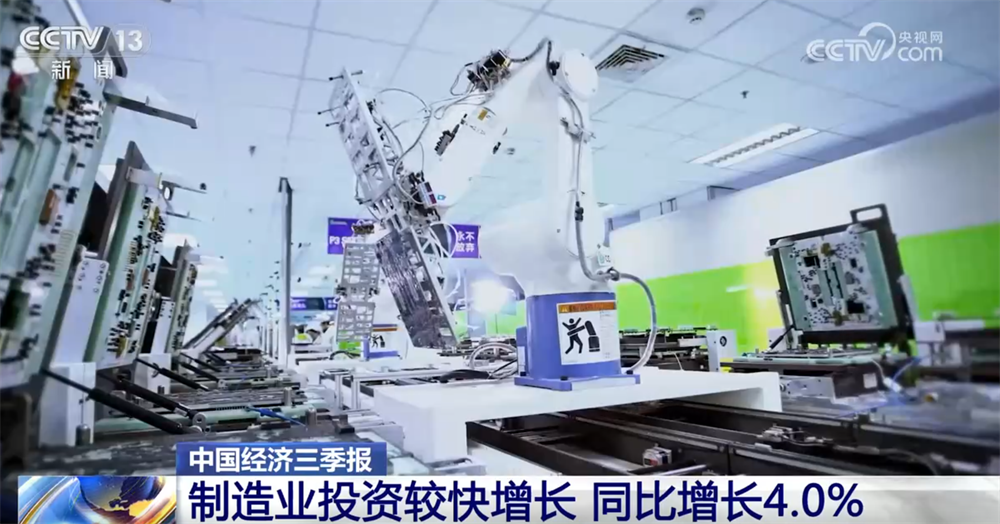
Economic Growth - China's GDP grew by 5.2% year-on-year in the first three quarters of this year, indicating a stable economic performance [1] - The industrial production saw a significant increase, with the industrial added value for large-scale enterprises rising by 6.2% year-on-year [1] Consumer Market - The total retail sales of consumer goods reached 365,877 billion yuan, with a year-on-year growth of 4.5%, accelerating by 1.2 percentage points compared to the same period last year [2] - Urban and rural markets expanded, with urban retail sales growing by 4.4% and rural retail sales by 4.6%, the latter outpacing urban growth by 0.2 percentage points [2] - Online retail sales increased by 9.8% year-on-year, reflecting a positive trend in e-commerce [2] Investment Trends - Manufacturing investment grew by 4.0% year-on-year, contributing to the overall economic stability [1] Service Sector Performance - The service sector experienced a year-on-year growth of 5.4%, contributing 60.7% to the national economic growth [3] - Modern service industries, such as information transmission and software services, saw substantial growth, with increases of 11.2% and 9.2% respectively [3] Consumption Upgrades - Service retail sales grew by 5.2% year-on-year, outpacing goods retail sales by 0.6 percentage points, indicating a shift towards higher quality service consumption [3] - The integration of services, such as "service+" models, is driving growth in various sectors including dining, accommodation, and travel [4]
中国经济三季报|消费市场稳健有力、向上向好 服务业“压舱石”作用显效
Yang Shi Wang· 2025-10-21 02:08
Economic Growth - China's GDP grew by 5.2% year-on-year in the first three quarters of this year, with industrial production increasing by 6.2% [1][3] - Manufacturing investment saw a rapid growth of 4.0% year-on-year [1] Consumer Market - The total retail sales of consumer goods reached 365,877 billion yuan, with a year-on-year growth of 4.5%, accelerating by 1.2 percentage points compared to the same period last year [4] - Urban and rural markets are expanding, with urban retail sales growing by 4.4% and rural retail sales by 4.6%, the latter outpacing urban growth by 0.2 percentage points [4] Income and Consumption - Rural residents' per capita disposable income increased by 6%, surpassing urban growth of 1.5% and the national average [7] - Online retail sales grew by 9.8% year-on-year, with green consumption and high-efficiency appliances also seeing significant growth [7] Service Sector - The service sector achieved a year-on-year growth of 5.4%, contributing 60.7% to the national economic growth [10] - Key areas such as information transmission, software, and IT services saw increases of 11.2% and 9.2% respectively [10] Innovation and New Consumption Models - The integration of "AI + consumption" is accelerating, with new technologies enhancing consumer experiences and meeting demands for quality and diversity [9][13] - The "service +" model is expanding, linking various service sectors like dining, accommodation, and travel, driving service consumption growth [16]
2025年三季度国内生产总值初步核算结果
Guo Jia Tong Ji Ju· 2025-10-21 01:30
Core Points - The preliminary GDP results for the third quarter of 2025 indicate a GDP of 354,500 billion with a year-on-year growth of 4.8% and a growth of 5.2% for the first three quarters [8][5][4] - The primary industry grew by 4.0%, the secondary industry by 4.2%, and the tertiary industry by 5.4% in the third quarter [8][5] - The manufacturing sector showed a robust growth of 6.3%, while the construction industry faced a decline of 2.3% [8][5] GDP Growth Rates - Year-on-year growth rates for GDP from 2020 to 2025 show fluctuations, with 2025 projected to have a growth of 5.4% in Q1, 5.2% in Q2, and 4.8% in Q3 [5][4] - The quarterly growth rates indicate a consistent recovery post-pandemic, with 2023 showing a growth of 4.7% in Q1 and 6.5% in Q2 [5][4] Industry Performance - The agricultural sector (including forestry, animal husbandry, and fishery) reported a growth of 4.1% in Q3 2025 [8] - The industrial sector, particularly manufacturing, continues to be a strong contributor to GDP, with a growth rate of 6.3% [8] - The financial sector also showed positive growth at 5.2%, while the real estate sector faced challenges with a slight decline of 0.2% [8] Data Sources and Methodology - The GDP data is calculated using the production method, which reflects the value added by various industries [12][11] - The classification of industries follows the national standards set by the National Bureau of Statistics, ensuring consistency in reporting [22][23] - The GDP figures are subject to revisions as more comprehensive data becomes available, ensuring accuracy in reflecting economic conditions [33][34]