进出口贸易

Search documents
湖南对非贸易规模连续7年居中国中西部第一
Zhong Guo Xin Wen Wang· 2026-01-21 07:42
Group 1 - Hunan's trade with African countries is projected to reach 58 billion RMB by 2025, marking a historical high and maintaining the top position in Central and Western China for seven consecutive years [1] - Exports of electromechanical products to Africa are expected to be 16.22 billion RMB in 2025, accounting for 59.9% of Hunan's total exports to Africa, with significant growth in engineering machinery, steel, and "new three types" products [1] - Imports of African specialty products, including dried chili, nuts, coffee, and sesame, are also increasing, with notable year-on-year growth rates [1] Group 2 - Starting December 1, 2024, China will grant zero-tariff treatment on 100% of products from the least developed countries that have diplomatic relations with China, benefiting 33 African nations [2] - By the end of 2025, Hunan's foreign trade enterprises are expected to enjoy a tax reduction of 29.4866 million RMB from imports from African countries, covering goods like mica sheets, sesame, and coffee beans [2] - Hunan is exploring new trade models with Africa, including the implementation of a food access pre-assessment system for African products, which has been approved by the General Administration of Customs of China [2]
2025年江西外贸平稳增长 对东盟进出口大增
Sou Hu Cai Jing· 2026-01-21 07:32
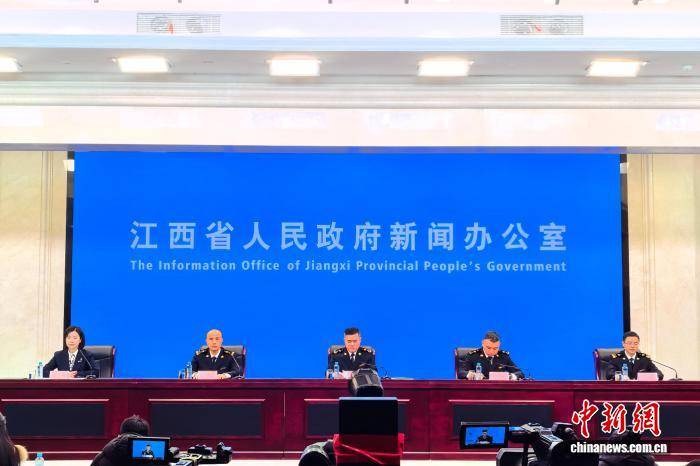
Core Viewpoint - Jiangxi's foreign trade is experiencing steady growth in 2025, with significant increases in exports and imports, particularly with ASEAN countries [3][4]. Group 1: Trade Performance - In 2025, Jiangxi's total foreign trade import and export value reached 482.3 billion yuan, a year-on-year increase of 2.7% [3]. - Exports amounted to 309.78 billion yuan, growing by 1.8%, while imports were 172.52 billion yuan, increasing by 4.3% [3]. - From June 2025, Jiangxi's foreign trade began to rebound, with monthly imports and exports consistently exceeding 40 billion yuan for seven consecutive months [3]. Group 2: Regional Trade Growth - Jiangxi's trade with countries involved in the Belt and Road Initiative reached 265.82 billion yuan, marking a 13.9% increase [3]. - Trade with ASEAN countries surged by 34.9%, while trade with Latin America and Africa grew by 10.9% and 11.1%, respectively [3]. - Intermediate goods trade saw a total of 348.06 billion yuan, with a growth rate of 4.8%, and significant increases in trade with ASEAN and Africa at 31.8% and 12.6% [3][4]. Group 3: Export Drivers - The "New Three Products" (electric vehicles, photovoltaic products, and lithium batteries) became key drivers of Jiangxi's exports, totaling 27.44 billion yuan, an increase of 89.1% compared to 2020 [4]. - The number of foreign trade enterprises in Jiangxi reached 7,412, an increase of 11.2%, with production enterprises growing by 7.6% [4]. - The total value of imports and exports for production enterprises was 389.91 billion yuan, reflecting a growth of 5.2% [4]. Group 4: Long-term Growth Trends - During the 14th Five-Year Plan period, Jiangxi's trade with Belt and Road countries saw an average annual growth of 6.9%, with emerging markets like ASEAN, Latin America, and Africa growing at 11.8%, 13.7%, and 6% respectively [5].

去年青岛市进出口9128.9亿,共建“一带一路”国家占六成
Qi Lu Wan Bao· 2026-01-21 07:29
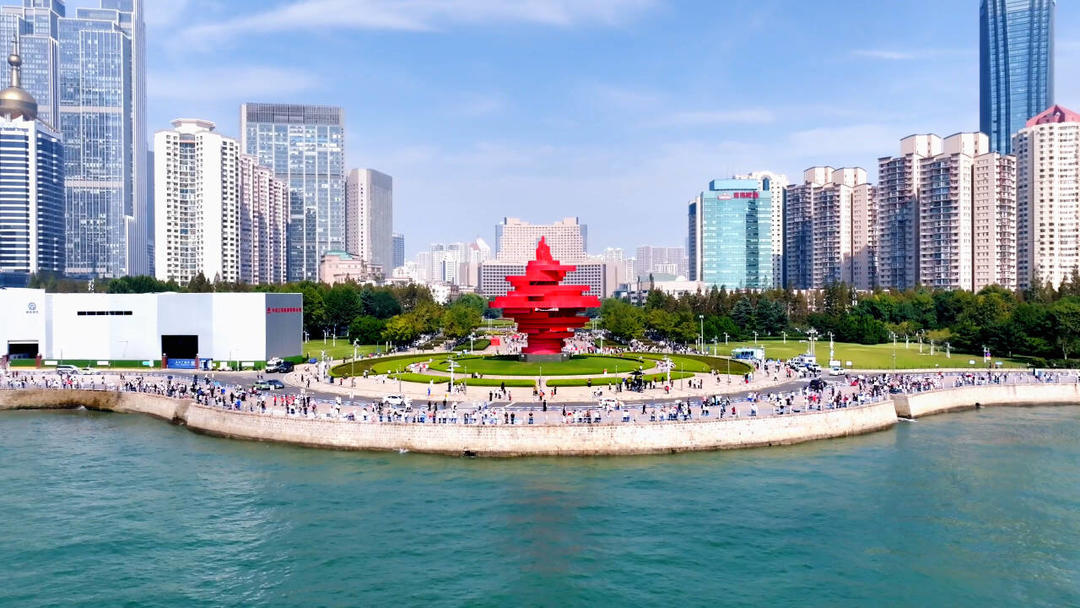
Core Insights - In 2025, Qingdao's total import and export value reached 912.89 billion yuan, marking a year-on-year growth of 0.6%, accounting for 25.9% of Shandong Province's total import and export value [2][3] Group 1: Trade Performance - Exports amounted to 541.87 billion yuan, increasing by 2.7%, while imports were 371.02 billion yuan, showing a decline of 2.3% [3] - General trade accounted for over 60% of the total, with a value of 582.81 billion yuan, down 1.5%, representing 63.8% of the total import and export value [3] - The value of bonded logistics trade was 164.81 billion yuan, growing by 6.7%, and processing trade reached 146 billion yuan, up by 2.8% [3] Group 2: Enterprise Growth - The number of foreign trade enterprises with import and export performance reached 28,800, an increase of 7.5%, with private enterprises numbering 26,200, up by 8.6% [3] - The import and export value of private enterprises was 660.78 billion yuan, growing by 5%, and their share of the total import and export value rose by 3.1 percentage points to 72.4% [3] Group 3: Sector-Specific Performance - Mechanical and electrical products exports totaled 282.62 billion yuan, increasing by 5.7%, constituting 52.2% of total exports [4] - Agricultural product exports reached 49.3 billion yuan, growing by 2.4% [4] - The import value of crude oil was 20.1 million tons, up by 19.2%, valued at 71.17 billion yuan, a 0.9% increase [4] Group 4: Market Diversification - Emerging markets showed significant growth, with exports to South America, Africa, and the Middle East increasing by 6.3%, 21.6%, and 7.7% respectively [3] - Trade with countries involved in the Belt and Road Initiative reached 546 billion yuan, growing by 6.2%, accounting for 59.8% of the total import and export value [3]
进出口规模再创新高!2025年山东省进出口总值3.53万亿元,同比增长4.5%
Zhong Guo Fa Zhan Wang· 2026-01-21 01:25
Core Insights - Shandong Province's foreign trade is projected to reach a total import and export value of 3.53 trillion RMB in 2025, marking a year-on-year growth of 4.5% and accounting for 7.8% of the national total [1] - The province's exports are expected to be 2.16 trillion RMB, growing by 4%, while imports are anticipated to reach 1.37 trillion RMB, with a growth rate of 5.1% [1] Group 1: Trade Performance - Shandong's import and export value has surpassed 3.5 trillion RMB for the first time, achieving a historical high and ranking fifth nationally, with a growth rate of 4.5%, the highest in three years [1] - Monthly trade performance has been stable, with 10 months showing year-on-year growth, and December's trade value reaching 340.78 billion RMB, a 3.1% increase year-on-year and a 13.6% increase month-on-month [1] Group 2: City-Level Growth - Five cities in Shandong achieved double-digit growth in foreign trade in 2025, with Jinan, Zaozhuang, Liaocheng, Yantai, and Tai'an showing growth rates of 24.7%, 18.8%, 15.5%, 13.7%, and 10.8% respectively [2] - Qingdao, Yantai, Weifang, and Jinan, the top four foreign trade cities, all maintained growth, with Qingdao's trade value at 912.89 billion RMB, a 0.6% increase, representing 25.9% of the province's total [2] Group 3: Trade Structure - General trade in Shandong reached 2.29 trillion RMB, growing by 4.4% and accounting for 64.8% of total trade; bonded logistics trade grew by 5.6% to 599.32 billion RMB; processing trade increased by 5.3% to 546.16 billion RMB [2] - Cross-border e-commerce B2B direct exports reached 113.34 billion RMB, growing by 7.6%, while overseas warehouse exports surged by 10.1 times to 5.59 billion RMB [2] Group 4: Export and Import Dynamics - Machinery and electrical products exports are projected to be 1.06 trillion RMB, growing by 8.7% and accounting for 48.9% of total exports, with notable growth in automotive, electronic components, and gaming consoles [4] - Agricultural exports are expected to reach 166.83 billion RMB, growing by 1.2%, maintaining Shandong's position as the top agricultural exporter in China [4] - Import trends show a continuous increase over four quarters, with crude oil imports up by 21.4% and metal ore imports up by 15.3%, together accounting for 49.1% of total imports [4] Group 5: Business Environment and Future Outlook - The number of foreign trade enterprises in Shandong reached 80,500, a 9.7% increase, with private enterprises accounting for 74,800 and showing a 10.6% growth in trade value [3] - The province's trade with countries involved in the Belt and Road Initiative accounted for over 60% of total trade, with significant growth in exports to Africa, the Middle East, and Central Asia [3] - Shandong's foreign trade development is seen as a significant achievement, with local customs authorities committed to enhancing regulatory efficiency and optimizing the business environment [5]
增长4.5%!2025年山东进出口总值3.53万亿元
Da Zhong Ri Bao· 2026-01-21 01:01
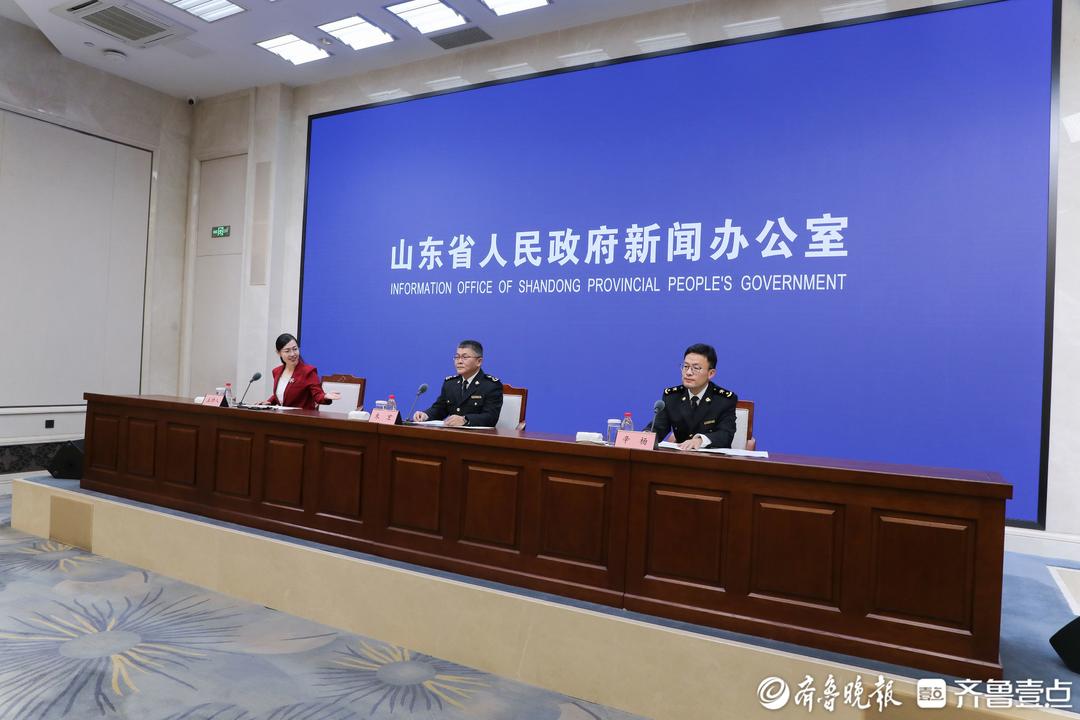
Core Insights - In 2025, Shandong's total foreign trade import and export value reached 3.53 trillion yuan, marking a year-on-year growth of 4.5%, and accounting for 7.8% of the national total, contributing 9.1% to the national foreign trade growth [2][3] Trade Performance - Exports amounted to 2.16 trillion yuan, increasing by 4%, while imports reached 1.37 trillion yuan, growing by 5.1% [2] - Monthly trade values remained stable, with 10 months showing year-on-year growth; December's trade value hit a record high of 340.78 billion yuan, up 3.1% year-on-year and 13.6% month-on-month [2] Trade Composition - General trade accounted for 2.29 trillion yuan, growing by 4.4% and representing 64.8% of total trade; bonded logistics trade reached 599.32 billion yuan, up 5.6%; processing trade was 546.16 billion yuan, increasing by 5.3% [2] - Cross-border e-commerce saw significant growth, with B2B direct exports reaching 113.34 billion yuan, up 7.6%, and overseas warehouse exports skyrocketing to 5.59 billion yuan, a tenfold increase [2] Market Participants - Shandong had 80,500 enterprises engaged in import and export activities, a 9.7% increase from the previous year; private enterprises accounted for 74,800 of these, contributing 76.3% of the total import and export value [3] - Private enterprises' import and export value reached 2.69 trillion yuan, growing by 6.3%, while state-owned enterprises reported 302.22 billion yuan, a 2.1% increase [3] Export Dynamics - In 2025, private enterprises contributed 92.9% of market participants, 76.3% of the total import and export value, and 105.9% of the foreign trade increment [3] - Major export products included electromechanical products, which reached 1.06 trillion yuan, growing by 8.7% and accounting for 48.9% of total exports; this marked the first time exports surpassed the trillion yuan mark [3][4] - Key export items such as automobiles, electronic components, and gaming consoles saw growth rates of 22.4%, 23.2%, and 25.7% respectively [3] Trade Markets - Shandong's trade with the EU, Russia, and Brazil grew by 5.1%, 4.4%, and 7.1% respectively; trade with Belt and Road countries reached 2.26 trillion yuan, up 7.6%, making up 64.1% of total trade [3] - Notable growth in trade with Africa, the Middle East, and Central Asian countries was recorded at 38.6%, 18.5%, and 55.2% respectively [3] Manufacturing Strength - Shandong has established itself as a global manufacturing hub, with 105 categories of electromechanical products leading the nation in export value; specific products like diesel trucks and concrete mixers account for over 10% of global exports in their categories [4]
韩国1月前20天出口同比增长14.9%
Xin Lang Cai Jing· 2026-01-21 00:19
Group 1 - South Korea's exports in the first 20 days of this month increased by 14.9% year-on-year, reaching $36.36 billion, compared to $31.63 billion in the same period last year [1][4] - During the same period, imports rose by 4.2% year-on-year to $36.98 billion, resulting in a trade deficit of $600 million [2][5] - In December of last year, driven by strong semiconductor demand, South Korea's exports grew by 13.4% year-on-year, totaling $69.6 billion, marking the 11th consecutive month of year-on-year growth [2][5] Group 2 - South Korea's total export value is projected to reach a record $709.7 billion by 2025 [3][6]
美元资产遭遇抛售潮 欧盟多国考虑限制美企进入市场
Ge Long Hui A P P· 2026-01-20 16:06
格隆汇1月20日|据央视财经,受欧美经贸关系紧张等因素影响,国际贵金属价格20日继续走高,黄金 和白银价格在盘中纷纷再创历史新高。分析师认为美国近期威胁对欧洲多国加征关税,再次带来了极大 的不确定性,引发投资者抛售美元资产、涌向避险资产。美国日前宣布向反对美国得到格陵兰岛的欧洲 国家加征关税。作为反制措施,欧盟多国正考虑对价值930亿欧元的美国输欧商品加征关税,或者限制 美国企业进入欧盟市场。此外,据彭博社消息,欧洲方面还在考虑抛售美债等。 ...
2026人民币升值趋势确立!对美元汇率破6.96,老百姓沾光迎红利
Sou Hu Cai Jing· 2026-01-20 14:11
Core Viewpoint - The recent appreciation of the Renminbi (RMB) against the US dollar reflects a strong trend supported by China's economic fundamentals, marking a significant milestone in the currency's performance [1][4][43]. Economic Performance - In 2025, China's GDP grew by 5%, surpassing 140 trillion yuan, indicating robust economic performance that underpins the RMB's strength [6]. - The RMB's appreciation is attributed to improved Sino-US trade relations and a weakening US dollar, which has provided more room for the RMB to strengthen [8][6]. Market Dynamics - The onshore and offshore RMB appreciated by 0.4% and 0.3% respectively since the beginning of the year, showcasing a trend of strengthening [3]. - The RMB's rise is not merely a short-term fluctuation but a reflection of deeper economic transformations, including a shift towards high-quality development and enhanced technological content in exports [14][31]. Consumer Impact - The appreciation of the RMB has made overseas consumption, education, and imported goods more affordable for consumers, leading to tangible benefits for families planning to travel or study abroad [16][18]. - The cost of imported goods, including cosmetics and high-end food products, is expected to decrease, benefiting consumers through lower prices and more frequent promotions [20]. Financial Innovations - The digital RMB has been upgraded to version 2.0, introducing features like interest-bearing wallets, enhancing financial convenience for users [22]. - The digital RMB also incorporates carbon credit functionalities, linking green living with financial incentives, thus broadening its utility beyond mere transactions [24]. Investment Implications - The RMB's appreciation suggests that investors may need to adjust their asset allocations, potentially reducing USD-denominated assets and increasing RMB-denominated investments [37]. - The ongoing development of the digital RMB is expected to play a significant role in personal asset management, making it a vital option for consumers [39]. Long-term Outlook - The RMB's strengthening is indicative of China's economic transformation and long-term growth potential, with expectations of continued benefits for the populace as the economy evolves [29][45]. - The RMB's rise is anticipated to enhance China's attractiveness for foreign goods and services, further stimulating import trade [35].

山东进出口总值首次突破3.5万亿元
Xin Hua Cai Jing· 2026-01-20 09:38
Core Insights - The total import and export value of Shandong Province is projected to reach 3.53 trillion yuan by 2025, representing a year-on-year growth of 4.5% and accounting for 7.8% of the national total [1] - Exports are expected to be 2.16 trillion yuan, growing by 4%, while imports are anticipated to reach 1.37 trillion yuan, increasing by 5.1% [1] Trade Performance - The number of foreign trade enterprises in Shandong has reached 80,500, with 74,800 being private enterprises [1] - The import and export value of private enterprises is 2.69 trillion yuan, making up 76.3% of the province's total [1] Belt and Road Initiative - Shandong's trade with countries involved in the Belt and Road Initiative is projected to be 2.26 trillion yuan, which constitutes 64.1% of the total import and export value [1] Product Export Breakdown - By 2025, the export of electromechanical products is expected to be 1.06 trillion yuan, representing 48.9% of total exports [1] - Specific product categories such as automobiles, electronic components, and gaming machines are projected to see export growth rates of 22.4%, 23.2%, and 25.7% respectively [1] - High-tech product exports are expected to grow by 34.6%, while the "new three samples" products are projected to increase by 37% [1]
畅通关、降成本、优服务,海关多举措助力山东外贸企业“轻装上阵”
Qi Lu Wan Bao· 2026-01-20 07:51
Core Viewpoint - The Shandong provincial government is actively promoting foreign trade development through various measures to support enterprises amid global economic uncertainties, with a focus on optimizing the business environment and enhancing service mechanisms [3][5]. Group 1: Measures to Support Foreign Trade - The customs authorities are implementing extraordinary measures to inject new momentum into Shandong's foreign trade, including optimizing the business environment to boost enterprise confidence [3]. - A total of 21 innovative practices have been recognized for improving the port business environment, including "inland port + bonded" and "bonded logistics + physical mixing" [3]. - The customs has conducted 146 policy briefings to shift from passive consultations to proactive support for enterprises [3]. Group 2: Focus on AEO Enterprises - In 2025, Shandong is expected to have 634 AEO (Authorized Economic Operator) enterprises, with an import and export value of 739.01 billion yuan, representing a growth of 3.8% and accounting for 20.9% of the province's total import and export value [4]. - The customs and tax authorities are collaborating on the "Tax and Customs Credit" project to enhance the benefits for AEO enterprises [4]. - AEO enterprises are being supported in reforming processing trade supervision models to facilitate resource sharing and improve supply chain efficiency [4]. Group 3: Support for Small and Medium Enterprises - Small and medium enterprises (SMEs) constitute 95% of foreign trade enterprises in Shandong, with a focus on providing low-cost financing services exceeding 30 million yuan [4]. - The customs is maintaining a "zero distance" approach to address real issues faced by enterprises and is implementing flexible law enforcement to reduce penalties for minor violations [4]. - Continuous tracking and resolution of enterprise issues are emphasized to ensure the growth of SMEs in the foreign trade sector [4]. Group 4: Future Outlook - The overall resilience, vitality, and potential of Shandong's foreign trade enterprises are highlighted, with a commitment from customs to continuously optimize service mechanisms and introduce high-value measures to help enterprises compete effectively in international markets [5].