风险投资

Search documents
金融街论坛|金融如何赋能科技服务业高质量发展?
Shang Hai Zheng Quan Bao· 2025-10-30 12:35
Group 1 - Financial services are crucial for the high-quality development of the technology service industry, with a focus on integrating financial support with industrial innovation [1][2] - During the "14th Five-Year Plan" period, China aims to establish a financial service system that aligns with industrial innovation, facilitating over 1.2 trillion yuan in enterprise financing through specialized financial products [1] - In Beijing, venture capital and private equity investments reached 103.8 billion yuan from January to August, marking a 19.4% year-on-year increase, with early-stage investments growing by 51% [1] Group 2 - Banks are evolving their service models by focusing on dynamic operational behaviors such as R&D investment and human capital, utilizing big data and privacy computing to enhance credit accessibility for enterprises [2] - There are existing challenges in financing for small and micro technology enterprises, including high costs and insufficient service levels for early-stage investments in hard technology [2] - The Ministry of Industry and Information Technology emphasizes the need for innovative financial products and services to support the entire chain of enterprise incubation and technology transfer [2] Group 3 - Global technological competition necessitates higher quality financial support, particularly for revolutionary hard technology innovations that require substantial and continuous funding [3] - The Ministry of Industry and Information Technology plans to enhance mechanisms, nurture key players, build platforms, and optimize ecosystems to promote high-quality development in the technology service industry [3]

金融街论坛丨金融如何赋能科技服务业高质量发展?
Xin Hua Wang· 2025-10-30 11:19
Core Insights - Financial services are crucial for the high-quality development of the technology service industry, acting as both the "bloodline" of the real economy and the "water" that nurtures scientific and technological advancements [1][2][3] Group 1: Financial Empowerment in Technology - During the 2025 Financial Street Forum, discussions highlighted the importance of a financial service system that aligns with industrial innovation, with over 1.2 trillion yuan in financing facilitated for enterprises through specialized financial products [1] - In Beijing, venture capital and private equity investments reached 103.8 billion yuan from January to August, marking a 19.4% year-on-year increase, while early-stage investments grew by 51% [1] Group 2: Challenges and Recommendations - Despite achievements in technology finance, challenges remain, such as the difficulty and high cost of financing for small and micro technology enterprises, and insufficient service levels for early-stage investments in hard technology [2] - Recommendations include enhancing product innovation and developing financial tools and services specifically for enterprise incubation and technology transfer [2] Group 3: Future Directions - The need for continuous financial support for revolutionary "hard technology" innovations was emphasized, with a focus on nurturing enterprises from small beginnings to significant growth [3] - The Ministry of Industry and Information Technology aims to strengthen mechanisms, cultivate main entities, build platforms, and optimize ecosystems to promote high-quality development in the technology service industry [3]
又一家VC换了个新名字
暗涌Waves· 2025-10-29 13:26
Core Viewpoint - The article discusses the rebranding of Lightspeed China to Luminous Ventures, marking its 20th anniversary in the Chinese market, aiming to create more value for entrepreneurs and LP investors [2][3]. Company History - Luminous Ventures traces its history in the Chinese market back to 2006, shortly after other foreign VC firms like Sequoia and GGV entered China [4][5]. - Initially led by investor Cao Dayong, Lightspeed began its operations in China, with significant contributions from partners like Mi Qun and Han Yan, who joined in 2008 [5]. - In 2011, Lightspeed China was established as an independent entity focusing on early-stage investments, successfully investing in notable companies such as Meituan, Pinduoduo, and Xuchuang Technology [5]. - The firm transitioned to raising its first RMB fund in 2016, reflecting the growth of local LPs and a shift towards a dual-currency strategy, with fundraising reaching $560 million by 2019 [5][6]. Investment Strategy and Changes - By 2021, amidst a competitive VC landscape, Luminous Ventures raised a record $920 million, with a focus on hard technology and new energy sectors [6]. - The firm has adapted its investment focus over the years, with recent investments in companies like Yushu Technology and Zihua AI, indicating a deeper engagement in technology and industrial sectors [7]. - The rebranding to Luminous Ventures in 2023 symbolizes a strategic shift to better align with local market needs and emphasizes the firm's commitment to generating social impact through its investments [6][7].


蓝驰创投:捕捉兼具年轻锐气与全球视野的创业者
Sou Hu Cai Jing· 2025-10-29 07:13
Core Insights - The key to China's advantage in AI lies in leveraging new comparative advantages in engineering implementation and supply chain [1][3] - China's AI ecosystem has the potential to drive domestic industrial upgrades and become a significant force in global innovation [1] - BlueRun Ventures focuses on capturing young and globally-minded entrepreneurs to translate cutting-edge insights into actionable investments [1] AI Industry Trends - The next 5 to 10 years are expected to be a significant recovery period for the Chinese economy, with a restructuring of underlying growth logic [3] - Major power competition is increasingly centered around technology, driving rapid adjustments in industrial structure and restoring early-stage tech investment vitality [3] - Five observed trends in AI evolution include the flywheel effect of open-source models, mainstream applications of reinforcement learning, autonomous agents unlocking foundational model potential, fundamental improvements in AI programming efficiency, and the expansion of application boundaries through multimodal approaches [3] Investment Focus Areas - In the field of embodied intelligence, BlueRun Ventures sees long-term competitive advantages in Chinese humanoid robots, with a shift from concept validation to commercial implementation in specific scenarios [5] - In computing power, the firm emphasizes the urgent need for innovation in computing architecture due to an expanding global computing gap and the slowing of Moore's Law, positioning itself to capitalize on the upcoming AI explosion in 2025 [5] - In biotechnology, BlueRun Ventures identifies China's core competitive advantages as efficient R&D systems, significant cost advantages, and increasing international licensing transactions, focusing future investments on differentiated innovation, experienced entrepreneurs, and teams with strong international business development capabilities [5] Company Overview - Established in 2008, BlueRun Ventures is a venture capital firm specializing in early-stage startups, managing over 15 billion RMB, making it one of the largest early-stage funds in China [6]

独家洞察 | 融资新方向:私募市场的四大“绿洲”全透视
慧甚FactSet· 2025-10-29 02:14
Core Insights - The private equity (PE) and venture capital (VC) landscape in 2025 is characterized by a "polarized" market, with record financing rounds and valuations contrasted by one of the most challenging fundraising environments in recent years [1][3]. Fundraising Environment - In the first half of 2025, fundraising for PE and VC reached its lowest levels in years, with US VC activity hitting a near-decade low and traditional industries struggling to attract meaningful investments [5]. - The root causes of this crisis include rising interest rates, geopolitical uncertainties, and a distribution crisis where limited partners (LPs) face constraints in reinvesting capital into new commitments [5]. - The average fundraising interval for funds has exceeded three years for the first time, forcing fund managers to adopt increasingly creative deal structures to delay re-entering an unfriendly capital market [5]. Investment Themes - A custom financing score created using FactSet's multi-factor screening tool reveals a "polarization" in the market, identifying areas of strong investor confidence [5]. - High-scoring sectors include AI/ML, cybersecurity, defense, enterprise SaaS, and digital infrastructure, while lower-scoring sectors include consumer applications, e-commerce, food delivery, Web3/cryptocurrency, and edtech [6]. AI as a Dominant Force - AI has emerged as a dominant force reshaping resource allocation in the private market, with AI startups capturing a significant share of global VC funding, reflecting a fundamental shift where AI is becoming core business infrastructure [10]. - Companies viewing AI as a "basic function" rather than a differentiating advantage are achieving higher valuations, indicating a shift in investor perception [11]. Defense Technology - Geopolitical tensions have transformed defense technology from a niche area into a mainstream investment theme, with startups in the aerospace and defense sector experiencing unprecedented funding levels in the first half of 2025 [14]. - Companies that combine dual-use technology for commercial and defense purposes are attracting cross-sector investors looking to leverage accelerated government procurement cycles while maintaining commercial scalability [14]. Cybersecurity Resilience - Despite overall market headwinds, the cybersecurity sector has shown significant resilience, driven by its status as a non-discretionary expenditure amid escalating geopolitical threats and increasing regulatory demands [16]. - Late-stage companies dominate cybersecurity funding, indicating a preference among investors for established, market-validated platform enterprises [16]. Climate Technology - Climate technology financing faces headwinds globally, but the US market shows notable resilience, attracting a significant portion of global funding due to policy stability and strong business relationships between technology suppliers and buyers [19]. - Innovative companies, such as Capalo AI in Finland, are emerging in Europe, developing AI-driven solutions for clean energy infrastructure, demonstrating the ability to align with multiple high-confidence themes [19]. New Investment Paradigm - The current fundraising environment signifies a long-term shift in capital allocation, with themes attracting capital in 2025 sharing common characteristics, such as AI infrastructure, defense technology, high-margin enterprise software, and demand-driven cybersecurity [22]. - Private market participants must adopt targeted thematic investment approaches to identify companies at the intersection of multiple positive trends, as capital becomes increasingly scarce and selective [22].

红杉资本推出9.5亿美元早期投资基金应对AI热潮
Sou Hu Cai Jing· 2025-10-28 07:25
Core Insights - Sequoia Capital remains committed to its investment strategy despite discussions about an AI bubble, focusing on identifying exceptional founders to build generational companies [2] - The firm announced two new funds totaling $950 million, including a $750 million early-stage fund for Series A startups and a $200 million seed fund, reflecting its consistent investment approach [2][3] - Sequoia's recent challenges included significant financial losses from its investment in FTX and restructuring its operations, but it is now refocusing on early-stage investments [2][4] Fund Details - The new funds consist of a $750 million early-stage fund aimed at Series A startups and a $200 million seed fund, both targeting promising founders in the AI sector [3][4] - The strategy emphasizes early investment to secure lower valuations and larger equity stakes as AI startup valuations rise rapidly [3] Recent Investment Performance - Sequoia's early investments in companies like Clay, Harvey, n8n, Sierra, and Temporal have yielded multiple returns during the AI boom [3] - The firm has also made recent investments in Xbow, Traversal, and Reflection AI, which have subsequently raised funds at higher valuations [4] Strategic Focus - Sequoia aims to leverage its historical success in early-stage investments to maintain its position as a top investor in Silicon Valley [4] - The company emphasizes the importance of its next investment, as reflected in its newly renovated office, which features a wall reminding investors of this principle [4]

三季度VC/PE报告,投资交易达近两年峰值
投中网· 2025-10-25 05:43
Group 1 - The VC/PE fundraising market shows a strong recovery, with the number of institutions increasing by 11.7% year-on-year, reaching 1107 [8][9][18] - In Q3 2025, a total of 1475 new funds were established, marking a 16% increase from the previous period and an 18% increase year-on-year [9][13] - The investment market is heating up, with transaction volumes reaching a near two-year peak, and early-stage investments (A-round and below) accounting for 59.94% of the market share [8][39] Group 2 - Investment activity has surged, with 3008 investment cases recorded in Q3 2025, a 11.7% increase from the previous quarter, and a total investment scale of 3466.01 billion, up 30.6% [31][34] - Jiangsu province leads in investment transaction numbers with 541 cases, while Shanghai tops in transaction scale at 515.42 billion [34] - The electronic information sector continues to dominate the primary market, with significant investments in semiconductors, artificial intelligence, and biomedicine [36][37] Group 3 - A-round investments remain active, with 1117 cases representing 37.13% of the market share, while early-stage investments account for 22.81% [38][39] - The biomedicine sector has seen a rapid increase in investment transactions, rising from 148 cases in Q1 2024 to 194 cases in Q3 2025, with total investment growing from 186.25 billion to 238.88 billion [45][46] - Key investment areas include tumor drug development and AI-driven platforms, with government funds also participating in these investments [46][51]

高盛买下一家VC
投资界· 2025-10-22 07:14
Core Viewpoint - Goldman Sachs has announced an agreement to acquire Industry Ventures for a maximum price of $965 million, expected to be completed in Q1 2026, enhancing its investment capabilities in the venture capital space [2][5]. Group 1: Acquisition Details - The acquisition involves Goldman Sachs purchasing 100% of Industry Ventures, requiring a payment of $665 million in cash and equity, along with a potential performance-based payment of up to $300 million by 2030 [5]. - Industry Ventures, founded in 2000, manages over $7 billion and has made more than 1,000 investments across various stages of venture capital [2][5]. - Following the acquisition, all 45 employees of Industry Ventures will join Goldman Sachs' Asset Management division, with the founder Hans Swildens becoming a partner [5][6]. Group 2: Historical Context and Collaboration - Goldman Sachs has a collaboration history of over 20 years with Industry Ventures, having been a limited partner (LP) in its funds and promoting its investment strategies to clients for the past decade [3][7]. - The acquisition is seen as a strategic move to combine Goldman Sachs' global resources with Industry Ventures' expertise in venture capital, particularly in the context of evolving market demands driven by technology and AI [6][7]. Group 3: Industry Trends - The acquisition reflects a broader trend in the venture capital and private equity sectors, where firms are increasingly being acquired, as seen with other recent transactions in the industry [8][10]. - The global private equity and venture capital market, valued at $6 trillion, is experiencing consolidation, with a focus on creating larger, more competitive platforms [10].


政策托举之下,创业者为什么还是拿不到钱?
Sou Hu Cai Jing· 2025-10-18 04:28
Core Insights - The "14th Five-Year Plan" emphasizes venture capital as a core tool for breakthroughs in hard technology, with government guidance funds exceeding 6 trillion yuan, focusing on critical areas like integrated circuits and quantum computing [1] - Policy direction provides a clear path for venture capital while reducing investment risks through fiscal subsidies and tax incentives, alongside deepened capital market reforms that offer diversified exit channels for early-stage projects [1] - The current investment landscape shows a presence of various funds, but a lack of willingness to invest in uncertain projects, leading to a preference for projects with clearer short-term returns [2][3] Investment Environment - Public sector funding aims to support long-term innovation but is constrained by the need for compliance and accountability, resulting in a preference for projects that yield immediate, reportable results [2] - The shift in funding dynamics has led to a focus on projects with high certainty and clear policy backing, sidelining longer-term, high-risk innovations [2][3] Risk and Return Dynamics - The structure of equity investment has shifted towards debt-like terms, creating a scenario where venture capital resembles fixed returns, which discourages entrepreneurs from engaging with such funding [3] - This transformation leads to a homogenization of funded projects, favoring those with clear metrics and demonstrable outcomes, while innovative, exploratory projects are increasingly marginalized [3][5] Market Trends - The changing exit environment, characterized by instability in secondary market windows and IPO rhythms, places additional pressure on long-term projects, making them less attractive to investors [5] - In the AI era, projects that demonstrate immediate cash flow and efficiency improvements are favored, while foundational innovations requiring longer development times are often dismissed as overly idealistic [5][6] Conclusion - The current investment climate reflects a preference for certainty and short-term results, which may undermine the exploration of innovative ideas and technologies, raising questions about the future of venture capital's role in fostering true innovation [6]

手握200亿基金,寻找想打造品类第一的创业者
Sou Hu Cai Jing· 2025-10-16 06:33
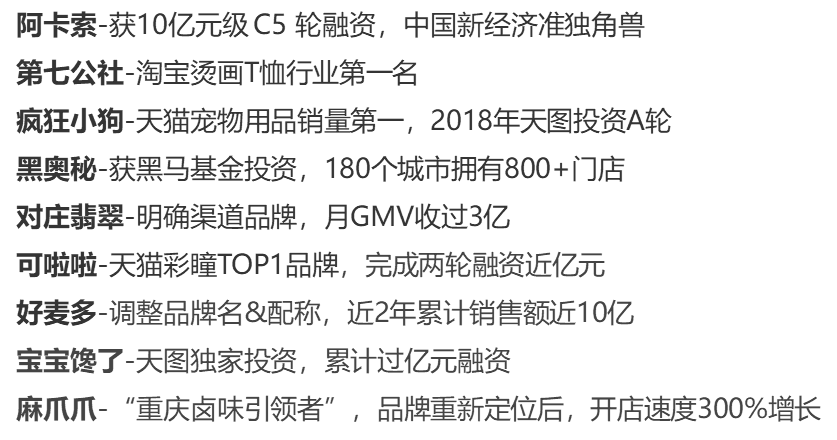
Group 1 - TianTu Capital became the first Chinese VC to be listed on the Hong Kong stock market on October 6, 2023, with founder Feng Weidong managing over 20 billion yuan in funds and investing in more than 200 companies [1] - Feng Weidong is recognized as a "scholar-type mentor" who provides both capital support and practical business guidance to entrepreneurs, significantly improving their operational metrics [1] - The "Feng Weidong Brand Entrepreneurship Laboratory" has conducted 15 sessions since 2015, empowering 274 companies and directly investing over 300 million yuan in Black Horse students [1] Group 2 - Feng Weidong has invested in several listed companies, including Zhou Hei Ya, Baiguoyuan, Nayuki Tea, Guoquan, and Feihe Dairy, emphasizing that true business success relies on the underlying logic of competition rather than fleeting trends [2] - The focus is on creating customers through brand development, leveraging new demands, channels, and technological possibilities to innovate new categories [2] - An upcoming event from November 20 to November 22 will feature Feng Weidong and Black Horse Chairman Niu Wenwen, discussing brand positioning, securing investment, and managing cash flow to help participants become category leaders [3]