
制造业

Search documents
中国买下200万吨大豆,美国高层立马变脸,称必须缩减对华贸易
Sou Hu Cai Jing· 2025-12-07 05:37
所以,美方所说的缩减对华贸易,实际上是在逼迫美国企业在关键领域加大研发力度,想让他们自力更生,和中国企业竞争国际市场。同时,这也是美国胁 迫盟友妥协的手段。例如,格里尔这次主要针对的对象是加拿大和墨西哥,这与之前美国怂恿欧洲国家与中国脱钩类似,目的都是在试图孤立中国制造。而 特朗普政府则选择了躲在盟友背后,因为他们深知,上次对华加税引发的后果至今让美国心有余悸。即便以后再继续用加税来威胁中方,实际上也没有勇气 再次实施。所以,今天的局面看起来就有些滑稽:美国一方面在请求中国扩大贸易,另一方面却又举着减少对华贸易的大旗,试图通过让盟友为自己出力, 拖住中国的发展步伐。 但问题是,愿意为美国冲锋的盟友又有多少呢?国与国之间的关系是基于利益的,利益使得它们结合,也会因为利益的变化而分裂。举个简单的例子,在中 美关税战期间,中国停止了数百家美国牛肉企业的出口资质,美国的牛肉对华出口几乎归零。结果,澳大利亚迅速填补了这一空缺,拿走了美国企业的份 额。所以,只要美国敢继续通过强制手段打压中国企业,中国同样会采取反制措施,保护中企的利益,平衡两国的贸易局面。正如中方所说的:和则两利, 斗则俱伤,这句话不仅是对美方的劝诫,也 ...


2025年1-10月制造业企业有487309个,同比增长2.83%
Chan Ye Xin Xi Wang· 2025-12-07 02:57
Core Viewpoint - The manufacturing sector in China has shown growth in the number of enterprises, indicating a positive trend in industrial development and investment opportunities [1] Group 1: Manufacturing Sector Overview - As of January to October 2025, the number of manufacturing enterprises reached 487,309, an increase of 13,423 compared to the same period last year, representing a year-on-year growth of 2.83% [1] - Manufacturing enterprises account for 93.1% of the total industrial enterprises, highlighting their significant role in the industrial landscape [1] Group 2: Industry Reports and Insights - The report titled "2026-2032 China Manufacturing Market Competition Pattern Analysis and Investment Development Research Report" by Zhiyan Consulting provides in-depth analysis and insights into the manufacturing sector [1] - Zhiyan Consulting is recognized as a leading industry consulting firm in China, specializing in comprehensive industry research reports, business plans, feasibility studies, and customized services [1]




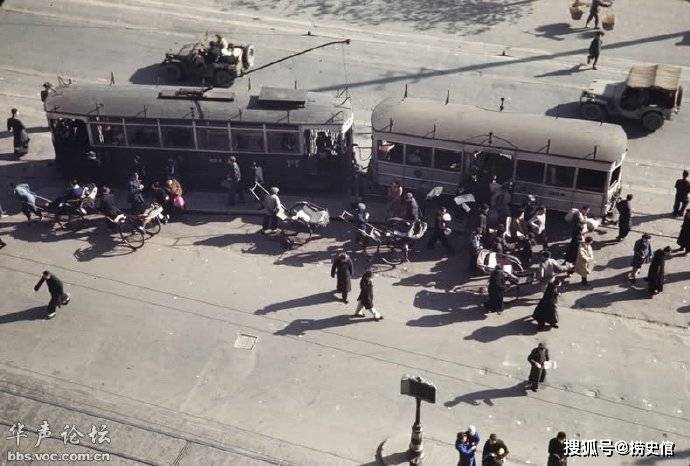
看了这组老照片你会知道,三十年代是老上海最繁华时期,敢与纽约和伦敦类比
Sou Hu Cai Jing· 2025-12-06 23:53
Economic and Industrial Development - In 1933, Shanghai's industrial output reached 730 million silver dollars, accounting for 66% of the total output of the 12 major industrial cities in China, significantly surpassing cities like Tianjin [1] - Shanghai was the largest gold trading center in Asia, with an active securities market ranked third internationally, following London and New York [1] Commercial Prosperity - Commercial streets like Nanjing Road were filled with shops, showcasing international brand advertisements, reflecting a growing consumer awareness [1] - The Bund and Nanjing Road were illuminated with neon lights at night, with nightclubs becoming popular gathering places for the elite [1] Architectural and Infrastructure Advancements - Shanghai saw the construction of many modern buildings, such as the International Hotel, completed in 1934, which remained the tallest building in Shanghai for 48 years [1] - The Bund's international architectural ensemble became a symbol of modern Shanghai [1] Population Growth - By 1931, Shanghai's population reached 3.11 million, ranking first in China and fifth globally; by the eve of the war in 1937, the population exceeded 3.75 million, driven by the influx of rural migrants attracted by modern industry and commerce [1] - The net population growth was approximately 120,000 to 130,000 people annually, indicating the city's strong appeal [1] Cultural Intersection - Shanghai served as a hub for the convergence of Eastern and Western civilizations, with the presence of foreign concessions introducing Western urban forms while retaining local cultural elements [2] - The city's vibrant life included traditional activities like temple fairs and modern entertainment venues, showcasing a rich cultural tapestry [2] International Recognition - Shanghai's prosperity was often compared to that of New York or London, with foreign visitors and literature referring to it as "Asia's first metropolis" [2] - The Japanese referred to Shanghai as "Magic City," emphasizing its modern characteristics [2] Social Disparities - Despite the overall prosperity in the 1930s, significant social inequalities existed, with stark contrasts between the lives of the impoverished laborers and the affluent upper class [2] - This disparity highlighted the social contradictions inherent in the urbanization process during that period [2]
刘世锦:经济增长更依托创新和消费,实施金融强国战略为之架桥
21世纪经济报道· 2025-12-06 13:27
Core Viewpoint - The article emphasizes the need for a robust financial system to support China's transition to a consumption-driven economy, highlighting the importance of capital markets and strong currency in achieving high-quality economic development [1][3]. Group 1: Economic Challenges and Financial Strategy - China's economic growth is shifting from supply constraints to demand constraints, with insufficient consumption being a primary issue rather than investment or exports [1][3]. - The implementation of a financial power strategy aims to bridge the gap between manufacturing and consumption, leveraging a modern financial system to support both sectors [1][3]. Group 2: Capital Market Development - A strong capital market is essential for selecting viable projects that are marketable, profitable, and have manageable risks, thereby enhancing resource allocation efficiency [3][4]. - As China enters an innovation-driven phase, the role of capital markets in project selection will increase, with more societal funds directed towards capital markets, particularly in light of declining real estate investment attractiveness [3][4]. Group 3: Currency and Internationalization - Strong currency is a key indicator of a financial power, historically supported by a robust economy, trade, technology, military strength, and a developed financial system [4][5]. - The internationalization of the Renminbi (RMB) has significant potential, with a focus on increasing offshore RMB availability to enhance liquidity and facilitate its use in international trade [5][6]. Group 4: Manufacturing and Trade Performance - China's manufacturing value added is projected to grow from 26.6 trillion yuan to 33.6 trillion yuan during the 14th Five-Year Plan, contributing over 30% to global manufacturing growth [5]. - In 2024, China's total goods trade is expected to reach 43.8 trillion yuan, maintaining its position as the world's largest trader, with exports surpassing 25 trillion yuan, marking a 7.1% year-on-year increase [5]. Group 5: Implications for Consumption - The anticipated appreciation of the RMB could enable Chinese consumers to purchase better international products, thereby boosting consumption and enhancing the quality of human capital [6].

美国9月核心PCE物价指数年率下降
Sou Hu Cai Jing· 2025-12-06 07:40
Group 1 - The core PCE price index in the U.S. for September decreased from 2.9% to 2.8% year-on-year, while the month-on-month rate remained stable at 0.2% [2] - The PCE data supports the Federal Reserve's potential decision to cut interest rates by 25 basis points, which may alleviate financing cost pressures on the U.S. real economy [2] - Consumer confidence index is low, with the personal consumption expenditure month-on-month rate dropping from 0.2% to 0%, below the expected 0.1% [2] Group 2 - The ISM manufacturing PMI has declined for nine consecutive months, remaining below the growth line, indicating ongoing economic challenges [2] - The U.S. economy faces significant uncertainty, which is also reflected in the capital markets, suggesting potential for increased volatility ahead [2] - The previous correction in the U.S. stock market may not be sufficient, indicating a possibility of a deeper downturn in the near future [2]

人力资源服务业与制造业试点“跨界融合” 北京、天津、唐山等39个城市承担试点任务
Ren Min Ri Bao· 2025-12-06 05:50
Core Insights - The Ministry of Human Resources and Social Security has initiated a pilot program to integrate human resource services with the manufacturing industry, designating 39 pilot cities including Beijing, Tianjin, and Tangshan [1][2] - The integration aims to enhance the development and utilization of human resources in manufacturing, addressing labor supply shortages and improving employment opportunities [1][3] Group 1: Pilot Program Overview - The pilot program includes 39 cities across various regions: 15 in the eastern region, 9 in the central region, 12 in the western region, and 3 in the northeastern region, covering major economic and manufacturing hubs [2] - These cities have significant manufacturing output, strong employment absorption capacity, and a well-developed human resource service industry [2] Group 2: Focus Areas and Implementation - The pilot cities will focus on key manufacturing sectors, selecting 1 to 3 sub-industries for targeted exploration of innovative paths for industrial upgrading and employment promotion [2] - The program emphasizes collaboration among leading manufacturing enterprises, specialized small and medium-sized enterprises, and key human resource service companies to create joint recruitment and training initiatives [2] Group 3: Technological Integration and Future Steps - The initiative will leverage emerging technologies such as artificial intelligence and big data to enhance the efficiency of human resource supply and demand matching in the manufacturing sector [3] - The Ministry will guide local departments to refine pilot work plans, document progress, and develop replicable successful experiences while ensuring regulatory compliance to protect workers' rights [3]
揭阳市臻瑾科技有限公司成立 注册资本12万人民币
Sou Hu Cai Jing· 2025-12-06 05:21
天眼查App显示,近日,揭阳市臻瑾科技有限公司成立,法定代表人为林金丽,注册资本12万人民币, 经营范围为一般项目:技术服务、技术开发、技术咨询、技术交流、技术转让、技术推广;信息技术咨 询服务;信息咨询服务(不含许可类信息咨询服务);网络技术服务;塑料制品制造;橡胶制品制造; 五金产品制造;家居用品制造;金属制日用品制造;家用电器制造;家居用品销售;塑料制品销售;橡 胶制品销售;五金产品批发;五金产品零售;日用品销售;鞋帽批发;鞋帽零售;电子产品销售;家用 电器销售;日用家电零售;家用电器零配件销售;互联网销售(除销售需要许可的商品);国内贸易代 理。(除依法须经批准的项目外,凭营业执照依法自主开展经营活动)。 ...
中方刚采购200万吨大豆,美国代表就通告全球,必须缩减对华贸易
Sou Hu Cai Jing· 2025-12-06 04:34
Core Viewpoint - The U.S. Trade Representative, Robert Lighthizer, emphasized the need to reduce trade with China, suggesting a 25% decline in tangible goods trade is a step in the right direction, despite recent positive signals regarding U.S. agricultural exports to China [1][3]. Group 1: U.S.-China Trade Dynamics - The U.S. Treasury Secretary confirmed that China is on track to purchase 12 million tons of U.S. soybeans by February 2026, indicating compliance with trade agreements [1]. - Recent shipping data shows that at least six bulk carriers of U.S. soybeans are expected to arrive at the Gulf Coast by mid-December, marking a significant resumption of trade after previous disruptions [1]. - Despite these agricultural purchases, the U.S. Trade Representative's stance remains focused on limiting China's access to North American manufacturing through trade barriers [5]. Group 2: Domestic Policy Implications - The Trump administration is pushing for a normalization of tariff policies, maintaining rates between 15% and 20%, and is prepared to reconstruct tariffs even if the Supreme Court overturns existing policies [3]. - The U.S. Trade Representative is advocating for adjustments to the USMCA (United States-Mexico-Canada Agreement) to prevent Canada and Mexico from acting as intermediaries for Chinese exports [3][5]. - There is a clear divergence in U.S. trade policy focus, with the Treasury Secretary prioritizing supply chain stability and agricultural exports, while the Trade Representative emphasizes manufacturing return and trade barriers [5]. Group 3: Future Trade Relations - The likelihood of significant expansion or contraction in U.S.-China trade is low; instead, a gradual restoration of trade relations is expected, albeit with ongoing friction [7][8]. - The U.S. will continue to focus on high-end manufacturing and strategic materials, while China will pursue U.S. agricultural and industrial products based on its own needs [7]. - The complexity of U.S.-China trade relations suggests a future characterized by cautious cooperation and competition, with both countries seeking to balance their respective interests [8].

人力资源服务业与制造业试点“跨界融合”(政策速递)
Ren Min Ri Bao· 2025-12-06 00:04
Core Viewpoint - The Ministry of Human Resources and Social Security has initiated a pilot program for the integration of human resources services and manufacturing industries in 39 cities, aiming to enhance the development of human resources in the manufacturing sector and improve employment services [1][2]. Group 1: Pilot Program Overview - The pilot program includes cities such as Beijing, Tianjin, and Tangshan, covering major economic and manufacturing areas in China, with a focus on advanced manufacturing clusters and robust human resources service foundations [2]. - The program aims to explore innovative mechanisms, policies, platforms, and models for the integration of human resources services with manufacturing, thereby enhancing the utilization of human resources in the manufacturing sector [1][3]. Group 2: Focus Areas and Implementation - Pilot cities will identify 1 to 3 specific sub-industries based on local industrial foundations and advantages, aiming to create innovative paths for industrial upgrading and employment promotion [2]. - The program emphasizes the role of leading manufacturing enterprises and specialized small and medium-sized enterprises in the pilot initiatives, fostering collaborative recruitment and training efforts [2]. Group 3: Technological Empowerment and Future Steps - The initiative will leverage emerging technologies such as artificial intelligence and big data to improve the efficiency of matching supply and demand in the manufacturing labor market [3]. - The Ministry will guide local departments to refine pilot work plans and document progress, challenges, and successful cases to create replicable experiences and projects [3].
人力资源服务业与制造业试点“跨界融合” 北京、天津、唐山等39个城市承担试点任务(政策速递)
Ren Min Ri Bao· 2025-12-05 21:57
Core Viewpoint - The Ministry of Human Resources and Social Security has initiated a pilot program to integrate human resource services with the manufacturing industry, selecting 39 cities including Beijing, Tianjin, and Tangshan for this initiative [1][2]. Group 1: Industry Overview - The human resource service industry is a crucial part of modern productive services, contributing positively to high-quality employment, human resource development, and the construction of a modern industrial system [1]. - By the end of 2024, there will be approximately 74,000 human resource service institutions in China, employing around 1.09 million people [1]. - During the 14th Five-Year Plan period, the industry is expected to provide employment and job-seeking services to 300 million laborers annually and professional support to over 50 million employers [1]. Group 2: Pilot Cities and Focus Areas - The 39 pilot cities are distributed across different regions: 15 in the eastern region, 9 in the central region, 12 in the western region, and 3 in the northeastern region, covering major economic cities and key manufacturing areas [2]. - These cities have significant manufacturing output, strong employment absorption capacity, and are involved in key sectors such as intelligent manufacturing, electronic information, new materials, new energy, and biotechnology [2]. - The pilot cities will focus on 1 to 3 specific sub-industries based on local industrial foundations and advantages, aiming to explore innovative paths for industrial upgrading and employment promotion [2]. Group 3: Technological Empowerment and Future Steps - There will be an emphasis on enhancing the efficiency of human resource supply and demand matching in the manufacturing sector through the application of emerging technologies like artificial intelligence and big data [3]. - The Ministry will guide provincial human resources departments and pilot cities to refine their work plans, track progress, and develop replicable and scalable effective experiences and projects [3]. - A regulatory framework will be established to oversee new business models and protect the rights of workers and employers, addressing issues such as false recruitment and employment discrimination [3].