工程机械

Search documents
看好出海高景气&内需托底的油服设备和工程机械;推荐催化加速的人形机器人 | 投研报告
Zhong Guo Neng Yuan Wang· 2025-11-10 06:09
Group 1: Excavator Sales and Market Outlook - In October, domestic excavator sales increased by 2.4% year-on-year, while exports rose by 12.9% [3] - Total excavator sales in October reached 18,096 units, marking a 7.77% year-on-year growth, with domestic sales at 8,468 units and exports at 9,628 units [3] - The domestic market is expected to remain stable, driven by demand from water conservancy projects and labor substitution, while overseas markets show strong capital expenditure in mining sectors [3] Group 2: Oil Service Equipment and Saudi Aramco - Saudi Aramco reported a Q3 adjusted net profit of $28 billion and operating cash flow of $36.1 billion, both showing slight year-on-year increases [4] - The company has adjusted its natural gas production capacity goals, increasing the target growth from over 60% to approximately 80% by 2030 [4] - The demand for oil service equipment is expected to rise due to ongoing energy transition and increased investment in downstream operations [4][5] Group 3: Robotics Sector and Upcoming Catalysts - The robotics sector is anticipated to experience a significant upward trend in November, driven by key events such as Tesla's third-generation robot release and the IPO application of Yushu [5] - Core stocks in the robotics supply chain are recommended for focus, including Top Group, Zhejiang Rongtai, and Hengli Hydraulic [5] - The sector is expected to benefit from concentrated catalysts in the upcoming months, suggesting a favorable investment environment [5]



“双料龙头”临工重机:年营收超百亿,仍难掩周期性风险
Zhi Tong Cai Jing· 2025-11-10 05:39
Core Viewpoint - The company, Lingong Heavy Machinery, is set to go public on the Hong Kong Stock Exchange, positioning itself as a "dual leader" in both mining and aerial work equipment sectors, which may spark a listing frenzy in the Hong Kong market [1][4]. Company Overview - Lingong Heavy Machinery, established in 2012, specializes in the research, design, manufacturing, sales, and service of machinery for mining, aerial work, and material handling [1]. - The company ranks third among domestic enterprises in the global mining transportation equipment and excavator market, and first in the domestic market for new energy mining transportation equipment as of 2024 [1][2]. Financial Performance - Revenue figures for Lingong Heavy Machinery from 2022 to 2024 are as follows: 10.529 billion yuan, 9.897 billion yuan, and 12.028 billion yuan, with a slight decline in 2023 followed by a recovery in 2024 [3]. - The company achieved a net profit of 0.954 billion yuan, 0.974 billion yuan, 1 billion yuan, and 0.635 billion yuan from 2022 to the first half of 2025, indicating a steady growth trend [3]. - The gross profit margin improved from 17.7% in 2022 to 22.4% in the first half of 2025, driven by increased sales of high-margin products and a decrease in raw material prices [3]. Market Position and Strategy - Lingong Heavy Machinery has expanded its global footprint, reaching over 100 countries and increasing its overseas revenue share from 26.8% in 2022 to 44% in the first half of 2025 [2]. - The company has diversified its product lines, focusing on high-altitude work machinery, wide-body dump trucks, drilling rigs, and special machinery, while also leading in the electrification and automation of mining equipment [2]. Industry Growth Potential - The global engineering machinery market is projected to grow from 1.5372 trillion yuan in 2024 to 2.1319 trillion yuan by 2030, with a compound annual growth rate (CAGR) of approximately 5.6% [5]. - The aerial work equipment market is expected to grow from 62.6 billion yuan in 2020 to 136.6 billion yuan in 2024, with a CAGR of 21.5% [5]. - The mining equipment market is forecasted to expand from 736.7 billion yuan in 2024 to 1,025.6 billion yuan by 2030, with a CAGR of 5.7% [6]. Competitive Landscape - The engineering machinery industry is becoming increasingly competitive, with major players like XCMG and SANY accelerating their overseas expansion [7]. - Lingong Heavy Machinery faces significant competition in the aerial work equipment sector, where its revenue is projected to decline by 57% in 2024, highlighting the challenges posed by domestic competitors [7].
广西柳州商标战略赋能产业转型升级的路径
Zhong Guo Zhi Liang Xin Wen Wang· 2025-11-10 05:01
Core Viewpoint - Guangxi Liuzhou is leveraging a dual strategy of "brand building + business environment" to enhance its industrial development, with notable brands like Wuling, LiuGong, and Liuzhou snail rice noodles achieving significant brand value and recognition [1][2]. Group 1: Background and Foundation - Liuzhou is the largest industrial city in Guangxi, with a diverse industrial base including traditional sectors like automotive and steel, as well as emerging industries such as smart terminals and new energy [2]. - Many industries in Liuzhou face challenges related to low product value and weak brand influence, necessitating a transformation through trademark strategies [2]. Group 2: Significance of Trademark Strategy - Trademarks are considered "intangible assets" and competitive tools that can enhance product value, competitiveness, and accelerate industrial upgrades, crucial for transitioning from "Liuzhou manufacturing" to "Liuzhou intelligence" and "Liuzhou creation" [3]. Group 3: Conditions for Development - Liuzhou has two foundational conditions for developing its trademark strategy: influential enterprises like Wuling and LiuGong leading the charge, and strong governmental support with policies and measures in place [4]. Group 4: Implementation and Effects of Trademark Strategy - Liuzhou employs a "market-led, enterprise-driven, government-guided" model to increase both the quantity and quality of trademarks, including over 60 intellectual property training sessions during the 14th Five-Year Plan [5]. - The establishment of a national geographical indication protection demonstration zone for Liuzhou snail rice noodles has created a comprehensive industry chain standard system, generating over 750 billion yuan in industry chain value [5]. - The integration of trademarks with various industries, such as engineering machinery and cultural tourism, has led to the creation of industrial clusters and enhanced regional branding [6]. Group 5: Comprehensive Service for Enterprises - Liuzhou has built a full-cycle service network for trademark registration, utilization, protection, and management, facilitating local businesses in handling trademark applications and financing [8]. - Since the establishment of the national trademark business window in 2021, 12,000 trademark-related services have been processed, helping enterprises secure 5.27 billion yuan in financing during the 14th Five-Year Plan [8]. Group 6: Brand Protection Measures - A multi-faceted protection system has been established to combat trademark infringement, with 475 cases handled during the 14th Five-Year Plan and the establishment of a knowledge property court for expedited case resolution [9]. - Liuzhou's knowledge property protection center assists enterprises in overseas trademark inquiries and legal consultations, enhancing their willingness to expand internationally [9]. Group 7: Mechanism of Trademark Strategy Empowering Industrial Upgrade - The value of trademarks is linked to corporate innovation, encouraging investment in research and development to improve product quality and market competitiveness [10]. - Trademarks act as catalysts for integrating industrial chains and promoting high-end, intelligent transformations within the industry [10]. - The regional brand serves as a "business card" for Liuzhou's economy, attracting resources and enhancing competitiveness, while improved trademark protection fosters a fair market environment [10].
工程机械专家交流
2025-11-10 03:34
Summary of Key Points from the Conference Call Industry Overview - The conference call discusses the **engineering machinery industry** in China, focusing on sales trends, market dynamics, and future growth drivers [1][14]. Core Insights and Arguments - **Sales Growth Trends**: In October 2025, engineering machinery sales growth decreased month-on-month due to weather impacts on construction rates, although year-on-year growth remained positive. The sales of small excavators were particularly strong, accounting for 65% to 70% of total sales [1][2][3]. - **Loader Market Performance**: The loader market showed stability with a year-on-year sales increase. In October, approximately 10,000 units were exported, and domestic sales reached about 5,500 units. SANY Heavy Industry's market share in electric loaders has improved, indicating a shift towards electric products [1][5]. - **Electrification Trend**: The trend towards electrification in engineering machinery is significant, with SANY Heavy Industry reporting a monthly growth rate of 1% to 2% in electric equipment sales since switching to electric loaders in the second half of 2023. This shift is driven by environmental policies and the need for equipment upgrades [1][6]. - **Profitability Challenges**: The industry faces intense price competition, leading to thin margins for dealers. Many manufacturers are transitioning to a direct sales model to reduce costs and improve profitability, with SANY Heavy Industry and Shandong Lingong already implementing this strategy [1][8][10]. - **Market Dependency**: The downstream market for engineering machinery is heavily influenced by the real estate sector and government-supported infrastructure projects. The overall industry growth rate for 2025 is projected at around 10%, which is below expectations [1][11][14]. - **Future Growth Drivers**: The main drivers for the engineering machinery industry in the coming years will be equipment upgrades and the electrification process. The proportion of equipment replacement is expected to reach 15% to 20%, supported by government infrastructure projects [1][15][18]. Additional Important Insights - **Export Market Caution**: The export market has seen a decline due to weaker foreign demand, not weather-related issues. Manufacturers are cautious about entering the export market due to concerns over after-sales service and brand reputation [1][4][12]. - **Aftermarket Services**: The aftermarket is performing well, with companies establishing service teams to enhance customer satisfaction and foster long-term relationships [1][13]. - **Price and Margin Trends**: Engineering machinery prices have been declining, with some excavators priced significantly lower than a decade ago. However, major companies like SANY Heavy Industry maintain higher profit margins, benefiting from dual listings and profit-oriented strategies [1][16][17]. This summary encapsulates the key points discussed in the conference call, providing a comprehensive overview of the engineering machinery industry, its current challenges, and future prospects.
新股前瞻|“双料龙头”临工重机:年营收超百亿,仍难掩周期性风险
智通财经网· 2025-11-10 02:46
Core Viewpoint - The company, Lingong Heavy Machinery, is set to go public on the Hong Kong Stock Exchange, aiming to leverage its strong market position in the mining and aerial work equipment sectors, which are characterized as "dual leading" segments in the industry [1][7]. Company Overview - Lingong Heavy Machinery was established in 2012 and specializes in the research, design, manufacturing, sales, and service of machinery for mining, aerial work, and material handling [1]. - The company ranks third among domestic enterprises in the global mining transportation equipment and excavator market, and first in the domestic market for new energy mining transportation equipment as of 2024 [1][2]. Financial Performance - Revenue figures for Lingong Heavy Machinery from 2022 to 2024 are as follows: 10.529 billion yuan, 9.897 billion yuan, and 12.028 billion yuan, with a slight decline in 2023 followed by a recovery in 2024 [3]. - The company achieved a net profit of 0.954 billion yuan, 0.974 billion yuan, 1 billion yuan, and 0.635 billion yuan from 2022 to the first half of 2025, indicating a steady growth trend [3]. Market Position and Growth - Lingong Heavy Machinery has expanded its sales footprint to over 100 countries, with overseas revenue increasing from 26.8% in 2022 to 44% in the first half of 2025 [2]. - The company has positioned itself as a leader in the electric and intelligent transformation of construction machinery, having sold approximately 1,600 new energy mining transportation devices by mid-2025 [2]. Industry Trends - The global engineering machinery market is projected to grow from 1.5372 trillion yuan in 2024 to 2.1319 trillion yuan by 2030, with a compound annual growth rate (CAGR) of approximately 5.6% [5]. - The aerial work equipment market is expected to grow from 62.6 billion yuan in 2020 to 136.6 billion yuan in 2024, with a CAGR of 21.5% [5]. Competitive Landscape - The engineering machinery industry is characterized by increasing competition, with major players like XCMG and SANY expanding aggressively in overseas markets [7]. - Lingong Heavy Machinery faces challenges in maintaining its market position, particularly in the aerial work equipment sector, where it experienced a 57% revenue decline in 2024 [7].
中证全指工程机械指数型基金投资价值分析 | 投研报告
Zhong Guo Neng Yuan Wang· 2025-11-10 02:28
Core Insights - The engineering machinery industry is experiencing a new development phase driven by three key factors: domestic demand recovery, rapid overseas exports, and accelerated electrification transformation [2][3] Global Market Overview - According to KHL data, the global engineering machinery market is projected to reach USD 237.6 billion by 2024, with a highly concentrated competitive landscape where the global CR3 exceeds 30% [2][3] - Leading international companies like Caterpillar and Komatsu dominate the market, while domestic firms are increasing their global market share due to technological advancements and cost advantages [2][3] Domestic Market Dynamics - Domestic demand for excavators saw a year-on-year increase of 21.5% from January to September 2025, indicating a recovery phase [3] - Key drivers for domestic demand include: 1. Continued growth in infrastructure investment supported by "stabilizing growth" policies, particularly large-scale projects like hydropower [3] 2. The arrival of the equipment replacement cycle and national policies promoting machinery updates [3] 3. Expanding application scenarios, such as agricultural and municipal projects, driving demand for smaller excavators [3] - The electrification transition is injecting new growth momentum, with electric loader penetration reaching 23% in the first three quarters of 2025 [3] International Market Growth - From 2015 to 2024, the compound annual growth rate (CAGR) for excavator exports is projected at 38%, driven by: 1. Increased infrastructure investments in countries participating in the Belt and Road Initiative [4] 2. Improved product performance and after-sales service of domestic companies, enhancing their competitiveness against international brands [4] 3. The cost-effectiveness of Chinese manufacturing becoming more pronounced in an inflationary environment [4] - Chinese companies have significant growth potential in high-end markets in Europe and the U.S., with electrification providing new opportunities for early-mover electric products [4] Index Analysis - The CSI Engineering Machinery Index, which includes 50 representative stocks from the engineering machinery sector, reflects the overall market performance of listed companies in this industry [5] - The index is heavily weighted towards large-cap stocks, with over 50% of its weight in companies with a market capitalization exceeding RMB 100 billion [5] - The index's valuation is currently at a historically high level, but with expectations of continued domestic recovery and global expansion, the industry is transitioning into a high-end manufacturing sector characterized by globalization, electrification, and intelligence [5]
三一集团轮值董事长夫妇的公益十年: 从“捐钱”到“育心”
Chang Sha Wan Bao· 2025-11-10 00:00
Core Insights - The article highlights the transformation of China's charity sector from traditional donations to a focus on sustainable development and deep public welfare initiatives, exemplified by the efforts of entrepreneurs like Tang Xiuguo and Li Kemei [1][3][4] Group 1: Charity Evolution - Over the past decade, Chinese public welfare has shifted towards "deep public welfare," emphasizing mental growth and sustainable development rather than just monetary donations [1][3] - The Deqing Foundation, established by Tang Xiuguo and Li Kemei, has been pivotal in promoting music education in rural areas, impacting over 139 million children [5][10] Group 2: Project Implementation - The "Happy Choir 3+1" project was launched to address the lack of music education in rural schools, focusing on empowering teachers and students through choir activities [4][12] - The project has successfully established choirs in multiple schools across China, providing children with opportunities to perform alongside renowned musicians [5][10] Group 3: Community Engagement - Li Kemei has actively involved family members and local resources in the foundation's work, fostering a culture of giving and community support [9][10] - The foundation collaborates with various organizations and experts to enhance the quality of music education and create a robust support network [12][13] Group 4: Challenges and Solutions - The foundation faces challenges related to perceptions of arts education, resource allocation, and the need for professional development in the nonprofit sector [11][12] - Strategies include breaking down barriers through community engagement, building a network of support, and implementing a dual-expert model for teacher training [11][12] Group 5: Future Aspirations - The article emphasizes the importance of professionalization in the charity sector, advocating for a shift from mere donations to creating lasting value [10][14] - There is a growing expectation for increased public participation in charity, improved professional standards, and a more supportive ecosystem for nonprofit initiatives [15]


中金2026年展望 | A股市场:乘势笃行
中金点睛· 2025-11-09 23:37
Core Viewpoint - The A-share market is expected to continue its upward trend since "9.24", with increasing importance of fundamentals after a valuation correction, supported by the new phase of Sino-US relations, restructuring of the international monetary order, and the AI revolution entering a critical application period [2][5][10]. Group 1: Macroeconomic Environment - The new global order and domestic macroeconomic needs require proactive responses, with the Sino-US relationship entering a new stage, which will continue to promote global capital reallocation favoring Chinese assets [6][12]. - The A-share market is transitioning from valuation recovery to improved profit expectations, with an estimated overall profit growth of around 4.7% for 2026, driven by high-growth sectors and industries nearing performance improvement inflection points [6][30]. - The overall valuation of A-shares remains reasonable, with the current risk premium of the CSI 300 at 5.2%, indicating a favorable comparison to the bond market in the context of "asset scarcity" [6][30]. Group 2: Investment Strategy - The investment strategy for 2026 focuses on three main lines: 1) Growth in high-prosperity sectors, particularly in AI and innovative industries; 2) Opportunities from external demand, especially in sectors like home appliances and engineering machinery; 3) Cyclical reversals in industries such as chemicals and renewable energy [7][28]. - The market style is expected to become more balanced, driven by the end of the capacity reduction cycle and policies promoting "anti-involution," leading to a closer supply-demand balance in many cyclical industries [7][28]. Group 3: Profit Growth and Structural Analysis - The profit growth for A-shares is projected to be around 4.7% in 2026, with non-financial companies expected to see an 8.2% increase in net profit, supported by policy implementation and the ongoing AI trend [29][30]. - High-growth innovative sectors are anticipated to support the index, with significant contributions expected from AI technology, innovative pharmaceuticals, and high-end manufacturing [31][32]. - The capacity cycle is showing signs of improvement, with many industries experiencing a turning point after three years of capital expenditure reduction, leading to potential investment opportunities [32][33].

A+H板块持续扩容 AH溢价呈现分化
Zheng Quan Ri Bao· 2025-11-09 16:04
Core Insights - The "A+H" market has expanded significantly this year, with 16 A-share companies listed in Hong Kong, raising a total of 1,040 million HKD, accounting for 48% of the total IPO fundraising in the Hong Kong market this year [1] - The performance of newly listed H-shares has shown divergence, with A-share premiums remaining mainstream but exhibiting a trend of differentiation [2] A-H Premium Analysis - As of November 9, the Hang Seng AH Premium Index stood at 118.42, a historical low, compared to a peak of 155.58 in early 2024 [2] - Among the 16 newly listed "A+H" stocks, there are both large-cap companies like Ningde Times and smaller firms like Xiamen Jihong Technology [2] - A total of 174 institutions participated as cornerstone investors in these 16 "A+H" stocks, including international investors like Morgan Stanley and local venture capital firms [2] - Historically, the AH premium phenomenon has existed, with 30 out of 166 A+H companies having an A-share premium rate exceeding 100% [2] Sector-Specific Premium Trends - Certain sectors have seen a significant narrowing of AH premium rates, such as the semiconductor industry, where Shanghai Fudan Microelectronics Group's A-share premium rate has dropped over 100 percentage points [3] - Innovative pharmaceutical companies have experienced valuation increases in the Hong Kong market, with Rongchang Bio's H-share price surging 476.74% this year, outperforming A-shares by over 200 percentage points [3] - High-dividend consumer stocks are also gaining favor, with Qingdao Beer’s AH premium rate falling to 35.61%, significantly below the average for the consumer staples sector [3] Valuation Dynamics - The price differences between A and H shares reflect varying investor valuations, as both markets are influenced by different investor bases [4] - The low AH premium index is attributed to continuous inflows of southbound capital, which reached a net purchase of 12,986.97 million HKD this year, altering traditional pricing logic in the Hong Kong market [5] - The ongoing valuation recovery in the Hong Kong market, particularly for state-owned enterprises and high-dividend sectors, is contributing to the narrowing gap between H and A shares [5]


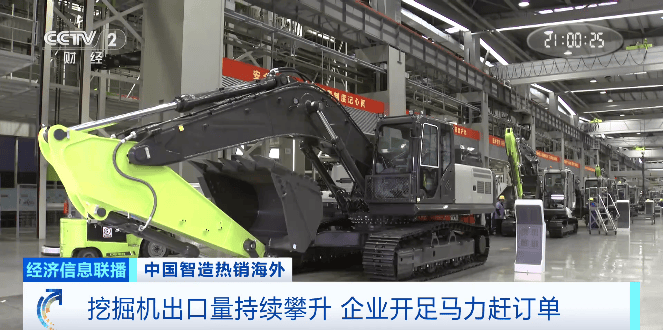
我国挖掘机出口增长强劲,海外市场持续扩容
Sou Hu Cai Jing· 2025-11-09 15:30
Core Viewpoint - The excavator export market is experiencing strong growth, with production companies in Hunan ramping up operations to meet increasing overseas demand [1][3]. Group 1: Production and Demand - Excavator production lines are operating at full capacity, with an average of one excavator being completed every six minutes [3]. - A production manager reported that their output has already surpassed the total production for the previous year, indicating a supply-demand imbalance [5]. - The overall sales performance in the third quarter saw a growth rate exceeding 50% compared to the same period last year, primarily driven by overseas sales [9]. Group 2: Export Markets - The export business now accounts for over 70% of the company's excavator sales, with significant demand from emerging markets in Southeast Asia, the Middle East, Africa, and South America [7]. - Exports to mature markets such as Europe and North America are also stable, contributing to the overall growth [7]. - Data from the China Construction Machinery Industry Association indicates that from January to September 2025, China exported 84,162 excavators, marking a year-on-year increase of 14.6% [11]. Group 3: Market Trends - The continuous growth in excavator exports has been observed for 13 consecutive months, driven by expanding overseas mining demand and a recovery in infrastructure needs in certain regions [13]. - The export growth rate for medium and large excavators is particularly high, while small excavators are benefiting from a rebound in demand from the European and American markets [13].