
畜牧业

Search documents
农业农村部:11月第1周全国生猪平均价格12.71元/公斤 比前一周下跌0.4%
Xin Hua Cai Jing· 2025-11-11 04:10
Core Insights - The agricultural market is experiencing mixed price trends for various livestock and feed products, with beef and mutton prices increasing while pork and egg prices are declining [1][2][3][4]. Livestock Prices - The average price of piglets is 24.59 yuan/kg, down 0.8% week-on-week and 29.6% year-on-year [2] - The national average price of live pigs is 12.71 yuan/kg, down 0.4% week-on-week and 28.6% year-on-year [2] - The average price of pork is 23.17 yuan/kg, down 0.3% week-on-week and 20.6% year-on-year [2] - The average price of beef is 71.46 yuan/kg, up 0.2% week-on-week and 6.5% year-on-year [4] - The average price of mutton is 70.98 yuan/kg, up 0.3% week-on-week and 1.6% year-on-year [4] Poultry Prices - The average price of eggs is 8.67 yuan/kg, down 0.7% week-on-week and 23.4% year-on-year [3] - The average price of chicken is 22.33 yuan/kg, unchanged week-on-week and down 5.4% year-on-year [3] - The average price of broiler chicks is 3.55 yuan each, down 0.6% week-on-week and 10.1% year-on-year [3] Dairy and Feed Prices - The average price of fresh milk is 3.02 yuan/kg, down 0.3% week-on-week and 3.2% year-on-year [5] - The average price of corn is 2.44 yuan/kg, down 0.4% week-on-week but up 3.0% year-on-year [6] - The average price of soybean meal is 3.28 yuan/kg, up 0.6% week-on-week but down 1.8% year-on-year [6]
农产品日报:需求仍显疲软,猪价维持震荡-20251111
Hua Tai Qi Huo· 2025-11-11 02:51
农产品日报 | 2025-11-11 需求仍显疲软,猪价维持震荡 生猪观点 市场要闻与重要数据 市场分析 10月份入场的二次育肥预计出栏时间会在冬至前后,如果价格下降或将有一定提前出栏的风险。从目前的生猪存 栏体重来看未来生猪供应仍处于过剩状态,未来叠加二次育肥的出栏会进一步增加供应压力,整体供强需弱格局 难改。 策略 谨慎偏空 期货方面,昨日收盘生猪 2601合约11955元/吨,较前交易日变动+90.00元/吨,幅度+0.76%。现货方面,河南地区 外三元生猪价格12.14元/公斤,较前交易日变动-0.05元/公斤,现货基差 LH01+185,较前交易日变动+10;江苏地 区外三元生猪价格 12.24元/公斤,较前交易日变动+0.09元/公斤,现货基差LH01+285,较前交易日变动+90;四川 地区外三元生猪价格11.53元/公斤,较前交易日变动+0.00元/公斤,现货基差LH01-425,较前交易日变动-20。 据农业农村部监测,11月10日"农产品批发价格200指数"为125.58,比上周五上升0.34个点,"菜篮子"产品批发价格 指数为127.66,比上周五上升0.39个点。全国农产品批发市场猪肉 ...
山东民和牧业股份有限公司 2025年10月份鸡苗销售情况简报
Xin Lang Cai Jing· 2025-11-10 23:21
Group 1 - The core point of the article is the sales performance of the company's commodity chick seedlings in October 2025, showing significant year-on-year and month-on-month growth [1] - In October 2025, the company sold 26.8511 million commodity chick seedlings, representing a year-on-year increase of 34.43% and a month-on-month increase of 1.64% [1] - The sales revenue for the same period was 89.6031 million yuan, reflecting a year-on-year increase of 7.82% and a month-on-month increase of 4.99% [1] Group 2 - The increase in chick seedlings sales is attributed to a rise in the number of breeding chickens and an increase in hatching eggs [1] - The announcement specifies that the disclosed data only represents the sales situation of commodity chick seedlings and does not include other business operations [1] - It is noted that the prices of chick seedlings can fluctuate significantly, which directly impacts the company's operating performance [1]

刚涨回6字头,猪价就又涨不动了?
Sou Hu Cai Jing· 2025-11-10 14:39
Core Insights - The current pig price has shown a slight rebound, reaching just above 6 yuan/kg, but the momentum appears weak and unsustainable [2][3] - After a significant price increase in late October, the market has experienced a downturn, erasing previous gains and creating a cautious sentiment among producers [4][6] Market Dynamics - The market is currently experiencing a mixed trend with fluctuations in prices, indicating a lack of strong upward or downward movement [3][4] - The concept of "secondary fattening" (二次育肥) is highlighted as a critical factor influencing the market, as it can significantly impact supply dynamics [6][12] Supply and Demand Factors - The supply of pigs is relatively stable, with no significant reductions expected unless a major disease outbreak occurs [8] - Consumer demand for pork is limited due to the availability of alternative protein sources, such as poultry and eggs, which are currently priced lower [9] - The elongation of the consumption cycle, particularly with the upcoming late Spring Festival, is expected to dilute the demand spike typically seen during festive periods [10] Future Outlook - While there is some potential for price support due to seasonal consumption increases, the overall market sentiment remains cautious, limiting the likelihood of significant price increases [12] - The reduction in secondary fattening activities reflects a broader uncertainty about market prospects, which may lead to only narrow fluctuations in pig prices moving forward [12]

福成股份:公司租赁6万多亩农耕土地用于种植玉米
Zheng Quan Ri Bao Wang· 2025-11-10 14:12
Core Viewpoint - The company is leveraging over 60,000 acres of farmland for corn cultivation, which is used as silage feed for cattle, enhancing production efficiency and cost control in its downstream livestock business [1] Group 1 - The company has leased more than 60,000 acres of farmland for corn planting [1] - Corn is utilized as silage feed for cattle, supporting the livestock sector [1] - Large-scale mechanized and automated agricultural production improves land use and production efficiency while reducing overall costs [1] Group 2 - The approach effectively controls costs in the company's downstream livestock operations [1] - Strengthening the stability of output across the industry chain is a key benefit of this strategy [1]

11月10日这些公告有看头
Di Yi Cai Jing Zi Xun· 2025-11-10 13:47
Major Announcements - Wenta Technology has completed the transfer of certain assets to Luxshare Precision, but there are outstanding payments totaling 700 million yuan and 1.61 billion yuan for different asset transactions [3] - Chaoying Electronics plans to invest approximately 1.468 billion yuan in an AI computing power high-end printed circuit board expansion project in Thailand, which is currently in the preparatory stage [4] - Lingzhi Software is planning to acquire 100% of the shares of Kaimiride through a combination of cash and stock issuance, with the stock resuming trading on November 11, 2025 [5] - Shannon Chip Innovation has noted that its main business remains stable despite recent reports of rising storage chip prices [6] Shareholder Actions - Puran Co. announced a share transfer at 106.66 yuan per share, which is a 38% discount compared to the closing price of 173.15 yuan [7][8] - Dongfang Ocean reported that a major shareholder reduced their stake by 1% through various trading methods [16] - Iron Tuo Machinery's major shareholder plans to reduce their stake by up to 1.14% [17] - Haibo Heavy Industry announced a plan to reduce their stake by up to 0.99% [18] - Blue Special Optics' director plans to reduce their stake by up to 2% [19] Financial Performance - Shandong Gold's subsidiary needs to pay 738 million yuan in taxes, which is expected to impact the company's net profit for 2025 by 230 million yuan [11] - Xiantan Co. reported a revenue of 503 million yuan from chicken products in October, a year-on-year increase of 9.3% [12] - Luoniushan reported a revenue of 116 million yuan from pig sales in October, a year-on-year increase of 24.65% [13] - Huanxu Electronics reported a decrease in consolidated revenue of 8.93% year-on-year for October [14] - Dekang Agriculture reported an average selling price of 11.54 yuan per kilogram for pigs in October, a decrease of 11.44% from September [15] Major Contracts - Zhongbei Communication signed a 1 billion yuan comprehensive service framework agreement with Hongxin Electronics [21] - Sichuan Chengyu's subsidiary signed engineering contracts totaling approximately 178.94 billion yuan with related parties [22] - Digital Government won a bid for a smart water project worth 109 million yuan [24] - State Grid Information announced that its subsidiaries won bids totaling 1.318 billion yuan [25]

新五丰:2025年10月份生猪业务主要经营数据公告
Zheng Quan Ri Bao· 2025-11-10 11:42
Core Insights - The company Xinwufeng announced its main operational data for the pig farming business for October 2025, reporting a total sales volume of 610,000 pigs [2] - Out of the total sales, 354,600 were sold as commercial pigs [2] Summary by Category Company Performance - In October 2025, Xinwufeng sold 610,000 pigs, indicating a significant operational scale in the pig farming sector [2] - The sales of commercial pigs accounted for 354,600, reflecting the company's focus on this segment of the market [2]

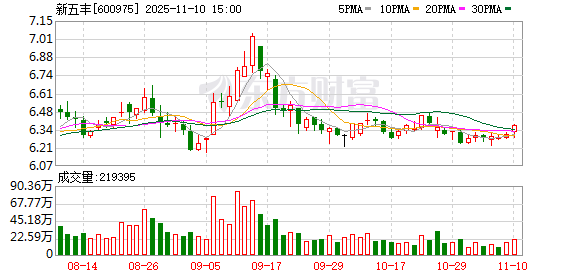
广东清远冲出一家IPO,养猪和土鸡年入超47亿,温氏前高管创办
格隆汇APP· 2025-11-10 11:29
Core Viewpoint - A new IPO has emerged from Qingyuan, Guangdong, focusing on pig farming and native chicken production, generating over 4.7 billion yuan in annual revenue, founded by a former executive of Wen's Foodstuffs Group [1] Group 1: Company Overview - The company specializes in pig farming and native chicken production, indicating a diversified agricultural focus [1] - The annual revenue of over 4.7 billion yuan highlights the company's significant market presence and operational scale [1] Group 2: Industry Context - The agricultural sector, particularly in livestock and poultry, remains a vital part of the economy, with increasing demand for quality meat products [1] - The involvement of experienced executives from established companies like Wen's Foodstuffs Group suggests a trend of leveraging industry expertise to drive new ventures [1]
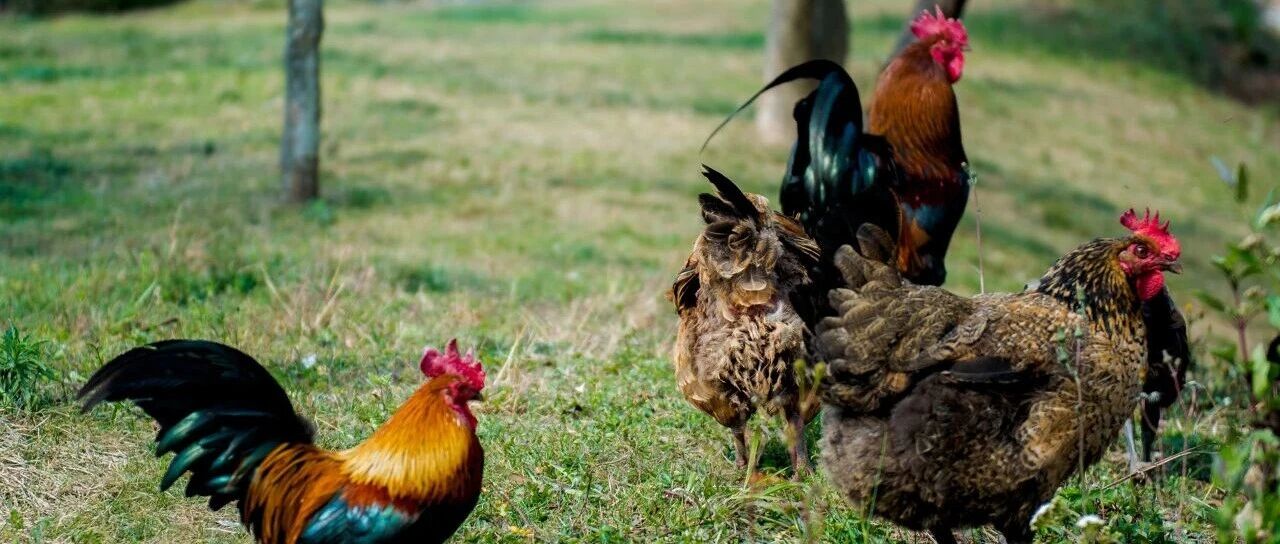
中粮家佳康10月生猪出栏量58.5万头 环比增长25%
Zhi Tong Cai Jing· 2025-11-10 11:27
Group 1 - The core point of the article is that COFCO Joycome (01610) reported an increase in pig production and sales metrics for October 2025, indicating positive growth in its operations [1] Group 2 - The company achieved a pig output of 585,000 heads in October 2025, representing a 25% increase compared to the previous period [1] - The average selling price of commercial pigs was 11.58 yuan per kilogram [1] - Fresh pork sales reached 32,300 tons, with brand revenue accounting for 34.52% of the fresh pork business [1]
中粮家佳康(01610)10月生猪出栏量58.5万头 环比增长25%
智通财经网· 2025-11-10 11:24
Core Viewpoint - COFCO Jiajia Kang (01610) reported a significant increase in pig production and sales, indicating strong operational performance in the fresh pork market [1] Group 1: Production and Sales Performance - The company achieved a pig output of 585,000 heads in October 2025, representing a 25% increase compared to the previous month [1] - The average selling price of commodity pigs was 11.58 yuan per kilogram [1] - Fresh pork sales reached 32,300 tons, with brand revenue accounting for 34.52% of the fresh pork business [1]