
半导体制造

Search documents
1nm,最新进展
半导体行业观察· 2025-03-13 01:34
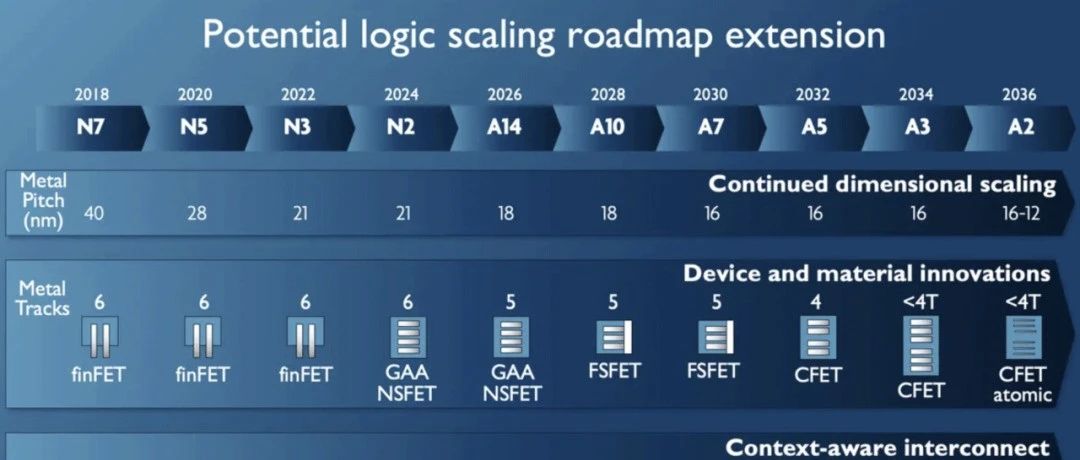
Core Viewpoint - The semiconductor industry is witnessing intense competition among leading foundries like TSMC, Intel, and Samsung in the development of advanced 2nm and 1nm technologies, with TSMC planning to establish a 1nm fab in Taiwan to maintain its market leadership [1][6][7]. Group 1: Advanced Technology Development - ASML and Imec have formed a five-year partnership to enhance research capabilities for technologies below 2nm, focusing on integrating ASML's latest lithography tools into advanced semiconductor manufacturing [3][4]. - Imec will utilize ASML's advanced wafer fabrication equipment, including High-NA EUV tools, to accelerate the development of next-generation semiconductor production technologies [4][5]. - The cost of High-NA EUV systems can reach $350 million, posing a barrier for new entrants and researchers in the semiconductor field [4]. Group 2: TSMC's 1nm Fab Plans - TSMC is accelerating its 1nm technology development and plans to build a large Giga-Fab in Tainan, Taiwan, which will house six production lines for 1nm and 1.4nm chips [6][7]. - The new fab aims to outpace competitors like Samsung and Intel in the race to commercialize 1nm technology, which is critical for producing high-performance chips with lower power consumption [6][7]. Group 3: EUV Lithography Advancements - DNP has successfully developed the first generation of EUV masks required for 2nm and beyond, achieving fine pattern resolution necessary for advanced semiconductor manufacturing [9][10]. - The development of High-NA EUV masks is crucial for achieving the required precision for 2nm and smaller nodes, with DNP aiming for mass production of these masks by FY2027 [10]. Group 4: Future Roadmap and Challenges - Imec's roadmap for transistor technology includes advancements from FinFET to GAA (Gate-All-Around) designs, with expectations for CFET (Complementary FET) and atomic channel transistors to emerge by 2032 [12][13]. - The semiconductor industry faces challenges in meeting the growing demand for computational power, particularly for machine learning and AI applications, which require rapid advancements in transistor density and performance [14][17]. - Innovations in interconnect technologies and materials, such as the potential use of graphene, are being explored to overcome scaling challenges in semiconductor manufacturing [18][19].


日本2nm,已过时!
半导体芯闻· 2025-03-11 10:38
如果您希望可以时常见面,欢迎标星收藏哦~ 来源:内容来自technews,谢谢。 报导提到Rapidus 最大不安因素,是目前没有足够客户需求。一旦开始生产,出货量将达到数亿 颗,但目前没有足够的客户需求作为支撑。目前先进半导体主要应用于智能手机或盛怒据中心服务 器处理器,但Rapidus 并未掌握这类客户。井上弘基质疑,「Rapidus 大量生产的芯片,究竟有谁 会购买?购买量又会有多少?」 台积电和三星电子开发先进半导体时,会事先与苹果、高通、英伟达等大型客户建立合作关系,确 保订单,并与客户步调一致地推进技术开发。这与Rapidus 的做法完全不同。客观来说,即使 Rapidus 成功建造最先进的产能基地,如果缺少买家,导致产能闲置,恐进而造成财务危机。 除了井上弘基负面看待日本对Rapidus 经营模式,过去日本政府和经济评论员古贺茂明也提到认为 目前Rapidus 失败的机率不断升高。 Rapidus 所需资金预估为5 万亿日圆,但来自民间投资的出资额为73 亿日圆,之后就再也没增 加,意味民间部门没人愿意接手这个专案。古贺茂明指出,虽然Rapidus 北海道千岁市工厂的开工 仪式,有许多企业高层助 ...
英飞凌跃升全球MCU龙头
半导体行业观察· 2025-03-11 00:53
Core Insights - Infineon has become the leading supplier in the global microcontroller market, achieving a market share of 21.3% in 2024, up from 17.8% in 2023, marking a year-on-year increase of 3.5 percentage points [1] - The company has consistently outperformed the market, with an average annual growth rate of 13.0% in its microcontroller business since 2015, compared to the overall market growth of 4.0% [1] - Infineon has also secured the top position in the automotive microcontroller market for the first time, with a significant sales increase of nearly 44% in 2023 [5] Market Position - According to Omdia, the global microcontroller sales market size is projected to be $22.4 billion in 2024, down from $28 billion in 2023 [1] - Infineon's market share in the automotive semiconductor market increased to approximately 14% in 2023, up from nearly 13% in 2022, solidifying its leadership position [4] - The automotive semiconductor market reached a record size of $69.2 billion in 2023, growing by 16.5% [4] Product Innovation - Infineon's microcontroller product portfolio includes various series such as AURIX, TRAVEO, PSOC, and XMC, catering to diverse applications from automotive systems to industrial machinery [2] - The company plans to launch a new series of automotive microcontrollers based on RISC-V architecture, aimed at meeting the complex computing needs of software-defined vehicles [2] - Infineon has showcased innovations in its PSOC series, enhancing capabilities in power and motor control, as well as edge AI applications [2] Strategic Growth - Infineon's automotive microcontroller sales have been a key driver of its performance, with a global market share of approximately 29% in this segment [5] - The AURIX and TRAVEO microcontroller series are pivotal in supporting the automotive industry's transition towards automation, connectivity, and electrification [6] - The company has seen growth in all regions, maintaining a leading position in markets such as South Korea and China, and achieving significant growth in Japan [4]

台积电在美国被员工起诉,官方:编故事
半导体行业观察· 2025-03-10 01:20
Core Viewpoint - Taiwan Semiconductor Manufacturing Company (TSMC) announced a $100 billion investment plan in Arizona, which may help the company avoid tariffs while facing a legal dispute over alleged "anti-American" labor practices [1][2]. Investment Plan - TSMC plans to invest $100 billion over the next four years to build five factories in Arizona, aligning with the "Made in America" policy and potentially avoiding tariffs of up to 100% [1]. - The company has already invested $65 billion in two factories in Arizona, with $6 billion coming from the CHIPS and Science Act subsidies [1]. Legal Dispute - TSMC is facing a lawsuit that accuses the company of discrimination against non-East Asian employees and other misconduct, set to be heard in federal court next month [1][2]. - The lawsuit has expanded to nearly 30 plaintiffs, including individuals from various ethnic backgrounds, alleging a hostile work environment and discriminatory practices [3]. Company Response - TSMC denies the allegations, stating that the claims are false and could undermine its efforts to produce advanced chips in the U.S. [2][6]. - The company claims that the majority of its employees in Arizona are American, with a total workforce nearing 3,000 [3]. Court Proceedings - A recent motion by the plaintiffs sought to introduce new allegations, including unsafe chemical handling, which TSMC has requested to be sealed from public records [4][5]. - The court partially approved TSMC's motion to seal certain allegations while noting other complaints regarding the treatment of non-East Asian employees [6][7].
芯片法案,穷途末路
半导体行业观察· 2025-03-07 01:23
Core Viewpoint - The article discusses the impending termination of the CHIPS Act, which was initially designed to revitalize the U.S. semiconductor industry through significant subsidies and investments, but is now facing criticism and operational challenges, particularly from former President Trump [1][21]. Background of the CHIPS Act - The CHIPS Act was born out of a semiconductor shortage during the COVID-19 pandemic, highlighting the vulnerabilities in the global semiconductor supply chain, especially the U.S.'s reliance on Asian manufacturers [2][3]. - It combined previous legislative efforts aimed at boosting U.S. high-tech research and semiconductor manufacturing, including the Endless Frontier Act and the CHIPS for America Act [3][4]. Investment and Economic Impact - The CHIPS Act has led to a total investment of $272 billion across 37 projects, expected to create approximately 36,300 direct jobs [5][6]. - Major semiconductor companies, including TSMC, Intel, and Samsung, have announced substantial investments in U.S. manufacturing facilities, with TSMC alone committing $400 billion for multiple plants in Arizona [6][7][8]. Challenges and Setbacks - The construction of TSMC's Arizona plant has faced significant delays and cultural clashes, leading to a postponement of mass production from 2024 to 2025 [14][15]. - Intel has reported substantial financial losses, leading to delays in its new manufacturing facilities and raising concerns about the effectiveness of the CHIPS Act [16]. Legislative and Policy Critique - Critics argue that the CHIPS Act has not delivered the expected results, with only 43% of the allocated funds disbursed and job creation falling short of projections [21]. - The act's reliance on government subsidies has been questioned, with some industry leaders advocating for a more stable market environment rather than fluctuating government support [21][22]. Future Directions - Trump has proposed converting the CHIPS Act's subsidies into tariff funds to encourage domestic semiconductor manufacturing without relying on government handouts [22]. - The article concludes that the dream of revitalizing U.S. semiconductor manufacturing may remain elusive, as the industry grapples with both internal and external challenges [23].
特朗普,要废除芯片法案
半导体芯闻· 2025-03-05 10:25
如果您希望可以时常见面,欢迎标星收藏哦~ 来源:内容来自半导体芯闻综合 ,谢谢。 美国总统唐纳德·特朗普3月4日表示,将废除拜登政府制定的半导体补贴计划《CHIPS法案》,此 举可能影响韩国芯片制造商三星电子和SK海力士。 三星和 SK 海力士在美国投资巨大,原本将根据该计划获得数十亿美元的补贴。特朗普再次承诺废 除该计划,引发了人们对这些公司可能受到的财务影响的担忧。 特朗普在国会联合演讲中表示:"得益于我们的'美国优先'政策,我们在过去几周内就看到美国获 得了 1.7 万亿美元的新投资。软银是世界上最出色的公司之一,宣布投资 2000 亿美元。OpenAI 和甲骨文——拉里·埃里森——宣布投资 5000 亿美元。苹果宣布投资 5000 亿美元。蒂姆·库克打 电话给我说,'我花这笔钱的速度还不够快。'就在昨天,台湾半导体公司宣布投资 1650 亿美元, 在美国制造地球上最强大的芯片" https://www.chosun.com/english/industry-en/2025/03/05/DVF7DO7XAZFJJHIXEWYTSUC4SA/ 点这里加关注,锁定更多原创内容 *免责声明:文章内容系作者个人 ...

三星,率先升级HBM!
半导体芯闻· 2025-03-04 10:59
Core Viewpoint - Samsung Electronics is focusing on "Fluxless" as a new bonding technology for high-bandwidth memory (HBM), currently in the research and development phase, with evaluations expected to be completed by the end of the year [1][4][5]. Group 1: Current Technology and Developments - Samsung is currently using Non-Conductive Film (NCF) as a post-processing technology for HBM manufacturing, which involves stacking multiple DRAMs to enhance data processing performance [2][3]. - The existing MR-MUF (Mass Reflow Underfill) technology requires the application of a flux to remove oxidation from bumps, which may not be effective with the increased number of I/O terminals in HBM4, potentially compromising chip reliability [3][4]. Group 2: Future Technology Considerations - Samsung is closely examining the application of fluxless bonding, initially intended for logic semiconductors but now prioritized for HBM4 due to investment focus [4][5]. - The industry anticipates that Samsung will consider three bonding technologies for HBM4: NCF, fluxless, and hybrid bonding, with challenges in reliability and thermal characteristics for NCF and maturity for hybrid bonding [6]. Group 3: Competitive Landscape - SK Hynix is also exploring the application of fluxless bonding for HBM4, benefiting from its existing use of MR-MUF technology, which may provide easier access to fluxless methods [6].

天岳先进:碳化硅龙一卡位AR眼镜核心环节-20250303
Soochow Securities· 2025-03-03 13:50
Investment Rating - The report maintains a "Buy" rating for the company [1] Core Insights - The company is positioned as a leader in silicon carbide (SiC) substrates, which are critical for the AR glasses market, with a projected market space of 30 billion RMB in the long term [3][4] - The report highlights the significant advantages of SiC waveguides in AR applications, including improved color fidelity, reduced weight, and enhanced optical performance [3] - The anticipated cost reduction in SiC substrates is expected to drive AR glasses pricing down to 3,500 RMB, potentially leading to a market volume of 20 to 30 million units [3][4] Financial Projections - Total revenue is projected to grow from 1,250.70 million RMB in 2023 to 3,324.63 million RMB in 2026, reflecting a compound annual growth rate (CAGR) of approximately 40.16% [1][12] - The net profit is expected to turn positive by 2024, reaching 315.06 million RMB by 2025, with a significant growth rate of 76.21% [1][12] - The earnings per share (EPS) is forecasted to improve from -0.11 RMB in 2023 to 1.14 RMB in 2026 [1][12] Market Position and Competitive Landscape - The company is noted for its strategic collaborations with key players in the AR industry, enhancing its competitive edge [4] - The report emphasizes the company's unique position as a domestic leader in SiC substrates, which is expected to be a critical component in the expanding AR market [4]

安意法8英寸SiC晶圆合资厂正式通线,全链构筑中国SiC产业头雁效应
半导体行业观察· 2025-03-03 01:06
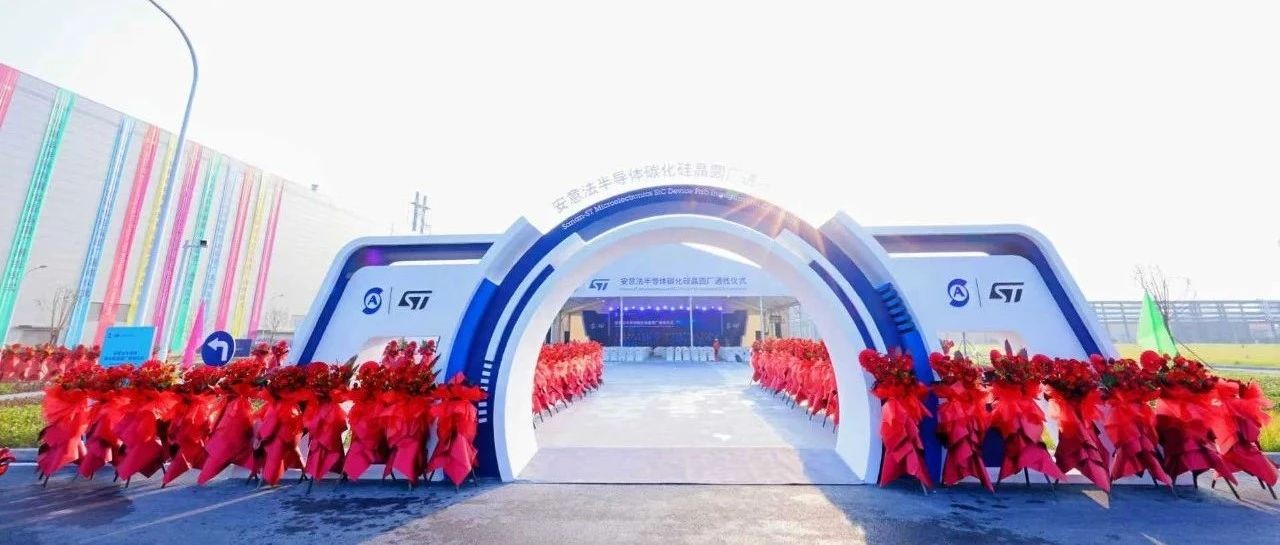
Core Viewpoint - The establishment of the joint venture "Anifa Semiconductor Co., Ltd." between STMicroelectronics and Sanan Optoelectronics marks a significant milestone in localizing the production of 8-inch silicon carbide (SiC) wafers in China, aimed at meeting the growing demand in the electric vehicle and industrial power sectors by 2025 [1][3][4]. Group 1: Joint Venture and Production - The joint venture, located in Chongqing, includes an 8-inch SiC power device manufacturing facility and a separate SiC substrate manufacturing plant operated by Sanan, both designed to support local production needs [1][4]. - The total investment for the joint venture is projected to be approximately 23 billion RMB (3.2 billion USD), making it the first large-scale production line for automotive-grade SiC power devices in China [4][6]. Group 2: Market Demand and Industry Trends - The demand for SiC devices is expected to surge, with a forecasted market value of nearly 10 billion USD by 2029, driven primarily by the automotive, mobile, and transportation sectors [3]. - The shift from 6-inch to 8-inch wafers is becoming a consensus in the industry due to the increased effective area for cutting dies, which significantly reduces costs and enhances production efficiency [6][7]. Group 3: Local Economic Impact - The project is anticipated to enhance Chongqing's semiconductor industry chain, contributing to the formation of a significant SiC industry cluster and improving the local economy [4][12]. - STMicroelectronics' commitment to local production aligns with China's strategic goals for high-quality industrial development and innovation [9][12]. Group 4: Long-term Strategy - STMicroelectronics has a long history in China, having established a complete industrial chain and focusing on localization to better serve the Chinese market [10][11]. - The company's strategy includes collaboration with local educational institutions and partners to foster talent and innovation in the semiconductor field [11].


港股科技股Big7
Western Securities· 2025-03-01 15:26
Investment Rating - Industry Rating: Overweight [1] - Previous Rating: Overweight [1] - Rating Change: Maintained [1] Core Insights - DeepSeek represents the transition of domestic AI technology from catching up to leading, indicating a potential revaluation of Chinese tech assets [1] - The selected "Big 7" Hong Kong tech stocks include Alibaba, Tencent, Xiaomi, Meituan, SMIC, BYD, and Horizon Robotics, based on industry influence and technological innovation capabilities [1] Summary by Company Alibaba - Alibaba is one of China's largest tech companies, with a business scope covering e-commerce, cloud computing, local services, and international digital commerce [12] - The core competitiveness lies in the "data-technology-scenario" closed loop, with significant advantages in AI model training due to massive consumer behavior data [12][13] - Collaboration with Apple to develop localized AI features for the Chinese version of the iPhone may lead to a revaluation of Alibaba's cloud and AI business [13] Tencent - Tencent is a leading player in China's internet ecosystem, with a strong "social + content" super-ecosystem that forms a solid barrier to entry [2][14] - Future growth is expected to be driven by innovations powered by AI technology, with applications in enterprise services and consumer-facing products [15] Xiaomi - Xiaomi is a leading consumer electronics and smart manufacturing company, focusing on smartphones, smart hardware, and IoT platforms [3][17] - The company has connected 822.2 million IoT devices, showing a 25.6% year-on-year growth, and aims to deepen its "human-vehicle-home" ecosystem strategy [17][18] - The automotive sector is expected to become a second growth curve, with AI integration enhancing user experience and creating new revenue streams [18] Meituan - Meituan is a super platform in China's local service sector, focusing on the digitalization of various scenarios including food delivery and travel [4][19] - The company's competitive edge lies in its super app ecosystem and instant delivery system, which creates a high-frequency traffic entry point [19][20] - Future growth will benefit from structural upgrades in the local service market and technological innovation [20] SMIC - SMIC is a leader in China's integrated circuit manufacturing, focusing on both mature and advanced process chip production [5][22] - The company has a strong manufacturing capability and localized supply chain, which positions it well to meet the growing semiconductor demand [22][23] - Future growth is expected to be driven by the continuous demand for semiconductors and technological upgrades [23] BYD - BYD is a global leader in the new energy vehicle sector, with a projected sales volume of over 4.27 million vehicles in 2024 [6][24] - The company has significant advantages in technology, cost, innovation, and distribution channels, which solidify its leadership position [24][25] - The "smart driving equality" strategy is expected to deepen BYD's leadership in the automotive industry [25] Horizon Robotics - Horizon Robotics is a leading supplier of advanced driver-assistance systems (ADAS) and high-level autonomous driving solutions [7][27] - The company has a competitive advantage through software-hardware collaboration, high efficiency, and an open ecosystem for customized development [27][28] - Future prospects include a strong entry into the high-performance computing market with its J6P chip, marking a significant leap in capabilities [29]