
港口

Search documents
盐田港9月19日获融资买入1160.52万元,融资余额2.94亿元
Xin Lang Cai Jing· 2025-09-22 01:16
Group 1 - The core viewpoint of the news highlights the financial performance and trading activities of Yantian Port, indicating a mixed trend in financing and stock performance as of September 19 [1] - On September 19, Yantian Port's stock price increased by 0.45%, with a trading volume of 115 million yuan. The financing buy-in amount was 11.61 million yuan, while the financing repayment was 17.65 million yuan, resulting in a net financing outflow of 6.05 million yuan [1] - As of September 19, the total margin financing and securities lending balance for Yantian Port was 295 million yuan, with the financing balance accounting for 2.07% of the circulating market value, indicating a high level compared to the past year [1] Group 2 - As of June 30, the number of shareholders for Yantian Port reached 65,000, an increase of 14.09% from the previous period, with an average of 48,673 circulating shares per person, up by 23.26% [2] - For the first half of 2025, Yantian Port reported an operating income of 389 million yuan, a year-on-year decrease of 4.49%, while the net profit attributable to shareholders increased by 4.07% to 653 million yuan [2] - Yantian Port has distributed a total of 7 billion yuan in dividends since its A-share listing, with 1.56 billion yuan distributed over the past three years [3]

巡察“点题” 部门“快答” 市交通运输局以精细服务暖企心惠民行
Zhen Jiang Ri Bao· 2025-09-21 23:36
Core Viewpoint - The article highlights the proactive measures taken by the Zhenjiang Municipal Transportation Bureau to address public transportation issues and enhance safety and service quality in response to community needs and inspection feedback [1][2][3] Group 1: Public Transportation Improvements - The introduction of the "Convenient Express Bus" service has significantly reduced waiting times for passengers traveling between Zhenjiang and Yangzhong, with peak intervals now at 15 minutes and average waiting times shortened by 10-15 minutes [1] - The fare for the "Convenient Express Bus" has been lowered from 17 yuan to 10 yuan, providing a more cost-effective option for citizens [1] Group 2: Infrastructure and Safety Enhancements - The Zhenjiang Municipal Transportation Bureau has upgraded key signage at the Zhenjiang Station to improve navigation for travelers, enhancing their overall experience and perception of the city [2] - A comprehensive safety inspection revealed that 538 operational vehicles had similar safety risks to those identified in a problematic fire extinguishing device, leading to a swift rectification plan that was completed by the end of August [2] Group 3: Regulatory and Service Quality Improvements - The Bureau has addressed issues with taxi invoice printing that hindered passenger reimbursement by coordinating with tax authorities to update the invoice template, ensuring smoother processes for both taxi companies and passengers [2] - The Bureau is encouraging the use of new energy vehicles in port operations to mitigate pollution, alongside implementing vehicle management plans to regulate traffic at key port areas [3] Group 4: Business Support Initiatives - A series of outreach activities were conducted to understand the challenges faced by maintenance and driving training enterprises, with plans to develop solutions to address their needs by the end of the year [3]
交运行业2025Q3业绩前瞻:内需延续改善,外需维持韧性
Changjiang Securities· 2025-09-21 23:30
Investment Rating - The report maintains a "Positive" investment rating for the transportation industry [13] Core Insights - The transportation industry is expected to see improvements in profitability across various sub-sectors in Q3 2025, driven by domestic demand recovery and resilient international demand [2][6][7][8][9][10][11][12] Summary by Sub-Sector Aviation - The aviation sector is experiencing subdued demand but is benefiting from reduced costs, leading to an overall improvement in profitability for Q3 2025. The international flight recovery remains strong, and oil prices have significantly decreased [6][19][24] Airports - Domestic airport traffic is recovering, with international flights also increasing. Revenue is expected to improve steadily, with key airports benefiting from both domestic and international demand growth [2][6][24][26] Express Delivery - The "anti-involution" policy is driving price increases in the express delivery sector, leading to improved profitability for e-commerce deliveries. However, operational costs are temporarily pressuring profit margins [2][6][28][30] Logistics - The logistics sector is stabilizing, with major players expected to see profit growth due to improved supply chain performance and resilient cross-border logistics profitability [2][6][7][31] Maritime Transport - The maritime sector is witnessing a divergence in profitability among different shipping types. While container shipping faces challenges, oil tanker profits are improving due to favorable market conditions [2][6][8][33][37] Ports - Port operations are expected to see improved profitability in bulk cargo handling, while container throughput remains resilient despite external pressures [2][6][9][39] Highways - Highway traffic is relatively stable, with a slight increase in profitability anticipated for Q3 2025, supported by steady freight and passenger traffic [2][10][41] Railways - Railway passenger and freight volumes are showing mixed trends, with a focus on opportunities arising from high-speed rail transformations. Overall, passenger transport is expected to grow, while freight transport is improving [2][11][43][44]




北部湾港北海铁山港区外贸集装箱业务正式开启
Zheng Quan Shi Bao Wang· 2025-09-21 12:48
人民财讯9月21日电,据北部湾港(000582)集团消息,9月18日,随着5-1号岸桥将临港企业2大柜成品 纸顺利装入"华信长荣"轮,首票在北部湾港北海铁山港区报关及查验合格的外贸集装箱货物将发往东南 亚地区,宣告了北海铁山港外贸集装箱作业业务正式开启,成功开辟了一条新的外贸集装箱出海渠道。 ...

全球港口建设出现新变化→
Sou Hu Cai Jing· 2025-09-21 08:04
Core Viewpoint - The global multi-modal transport market is expected to grow significantly, driven by various factors including the Belt and Road Initiative, supply chain restructuring, and advancements in low-altitude economy, impacting port operations and management [4][5][6]. Multi-Modal Transport Market Growth - The global multi-modal transport market is projected to reach $62.25 billion in 2024, with a year-on-year growth of approximately 6.6%, and is expected to expand to $103.29 billion by 2032 [4]. - In North America, the multi-modal transport demand is anticipated to grow due to the US-Mexico-Canada Agreement and potential tariffs, with a projected total of 18.084 million units in 2024, reflecting an 8.5% increase [4]. - The European multi-modal transport market is steadily growing, supported by the new TEN-T policy aimed at creating an efficient multi-modal network across Europe [4]. China's Multi-Modal Transport Development - China's multi-modal transport market is significantly driven by the Belt and Road Initiative, with a projected 2024 port container rail-water transport volume of 13.35 million TEUs, marking a 15.4% increase [5]. - The China-Europe Railway Express is expected to operate 19,000 trains in 2024, showing a year-on-year growth of 10.7% [5]. Supply Chain Restructuring Impact - The global supply chain landscape is undergoing profound changes due to geopolitical conflicts and supply chain restructuring, significantly affecting the port industry [9]. - The Red Sea crisis has led to a 56% increase in the diversion of dry bulk vessels and a 90% increase for container ships compared to 2023, disrupting trade and logistics [9]. Low-Altitude Economy and Port Development - The low-altitude economy, particularly low-altitude logistics, is emerging as a key component in enhancing port operations, showcasing advantages in short-distance transport and high-efficiency delivery [13][14]. - The global low-altitude economy market reached 2.08 trillion RMB in 2023, with a projected compound annual growth rate of 11.51% from 2024 to 2029 [14]. Sustainable Port Transformation - Ports are transitioning from traditional logistics nodes to multi-dimensional sustainable hubs, balancing environmental, social, and economic impacts through community collaboration and green technology [17]. - Recent initiatives in Australia, such as the redevelopment of the Darwin waterfront area, aim to enhance community sustainability while preserving ecological spaces [17].

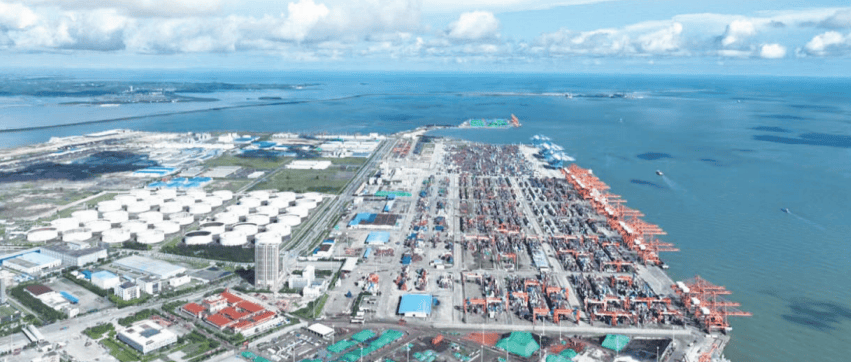
码头上的全球贸易
经济观察报· 2025-09-21 07:45
Core Viewpoint - The article discusses the transformation of Shandong Port from a "single port operator" to a "comprehensive port service provider," reflecting China's evolving role in the global supply chain from a participant to a driver and leader [1][3][24]. Group 1: Shandong Port's Role and Performance - Shandong Port is the largest port group globally, with a cargo throughput expected to exceed 1.8 billion tons in 2024 [2]. - The port handles over 44 million TEUs of container throughput, ranking second globally, and accounts for significant shares of various imports, including over one-third of China's crude oil imports [2][3]. - The port's diverse cargo throughput serves as a mirror for the macroeconomic conditions in China, with fluctuations in different cargo types reflecting changes in domestic economic activities [2][10][22]. Group 2: Growth in Specific Cargo Types - The throughput of general cargo at Shandong Port has seen a significant increase, with a 77% year-on-year growth in the first eight months of 2025, reaching nearly 20 million tons [5]. - The port has expanded its general cargo routes, opening nine new routes and enhancing six existing ones, primarily targeting markets in Africa, North America, and Europe [5][6]. - China's foreign direct investment reached $192.2 billion in 2024, marking an 8.4% increase, indicating a strong trend of Chinese enterprises investing abroad [5][6]. Group 3: Crude Oil and Economic Relations - Shandong Port's crude oil imports account for over one-third of China's total, with a processing capacity of over 237 million tons annually [10][11]. - The port's crude oil throughput has been affected by global geopolitical events, leading to fluctuations in demand and pricing, with a 2.9% year-on-year decline in crude oil imports in the first eight months of 2025 [11][12]. - The transition to renewable energy sources is impacting crude oil demand, with a significant increase in new energy vehicle exports from the port [12][22]. Group 4: Steel Exports and Infrastructure Development - Shandong Port's iron ore imports constitute nearly one-fourth of China's total, but the demand is facing pressure due to slowing domestic infrastructure investment [14][16]. - Conversely, steel exports from Shandong Port have surged, with a 19.2% increase in steel exports in the first half of the year, driven by infrastructure projects in emerging markets [17][18][19]. - The port's strategic location and capabilities are facilitating the export of steel to regions with growing infrastructure needs, such as Africa and Southeast Asia [17][19]. Group 5: Future Directions and Strategic Shifts - Shandong Port is evolving into a comprehensive service provider, offering integrated logistics solutions and financial services to enhance competitiveness in the global market [24][25]. - The port is actively participating in the global supply chain by designing logistics solutions for overseas projects and collaborating with various enterprises to optimize supply chain efficiency [24][25]. - The ongoing transformation aligns with national strategies to enhance China's competitive edge in international trade and logistics [25][26].
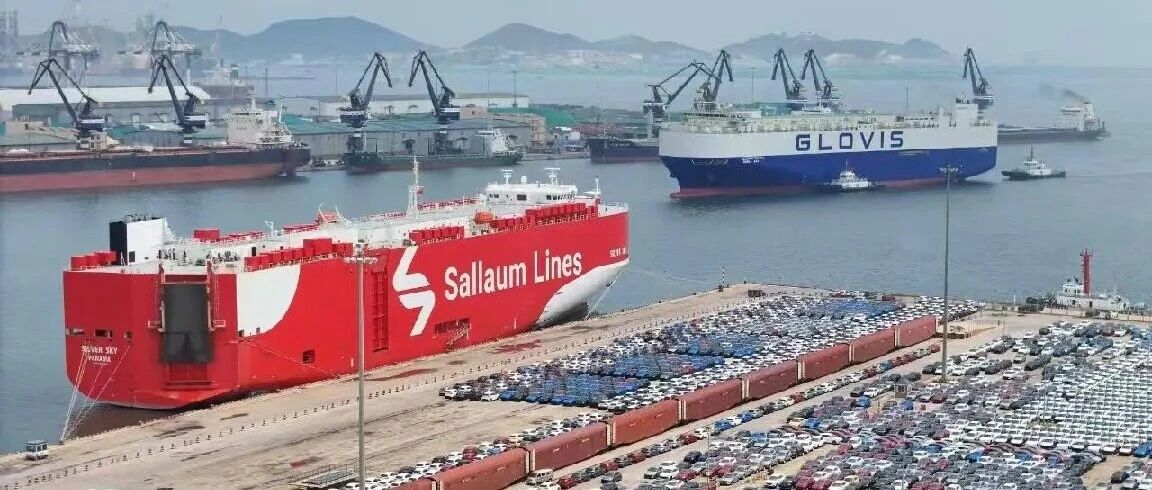
码头上的全球贸易
Jing Ji Guan Cha Wang· 2025-09-21 07:03
Core Insights - The article highlights the transformation of Shandong Port from a "single port operator" to a "comprehensive service provider," reflecting China's evolving role in the global supply chain [2][17] - Shandong Port serves as a barometer for the macroeconomic landscape, with its cargo throughput providing insights into domestic and international economic trends [1][15] Group 1: Cargo Throughput and Economic Indicators - Shandong Port is the largest port group globally, with a projected cargo throughput exceeding 1.8 billion tons in 2024, and it ranks second in container throughput with over 44 million TEUs [1] - The port's diverse cargo types, including iron ore, crude oil, and general cargo, mirror the state of the macroeconomy, with specific cargo trends indicating industrial activity and consumer demand [1][15] - In the first eight months of 2025, the throughput of general cargo increased by 77%, indicating a surge in overseas investments by Chinese companies [3][4] Group 2: International Trade and Investment Trends - China's outbound direct investment reached $192.2 billion in 2024, marking an 8.4% increase and maintaining a global share of 11.9% [4] - The number of new overseas projects signed by Chinese companies in 2025 reached 1,143, the highest for the same period in history, reflecting a robust trend in international expansion [4] - Shandong Port is adapting to the increasing demand for logistics services by providing tailored solutions for global supply chains, including logistics for overseas projects [4][18] Group 3: Crude Oil and Geopolitical Influences - Shandong Port handles over one-third of China's crude oil imports, with significant implications for the local refining industry [7] - Recent geopolitical tensions have led to fluctuating oil prices, impacting the profitability of local refineries and reducing their operational rates [8][9] - The demand for crude oil at Shandong Port has decreased by 2.9% in the first eight months of 2025, reflecting broader shifts in energy consumption patterns [9] Group 4: Steel Exports and Infrastructure Development - Shandong Port's iron ore imports account for nearly 25% of China's total, driven by the region's steel production capacity [10][12] - Despite a slowdown in domestic construction and real estate investment, steel exports from Shandong Port surged by 19.2% in the first half of the year, primarily to emerging markets [13][14] - The port is responding to the growing demand for steel in infrastructure projects across Southeast Asia and Africa, aligning with China's Belt and Road Initiative [14] Group 5: Shifts in Cargo Types and Economic Signals - The port's aluminum ore imports increased by over 70% in the first eight months of 2025, driven by rising domestic demand for aluminum in various industries [15] - Conversely, grain imports fell by 21.3%, indicating a shift towards greater self-sufficiency in food production [15] - The overall decline in coal throughput reflects changes in energy consumption and a transition towards renewable energy sources [16]
(活力中国调研行)江苏港口激发外贸强大韧性 江海联动打造开放新格局
Zhong Guo Xin Wen Wang· 2025-09-21 03:40
Core Insights - Jiangsu's ports are experiencing robust foreign trade growth, with a total import and export value of 3.82 trillion yuan in the first eight months of the year, a 5.1% increase year-on-year, surpassing the national average growth rate by 1.6% [1] Group 1: Port Performance - Lianyungang Port has exported 34,500 new energy vehicles in the first eight months, marking a year-on-year growth of 78.76%, and has operated 610 international trains covering 104 international stations [1] - Taicang Port has seen explosive growth in automobile exports, with 513,000 vehicles exported from January to August, exceeding the total for the previous year, making it a key hub for automobile exports [4] - Yancheng Port has opened new routes to countries like Jordan and the UAE, significantly boosting its roll-on/roll-off vehicle business, placing it among the top three coastal ports in Jiangsu [7] Group 2: Strategic Initiatives - Lianyungang Port is enhancing the synergy between China-Europe freight trains and ocean routes, expanding its market reach to the Middle East and Russia through new initiatives [2] - Taicang Port has achieved a container throughput of 5.8 million TEUs and a cargo throughput of 199 million tons in the first eight months, with foreign trade cargo throughput increasing by 11.7% [4][5] - The ports collectively contribute to Jiangsu's multi-modal transport system, focusing on new energy vehicles and bulk commodities, thereby stabilizing the province's foreign trade [7]
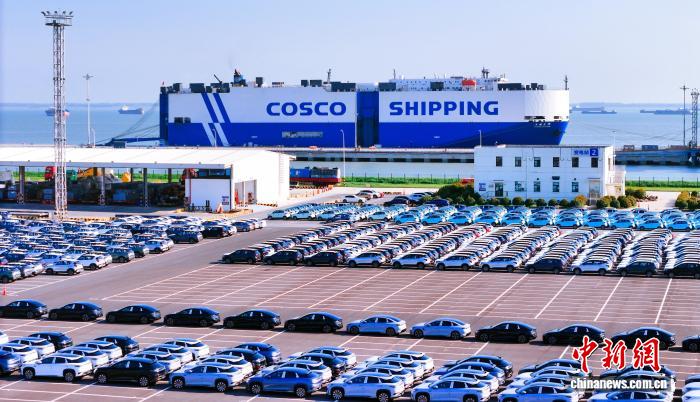
(活力中国调研行)连云港港:打造陆海联动强枢纽 激发外贸新活力
Zhong Guo Xin Wen Wang· 2025-09-20 07:39
Core Points - Lianyungang Port is enhancing its role as a crucial hub for international trade by expanding its logistics capabilities and optimizing port services, resulting in a significant increase in cargo throughput and container volume in 2023 [3][5]. Group 1: Trade and Logistics Expansion - From January to August 2023, Lianyungang Port achieved a cargo throughput growth of 7.57% and an 8.66% increase in container volume, indicating a robust economic vitality for the port [3]. - The port is actively developing international logistics channels with Central Asian countries, establishing a new integrated operation model for the New Eurasian Land-Sea Corridor [3][5]. - Lianyungang has established multiple international train routes covering five Central Asian countries and has opened new connections to cities like Wuxi and Yancheng, enhancing its logistics network [3][5]. Group 2: Export and Import Dynamics - The port has created a unique "export + transit" brand through the China-Europe (Asia) freight trains, facilitating a healthy cycle of goods movement between East and West [5]. - In the first eight months of 2023, Lianyungang Port's export volume of new energy vehicles reached 34,500 units, marking a year-on-year increase of 78.76% [5]. - The port's roll-on/roll-off vehicle exports ranked third nationally, showcasing its growing significance in the automotive export sector [5]. Group 3: Infrastructure and Connectivity - Lianyungang Port has established 25 rail-water intermodal transport routes in collaboration with inland hubs like Zhengzhou and Hefei, promoting deeper integration of inland and coastal foreign trade [6]. - The port is transitioning the New Eurasian Land-Sea Corridor from a "logistics corridor" to an "economic corridor," enhancing its pivotal role in stabilizing and improving foreign trade [6].

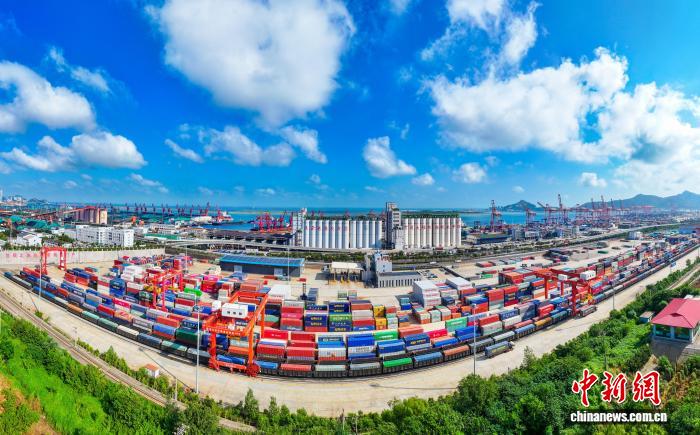
上港集团:推进罗泾港区改造及小洋山北侧开发,持续提升上海港产能与效率
Quan Jing Wang· 2025-09-19 13:11
Core Insights - The company participated in the "Communicating Value and Building Confidence for the Future" event, focusing on the collective reception day for listed companies in Shanghai [1] - The company is advancing several projects aimed at enhancing the capacity of Shanghai Port, including the renovation of the Luojing Port container terminal and the development of the northern side of Xiaoyangshan [1] - The first phase of the Luojing Port container terminal renovation has been put into operation, while the second phase has commenced construction [1] - The Xiaoyangshan North project is set to gradually commence operations in phases during the 14th Five-Year Plan period [1] - The company aims to continue improving production efficiency and container throughput in the future [1]
