科技行业

Search documents
特斯拉盘前涨超2%,英伟达、谷歌、亚马逊涨近2%。
Xin Lang Cai Jing· 2025-12-18 13:52
Group 1 - Tesla's pre-market stock price increased by over 2% [1] - Nvidia, Google, and Amazon also saw stock price increases of nearly 2% [1]




超117万人被裁!
商业洞察· 2025-12-18 09:23
Core Viewpoint - The article discusses the alarming rise in layoffs in the U.S. job market, with over 1.17 million employees laid off by November 2025, a 54% increase from the previous year, drawing parallels to the 2008-2009 financial crisis [4][5]. Group 1: Causes of Layoffs - The primary cause of layoffs is attributed to the efficiency revolution led by the DOGE department, resulting in 293,753 federal employees and contractors losing their jobs, with an additional 20,976 in the private and non-profit sectors, an eightfold increase compared to 2024 [15]. - The macroeconomic environment, characterized by high costs and tariffs, is also a significant factor, as many companies face debt repayment pressures from loans taken during the low-interest period of 2020-2021 [18][19]. - Companies, particularly those owned by private equity, are cutting jobs at a rate 1.5 times higher than publicly traded firms due to high leverage costs and cash flow constraints [21][22]. Group 2: Impact on Various Industries - The retail sector is the hardest hit, with a significant drop in consumer confidence and companies like Target and Starbucks announcing substantial layoffs due to decreased sales [27][28]. - The service industry has seen a 64% increase in layoffs, with UPS cutting 14,000 management positions to improve efficiency [30][31]. - The food industry has also been affected, with 34,165 job losses throughout the year, particularly in beef processing due to rising costs [32][33]. Group 3: Technology and Management Changes - The technology sector has contributed significantly to layoffs, with 35% of the total layoffs coming from this industry, primarily affecting middle management roles [46][47]. - A new corporate mantra has emerged: "Every employee generates revenue," leading to layoffs becoming a normalized management tool rather than a crisis response [51]. - Companies like Amazon and IBM have reported increased profits while simultaneously announcing significant layoffs, indicating a trend where cost-cutting measures are prioritized over workforce stability [53][54]. Group 4: Future Implications - The trend of layoffs is expected to continue, with predictions that the technology sector will see a peak in cost-cutting benefits by 2026, potentially reducing operational costs significantly [58]. - However, the loss of middle management, which often holds critical technical knowledge, could extend product development cycles and hinder innovation [62][71]. - The article warns that excessive cost-cutting may erode the foundation of innovation within the technology sector, leading to long-term negative consequences [72].





港股航空股大涨
第一财经· 2025-12-18 08:43
Market Overview - The Hang Seng Index (HSI) closed at 25,498.13, up by 29.35 points or 0.12% [1] - The Hang Seng Technology Index (HSTECH) decreased by 39.66 points, down 0.73% to 5,418.29 [1] - The Hang Seng China Enterprises Index (HSCEI) slightly fell by 2.06 points, down 0.02% to 8,841.51 [1] - Sectors such as coal, transportation, banking, and oil & petrochemicals showed gains, while sectors like paper, electrical equipment, machinery, and real estate experienced declines [1] Airline Sector Performance - Airline stocks saw a general increase, with China Eastern Airlines rising over 8%, China Southern Airlines up more than 5%, and Air China increasing by over 4% [2] - The airline index (887825) reported a rise of 42.84 points, or 5.07%, reaching 887.06 [3] - Notable airline stock performances include: - China Eastern Airlines (0670.HK) at 5.350, up 8.08% - Beijing Capital International Airport (0694.HK) at 2.850, up 6.74% - China Southern Airlines at 5.880, up 5.57% - Air China at 7.050, up 4.75% [3] Technology Sector Performance - Major technology stocks mostly declined, with SenseTime dropping over 4%, Xiaomi down more than 2%, and Alibaba, JD Health, BYD, and Sunny Optical Technology each falling over 1% [2] - Specific declines include: - SenseTime (商汤-W) at 1.890, down 4.06% - Xiaomi Group (小米集团-W) at 40.200, down 2.47% - Lenovo Group at 9.400, down 1.88% - Sunny Optical Technology at 65.350, down 1.80% [5][6]

明年将如何提高居民收入、扩内需,中央财办详解中央经济工作会议
2 1 Shi Ji Jing Ji Bao Dao· 2025-12-17 12:33
Core Viewpoint - The central economic work meeting emphasizes a positive outlook for China's economy, projecting a growth rate of around 5% for 2025, with the total economic output expected to reach approximately 140 trillion yuan [1] Group 1: Macroeconomic Policies - China will continue to implement more proactive fiscal and monetary policies in 2026, maintaining necessary fiscal deficits and debt levels while optimizing fiscal expenditure structures [2] - The total government bond issuance for 2025 is projected to be 11.86 trillion yuan, with a deficit rate expected to rise to around 4% [2][3] - Monetary policy will focus on maintaining liquidity and supporting economic growth, with tools such as interest rate cuts and reserve requirement ratio adjustments being utilized flexibly [3][4] Group 2: Income and Employment - A series of measures to promote income growth and stabilize employment are expected in 2026, including the implementation of a plan to increase urban and rural residents' income [5][6] - The government aims to enhance the basic pension for residents and improve consumption capacity, with a focus on ensuring that income growth aligns with economic growth [6][8] Group 3: Consumption and Investment - Expanding domestic demand is a top priority for 2026, with a shift from goods consumption to a balanced focus on both goods and service consumption [9] - Investment is expected to stabilize, with a focus on infrastructure and social welfare projects, while also encouraging private investment in high-tech and service sectors [10][11][12] - The government plans to enhance investment in areas such as urban renewal, healthcare, and childcare, while also leveraging government funds to stimulate private sector investment [11][12]
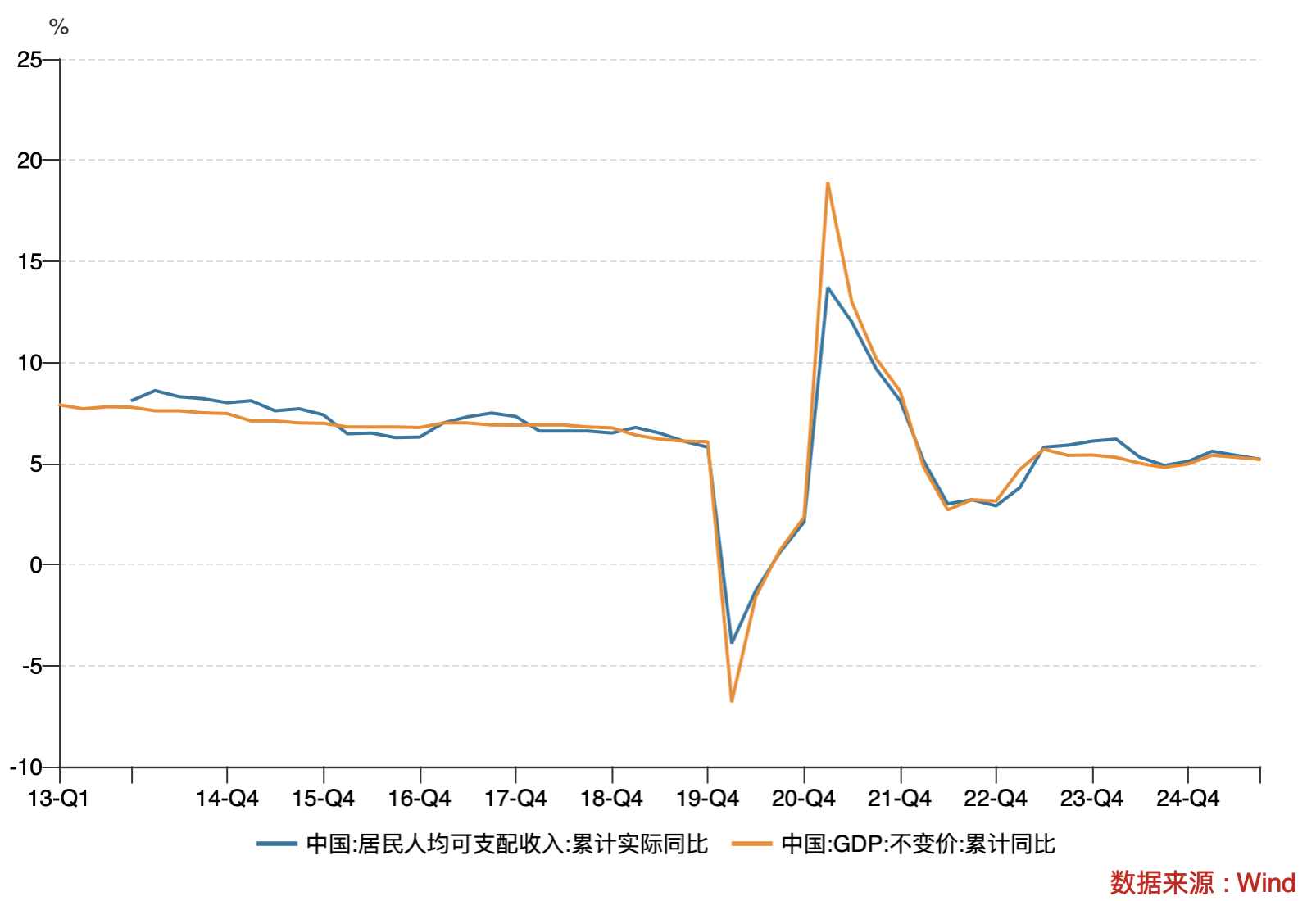
日本加息风暴真的来了!你的投资还安全吗?
Sou Hu Cai Jing· 2025-12-17 09:18
Core Viewpoint - The era of "free leverage" in global financial markets, largely supported by Japan's ultra-low interest rates, is coming to an end as the Bank of Japan prepares to raise interest rates after more than two decades of monetary easing [1][3][10]. Group 1: Economic Factors - Japan's core inflation rate has risen for fifty consecutive months, indicating persistent inflationary pressure, while wage growth has not kept pace with rising prices, leading to a decrease in real purchasing power for consumers [3][4]. - The Japanese yen has depreciated significantly, from 110 yen per dollar to 160 yen, a decline of over 30%, exacerbating import-driven inflation for a country heavily reliant on energy and food imports [3][4]. - The Japanese government's extensive fiscal stimulus has increased inflation and created risks of fiscal imbalance, necessitating a shift in monetary policy to cool down the overheated economy [3][4]. Group 2: Financial Market Dynamics - The practice of yen carry trade, where investors borrow yen at low interest rates to invest in higher-yielding assets globally, has been a significant driver of capital flows into markets like the US and Europe, with over 90% of these funds directed there [4][6]. - A potential interest rate hike, even a modest increase from 0% to 0.5%, would disrupt this carry trade, leading to a significant outflow of capital from global markets as investors rush to close positions [7][10]. - The anticipated market reaction to Japan's interest rate hike could lead to a massive sell-off in assets such as US stocks and cryptocurrencies, as seen in August when a hint of a rate increase caused significant market declines [7][8]. Group 3: Global Market Implications - The interconnectedness of global capital markets means that a downturn in US and Hong Kong markets due to carry trade unwinding could negatively impact investor sentiment in the A-share market, despite its limited direct exposure to yen carry trades [8][9]. - The potential appreciation of the yen following an interest rate hike could create upward pressure on other Asian currencies, including the Chinese yuan, complicating the competitive landscape for exports [9][10]. - The upcoming interest rate changes in Japan are expected to have a prolonged impact on global markets, leading to a gradual revaluation of assets rather than a sudden market crash, which poses a challenge for investors [10][11].

直线跳水!美联储大消息!
天天基金网· 2025-12-17 01:31
Core Viewpoint - The unexpected rise in the U.S. unemployment rate to 4.6% in November, the highest since September 2021, may be a key factor prompting the Federal Reserve to consider further interest rate cuts [3][5][12]. Group 1: Employment Data - The U.S. non-farm payrolls increased by 64,000 in November, surpassing the expected increase of 50,000 [5]. - The unemployment rate rose to 4.6%, higher than the expected 4.5% and up from 4.4% in September [5][12]. - The October employment figures were significantly revised down, showing a decrease of 105,000 jobs, much worse than the anticipated decline of 25,000 [5][6]. Group 2: Wage and Retail Sales Data - Average hourly earnings in November grew by 3.5% year-over-year, marking the lowest growth rate since May 2021 [7]. - Retail sales in October remained flat month-over-month, slightly below the expected growth of 0.1%, indicating signs of economic slowdown [7][8]. Group 3: Market Reactions - Following the employment data release, the probability of a 25 basis point rate cut by the Federal Reserve in January rose to 26.6%, up from 22% prior to the data [8][9]. - The U.S. dollar index fell sharply, dropping below 98 for the first time since October 6, with a minimum of 97.8669 during the day [11]. - Major U.S. stock indices opened lower but saw a rebound, with the Nasdaq gaining 0.23% and large tech stocks generally rising [11]. Group 4: Economic Outlook - Economists suggest that the slowdown in the labor market, combined with high inflation due to tariffs, poses potential risks to consumer spending [8]. - The market anticipates two rate cuts by 2026, with a total easing of 58 basis points expected next year [9][12]. - The Federal Reserve is likely to adopt a cautious approach in interpreting future data due to incomplete data collection for October and November [12].

美元直线跳水!美联储降息大消息!
Zheng Quan Shi Bao Wang· 2025-12-16 23:51
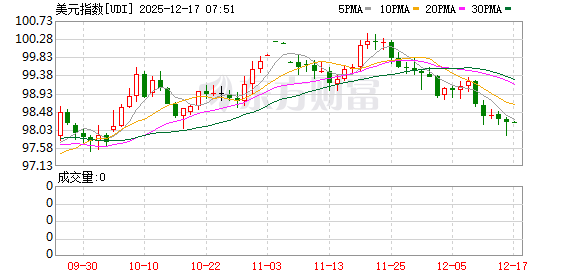
重磅数据搅动美联储降息前景。 北京时间12月16日晚间,美国劳工统计局一次性公布了10月和11月的非农就业数据,其中显示,美国11 月失业率却意外升至4.6%,创下2021年9月以来的新高。有分析称,这很可能是促使美联储进一步降息 的关键因素。 非农数据公布后,交易员押注美联储2026年将降息两次。据CME"美联储观察",美联储明年1月降息25 个基点的概率一度升至26.6%,数据公布前这一概率为22%。受此影响,美元指数直线跳水,一度跌破 98,为10月6日以来首次。美股三大指数集体低开后,震荡分化,纳指拉升翻红,大型科技股多数收 涨。 另据最新消息,美国总统特朗普将于当地时间周三面试另一位美联储主席候选人——美联储理事克里斯 托弗·沃勒(Christopher Waller)。在所有被考虑的美联储主席人选中,沃勒在《华尔街日报》10月对经 济学家的调查中被评为首选,华尔街普遍对沃勒评价较高。 重磅数据出炉 从修正数据来看,美国就业市场正加速"降温"。美国8月非农新增就业人数由-0.4万人修正至-2.6万人; 9月份非农新增就业人数由11.9万人修正至10.8万人。这意味着,美国8月和9月新增就业人数合计下 ...


美元直线跳水!美联储,降息大消息!
Xin Lang Cai Jing· 2025-12-16 23:36
重磅数据搅动美联储降息前景。 北京时间12月16日晚间,美国劳工统计局一次性公布了10月和11月的非农就业数据,其中显示,美国11 月失业率却意外升至4.6%,创下2021年9月以来的新高。有分析称,这很可能是促使美联储进一步降息 的关键因素。 非农数据公布后,交易员押注美联储2026年将降息两次。据CME"美联储观察",美联储明年1月降息25 个基点的概率一度升至26.6%,数据公布前这一概率为22%。受此影响,美元指数直线跳水,一度跌破 98,为10月6日以来首次。美股三大指数集体低开后,震荡分化,纳指拉升翻红,大型科技股多数收 涨。 另据最新消息,美国总统特朗普将于当地时间周三面试另一位美联储主席候选人——美联储理事克里斯 托弗·沃勒(Christopher Waller)。在所有被考虑的美联储主席人选中,沃勒在《华尔街日报》10月对经 济学家的调查中被评为首选,华尔街普遍对沃勒评价较高。 重磅数据出炉 美国劳工统计局公布的数据显示,美国11月非农就业人口增长 6.4万人,高于预期的5万人;美国11月失 业率意外升至4.6%,高于预期的4.5%,亦高于9月的4.4%,创2021年以来的新高。 报告显示, ...
直线跳水!美联储,降息大消息!
券商中国· 2025-12-16 23:23
重磅数据搅动美联储降息前景。 北京时间12月16日晚间,美国劳工统计局一次性公布了10月和11月的非农就业数据,其中显示,美国11月失业 率却意外升至4.6%,创下2021年9月以来的新高。有分析称,这 很可能是促使美联储进一步降息的关键因素。 非农数据公布后,交易员押注美联储2026年将降息两次。据CME"美联储观察",美联储明年1月降息25个基点 的概率一度升至26.6%,数据公布前这一概率为22%。受此影响,美元指数直线跳水,一度跌破98,为10月6日 以来首次。美股三大指数集体低开后,震荡分化,纳指拉升翻红,大型科技股多数收涨。 薪资数据同样释放出降温信号。美国11月平均时薪同比增长3.5%,为2021年5月以来最低增速。尽管仍跑赢通 胀,但实际工资增速正在放缓,这意味着,美国家庭购买力改善的空间正在收窄。 经济学家表示,美国就业市场放缓与关税引发的高通胀双重冲击,仍对消费者支出构成潜在风险。 美国劳工统计局公布的数据显示,美国11月非农就业人口增长 6.4万人,高于预期的5万人;美国11月失业率意 外升至4.6%,高于预期的4.5%,亦高于9月的4.4%,创2021年以来的新高。 报告显示,美国10 ...

“永久裁员”时代来临,这个行业受冲击最严重
Xin Lang Cai Jing· 2025-12-16 19:17
Core Insights - The article highlights a significant wave of layoffs in the U.S., with over 1.1 million job cuts announced by companies as of November 2025, marking a level not seen since 1993, excluding the pandemic year of 2020 [1][3][4] Group 1: Layoff Trends - The technology sector has been the hardest hit, with over 150,000 layoffs in 2025 alone, as companies adjust their workforce and accelerate automation [3][5] - Cumulatively, U.S. employers reported 1.1708 million layoffs in the first eleven months of 2025, a 54% increase compared to the same period in 2024, with November alone seeing 71,300 layoffs, the highest for that month since 2022 [3][4] - The trend has shifted from large-scale layoffs to more frequent small-scale "rolling layoffs," with the proportion of such layoffs rising from less than half in the mid-2010s to over half in 2025 [6][9] Group 2: Economic Context - The economic signals in 2025 are contradictory, with concerns about job security amid an AI bubble and rising political issues regarding affordability for lower-income workers [4][5] - Analysts predict a "rolling recession" followed by a "rolling recovery," but the current recovery appears limited to financial metrics, with continued declines in white-collar job demand [5][12] Group 3: Labor Market Dynamics - Recruitment demand has also weakened, with companies planning to hire only 497,200 workers in the first eleven months of 2025, a 35% drop and the lowest since 2010 [11] - The labor market exhibits a "K-shaped structure," where large companies are restructuring successfully while small businesses face significant challenges due to rising costs and weak demand [11][12] Group 4: Impact of AI - The wave of layoffs is partly attributed to the adoption of artificial intelligence, with over 70,000 positions cut due to automation efforts [12] - The balance of power in the workplace is shifting towards employers, with remote workers facing diminished career advancement opportunities, leading to a culture of insecurity and increased workloads for remaining employees [12]