
自动驾驶

Search documents
节后要暴涨9大题材梳理:全上热搜!涉及人形机器人、算力、6G
Sou Hu Cai Jing· 2026-02-23 16:20
Group 1: Market Overview - The first trading day of the A-share market in the Year of the Horse is expected to open high, supported by overseas market performance and major themes such as humanoid robots and AI models [2][4] - During the Spring Festival, the Hong Kong stock market rose nearly 1%, and the FTSE A50 index increased by 1.6% [2] Group 2: Humanoid Robots - Humanoid robots made a significant appearance during the Spring Festival Gala, showcasing their capabilities and benefiting the related industry chain [4][5] - Notable companies include Magic Atom, Galaxy General, and Yushu Robotics, which demonstrated advanced robotic performances [4][5] - The demand for these robots surged, with products selling out quickly on platforms like JD.com [6] Group 3: AI Models - The stocks of AI model companies such as Zhipu and MiniMax saw significant increases, with Zhipu's stock price rising nearly 43% and MiniMax's by about 15% [7][9] - Zhipu's new flagship model GLM-5 has achieved high performance in programming tasks, leading to increased user demand and computational power needs [11] Group 4: Autonomous Driving - Tesla's Cybercab, a fully autonomous electric vehicle, has begun production, marking a significant step in the commercialization of autonomous driving [12][13] - Data shows that Tesla's Full Self-Driving (FSD) system has a significantly higher mileage before accidents compared to other driving modes [13] Group 5: 6G Technology - Chinese scientists have made breakthroughs in optical communication and 6G technology, achieving record data transmission rates [14][15] - This advancement is expected to enhance China's capabilities in the semiconductor field and reduce reliance on foreign technology [15] Group 6: Lithium Industry - UBS has expressed a bullish outlook on the lithium market, predicting a 14% increase in global lithium demand by 2026, driven by electric vehicle sales and energy storage systems [16][17] - The report indicates a significant price increase for lithium products, forecasting a new super cycle in lithium prices [16] Group 7: Alcohol Industry - The Chinese government aims to cultivate at least 10 billion-level specialty brewing industrial parks by 2028, promoting growth in the alcohol industry [19][20] - This initiative is expected to benefit related listed companies in the alcohol sector [21][22] Group 8: AI in Healthcare - A research team has developed an AI system capable of diagnosing rare diseases, showing improved accuracy compared to previous models [23][24] - This innovation is anticipated to benefit companies involved in AI and healthcare [24] Group 9: AI Hardware - Companies in the AI hardware sector, particularly those producing AI optical modules, are experiencing high demand, with orders extending into 2026 [25][26] - The growth in AI capital expenditure from major tech companies is expected to benefit these hardware manufacturers [27][28]


佑驾创新(02431)与地上铁及壁虎科技签署无人物流领域战略合作协议
Zhi Tong Cai Jing· 2026-02-23 13:26
Core Viewpoint - The strategic cooperation agreement among Youjia Innovation, Dizhantian Green Technology, and Wall Gecko Technology aims to develop and deliver 3,000 autonomous logistics vehicles that meet automotive standards, enhancing market competitiveness and establishing a leading industry position [1][2]. Group 1: Cooperation Framework - The collaboration focuses on the research, manufacturing, and commercialization of autonomous logistics vehicles, emphasizing "complementary advantages, collaborative development, and win-win creation" [1][2]. - Youjia Innovation will ensure compliance with national and industry automotive certification standards, focusing on core technical indicators for the autonomous logistics vehicles [1][2]. - Wall Gecko Technology will lead the development of the vehicle chassis system, managing the entire process from component selection to performance validation and multi-scenario testing [2]. - Dizhantian will contribute to product definition, leveraging its understanding of logistics scenarios to provide practical suggestions for product features, performance metrics, and cost control [2]. Group 2: Market Deployment and Impact - The parties agree to scale deployment by integrating manufacturing systems and operational resources, aiming for mass implementation of autonomous logistics vehicles across various scenarios to enhance logistics efficiency and cost-effectiveness [2]. - The collaboration is expected to break traditional industry barriers and promote the large-scale application of autonomous driving technology in urban logistics [2]. - The long-term prospects for the L4 autonomous logistics vehicle business are positive, with significant progress since its launch, including multiple orders exceeding 100 units and successful product deliveries in various cities [3].
佑驾创新(02431.HK)与地上铁及壁虎科技达成战略合作协定,推动自动驾驶技术在城市物流领域的规模化应用
Ge Long Hui· 2026-02-23 13:25
Core Viewpoint - The strategic cooperation agreement among Youjia Innovation, Dingshang Iron, and Bihu Technology aims to develop and deliver 3,000 autonomous logistics vehicles that meet automotive standards, enhancing market competitiveness and establishing a leading industry position [1][2]. Group 1: Cooperation Framework - The collaboration focuses on leveraging each party's strengths in operational management, R&D, and L4 autonomous driving technology to create a comprehensive strategic partnership [1]. - The agreement emphasizes "complementary advantages, collaborative development, and win-win creation" in the research, manufacturing, and commercialization of autonomous logistics vehicles [2]. Group 2: Responsibilities and Contributions - Youjia Innovation will ensure compliance with national and industry automotive certification standards, leading the integration of smart driving and chassis systems, and conducting comprehensive testing to deliver operational vehicles [1][2]. - Bihu Technology will lead the development of the vehicle chassis system, managing the entire process from component selection to performance validation, ensuring structural stability and operational reliability [2]. - Dingshang Iron will define the product based on deep insights into logistics scenarios, providing practical recommendations for product features, performance metrics, and market expectations [2]. Group 3: Market Deployment and Future Prospects - The parties agree to scale deployment by integrating manufacturing and operational resources, enhancing logistics efficiency and cost-effectiveness [2]. - The board believes that this cooperation will effectively reduce logistics costs and provide a replicable model for cost reduction and efficiency improvement in the industry [3]. - The long-term outlook for the L4 autonomous logistics vehicle business is positive, with significant progress and multiple orders exceeding 100 units already secured [3].
双重人工监管:特斯拉承认其 Robotaxi 仍需车内司机与远程操作员
Xin Lang Cai Jing· 2026-02-22 11:23
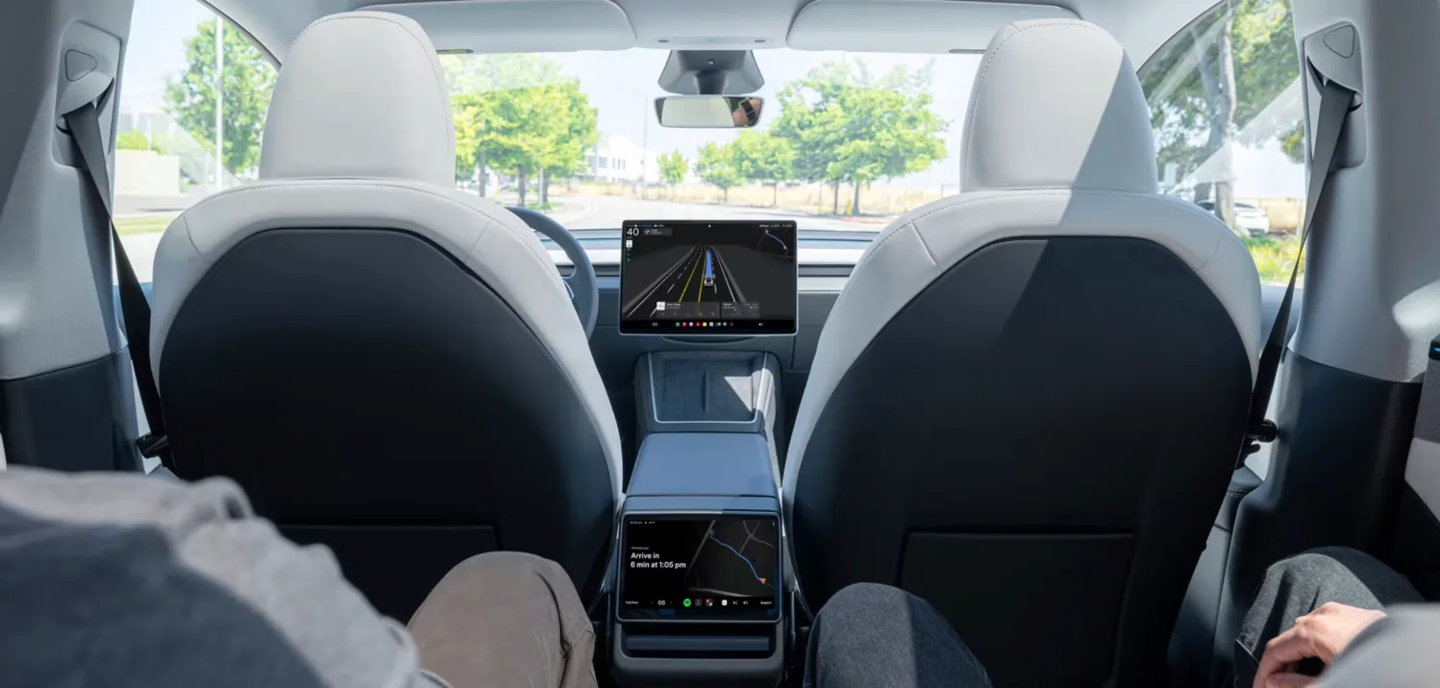
Core Viewpoint - Tesla's submission to the California Public Utilities Commission (CPUC) reveals that its "Robotaxi" service still relies on human drivers and remote operators, contradicting its claims of full autonomy [1][3][4] Group 1: Operational Details - Tesla's ride-hailing service requires a human driver in the vehicle and a remote operator, highlighting a significant operational gap compared to Waymo's fully autonomous service [3] - The service operates under the Transport Charter Program (TCP) with a Level 2 (L2) driver assistance system, necessitating a licensed human driver to monitor and take control when needed [3][4] - Tesla has deployed local remote operators in Austin and the Bay Area, who must pass background checks and training, providing an additional layer of safety [3][4] Group 2: Marketing and Regulatory Issues - Tesla argues against mandatory passenger consent for L2 technology use, claiming that user agreement during app registration suffices [5][7] - The company opposes Waymo's proposal to restrict the use of terms like "autonomous" or "Robotaxi" for L2 services, asserting that existing advertising laws are adequate [6][7] - Tesla's contradictory stance of claiming its vehicles are not autonomous while simultaneously marketing them as "Robotaxi" raises questions about its compliance with advertising regulations [6] Group 3: Safety Claims and Data Reporting - Tesla cites its Vehicle Safety Report, claiming that the probability of accidents decreases to 1/7 when using the Full Self-Driving (FSD) system [9] - The self-reported safety data has faced criticism due to Tesla's lack of comprehensive takeover data, which is required for autonomous vehicle licensing [9]

最新研究:清华AIR团队揭示人类与智驾算法视觉注意力的本质差异
Xin Lang Cai Jing· 2026-02-22 03:30
Core Insights - The research published in "npj Artificial Intelligence" highlights the fundamental differences between human and algorithmic visual attention in the context of autonomous driving [1] - It introduces a three-stage quantitative framework for human driving attention and identifies a critical flaw in algorithmic visual understanding: the lack of "semantic salience extraction capability" [1] - The study suggests that incorporating human semantic attention can effectively bridge the "semantic gap" and "grounding gap" in professional algorithms without relying on large-scale pre-training [1] Research Methodology - The research team conducted experiments with both expert and novice drivers to complete tasks related to hazard detection, usability recognition, and anomaly detection [1] - Eye-tracking data was used to categorize attention stages, which were then integrated into various professional algorithms and visual language models (VLM) [1] Key Findings - The core difference in attention between humans and algorithms is not in "spatial localization" but in "semantic understanding" [1] - Humans can assign semantic priority to scene features through top-down cognition, a capability that algorithms struggle to learn independently [1] - This discovery offers a non-scaling new pathway for enhancing the performance of autonomous driving algorithms, which is significant for resource-constrained real-time systems [1]
运营成本年降六成,九识押注“无图驾驶”
Jing Ji Guan Cha Bao· 2026-02-20 06:35
Core Insights - The company, Zelos Technology (九识智能), is focusing on a "scale first, profit later" strategy in the autonomous delivery vehicle sector, aiming to build a $2 billion business system through integration with Alibaba's logistics platform, Cainiao [1] - The CEO, Kong Qi, emphasized that this partnership not only increases fleet size but also drives structural changes in the company's technology roadmap and business model [1] Group 1: Business Strategy - The company plans to launch a new generation of autonomous driving systems within the next three to five months, enabling vehicles to operate without high-precision maps, thus expanding service areas and reducing deployment costs [2] - By the second half of 2025, overall operating costs are expected to decrease by approximately 60%, with remote human takeover costs dropping to below 3% of monthly operating costs [2] - The fleet size has significantly increased to over 20,000 operational vehicles, with plans to expand to over 70,000 vehicles this year, indicating a potential threefold growth in the short term [2] Group 2: Technological Investment - The company is committed to enhancing its artificial intelligence capabilities, including large models, computing platforms, chips, and operational algorithms [3] - Currently, the autonomous driving system primarily uses NVIDIA chips, but the company is exploring alternative solutions to lower hardware costs and may consider developing its own chips in the future [3] - The long-term goal is to build a global logistics ecosystem rather than merely selling or leasing vehicles, with the company already present in 20 countries and leveraging Cainiao's global logistics network for overseas partnerships [3] Group 3: Market Positioning - The autonomous delivery vehicle industry has entered a "scale threshold phase," where achieving a certain fleet size is crucial for companies to gain cost advantages through data loops and scheduling efficiency [2] - The company aims to transition its business model from "hardware sales" to "system service platform," participating in the construction of next-generation intelligent logistics infrastructure [3] - Balancing rapid expansion with cost control will be critical for the company to maintain its leading position in the autonomous delivery sector [3]
利弗莫尔中概股龙头指数微涨0.16%,板块分化延续,矿业光伏偏强,云计算自动驾驶承压
Jin Rong Jie· 2026-02-18 23:32
Group 1 - The Livermore Chinese Concept Stock Index rose by 0.16% on February 19, with significant divergence in individual stock performances [1] - Hilltop Metal Mining and Canadian Solar both recorded gains exceeding 4%, while Futu Holdings and Amer Sports followed with gains over 2% [1] - Century Internet experienced a drop of over 9%, with other stocks like WeRide, Kingsoft Cloud, and AHG also declining by more than 3% [1] Group 2 - The Nasdaq Golden Dragon China Index fell by 0.04%, with mixed performances among popular Chinese concept stocks [1] - Notable stocks such as Pinduoduo, Trip.com, and Bilibili saw varying degrees of increase, while Li Auto and Tencent Music experienced slight declines [1] - The Livermore Chinese Concept Stock Index has shown frequent volatility recently, with a significant drop of 2.64% on February 13, where Tencent Music fell over 10% and Pinduoduo dropped over 4% [1]
马斯克重申:特斯拉Cybercab 4月投产,无方向盘无踏板【附自动驾驶行业市场分析】
Xin Lang Cai Jing· 2026-02-18 05:56
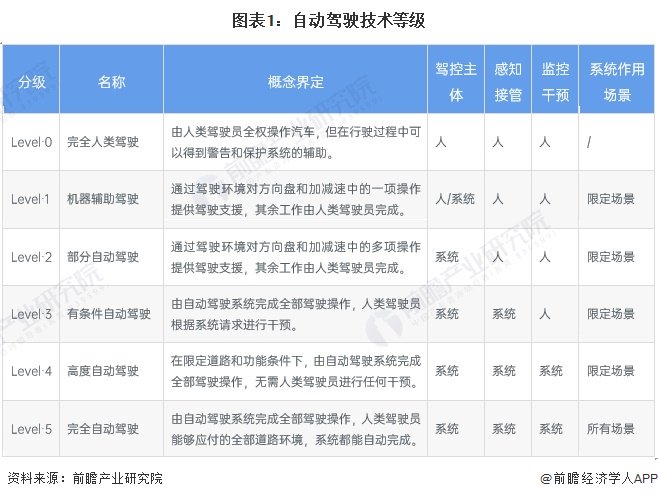
Group 1: Tesla's Cybercab Production - Tesla CEO Elon Musk reiterated that the production of the Cybercab, a fully autonomous vehicle without a steering wheel or pedals, will begin in April 2024, marking the third time he has confirmed this timeline in six months [1] - The Cybercab is designed to be a core component of Tesla's Robotaxi network, reflecting the company's strategic shift towards an autonomous ride-hailing service [1] - Musk acknowledged that initial production volumes of the Cybercab will be low due to the use of revolutionary new components and production techniques, with a production ramp-up expected to follow an S-curve pattern [1] Group 2: Autonomous Driving Market Trends - Autonomous driving has become a core competitive advantage for automakers, serving as a key component of technological barriers and business model upgrades [2] - The SAE defines six levels of autonomous driving (L0-L5), with L5 representing full automation, or true "driverless" operation [2] - Level 2 (L2) advanced driver assistance systems have become mainstream, with penetration rates in China's passenger car market increasing from 23.5% in 2021 to 42.4% in the first half of 2023 [4] Group 3: Future Predictions - NVIDIA CEO Jensen Huang predicted that a significant portion of vehicles will be autonomous or highly automated within the next decade, potentially reaching a scale of one billion autonomous vehicles [6]
特斯拉首辆Cybercab下线:没有方向盘和踏板的汽车终于来了
华尔街见闻· 2026-02-18 04:33
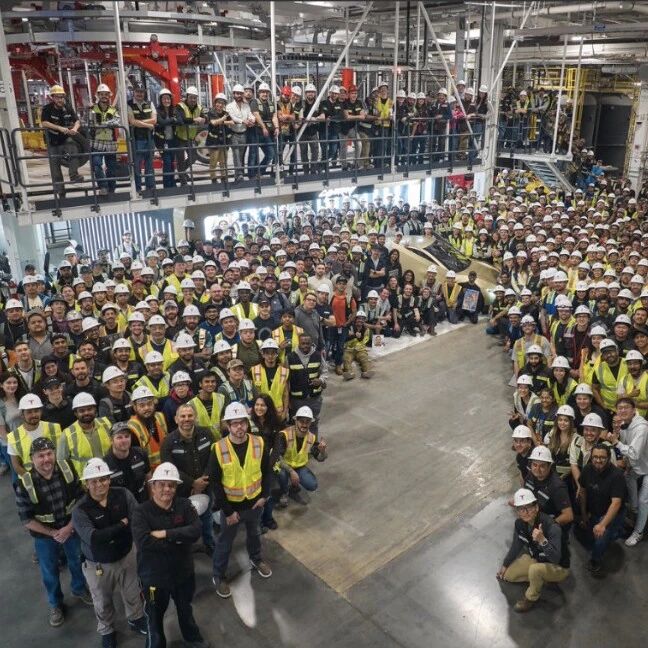
Core Viewpoint - Tesla has launched its purpose-built autonomous taxi vehicle, Cybercab, marking a significant step in the fully autonomous driving sector, but its commercial prospects depend on regulatory approval progress [1][3]. Group 1: Vehicle Design and Features - The Cybercab is designed specifically for Tesla's emerging autonomous taxi business, differing from the 2025 Model Y, as it lacks any manual driving controls [3][4]. - This two-door vehicle is intended for complete autonomous driving, eliminating the steering wheel and pedals [3][4]. Group 2: Regulatory Challenges - Achieving legal road use for the Cybercab requires overcoming significant regulatory hurdles, as federal vehicle safety standards were established with human control systems in mind [3][6]. - Tesla may need to apply for special exemptions from regulatory agencies to meet these requirements, similar to what Zoox has done for its operations in Las Vegas and San Francisco [7][8]. Group 3: Market Position and Pricing - Currently, Tesla's autonomous taxi project primarily operates using the 2025 Model Y, with most trips still relying on human safety supervisors [4]. - Elon Musk indicated that consumers will have the option to purchase the Cybercab, which is designed for autonomous driving and is priced at approximately $25,000 [8].
淘宝年货节海外销额增超40%;比亚迪进入埃及市场丨出海周报
2 1 Shi Ji Jing Ji Bao Dao· 2026-02-17 06:33
Industry Overview - The global humanoid robot market is expected to see a shipment of approximately 17,800 units by 2025, representing a year-on-year growth of 508%, with a market sales value of around $440 million [1] - Chinese manufacturers dominate the market, with Zhiyuan Robotics and Yushu Technology shipping about 5,000 units combined, leading the industry [1] - The commercial application of humanoid robots is primarily focused on entertainment, education, and data collection [1] Digital Trade - China's digital service trade surplus is projected to double by 2025, reaching approximately $33 billion, driven by the expansion of cloud computing and AI sectors [2] - The surplus in telecommunications, computer, and information services is expected to be around $31.8 billion, with a year-on-year increase of nearly 30% [2] - Major Chinese tech companies like Alibaba and ByteDance are establishing robust overseas business systems in e-commerce, gaming, and social networking [2] E-commerce and Logistics - Taobao's overseas sales during the New Year festival increased by over 40% compared to the previous year, with significant growth in pet and automotive accessories [3] - JD.com has launched its self-built logistics network, JoyExpress, in Europe, covering major cities and offering same-day and next-day delivery services [7] - Cainiao has initiated Spring Festival logistics guarantees, providing rapid delivery services across over 200 cities in China [8] Automotive Industry - BYD has officially entered the Egyptian market, aiming for overseas sales of 1.3 million units by 2026, a nearly 25% increase from the previous target [6] - AITO Wenjie has partnered with Abu Dhabi Motors to enter the UAE market, marking a significant step in its global strategy [9] - The collaboration between Tencent and Uber expands Tencent's ride-hailing service to over 20 countries, enhancing user accessibility [10] Strategic Partnerships - Midea Group has signed a strategic agreement with CMA CGM to enhance cross-border logistics and technology innovation between China and the U.S. [13] - Temu has partnered with DEKRA to improve compliance and safety standards for electronic products on its platform [11][12] - Miaokelando has collaborated with SADAFCO to explore the children's cheese snack market in Saudi Arabia, leveraging local distribution channels [14]
