
茶产业

Search documents
茉莉花茶香满城--福建福州茉莉花茶产业复兴之路
Zhong Guo Chan Ye Jing Ji Xin Xi Wang· 2025-07-11 22:37
Core Insights - Fuzhou, the birthplace of jasmine tea, has faced significant challenges in the market, leading to a drastic decline in jasmine flower cultivation and tea production [1][2] - The local government has initiated a revival campaign for jasmine tea, implementing protective measures and financial support to boost the industry [2][4] - Fuzhou jasmine tea has been recognized for its quality and has gained geographical indication status, enhancing its brand value and market reach [3][4] Group 1: Industry Challenges - The area dedicated to jasmine flower cultivation has decreased from over 6,600 hectares to less than 3,400 hectares, and the number of tea enterprises has plummeted from over 1,000 to just over 20 [1][2] - Urban expansion and low profitability have led to a decline in farmers' interest in jasmine cultivation, compounded by fierce competition from other tea varieties and international brands [2] Group 2: Government Initiatives - The Fuzhou government has invested over 80 million yuan to support the development of the jasmine flower and tea industry [2] - Protective regulations have been established, categorizing cultivation areas into different protection levels, with key regions receiving top-tier protection [2] Group 3: Brand Development - Fuzhou has developed local standards and industry norms for jasmine tea, contributing to its high-quality development and preserving traditional craftsmanship [3] - The brand value of Fuzhou jasmine tea reached 4.684 billion yuan, and it has been included in the first batch of geographical indication products under the China-EU agreement [4] Group 4: Market Expansion - Fuzhou jasmine tea is increasingly popular in new tea beverage markets, with over 30% of new tea products using jasmine tea as a base [5] - The tea has gained international recognition, with products exported to Southeast Asia, Europe, and the United States, particularly in countries like France and Japan [4] Group 5: Culinary Innovations - Fuzhou jasmine tea is being incorporated into innovative culinary creations, including dishes served in Michelin-starred restaurants in France [6] - The local government has launched "landmark banquets" that combine traditional Fujian cuisine with geographical indication products, enhancing the cultural appeal of jasmine tea [7]
特产开出隐藏款
Jing Ji Ri Bao· 2025-07-11 22:14
Group 1: New Specialty Products in China - Traditional perceptions of "foreign specialties" are evolving as local products like Tongren matcha, Weifang foie gras, and Chenzhou caviar combine with regional characteristics to become new specialties in China [1][9] - These new products enrich the dining experience for consumers and expand industry opportunities [1] Group 2: Tongren Matcha - China is the world's largest matcha producer, with 25% of its matcha coming from Tongren, Guizhou [2] - Guizhou's unique geographical and climatic conditions, such as high altitude and low sunlight, are ideal for matcha cultivation [2] - The Guizhou Tea Group has exported over 200 tons of matcha this year, with plans to reach a comprehensive output value of over 1.7 billion yuan by 2026 [3] - The matcha industry in Tongren employs over 100,000 tea farmers and supports more than 30 tea processing enterprises [3] Group 3: Weifang Foie Gras - Weifang's foie gras accounts for 70% of the domestic market and 20% of the global market, with an annual output of over 5,000 tons and a market value exceeding 8 billion yuan [5] - The industry has developed a full production chain from breeding to processing, with innovative products like red wine blueberry foie gras gaining popularity [5][6] - The introduction of 1,260 French breeding geese marks a significant step towards sustainable development in the foie gras industry [6] Group 4: Chenzhou Caviar - Over 60% of the world's caviar comes from China, with domestic consumption expected to reach 100 tons by 2030 [7][9] - Chenzhou's unique cold water resources are suitable for sturgeon farming, which is essential for high-quality caviar production [8] - The company is developing new caviar products that can be paired with ice cream and yogurt, while also exploring caviar-derived skincare products [9] Group 5: Broader Implications - The rise of these new specialties not only enhances local economies but also opens up international markets for Chinese products [9] - Other products like Yunnan avocados, Heilongjiang cranberries, and Jilin king crabs are also transitioning from foreign specialties to local specialties, further diversifying the market [9]
中国茶香飘海外背后:金砖峰会 “人货场” 逻辑驱动文化出海新实践
Cai Jing Wang· 2025-07-11 06:19
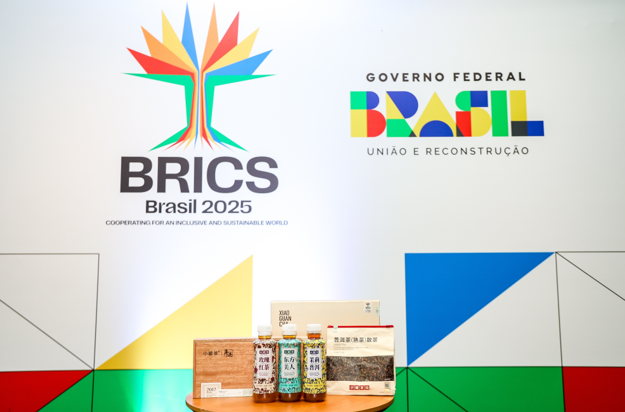
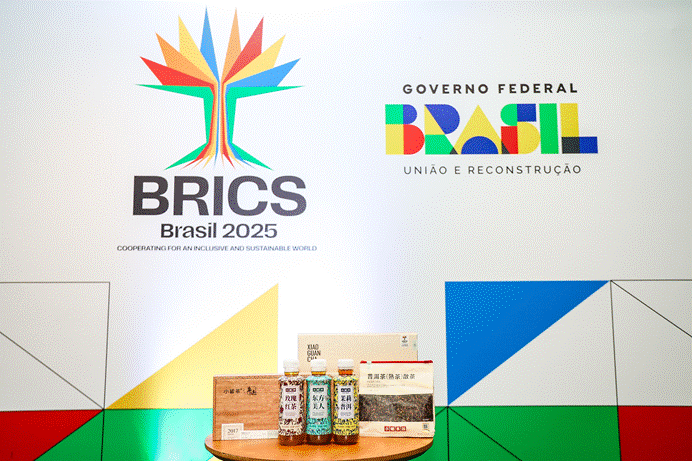
Core Insights - The article highlights the global expansion of Chinese brands, particularly focusing on the success of "Little Jar Tea" at the 2025 BRICS Summit, where it became the "official designated tea" [4][11] - The brand aims to redefine the narrative of Chinese tea culture through innovative packaging and cultural symbolism, enhancing its global appeal [6][12] Group 1: Brand Positioning and Cultural Integration - "Little Jar Tea" is leveraging cultural elements and modern design to create emotional connections with consumers, emphasizing the importance of visual symbols in building cultural identity [2][6] - The brand's packaging, featuring the "Tea Branch Pattern," is designed to resonate with both domestic and international audiences, showcasing a blend of traditional and contemporary aesthetics [6][9] - The brand's participation in high-profile international events like the BRICS Summit serves to elevate its global presence and reinforce its identity as a cultural ambassador for Chinese tea [12][14] Group 2: Product Innovation and Market Trends - The introduction of sugar-free ready-to-drink tea aligns with the growing consumer trend towards health and convenience, reflecting a significant market opportunity [7][8] - The overall tea consumption market in China is expanding, with a reported 18% year-on-year growth in online tea product sales and a 101.2% increase in the sugar-free beverage market, reaching a scale of 40.16 billion yuan in 2023 [7][8] - "Little Jar Tea" is adapting to diverse consumer preferences by offering various drinking methods, including traditional brewing and modern ready-to-drink options, thereby enhancing its market appeal [8][12] Group 3: Strategic Partnerships and Global Outreach - The brand's strategy includes forming partnerships with international events and cultural exchanges, which helps to promote Chinese tea culture on a global scale [13][14] - "Little Jar Tea" has established itself as a key player in cultural diplomacy, participating in various international forums and events to foster cross-cultural dialogue and recognition [13][15] - The brand's commitment to transparency and quality, exemplified by its "Dare to Guarantee Authenticity" strategy, aligns with the principles of openness and cooperation emphasized at the BRICS Summit [11][12]

“茶鱼饭后”的金融账:信贷探索有效风险补偿机制
2 1 Shi Ji Jing Ji Bao Dao· 2025-07-11 05:57
Group 1: Industry Overview - Fujian Tianma Technology Group is a leading player in the eel industry, with an annual production capacity exceeding 15,000 tons in Fuzhou, China, which is known as the "hometown of eel" [1][4] - The eel industry in Fuzhou has expanded from farming to processing and sales, forming a complete industrial chain that is gaining popularity in Southeast Asia, Europe, and the United States [1][4] - The global consumption of eel is approximately 200,000 tons annually, with 80% of the eel consumed in Japan being produced in China, indicating a strong international market for Chinese eel products [5] Group 2: Company Development - Tianma Technology Group was established in 2001 and has rapidly become a leading enterprise in the special aquatic feed industry, breaking technological monopolies held by Japan and South Korea [4][8] - The company has developed a comprehensive industrial chain that includes seedling, farming, feed, and food production, positioning itself as the world's largest eel industry player [4][5] - The company has implemented advanced technologies in eel farming, such as geothermal pumps and digital management, enhancing risk resistance and survival rates compared to traditional farming methods [5] Group 3: Financial Support and Innovation - Financial institutions play a crucial role in supporting the industrial upgrade of agriculture and aquaculture, with Tianma Technology Group receiving strategic cooperation agreements from Agricultural Bank of China to enhance its development [4][8] - The bank provides flexible funding solutions to farmers, addressing the challenges of collateral and credit history in the aquaculture sector [8] - Similarly, Fujian Chunlun Group, a long-established tea company, has also benefited from tailored financial products that support its modernization and diversification efforts [9][15] Group 4: Technological Advancements - Chunlun Group is leveraging technology to drive industry upgrades, including the establishment of a data platform and the introduction of automated production lines [9][13] - The company has developed a comprehensive ecosystem for tea production, including ecological tourism and cultural heritage initiatives, attracting over 500,000 visitors annually [11][13] - The tea industry is also experiencing a shift towards modernized production methods, with Chunlun Group adapting to market trends by offering a variety of tea products, including new beverage options [11][13]

金砖舞台的外交智慧:小罐茶如何用一杯茶连接世界
Zhong Guo Shi Pin Wang· 2025-07-08 04:08
Core Points - The BRICS Summit held in Rio de Janeiro showcased the "Big BRICS" new lineup, emphasizing multilateralism, common development, and global governance [1] - The Chinese tea brand, Xiaoguan Tea, served as the "official designated tea" for the event, representing a significant cultural exchange and exploration of Chinese culture on the global stage [1] Company Highlights - Xiaoguan Tea presented a full range of brands, including high-end Chinese tea, aged tea, and ready-to-drink tea products, demonstrating the ecological diversity of the tea industry [3] - The brand combined traditional tea brewing with modern consumption styles, creating an innovative expression that transcended cultural boundaries and showcased the multifaceted charm of Chinese tea [3][9] - Professional tea artists performed traditional tea ceremonies, allowing international guests to appreciate the aesthetics and cultural significance of Chinese tea [4][9] Cultural Significance - Xiaoguan Tea's brand director emphasized the goal of showcasing Chinese hospitality and innovation through tea culture, aiming to let the world see China through a cup of tea [6] - The unique "Tea Branch Pattern" design, inspired by traditional motifs, served as a fashionable cultural symbol, bridging ancient tea culture with contemporary aesthetics [10][12] - The event facilitated a multidimensional dissemination of Chinese tea culture, allowing guests to experience the depth and modern vitality of this tradition [12]
金融助闽特色农业升级 广发银行金融活水润茶香
Xin Hua Wang· 2025-07-03 08:14
Core Viewpoint - The collaboration between banks and enterprises is essential for fostering "new quality productivity" and promoting high-quality economic development in Fujian province [1][2][3]. Group 1: Bank Initiatives - Guangfa Bank's Fuzhou branch is positioned to support the "21st Century Maritime Silk Road" initiative, focusing on enhancing the local economy through "new quality productivity" [2]. - As of May 2025, the green credit balance of Guangfa Bank's Fuzhou branch reached 716 million yuan, with over 1.1 billion yuan in loans to technology-based enterprises [2]. - The bank has provided 30 million yuan in credit support to Chunlun Group, a national-level intangible cultural heritage enterprise, to help establish a "World Tea Culture Exchange Port" [2]. Group 2: Enterprise Development - Chunlun Group, a key player in the Fuzhou jasmine tea industry, has over 30 years of experience and holds 12 national patents, with its tea-making process recognized as a UNESCO intangible cultural heritage [3]. - The investment of 1 billion yuan in the "World Tea Culture Exchange Port" is expected to increase annual output value by 15%, serving as a new engine for the transformation of Fujian's tea industry [3]. - The partnership with Guangfa Bank has evolved from a 5 million yuan working capital loan to comprehensive financial services, facilitating digital transformation and carbon trading platform development for Chunlun Group [3]. Group 3: Technological Integration - The research team visited Chunlun's jasmine tea cultural creative industry park, where they experienced the integration of traditional tea culture with modern technology, including IoT sensors for real-time monitoring of tea garden conditions [4]. - The use of big data has led to a 30% increase in jasmine flower yield, showcasing the effectiveness of technology in enhancing agricultural productivity [4]. - Guangfa Bank's "Technology Loan" product has alleviated funding bottlenecks for digital transformation, with a rapid credit approval process completed in just two weeks [4].
合福高铁开通运营十周年:重构沿线产业版图
Zhong Guo Xin Wen Wang· 2025-06-28 13:51
Core Insights - The Hefei-Fuzhou High-Speed Railway (合福高铁) has significantly transformed the transportation landscape in the Anhui, Jiangxi, and Fujian provinces over the past decade, facilitating the movement of 140 million passengers [1][3] - The railway has stimulated a new tourism model, with tourist numbers in areas like Jiangxi's Gexian Village increasing nearly 12 times, largely due to visitors from high-speed rail-connected cities [3][6] - The high-speed rail has revolutionized the tea industry, enabling faster logistics and enhancing the distribution of Wuyi Rock Tea, which can now reach major cities within a day [5][6] Tourism Impact - The opening of the Hefei-Fuzhou High-Speed Railway has activated a new tourism pattern, allowing for quicker access to scenic areas, such as Wuyuan, which has seen a rise in boutique homestays [1][3] - Tourist attractions along the railway, like Gexian Village, have become popular destinations, with 65% of visitors coming from high-speed rail cities [3][6] Economic Transformation - The high-speed railway has created a "talent-sharing ecosystem" across the three provinces, attracting numerous digital economy enterprises, including major players like JD.com and Alibaba [8] - The efficiency of the high-speed rail has improved the collaboration within industries, allowing for seamless travel between cities for talent and technology exchanges [6][8] - The high-speed rail has contributed to a 40% increase in the talent mobility rate among high-tech enterprises in Jiangxi's Shangrao High-Speed Rail Economic Experimental Zone [8]
田埂上的“高材生”——杭州“新农人”种出乡村振兴新图景
Hang Zhou Ri Bao· 2025-06-27 02:42
Core Perspective - The transformation of traditional agriculture to modern agriculture in Hangzhou is driven by a new generation of farmers known as "new farmers," who are often highly educated and come from various professional backgrounds [2][9]. Group 1: New Farmers and Their Impact - New farmers are contributing to rural revitalization and economic growth by leveraging their skills and knowledge to innovate in agricultural practices and rural tourism [2][9]. - The "new farmers" initiative in Hangzhou has trained approximately 48,000 individuals, significantly boosting rural collective economic income [9][10]. - Programs like the "5050" plan support young farmers in obtaining agricultural degrees, enhancing their capabilities to contribute to rural development [9][10]. Group 2: Case Studies of New Farmers - Lu Song, a new farmer, has implemented innovative strategies in rural tourism and local product promotion, leading to increased visitor engagement and economic activity in Huantan Village [3][4]. - Su Hong has modernized tea production through technology, improving efficiency and quality, which benefits local tea farmers [5]. - Chen Yuxia has developed a rose-themed tourism project that integrates agricultural production with high-value product development, enhancing local economic prospects [6][7]. Group 3: Educational and Institutional Support - Zhejiang Agricultural and Forestry University is actively involved in training leaders for rural industry revitalization, with a goal of cultivating 700 leaders by 2024 [10]. - The university plans to expand its educational offerings to meet the growing demand for skilled agricultural professionals, emphasizing the importance of practical training and collaboration with local industries [10][11]. - Hangzhou is focused on creating a supportive environment for young talents to engage in rural entrepreneurship, aiming to build a robust network of skilled individuals to drive rural development [11].
中茶协王庆:茶产品质量安全水平稳步提升,茶产业应加强协同发展
Bei Ke Cai Jing· 2025-06-26 09:14
Core Viewpoint - The Chinese tea industry is experiencing increased attention and improved food safety standards, with a focus on enhancing quality and regulatory compliance as it approaches the end of the 14th Five-Year Plan period [1][10]. Food Safety Awareness - The food safety awareness in the tea industry has significantly improved, with a shift in consumer expectations from "safe to eat" to "healthy" and "green" [5][6]. - The quality safety level of tea products has been steadily increasing, with the national supervision sampling pass rate remaining around 99% from 2015 to 2024 [7][8]. Regulatory Developments - The implementation of the national food safety standard for tea (GB31608—2023) starting September 6, 2024, aims to enhance food safety, regulate the tea market, and support the development of the tea industry [1][10]. - The tea industry is adopting a comprehensive approach to food safety, emphasizing prevention and systematic governance across the entire supply chain [6][9]. Industry Challenges - The tea industry faces challenges such as a slow growth in consumption, structural changes in products and industries, and persistent issues affecting high-quality development [11][12]. - The industry must address the imbalance between supply and demand, as well as the need for transformation in production and consumption patterns [11][12]. Future Development Directions - The Chinese tea industry aims to integrate new productive forces, enhance market vitality, and improve brand influence through technological innovation and supply chain optimization [10][13]. - Future strategies include strengthening brand development, enhancing cultural value, and transitioning from traditional agricultural practices to modern food enterprises [13][12].
第十七届 “西湖・日月潭”两湖论坛6月25日启幕
Mei Ri Shang Bao· 2025-06-26 02:47
Group 1 - The 17th "West Lake・Sun Moon Lake" Forum was held in Hangzhou, featuring a rich agenda including a main forum and sub-forums focused on culture, education, agriculture, and tourism, along with various cultural activities [1] - The forum served as a significant platform for promoting the collaborative development of the tea industry and cultural exchange between Hangzhou and Nantou, with many tea merchants from both regions participating [1] - The co-founder of Gu Ming Tea, Huan Xiu Di, highlighted the use of Taiwanese tea products in their beverages and expressed intentions for deeper collaboration with Nantou tea enterprises and the local government for innovative tea product development [1] Group 2 - The presence of young entrepreneurs from Nantou at the forum indicated a strong interest in Hangzhou's technological innovation and cultural arts, which could enhance cross-strait cooperation and development [2] - The forum aimed to deepen existing achievements while innovating formats and expanding cooperation in tourism, cultural industries, education, sports, and agricultural e-commerce, fostering emotional ties between the two regions [2]