
古茗茶饮

Search documents
古茗(01364):区域加密+自建冷链,正向飞轮保障成长
GOLDEN SUN SECURITIES· 2026-03-23 07:51
Investment Rating - The report assigns a "Buy" rating for the company, marking its first coverage [5]. Core Insights - The company is a leading player in the mid-priced ready-to-drink tea market, focusing on rapid store expansion through a franchise model and regional densification strategy, with over 11,179 stores across more than 200 cities in China as of mid-2025 [1][12]. - The ready-to-drink tea market in China is experiencing significant growth, with the number of consumers increasing from 224.8 million in 2018 to an estimated 482.7 million by 2028, reflecting a CAGR of 7.3% [2]. - The company has established a robust self-built cold chain and logistics system, enhancing supply efficiency and supporting its franchise ecosystem [3]. Company Overview - The company has transitioned from a single-store operation to a franchise management system since its first store opened in 2010, with a focus on regional market penetration [12]. - As of mid-2025, the company has a significant presence in lower-tier cities, with 81% of its stores located in second-tier cities and below [17]. Industry Analysis - The ready-to-drink beverage industry in China is projected to grow from approximately 517.5 billion yuan in 2023 to 627.9 billion yuan in 2024, with a CAGR of about 22.5% from 2018 to 2023 [32]. - The ready-to-drink tea segment is the largest within the ready-to-drink beverage market, accounting for 50% of the market share in 2023 [32]. Competitive Advantages - The company has developed a comprehensive supply chain and logistics system that is closely integrated with its regional densification strategy, allowing for cost-effective supply to franchisees [3]. - The franchise model is supported by a strong management system that ensures high profitability and quick return on investment for franchisees [3]. Financial Projections - The company is expected to achieve revenues of 128.08 billion yuan, 159.74 billion yuan, and 192.23 billion yuan for the years 2025, 2026, and 2027, respectively, with year-on-year growth rates of 45.7%, 24.7%, and 20.3% [3].
2026年,消费没有新故事?
虎嗅APP· 2026-01-22 23:59
Core Insights - The consumption market is undergoing a silent value reconstruction, characterized by both extreme "consumption downgrade" and sporadic "hotspot-style frenzy" [3][4] - Consumers are increasingly focused on practical value and emotional satisfaction, leading to a polarization in consumer personas [3][4] - The market is shifting towards a model where brands must provide genuine value rather than empty narratives, reflecting a collective negotiation between consumers and brands [4] Group 1: Market Trends - The year 2025 saw a significant increase in the popularity of second-hand platforms and discount supermarkets, indicating a shift towards practical consumption [3] - Despite some brands facing challenges, others like Mijia Ice City and Pop Mart have thrived, showcasing resilience in the market [4][5] - The trend of "not raising prices while upgrading consumption" is emerging as a key strategy for brands to navigate the current market environment [12] Group 2: Consumer Behavior - Consumers are now more discerning, focusing on the emotional value of products rather than just price, leading to a demand for higher quality and better experiences [40][41] - The rise of "K-shaped differentiation" in consumption indicates that while some sectors struggle, others are innovating and capturing market share [22] - The importance of emotional value in non-essential purchases, such as toys, is becoming more pronounced, as consumers seek joy and connection through their purchases [48][50] Group 3: Company Strategies - Companies are increasingly adopting a "four-dimensional warrior" approach, focusing on product upgrades, price optimization, user experience, and emotional connection with consumers [12][14] - The emphasis on localizing operations and decision-making is crucial for foreign brands to succeed in the Chinese market, as seen with companies like Bimbo [58][59] - Brands are encouraged to focus on core competencies and avoid unnecessary cost-cutting that could compromise product quality [42][44] Group 4: Future Outlook - The next few years are expected to see a continued emphasis on understanding and meeting diverse consumer needs, with a focus on value-driven products [60][61] - The market is likely to witness the emergence of new brands that prioritize consumer insights and long-term value creation [52][53] - The evolving landscape suggests that brands must adapt to changing consumer preferences and leverage emotional connections to thrive in a competitive environment [49][50]


【转|太平洋食饮-26年度策略】底部向阳,寻找结构性亮点
远峰电子· 2026-01-18 11:38
Overall Sector Review - The food and beverage sector significantly underperformed the market, with a year-to-date decline of -0.62%, lagging behind the Shanghai Composite Index by 15.0 percentage points [2] - The sector experienced a deep correction after an initial rebound driven by expectations of consumption recovery and supportive policies, but the actual recovery rate was lower than anticipated, leading to a consensus on weak domestic demand [2] Subsector Performance - The snack sector outperformed with a year-to-date increase of 28.88%, driven by channel expansion and a revenue growth rate of 30.97% in the first three quarters [4] - Soft drinks also showed resilience with a 10.11% stock price increase, benefiting from strong travel demand and low-cost, high-frequency consumption [4] - The restaurant chain sector saw a rebound with gains of approximately 10.34% and 10.29% for pre-processed and baked goods, respectively [4] - The liquor sector, particularly high-end liquor, faced challenges with weaker sales and declining prices, while beer performance was supported but affected by high-end market constraints [4] Investment Insights - The sector is under pressure from deflationary trends and a weak recovery, with consumer confidence remaining low, indicating a shift to a "new normal" of low growth [8] - High-end consumption has shown slight recovery due to stock market wealth effects, but sustainability remains a concern [9] - The food and beverage sector's valuation is at historical lows, with a current PE (TTM) of 21.9X, indicating potential investment opportunities in undervalued segments [12] Fund Holdings - As of Q3 2025, the food and beverage sector's fund holdings decreased to 6.38%, nearing levels seen in 2016, with the liquor segment comprising 5.52% of this [14] - Fund holdings in the liquor sector increased for certain subsectors, including white liquor and seasoning products, while others saw declines [16] Long-term Trends - The liquor industry is undergoing its longest adjustment period since 2003, with significant price corrections and a potential bottoming out of valuations [21] - The white liquor sector has underperformed the market with a year-to-date return of -4.87%, reflecting weak demand and a divergence from broader market trends [24] - The third quarter of 2025 saw a significant decline in revenue and net profit for the white liquor sector, indicating a deep adjustment phase [27] Pricing Dynamics - The white liquor market is experiencing a general decline in prices, particularly in high-end segments, while lower price segments show resilience [29] - The average price of high-end products like Moutai has dropped significantly, while mid-range and lower-range products have maintained stability or slight increases [31] Investment Recommendations - The white liquor sector is advised to focus on inventory reduction and demand recovery, with a preference for leading brands that can maintain pricing power and product stability [32]






市场如何看待咖啡茶饮行业
2025-11-20 02:16
Summary of Conference Call on Coffee and Tea Beverage Industry Company and Industry Overview - The conference call primarily discusses the performance and outlook of **Pop Mart** and **Luckin Coffee**, as well as the **tea beverage industry** represented by **Guming** [1][13][15]. Key Points on Pop Mart - **Performance Concerns**: Pop Mart's performance is influenced by the popularity of its IP, Labubu. There are concerns about its ability to continuously create popular IPs, with expectations of a peak and potential decline in 2025 [1][2]. - **Market Sentiment**: Bulls view Pop Mart as a successful IP operation platform with significant overseas market potential, while bears question its IP incubation capabilities and express concerns over reliance on single IPs and weak high-frequency data [1][3][4]. - **Sales Growth**: Fourth-quarter sales are expected to show limited growth compared to the third quarter, attributed to a focus on regular products rather than new hits [5]. - **US Market Dynamics**: High-frequency data fluctuations in the US market are linked to supply issues and operational strategy adjustments, with Halloween sales impacted by capacity constraints [6]. - **IP Lifecycle**: Despite concerns about Labubu's lifecycle, strong operational strategies can extend its viability, as demonstrated by the success of other IPs like Molly [7][8]. - **Future Developments**: Pop Mart plans to launch a new version of Labubu and engage in proactive operations, such as a 10th-anniversary exhibition, to maintain brand vitality [9][10]. - **Sales Structure**: Labubu accounted for approximately 30% of total sales in the first half of the year, with other established IPs like Molly contributing significantly. Emerging IPs like Cry Baby and Star People are also growing rapidly, indicating a diversified IP matrix [11]. - **Category Growth Potential**: The plush category is expected to become the largest, with projected sales reaching 10 billion. The global market potential for plush products could reach 30 billion, with other categories also showing growth potential [12]. Key Points on Guming - **Market Position**: Guming is viewed as a mid-priced tea brand with potential, but bears express concerns about its lack of uniqueness and potential performance decline post-subsidy [13][14][17]. - **Operational Strengths**: Bulls highlight Guming's operational capabilities, supply chain advantages, and digital membership operations, which are expected to mitigate impacts from subsidy reductions [14]. - **Expansion Plans**: Guming plans to expand into new markets, including Shandong and Shanghai, which are expected to contribute significantly to growth [16]. Key Points on Luckin Coffee - **Recent Performance**: Luckin Coffee reported a 14.4% quarter-over-quarter same-store sales growth in Q3 2025, driven by subsidies and seasonal demand [18]. - **Profitability Challenges**: Despite a 2.5 percentage point increase in gross margin, rising delivery costs are pressuring profitability. The company faces potential negative same-store sales growth starting in 2026 due to high base effects [18]. - **Long-term Outlook**: The Chinese ready-to-drink coffee market is still expanding, and Luckin's efficient supply chain and strong digital operations are expected to support continued growth [18].

茶颜悦色——茶叶产品由古茗旗下企业代工?两品牌客服回应
Yang Zi Wan Bao Wang· 2025-11-16 13:14
Core Viewpoint - The similarity in taste between tea products from Tea Yan Yue Se and Gu Ming is attributed to both brands being produced by the same manufacturer, Zhejiang Shui Cang Food Technology Co., Ltd, which is a common practice in the tea industry [1][6]. Group 1: Consumer Reactions - Online discussions reveal mixed opinions among consumers regarding the taste similarities, with some noting the close flavor profiles while others emphasize the normalcy of contract manufacturing in the industry [4]. - Some consumers advocate for a rational perspective, suggesting that as long as product quality is assured, the similarities should not be a concern [4]. Group 2: Company Operations - Tea Yan Yue Se confirmed that there is no direct partnership with Gu Ming, and the tea in question is a rebranded contract product, which is a standard practice in the industry [6]. - Gu Ming acknowledged that Zhejiang Shui Cang Food Technology Co., Ltd provides manufacturing services not only for itself but also for other brands, leading to similar taste profiles among different products [6]. Group 3: Manufacturer Insights - Zhejiang Shui Cang Food Technology Co., Ltd is a key part of Gu Ming's digital light food and beverage raw material processing base, with a projected tea and tea product output of over 7,000 tons and a revenue of 700 million yuan in 2024, reflecting a year-on-year growth of approximately 37% [6]. - The company is jointly owned by Gu Ming Technology Group Co., Ltd and Xu Zhou Kun Hang Enterprise Management Partnership (Limited Partnership) [6].
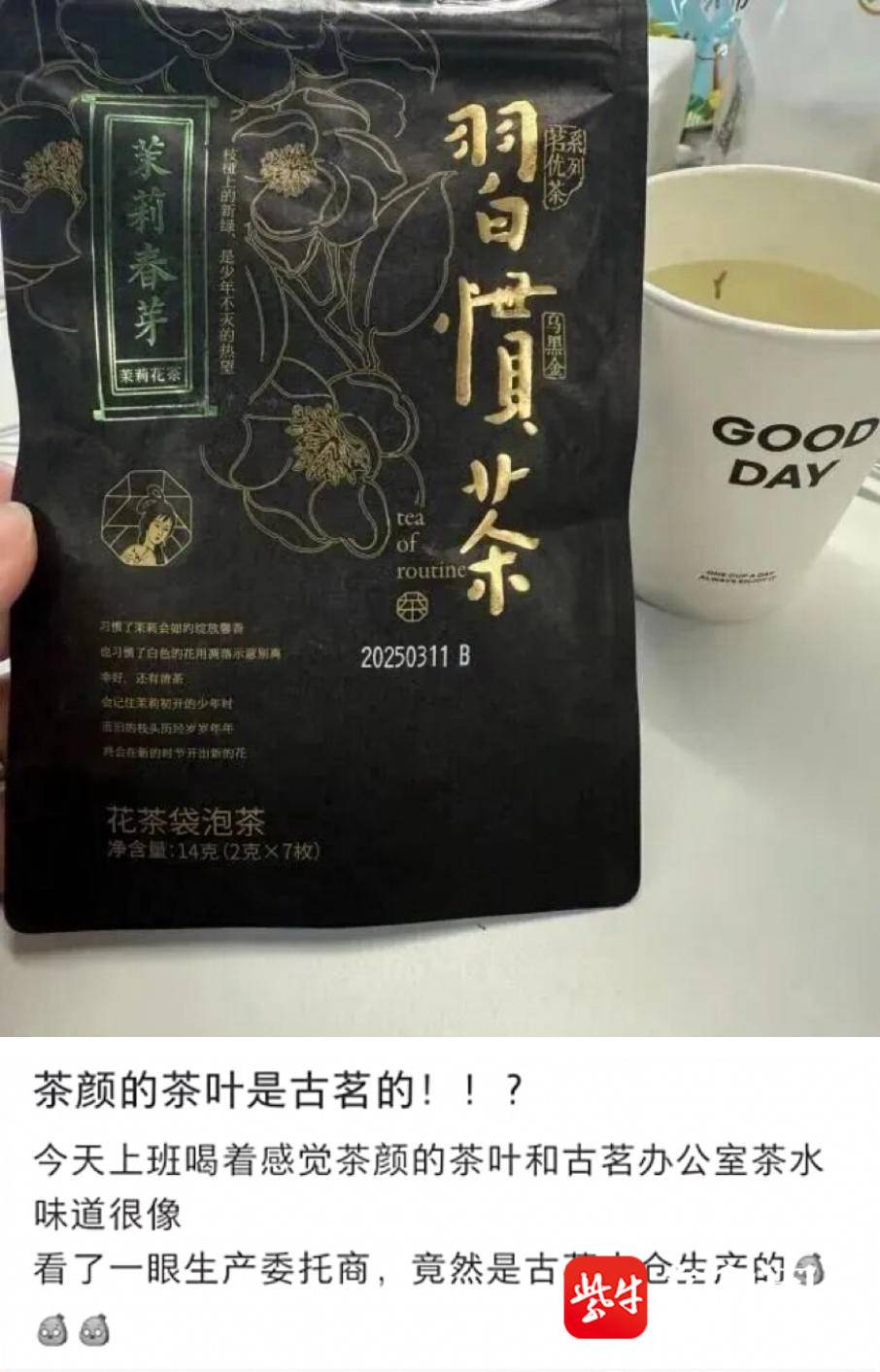
茶颜悦色茶叶由古茗旗下企业代工?两品牌客服回应→
第一财经· 2025-11-14 12:10
Core Viewpoint - The recent discussion around the similarity in taste between Cha Yan Yue Se's "Ming You Habit Tea (Jasmine Spring Bud)" and Gu Ming Tea has sparked significant online debate, highlighting the common practice of multiple brands using the same supplier in the beverage industry [2][3]. Group 1: Company Responses - Both Cha Yan Yue Se and Gu Ming's customer service stated that it is common for a supplier to serve multiple brands, emphasizing that there is no direct collaboration between the two brands [3]. - Cha Yan Yue Se clarified that they have specific production requirements for their tea leaves, which differentiates their products from those of Gu Ming, although they did not disclose detailed production processes [3]. - Gu Ming's customer service acknowledged that the similar taste is normal due to the overall flavor profile of similar tea leaves [3]. Group 2: Supplier Information - Zhejiang Shui Cang Food Technology Co., Ltd. is the supplier for both brands and is a key part of Gu Ming's digitalized light food and beverage raw material processing base, which began production in August 2022 [3]. - The projected production for 2024 from Zhejiang Shui Cang is over 7,000 tons, with an expected output value of 700 million yuan, representing a year-on-year growth of approximately 37% [3]. - The company was established in May 2022 with a registered capital of 10 million yuan and is co-owned by Gu Ming Technology Group and Xu Zhou Kun Hang Enterprise Management Partnership [3][4].
开源晨会-20250922
KAIYUAN SECURITIES· 2025-09-22 14:59
Macro Economic Overview - The "14th Five-Year Plan" emphasizes the use of more proactive fiscal policies to support employment and foreign trade, and to improve people's livelihoods [3][4] - Recent policies focus on industrial internet applications and the development of new energy sectors, indicating a shift towards digitalization and innovation [3][4] Fixed Income Market - As of August 2025, the total bond custody amount reached 174.54 trillion yuan, with a net increase of 15,060.06 million yuan, indicating a slight decrease in growth compared to previous months [9][10] - The leverage ratio in the bond market slightly increased to 106.88%, reflecting a cautious optimism in the market [13][14] Pharmaceutical Industry - The pharmaceutical sector is entering a new growth phase driven by innovation and optimization of centralized procurement, with major companies like Heng Rui Pharmaceutical and China Biologic Products showing robust revenue growth [17][18] - The recent adjustments in the national medical insurance directory are expected to benefit innovative drugs, leading to potential rapid growth for companies involved [18][19] Non-Bank Financial Sector - The performance of non-bank financial companies is primarily driven by property and equity investments, with significant contributions from the property insurance sector [21][22] - The net profit growth of listed insurance companies improved in the first half of 2025, largely due to the profitability of property insurance [21][24] Agricultural Sector - The price of white feather chicken increased due to supply disruptions and rising demand, with the average selling price reaching 7.17 yuan/kg in August 2025 [30][31] - The egg market faces pressure from high production capacity, limiting the potential for price increases despite some upward movement in prices [32][33] Machinery Industry - The valuation of global robotics companies is being redefined, with Figure's recent funding round valuing the company at 39 billion USD, indicating a bullish outlook for the robotics sector [37][38] - Key components in robotics are expected to see significant valuation increases, with potential PE ratios reaching 200 times as the industry matures [38][39] Consumer Services Sector - The upcoming National Day holiday is expected to boost travel bookings, with a steady increase in pre-booking trends observed [42][45] - The tea and coffee sector continues to show strong performance, with leading brands expanding their market presence despite some overall industry slowdowns [43][45] Real Estate and Construction - China Overseas Property is experiencing growth in both scale and profitability, with projected net profits increasing from 16.1 billion yuan in 2025 to 19.6 billion yuan by 2027 [47][48] - The company is focusing on high-quality expansion and has seen a significant increase in managed area and new contract signings [49][50] Electronics Industry - The domestic high-power server power supply market is growing, with companies like Oulu Tong positioned as leaders in this space, benefiting from the rise of AI applications [51][52] - The demand for higher power server supplies is expected to increase, with new products in development to meet the needs of advanced AI servers [53]





财信证券晨会纪要-20250922
Caixin Securities· 2025-09-21 23:56
Group 1: Market Overview - The Shanghai Composite Index closed at 3820.09, down 0.30% [1] - The Shenzhen Component Index closed at 13070.86, down 0.04% [1] - The ChiNext Index closed at 3091.00, down 0.16% [1] - The STAR 50 Index closed at 1362.65, down 1.28% [1] - The CSI 300 Index closed at 4501.92, up 0.08% [1] Group 2: Economic Insights - President Xi Jinping held a phone call with US President Trump discussing the stability and development of China-US relations [16][18] - The State Council is researching the implementation of domestic product standards in government procurement [19][20] - The Ministry of Industry and Information Technology is preparing the "14th Five-Year Plan" for the new battery industry to prevent low-level repeated construction [21] Group 3: Industry Dynamics - Gu Ming (1364.HK) reported a 41.2% increase in revenue and a 119.8% increase in profit for the first half of 2025 [26][27] - NVIDIA invested $5 billion in Intel common stock to jointly develop customized data center and personal computing products [28][29][30] - The Chinese smart glasses market saw a 145.5% year-on-year increase in shipments in Q2 2025, with audio and audio capture glasses leading the growth [32][34] Group 4: Company Tracking - Shenghong Technology (300476.SZ) issued shares at a price 113.81% above the base price [35][36] - Huadian Co., Ltd. (002463.SZ) is planning to list on the Hong Kong Stock Exchange [37][39] - Anhui Heli (600761.SH) intends to acquire 51% of Anhui Jianghuai Heavy Engineering Co., Ltd. to enhance its core competitive advantages [40][41]
瑞幸×崩铁: 买够周边要花近四百,预存十杯须15天喝完被吐槽
Xin Jing Bao· 2025-09-16 04:00
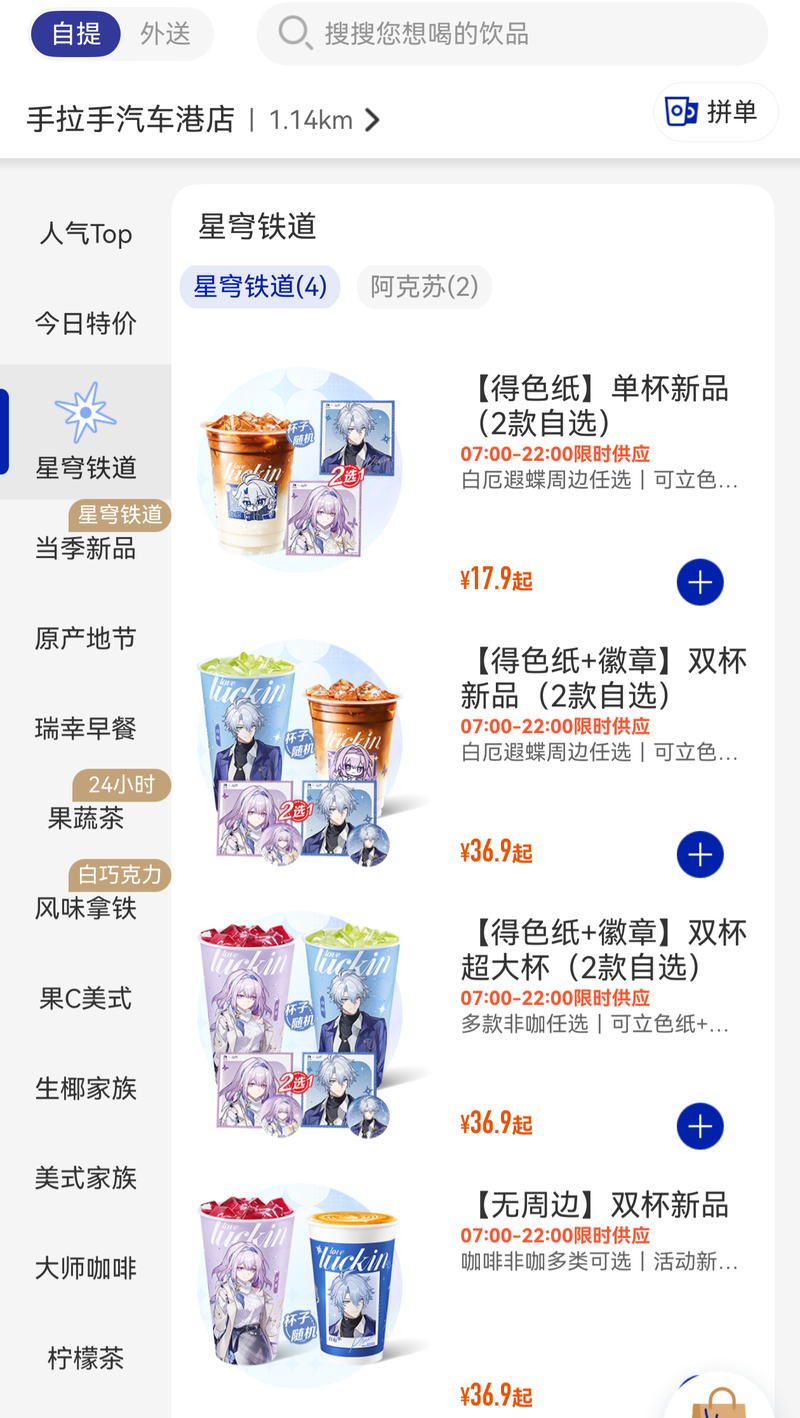
Core Viewpoint - Luckin Coffee has launched a collaboration with the game "Honkai: Star Rail," offering exclusive merchandise to consumers who purchase specific drink packages, raising questions about the appropriateness of such marketing strategies targeting underage fans [1][5][14]. Group 1: Collaboration Details - The collaboration consists of two phases, starting on September 15 and September 22, featuring popular characters "Xia Die" and "Bai E" from the game [1][4]. - Consumers can obtain merchandise such as acrylic stands, badges, and themed cups by purchasing drink packages, with a total cost of approximately 384.2 yuan required to collect all items [5][12]. Group 2: Consumer Reactions - Many consumers have expressed dissatisfaction with the high cost of obtaining the merchandise, particularly criticizing the marketing strategy as being exploitative towards underage fans [5][12]. - Parents have reported feeling pressured to assist their children in acquiring the merchandise, indicating a significant demand among younger demographics [5][12]. Group 3: Sales and Marketing Insights - Luckin Coffee's sales and marketing expenses have increased significantly, with first-quarter expenses rising by 52.4% year-over-year, attributed to higher advertising and promotional costs [15]. - The company has expanded its store count to 26,206, reflecting an 8.8% increase compared to the previous year, indicating robust growth in its operational footprint [15]. Group 4: Market Context - The game "Honkai: Star Rail" boasts a large player base of 50 million monthly active users, with over 60% of users aged 18-24, highlighting the potential market for such collaborations [14]. - Previous collaborations in the beverage sector, such as with the tea brand Gu Ming, have resulted in overwhelming consumer interest, leading to significant sales spikes and even system overloads on launch days [13][14].

新消费行业周报:茶饮龙头25H1收入利润高增,全球美妆前十品牌仅两家实现正增长-20250831
Hua Yuan Zheng Quan· 2025-08-30 23:59
Investment Rating - The industry investment rating is "Positive" (maintained) [4] Core Insights - The tea beverage industry shows strong revenue and profit growth, with companies like Mixue and Guming expanding their market share due to strong supply chain capabilities and consumer trend responsiveness [5] - The global beauty industry is facing challenges, with only two of the top ten brands achieving positive growth, indicating a need for brands to optimize their strategies [5] - Emerging consumer trends reflect a new generation's consumption concepts, highlighting the importance of understanding these narratives for investment opportunities [18] Summary by Sections Tea Beverage Industry - Mixue Group reported a revenue of 14.875 billion yuan in H1 2025, a 39.3% increase year-on-year, with a net profit of 2.718 billion yuan, up 44.1% [5] - Guming achieved a revenue of 5.663 billion yuan in H1 2025, a 41.2% increase, with an adjusted net profit of 1.086 billion yuan, up 42.4% [5] Beauty Industry - The top ten global beauty brands had a combined sales of 560 billion yuan in H1 2025, a slight increase of 0.3%, with 70% of companies experiencing a decline in sales [5] - L'Oreal led with a revenue of 187.74 billion yuan, a 6.5% increase, while brands like Estée Lauder and Shiseido faced declines of 10.9% and 7.6% respectively [5] Investment Recommendations - In the beauty sector, focus on high-quality domestic brands with strong innovation, such as Mao Ge Ping and Juzi Biotechnology [18] - In the gold and jewelry sector, consider brands appealing to younger consumers, like Laopu Gold and Chaohongji [18] - For the tea beverage sector, prioritize leading brands with strong market presence, such as Mixue Group and Guming [18]