
芯片

Search documents
澜起科技:2025年净利润预增52.29% - 66.46%
Xin Lang Cai Jing· 2026-01-16 10:37
澜起科技公告称,经初步测算,2025年度预计实现归属于母公司所有者的净利润21.50亿元 - 23.50亿 元,同比增长52.29% - 66.46%;扣非净利润19.20亿元 - 21.20亿元,同比增长53.81% - 69.83%。上年同 期净利润为14.12亿元,扣非净利润为12.48亿元。受益于AI产业趋势,互连类芯片出货量显著增加推动 业绩增长。本次业绩预告未经审计,具体数据以年报为准。 ...

澜起科技:预计2025年度归母净利润21.5亿元-23.5亿元,同比增长52.29%-66.46%
Xin Lang Cai Jing· 2026-01-16 10:37
澜起科技1月16日公告,受益于AI产业趋势,行业需求旺盛,公司互连类芯片出货量显著增加,推动公 司2025年度经营业绩较上年同期实现大幅增长。公司预计实现归属于母公司所有者的净利润21.50亿元 ~23.50亿元,较上年同期增长52.29%~66.46%;实现归属于母公司所有者的扣除非经常性损益的净利润 19.20亿元~21.20亿元,较上年同期增长53.81%~69.83%。本次业绩预告是公司财务部门基于自身专业判 断进行的初步核算,未经注册会计师审计。公司尚未发现影响本次业绩预告内容准确性的重大不确定因 素。 ...
放量不涨反跌!ETF巨量流出揭秘:是慢牛变慢熊?还是主力暗中施压
Sou Hu Cai Jing· 2026-01-16 10:22
Market Overview - Today's trading volume increased compared to yesterday, but there was no corresponding rise in indices or individual stocks, indicating strong selling pressure with significant outflows from major ETFs [1][3] - The market sentiment remains unclear, with a notable reduction in leverage and a general avoidance of participation during this uncertain period [1][3] Trading Strategy - The buying power has returned to over 2000, which is considered a normal median level under 3 trillion, while selling pressure remains consistent at over 1700, indicating that retail, institutional, and major funds are exiting the market [3] - If major players are determined to continue suppressing prices, the market will likely follow their lead, suggesting that participation in a downward-trending market is unwise [3][8] Sector Analysis - The sectors showing significant gains today include chips, robotics, and electric grids, while traditional heavyweight sectors are experiencing concentrated selling pressure [5] - The market is characterized as a volatile environment rather than a bull market, with a focus on technology stocks amidst a broader decline in traditional sectors [5] Investment Sentiment - The sentiment among investors is mixed, with new investors interpreting the reduction in leverage as a potential buying opportunity, while seasoned investors recognize the risks associated with current market conditions [5][8] - The likelihood of successful rebounds is low, with a 30% success rate for chasing rallies and a 50% success rate for bottom-fishing, indicating a cautious approach is advisable [8] Performance Metrics - The data indicates that the market has been under pressure, with a significant number of stocks experiencing declines, and the overall market performance reflecting a bearish trend [9]

两记GPU的锣声背后,文创之都的“超级密码”
Mei Ri Jing Ji Xin Wen· 2026-01-16 10:03
Core Insights - Chengdu is focusing on the high-quality development of the digital cultural and creative industry, emphasizing its importance as a key component of the modern industrial system [1] - The digital cultural and creative industry in Chengdu is projected to exceed 410 billion yuan by 2025 and 600 billion yuan by 2030, positioning the city among the top in the nation [2] - The rise of GPU technology is seen as a foundational infrastructure for various digital content applications, driving the industry's intelligent upgrade [1][10] Investment and IPO Highlights - Wallen Technology became the first GPU stock on the Hong Kong Stock Exchange on January 2, 2023, with a market capitalization exceeding 90 billion HKD after an opening surge of 82.14% [4] - TianShu ZhiXin, another GPU company, successfully listed on January 8, 2023, with a market cap surpassing 40 billion HKD [7] - Chengdu's Tianfu Cultural Investment Fund has made strategic investments in both companies, yielding significant returns and demonstrating the city's strategic foresight in future industry layout [9][10] Ecosystem Development - The local government investment funds are playing a crucial role in building a comprehensive digital cultural and creative ecosystem, focusing on both technology and application scenarios [10][11] - Chengdu is adopting a model of "government guidance + market operation + ecological cultivation," positioning itself as a strategic investor and industry partner [11] - The city is also expanding its investment into various sectors, including AI, robotics, and digital content creation, to enhance its cultural and creative industry ecosystem [11][12] Future Outlook - Chengdu aims to become a national cultural and creative center, promoting the integration of culture and technology, and developing new business models [12][13] - The establishment of a 100 billion yuan digital cultural and creative industry fund group is part of the city's strategy to support the growth of the industry and achieve its ambitious targets by 2030 [13][15] - The investment landscape in Chengdu is evolving, with a significant number of private equity and venture capital funds being established, enhancing the city's competitive edge in the new industrial landscape [16]
开年狂飙!港股IPO扎推来了
FOFWEEKLY· 2026-01-16 10:02
以下文章来源于虎嗅APP ,作者董必政 虎嗅APP . 从思考,到创造 导读: 港股IPO热闹非凡。 作者|董必政 来源 |虎嗅APP 2026年的开年大戏,不在大银幕,而在港交所的锣声里。 仅仅过去不到半个月,港股IPO市场就热闹非凡。1月2日,"港股GPU第一股"壁仞科技首日暴涨 94.59%。 紧接着,1月8日,精锋医疗-B、天数智芯、智谱华章三家硬科技企业同日挂牌。1月9日,瑞博生 物、MiniMax接力登场。就在这短短几天内,GPU、大模型、生物科技在港股纷纷上市。 甚至连那久违的"千倍认购"神话,都随着智谱和MiniMax的招股重现江湖。 真正让这些企业夜不能寐的,是账上的现金流。 AI又是一场极度"烧钱"的行业。而资本市场不仅是交易所,更是AI企业的弹药库。 翻开招股书,我们可以发现2025年上半年,壁仞亏损16亿,智谱亏损23.6亿,天数智芯亏损6.1 亿。 以智谱为例,这家大模型企业每个月的研发支出高达2.66亿元。而截至上市前,其账面现金仅剩 25.5亿元。如果不上市输血,这笔钱只能撑9个月。 天数智芯更夸张,其研发费率高达139%,也就是每挣1块钱,就要花1.4元去搞研发。 那为何又是港 ...

北水动向|北水成交净买入0.94亿 芯片股再获加仓 北水抢筹中芯国际(00981)超10亿港元
智通财经网· 2026-01-16 09:48
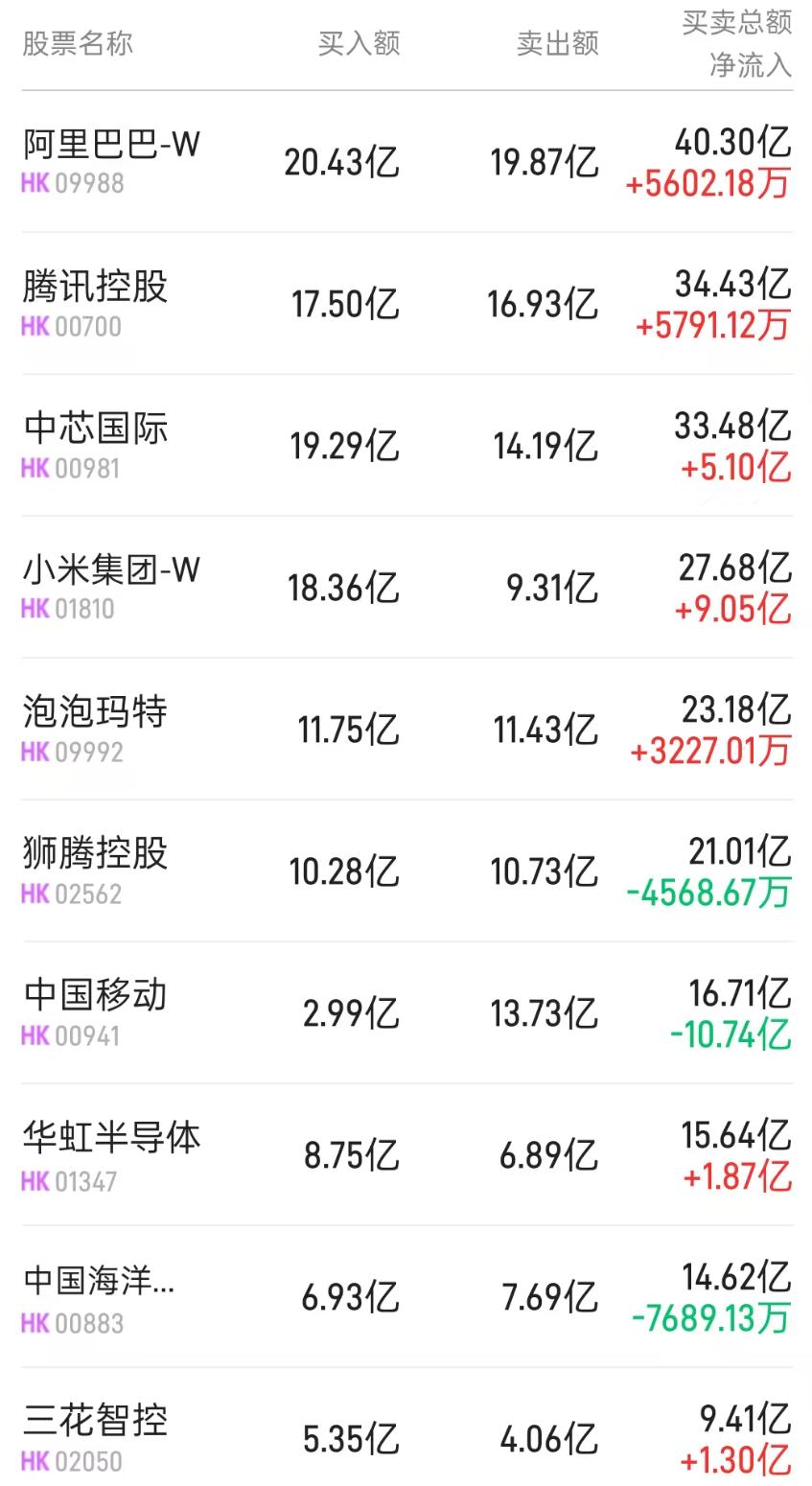
Group 1: Market Overview - Northbound trading recorded a net buy of HKD 0.94 billion, with a net buy of HKD 10.06 billion from the Shanghai Stock Connect and a net sell of HKD 9.13 billion from the Shenzhen Stock Connect [1] - The most bought stocks included SMIC (00981), Xiaomi Group-W (01810), and Hua Hong Semiconductor (01347), while the most sold stocks were China Mobile (00941), Alibaba Health (00241), and CNOOC (00883) [1] Group 2: Stock Performance - Alibaba-W (09988) saw a net buy of HKD 395.9 million, while Lion Group (02562) and Alibaba Health (00241) experienced net sells of HKD 42 million and HKD 461 million respectively [6] - Tencent Holdings (00700) had a net buy of HKD 342.8 million, while China Mobile (00941) faced a significant net sell of HKD 10.74 billion [8] Group 3: Sector Insights - SMIC (00981) and Hua Hong Semiconductor (01347) received net buys of HKD 10.84 billion and HKD 5.85 billion respectively, driven by news of the U.S. easing export restrictions on Nvidia's H200 chips to China [4] - Xiaomi Group-W (01810) gained a net buy of HKD 8.67 billion, with the announcement of new purchasing incentives for its popular model, the Xiaomi YU7 [5] - Bubble Mart (09992) attracted a net buy of HKD 1.41 billion, with growth drivers identified for 2026, including monetization of existing IPs and new IP launches [5]

富满微:公司是有自己的存储芯片产品
Zheng Quan Ri Bao· 2026-01-16 09:12
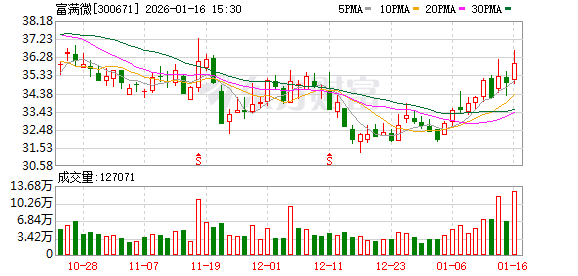
Group 1 - The company, Fuman Micro, confirmed that it has its own storage chip products in response to investor inquiries on an interactive platform [2]

禾盛新材投资企业熠知电子新一代 AI CPU性能对标英伟达Grace
Xin Lang Cai Jing· 2026-01-16 08:43
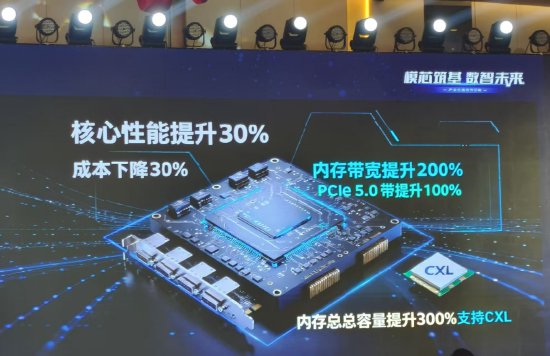
炒股就看金麒麟分析师研报,权威,专业,及时,全面,助您挖掘潜力主题机会! 1月16日,上市公司禾盛新材(002290)战略投资的核心科技企业——上海熠知电子科技有限公司,在 上海市工商联人工智能专委会主题活动上正式推出第三代 AI CPU TF9000 系列。作为禾盛新材"制造 +芯片+场景"战略布局的关键落子,熠知电子此次发布的新品,是其TF16000、TF7000系列的迭代升级 之作,更标志着在ARM服务器处理器芯片赛道的研发取得重大突破。 这款新一代 AI CPU 性能全面对标英伟达 Grace 系列,依托"异构合封"这一后摩尔时代核心技术实现灵 活定制,相较前代核心性能提升30%、成本下降30%,内存带宽、PCIe 5.0带宽及内存总容量分别提升 200%、100%、300%。作为国内少数实现ARM服务器处理器芯片商业落地的企业,熠知电子凭借禾盛 新材的资本赋能与产业链协同优势,已构建"芯片设计-硬件平台-行业方案"完整生态,此次TF9000系列 的推出,将进一步强化其在高端算力芯片领域的竞争力。 炒股就看金麒麟分析师研报,权威,专业,及时,全面,助您挖掘潜力主题机会! 1月16日,上市公司禾盛新材( ...

华安基金总经理助理、首席指数投资官许之彦:2026年科技投资将从预期驱动走向业绩兑现
Di Yi Cai Jing· 2026-01-16 08:38
Core Insights - 2025 is viewed as a pivotal year for the technology sector, driven by advancements in artificial intelligence, hardware innovation, and supportive policies, leading to a significant market transformation [1] - The performance of technology-themed ETFs, particularly those represented by the STAR Market and ChiNext, has significantly outperformed the market average, establishing their status as "core growth poles" [2] - The macroeconomic outlook for 2026 indicates a transition from structural pain to "micro recovery," with key indicators expected to show positive trends [3] Group 1: 2025 Review - The technology-themed ETFs have shown remarkable performance, with several related funds achieving net value growth rates exceeding 50%, and the ChiNext 50 Index rising by 57% [2] - The strong performance is attributed to the underlying high growth potential, profitability elasticity, and alignment with policy directions, focusing on high-quality companies characterized by innovation and new technologies [2] Group 2: 2026 Macro Outlook - The macroeconomic environment is expected to improve, with key indicators like PPI, CPI, and PMI projected to recover from low levels, enhancing the corporate profitability landscape [3] - The investment focus in 2026 will shift towards performance certainty, moving away from the previous emphasis on "visions and expectations" [4] Group 3: AI Industry Insights - AI is identified as a long-term structural industry opportunity, with 2026 marking a critical transition from "technology validation" to "scale deployment" [5] - The AI sector is shifting from a focus on infrastructure to application deployment, with significant investments in efficiency and global competitiveness [5] - The core companies in the AI wave are financially healthy, and the demand for computing power is expected to grow significantly over the next 5-10 years [5][6] Group 4: Tooling Configuration - The ChiNext 50 Index is highlighted for its structural advantages, with a balanced industry matrix and a focus on growth and diversification [7] - The index's valuation remains reasonable, with expected annual net profit growth of over 25% in the next three years, indicating a favorable balance between volatility control and growth elasticity [7] - The long-term investment value of the Hong Kong technology sector is increasing, with potential for valuation recovery and phase-based gains [7] Group 5: Conclusion - The key to technology investment in 2026 lies in returning to performance and fundamentals, emphasizing high-quality broad-based indices to navigate market cycles [8] - Focus should be on companies with competitive advantages in the global supply chain, sustained R&D investment, and those entering a profit growth phase [8] - The market's pricing mechanism is shifting from forward-looking expectations to continuous validation of actual operational results, raising the bar for asset allocation and risk management [8]
郑泉水院士:自超滑技术将赋能第四次工业革命
Zheng Quan Ri Bao· 2026-01-16 08:38
Core Viewpoint - The self-lubricating technology has the potential to overcome challenges in precision manufacturing, chips, aerospace, and robotics, enabling intelligent, miniaturized, and high-performance devices, as well as strategic emerging industries [1][2]. Group 1: Self-Lubricating Technology - Self-lubricating refers to an ideal state where wear and static friction are zero, and the friction coefficient is nearly zero under solid surface contact without lubricants [1]. - This technology can significantly reduce energy consumption by one or two orders of magnitude and enhance power density and lifespan by tens to hundreds of times in applications such as smart terminals, high-end equipment, and 6G/satellite internet [1]. Group 2: Research Contributions and Product Development - Zheng Quanshui's team contributes nearly half of the global publications on superlubricity and has developed a series of products based on this technology, including micro-generators, RF switch chips for communication bases, and micro-special motors, with some already receiving orders [2]. - The lifespan of micro-special motors, which serve as key actuators and physical interfaces connecting digital commands (algorithms, AI) to physical actions (motion, operation), can be increased from the current global maximum of 1,200 hours to between 4,000 and 15,000 hours with self-lubricating technology [2]. Group 3: Event Overview - The "Good Hope Cape Science Salon," initiated by Zhongke Chuangxing Technology Investment Co., aims to create a platform for influential science and technology integration and cross-border communication, having held ten events to date [2]. - The tenth event, themed "Digital Intelligence Era and Zero Friction World," took place on January 15 in Shanghai, featuring discussions on atomic-level manufacturing technologies and future prospects with over 100 representatives from research, industry, and investment sectors [2].