
饮料

Search documents
宗馥莉首次回应,杜建英危险了!
Xin Lang Cai Jing· 2025-08-27 12:21
来源:电商天下 宗馥莉,是自己的定海神针 作者 I 清清 报道 I 电商天下 不在沉默中爆发,就在沉默中灭亡,隐而未发的宗馥莉,终于回应了。 直到8月25日,一则"她已返岗坐镇娃哈哈"的爆料打破了沉默; 短短两天后,她通过媒体专访回应一切,不再绕弯、不再隐忍。 面对《财经》杂志的采访,宗馥莉坦言: 我的"定海神针"就是坚持做自己。以前我是怎样的,现在还是怎样,我不会因为风波改变方向。 在电商天下看来,这句话,既是她对市场的宣言,也是对近期家族纷争的回应。 宗馥莉:"我不会因为风波改变方向" 自从宗庆后的私生子曝光、百亿遗产争夺风波悬而未决以来,娃哈哈现任领导人宗馥莉的每一条动态,都承载着大量的关注。 而自从6月12日那场内部活动之后,宗馥莉就像突然消失了。 百亿争产风波呼啸而过,外界猜测众说纷纭,但宗馥莉没出现在办公室,也没发声回应。 这种低调到近乎神隐的姿态,让不少小道消息得以蔓延——有说法称她远走海外度假放松,亦有说法称其在陪伴家人; 图源:抖音网友 而紧接着,她依次谈及娃哈哈的组织架构、发展战略、企业文化,没有悲情叙事、没有家族伦理,只字未提争产二字,却又句句都在回应焦 点。 她说企业不属于个人,而是所 ...


钟睒睒渡劫:农夫山泉走出舆论与价格战的双重绞杀了吗?
3 6 Ke· 2025-08-27 11:28
Core Viewpoint - The company faced a significant crisis in 2024 due to a sudden wave of public criticism, leading to a sharp decline in sales and revenue, particularly in its core bottled water business, which saw a 21.3% year-on-year revenue drop. However, the company rebounded in the first half of 2025, reporting a 15.6% increase in total revenue and a 22.1% increase in net profit, surpassing market expectations [1][3][21]. Group 1: Bottled Water Business - The bottled water segment was severely impacted by both public opinion and aggressive price competition from rivals, prompting the company to launch a low-priced green bottle water product as a tactical response [4][5]. - The introduction of the green bottle water product aimed to disrupt competitors and penetrate previously inaccessible market segments, leading to a significant price war that forced competitors to react defensively [5][8]. - By mid-2025, the company shifted focus back to its core red bottle natural water, reducing subsidies for the green bottle and increasing the revenue share of red bottle water to over 80% [9][21]. Group 2: Tea Beverage Business - The tea beverage segment, particularly the "Oriental Leaf" brand, demonstrated strong growth, achieving a revenue of 10.1 billion RMB in the first half of 2025, a 19.7% increase year-on-year, and becoming the company's largest business segment [10][11]. - The tea business maintained a high operating profit margin of 48.4%, attributed to effective supply chain management and early investments in the tea production process [12][14]. - The company's proactive marketing strategies, such as the "One Yuan Enjoyment" campaign, helped maintain a market share of 70% in key regions for its tea products [12][14]. Group 3: Other Beverage Segments - The functional beverage segment reported a revenue of 2.9 billion RMB, a 13.6% increase, showcasing the company's strong channel capabilities despite facing tough competition [17][20]. - The juice beverage segment achieved a remarkable growth rate of 21.3%, with revenue reaching 2.6 billion RMB, indicating successful penetration into both high-end and mass-market segments [18][19]. - The company's dual strategy of targeting both premium and value markets in the juice category highlights its operational flexibility and platform capabilities [19][20]. Group 4: Financial Performance and Market Position - The company's financial results for the first half of 2025 indicated a successful recovery from the previous year's crisis, with a gross margin exceeding 60% and a net profit margin close to 30%, positioning it competitively against both domestic and international peers [23][24]. - The rapid recovery and strong financial metrics suggest that the company's true competitive advantage lies in its internal operational structure rather than just its access to natural resources [23][24]. - Following the release of the financial report, the company's stock price surged by 6%, reflecting positive market sentiment and confidence in its recovery strategy [21].

舆情影响渐消,农夫山泉重回增长
Guo Ji Jin Rong Bao· 2025-08-27 10:09
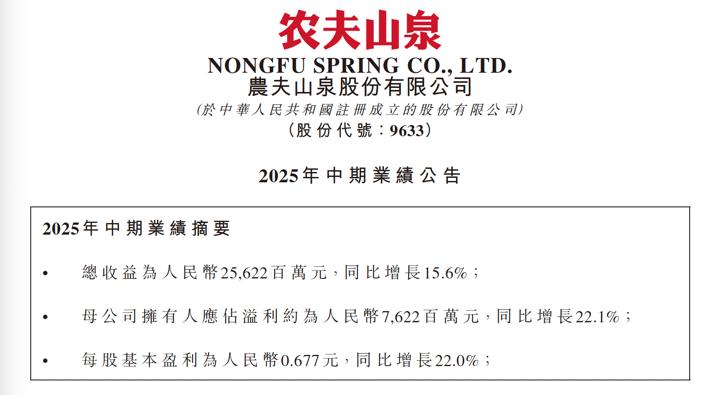
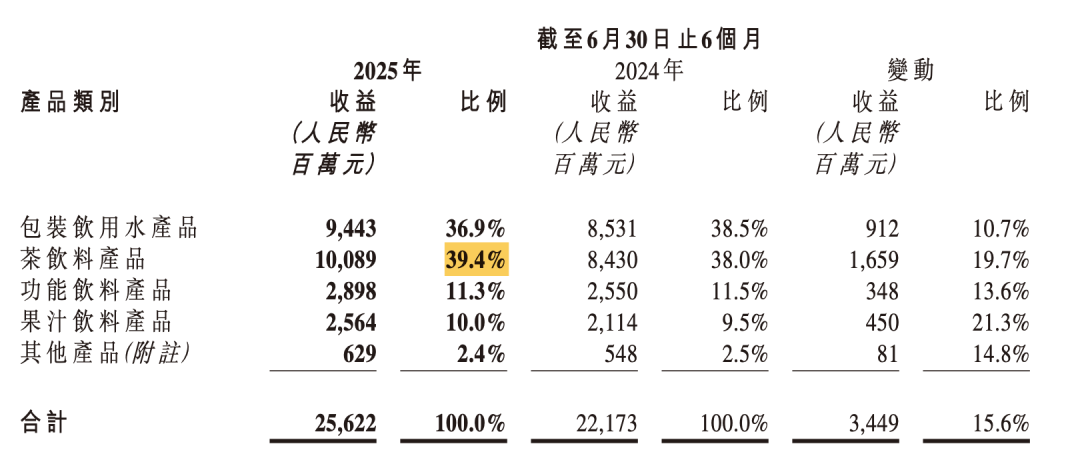
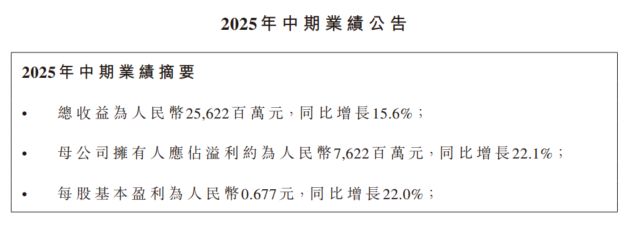
Core Viewpoint - Nongfu Spring has shown signs of recovery from its previous challenges, with significant revenue growth and stock price increase, but faces new challenges as its tea beverage segment experiences a slowdown in growth [1][3]. Financial Performance - For the first half of 2025, Nongfu Spring reported revenue of 25.622 billion RMB, a year-on-year increase of 15.6%, and a net profit attributable to shareholders of 7.622 billion RMB, up 22.1% [1][2]. - The gross profit margin improved by 1.5 percentage points to 60.3%, while the net profit margin rose to 29.75%, marking a record high for the company [1]. Business Segments - The company operates five main business segments: packaged drinking water, tea beverages, functional drinks, juices, and others [1]. - Packaged drinking water revenue for the first half of 2025 was 9.443 billion RMB, accounting for 36.9% of total revenue, with a year-on-year growth of 10.7% [2][3]. - The tea beverage segment, led by "Oriental Leaf," generated revenue of 10.089 billion RMB, representing 39.4% of total revenue, but its growth rate has slowed compared to previous years [2][7]. Market Dynamics - The bottled water market in China is projected to reach a scale of 247 billion RMB by 2024, with Nongfu Spring holding a market share of 14.4% [4]. - The tea beverage market is experiencing a shift, with many manufacturers reallocating resources towards functional drinks and juices, leading to a slowdown in the growth of sugar-free tea products [9]. Product Innovations - To maintain its market position, "Oriental Leaf" has introduced new products, including a 1.5L large package and a new flavor "Chenpi White Tea," along with promotional activities to stimulate sales [7]. - The juice beverage segment achieved revenue of 2.564 billion RMB, growing by 21.3%, while functional drinks generated 2.898 billion RMB, up 13.6% [9].
皮爷咖啡宣布卖了
投资界· 2025-08-27 08:18
Core Viewpoint - The article discusses the acquisition of JDE Peet's by Keurig Dr Pepper (KDP) for €15.7 billion (approximately ¥130 billion), highlighting the strategic importance of this deal in the coffee industry and the historical significance of Peet's Coffee as a premium brand [3][13]. Group 1: Acquisition Details - KDP is acquiring JDE Peet's, which is known for its coffee and tea brands, including the well-known Peet's Coffee, often referred to as the "father of Starbucks" [3][5]. - The acquisition price of €31.85 per share represents a 33% premium over JDE Peet's 90-day volume-weighted average share price, totaling €15.7 billion [13]. - JAB Holdings, which has a significant stake in both KDP and JDE Peet's, is positioned to gain approximately $12.3 billion (around ¥88 billion) from this transaction [11][13]. Group 2: Historical Context of Peet's Coffee - Peet's Coffee was founded in 1966 by Alfred Peet, who initiated a revolution in the specialty coffee market in the U.S. [5]. - The brand has a historical connection to Starbucks, as the founders of Starbucks were trained by Peet and used its coffee beans in their first store [5][6]. - In 2012, JAB Holdings acquired Peet's Coffee for $977 million, leading to its privatization and subsequent global expansion [6][9]. Group 3: Market Performance and Future Outlook - JDE Peet's reported strong organic sales growth in China, with a 23.8% increase in adjusted EBIT, contributing to a global sales figure of €88.37 billion (up 7.9% year-on-year) [9]. - Despite the growth, Peet's Coffee has faced challenges in recent years, including rumors of store closures and a slowdown in expansion [9]. - KDP plans to split into two independent publicly traded companies post-acquisition, with one focusing on beverages and the other on coffee, aiming to create a global coffee giant with a projected combined annual net sales of approximately $16 billion [14][15]. Group 4: Broader Industry Trends - The article notes a surge in consumer mergers and acquisitions, with significant interest in brands like Starbucks and Froneri, indicating a trend of strategic repositioning in the consumer sector [17][18]. - The consumer sector is viewed as resilient during economic downturns, leading to increased merger activity as companies seek to optimize their portfolios [19]. - Investment firms are actively seeking opportunities in the consumer space, with a significant percentage of consumer goods executives anticipating asset sales in the coming years [19].

一年卖超1000亿元,卡车司机最爱饮料,怎么悄悄被年轻人买爆?
3 6 Ke· 2025-08-27 06:43
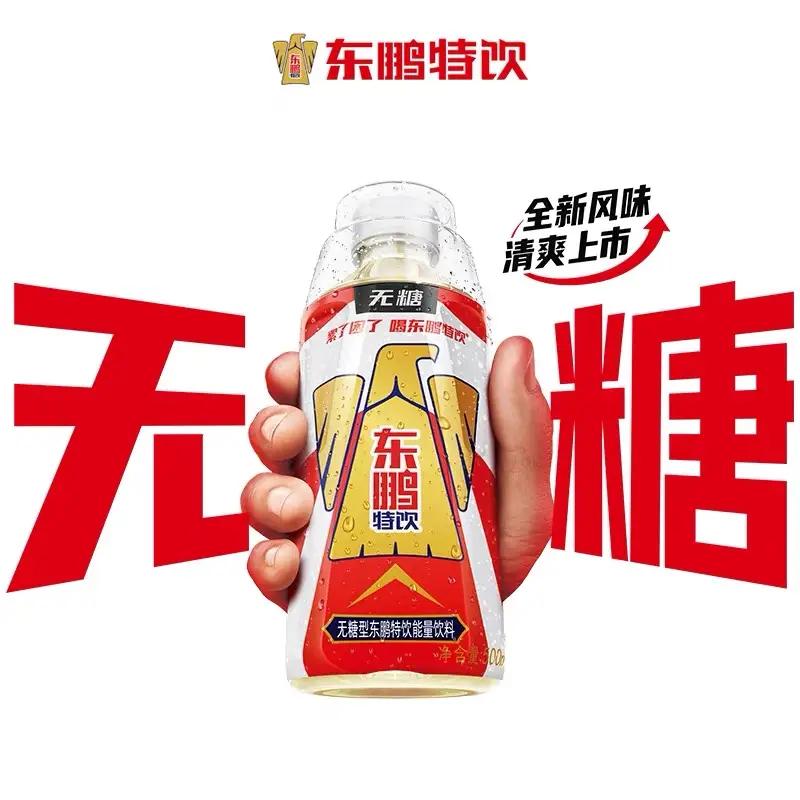
Core Viewpoint - The energy drink market in China is rapidly penetrating among young consumers, driven by new product launches and changing consumer preferences towards healthier options and innovative packaging [1][3][47]. Group 1: Product Innovations - Dongpeng Beverage launched a new "sugar-free Dongpeng Energy Drink" in July, catering to young consumers' demand for reduced sugar and featuring L-α-glycerophosphocholine to enhance cognitive function [1][31]. - The energy drink market in China reached a retail value of 111.4 billion yuan in 2024, with young consumers becoming a significant driving force [3][47]. - Brands like Monster and Yuanqi Forest have introduced products with unique flavors and packaging, such as the MAXX drink with mint extract, appealing to the younger demographic [13][35]. Group 2: Market Trends - The energy drink market is experiencing a shift from traditional blue-collar consumers to urban young professionals, with consumption scenarios now including gaming, late-night work, and fitness [3][37]. - The market is projected to maintain a growth rate of over 15% year-on-year in 2024, significantly outpacing the soft drink market's growth [47]. - The per capita consumption of energy drinks in China is 2.79 liters in 2024, which is substantially lower than in the US and Japan, indicating significant growth potential [47]. Group 3: Packaging and Branding - Energy drink brands are adopting vibrant and trendy packaging to attract younger consumers, moving away from traditional designs that appealed to blue-collar workers [4][8][20]. - The introduction of diverse color schemes and artistic designs in packaging has become a key strategy for brands like Monster and Dongpeng to engage with the younger audience [20][24]. - The shift in branding strategies, such as Dongpeng's focus on youth culture and lifestyle, has helped reshape the perception of energy drinks in the market [44][46]. Group 4: Ingredient Trends - There is a growing trend towards cleaner ingredient profiles in energy drinks, with brands eliminating synthetic additives like taurine and caffeine in favor of natural plant-based ingredients [25][26]. - The rise of sugar-free options is notable, with brands like Yuanqi Forest and Dongpeng introducing products that utilize alternative sweeteners to meet health-conscious consumer demands [28][31]. - The incorporation of carbonation in energy drinks has also gained popularity, aligning with the trend of fizzy beverages among younger consumers [34][35].

港股异动丨业绩亮眼,农夫山泉涨超7%,创2021年3月以来新高
Ge Long Hui· 2025-08-27 04:15
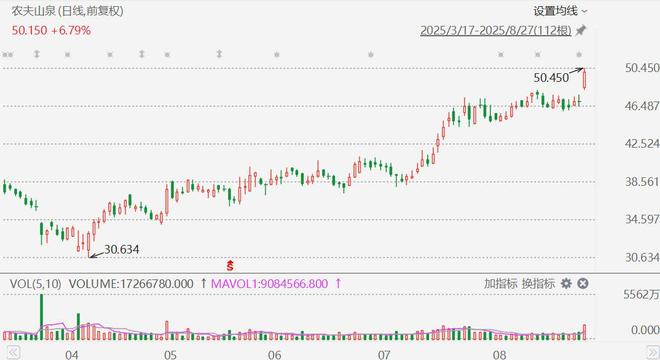
Core Viewpoint - Nongfu Spring (9633.HK) shares rose over 7% to HKD 50.45, reaching the highest level since March 2021 following the release of its financial results for the first half of 2025 [1] Financial Performance - The company reported revenue of CNY 25.622 billion for the first half of 2025, representing a year-on-year increase of 15.6% [1] - The net profit attributable to shareholders was CNY 7.622 billion, showing a year-on-year growth of 22.1% [1] - Basic earnings per share were CNY 0.677, up 22.0% compared to the previous year [1] Business Segment Analysis - The bottled water segment, which had previously faced challenges due to public sentiment, is gradually recovering, with revenue of CNY 9.443 billion in the first half of 2025, an increase of 10.7% year-on-year [1] - The tea and juice beverage segments showed strong growth, with profit margins continuing to improve, contributing to a stable and positive overall development in the beverage sector [1] - The company is expected to maintain a recovery trend in its bottled water business due to its strong brand, product, and channel influence [1] Analyst Rating - Guosheng Securities maintained a "Buy" rating for Nongfu Spring, reflecting confidence in the company's growth prospects [1]
娃哈哈董事长宗馥莉:我不会因为家族继承风波改变方向!“定海神针”是坚持做自己,以前怎样,现在还是怎样
Sou Hu Cai Jing· 2025-08-27 04:11
Core Viewpoint - The article discusses the challenges and strategies of Zong Fuli, the current chairperson of Wahaha Group, as she navigates family disputes and aims to modernize the company's operations while maintaining its legacy [2][5][6]. Group 1: Family Disputes and Leadership Transition - Zong Fuli faces legal challenges from her half-siblings regarding a $2.1 billion offshore trust and other assets following the death of her father, Zong Qinghou [2][3]. - The Hangzhou government has intervened in the inheritance dispute, indicating the high stakes involved in the family dynamics [2]. - Zong Fuli holds 29.4% of Wahaha Group, while the majority shares are held by a state-owned entity [3]. Group 2: Company Performance and Strategic Changes - In 2024, Wahaha Group broke a nine-year stagnation, achieving a revenue of 70 billion yuan, although concerns remain about sustaining this growth [5][8]. - Zong Fuli emphasizes a long-term growth strategy over short-term performance, indicating that the company is in a transitional phase [8][10]. - The company has undergone significant organizational restructuring, merging or eliminating several departments to align with its strategic goals [9][10]. Group 3: Management Philosophy and Future Direction - Zong Fuli rejects the notion of a "Zong Fuli era," asserting that the company belongs to all its employees and that her focus is on effective management and adaptation to market changes [6][11]. - The company is shifting its marketing strategies to foster deeper connections with consumers rather than relying solely on traditional advertising methods [7][12]. - Zong Fuli believes in the importance of a strong corporate culture that encourages individual responsibility and collective growth, viewing this as essential for the company's long-term success [8][15]. Group 4: Industry Context and Competitive Landscape - The beverage industry is characterized by rapid changes, requiring companies to be agile and responsive to consumer preferences and market dynamics [6][7]. - Wahaha's distribution model, once highly successful, is being reevaluated to better fit the current competitive environment [7][12]. - The company is optimizing its dealer network, focusing on partnerships that align with its strategic vision while phasing out less effective relationships [11][12].

农夫山泉交出新高业绩:形成产品力护城河,包装水业绩回暖
Xin Jing Bao· 2025-08-27 04:04
Core Viewpoint - The company achieved record-high performance in the first half of 2025, with revenue of RMB 25.622 billion, a year-on-year increase of 15.6%, and a net profit of RMB 7.622 billion, up 22.1% [1][2][5] Group 1: Financial Performance - The beverage industry is experiencing stable operations, with health and natural trends driving product innovation and upgrades, contributing to the company's growth [1][2] - The tea beverage segment continues to grow rapidly, with revenue reaching RMB 10.089 billion, a year-on-year increase of 19.7% [5] - The packaged drinking water segment showed signs of recovery, achieving revenue of RMB 9.443 billion, a year-on-year increase of 10.7%, accounting for 36.9% of total revenue [10] Group 2: Product Quality and Innovation - The company's commitment to quality and food safety has established a strong product moat, with a focus on raw materials, processes, and standards [2][9] - The "0 sugar, 0 calorie, 0 fat, 0 flavoring, 0 preservatives" philosophy of the sugar-free tea "Oriental Leaf" has attracted many brands to follow suit [5] - The introduction of new products, such as the low-sugar black coffee and the "17.5°" juice, showcases the company's innovative approach to meet consumer demands [6][11] Group 3: Strategic Initiatives - The company adheres to a water source strategy, establishing factories and bottling plants at water sources, which serves as a long-term foundation for growth [10] - The company has expanded its water source advantages with new production sites in Hunan, Sichuan, and Tibet, enhancing its supply system [10] - The launch of "pure transparent ice" and the construction of new factories in various provinces aim to further leverage water source value and support product supply [11] Group 4: Market Position and Recognition - The company ranked third in the Brand Finance report on global soft drink brand value, marking a significant milestone for Chinese brands in the beverage market [9] - The company plans to explore international markets, including Hong Kong, to expand its growth opportunities [11]
农夫山泉(09633):龙头强势复苏,盈利能力提振
HTSC· 2025-08-27 02:53
Investment Rating - The investment rating for the company is maintained as "Buy" with a target price of HKD 56.37 [1][7]. Core Views - The company has shown strong recovery in its leading position, with revenue and net profit for the first half of 2025 reaching CNY 256.2 billion and CNY 76.2 billion, respectively, representing year-on-year increases of 15.6% and 22.1% [5][6]. - The report highlights effective brand maintenance and distribution efforts since the beginning of 2025, leading to improved market share in the packaged water segment and continued growth in the ready-to-drink tea and juice businesses [5][6]. - The company's gross margin increased by 1.5 percentage points to 60.3% in the first half of 2025, driven by lower raw material costs and improved operational efficiency [6]. Summary by Sections Financial Performance - For the first half of 2025, the company's revenue from packaged water increased by 10.7% to CNY 94.4 billion, while the ready-to-drink tea segment saw a revenue increase of 19.7% [5][6]. - The juice business reported a revenue growth of 21.3%, indicating a rising acceptance of NFC juice products in the market [5][6]. Profitability Metrics - The net profit margin improved by 1.6 percentage points to 29.7% in the first half of 2025, supported by effective cost control and a reduction in financial expenses [6]. - The report anticipates continued focus on the packaged water and sugar-free tea segments, with new product launches expected to contribute to revenue growth [6][7]. Earnings Forecast - The earnings per share (EPS) estimates for 2025, 2026, and 2027 are projected at CNY 1.35, CNY 1.52, and CNY 1.69, respectively, reflecting upward revisions of 4%, 5%, and 6% from previous forecasts [7][15]. - The report assigns a price-to-earnings (PE) ratio of 38x for 2025, leading to the target price of HKD 56.37, which is an increase from the previous target of HKD 53.59 [7].
可口可乐考虑出售Costa咖啡:一场39亿英镑收购的反思与转向
Xin Lang Zheng Quan· 2025-08-27 02:37
Core Insights - Coca-Cola's acquisition of Costa Coffee in 2018 for £3.9 billion (approximately $5.3 billion) was aimed at reducing reliance on sugary soft drinks, but the company is now considering selling Costa for an estimated £2-2.5 billion, indicating a potential loss of billions [1][7] Group 1: Acquisition and Initial Expectations - The acquisition was intended to provide Coca-Cola with new capabilities and expertise in the coffee sector, allowing it to penetrate the hot beverage market [2] - Costa Coffee, founded in 1971, expanded rapidly under Whitbread, reaching nearly 4,000 stores globally by the time of acquisition [2] - Despite initial growth, Costa's performance has not met expectations, with 2023 revenues at £1.22 billion, a 9% increase from 2022 but below the £1.3 billion in 2018 [2][3] Group 2: Current Challenges and Market Environment - Costa Coffee faces a challenging market environment, including inflation, supply chain disruptions, and changing consumer habits, with global coffee demand projected to decline by 0.5% by 2025 [4] - The UK market, Costa's primary market, is experiencing economic pressures, prompting a restructuring plan to address management costs and invest in growth [4] - Competitors in the UK include Starbucks, Caffe Nero, and Pret a Manger, along with increasing competition from premium chains [4] Group 3: Future Prospects and Potential Sale - Coca-Cola is in preliminary talks with potential buyers, including private equity firms, with indicative bids expected in early autumn [7] - Analysts estimate the sale price for Costa could be around £2 billion (approximately 19.3 billion RMB), representing only 51%-64% of the original acquisition price [7] - If the sale proceeds, it would mark another significant strategic shift for Coca-Cola, which previously exited the coffee market in the 1980s before re-entering with the Costa acquisition [7][8]
