
人工智能

Search documents
2天会谈结束,中美都没签字
Xin Lang Cai Jing· 2026-02-10 23:24
Core Viewpoint - The third "Responsible Use of Artificial Intelligence in Military" summit held in Spain saw 85 countries participating, but neither the US nor China signed the joint declaration, reflecting underlying strategic concerns from both nations [1][2][6]. Group 1: US Concerns - The US is wary that binding international rules could limit its technological flexibility and competitive edge in military AI, as it seeks to accelerate development through a "rapid iteration" model similar to SpaceX [1][2]. - The US aims to maintain a technological gap and a "technological crushing" advantage by combining rapid iteration with measures to contain competitors, particularly China, through export controls and investment reviews [2][4]. - The US prefers to establish a "Western-centric" governance system by creating standards with allies outside of multilateral frameworks, thereby excluding countries like China and reinforcing its own technological and regulatory dominance [2][4]. Group 2: China's Position - China refrained from signing the declaration due to concerns over vague principles regarding "responsible use" and the lack of mechanisms to balance the technological advantages of leading nations, fearing it could entrench Western dominance [6][8]. - China advocates for multilateral governance and emphasizes that international rules should consider both security and development, opposing the politicization of technology issues [6][8]. - The Chinese delegation highlighted the importance of risk prevention in military AI applications and reiterated its commitment to a human-centered approach to military AI, aiming to ensure national sovereignty and security [6][8]. Group 3: Structural Challenges - The sensitivity of military AI, involving national defense secrets, presents verification and enforcement challenges for any international rules, leading to a "prisoner's dilemma" where countries are hesitant to commit [8]. - The rapid pace of AI technological advancement outstrips the rule-making process, rendering the principles in the declaration inadequate to address specific risks associated with autonomous weapons and algorithmic biases [8].


具身智能苦等“ChatGPT时刻”
3 6 Ke· 2026-02-10 23:22
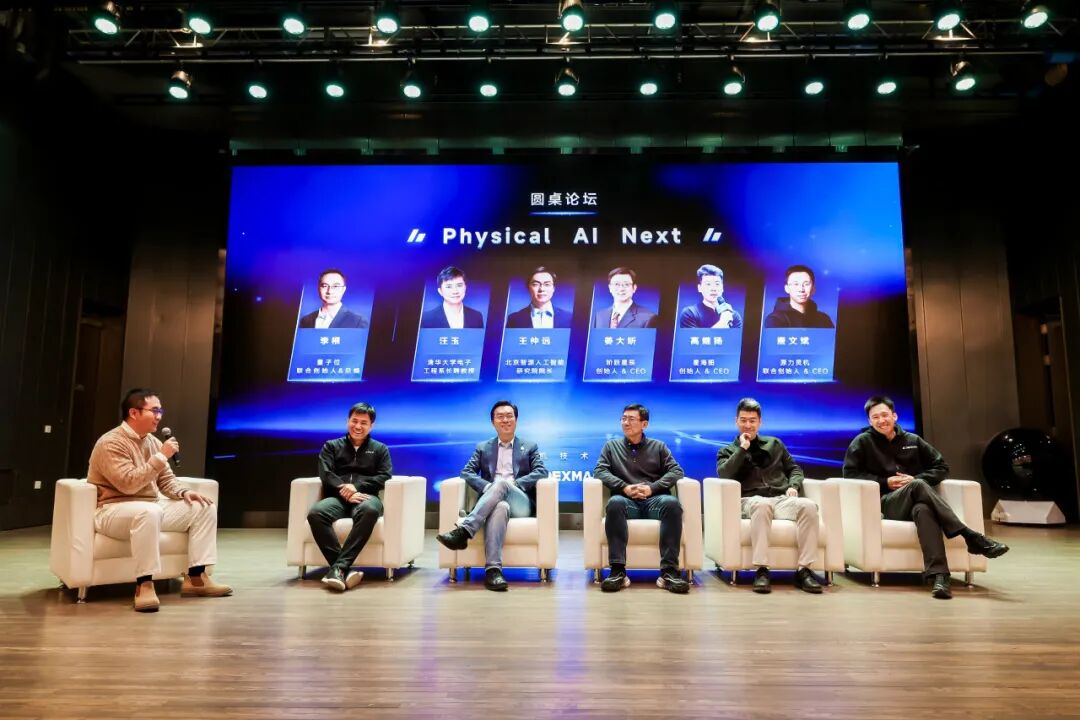
Fast Reading 在人工智能的诸多分支中,具身智能是近一年间被高频提及的方向之一。 从工业机器人到服务机器人,从自动驾驶到人形机器,各条技术路线每隔一段时间就会被寄予一次"通用智能入口"的期待。 但与算法驱动的软件革命不同,它始终被现实世界的摩擦力拖慢节奏。 如果只看公开视频,具身智能的公共叙事几乎被同一组类似的画面占据:机器人跑得更稳了,抓得更准了,动作更连贯,任务更复杂。融资在加速,模型 在迭代,具身智能似乎正处在一条确定无疑的上升曲线。 成功被循环播放,失败被剪掉——在实验室之外,另一种叙事同时存在:部署成本、稳定性、维护复杂度,仍在反复拉长商业化的时间表。 2月10日,原力灵机的首次技术开放日在北京中关村国家自主创新示范区展示中心举行。 原力灵机发布了三款核心产品:具身原生大模型 DM0、具身原生开发框架 Dexbotic 2.0、以及具身原生应用量产工作流 DFOL。这也是原力灵机成立近一 年来,公司核心团队第一次集体公开亮相。 在当天的"Physical Al Next 圆桌论坛"上,来自产、学、研的五位嘉宾花了约一半的时间,讨论一个问题: 具身智能的ChatGPT时刻何时到来? 具身智能 ...
早报央行:继续实施好适度宽松的货币政策;美联储官员最新发声
Sou Hu Cai Jing· 2026-02-10 23:15
宏观新闻 1、国务院办公厅转发民政部等十部门《关于进一步加强养老机构安全管理的意见》。意见提出,到 2026年底,深入排查整治养老机构存量安全风险隐患,推动安全风险隐患动态清零。到2027年底,因地 制宜加强人防、物防、技防,养老机构本质安全水平明显提升。 2、央行发布2025年第四季度中国货币政策执行报告。报告提出,继续实施好适度宽松的货币政策。灵 活高效运用降准降息等多种政策工具,保持流动性充裕和社会融资条件相对宽松。报告还提出,把握好 利率、汇率内外均衡。引导短期货币市场利率更好围绕央行政策利率平稳运行。 3、上海市规划和自然资源局发布《上海大都市圈国土空间规划(2025—2035年)》草案公示。根据 《规划》草案的目标,至2035年,将加快建成具有世界影响力的社会主义现代化国际大都市圈。 4、美国总统特朗普称他正在考虑,若与伊朗的谈判未能取得成果,或向中东地区再派遣一支美国航母 打击群,为可能的军事行动做准备。 特朗普2月10日当天表示,"伊朗不会拥有核武器或者导弹"。 5、美联储洛根表示,未来几个月如果通胀回落、劳动力市场保持稳定 就不需要进一步降息。美联储哈 玛克表示,美联储的利率政策可能会"在相 ...




政治豪赌之后 高市早苗的经济困局依然难解
Xin Lang Cai Jing· 2026-02-10 23:13
日本第51届众议院选举结果2月9日凌晨揭晓。据新华社消息,执政党自民党议席数较选前大幅增加,超 过众议院议席总数的三分之二。分析认为,自民党总裁、日本首相高市早苗赶在其政策危害彻底暴露 前,以一场"闪电式"选举强化了执政基础,但日本经济民生困境仍难解。 高市早苗颇受日本前首相安倍晋三的提携,是"安倍经济学"的忠实信徒,其施政纲领完全抄了安倍晋三 的"作业"。然而,日本国内经济形势变了,国际经济环境也变了,高市早苗能否解决日本经济与金融的 棘手问题? 日本经济的沉疴痼疾难去 特约撰稿 王应贵 为促进经济增长,安倍晋三再度上任(2012~2020年)后连发三箭。第一箭指财政政策,即扩大财政支 出、刺激国内消费;第二箭指货币政策,确定通胀目标为2%,要求日本银行尽快实施积极的量化宽松 货币政策,通过购买长期债券(以前为买入短期债券)全面管控利率水平;第三箭指公司治理改革(增 长战略与企业结构性改革)。2012年,日本政府总负债与GDP之比高达220.09%。安倍对振兴经济已力 不从心,只能期望通过公司治理改革鼓励私营部门投资、促进经济增长。 然而,当下日本经济形势已完全不同于2012年。目前,日本通货膨胀已达2.1 ...
豆包官宣将登央视春晚 阿里发布图像模型Qwen-Image-2.0|未来商业早参
Mei Ri Jing Ji Xin Wen· 2026-02-10 23:11
Group 1 - Doubao announced its participation in the CCTV Spring Festival Gala, planning to distribute over 100,000 technology gifts and cash red envelopes up to 8,888 yuan on New Year's Eve [1] - This initiative reflects Doubao's strategic focus on brand promotion and user engagement, aiming to enhance brand awareness and user participation through the high-visibility platform of the Spring Festival Gala [1] Group 2 - Alibaba officially launched its new image generation and editing model, Qwen-Image-2.0, which supports up to 1K tokens of text output and demonstrates advantages in rendering Chinese characters [2] - The release of Qwen-Image-2.0 showcases Alibaba's technological strength and innovation in the AI image generation field, potentially enhancing its competitiveness in the market [2] Group 3 - Qiongche Intelligent announced the completion of its Series A financing round, raising several hundred million yuan, led by C Capital with participation from various overseas industry players and domestic financial investors [3] - This financing is expected to accelerate the research and development of Qiongche Intelligent's embodied brain technology and its commercialization across multiple scenarios, facilitating its international expansion [3]

中文版Nano Banana来了?Qwen-Image-2.0炸场:1K长文本硬吃,中文生图彻底不拧巴了
3 6 Ke· 2026-02-10 23:05
文本一长就糊、指令一杂就撂挑子、遇到中文更是一整个变形freestyle…… 「AI生图」的这点苦,到底有谁懂啊!!! 停,不用拧巴了,因为现在的AI,已经能稳稳吃下1K token的超长文字指令了: 你以为到这儿就结束了,NONONO!因为它还能——多图编辑。 随手丢给了它一张照片,人家直接给我甩出一组影棚级的9宫格写真!!(诶,突然感觉怒省一笔钱… 复杂指令也不在怕的,最近OpenClaw贼火,我索性让AI直接帮roll出一个赛博信息图海报(你就说牛不牛吧): 中文渲染表现也不孬,《兰亭集序》这种公认的高难度文本,这AI居然能做到文字1:1还原,排版、笔锋都在线: 刚才帮我干活的这位,正是阿里刚刚发布的新一代图像生成及编辑模型——Qwen-Image-2.0。 1K token长文本、复杂指令、中文渲染、图片编辑、2K分辨率一次性梭哈,连国际评测里的表现都已经冲到了仅次于Nano Banana Pro的位置。 不废话,这个中文版Nano Banana到底能不能打,咱实测见真章!!! Qwen-Image-2.0 一手实测 复杂指令理解准,1K token文本玩得转 在AI生图界,最让人崩溃的倒不是写Pro ...

AI能否兑现承诺?行业面临巨大交付压力
Sou Hu Cai Jing· 2026-02-10 23:02
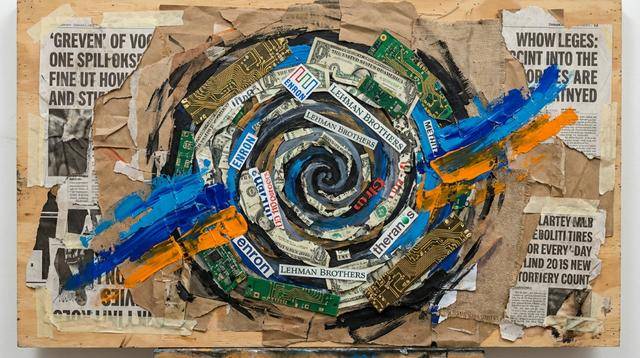
每周都有AI领域主要玩家的融资交易和合作伙伴关系的消息传出。这些活动引发了关于循环融资推动 AI泡沫的讨论。也有推测认为,除非发生某种根本性变化,否则OpenAI可能在2027年耗尽资金。 人工智能是否成了数字化的无底洞?沉没成本谬误是否让AI的拥护者陷入了死亡螺旋?是否应该调整 方向,设定更现实可行的目标? 在互联网泡沫的狂热中,期望发生了根本性变化。对科技成功的需求飞速增长。突然间,每项创新都需 要实现直冲火星且永不停歇的曲棍球棒式增长。当然,FAANG公司接管一切的现象是可以复制的,对 吧?如果这些情况无法重现,也许下一次技术革命至少可以推动这些公司通过永续增长达到更高的高 度。 尽管有例子和警告表明情况并非如此,我们对增强现实、虚拟现实和元宇宙都抱有同样的期望。 但现在AI必须像数字精灵一样实现所有人的愿望,否则将面临大量解释工作——涉及数十亿美元。时 间正在紧迫地流逝。 微软首席执行官萨蒂亚·纳德拉最近在世界经济论坛上表示,如果真正的好处不能很快显现,AI可能会 失去消耗能源和产生其他环境影响的"社会许可"。这一观点紧随纳德拉之前的请求,即公众停止将生成 式AI内容称为"AI垃圾"。 当AI炒作周期 ...
浙江宁波:擦亮“人工智能+制造”靓丽标签
Ren Min Ri Bao· 2026-02-10 22:56
"宁波有很强的'硬科技'孵化实力。我们打算在宁波加速光模块AI技术的产业孵化,推动这个项目的加 速落地,未来还打算和宁波乃至浙江的本土制造业企业做更多的结合和赋能。"作为第二届"AI宁波"人 工智能赋能产业大赛特等奖项目的负责人,张韦韪对未来项目在浙江宁波的发展充满信心。 "宁波当地的政策好,产业链资源也好,尤其是对这些走在行业前列的新技术都非常欢迎。宁波有着得 天独厚的优势。"宁波本土企业、智昌科技集团股份有限公司有关负责人于槐林表示。该企业已和一个 生物医药领域的参赛项目团队达成了产业合作关系,相互赋能、互利共赢。 "宁波的国家级制造业单项冠军企业数量,连续8年居全国城市首位。可以说,宁波需要AI人才,AI人 才也需要宁波这个超级训练场。'AI+制造'的碰撞,催生了智能制造的无限畅想。"宁波市委人才办相关 负责人说。 为了更好营造"真金白银"+"真心实意"的创新生态,宁波还专项出台人工智能人才政策,建设超算中 心、打造AIOPC社区,完善知识产权保护与成果转化体系,构建超400亿元的人工智能综合融资服务资 金池,全链条提供人才发展全生命周期服务。 "宁波以产业为锚点,以大赛为平台,汇聚智慧、链接资源、营造 ...
看展,AI讲解员做“搭子”
Ren Min Ri Bao Hai Wai Ban· 2026-02-10 22:52
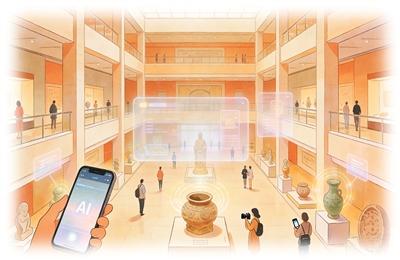
图片由AI生成 浦东美术馆内,观众正在使用AI讲解员了解毕加索的作品《装扮成喜剧丑角的保罗》相关创作背 景。 本报记者 孙亚慧摄 拿起手机,点击"视频通话",接通后将手机对向博物馆内的展品,属于观众自己的AI讲解员随即上 线。 "这幅画作的立意与毕加索的童年有关吗?" "这一幅下方好像有缺损,是如何造成的?" …… 无论抛出什么问题,屏幕那头总会送来耐心而专业的解答。它不仅能够陪唠,必要的时候,还会委 婉纠正观众提问时出现的知识性错误。 在上海浦东美术馆官方AI讲解员的陪伴下,记者收获了一次特别的看展经历。 美育资源突破时空限制 前不久,字节跳动旗下的AI工具豆包,正式成为"图案的奇迹:卢浮宫印度、伊朗与奥斯曼的艺术 杰作"与"非常毕加索:保罗·史密斯的新视角"两大国际大展的官方AI讲解员。 据豆包逛展项目负责人李若瑄介绍,模型需要攻克3个核心难题:区分外观高度相似的展品、解读 小众稀缺的文物资料、在观众移动观展时AI保持稳定识别。 "以伊朗15世纪的牡丹纹盘为例,其风格与明代永乐年间的青花牡丹纹盘非常接近,这就要求AI必 须从细节入手,能精准识别出文物细微的纹饰、工艺差异,给出正确信息。"李若瑄说。 多角度 ...
关于四川省2025年国民经济和社会发展计划执行情况及2026年计划草案的报告
Si Chuan Ri Bao· 2026-02-10 22:26
Core Viewpoint - The report outlines the execution of the 2025 National Economic and Social Development Plan in Sichuan Province, highlighting significant achievements and setting the stage for the 2026 plan, emphasizing high-quality development and strategic initiatives for economic growth. Group 1: 2025 Economic and Social Development Plan Execution - The GDP reached 67,665.3 billion yuan, growing by 5.5%, meeting the expected target [3] - Fixed asset investment (excluding farmers) decreased by 2.4%, falling short of the expected target due to declines in real estate and infrastructure investments [3] - Retail sales of consumer goods increased by 5.1%, exceeding the expected target [4] - Total import and export volume was 10,318.1 billion yuan, meeting the expected target [5] - Local general public budget revenue reached 5,853.9 billion yuan, growing by 3.9%, surpassing the expected target [6] - Urban residents' per capita disposable income grew by 4.4%, meeting the expected target [7] - Rural residents' per capita disposable income increased by 5.6%, meeting the expected target [8] - Consumer prices decreased by 0.3%, meeting the expected target [9] - Urban employment increased by 1.073 million, exceeding the expected target by 223,000 [10] - The urbanization rate of the permanent population is expected to exceed 61%, increasing by about 1 percentage point from the previous year, roughly meeting the expected target [11] - Grain production reached 732.5 billion jin, exceeding the expected target by 75 million jin [13] Group 2: Economic and Social Development Situation - The regional coordinated development pattern has been optimized, with significant progress in the Chengdu-Chongqing economic circle [14] - The "Five Districts Common Prosperity" development strategy has been advanced, with key projects achieving substantial investment [15] - County economies have shown significant improvement, with 39 underdeveloped counties receiving targeted support [16] - Domestic demand has been steadily increasing, with consumption policies stimulating growth [17] - Key projects have accelerated implementation, with a high completion rate of provincial key projects [18] - Innovation capabilities have significantly improved, with the establishment of high-level innovation platforms and successful technology breakthroughs [19][20] - The traditional industries are undergoing rapid transformation and upgrading, with significant growth in key sectors [22] - New and future industries are being rapidly developed, with a focus on emerging technologies [23] - A new service system is being actively constructed, with notable growth in the service sector [24] Group 3: Market Vitality and Economic Environment - The environment for private economic development is steadily improving, with significant growth in private sector contributions to GDP [26][27] - State-owned enterprise reforms have shown significant results, with increased revenue and strategic restructuring [28] - Digital infrastructure development is advancing, with initiatives to enhance data utilization and government services [29] Group 4: High-Level Opening Up - The opening channels and platforms are becoming increasingly complete, with enhanced logistics and transportation networks [30] - The scale of the open economy is stabilizing and improving, with significant growth in foreign trade and investment [31][32] Group 5: Urban-Rural Integration and Environmental Protection - New urbanization is accelerating, with significant improvements in urban infrastructure and rural revitalization efforts [33][34] - Ecological environment quality is improving, with successful implementation of environmental protection measures [36][37] Group 6: Social Welfare and Public Services - Employment and income growth measures have been effective, with significant increases in disposable income and job creation [38][39] - Public service systems are becoming more robust, with improvements in healthcare, education, and social security [40] Group 7: Safety and Risk Management - Food and energy security measures are being effectively implemented, ensuring stable supply chains [41] - Risk prevention and control measures are in place, addressing financial and operational risks [42]