
生猪养殖

Search documents
生猪推牧原德康邦基
2025-07-19 14:02
Summary of Conference Call on Swine Industry Industry Overview - The swine industry is currently undergoing significant policy changes aimed at stabilizing prices and enhancing production efficiency. The Ministry of Agriculture and Rural Affairs is engaging with leading and mid-tier companies to ensure stable production, limit breeding, and reduce weight to support prices in the latter half of the year and into 2026 [1][2][3]. Key Points and Arguments - **Price Forecast**: Recent declines in pig prices due to weight and disease factors are expected to reverse, with optimistic projections for Q3, Q4, and 2026, potentially reaching 13-15 RMB/kg. A slight increase in national production is anticipated for 2025, but growth will slow due to restrictions, extending the profitability cycle [1][5]. - **Competitive Landscape**: Competition among swine companies is primarily reflected in profit performance. For Q2, Muyuan's profits were notably strong due to effective cost control measures. Companies with good cost management and sufficient breeding stock are expected to benefit from production limits and favorable price expectations [1][7]. - **Policy Implementation**: The policy began implementation at the end of May, with a focus on reducing production by 1 million pigs nationwide. Despite some resistance from smaller enterprises and local governments, the policy is expected to gradually stabilize production and enforce environmental standards [3][10]. - **Investment Recommendations**: Recommended stocks include DeKang (Hong Kong), Muyuan (A-shares), and Bangji Technology (A-shares), all of which possess quality production capacity and competitive advantages in the current market environment [3][6]. Notable Developments - **DeKang's Innovations**: DeKang has introduced a new breeding model that is more cost-effective than traditional methods, leading competitors to follow suit. The company is also innovating in asset-light strategies to enhance core competitiveness [1][8]. - **Bangji Technology's Transition**: Bangji Technology is transitioning from feed production to swine farming, with feed sales expected to double in 2025. The company is acquiring quality assets and enhancing production efficiency through strategic moves in the downstream market [1][9][13]. - **Environmental Policy Impact**: The current environmental policy cycle is expected to significantly impact the swine industry, promoting compliance and potentially leading to the elimination of non-compliant operations. This process will take time but is seen as a necessary step for industry standardization [11][12]. Additional Insights - **Market Dynamics**: The cost advantage among quality producers can exceed 2 RMB/kg, leading to profit disparities of over 200 RMB per pig. This dynamic is expected to drive the elimination of less efficient producers over the long term [2][15]. - **Future Production Goals**: Bangji Technology aims for a near-term output of 600,000 to 700,000 pigs, with long-term goals exceeding 2-3 million pigs through expanded breeding stock and integrated supply chain management [14]. This summary encapsulates the key insights and developments within the swine industry as discussed in the conference call, highlighting the implications of policy changes, competitive dynamics, and investment opportunities.


我国社会消费品零售实际购买力为美国的1.6倍!| 新闻早班车来了
Sou Hu Cai Jing· 2025-07-18 23:57
今天是7月19日 农历六月二十五 星期六 要闻 我国对外投资年均增速超5%,总量规模稳居世界前三。 今年我国社会消费品零售总额有望突破50万亿元。商务部:我国社零实际购买力已超过美国,为美国的 1.6倍。 工业和信息化部:以市场化思维、法治化理念加强行业治理,推动落后产能有序退出。 欧盟正准备针对美国服务业的潜在报复清单,包含科技巨头。 土耳其总统埃尔多安批以色列空袭叙利亚,称不会允许叙利亚遭分裂。 伊朗总统:伊以冲突暴露伊朗安全领域"根本性"问题。 朝鲜谴责日本政府2025年版《防卫白皮书》。 财经 农业农村部:前期各级农业农村部门通过及时释放产能过剩预警信号、引导头部企业有序调减产能等调 控措施,自去年5月以来,生猪养殖已经连续14个月保持盈利。今年6月,全国5月龄以上的中大猪存栏 量比上个月降低了0.8%,预示着7、8月的生猪出栏量将有所减少,有利于猪价稳定和养殖盈利。7月第 2周全国生猪平均价格15.09元/公斤,比前一周上涨0.9%。 国内智能手机市场呈现"总量承压、结构优化"的态势。消费者换机周期普遍延长至32个月,一方面市场 出货增速放缓,另一方面在补贴政策与AI技术的驱动下,头部企业凭借产品优 ...
农林牧渔行业双周报(2025、7、4-2025、7、17):生猪养殖公司上半年盈利较好-20250718
Dongguan Securities· 2025-07-18 14:49
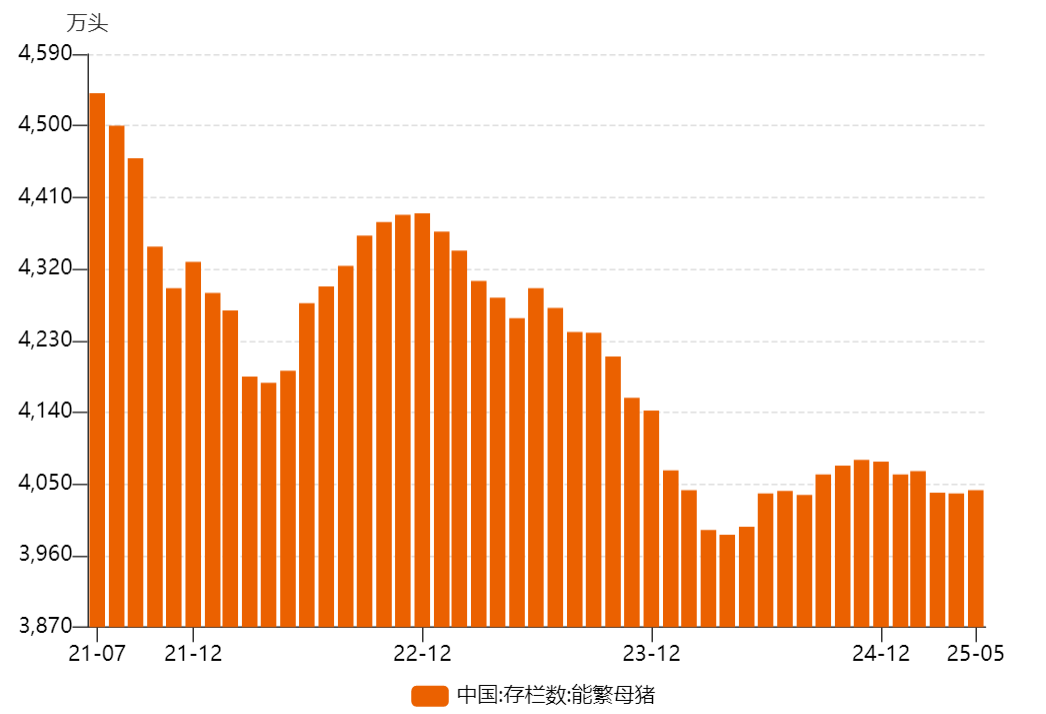
Investment Rating - The report maintains an "Overweight" rating for the agriculture, forestry, animal husbandry, and fishery industry [45][46]. Core Insights - The SW agriculture, forestry, animal husbandry, and fishery industry slightly underperformed the CSI 300 index, with an increase of 0.74% from July 4 to July 17, 2025, lagging behind the index by approximately 0.93 percentage points [11][14]. - Most sub-sectors recorded positive returns during the same period, with animal health, agricultural product processing, breeding, and planting sectors increasing by 8.71%, 2.56%, 1.42%, and 0.46% respectively, while the fishery and feed sectors saw declines of 1.8% and 4.2% [14][15]. - The overall price-to-book (PB) ratio for the industry is approximately 2.66 times, indicating a slight recovery, but still remains at a historical low, around 59.2% of the valuation center since 2006 [21][22]. Industry Key Data - **Pig Farming**: - The average price of external three yuan pigs decreased from 15.31 CNY/kg to 14.37 CNY/kg between July 4 and July 17, 2025 [24]. - As of June 2025, the breeding sow inventory reached 40.43 million heads, slightly up by 0.02% from the previous month, which is 103.7% of the normal holding capacity of 39 million heads [24]. - The profit from self-breeding pigs is 90.89 CNY/head, while the profit from purchased piglets is -18.66 CNY/head, both showing a decline compared to the previous week [29]. - **Poultry Farming**: - The average price of broiler chicks in major production areas was 1.37 CNY/chick, showing a slight increase, while the average price of layer chicks was 3.88 CNY/chick, which slightly decreased [31]. - The average price of white feather broilers was 6.4 CNY/kg, which has also decreased, with a profit of -2.93 CNY/chick, showing a slight recovery compared to the previous week [34]. - **Feed Costs**: - The spot price of corn was 2409.12 CNY/ton, showing a decline, while soybean meal prices were 2952 CNY/ton, which fluctuated in the last two weeks [26]. Industry Outlook - The report anticipates an overall increase in pig production capacity this year, which may suppress pig prices. The breeding sow inventory has some room for reduction [45]. - The poultry sector continues to face pressure on profitability, with opportunities for marginal improvement [45]. - In the feed sector, there are opportunities arising from increased concentration among leading companies, cost reduction, and overseas expansion [45]. - The domestic pet market is expected to maintain rapid growth, with leading domestic brands likely to see significant growth [45]. Recommended Stocks - Key stocks to focus on include: - Muyuan Foods (002714) - Wens Foodstuff Group (300498) - Shennong Development (002299) - Haida Group (002311) - Bio-Stock (600201) - Zhongchong Co., Ltd. (002891) - Yiyi Co., Ltd. (001206) [46].


生猪市场周报:预计生猪价格区间波动-20250718
Rui Da Qi Huo· 2025-07-18 10:21
Report Overview - Report Title: "2025.07.18 - Weekly Report on the Pig Market: Expected Range-bound Fluctuations in Pig Prices" [2] - Researcher: Zhang Xin - Industry: Pig Market 1. Report Industry Investment Rating - Not provided in the report 2. Core Viewpoints - Pig prices showed a trend of first falling and then rising, with the main contract declining by 1.46% on a weekly basis. In the short term, increased supply and weak demand will suppress price fluctuations. However, as prices weaken, it may stimulate the sentiment of farmers to hold prices and attract secondary fattening, and the slaughter rhythm may slow down again at the end of the month, limiting the downside space. Overall, the market is expected to show a volatile trend, and short - term prices will change with the slaughter and secondary fattening entry and exit rhythms. The recommended strategy is range trading or waiting and seeing [7]. 3. Summary by Directory 3.1 Weekly Summary - **Market Review**: Pig prices first declined and then rose, with the main contract down 1.46% weekly [7]. - **Market Outlook**: Supply increased as the slaughter rhythm of farmers recovered in mid - month and the proportion of large pigs for slaughter accelerated due to high - temperature and rainy weather in the South. Demand was weak as high temperatures reduced people's willingness to buy pork, schools were on holiday, and the terminal sales were slow, leading to a continuous decline in the slaughterhouse operating rate, although it was higher than the same period last year. Overall, short - term supply increase and weak demand will suppress price fluctuations, but lower prices may stimulate farmers' price - holding sentiment and attract secondary fattening, and the slaughter rhythm may slow down at the end of the month, limiting the downside space. - **Strategy Recommendation**: Range trading or waiting and seeing [7]. 3.2 Futures Market - **Price Trend**: Futures prices first declined and then rose, with the main contract down 1.46% weekly [11]. - **Net Position and Warehouse Receipts**: As of July 18, the net short position of the top 20 holders in pig futures was 16,156 lots, a decrease of 721 lots from the previous week, and the number of futures warehouse receipts was 284, a decrease of 3 from the previous week [17]. 3.3 Spot Market - **Base Difference**: The basis of the September contract was 65 yuan/ton, and the basis of the November contract was 565 yuan/ton this week [21]. - **Pig and Piglet Prices**: The national average price of live pigs was 14.81 yuan/kg this week, a decrease of 0.11 yuan/kg from the previous week but an increase of 2.35% from the previous month. The average price of 15 - kg weaned piglets was 34.03 yuan/kg, unchanged from the previous week and the same period last month [28]. - **Pork and Sow Prices**: On July 10, the national average market price of pork was 25.35 yuan/kg, an increase of 0.11 yuan/kg from the previous week. The average market price of binary sows was 32.52 yuan/kg, unchanged from the previous week [32]. - **Pig - Grain Ratio**: As of the week of July 9, 2025, the pig - grain ratio was 6.27, an increase of 0.06 from the previous week, but still below the break - even point [36]. 3.4 Industry Situation 3.4.1 Upstream - **Sow Inventory**: In May 2025, the inventory of breeding sows was 40.42 million heads, a month - on - month increase of 40,000 heads (0.1%) and a year - on - year increase of 1.15%, reaching 103.6% of the normal inventory. In June, according to Mysteel data, the inventory of breeding sows in large - scale farms increased slightly by 0.29% month - on - month and 4.20% year - on - year, and in small and medium - sized farms, it increased slightly by 0.17% month - on - month and 7.05% year - on - year [41]. - **Pig Inventory**: In Q2 2023, the national pig inventory was 424.47 million heads, an increase of 7.16 million heads from the end of the previous quarter and 9.14 million heads year - on - year. In May, according to Mysteel data, the inventory of commercial pigs in large - scale farms increased by 0.30% month - on - month, and in small and medium - sized farms, it increased by 0.57% month - on - month [44]. - **Slaughter Volume**: In June, according to Mysteel data, the slaughter volume of commercial pigs in large - scale farms was 10.7682 million heads, a month - on - month increase of 1.60% and a year - on - year increase of 23.60%, while in small and medium - sized farms, it was 487,700 heads, a month - on - month decrease of 0.40% but a year - on - year increase of 57.41%. The average slaughter weight of live pigs this week was 123.49 kg, a slight decrease of 0.01 kg from the previous week [47]. 3.4.2 Industry Profit - **Pig Farming Profit**: As of July 18, the profit of purchasing piglets for farming was a loss of 18.66 yuan/head, a decrease of 50.26 yuan/head from the previous week; the profit of self - breeding and self - raising pigs was 90.89 yuan/head, a decrease of 42.98 yuan/head from the previous week [52]. - **Poultry Farming Profit**: As of July 18, the profit of egg - laying hens was a loss of 0.47 yuan/head, a decrease in loss of 0.22 yuan/head from the previous week, and the profit of 817 meat - hybrid chickens was a loss of 0.56 yuan/head [52]. 3.4.3 Import - In the first six months of 2025, China imported a total of 540,000 tons of pork, with an average monthly import of 90,000 tons, a year - on - year increase of 5.88%, which was at a historically low level during the same period [57]. 3.4.4 Substitutes - As of the week of July 11, the price of white - striped chickens was 13.20 yuan/kg, unchanged from the previous week. As of the week of July 17, the average price difference between standard and fat pigs was - 0.19 yuan/kg, a decrease of 0.05 yuan/kg from the previous week [61]. 3.4.5 Feed - **Feed Price**: As of July 17, the spot price of soybean meal was 2938.86 yuan/ton, an increase of 24 yuan/ton from the previous week, and the price of corn was 2409.12 yuan/ton, a decrease of 12.45 yuan/ton from the previous week [66]. - **Feed Index and Price**: As of July 18, the closing price of the Dalian Commodity Exchange pig feed cost index was 944.59, an increase of 0.7% from the previous week. This week, the price of finishing pig compound feed was 3.35 yuan/kg, unchanged from the previous week [70]. - **Feed Output**: As of June 2025, the monthly feed output was 2.9377 million tons, a month - on - month increase of 175,600 tons [75]. 3.4.6 CPI - As of June 2025, the year - on - year increase in CPI was 0.1% [79]. 3.4.7 Downstream - **Slaughterhouse Operating Rate and Cold Storage Capacity**: In the 29th week, the operating rate of slaughterhouses was 25.15%, a decrease of 0.07 percentage points from the previous week but 5.94 percentage points higher than the same period last year. As of Thursday this week, the cold storage capacity of key domestic slaughterhouses was 17.44%, an increase of 0.02 percentage points from the previous week [82]. - **Slaughter Volume and Catering Consumption**: As of May 2025, the slaughter volume of designated pig slaughtering enterprises was 32.16 million heads, a month - on - month increase of 4.52%. In June 2025, the national catering revenue was 47.076 billion yuan, a year - on - year increase of 0.9% [87]. 3.5 Pig - Related Stocks - The report mentions the stock trends of Muyuan Co., Ltd. and Wens Co., Ltd., but no specific analysis is provided [88].
7.18犀牛财经早报:年内险企增资发债超740亿元 宗馥莉被起诉后娃哈哈销量骤降
Xi Niu Cai Jing· 2025-07-18 01:44
Group 1: Financial Instruments and Market Trends - The first batch of Sci-tech Bond ETFs has been launched, increasing the total number of credit bond ETFs to 21, which will help attract more medium to long-term funds into the market [1] - Insurance companies have raised over 74 billion yuan in capital this year, indicating a sustained high demand for capital supplementation [1] Group 2: Automotive Industry Developments - The penetration rate of L2-level assisted driving in China has exceeded 50%, the highest globally, with emerging technologies like parking assistance also gaining traction [2] - The automotive industry's competitiveness is shifting from mechanical hardware to intelligence and AI, emphasizing the need for companies to adapt to this new landscape [2] Group 3: Solar Industry Performance - The solar industry is facing significant challenges, with most companies in the supply chain reporting losses, highlighting a clear divergence in performance among firms [2] - Only 8 out of 30 solar companies that released half-year performance forecasts expect positive net profits, with only 2 showing year-on-year growth [2] Group 4: Swine Industry Insights - Despite a decline in pig prices, many pig farming companies are expected to report profits, driven by effective cost control measures [3] - The industry is focusing on regulating sow production capacity to stabilize prices, which may lead to increased market concentration [3] Group 5: Film Industry Performance - The summer film season has seen box office revenues surpass 3.5 billion yuan, with diverse genres and innovative themes contributing to its success [4] Group 6: AI and Robotics Innovations - A new AI framework for malaria diagnosis has achieved an accuracy rate of 96.47%, showcasing advancements in AI applications for disease control [4] - A new type of robot capable of self-growth and repair by absorbing surrounding materials has been developed, marking a significant step towards sustainable robotic systems [4] Group 7: Corporate Changes and Market Reactions - JD.com has criticized the recent "0 yuan purchase" promotions in the food delivery sector as a form of unhealthy competition [5] - Wahaha's sales have reportedly dropped significantly following legal issues faced by its chairman, raising concerns among distributors [5] - Good Products announced a significant change in its controlling shareholder, with the Wuhan State-owned Assets Supervision and Administration Commission set to become the actual controller [9] - Han's announcement of a fundraising adjustment indicates a focus on projects related to large model chip platforms and software [11] - Zongheng's actual controller's divorce has led to a significant change in shareholding structure, but control remains unchanged [11] - Gujia Home's CFO and board secretary have resigned, with new appointments made to fill these roles [10]



14家预告 8家扭亏 猪价下跌,猪企为何赚了?
Shang Hai Zheng Quan Bao· 2025-07-17 18:13
Core Viewpoint - Despite the continuous decline in pig prices, many listed pig farming companies are expected to report profits in the first half of 2025, primarily due to effective cost control measures [1][2][4]. Group 1: Company Performance - 14 pig farming companies have disclosed their performance forecasts for the first half of 2025, with 8 companies expected to turn losses into profits, including New Hope, Juxing Agriculture, and others [2][3]. - Muyuan Foods anticipates a net profit of 10.2 billion to 10.7 billion yuan, representing a year-on-year increase of 1129.97% to 1190.26%, driven by a 32.5% increase in pig sales [2][3]. - New Hope expects a net profit of 680 million to 780 million yuan, indicating a turnaround from losses, with improved production metrics and reduced costs [2][3]. - Shennong Group forecasts a net profit of 341 million to 420 million yuan, a year-on-year increase of 175.12% to 238.85%, attributed to a 40.93% increase in pig sales and lower raw material costs [3]. Group 2: Industry Trends - The pig farming industry is undergoing a "reverse involution" aimed at regulating sow capacity and boosting pig prices, with a focus on reducing the number of breeding sows by approximately 1 million [4][5]. - The top three companies, Muyuan Foods, Wens Foodstuff Group, and New Hope, account for over 78% of total pig sales, indicating a trend towards increased industry concentration [4]. - The average selling prices of pigs have declined significantly, with Muyuan Foods reporting an average price of 14.08 yuan/kg in June, down 21% year-on-year [4][6]. Group 3: Market Outlook - Experts express cautious optimism for the pig market in the second half of the year, predicting a seasonal price increase but not a significant rise due to ample supply [6]. - The reduction in breeding sow capacity and overall weight of pigs is expected to positively impact pig prices in the medium to long term [6]. - The focus of competition in the pig farming industry is shifting from mere scale expansion to cost control and quality improvement, emphasizing the importance of detailed management practices [6].

农业农村部:生猪养殖连续14个月盈利,七八月出栏量将有所减少
2 1 Shi Ji Jing Ji Bao Dao· 2025-07-17 09:45
Core Insights - China's pork production and consumption account for approximately 60% of total meat consumption, indicating that stability in pig farming is crucial for the overall livestock industry [1] - As of mid-2023, the number of pigs slaughtered reached 36.619 million, a year-on-year increase of 0.6%, while the pig inventory stood at 42.447 million, up 2.2% year-on-year [1] - The average price of pigs in the second week of July was 15.09 yuan per kilogram, reflecting a 0.9% increase from the previous week but an 18.5% decrease year-on-year [1] Industry Analysis - The Ministry of Agriculture and Rural Affairs has reported that pig farming has remained profitable for 14 consecutive months since May of the previous year, aided by timely warnings about excess production capacity and guidance for leading enterprises to adjust their output [1] - The current market conditions show a strong supply but weak demand for pigs, leading to downward pressure on prices [1] - Monitoring data indicates a 0.8% decrease in the inventory of pigs over five months old in June, suggesting a potential reduction in pig slaughtering in July and August, which may help stabilize prices and maintain farming profitability [2] - The inventory of breeding sows was recorded at 40.43 million, exceeding the normal holding capacity of 39 million by 3.7%, indicating that production capacity is still within a reasonable range [2] - Future efforts by the Ministry will focus on capacity adjustment and policy stabilization to promote steady development in pig production, including timely market warnings and the elimination of low-yield sows [2]
金十期货7月17日讯,据农业农村部畜牧兽医局局长黄保续称,前期各级农业农村部门通过及时释放产能过剩预警信号、引导头部企业有序调减产能等调控措施,自去年5月份以来,生猪养殖已经连续14个月保持盈利。针对近期猪价存在的一定下行压力,我们已经提前释放了市场预警信息,指导头部企业合理调减产能,控制出栏节奏。下一步,农业农村部将重点抓好两方面工作,促进生猪生产稳定发展。一是调产能。加密发布市场预警信息,引导有序出栏,加快淘汰低产母猪和弱仔猪,适应性调整产能,促进供需均衡。二是稳政策。落实地方生猪稳产稳价责任,优化生猪
news flash· 2025-07-17 08:12
Core Viewpoint - The Ministry of Agriculture and Rural Affairs emphasizes the importance of stabilizing pig production and prices, implementing measures to optimize pig production capacity regulation in response to recent price pressures [1] Group 1: Production Capacity Regulation - The agricultural authorities have been releasing warnings about excess production capacity and guiding leading enterprises to orderly reduce production capacity since May of last year, resulting in 14 consecutive months of profitability in pig farming [1] - Future efforts will focus on two main areas: adjusting production capacity and stabilizing policies [1] Group 2: Policy Implementation - The Ministry will enhance the release of market warning information to guide orderly market exits, accelerate the elimination of low-yield sows and weak piglets, and adjust production capacity to promote supply-demand balance [1] - The Ministry will also ensure the implementation of local responsibilities for stabilizing pig production and prices, optimize production capacity regulation measures, and maintain routine prevention and control of African swine fever [1]
牧原股份连续两季减产!政策驱动供给收缩,生猪养殖估值修复在即?
Jin Rong Jie· 2025-07-17 06:33
Group 1 - The core viewpoint of the articles highlights the positive impact of the "anti-involution" policy on the livestock industry, leading to a focus on market-driven capacity reduction and price expectations [1][3] - The livestock theme ETF, the Livestock Breeding ETF (516670), has attracted significant capital inflow, with nearly 62 million yuan net inflow on July 16, ranking first among its peers [1] - The reduction in breeding sows is evident, with the number of breeding sows recorded at 40.42 million as of the end of May, showing a downward trend [1][3] Group 2 - Companies are actively implementing measures to control the number of breeding sows, with leading firms like Muyuan Foods reducing their breeding sow inventory by 54,000 heads to 3.43 million, marking two consecutive quarters of reduction [1][3] - The average weight of slaughtered pigs has decreased, with June's average weight at 90.3 kg, down 0.58% month-on-month and 2.11% year-on-year, influenced by policy guidance and high temperatures [3][6] - The livestock sector is expected to maintain a reasonable price stability in the short to medium term due to the policy-driven reduction of breeding sows, control of secondary fattening, and weight reduction [3][6] Group 3 - The overall valuation level of the pig sector remains attractive, with the latest valuation of the China Securities Livestock Index at 2.59 times PB, which is less than 9% of its historical percentile [6] - Long-term stable conditions in the pig farming industry are anticipated to sustain a certain level of profitability, with companies that excel in management and cost efficiency expected to maintain good profitability [6] - The demand side is expected to support pork consumption, with the domestic economy's stability and resilience enhancing the outlook for pig prices and the overall performance of the pig sector [6] Group 4 - The Livestock Breeding ETF (516670) closely tracks the China Securities Livestock Index, covering over 60% of the weight of stocks related to pig farming, including major companies like Muyuan Foods and Wens Foodstuff Group [6] - The ETF also includes upstream and downstream concepts related to pig farming, such as vaccines and feed, accounting for nearly 40% of its composition [6]

供应增加,猪价承压,政策托底
Zhao Shang Qi Huo· 2025-07-17 02:24
1. Report Industry Investment Rating No relevant content provided. 2. Core Viewpoints of the Report - Long - term: Supply increases, demand peaks, and it's an era of small profits. A profit of 200 yuan per pig may be the price ceiling. Macroscopically, the government promotes a reasonable recovery of prices and uses reserve purchases to support the market. In terms of supply and demand, supply is expected to increase continuously after July (except for a slight decline in July), and the supply growth rate is faster than the demand growth rate before November. The supply - demand gap is expected to narrow at the end of the year. Pig prices are expected to be strong from July to August, then gradually decline under pressure, and have a seasonal rebound at the end of the year. Spot prices are expected to range from 13 - 16 yuan/kg, and futures prices from 12.5 - 15 yuan/kg. Opportunities to short at high prices can be considered from July to August, and industrial clients can consider selling hedging for far - month contracts after the high in the third quarter [58]. 3. Summary by Relevant Catalogs 3.1 Long - term: Stable Supply, Peak Demand, and Era of Small Profits 3.1.1 Supply Dimension - **Concentration Increase and Stable Capacity**: Currently, the proportion of small - scale farmers' pig sales is 31.9% (91.3% in 2000), and that of large - scale enterprises is 68.1% (8.7% in 2000). Group farms are expanding rapidly, and small - scale farmers are exiting. With the increase in the concentration of large - scale breeding enterprises, their influence on pig prices has increased. The production capacity will be relatively stable as large - scale enterprises have stronger anti - risk capabilities [7]. - **Improvement in Production Efficiency**: There is still much room for improvement in China's pig production efficiency compared with foreign countries. For example, Denmark's PSY is as high as 34.14, while the UK's is 26.64. In 2022, the daily weight gain in Denmark and Sweden exceeded 1000 grams. With stable and slightly increasing capacity, higher large - scale proportion, and improved production efficiency, the supply from leading enterprises will continue to increase [10]. 3.1.2 Consumption Dimension - **Peak in Pork Consumption**: In 2014 and 2023, pig prices were low and there were breeding losses, indicating oversupply. The similar pork production in 2014 and 2023 shows that domestic demand may have saturated at around 58 million tons, suggesting that China's pork consumption may have peaked in 2014 [13]. 3.1.3 Supply - Demand and Profit - **Gradually Loosening Supply - Demand and Small Profits**: China's population decline is faster than expected, which will lead to a decrease in pork consumption in the long run. The total pork consumption is the product of the total population and per - capita consumption. With a negative population growth and a possible peak in per - capita pork consumption, the total demand is weakening. A profit of about 200 yuan per pig corresponds to a cost increase of 2 yuan/kg [17][18]. 3.2 Medium - and Short - Term: Sufficient Supply and Lower Price Center 3.2.1 Supply Side - **Adequate Capacity**: As of the end of May 2025, the national inventory of breeding sows was 40.42 million, 103.64% of the normal inventory of 39 million, with a month - on - month increase of 0.1% and a year - on - year decrease of 1.2%, indicating sufficient breeding sow capacity [21]. - **Weak Will to Reduce Capacity**: There is a lack of strong motivation among producers to reduce production capacity as shown by relevant profit and sow culling data [23][24][25]. - **Continuous Improvement in Production Efficiency**: Indicators such as the breeding - farrowing rate, piglet survival rate, litter size of healthy piglets, and fattening pig survival rate have shown an upward trend, indicating continuous improvement in production efficiency [29]. - **Increasing Slaughter**: In the first half of the year, the national pig slaughter was 366.19 million, a year - on - year increase of 0.6%. Except for a slight decline in July, the slaughter volume is expected to increase continuously, and the pig price center is expected to decline accordingly [36]. - **Increasing Second - Fattening Pressure**: The enthusiasm for second - fattening was similar to last year from February to April this year, reaching a peak in mid - April and then declining rapidly. However, the utilization rate of second - fattening pens has recently increased rapidly, indicating that the supply pressure is postponed, and the subsequent second - fattening slaughter pressure will increase [39]. - **Increasing Slaughter Weight**: This year's pig slaughter weight is at a four - year high, with an average increase of 3 kg compared to last year. Due to low feed costs, enterprise breed improvement, and favorable standard - fat price spreads, large - scale enterprises have generally increased the slaughter weight. The game between large - scale enterprises and small - scale farmers makes weight reduction uncertain [43]. 3.2.2 Demand Side - **Seasonal Weakening of Slaughter Volume**: The pig slaughter volume shows a seasonal weakening trend [44]. 3.2.3 Price - **Widening Standard - Fat Price Spread and Rebounding Piglet Price**: The standard - fat price spread has widened, and the piglet price has rebounded [46]. 3.2.4 Policy - **CPI and Policy Actions**: The government aims to promote a reasonable recovery of prices. Relevant policies include large - scale enterprises not increasing the number of breeding sows, reducing the slaughter weight to 120 kg, and banning the second - fattening of the head part [51]. - **Pork Reserve Early - Warning and Adjustment Mechanism**: The mechanism has different early - warning levels and corresponding reserve adjustment measures for both excessive price drops and rises. As of June 11, the official pig - grain ratio was 6.12, in the third - level early - warning, and frozen meat reserve purchases were initiated in advance [52][54].