
半导体

Search documents
事关芯片,深圳重磅发布
半导体芯闻· 2026-02-13 09:35
Core Viewpoint - Shenzhen has released the "Artificial Intelligence+" Advanced Manufacturing Action Plan (2026-2027), aiming to integrate AI technology deeply into the manufacturing process and enhance the semiconductor industry through AI applications [1][3]. Group 1: Key Support Platforms - The plan emphasizes the establishment of an Industrial Intelligence Innovation Center and aims to accelerate the construction of provincial and national manufacturing innovation centers [5]. - It supports the development of industrial software and knowledge alliances, focusing on standardizing industrial knowledge and creating leading autonomous industrial software products [5][6]. Group 2: Empowering Key Industry Clusters - AI will be applied to critical areas of the semiconductor industry, optimizing chip design and software coding efficiency, with a focus on developing high-performance SoC chips for various AI applications [8]. - The plan also highlights the importance of AI in robotics, promoting the development of multimodal interaction technologies and enhancing the capabilities of robots in industrial settings [8][9]. - In the low-altitude economy, the plan aims to establish a drone autonomy evolution system and enhance drone capabilities for various applications, improving resource scheduling and operational efficiency [9]. Group 3: AI in Electronics and Healthcare - The plan encourages collaboration among leading enterprises in the electronic information manufacturing sector to explore potential AI application scenarios and develop benchmark projects [9]. - In the pharmaceutical and medical device sectors, the plan promotes the integration of AI in drug development and medical technology, aiming to accelerate innovation and enhance the capabilities of medical devices [10].


HBM 4,竞争激烈
半导体芯闻· 2026-02-13 09:35
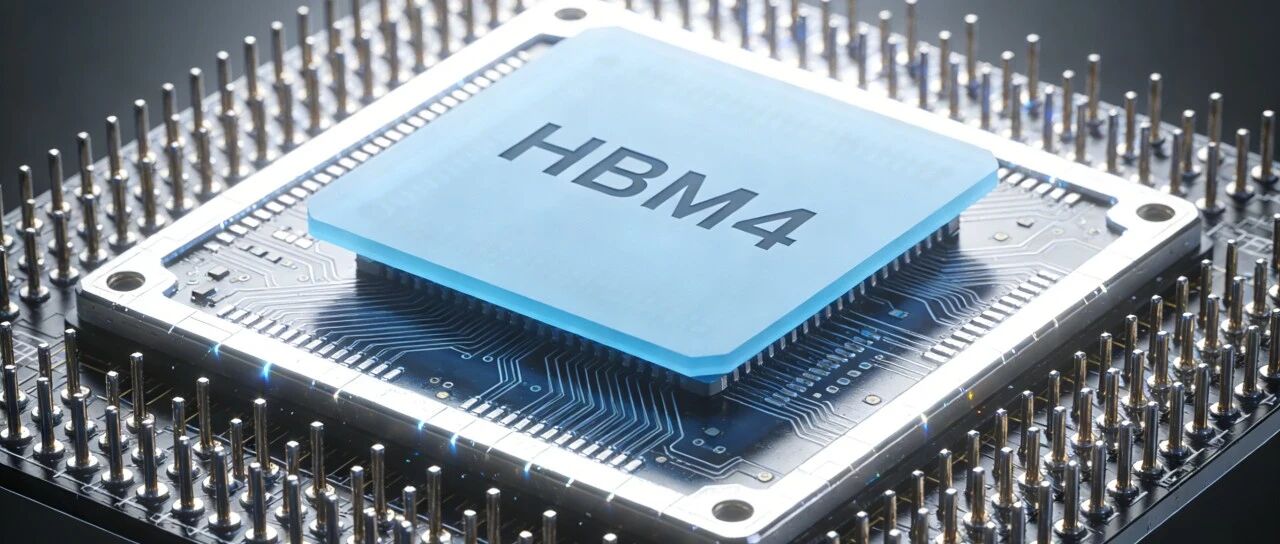
Core Viewpoint - The competition among the three major global memory semiconductor companies for HBM4 (the sixth generation high bandwidth memory) is intensifying, with Samsung Electronics leading the way in production ahead of SK Hynix and Micron, highlighting its advantages in R&D speed and performance [1][2]. Group 1: HBM4 Production and Market Dynamics - Samsung Electronics announced the mass production of HBM4 on the 12th, ahead of its competitors, emphasizing its commitment to exceeding JEDEC standards from the beginning of HBM4's development [2]. - The HBM4 memory will be installed in NVIDIA's upcoming "Rubin" AI accelerator, featuring 2048 I/O ports, which is double the number of the previous generation [2]. - SK Hynix and Micron are also set to begin mass production of HBM4 this month, with SK Hynix claiming to be the only company capable of simultaneously supplying both HBM3E and HBM4 [3][4]. - The term "mass production" used by these companies refers to "risk production," where chips are produced before receiving formal purchase orders, which may lead to market confusion [4][5]. Group 2: Supply Chain and Performance Concerns - The supply chain dynamics for HBM4 are expected to be significantly influenced by NVIDIA's supply strategy, which balances performance and supply stability [6]. - Samsung's HBM4 achieves a stable operating speed of 11.7 Gbps, setting a new industry standard, which is approximately 46% faster than the previous 8 Gbps standard [6]. - Despite Samsung's advancements, the company currently has a yield rate of about 60% for its 1c DRAM, which may decline further during post-processing [6][7]. - SK Hynix has secured the largest HBM4 allocation in negotiations with NVIDIA, but initial reliability assessments indicate challenges in meeting the 11 Gbps performance target [7]. Group 3: Future Expectations and Strategic Adjustments - Industry insiders suggest that NVIDIA may relax its performance requirements for HBM4 to ensure stable supply, given the current memory shortage [7]. - The ongoing investments in new and upgraded production facilities for 1c DRAM will take time to translate into actual capacity, impacting the overall supply chain [7].


上海复旦(01385) - 内幕消息 - 截至2025年12月31日止年度初步业绩公告
2026-02-13 09:33
香港交易及結算所有限公司及香港聯合交易所有限公司對本公告之內容概不負責,對其 準確性或完整性亦不發表任何聲明,並明確表示概不就因本公告全部或任何部份內容而 產生或因倚賴該等內容而引致之任何損失承擔任何責任。 上海復旦微電子集團股份有限公司 Shanghai Fudan Microelectronics Group Company Limited* (在 中 華 人 民 共 和 國 註 冊 成 立 的 股 份 有 限 公 司 ) (股 份 編 號 : 1385) 內幕消息 截至2025年12月31日止年度初步業績公告 本公告乃上海復旦微電子集團股份有限公司(「本公司」,連同其附屬公司統稱「本集團」) 董事會(「董事會」)根據香港聯合交易所有限公司主板證券上市規則(「上市規則」)第 13.09 條及香港法例第 571 章證券及期貨條例第 XIVA 部項下內幕消息條文(定義見上 市規則)而作出。 I. 截至 2025 年 12 月 31 日止年度(「2025 年度」)主要財務數據和指標 | | | | 人民幣萬元 | | --- | --- | --- | --- | | 項目 | 2025 年度 | 上年同期 | ...
芯原股份今日大宗交易成交40.68万股,成交额9786.03万元
Xin Lang Cai Jing· 2026-02-13 09:31
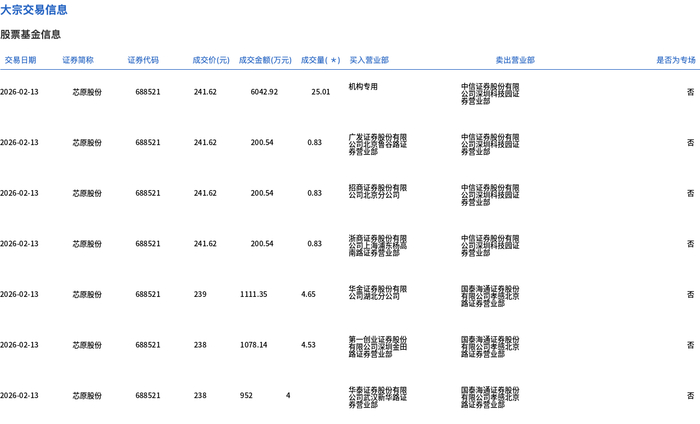
Group 1 - The core point of the news is that on February 13, 2026, Xinyuan Co., Ltd. executed a block trade of 406,800 shares, amounting to 97.86 million yuan, which represented 1.77% of the total trading volume for that day [1] - The average transaction price was 240.56 yuan, reflecting a discount of 12.68% compared to the market closing price of 275.5 yuan [1] - The highest transaction price recorded was 241.62 yuan, while the lowest was 238 yuan during the trading session [1] Group 2 - The block trade involved multiple transactions, with the largest single transaction being 604.29 million yuan at a price of 241.62 yuan [2] - Other transactions included amounts of 200.54 million yuan and 1,111.35 million yuan at prices of 241.62 yuan and 239 yuan respectively [2] - The trading activity was primarily conducted by institutional investors, indicating a significant interest from this segment [2]

华虹公司(688347.SH):委任葛茂晖担任执行副总裁
Ge Long Hui A P P· 2026-02-13 09:29
格隆汇2月13日丨华虹公司(688347.SH)公布,公司董事会于2026年2月13日作出决议,委任葛茂晖先生 担任公司的执行副总裁,简历如下: 葛茂晖先生,男,61岁。现任公司、上海华虹宏力半导体制造有限公司执行副总裁,分管质量与测试相 关业务。葛茂晖先生于二零二六年一月加入本公司,拥有超过30年的半导体行业相关工作经验,曾历任 美国英特尔公司主任工程师与良率项目经理、MIRADIA科技良率与可靠性总监、iUSE运营总经理、 PACIFIC BIOSCIENCES 质量总监、CYPRESS半导体全球客户与产品线质量总监、长江存储科技质量 与可靠性高级总监及武汉新芯质量与可靠性负责人、MARVELL半导体质量与可靠性副总裁等职务。葛 茂晖先生拥有复旦大学物理学学士学位、美国夏威夷大学固态物理学博士学位,并顺利完成美国伊利诺 伊大学厄巴纳-香槟分校博士后研究工作。 ...
太极实业(600667.SH):目前公司半导体业务不涉及HBM产品
Ge Long Hui· 2026-02-13 09:21
Group 1 - The core point of the article is that Taiji Industry (600667.SH) has stated on its investor interaction platform that its semiconductor business does not involve HBM products [1]

中国半导体行业展望
Zhong Cheng Xin Guo Ji· 2026-02-13 09:14
Investment Rating - The semiconductor industry is rated as "stable improvement" for the next 12 to 18 months, with potential for upward adjustments based on demand growth from automotive electronics and artificial intelligence [5][7]. Core Insights - The semiconductor industry in China is expected to benefit from effective industrial support policies, accelerating domestic substitution processes, and a stable upward trend in credit quality [5][8]. - The competition in the semiconductor industry remains a key national focus, with ongoing support for high-end breakthroughs and supply chain management [7][9]. - The recovery of the semiconductor industry is driven by the mild recovery in consumer electronics and rapid development in automotive electronics and artificial intelligence [19][24]. - The global semiconductor sales reached approximately $697.18 billion in 2025, with a year-on-year growth of 11.22%, indicating a new recovery cycle after a previous downturn [20][24]. - The domestic semiconductor market in China is projected to reach $210.88 billion in 2025, growing by 14.68% year-on-year, driven by AI and automotive electronics [24]. Industry Fundamentals Analysis - The semiconductor industry is supported by a comprehensive policy framework that includes national and local government initiatives aimed at enhancing self-sufficiency and technological breakthroughs [9][10]. - The production of integrated circuits in China reached 484.3 billion units in 2025, a year-on-year increase of 87.28%, with exports also showing significant growth [11][24]. - The industry is characterized by a high degree of concentration, with the top ten chip design companies holding over 65% of the market share globally, predominantly led by U.S. firms [30][31]. Credit Performance of Industry Enterprises - The overall financial performance of the semiconductor industry has improved, with revenue, profit, and operating cash flow showing growth, while debt levels remain manageable [29]. - The industry has not experienced any bond extensions or defaults, indicating a stable credit environment [29]. - The chip design sector has seen rapid growth, particularly in AI chip manufacturers, which have outperformed other segments [31].



复旦微电(688385.SH):2025年度净利润约为2.32亿元,同比下降约59.42%
Ge Long Hui A P P· 2026-02-13 09:05
格隆汇2月13日丨复旦微电(688385.SH)公布2025年度业绩快报,公司实现营业收入约为39.82亿元,较上 年度增长约10.92%。公司实现归属于母公司所有者的净利润约为2.32亿元,较上年度下降约59.42%;实 现归属于母公司所有者的扣除非经常性损益的净利润约为1.43亿元,较上年度下降约69.29%。 2025年,半导体行业的景气度呈现出明显的结构性分化,下游应用需求差异显著。FPGA产品在有线无 线通信、卫星通信、工业控制、人工智能以及高可靠等领域应用良好,公司产品竞争力强,营收增长; 安全与识别芯片各子线产品市场表现不同,在RFID与传感芯片带动下整体营收小幅增长;非挥发存储 器市场竞争激烈,全年营收下降;MCU芯片因良好市场布局和稳定产品质量,在车规和白色家电市场 出货较上年快速增长。公司整体营业收入实现增长,毛利率保持稳定,毛利较上年同期增加约为2.29亿 元。 ...

晶华微股价上涨3.45%,半导体板块情绪受AI芯片进展提振
Jing Ji Guan Cha Wang· 2026-02-13 09:04
Core Viewpoint - The recent market sentiment around Jinghua Micro (688130) is primarily influenced by the semiconductor sector's overall performance and the company's stock price dynamics during the week from February 6 to February 13, 2026 [1] Stock Performance - Jinghua Micro's stock price has shown an upward trend over the past week, with a price increase of approximately 3.45%, rising from 23.38 yuan on February 6 to 24.48 yuan on February 13 [2] - The 5-day price change is recorded at 4.70%, with a daily increase of 0.70% on February 13, accompanied by a net inflow of 113,400 yuan in main funds and a turnover rate of 1.82%, indicating active short-term trading [2] - The semiconductor sector remained stable during the same period, with a sector change of 0.00%, while Jinghua Micro outperformed the broader market, as the Shanghai Composite Index increased by 0.41% over the past five days [2] Recent Events - The semiconductor sector has been positively impacted by advancements in AI chip development, notably with reports on February 11 regarding ByteDance's progress in self-developed AI chips and discussions with Samsung for contract manufacturing, which may indirectly affect the sentiment towards companies like Jinghua Micro [3] - Jinghua Micro has not released any significant announcements or events in the past week, and the latest financial report available is for the first three quarters of 2025, showing a revenue of 123 million yuan, a year-on-year increase of 27.32% [3]

新旧经济的分化与资本市场映射
Ping An Securities· 2026-02-13 09:00
Macro Perspective - Since 2025, China's economy has increasingly shown characteristics of "new and superior" development, with new productive forces being cultivated and diverse consumer preferences becoming more prominent[3] - High-tech manufacturing PMI was 52.0% in January 2026, consistently outperforming the overall manufacturing PMI of 49.3%[21] - High-tech industries' added value grew by 11.0% year-on-year in December 2025, exceeding the overall industrial enterprises' growth by 5.8 percentage points[21] Industry Perspective - Investment in advanced manufacturing, such as aerospace and automotive, grew by 16.9% and 11.7% respectively, outpacing overall manufacturing investment growth[25] - The information technology service sector saw an investment increase of 28.4%, maintaining over 25% growth for 11 consecutive months[25] - The revenue growth of strategic emerging services was 9.9%, while high-tech services grew by 8.6%, both surpassing the overall service sector growth of 7.8%[24] Market Perspective - As of January 2026, the market capitalization weight of the A-share information and communication sector reached 24%, surpassing financial and real estate sectors at 19%[3] - The market capitalization of A-share new economy MAG7 stocks is below that of US MAG7 stocks (20%+) and Hong Kong stocks (10+%), indicating room for growth[3] - The performance of A-share strategic emerging industries showed a profit growth of 15.5%, exceeding the overall non-financial A-share sector's growth of 13.8%[38] Outlook and Risks - The transition from old to new economic drivers is expected to accelerate, positioning new economic sectors as the main growth engine for China's economy[3] - Key investment areas include technology innovation and advanced manufacturing, particularly in AI and innovative pharmaceuticals[3] - Risks include potential market learning effects, unexpected tightening of macro and industrial policies, and significant changes in macroeconomic conditions and liquidity[3]