
航空航天

Search documents
未来十多年中等收入群体将超8亿
2 1 Shi Ji Jing Ji Bao Dao· 2025-10-24 14:48
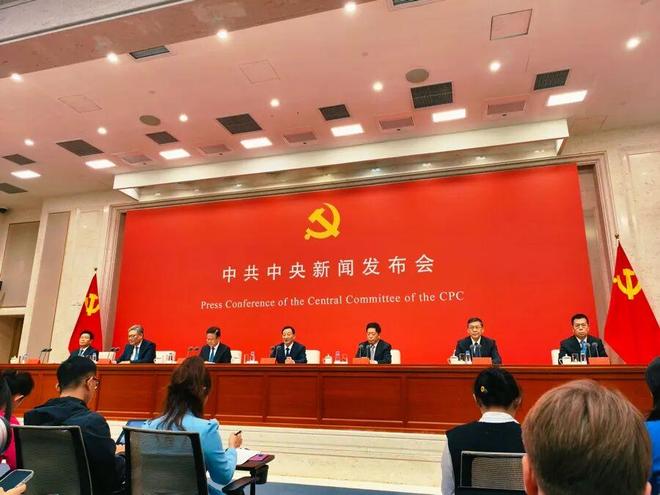
作者丨周潇枭 编辑丨张星 党的二十大确定到2035年基本实现社会主义现代化,"十五五"时期是夯实基础、全面发力的关键时期。 10月20日至23日,中国共产党第二十届中央委员会第四次全体会议在北京召开,全会审议通过了《中共 中央关于制定国民经济和社会发展第十五个五年规划的建议》(下文简称《建议》),明确了"十五 五"时期经济社会发展的指导方针和主要目标,擘画了未来五年发展的宏伟蓝图,为深入推进中国式现 代化指明了前进方向。 10月24日,中共中央举行新闻发布会,介绍和解读党的二十届四中全会精神。发布会邀请了中央政策研 究室主任江金权,中央财办分管日常工作的副主任、中央农办主任韩文秀,国家发展改革委党组书记、 主任郑栅洁,科技部党组书记、部长阴和俊,商务部党组书记、部长王文涛,以及国家卫生健康委党组 书记、主任雷海潮出席,介绍相关情况并答记者问。 江金权表示,《建议》即将发布。《建议》共有15个部分、61条,分为三大板块。第一板块是总论,包 括第一部分、第二部分,主要阐述"十四五"时期我国发展取得的重大成就、抓好"十五五"时期经济社会 发展的重大意义和总体要求。第二板块从第三部分到第十四部分为分论,分领域部署了" ...

富达基金张笑牧:持续看好“一超三强”四大赛道
Guo Ji Jin Rong Bao· 2025-10-24 14:39
Group 1 - The core viewpoint of the article emphasizes the clear path outlined for China's socio-economic development over the next five years, aligning with investment opportunities in sectors such as artificial intelligence, aerospace, low-altitude economy, and innovative consumption [1][2] - The policy framework proposed includes a dual focus on industry and technology, highlighting the need for a modern industrial system and high-level technological self-reliance, which supports advancements in high-end manufacturing and technological innovation [1] - The announcement of the "strong aerospace nation" goal marks a significant policy endorsement for achieving major milestones like manned lunar landings during the 14th Five-Year Plan period [1] Group 2 - The strategy emphasizes the importance of expanding domestic demand while fostering innovation in supply, aiming to create new market opportunities for China's robust manufacturing capabilities [2] - The policy also encourages international market expansion through trade innovation and high-quality Belt and Road initiatives, which aim to alleviate internal competition pressures by promoting global capacity distribution [2] - The focus on safety and governance includes strengthening the national security system and advancing the modernization of defense and military, which is essential for the sustainable development of self-reliant and innovative industries [2]
未来十多年中等收入群体将超8亿
21世纪经济报道· 2025-10-24 14:32
Core Viewpoint - The article discusses the key objectives and strategies outlined in the "15th Five-Year Plan" (2021-2025) as approved by the Chinese Communist Party, emphasizing the importance of high-quality development, technological self-reliance, and expanding domestic demand to achieve modernization by 2035 [1][2]. Economic Growth and Development Goals - The main goals for the "15th Five-Year Plan" include achieving significant results in high-quality development, maintaining economic growth within a reasonable range, and significantly improving the resident consumption rate [4]. - The plan aims for a substantial increase in the level of technological self-reliance, with rapid breakthroughs in key core technologies and deep integration of technological and industrial innovation [4]. - It emphasizes the need for comprehensive reforms to enhance the socialist market economy and improve the high-level opening-up system [4]. Domestic Demand and Consumption - The strategy focuses on expanding domestic demand as a key foundation for modernization, with a projected retail sales total of 48.3 trillion yuan in 2024, expected to exceed 50 trillion yuan in 2025 [7]. - The plan includes initiatives to boost consumption, such as implementing special actions to stimulate consumption and enhancing the quality of public services to improve living standards [10][8]. - The government aims to optimize investment structures and increase the proportion of government investment in public welfare [8]. Modern Industrial System - The plan prioritizes building a modern industrial system, with a focus on optimizing traditional industries and fostering emerging sectors such as new energy and advanced manufacturing [12]. - It anticipates a market space of approximately 10 trillion yuan over the next five years, driven by the development of strategic emerging industries [12]. - The plan also includes forward-looking initiatives in future industries like quantum technology and artificial intelligence, which are expected to contribute significantly to economic growth [12][13]. Technological Innovation - The "15th Five-Year Plan" emphasizes the importance of technological modernization, aiming to enhance the national innovation system and boost self-innovation capabilities [13]. - Specific measures include supporting enterprises in leading innovation efforts and increasing R&D investment, particularly in artificial intelligence and other digital technologies [14]. - The government plans to strengthen the ecosystem for artificial intelligence development, focusing on foundational research and governance [14]. High-Level Opening-Up - The plan outlines strategies for expanding high-level opening-up, including promoting trade innovation and enhancing bilateral investment cooperation [17]. - It aims to leverage China's large market to attract foreign investment and create a favorable business environment [18]. - The emphasis is on balancing GDP growth with national income (GNI) considerations, reflecting a shift towards recognizing the importance of income generated from overseas investments [19][20].

中央重磅文件点题四大新兴支柱产业,这些城市已领跑
Di Yi Cai Jing Zi Xun· 2025-10-24 13:09
Core Insights - The National Development and Reform Commission's proposal for the 15th Five-Year Plan emphasizes the development of strategic emerging industries such as new energy, new materials, aerospace, and low-altitude economy, which are expected to create several trillion-yuan markets [1][2] - Major cities like Beijing, Shanghai, Shenzhen, and Guangzhou are leading in multiple emerging industries, showcasing their comprehensive strengths as first-tier cities [1] - Regional clusters are evident in the development of these industries, with the Yangtze River Delta excelling in new energy and new materials, the Pearl River Delta in low-altitude economy and new materials, and the Beijing-Tianjin-Hebei region in aerospace [1] New Energy - The top five cities in the new energy industry competitiveness ranking are Beijing, Shanghai, Guangzhou, Shenzhen, and Xi'an, with Beijing leading in overall competitiveness [3][4] - Beijing excels in high-efficiency photovoltaic technology and smart energy systems, supported by major state-owned enterprises [3] - Shenzhen leads in the production of new energy vehicles, with an output of 2.935 million units in 2024, while Xi'an has a strong technical foundation in the new energy sector [4] New Materials - Suzhou ranks first in the new materials industry, supported by a strong focus on advanced materials and significant innovation resources [5][6] - The Yangtze River Delta and Pearl River Delta are the leading regions in new materials, with Suzhou's new materials industry becoming a trillion-yuan cluster [6][7] Aerospace - Beijing is the top city in the aerospace industry, benefiting from a concentration of enterprises and financial resources [8][9] - Other cities like Shanghai, Xi'an, Chengdu, and Guangzhou are also showing strong competitiveness in aerospace, with regional clusters forming [8] Low-altitude Economy - The low-altitude economy is a competitive area, with Shenzhen, Beijing, and Chengdu leading in development [10][11] - Shenzhen has over 1,900 companies in the low-altitude economy sector, with an expected annual output value exceeding 90 billion yuan in 2024 [11][12] - Shanghai focuses on high-end manufacturing and modern services in the low-altitude economy, aiming for a core industry scale of over 50 billion yuan by 2027 [12]
中央这场发布会释放重大信号:未来十多年中等收入群体将超8亿
2 1 Shi Ji Jing Ji Bao Dao· 2025-10-24 13:00
Core Points - The article discusses the key objectives and strategies outlined in the "15th Five-Year Plan" for China's economic and social development, emphasizing the importance of achieving high-quality growth and modernization by 2035 [1][2][3] Economic Growth and Development Goals - The main goals for the "15th Five-Year Plan" include achieving significant results in high-quality development, maintaining reasonable economic growth, and improving residents' consumption rates [3] - By 2035, China aims to reach a per capita GDP of approximately $23,000, requiring an average nominal GDP growth of 5% annually over the next decade [4][5] Domestic Demand and Consumption - The plan emphasizes expanding domestic demand as a strategic foundation, with a focus on enhancing consumer spending and investment in both goods and services [7][8] - The retail sales of consumer goods are projected to exceed 50 trillion yuan in 2025, positioning China as the second-largest consumer market globally [7] Modern Industrial System - The "15th Five-Year Plan" prioritizes building a modern industrial system, with a focus on optimizing traditional industries and fostering new and future industries [9] - It is estimated that the plan will create a market space of around 10 trillion yuan over the next five years, contributing to economic growth and improving living standards [9] Technological Innovation - The plan aims to accelerate high-level technological self-reliance, enhancing the overall effectiveness of the national innovation system and promoting breakthroughs in key technologies [10][11] - The artificial intelligence sector is expected to grow significantly, with over 4,500 companies projected by the end of 2024, contributing to new economic growth drivers [11] High-Level Opening Up - The plan includes a dedicated section on expanding high-level opening up, signaling China's commitment to open cooperation and mutual benefit [12][13] - It aims to leverage China's large market to attract foreign investment and enhance international collaboration, particularly in high-tech industries [13][14]
超卓航科:2025年前三季度净利润约1114万元
Mei Ri Jing Ji Xin Wen· 2025-10-24 11:32
Group 1 - The core viewpoint of the article highlights the financial performance of 超卓航科 (Superb Aerospace) for the third quarter of 2025, indicating a slight increase in revenue but a significant decline in net profit and earnings per share [1] - For the first three quarters of 2025, the company's revenue was approximately 271 million yuan, representing a year-on-year increase of 0.74% [1] - The net profit attributable to shareholders was around 11.14 million yuan, showing a year-on-year decrease of 44.28% [1] - The basic earnings per share were reported at 0.13 yuan, which is a decrease of 40.91% compared to the previous year [1] Group 2 - As of the report date, the market capitalization of 超卓航科 is 5.2 billion yuan [2] - The article also discusses the broader context of the Chinese innovative drug market, noting that overseas licensing has generated 80 billion US dollars this year, while the secondary market for biomedicine is thriving [2]

中央“十五五”发布会,释放八大政策信号
21世纪经济报道· 2025-10-24 11:07
作者丨周潇枭 编辑丨陈洁 党的二十大确定到2035年基本实现社会主义现代化,"十五五"时期是夯实基础、全面发力的关 键时期。 10月20日至23日,中国共产党第二十届中央委员会第四次全体会议在北京召开,全会审议通过 了《中共中央关于制定国民经济和社会发展第十五个五年规划的建议》(下文简称《建 议》),明确了"十五五"时期经济社会发展的指导方针和主要目标,擘画了未来五年发展的宏 伟蓝图,为深入推进中国式现代化指明了前进方向。 10月24日,中共中央举行新闻发布会,介绍和解读党的二十届四中全会精神。发布会邀请了中 央政策研究室主任江金权,中央财办分管日常工作的副主任、中央农办主任韩文秀,国家发展 改革委党组书记、主任郑栅洁,科技部党组书记、部长阴和俊,商务部党组书记、部长王文 涛,以及国家卫生健康委党组书记、主任雷海潮出席,介绍相关情况并答记者问。 21世纪经济报道记者从这场事关"十五五"规划的发布会上,梳理出八大重要的政策信号。 (发布会现场图 21世纪经济报道记者现场拍摄) 中央财经领导小组办公室原副主任杨伟民表示,"十五五"时期,要推动经济实现质的有效提 升,就是经济增长要带来结构优化、技术进步、效率提高、 ...

历史首次!未来5年重磅主线出现!
Ge Long Hui· 2025-10-24 11:03
Core Viewpoint - The recent release of the "14th Five-Year Plan" has significantly boosted the A-share market, particularly in the aerospace and defense sectors, indicating a strong government focus on technological self-reliance and modernization of the industrial system [1][3][4]. Market Performance - A-share indices collectively rose, with the Shanghai Composite Index up 0.71% to 3950 points, marking a 10-year high, while the Shenzhen Component and ChiNext indices increased by 2.02% and 3.57%, respectively [1]. - The aerospace and defense sectors, alongside AI and semiconductor industries, saw substantial gains, with the Aerospace ETF (159227) rising by 2.59% and experiencing a twofold increase in trading volume [1][3]. Sector Highlights - The defense and aerospace sectors emerged as key hotspots, with significant net inflows exceeding 4 billion yuan, particularly in the Aerospace ETF, which has seen a 183.45% increase in shares this year [3][4]. - The "14th Five-Year Plan" emphasizes the goal of becoming a "strong aerospace nation," which is expected to drive substantial growth in the aerospace industry, with an anticipated annual growth rate exceeding 20% during this period [4][10]. Commercial Aerospace Growth - China's commercial aerospace market is projected to reach 2.3 trillion yuan in 2024, with expectations to exceed 2.5-2.8 trillion yuan in 2025, reflecting a compound annual growth rate of over 20% [12]. - The country has initiated multiple large-scale satellite constellation projects, with plans for over 60,000 satellites, indicating a robust demand for rocket launches and commercial aerospace activities [10][11]. Investment Opportunities - The Aerospace ETF (159227) is highlighted as a stable investment strategy, tracking the National Aerospace Index, which has a high concentration in defense and aerospace sectors [15]. - The ETF includes major companies such as AVIC Shenyang Aircraft Corporation and Aero Engine Corporation of China, which are pivotal in military and commercial aviation [15].


历史首次!未来5年重磅主线出现!
格隆汇APP· 2025-10-24 10:28
Core Viewpoint - The article highlights the significant growth potential in the aerospace and defense sectors in China, driven by the recent policy announcements and the "14th Five-Year Plan" which emphasizes technological self-reliance and the establishment of a modern industrial system [2][8][9]. Market Performance - On October 24, A-shares saw a collective rise, with the Shanghai Composite Index up 0.71% to 3950 points, marking a 10-year high. The Shenzhen Component Index increased by 2.02%, and the ChiNext Index rose by 3.57% [2]. - The aerospace and defense sectors, alongside semiconductor and AI industries, emerged as strong market performers, with the Aerospace ETF (159227) gaining 2.59% and experiencing a significant increase in trading volume [2][4]. Policy Impact - The recent Fourth Plenary Session emphasized the goal of becoming a "strong aerospace nation," marking a strategic shift for the aerospace industry in China [8][9]. - The "14th Five-Year Plan" aims to develop emerging pillar industries, including aerospace, which is expected to create several trillion-yuan markets [9][11]. Industry Growth Projections - The aerospace industry is projected to grow at an average annual rate of over 20% during the "14th Five-Year Plan" period, driven by increased R&D investments in missiles, rockets, and satellites [11]. - The commercial aerospace market in China is expected to reach 2.3 trillion yuan in 2024 and exceed 2.5-2.8 trillion yuan in 2025, with a compound annual growth rate exceeding 20% [20]. Investment Opportunities - The article suggests that the aerospace and defense sectors are closely tied to national five-year plans, indicating that investment strategies should consider the timing of policy announcements and order releases [23]. - The Aerospace ETF (159227) is highlighted as a stable investment option, tracking the National Aerospace Index and comprising a high percentage of defense and aerospace stocks [24][26]. Key Companies - Notable companies in the aerospace sector include AVIC Shenyang Aircraft Corporation, which is the only pure fighter jet listed company in A-shares, and Aero Engine Corporation of China, which supplies engines for major military aircraft [14][15]. - The C919 aircraft has surpassed 1500 orders, indicating strong market recognition and potential for growth in the civil aviation sector [16].



在新时代新征程续写经济快速发展和社会长期稳定两大奇迹新篇章——中共中央举行新闻发布会解读党的二十届四中全会精神
Xin Hua Wang· 2025-10-24 10:20
Core Points - The key outcome of the 20th Central Committee's Fourth Plenary Session is the approval of the "Suggestions on Formulating the 15th Five-Year Plan for National Economic and Social Development" [3][4] - The "15th Five-Year Plan" is crucial for advancing China's modernization and addressing complex external challenges [3][5] Summary by Sections General Overview - The "Suggestions" document consists of 15 parts and 61 articles, divided into three main sections: general overview, specific strategies, and tasks for strengthening centralized leadership [4] - The document is considered a significant programmatic document in the party's history, with clear development goals and practical measures [4] Economic and Social Development Goals - The main goals for the "15th Five-Year Plan" include achieving high-quality development, enhancing technological self-reliance, deepening reforms, improving social civilization, and ensuring national security [7][8] - Emphasis is placed on addressing agricultural modernization as a priority for achieving overall modernization [7] Modern Industrial System - The plan prioritizes building a modern industrial system and strengthening the foundation of the real economy, with a focus on upgrading traditional industries and fostering emerging sectors [8] - It is estimated that the market space will increase by approximately 10 trillion yuan over the next five years [8] Technological Innovation - The plan outlines strategies for enhancing technological self-reliance, including original innovation, integration of technology and industry, and fostering a talent development system [10][11] - It aims to leverage new technologies such as artificial intelligence and quantum technology to drive economic growth [10] Open Economy - The plan emphasizes expanding foreign trade and investment, enhancing cooperation in the Belt and Road Initiative, and creating a favorable environment for foreign investment [12][13] - It aims to make the Chinese market a global innovation application platform [13] Health and Population Development - The plan includes strategies for improving public health, enhancing healthcare services, and promoting a supportive environment for childbirth and aging populations [14] - It aims to ensure equitable access to healthcare and improve the overall health of the population [14] Political Leadership - The plan stresses the importance of centralized leadership and a clean political environment to ensure the successful implementation of modernization efforts [15][16] - It calls for a robust mechanism for decision-making and accountability within the party [15]