工艺品制造

Search documents
金融活水润泽田间地头
Jing Ji Ri Bao· 2025-08-05 22:06
Core Viewpoint - The news highlights the ongoing efforts and financial support aimed at enhancing rural development and poverty alleviation in China, particularly through innovative financial products and services that facilitate access to loans for farmers and rural enterprises [1][2][5]. Group 1: Financial Support for Agriculture - As of the end of Q2 2025, the balance of agricultural loans reached 53.19 trillion yuan, marking a year-on-year increase of 7.4%, which is 0.6 percentage points higher than the growth rate of all loans [1]. - The central government's focus on promoting county-level industries and rural revitalization is evident in the issuance of financial guidelines aimed at supporting agricultural development [2][4]. Group 2: Case Studies of Successful Enterprises - The Tibet Youge Warehouse Industry and Trade Co., Ltd. has received a total of 134.1 million yuan in loans from Agricultural Bank of China, enabling it to expand its production capacity and capture approximately 50% of the Tibetan incense market [3]. - In Zhejiang's Banshui Town, the local pen manufacturing industry has benefited from over 150 million yuan in loans, leading to significant job creation and industry growth [4]. Group 3: Enhancing Farmers' Income - The central government's 2025 policy emphasizes broadening income channels for farmers, encouraging the development of family-run projects and local economies [5][6]. - The Agricultural Bank of China has provided targeted financial services to local communities, resulting in increased income for families involved in tourism and cultural heritage projects [6][7]. Group 4: Improving Financial Services - The Agricultural Bank of China has implemented a "3+2" mobile service mechanism to enhance financial service accessibility in remote areas, establishing over 5,500 financial service points [8]. - The establishment of a comprehensive financial service station in the Saigui Village resettlement area aims to meet the diverse financial needs of residents, providing essential banking services and financial education [9][10]. Group 5: Digital Financial Integration - The integration of digital technology in rural finance is crucial for enhancing risk management and preventing illegal financial activities, promoting a more robust financial ecosystem in rural areas [10].

黄金白银投资指南:从入门到精通的财富密码
Sou Hu Cai Jing· 2025-08-02 12:43
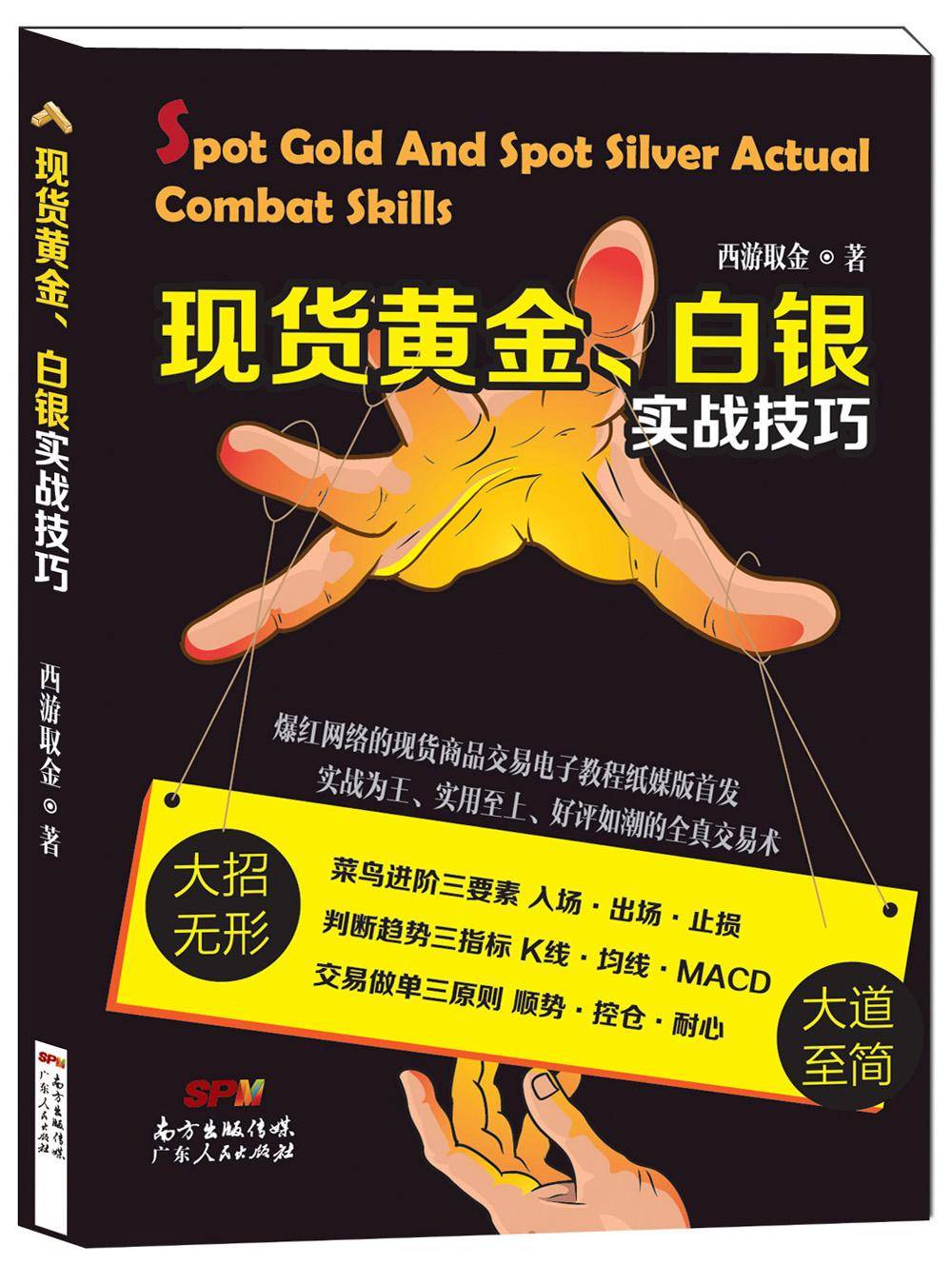
Group 1: Investment Opportunities in Precious Metals - The article emphasizes the growing interest in gold and silver as valuable assets for hedging against inflation and diversifying investment portfolios [1][6] - The "Futures Investment" series focuses on gold futures and extends to other commodities, providing a comprehensive understanding of commodity futures [4] - The practical application of precious metals is highlighted through the aesthetic value of items like S925 silver cake decorations, which symbolize both celebration and value retention [6] Group 2: Health and Investment - The importance of health management for investors is discussed, noting that 67% of traders suffer from neck issues due to prolonged screen time [6] - The book "Practical Skills in Spot Gold" includes a chapter on healthy trading habits, advocating for regular breaks and physical activity [6] - The connection between silver's antibacterial properties and its psychological benefits is explored, suggesting that silver investments attract health-conscious individuals [7] Group 3: Market Dynamics and Long-term Perspective - The article draws parallels between the stability of the spot market and the volatility of the futures market, likening financial markets to the interplay of light and shadow [8] - It emphasizes the long-term nature of precious metal investments, suggesting that true wealth is built over time [8] - The seasonal analysis of silver futures indicates a pattern of price increases before flu season, showcasing the interconnectedness of health trends and market behavior [7]

辽宁:税务护航 助力外贸企业稳增长
Sou Hu Cai Jing· 2025-08-01 06:05
Group 1: Export Performance - Liaoning's total export value reached a historical high of 199.26 billion yuan in the first half of the year, with a year-on-year growth of 13.4%, exceeding the national average by 6.2 percentage points [1] - The province's tax authorities have optimized export tax rebate services and strengthened compliance guidance to support export enterprises [1] Group 2: Transition from Export to Domestic Sales - The tax system in Liaoning has introduced measures such as "Export Transition Tax Policy Guidance" to assist foreign trade enterprises in transitioning their products from export to domestic sales [1] - Companies like Dandong Zhengrun Food Co., Ltd. received timely support from tax experts to adjust their reporting data and ensure compliance during the transition [1] Group 3: Market Expansion and Innovation - Companies are actively expanding into both domestic and international markets, with Liaoning Hand Technology Co., Ltd. reporting a 17% year-on-year increase in orders for the first quarter of 2025 [2] - Liaoning WoDe Pharmaceutical Co., Ltd. has seen a surge in orders from Germany and South Korea, indicating strong demand for its products [4] Group 4: Tax Support and Compliance - The tax authorities have established a service mechanism to address the needs of enterprises transitioning from export to domestic sales, ensuring compliance and risk management [3] - Tax departments are providing tailored services, including policy updates and compliance guidance, to enhance the competitiveness of export enterprises [4][5] Group 5: Future Outlook - The tax system in Liaoning plans to continue focusing on the tax needs of export enterprises, promoting compliance and risk mitigation to support high-quality local economic development [6]
研判2025!中国牛角梳行业PEST分析、产业链图谱、发展现状、竞争格局及发展趋势分析:市场格局较为分散[图]
Chan Ye Xin Xi Wang· 2025-07-11 01:39
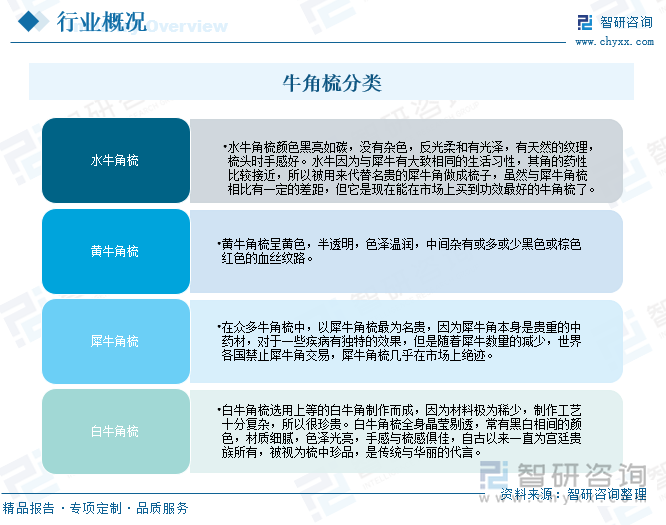
Overview - The bull horn comb, once a luxury item for the elite, has become a popular daily use product among the general public due to increased production and rising living standards. The demand for natural health products has surged, with the market for bull horn combs expected to reach 1.028 billion yuan in 2024, with a demand of 18.6225 million units [1][10]. Development Background - The Chinese government has been promoting cultural industries and traditional crafts as important carriers of cultural heritage, providing policy support for the development of the bull horn comb industry. The increasing consumer focus on health and preference for natural materials have further driven market growth [4]. Industry Chain - The bull horn comb industry consists of upstream sectors such as cattle farming (water buffalo and yellow cattle), production equipment, and packaging materials. The midstream involves the production and manufacturing of bull horn combs, while the downstream includes various sales channels like specialty stores, supermarkets, and e-commerce platforms [6][8]. Current Development - The bull horn comb industry has seen a shift from a luxury item to a widely used product. The demand for natural health products has increased significantly, with the market projected to reach 1.028 billion yuan and a demand of 18.6225 million units in 2024 [10]. Competitive Landscape - The bull horn comb market is fragmented with numerous participants. Key players include Tan Mu Jiang, Zhang Xiao Quan, and several other companies specializing in traditional crafts. Tan Mu Jiang is noted for its high-quality wooden products and has a strong market presence [12][14]. Company Analysis - Tan Mu Jiang Holdings Limited reported a revenue of 505 million yuan in 2024, with a gross profit of 305 million yuan and a gross margin of 60.38% [14]. - Zhangjiajie Drill Bull Horn Crafts Co., Ltd. focuses on quality and has obtained over 80 national patents, establishing itself as a leading brand in the industry [17]. Future Trends - The bull horn comb industry is expected to integrate modern technology, developing smart combs with health monitoring features. There will be an emphasis on enhancing health benefits and establishing a raw material traceability system to ensure sustainable supply and improve product quality [19].
提振消费进行时 | 编织诗意消费新图景
Guang Xi Ri Bao· 2025-07-10 01:47
Core Insights - The article highlights the transformation of the weaving industry in Bobai County, showcasing its evolution from practical items to aesthetic home decor, driven by consumer demand for low-carbon living and quality products [2][3]. Group 1: Industry Overview - Bobai weaving generates approximately $450 million annually for the local economy, with products evolving from simple utility items to themed, scene-based home decor [2]. - The integration of ecological materials into daily products has increased the average price of items from tens of yuan to over a hundred yuan, reflecting a blend of culture, industry, and consumerism [2]. - The county has 386 enterprises engaged in the weaving industry, each establishing cultural creative display halls and product live-streaming accounts [3]. Group 2: Company Highlights - Jiayu Craft Co., Ltd. anticipates a sales revenue of 45.08 million yuan in 2024, with 90% of sales coming from exports [2]. - Bincheng Craft Co., Ltd. produces over 1 million woven items annually, generating an output value of approximately 20 million yuan [2]. - The county's weaving techniques have been recognized as a representative project of intangible cultural heritage, promoting both domestic and international sales through e-commerce [3].

潍坊安丘:一朵绢花撬动三亿市场 稳坐江北工艺头把交椅
Qi Lu Wan Bao Wang· 2025-07-09 10:42
Core Insights - The main focus of the articles is on the thriving silk flower industry in Anqiu City, particularly in Jingzhi Town, which has become a significant contributor to local economic growth and rural employment [1][2] Group 1: Company Overview - Weifang Jiaxin Craft Co., Ltd. specializes in artificial flowers, primarily exporting to Europe and the United States, with a stable monthly production of approximately 20 containers [1] - The silk flower industry in Jingzhi Town has developed over 40 years, gaining widespread acclaim from consumers both domestically and internationally due to its unique artistic charm and exquisite craftsmanship [1] Group 2: Industry Development - The silk flower industry in Jingzhi Town has expanded to include nearly 1,000 varieties across 20 major series, generating an annual sales revenue of nearly 310 million yuan [2] - The industry has effectively addressed rural surplus labor employment issues, allowing many villagers to achieve income growth while balancing family responsibilities [1][2] Group 3: Economic Impact - The growth of the silk flower industry has injected strong momentum into the local economy and has become a vital force in rural revitalization, with nearly 1,000 rural women benefiting from employment opportunities [1][2] - The local government is committed to optimizing services and addressing challenges faced by silk flower processing enterprises to enhance their international presence [2]
扬州:打造“苏字号”金名片 赋能“好地方”新跨越
Xin Hua Ri Bao· 2025-06-27 06:33
Core Viewpoint - The city of Yangzhou is focusing on brand development as a core strategy to enhance its competitiveness, aiming to transform "Yangzhou products" into "Yangzhou brands" through a structured approach involving both government guidance and enterprise initiatives [1] Group 1: Policy Guidance - Yangzhou has established brand building as a strategic pivot for high-quality urban development, enhancing its policy framework through various initiatives [2] - The city has introduced several financial incentives, including a special fund for brand development, with rewards up to 1 million yuan for companies achieving significant brand honors [2] - An annual budget of 3 million yuan is allocated to support the revitalization of time-honored brands, with over 430,000 yuan invested in 27 projects to date [2] Group 2: Innovation and Competitiveness - The vitality of Yangzhou's service industry brand construction is rooted in innovative practices, transitioning from traditional manufacturing to modern intelligent manufacturing [3] - Time-honored brands are revitalizing by adopting innovative business models and integrating modern technology with traditional craftsmanship [3] - The Yangzhou lacquer factory has successfully combined ancient techniques with modern technology, enhancing production efficiency and product quality [3] Group 3: Cultural Integration - Yangzhou emphasizes the integration of cultural elements into brand development, enhancing brand identity through storytelling and cultural heritage [5] - The city has established over 70 cultural facilities to promote local culinary and artistic traditions, fostering consumer connection and brand loyalty [5] - Yangzhou is actively promoting its service brands on international platforms, enhancing the global presence of its cultural heritage [5] Group 4: Public Engagement - The city is leveraging media platforms to enhance public awareness and appreciation of its service brands, creating a favorable environment for brand recognition [6] - Initiatives such as brand culture exhibitions and service experience days are being encouraged to bridge the gap between brands and the public [6] - Yangzhou aims to cultivate a culture of trust and support for local brands, reinforcing the importance of quality and brand value in the community [6]
外贸转战618大促:价格战之外追寻品牌溢价
2 1 Shi Ji Jing Ji Bao Dao· 2025-06-17 23:41
Core Viewpoint - The article emphasizes the shift of foreign trade companies like Aishida towards the domestic market due to uncertainties in international trade, particularly the impact of fluctuating tariffs from the U.S. [1][3] Group 1: Market Transition - Aishida's chairman highlights the need to focus on domestic sales, which have become a core strategy following challenges in foreign trade [1] - The "618" e-commerce promotion is seen as a critical test for foreign trade companies transitioning to domestic markets, although the results have been underwhelming compared to previous years [1][3] - Many foreign trade companies are experiencing a decline in growth during major promotions, indicating a shift in consumer enthusiasm and market dynamics [3][5] Group 2: Challenges in Domestic Market - The transition to domestic sales involves complex adjustments in branding and pricing strategies, despite the support from e-commerce platforms [2][3] - Smaller foreign trade companies face intense competition in the domestic market, struggling to gain visibility and manage costs effectively [6][10] - The perception of major promotions like "618" has weakened, with many businesses opting for pre-promotion activities to capture consumer interest [4][5] Group 3: Long-term Opportunities - Despite current challenges, the domestic market holds significant long-term potential, driven by rising consumer demand for high-quality and differentiated products [7][9] - Companies are increasingly investing in advertising and marketing to enhance their presence in the domestic market, with some aiming for domestic orders to constitute a larger share of their total sales [8][9] - The shift from manufacturing to branding represents a strategic evolution for foreign trade companies, allowing them to capture greater pricing power and profit margins [10][11] Group 4: Future Outlook - The success of foreign trade companies in the domestic market will depend on their ability to find brand value beyond price competition and to identify new growth opportunities [12]

浙江宁波外贸企业以绿电提升竞争力 绿色产品走俏海外
Ren Min Ri Bao· 2025-06-17 21:43
Core Viewpoint - The company has established a complete green supply chain, utilizing green electricity for both production and transportation, which enhances its market competitiveness and reduces carbon emissions [1][2]. Group 1: Production - The company produces its bamboo products using fully automated production lines powered by wind and solar energy from the northern Zhejiang region [1]. - Last year, the company purchased 3,141 green certificates, providing each product with a "green ID" that accurately tracks its carbon footprint throughout the production process [1]. - The implementation of green electricity has allowed the company to avoid high carbon taxes, which could have consumed 20% of its profits under traditional production methods [1]. Group 2: Transportation - The company utilizes electric container trucks for transporting its products, which operate on a dedicated new energy heavy truck route that includes six charging stations and four battery swap stations [1]. - This transportation route, operational since April of last year, reduces carbon dioxide emissions by 80 kilograms per trip over a distance of 80 kilometers [1]. Group 3: Market Impact - Over 2,000 foreign trade enterprises in Ningbo have enhanced their market competitiveness through the procurement of green certificates [2]. - The scale of green electricity trading in Ningbo has increased by 87% year-on-year in the first four months of this year [2].
老字号“牵手”外贸优品 山东展销国货潮品促消费
Sou Hu Cai Jing· 2025-06-13 13:12
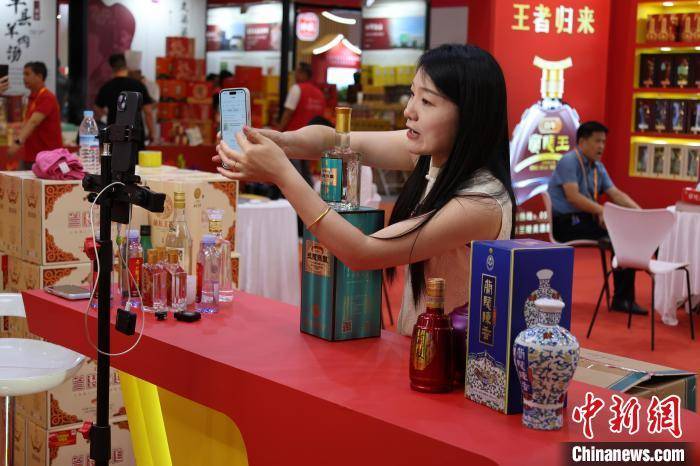
Core Insights - The 9th China Time-honored Brand (Shandong) Expo opened in Jinan on June 13, 2023, promoting a dual circulation supply chain model that combines time-honored brands with foreign trade products [1][3][5] - The expo also featured the 2025 Shandong Foreign Trade Quality Shopping Season, focusing on various categories including crafts, gifts, and decorative items [5][7] Company Innovations - Shandong Yangping Food Co., Ltd. introduced new products like pepper beef spicy soup to attract younger consumers, while also exporting health-oriented products to countries like Vietnam, Malaysia, and Singapore [3] - Jinan Yefengsu Food Co., Ltd. launched innovative products such as black five-grain pancakes and quinoa pancakes, incorporating intangible cultural heritage elements to appeal to younger demographics [3] - Jinan Baotu Spring Liquor Co., Ltd. is developing new flavors like rose pineapple and jasmine hawthorn to cater to younger drinking preferences, alongside a low-alcohol product with a 35.8% alcohol content [5] Industry Growth - Shandong province has seen significant growth in its time-honored brands, with 91 national time-honored brands and 255 provincial ones, including 108 companies over a century old [7] - In 2024, Shandong's time-honored brands achieved a revenue of 268 billion RMB, reflecting a year-on-year growth of 6.5% [7]