智能穿戴

Search documents
把彩电“装”进眼镜里,武汉企业研发AI+AR眼镜“读懂”你的眼神
Chang Jiang Ri Bao· 2025-10-21 12:37
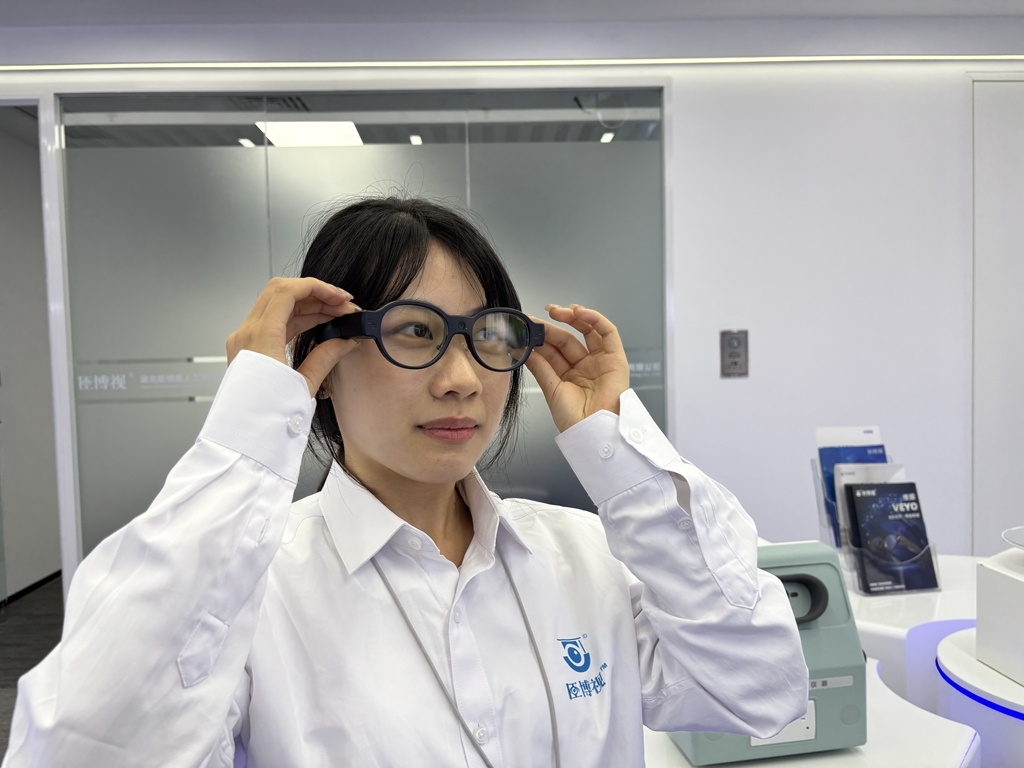
Core Viewpoint - The company Chenboshi has launched a new AI+AR smart glasses product that integrates advanced optical technology to provide a full-color display, enhancing user interaction with both virtual and real-world environments [1][6]. Group 1: Product Features - The newly developed AR glasses feature a design similar to regular glasses, allowing users to see a clear color screen alongside the real world [2][3]. - Unlike traditional monochrome AR glasses, this product offers full-color display capabilities, utilizing a small optical module and a transparent medium to project images onto the retina [2][4]. - The glasses can be activated by voice commands to perform various functions such as translation, recording, navigation, and real-time teleprompter features [2][10]. Group 2: Technological Advancements - The design optimizes the optical waveguide structure to eliminate issues like rainbow patterns and light leakage, resulting in a clean and clear visual experience [4][10]. - The integration of AI allows the glasses to serve as an interactive tool for learning and accessibility, providing descriptions of the environment and transcribing sounds into text for the hearing impaired [10]. Group 3: Market Position and Future Plans - Chenboshi plans to launch the AR glasses in both online flagship stores and offline retail locations soon, indicating a strategic move to penetrate the consumer electronics market [10]. - The company aims to develop next-generation wearable products tailored for various applications, including tourism, business, and education, leveraging local AI resources [10].

第138届广交会首期展览结束
Yang Shi Wang· 2025-10-19 12:57
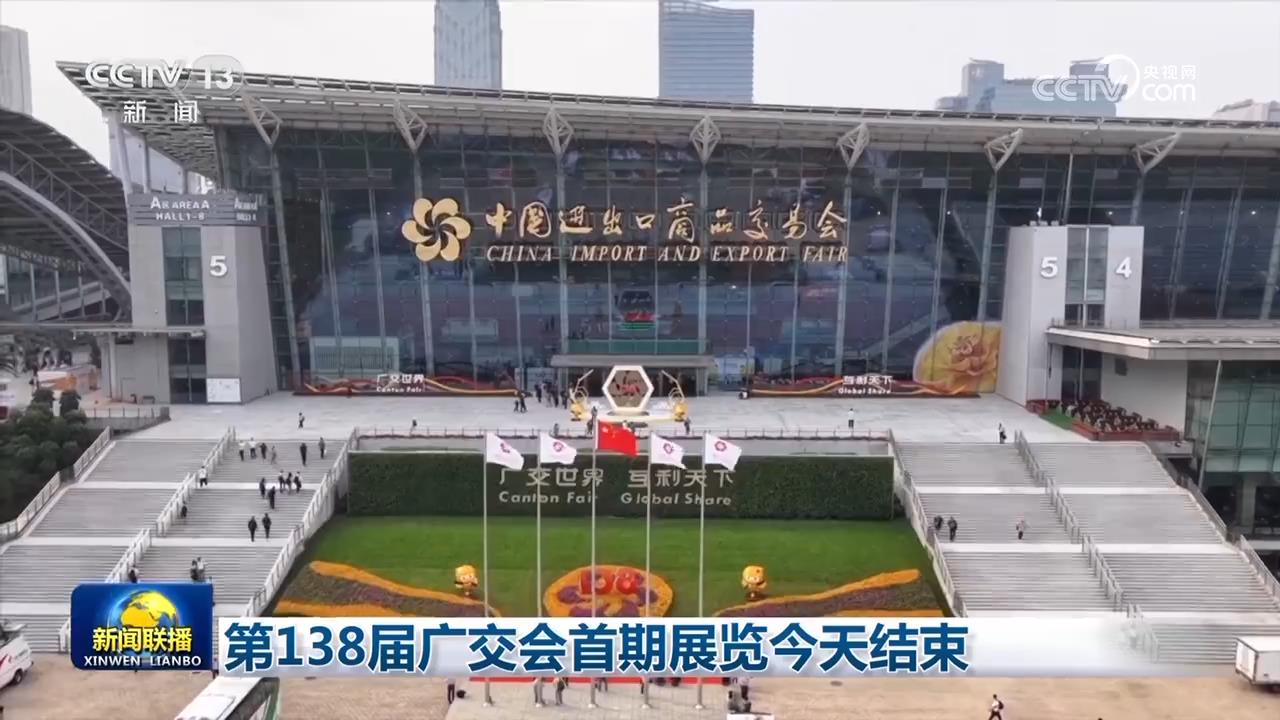
Group 1 - The 138th Canton Fair's first phase exhibition ended on October 19, with over 157,000 overseas buyers attending, marking a 6.3% increase compared to the previous session and setting a historical high for the same period [1] - The total exhibition area for this phase is 520,000 square meters, featuring over 25,000 booths and approximately 12,000 participating companies, including more than 5,500 high-quality specialty enterprises, which is an increase of 400 from the last session, accounting for 55% of the total high-quality enterprises [3] - The fair showcased a range of high-tech and high-value-added products, such as precision machining tools, AI smart wearable devices, energy-efficient home appliances, and intelligent robots, reflecting a trend of Chinese companies transitioning from processing to original design and comprehensive solutions [3] Group 2 - The second phase of the Canton Fair, themed "Quality Home Furnishings," will take place from October 23 to 27, focusing on three main categories: building materials and furniture, household goods, and gifts and decorations [5]
一枚戒指,估值777亿
投中网· 2025-10-17 06:46
Core Insights - Oura, a company founded 12 years ago, is dominating the AI-native hardware market with its smart ring, achieving a valuation of $10.9 billion after a recent funding round of $875 million [3][12] - The company has sold 5.5 million rings since its inception, with 3 million sold in the last year alone, generating revenue of $500 million, projected to reach $1 billion by 2025 [12][15] Company Background - Oura was established in 2013 in Oulu, Finland, originally named Jouzen, which means "swan" in Finnish [6] - The founding team, consisting of Petteri Lahtela, Kari Kivelä, and Markku Koskela, has extensive experience in technology and product development [7][9] - The company faced initial challenges, including cash flow issues and difficulties in securing early funding, but successfully launched its first product, the Oura Ring Gen1, in 2015 [10][11] Product Development and Market Expansion - The second generation of the Oura Ring (Gen2) was launched in 2017, leading to significant sales growth, especially during the COVID-19 pandemic due to its temperature monitoring capabilities [11][12] - Oura has expanded its customer base to include enterprises, offering products for health risk management to various organizations, including hospitals and sports teams [12][15] Technological Advancements - The latest Oura Ring 4 features enhanced Smart Sensing technology, increasing the number of signal pathways from 8 to 18, improving data accuracy [14][15] - Oura has received FDA certification for its medical device, allowing it to develop a more comprehensive healthcare ecosystem through acquisitions and partnerships [15][16] Future Plans and Market Strategy - The recent funding will be used for research on non-invasive glucose monitoring, hiring medical data scientists, and expanding into Asian markets [16] - Oura's CEO emphasized the company's competitive edge lies in its extensive data collection, with nearly 15 billion hours of health data, making it difficult for larger companies to compete [16]

智能穿戴市场火热 产业链公司把握机遇积极创新
Zheng Quan Ri Bao· 2025-10-16 16:13
Industry Overview - In the first three quarters of this year, the total number of registered smart wearable products in China reached 181,000, involving 6,000 enterprises, marking a 91.4% increase compared to September 2020, with an average annual growth rate of 13.9% [1] - The variety of smart watches has reached 29,000, with an average annual growth of 46.8%; smart glasses at 2,000, with an average annual growth of 23.5%; smart headphones at 122,000, with an average annual growth of 14.0%; and smart bands at 28,000, with an average annual growth of 1.2% [1] - The rapid development of artificial intelligence technology is injecting new momentum into the consumer electronics industry, driving continuous innovation in the smart wearable product sector [1] Regional Insights - By September 2025, the provinces with the highest number of registered smart wearable products will be Guangdong (158,400), Beijing (6,500), Zhejiang (3,200), Shanghai (3,100), and Fujian (2,800) [1][2] Market Dynamics - Guangdong's active smart wearable industry benefits from a robust and complete industrial chain, with a concentration of upstream and downstream enterprises in key areas such as chips, optical displays, sensors, and batteries [2] - The Huaqiangbei market in Shenzhen showcases a wide variety of smart wearable products, attracting global buyers, and features a complete supply chain from R&D to manufacturing and marketing [2] Company Innovations - Companies like GoerTek Inc. (002241) are leveraging their strengths in acoustics, optics, microelectronics, and precision manufacturing to capture market opportunities in the smart wearable sector [2] - Leading companies such as Lingyi iTech (002600) focus on core components and technologies in smart glasses and other wearable devices, providing comprehensive services [3] - Shenzhen Haopeng Technology (001283) specializes in high-energy-density battery technology and has established deep strategic partnerships with major brand clients in the smart wearable field [3] Future Outlook - The smart wearable sector is seen as a key entry point for the next generation of human-computer interaction, with significant market potential [3] - The Chinese smart wearable industry is demonstrating leadership in areas like smart bands and health monitoring, driven by active technological innovation and enhanced marketing capabilities [3]


影目科技宣布进军线下 联合腾讯、蚂蚁集团等打造产业生态
Zheng Quan Shi Bao Wang· 2025-10-16 14:47
Core Viewpoint - The Chengdu Smart Glasses Industry Ecosystem Development Conference highlighted the launch of a new generation of AI smart glasses by Sichuan Yingmu Technology Co., Ltd, aiming to integrate technology into daily life and enhance user experience through offline channels [1][2]. Group 1: Company Developments - Yingmu Technology plans to collaborate with brands like LOHO and Asia Glasses to establish over 2000 experience stores, with pop-up stores set to open in December 2023 in cities including Chengdu, Shenzhen, Wuxi, and Luoyang [1]. - The company aims to create a global open AI+AR industry ecosystem platform called Yingmu World, partnering with Ant Group to innovate AI services in smart glasses [2]. - Yingmu Technology is recognized as one of the "AR Four Little Dragons," holding over 85% market share in consumer-grade AR products alongside XREAL, Thunderbird Innovation, and Rokid [3]. Group 2: Financial and Structural Changes - In July 2023, Yingmu Technology completed a B+ round financing exceeding 150 million yuan, with investments from PwC Capital, Liangxi Industrial Development Group, and Shenqi Capital [4]. - The company relocated its headquarters from Shenzhen to Chengdu as part of its B round financing agreement, aiming to build a complete metaverse industry ecosystem in collaboration with internet companies like Mango Media and Momo [3].
影目科技宣布进军线下, 联合腾讯、蚂蚁集团等打造产业生态
Zheng Quan Shi Bao Wang· 2025-10-16 14:39
Core Insights - Chengdu's Smart Glasses Industry Ecological Development Conference highlighted the launch of a new generation of AI smart glasses by Sichuan Yingmu Technology Co., Ltd, one of the "AR Four Little Dragons" [1] - The company plans to collaborate with brands like LOHO and Asia Glasses to establish over 2000 experience stores, aiming to enhance user experience and accessibility [1] - Yingmu Technology's CEO emphasized the goal of integrating AI into daily life, positioning the new product as a gateway to future lifestyles [1] Industry Trends - The Chinese smart glasses market is experiencing rapid growth, with projections indicating that user spending on applications within smart glasses will exceed 2 billion yuan by 2029 [1] - Despite growth, the industry faces challenges such as limited content sources, slow application updates, and subpar user experience [1][2] - The AI glasses are seen as the next generation of "human-centered" service interfaces, highlighting the need for stronger software and hardware infrastructure [2] Company Developments - Yingmu Technology announced the creation of an open AI+AR industry ecosystem platform called Yingmu World, in collaboration with Ant Group and Tencent [2] - The company aims to transition smart glasses from functional devices to fashionable lifestyle products through partnerships and an open approach [2] - Yingmu Technology is recognized as one of the earliest manufacturers to achieve mass production of wireless consumer-grade AR glasses, holding over 85% market share alongside three other companies [3] Financial Milestones - In July 2024, Yingmu Technology completed a B+ round financing exceeding 150 million yuan, with investments from multiple firms [4] - The company relocated its headquarters from Shenzhen to Chengdu as part of its growth strategy, aiming to build a comprehensive metaverse ecosystem in collaboration with internet companies [3]
我国登记使用商品条码的消费品品种总量达2.3亿种
Xin Hua Wang· 2025-10-15 13:55
Core Insights - As of the end of September, the total number of consumer goods registered with barcodes in China reached 230 million, indicating a significant growth in product identification and market circulation [1] - In the first three quarters of this year, 19.922 million new consumer goods were registered with barcodes, representing a year-on-year increase of 31.4%, involving 295,000 enterprises [1] Consumer Goods Categories - Among the 26 major categories of newly registered consumer goods, the top ten by quantity include: clothing/shoes/hats/textiles, furniture, daily necessities, grain/oil/food, healthcare, hardware/electrical materials, cosmetics, cultural and office supplies, building and decoration materials, and home appliances/audio-visual equipment, totaling 17.259 million items, which accounts for 86.6% of the total new registrations [1] Smart Wearable Products - The total number of smart wearable products registered with barcodes reached 181,000, involving 6,000 enterprises, showing a steady and rapid growth trend in the market [1] - Specific growth rates for smart wearable products include: smart watches at 29,000 types with an annual growth of 46.8%, smart glasses at 2,000 types with an annual growth of 23.5%, smart headphones at 122,000 types with an annual growth of 14%, and smart bands at 28,000 types with an annual growth of 1.2% [1]
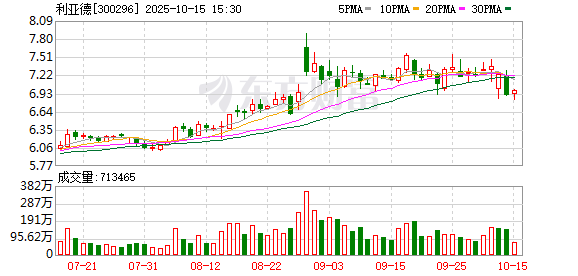
利亚德:公司推出“利亚德”自有品牌AR眼镜,预计将于10月底前在利亚德官网、利亚德商城同步发售
Mei Ri Jing Ji Xin Wen· 2025-10-15 13:27
Core Viewpoint - The collaboration between the company and Rokid aims to enhance the application of AR glasses in cultural tourism and exhibition scenarios, leveraging both parties' strengths to meet the growing demand for immersive interactive experiences [2]. Group 1: Partnership and Product Development - The company has partnered with Rokid, a pioneer in the AI/AR glasses field, to utilize Rokid's mature AR products that have existing applications in cultural tourism [2]. - The company has a strong presence in the cultural tourism and exhibition markets, having accumulated numerous high-quality customer resources over the years [2]. - The company plans to launch its own brand of AR glasses by the end of October, which will be available on its official website and online store [2]. Group 2: Product Progress and Future Plans - The full-color AR glasses are still under development, with no specific release date mentioned [2].

“加减乘除”中的发展密码
Zhong Guo Zheng Quan Bao· 2025-10-13 20:55
Economic Growth and Contributions - China's economy is projected to exceed 35 trillion yuan in growth over five years, equivalent to recreating the Yangtze River Delta and surpassing the economic output of the world's third-largest economy [2] - The average annual growth rate is 5.5%, contributing approximately 30% to global economic growth [2] - By 2024, China's total grain production is expected to surpass 1.4 trillion jin, an increase of 74 billion jin compared to 2020, indicating a robust agricultural sector [2] Structural Reforms and Tax Policies - A cumulative reduction in taxes and fees is expected to reach 10.5 trillion yuan during the "14th Five-Year Plan" period, with over 36.7% of these reductions benefiting technology innovation and advanced manufacturing [2][3] - The number of enterprises benefiting from R&D expense deductions reached 615,000, with a total deduction amounting to 3.32 trillion yuan in 2024, reflecting a 25.5% increase from 2021 [3] Innovation and R&D Investment - R&D expenditure in large manufacturing enterprises accounted for over 1.6% of their operating income, with total R&D investment expected to grow nearly 50% by 2024 compared to the end of the "13th Five-Year Plan" [5] - The added value of high-tech manufacturing is projected to increase by 42% by 2024 compared to the end of the "13th Five-Year Plan" [5] Domestic Demand and Market Dynamics - Domestic demand contributed an average of 86.4% to economic growth over the past four years, with final consumption contributing 56.2%, an increase of 8.6 percentage points from the "13th Five-Year Plan" period [6] - The market for AI smart glasses saw a sevenfold increase in sales during the "618" shopping festival, showcasing the explosive potential of emerging product categories [6] Infrastructure and Connectivity - The Hubei Ezhou Huahu International Airport has opened 45 international cargo routes, contributing to a 6.1 percentage point increase in Hubei's foreign trade growth since 2025 [7] - The reduction of regulatory barriers has led to a significant increase in market efficiency, with over 4,000 regulations hindering fair competition and a unified market being eliminated [7][8] Green Development and Sustainability - During the "14th Five-Year Plan" period, energy consumption per unit of GDP decreased by 11.6%, and renewable energy generation capacity increased to approximately 60% [6] - The focus on green transformation is expected to empower traditional industries and contribute to global sustainability efforts [6]
“加减乘除”中的发展密码——从“四则运算”解析“十四五”中国经济
Shang Hai Zheng Quan Bao· 2025-10-13 18:20
Economic Growth and Achievements - China's economy is projected to reach approximately 140 trillion yuan, with an average annual growth rate of 5.5%, contributing over 30% to global economic growth [2][4][7] - The economic increment over five years is expected to exceed 35 trillion yuan, equivalent to recreating the economic output of the Yangtze River Delta region [3][7] - By 2024, the total grain production is anticipated to surpass 1.4 trillion jin, marking an increase of 740 billion jin since 2020 [5] Policy and Structural Reforms - The implementation of structural tax reductions and improved business environments has led to a cumulative tax reduction of approximately 10.5 trillion yuan during the "14th Five-Year Plan" period [9][11] - The number of companies benefiting from R&D tax deductions reached 615,000, with a total deduction amounting to 3.32 trillion yuan in 2024, reflecting a 25.5% increase [10] Innovation and Technological Advancements - R&D expenditure as a percentage of revenue for large industrial enterprises exceeded 1.6%, with a nearly 50% increase in total R&D investment by 2024 compared to the end of the "13th Five-Year Plan" [14] - High-tech manufacturing value added is expected to grow by 42% by 2024 compared to the end of the "13th Five-Year Plan" [14] Market Dynamics and Internal Demand - Domestic demand contributed an average of 86.4% to economic growth over the past four years, with final consumption accounting for 56.2%, an increase of 8.6 percentage points from the "13th Five-Year Plan" [14] - The emergence of new products and business models has shown significant market potential, as evidenced by a sevenfold increase in sales of AI smart glasses during the "618" shopping festival [14] Infrastructure and Connectivity - The establishment of the Hubei Ezhou Huahu International Airport has opened 45 international cargo routes, contributing to a 6.1 percentage point increase in Hubei's foreign trade growth since 2025 [16] - The reduction of regulatory barriers has led to a 40.4% share of inter-provincial trade sales in total sales revenue, indicating improved market integration [16] Green Development and Sustainability - During the "14th Five-Year Plan," energy consumption per unit of GDP decreased by 11.6%, and renewable energy generation capacity reached approximately 60% [15] - The focus on green transformation is expected to enhance long-term economic sustainability and contribute to global green initiatives [15]