玩具

Search documents
AI玩具崛起,投融界解码“情感科技”创业新范式
Sou Hu Cai Jing· 2026-01-20 07:34
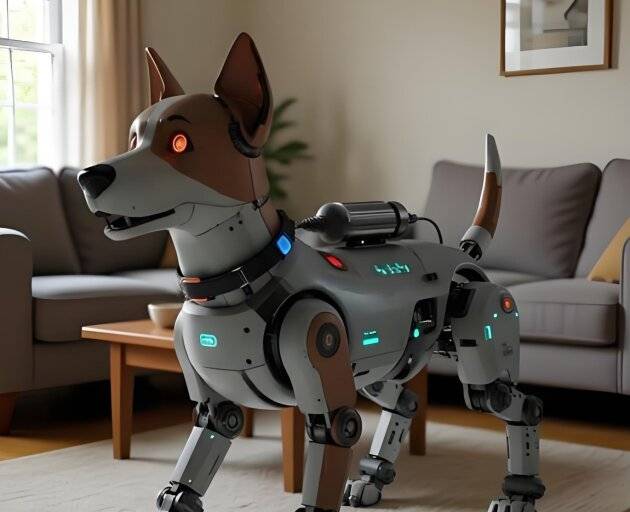
Core Insights - The article highlights the rising trend of AI toys, which are becoming emotional companions for users, reflecting a growing demand for low-burden companionship in modern fragmented lifestyles [1][4]. Group 1: Emotional Connection and Technological Integration - AI toys have evolved from being merely observed to being perceived, with capabilities such as emotional recognition and interactive memory, allowing them to "understand" users better [1][2]. - The transition from functional response to emotional resonance is driven by the democratization of AI technology, enabling toys to provide continuous emotional support and integrate seamlessly into daily life [2][4]. Group 2: Market Growth and Ecosystem Development - The AI toy market in China is projected to grow from approximately 24.6 billion yuan in 2024 to 29 billion yuan in 2025, with the global market expected to reach 58 billion USD by 2030 [4]. - The ecosystem of AI toys includes agile startups, tech giants leveraging their advantages, and traditional toy companies exploring AI transformation, indicating a diverse competitive landscape [4][5]. Group 3: Challenges and Future Directions - Key challenges for AI toys include achieving natural and long-term emotional companionship, balancing personification with privacy concerns, and creating sustainable product differentiation [4][5]. - The future of AI toys is anticipated to focus on deeper emotional connections, moving from novelty to becoming integral companions in daily life, with a shift in consumer spending from functionality to emotional resonance [5][6].


从商品到社交硬通货 IP激活情感消费
Bei Jing Shang Bao· 2026-01-20 06:18
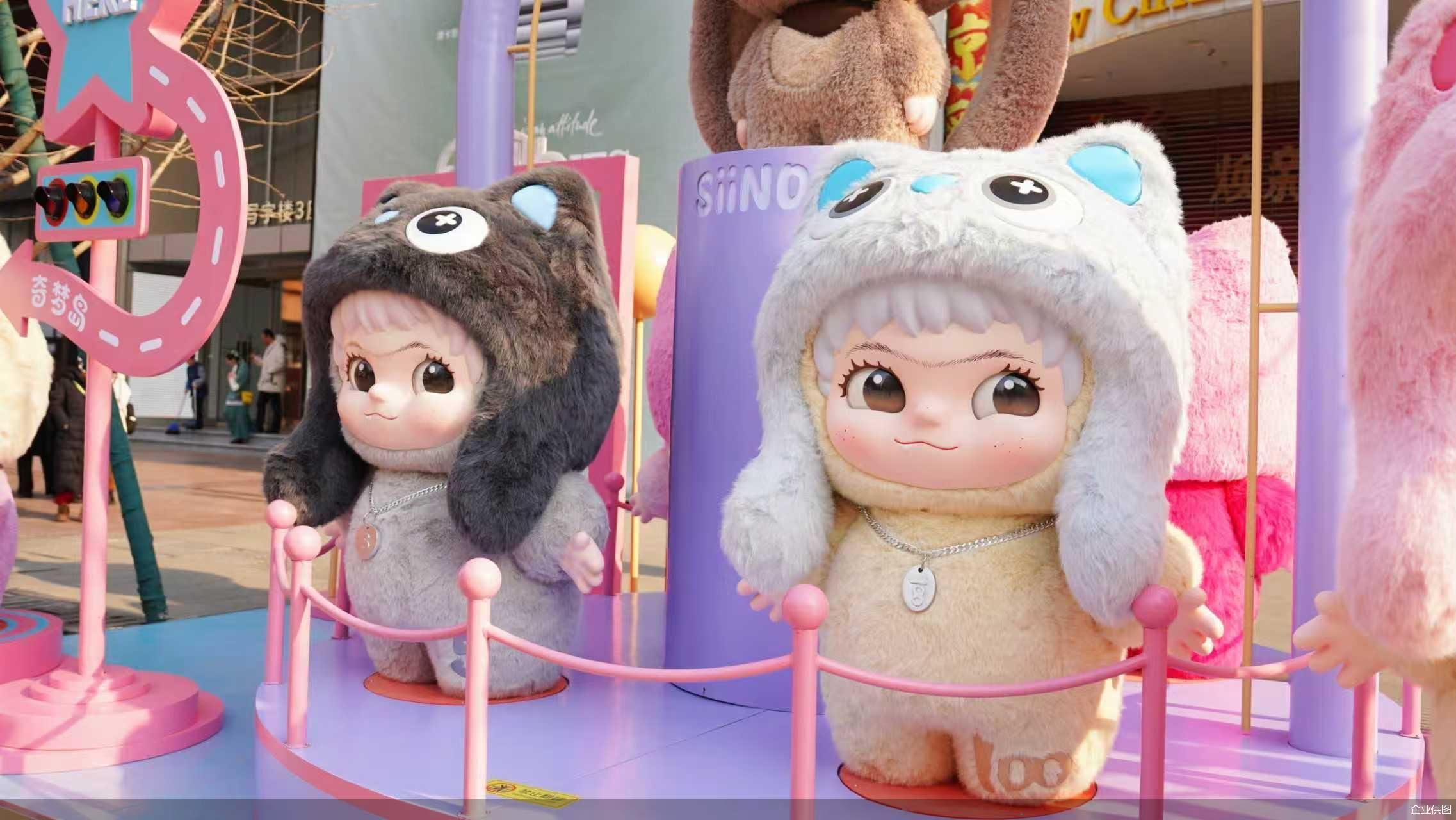
Core Insights - The integration of IP (Intellectual Property) with toys has transformed simple product transactions into a deeper emotional and cultural experience for consumers, making toys not just consumer goods but also trendy collectibles [1][2] Group 1: Importance of IP in the Toy Industry - The necessity of IP in the toy industry is emphasized, as it allows brands to connect cultural content with products, enhancing emotional resonance and consumer engagement [2] - Successful brands in the competitive toy market are often backed by strong, well-recognized IPs that serve as the soul of the products and create emotional connections with consumers [2][3] - The rise of domestic cultural IPs reflects a strong emotional connection among Chinese consumers, indicating a shift towards valuing local culture in the toy market [3][4] Group 2: Market Trends and Consumer Behavior - The transition from conventional products to IP collaborations is a common growth path for Chinese toy companies, aiming for higher value products and brand equity [4] - The demand for high-value consumption is driven by emotional resonance, with consumers willing to pay for the cultural and emotional significance of the IPs [5][6] - The emergence of "meaningful consumption" reflects a shift in consumer preferences towards products that fulfill emotional and social needs rather than just entertainment [6][7] Group 3: Emotional Engagement and Content Creation - Successful IPs today are characterized by their ability to resonate with contemporary emotions and provide a platform for user participation in content creation [8][9] - The new generation of consumers seeks products that reflect their identities and emotions, indicating a shift from mere transactions to emotional consumption [9]
潮尚重构消费|从商品到社交硬通货 IP激活情感消费
Bei Jing Shang Bao· 2026-01-20 06:08
Core Insights - The integration of IP (Intellectual Property) with toys has transformed simple product transactions into emotional and cultural experiences for consumers, making toys not just consumer goods but also trendy collectibles [1][3]. Group 1: Importance of IP in the Toy Industry - The necessity of IP in the toy industry is emphasized, as it allows brands to connect cultural content with products, enhancing emotional resonance and consumer engagement [3][4]. - Successful brands in the competitive toy market are often backed by strong, well-recognized IPs that serve as emotional connectors and brand differentiators [3][4]. - The rise of domestic cultural IPs reflects a strong emotional connection among Chinese consumers, indicating a shift towards valuing local culture in product offerings [4][6]. Group 2: Market Dynamics and Consumer Behavior - The transition from conventional products to IP collaborations is a common growth path for Chinese toy companies, aiming for higher value products and brand differentiation [6][7]. - The emotional and social aspects of toy consumption have evolved, with products now serving as "social currency" for adults, reflecting deeper emotional needs and social connections [7][8]. - The success of IPs is increasingly tied to their ability to resonate with contemporary consumer emotions and facilitate user participation in content creation [10][11]. Group 3: Case Studies and Brand Strategies - Brands like Pop Mart and 52TOYS have established recognizable cultural symbols through their IPs, which connect with consumer emotional demands [4][6]. - The development of military-themed IPs and collaborations with cultural institutions has allowed companies like Senbao to enhance brand value and consumer engagement [6][7]. - The emotional pull of products like the Shandong aircraft carrier model demonstrates how national pride can drive consumer interest and sales [7][9].
A股回调!地产股异动拉升,002208,直线涨停
Zheng Quan Shi Bao· 2026-01-20 03:02
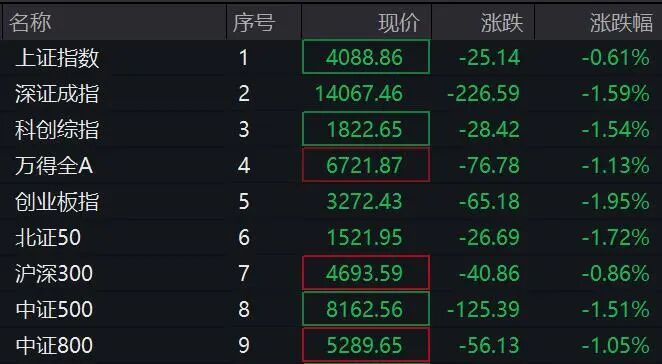
Group 1: Market Overview - The A-share market opened higher but turned negative, with the ChiNext Index down nearly 2% and sectors like commercial aerospace, non-ferrous metals, and Hainan showing significant declines [1][2] - The Hang Seng Index turned negative, with the Hang Seng Tech Index dropping over 1%, while Pop Mart saw a surge of over 10% [2][11] Group 2: Real Estate Sector - The real estate sector experienced a notable rise, with Hefei Urban Construction (002208) hitting the daily limit, and other companies like City Investment Holdings and Yingxin Development also seeing gains [1][8] - According to the National Bureau of Statistics, new residential sales prices in first-tier cities decreased by 0.3% month-on-month in December 2025, a slight narrowing of the decline compared to the previous month [10] Group 3: AI and Robotics Sector - The AI application concept was active, with Zhejiang Wen Internet hitting the daily limit and companies like Tiandi Online and Liujin Technology also rising [3] - The robotics sector saw gains, with companies like New Times Da hitting the daily limit and Top Group rising over 6% [6] - A report from CounterPoint Research indicated that the humanoid robot industry is expected to see a commercial explosion in 2025, with an estimated installation of around 16,000 units [8] Group 4: Semiconductor and Construction Materials - The semiconductor sector experienced a rise, with companies like Zhongwei Semiconductor hitting the daily limit [10] - The construction materials sector also saw gains, with companies like Zhizhi New Materials hitting the daily limit and others like Jiu Ding New Materials and Hai Luo Cement following suit [10] Group 5: Pop Mart Developments - Pop Mart announced a share buyback of approximately HKD 251 million, repurchasing 1.4 million shares at prices ranging from HKD 177.7 to HKD 181.2 per share, which is expected to attract more investor attention [13]
港股黄金股,集体走强
Di Yi Cai Jing Zi Xun· 2026-01-20 01:58
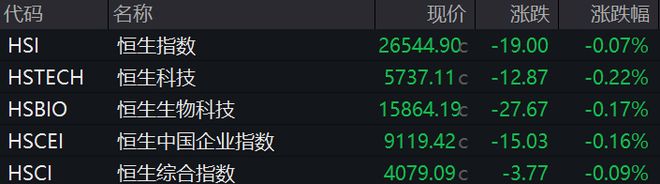
Market Overview - On January 20, the Hong Kong Hang Seng Index opened down 0.07% at 26,544.90 points, while the Hang Seng Tech Index fell by 0.22% to 5,737.11 points [1][2] - The Hang Seng Biotechnology Index decreased by 0.17% to 15,864.19 points, and the Hang Seng China Enterprises Index dropped by 0.16% to 9,119.42 points [2] Company Performance - Major tech stocks experienced declines, with Baidu Group down over 2% at 144.20 HKD, Tencent Holdings down 1.48% at 601.00 HKD, and Xiaomi Group down 1.26% at 36.02 HKD [2][3] - Alibaba Health saw an increase of over 2% [2] Gold Sector - Gold-related stocks performed well, with Zijin Mining up 1.32% at 39.84 HKD and Zijin Gold International up 1.12% at 172.00 HKD [4] - Other gold stocks like Chifeng Jilong Gold Mining and Tongguan Gold also saw slight increases [4] Specific Company News - Pop Mart announced a buyback of 1.4 million shares for a total of 251 million HKD, with a repurchase price between 177.7 and 181.2 HKD per share, resulting in a rise of over 5% in its stock price [4] - Easy Communications Group resumed trading and surged over 69% following a change in controlling interest [5]
布鲁可(00325)股东将股票由中国国际金融香港证券转入高盛(亚洲)证券 转仓市值5.45亿港元
智通财经网· 2026-01-20 00:15
Group 1 - The core viewpoint of the article highlights that Bruker (00325) has transferred its shares from China International Capital Hong Kong Securities to Goldman Sachs (Asia) Securities, with a market value of HKD 545 million, representing 3.13% of the total shares [1] - Huaxin Securities has released a research report indicating that the Chinese trendy toy industry is still in an upward trajectory, and Bruker, as a leading company in the building block toy sector, is expected to benefit significantly from the industry's expansion [1] - The company is continuously adding new cooperative IPs and regularly launching new products, which contributes to its steady revenue growth, leading to a maintained "buy" investment rating by Huaxin Securities [1]
全球大公司要闻 | 苹果去年四季度iPhone出货量登顶中国市场
Wind万得· 2026-01-19 23:00
Group 1 - OpenAI's annual recurring revenue (ARR) is expected to exceed $20 billion by 2025, with a computing power scale of 1.9GW, achieving a tenfold revenue growth and 9.5 times increase in computing power within three years [2] - Micron Technology is acquiring the P5 wafer fab from Powerchip Semiconductor for $1.8 billion, expected to complete in Q2 2026, which will enhance Micron's position in the global DRAM market amid increasing demand from AI infrastructure [2] - Tesla's Neuralink has made advancements in brain-machine interface technology, allowing upgrades without surgery, and plans to restart the Dojo 3 supercomputer project, with a new affordable Model 3/Y targeting the Chinese market [3] Group 2 - Apple is set to regain the top position in the Chinese smartphone market with a 28% year-on-year increase in iPhone shipments by Q4 2025, and is developing the iPhone 18 Pro series with advanced features [3] - Baiwei Storage expects a net profit of 850 million to 1 billion yuan in 2025, representing a year-on-year growth of 427.19% to 520.22% [4] - China Duty Free Group plans to acquire DFS's travel retail business in Greater China for up to $395 million, strengthening its market position [6] Group 3 - Pfizer's CEO indicated that the company may raise drug prices abroad due to a pricing agreement with former President Trump, which could lead to a halt in new drug supplies to Europe if price increases are rejected [9] - Toyota aims for over 1.78 million vehicle sales in China by 2025, collaborating with Fujitsu to simplify automotive ECU design using quantum-inspired technology [11] - LVMH's DFS Group is selling its Greater China retail business to China Duty Free Group for up to $395 million, indicating significant market movements in the luxury retail sector [13]

52TOYS上推出马年限定系列产品
Bei Jing Shang Bao· 2026-01-19 12:06
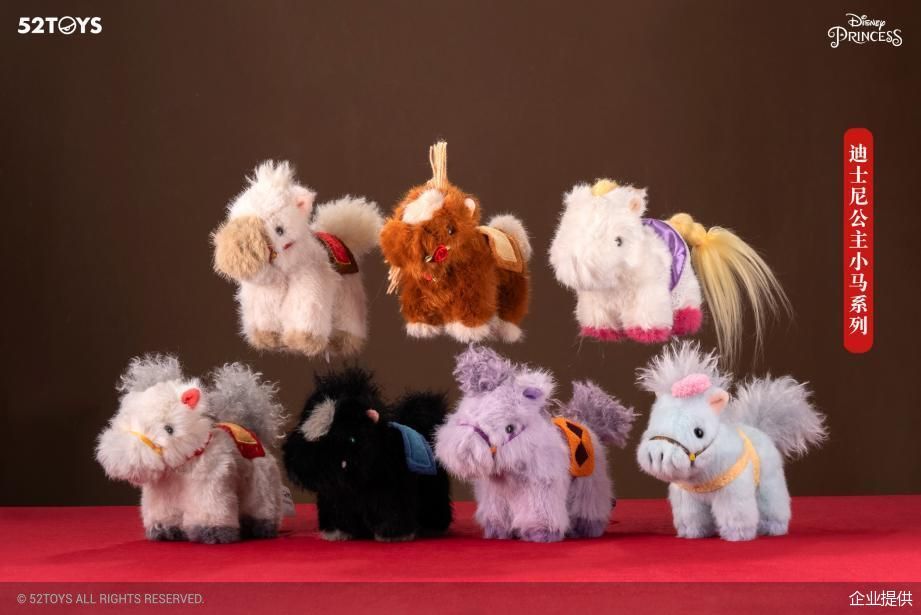
Group 1 - 52TOYS launched a limited edition product series for the Year of the Horse, featuring diverse styles, innovative designs, and engaging gameplay to enhance the festive spirit for consumers [1] - The Disney Princess Pony series incorporates surprise elements of blind boxes with the comforting texture of plush accessories, aligning perfectly with the Year of the Horse theme [3] - The Super Activation God Blessing series plush accessories are designed based on core Chinese deities, modernizing their images with a cute Q-version style, including figures like Wenchang Dijun and Guan Yu [5] Group 2 - There is a growing market preference for products that embody Chinese cultural identity, with 52TOYS leveraging its mature product categories to infuse Chinese cultural essence and creative inspiration [6] - Collaborations with cultural institutions, such as the National Museum's creative brand, have led to innovative products like the "Cultural Relics Walk Two Steps" series, which brings historical artifacts to life through modern interpretations [6] - The Sci-Fi IP Beast Box's "Qinglong and Baihu Set" showcases classic figures from Chinese traditional culture in a transforming mech toy format, enhancing player engagement with traditional culture [6]
9.9卖盲盒,5000万买IP:桑尼森迪的港股IPO成色几何
Sou Hu Cai Jing· 2026-01-19 08:12
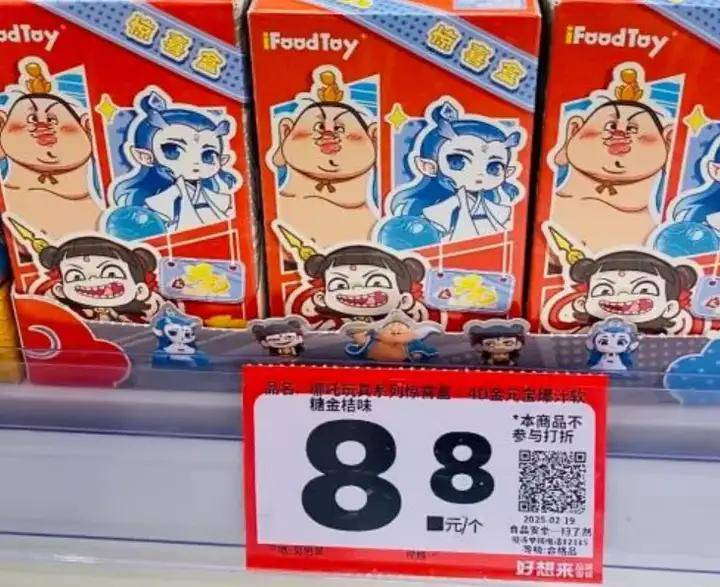
Core Viewpoint - The company, Sannisen Di, has successfully entered the Hong Kong stock market with its affordable IP toys, leveraging the popularity of the "Nezha" franchise, but faces challenges due to high IP costs and reliance on single-hit products [1][3][36] Financial Performance - In the first three quarters of 2025, Sannisen Di reported revenue of 386.49 million yuan, significantly surpassing the total revenue of 245 million yuan for 2024 [5][6] - The company's net profit reached over 50 million yuan in the first three quarters of 2025, a turnaround from a loss of over 19 million yuan in the same period of 2023 [9] - The gross profit margin increased from 16.9% in 2023 to 35.3% in the first three quarters of 2025, nearly doubling due to scale effects and supply chain optimization [10] Product Strategy - Sannisen Di focuses on affordable toys priced around 9.9 yuan, targeting lower-tier markets and price-sensitive consumers, differentiating itself from mid-to-high-end brands like Pop Mart [13][15] - The company has expanded its product distribution to 32,000 retail points across China, primarily in regional supermarkets and community toy stores, enhancing accessibility to a broader consumer base [15] IP Dependency and Costs - The revenue from IP toys, particularly from "Nezha 2," accounted for approximately 50.8% of total revenue, contributing around 196 million yuan [6][18] - The cost of IP licensing surged from over 6 million yuan in 2023 to over 50 million yuan in the first three quarters of 2025, becoming a significant operational expense [18][20] Market Competition - The toy industry is experiencing intense competition, with multiple companies, including 52TOYS and TOPTOY, also seeking IPOs, which may dilute Sannisen Di's market position [31][32] - Sannisen Di's reliance on non-exclusive IP licenses poses a risk, as competitors can produce similar products, potentially impacting long-term revenue stability [23] Strategic Challenges - The company faces a strategic dilemma between maintaining its low-cost model and pursuing brand upgrades, which may require significant investment and could alienate existing customers [35][36] - Sannisen Di's product line remains relatively narrow, primarily focusing on plastic figures and blind boxes, which may limit its competitiveness against rivals offering a broader range of products [28] Future Outlook - The company plans to use IPO proceeds to enhance product competitiveness, increase IP acquisitions, and expand sales channels, aiming to convert short-term gains into long-term brand equity [36]
珍酒李渡董事长吴向东:没有超级产品就不会有超级企业
Xin Lang Cai Jing· 2026-01-19 07:08
Core Viewpoint - The 20th China Brand Person Annual Conference will be held on December 29, 2025, in Shenzhen, focusing on the theme "Who Earns Respect for China," gathering over 2,000 elites from various sectors to reflect on the development of Chinese brands and explore new trends and opportunities in brand building [3][12]. Group 1: Innovation and Achievements - The company has implemented an innovative business model through the "Zunyi Forum," hosting 75 forums that attracted over 10,000 participants and generated over 600 million in revenue within 200 days, a significant achievement in a declining industry [5][14]. - The company has adopted a strategy of "one out, one in" for recruitment in certain regions, indicating a shift in operational focus [5][14]. Group 2: Seven Innovations for Business Breakthrough - The company has identified seven areas of innovation: super links, super products, super channels, super communication, super organization, super brand, and super experience, which have contributed to its business breakthroughs [5][14]. - A shift from large conferences to smaller forums has improved conversion rates from initially low percentages to significantly higher levels [5][14]. Group 3: Industry Challenges and Successful Case Studies - The liquor industry is facing challenges such as severe price inversion, affecting all channels [6][15]. - Successful case studies include Pop Mart, which saw a 16-fold increase in market value by creating a super product, LABUBU, and Huawei, which transformed its business model to achieve significant market success [6][15][16]. Group 4: Product Development and Market Positioning - The company has launched a super product, "Dazhen," priced at 600 yuan, which competes with products priced at 3,600 yuan, and is recognized as one of the hottest liquors in the market [8][18]. - The company is also developing a super beer with 20 times the amount of hops used in regular beer, positioning it as a leading new brand in the premium beer segment [8][18]. Group 5: Future Exploration and Incentives - The company is exploring new product lines, including a low-alcohol beverage and a health drink for women, aiming to maintain health into old age [9][19]. - A special equity incentive policy is in place to encourage sales, offering free shares of the listed company to those who assist in selling products [9][19].