生物技术

Search documents
张国清在内蒙古调研时强调 扎实推进产业创新 持续强化质量监管
Xin Lang Cai Jing· 2026-01-06 11:12
Group 1 - The core message emphasizes the importance of integrating technological innovation with industrial development to enhance quality and service high-quality growth and living standards [1] - The focus is on promoting new quality productivity through technological innovation, with an emphasis on the role of enterprises in driving innovation and research [2] - There is a call for seamless integration of the innovation chain and industrial chain, highlighting the need for demand-oriented approaches and practical applications of research outcomes [2] Group 2 - Quality supervision and certification processes are to be strengthened, with an emphasis on proactive management of product quality and safety standards [3] - The initiative includes rigorous monitoring and enforcement of food safety regulations to ensure public health and safety [3] - The importance of collaboration among regulatory bodies and real-time monitoring systems is highlighted to enhance quality control measures [3]
张国清在内蒙古调研时强调:扎实推进产业创新 持续强化质量监管
Xin Hua She· 2026-01-06 10:50
Core Viewpoint - The emphasis is on advancing industrial innovation and strengthening quality supervision to better serve high-quality development and improve living standards [2] Group 1: Industrial Innovation - The government aims to integrate technological innovation with industrial development, promoting new productive forces tailored to local conditions [2] - There is a focus on leading industrial upgrades through technological innovation, enhancing original innovation capabilities, and solidifying the technological foundation [3] - The government encourages seamless connection between innovation chains and industrial chains, emphasizing demand orientation and scenario-driven approaches [3] - Policies supporting large-scale equipment updates and significant technological upgrades in manufacturing are highlighted, with a push towards intelligent, green, and integrated development [3] Group 2: Quality Supervision - Strengthening source governance of quality is a priority, utilizing mandatory product certifications and national standards to drive quality improvements [4] - There is a commitment to rigorous daily oversight and enhanced collaboration among departments for real-time, integrated regulatory measures [4] - The government plans to intensify monitoring and enforcement against quality safety violations, ensuring the effectiveness of testing and certification institutions [4] - Food safety is also a focus, with a commitment to stringent oversight across the entire food safety chain to protect public health [4]
北京热景生物技术股份有限公司关于股份回购进展公告
Shang Hai Zheng Quan Bao· 2026-01-05 19:28
登录新浪财经APP 搜索【信披】查看更多考评等级 证券代码:688068 证券简称:热景生物 公告编号:2026-001 北京热景生物技术股份有限公司 二、回购股份的进展情况 根据《上市公司股份回购规则》《上海证券交易所上市公司自律监管指引第7号一一回购股份》等相关 规定,公司在实施回购期间,应当在每个月的前3个交易日内公告截至上月末的回购进展情况。现将公 司回购股份的进展情况公告如下:截至2025年12月31日,公司通过股份回购专用证券账户,以集中竞价 交易方式累计回购股份904,054股,占公司总股本92,707,940股的比例为0.98%,回购成交的最高价为 176.79元/股,最低价为145.59元/股,支付的资金总额为人民币149,955,134.73元(不含印花税、交易佣 金等交易费用)。 本次回购股份进展符合法律法规的规定及公司回购股份方案。 三、其他事项 公司将严格按照《上市公司股份回购规则》《上海证券交易所上市公司自律监管指引第7号一一回购股 份》等相关规定,在回购期限内根据市场情况择机做出回购决策并予以实施,同时根据回购股份事项进 展情况及时履行信息披露义务,敬请广大投资者注意投资风险。 ...

贵阳高新区四家企业跻身省级新型研发机构拟认定名单
Xin Lang Cai Jing· 2026-01-05 18:44
Core Viewpoint - The announcement highlights the inclusion of four companies from Guiyang High-tech Zone in the list of new-type research and development institutions in Guizhou Province for 2025, emphasizing their contributions to high-quality regional development through advanced technologies [1]. Group 1: Companies Recognized - The four companies recognized are Guizhou Tongdao Remote Satellite Technology Research Co., Ltd., Guizhou Biotechnology Research and Development Base Co., Ltd., Guizhou Coalbed Methane and Shale Gas Engineering Technology Research Center, and Guizhou Shengwei Chemical New Materials Research Institute Co., Ltd. [1] - These companies are engaged in cutting-edge fields such as satellite technology, biotechnology, energy engineering, and new materials [1]. Group 2: Future Plans and Support - Guiyang High-tech Zone will continue to focus on key industrial sectors and enhance support for new-type research institutions [1]. - The aim is to assist these institutions in tackling core technology challenges, transforming scientific achievements, and attracting high-end talent [1]. - The overall goal is to empower industrial upgrades through technological innovation and contribute to making Guizhou a nationally influential hub for technological innovation [1].
新股消息 | 靖因药业拟港股上市 中国证监会要求补充说明搭建离岸架构及返程并购的合规性等
Zhi Tong Cai Jing· 2026-01-05 13:08
Core Viewpoint - Jiangyin Pharmaceutical is seeking to go public on the Hong Kong Stock Exchange, but the China Securities Regulatory Commission (CSRC) has requested additional compliance information regarding its offshore structure and reverse mergers [1][2]. Group 1: Regulatory Compliance - The CSRC has asked Jiangyin Pharmaceutical to provide detailed explanations regarding the compliance of its offshore structure and reverse investment, including adherence to foreign exchange management, overseas investment, foreign investment, and tax management regulations [2]. - The company must clarify the legality of its domestic operating entity established in Shanghai and its historical equity changes [2]. Group 2: Financial Data and Business Operations - Jiangyin Pharmaceutical is required to disclose the proportion of its financial statements that is attributed to its domestic operating entity, and whether unpaid registered capital could negatively impact its business operations and debt repayment capabilities [2]. - The company must provide a conclusive opinion on whether its business scope and actual operations involve sectors that are restricted or prohibited for foreign investment [2]. Group 3: Company Overview - Jiangyin Pharmaceutical is a global clinical-stage biotechnology company focused on maximizing the clinical and commercial value of siRNA therapies [2]. - The company aims to innovate the current treatment standards for chronic diseases through the development of first-in-class and best-in-class siRNA therapies, supported by a proprietary siRNA technology platform and a global collaboration network [2].
靖因药业拟港股上市 中国证监会要求补充说明搭建离岸架构及返程并购的合规性等
Zhi Tong Cai Jing· 2026-01-05 13:06
Group 1 - The China Securities Regulatory Commission (CSRC) has requested Jiangyin Pharmaceutical to provide supplementary explanations regarding the compliance of its offshore structure and return acquisition [1] - Jiangyin Pharmaceutical submitted its listing application to the Hong Kong Stock Exchange on September 28, 2025, with Goldman Sachs, Haitong International, and HSBC as joint sponsors [1] - The CSRC has outlined specific areas for Jiangyin Pharmaceutical to clarify, including the regulatory procedures related to foreign exchange management, offshore investment, foreign investment, and tax management [1] Group 2 - Jiangyin Pharmaceutical is a global clinical-stage biotechnology company focused on maximizing the clinical and commercial value of siRNA therapies [2] - The company aims to innovate the current treatment standards for chronic diseases through the development of first-in-class and best-in-class siRNA therapies, supported by three major potential blockbuster product pipelines and a proprietary siRNA technology platform [2] - Jiangyin Pharmaceutical's strategy is built on a global collaboration network to address significant unmet medical needs [2]
港股收评:脑机接口概念火爆!科技股分化,快手飙涨11%
Ge Long Hui· 2026-01-05 08:47
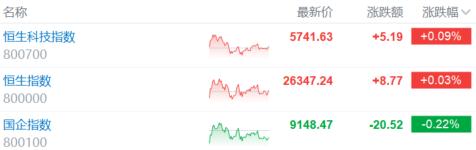
Market Overview - The Hong Kong stock market showed a narrow range of fluctuations on January 5, with the Hang Seng Index slightly up by 0.03%, the Hang Seng China Enterprises Index down by 0.22%, and the Hang Seng Tech Index up by 0.09% [1][2]. Sector Performance - Large tech stocks exhibited mixed performance, with Kuaishou surging by over 11%, while other notable stocks like Bilibili and Alibaba also saw gains of over 5% and 2%, respectively. Conversely, stocks like NetEase and Xiaomi fell by over 2% [2][4]. - The biotechnology sector was active, with companies like Rongchang Bio and Kelun-Bothai rising over 7%, and other firms like Fuhong Hanlin and Tigermed increasing by over 6% [7]. - The insurance sector saw strong gains, with China Pacific Insurance up over 6% and New China Life Insurance up over 5%. Analysts highlighted five key trends in the life insurance industry for 2026, including rapid growth in new business and a shift in customer demographics [8]. - The automotive sector faced declines, with Great Wall Motors dropping over 6% and NIO nearly 6%. Despite some brands achieving record sales in 2025, only a few met their annual sales targets [10]. Notable Stock Movements - Kuaishou's stock price reached 73.60 HKD, reflecting an increase of 11.09% with a market cap of 317.91 billion HKD [5]. - Nanjing Panda Electronics surged by nearly 40%, while Micron Brain Science and Brainhole Technology rose by nearly 20% and over 17%, respectively, following news of Neuralink's plans for large-scale production of brain-computer interface devices [6][4]. - The "three oil giants" saw significant declines, with China Petroleum and China National Offshore Oil Corporation both dropping over 3% due to geopolitical tensions and OPEC+ decisions [9]. Capital Flows - Southbound funds recorded a net inflow of 18.723 billion HKD, with the Shanghai-Hong Kong Stock Connect contributing 9.809 billion HKD and the Shenzhen-Hong Kong Stock Connect contributing 8.914 billion HKD [12]. Future Outlook - Goldman Sachs recommends overweighting Chinese stocks, predicting a 15% to 20% annual increase in the Chinese stock market for 2026 and 2027. Guosen Securities also sees potential in the market driven by a weaker US dollar and improved domestic liquidity in the spring of 2026 [15].


优宁维:全资子公司上海乐备实生物技术有限公司可为客户提供单/多因子相关检测分析、多色流式检测等服务
Mei Ri Jing Ji Xin Wen· 2026-01-05 08:15
(记者 王晓波) 优宁维(301166.SZ)1月5日在投资者互动平台表示,公司全资子公司上海乐备实生物技术有限公司作 为向客户提供实验室检测服务的实施主体,可为客户提供单/多因子相关检测分析、多色流式检测以及 多色组化检测等服务。 每经AI快讯,有投资者在投资者互动平台提问:董秘你好公司有涉足CRO领域吗? ...
生物医药ETF(512290)涨超1%,创新与出海主线获市场关注
Mei Ri Jing Ji Xin Wen· 2026-01-05 05:57
Group 1 - The core focus for emerging industries in 2026 includes brain-computer interfaces, robotics, and AI applications, alongside the importance of state-owned enterprise reforms as outlined in the 14th Five-Year Plan [1] - Long-term investment themes in healthcare are centered around innovation and international expansion, with a recommendation to pay attention to high-end medical devices and innovative pharmaceuticals [1] - In the high-end medical device sector, the increasing adoption of robotics, benefits from overseas investment, recovery in hospital procurement, and growing consumer demand for medical devices are driving business growth [1] Group 2 - The AI+ healthcare direction encompasses various subfields, including medical large models, imaging, medical testing, pharmaceutical e-commerce/precision marketing, gene sequencing, and drug development [1] - Key players in the CXO and upstream life sciences value chain include globally influential leading companies, domestic clinical CRO leaders, and resource-oriented CXO enterprises [1] - The Biopharmaceutical ETF (512290) tracks the CS Biomedicine Index (930726), which selects listed companies involved in pharmaceuticals, biotechnology, and medical devices to reflect the overall performance of the biotech and healthcare-related securities [1]
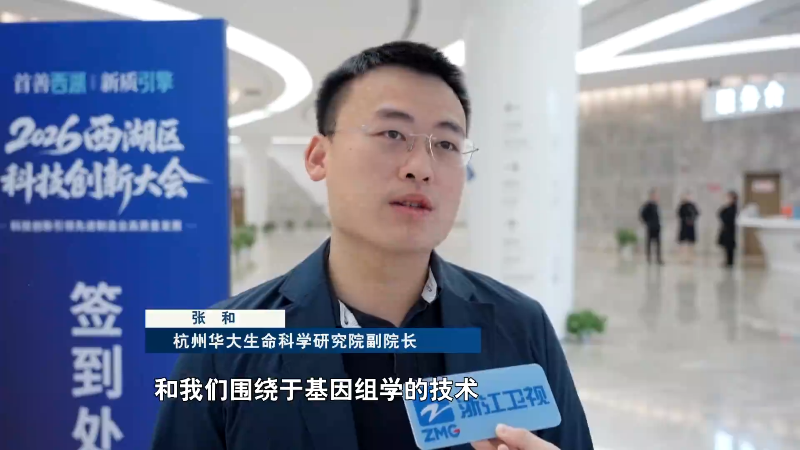
经济大省挑大梁丨应用场景机会清单新年密集发布 加速科技成果走向市场
Xin Lang Cai Jing· 2026-01-04 12:27
Core Insights - Zhejiang Province has recently released a list of application scenarios to provide testing and validation opportunities for cutting-edge technologies, accelerating the industrial application of scientific achievements [1][12] Group 1: Application Scenarios - The Hangzhou West Lake District held a technology innovation conference, unveiling a new round of application scenario opportunities, including government-led "integrated smart city management scenarios" and enterprise-focused "AI application scenarios" [1][12] - A total of 43 application scenarios have been publicly released in the West Lake District, with plans to establish a scenario innovation center for ongoing resource linkage services [5][16] Group 2: Industry Collaboration - The Vice President of BGI Life Sciences Research Institute expressed the intention to integrate genomic technologies and large model research with enterprise capabilities to form a "gene+" ecosystem [3][14] - Element Driven (Hangzhou) Biotechnology Co., Ltd. emphasized the need for more trials and connections for their technology applications, highlighting the importance of government and market collaboration [5][16] Group 3: Innovation and Resource Sharing - Scene innovation is identified as a key link in transitioning scientific achievements from "shelves" to "market," with various regions accelerating the sharing of application scenarios [9][18] - The Hangzhou West Lake District's Science and Technology Bureau is utilizing platforms like "West Lake Chain" and "Technology 8:30" to assist enterprises in finding technological innovation resources [7][19] Group 4: Data Utilization - The Executive Director of the Zhejiang Artificial Intelligence Research Center called for increased openness in public scenarios, particularly regarding data utilization, to create a conducive environment for technology development [12][21]