
矿产

Search documents
津巴布韦钢铁出口猛增1427%
Shang Wu Bu Wang Zhan· 2025-09-24 04:10
Group 1 - Zimbabwe's steel exports surged by 1427% in the first eight months of the year, reaching 172,000 tons, with export revenue increasing by 1913% to $50 million, largely due to the commissioning of the Dinson Steel Plant [1] - Coal exports from Zimbabwe also showed strong growth, with export volume increasing by 102% and export revenue rising by 124% to $1.443 million [1] - Zimbabwe's mineral exports saw a volume increase of 13%, totaling 3.34 million tons, but export revenue declined from $2.14 billion in the same period last year to $2.04 billion, primarily due to a drop in average global commodity prices, especially for high-value minerals [1]
谱写中国式现代化新疆实践新篇章
Jing Ji Ri Bao· 2025-09-23 22:18
Core Viewpoint - The article emphasizes the historical achievements and ongoing development in Xinjiang, highlighting the importance of the region in China's modernization efforts and the need for continued adherence to the Party's governance strategies [1][2][3]. Group 1: Strategic Importance of Xinjiang - Xinjiang has been an integral part of China and serves as a crucial gateway for opening up to the world, impacting the overall modernization of the country [2][3]. - The region is recognized for its strategic significance in national security and as a core area of the Silk Road Economic Belt, facilitating trade and cultural exchange [3][4]. Group 2: Economic Development Achievements - Xinjiang's GDP has increased from 749.947 billion yuan in 2012 to 2,053.408 billion yuan in 2024, marking a significant growth [4]. - Per capita GDP rose from 33,495 yuan in 2012 to 78,660 yuan in 2024, reflecting a 1.3 times increase [4]. - The region has established itself as a national base for high-quality agricultural products and energy resources, with ongoing development in various industries [4][5]. Group 3: Infrastructure and Trade Expansion - Xinjiang has accelerated its infrastructure development, with 19 open ports and 119 international road transport routes established [5]. - The total import and export volume increased from 158.96 billion yuan in 2012 to 434.16 billion yuan in 2024, showcasing a robust trade growth [5]. Group 4: Social Welfare and Quality of Life - The region has successfully eliminated absolute poverty and improved employment rates, with the total number of employed persons rising from 12.46 million in 2012 to 13.91 million in 2024, an increase of 11.64% [6]. - Urban and rural residents' disposable income has also seen significant growth, with urban residents' income reaching 42,820 yuan and rural residents' income at 19,427 yuan in 2024 [6]. Group 5: Environmental and Ecological Progress - Xinjiang has made notable advancements in ecological conservation, with air quality improvement and a forest coverage increase from 4.24% in 2012 to 5.07% in 2024 [6]. - The region is actively pursuing carbon neutrality goals, with a continuous decline in carbon emissions per unit of GDP [6][7]. Group 6: Future Development Strategies - The focus is on high-quality development, emphasizing technological innovation, urbanization, and green development to enhance the quality of life for residents [7][8]. - There is a strategic push to develop the southern region of Xinjiang, addressing existing challenges and leveraging its potential for growth [9].
东方铁塔:老挝矿产资源丰富,公司积极探寻其他资源的开发机会
Zheng Quan Ri Bao Wang· 2025-09-23 11:43
Group 1 - The company, Dongfang Tower (002545), announced on September 23 that it is actively exploring other resource development opportunities in Laos, which is rich in mineral resources [1] - The company has conducted assessments on multiple mineral resource projects, including bauxite and copper [1] - There remains significant uncertainty regarding these exploration efforts [1]

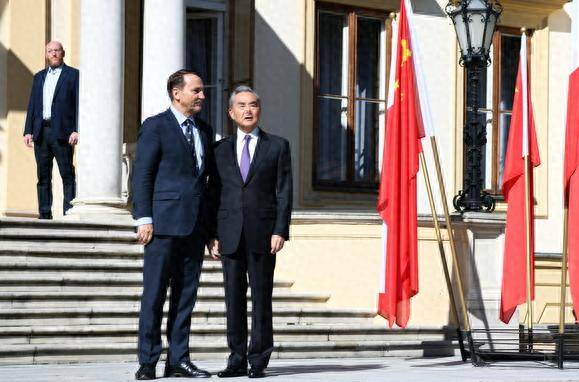
中波双方谈完,波兰当着全球公布重大喜讯,欧盟:为何运气如此好
Sou Hu Cai Jing· 2025-09-19 10:44
Core Viewpoint - The fourth meeting of the China-Poland Intergovernmental Cooperation Committee highlighted significant developments, particularly China's decision to relax export restrictions on key minerals and dual-use items, which is expected to enhance Poland's position in the European supply chain [1][3]. Group 1: Key Minerals and Economic Impact - Key minerals such as nickel, lithium, and rare earths are crucial for the new energy vehicle and battery industries, and Poland aims to strengthen its role in the European new energy supply chain [3]. - The relaxation of export restrictions is seen as a breakthrough for Poland, potentially leading to increased trade numbers and domestic processing and employment opportunities [3][5]. - Poland's acquisition of mineral resources is expected to provide it with greater negotiating power within the EU, especially in ongoing disputes over energy and mineral distribution [3][5]. Group 2: China-Poland Cooperation and Strategic Implications - The mineral export relaxation is mutually beneficial, as it stabilizes the China-Europe supply chain and enhances bilateral relations, countering discussions in Europe about reducing dependency on Chinese products [5][19]. - The "China-Europe Railway Express" has become a focal point of cooperation, with Poland's geographical position making it a key transit hub for goods moving from China to Europe [5][9]. - Both parties have agreed to optimize customs efficiency and increase transport capacity, which could alleviate financial pressures on businesses by reducing shipping times [7][9]. Group 3: Geopolitical Context and Security Concerns - The ongoing Ukraine conflict has heightened security concerns for Poland, which is directly affected by the war, leading to discussions on defense capabilities and military technology [11][12]. - Poland views China as a significant player that can maintain communication with Moscow, providing a potential avenue for conflict resolution [14][19]. - The EU's reaction to the China-Poland cooperation indicates concerns about Poland's rising influence within the EU, as it gains strategic resources that could enhance its bargaining power [16][19]. Group 4: Regional Reactions and Future Prospects - Eastern European countries have responded positively to Poland's actions, seeing it as a potential model for their own bilateral engagements with China [19]. - The EU has emphasized that all bilateral cooperation must align with EU rules, reflecting a cautious approach to Poland's growing autonomy in negotiations [19]. - China's strategic choice to highlight its cooperation with Poland serves to position itself as a collaborative partner in Europe, rather than an external disruptor [19].

Black Stone Minerals, L.P. Common Units (BSM) Shareholder/Analyst Call Transcript
Seeking Alpha· 2025-09-17 17:13
Core Points - The presentation is part of Black Stone Minerals' September 2025 Investor Presentation, indicating ongoing communication with investors [1][2] - The Director of Finance, Mark Meaux, is leading the presentation, highlighting the company's commitment to transparency and investor relations [2] - Forward-looking statements will be made regarding the company's future performance, which may involve risks that could lead to actual results differing from expectations [3][4] Financial Measures - The company may refer to non-GAAP financial measures that are considered useful for evaluating performance, with reconciliations provided in the appendix of the presentation [5]


安宁股份:2025年上半年公司钒钛铁精矿营业收入和营业成本增加主要系销量增加所致
Zheng Quan Ri Bao Wang· 2025-09-17 09:45
Group 1 - The company Anning Co., Ltd. (002978) reported that its revenue and cost of sales for vanadium-titanium iron concentrate are expected to increase in the first half of 2025 primarily due to an increase in sales volume [1] - The changes in revenue and cost of sales show slight differences, attributed to normal fluctuations in product prices and raw material costs [1]
国务院国资委:下一步仍将大力推动战略性专业化重组整合
Zhong Guo Jin Rong Xin Xi Wang· 2025-09-17 03:48
Group 1 - The core viewpoint of the article emphasizes the strategic professional restructuring of central enterprises during the "14th Five-Year Plan" period, focusing on optimizing layout and structural adjustments to enhance national strategic support and public service capabilities [1][2][3] Group 2 - The restructuring efforts are categorized into three main areas: 1. Restructuring to serve national strategic implementation, enhancing the strategic support capability of state-owned enterprises, with examples including the establishment of China Star Network for satellite internet and integration in strategic mineral resources [1][2] 2. Enhancing industrial synergy through horizontal and vertical integration to solve issues like repeated investments and resource dispersion, exemplified by the merger of Ansteel Group and Benxi Steel Group, and the formation of China Electrical Equipment [2] 3. Optimizing public services by integrating resources to provide high-quality and low-cost services, illustrated by the establishment of China Resource Recycling Group and the integration of medical resources within the General Technology Group [2][3] Group 3 - Future plans include enhancing core functions and competitiveness through systematic thinking and innovative measures, aiming to improve the allocation and operational efficiency of state-owned capital [3]
地缘经济论 | 第一章 在依赖中制衡:从地缘政治到地缘经济
中金点睛· 2025-09-16 23:40
Core Viewpoint - The article discusses the evolution of international competition from traditional geopolitical dynamics to geoeconomic strategies, emphasizing the strategic use of economic tools to influence global relations and decision-making among nations [2][3]. Group 1: Transition from Globalization to Geoeconomic Competition - The rise of geoeconomics reflects a shift where economic tools are increasingly used to achieve national strategic goals, particularly evident in U.S. policies under the "America First" framework [4][6]. - Economic sanctions and trade barriers have become more prevalent, with a notable increase in their use since 2017, surpassing traditional military interventions [4][6]. - Geoeconomics provides a new analytical perspective that integrates international relations and economics, focusing on the strategic use of economic tools [3][6]. Group 2: Asymmetric Dependence in Economic Globalization - The article highlights that globalization has led to unprecedented economic interdependence among nations, characterized by asymmetrical dependencies that create opportunities for economic competition [7][10]. - The U.S. maintains a dominant position in the global financial system, leveraging its control over the dollar to influence international economic relations [10][12]. - Emerging economies, particularly China, are increasingly becoming critical players in global supply chains, reducing their dependency on traditional economic powers [18][19]. Group 3: Characteristics of Geoeconomic Competition - Geoeconomic competition is likely to become a new norm due to the changing nature of international conflicts, where economic tools are preferred over military options [19][20]. - Economic measures are flexible and controllable, allowing governments to adjust their strategies without escalating conflicts unnecessarily [19][20]. - The effectiveness of geoeconomic tools is contingent upon the nature of the issues at stake and the ability of nations to adapt to changing dependencies [20][21]. Group 4: Economic Tools and Their Classification - Economic tools in geoeconomic competition can be categorized based on strategic intent (offensive vs. defensive) and intervention methods (inducement vs. sanctions) [22][23]. - The classification framework helps in understanding how nations utilize economic resources to influence others' behaviors or capabilities [22][23]. Group 5: Sources of Economic Power - Economic power is derived from a nation's resource endowment and its control over key nodes in the global economic network [27][30]. - A country's ability to exert economic pressure is fundamentally linked to its economic endowment, including natural resources, capital, and technological capabilities [28][30]. - Control over critical nodes in global supply chains enhances a nation's influence, allowing it to leverage its economic advantages effectively [30][31]. Group 6: Quantitative Analysis of Geoeconomic Power - The article proposes a framework for quantifying economic power based on input-output networks, highlighting the interconnectedness of global economies [32][33]. - Key industries and their roles in the global economy are analyzed to identify critical nodes that hold significant leverage in geoeconomic competition [33][36]. - The evolution of supply and demand networks from 2000 to 2023 illustrates shifts in economic power dynamics among major economies, particularly the rise of China as a regional center [44][47].
能源早新闻丨事关光伏,我国科研人员取得新进展!
中国能源报· 2025-09-16 22:33
Industry News - The National Energy Administration has issued the 2025 energy sector standard formulation and revision plan, which includes a total of 801 new standards and 402 revised standards [2] - The Ministry of Transport has released seven transportation industry standards, including the "Technical Specifications for Road Transport of Hydrogen (including Liquid Hydrogen)" [2] - The construction of the Tibet-Guangdong DC transmission project has commenced, which is the world's most advanced flexible DC transmission project, expected to deliver over 43 billion kWh of electricity annually to the Guangdong-Hong Kong-Macao Greater Bay Area after full operation in 2029 [2] - Research teams from Nanjing University of Posts and Telecommunications have made progress in the field of inorganic photovoltaic materials, achieving a 10.1% photoelectric conversion efficiency for large-area copper-zinc-tin-sulfur-selenium photovoltaic films [3] - The China Electricity Council has published a list of typical cases for the "three modifications" technology transformation of coal-fired power units for 2025, selecting 35 typical cases based on various evaluation criteria [3] - Qinghai Province encourages qualified charging facility operators to participate in electricity market transactions, allowing them to charge users for electricity and service fees [3] - Shaanxi Province encourages coal-fired self-supplied power plants to participate in grid regulation, particularly those with over 50% peak-shaving capacity [4] Corporate News - Jiangsu New Energy announced the resignation of General Manager Chen Hua, with Qiao Bing appointed as the new General Manager [6] - China Shenhua reported coal sales of 28 million tons in the first eight months of 2025, a year-on-year decrease of 9.2% [6]
中巴贸易20年增5倍 改写巴西经济版图
Jin Tou Wang· 2025-09-12 09:51
Group 1 - The trade between China and Brazil has increased nearly fivefold over the past 20 years, significantly impacting trade relations, employment, and industrial patterns in Brazil [1] - In 2024, China accounted for 28% of Brazil's exports and 24% of its imports, with a trade surplus of $276 billion with China over the past decade, contrasting with a trade deficit of $224 billion with the US and EU [1] - Brazil's exports to China have diversified, with the number of product categories increasing from 673 in 1997 to 2,589 last year, including meat, pulp, coffee, and manufactured goods [1] Group 2 - Over 40,000 Brazilian companies imported goods from China last year, covering electronics, machinery, fertilizers, and industrial chemicals, which is 15 times more than imports from other South American countries [2] - Brazil's overseas investment ranking has improved, with new opportunities emerging in energy transition-related sectors, including copper, lithium, manganese, corn, and fruits [3] - In 2024, China purchased 73% of Brazil's soybeans, 67% of iron ore, and 44% of crude oil, along with about half of Brazil's beef and cotton exports [3] Group 3 - Brazil's deep trade cooperation with China provides a buffer against external risks, as evidenced by Brazil's response to US tariffs by implementing reciprocal tariffs on US goods [3] - Brazil has initiated a "de-dollarization" strategy, signing a currency settlement agreement with China in 2023 to trade directly in yuan and reais, and plans to establish a tax consulting office in Beijing to simplify customs and combat tax evasion [3]