
3D打印

Search documents
招商证券:航空航天/汽车/电子/消费产业共振 3D打印迎来行业爆发
Zhi Tong Cai Jing· 2026-01-09 09:04
Core Insights - The Chinese 3D printing market is expected to reach 70 billion by 2025, growing at a rate of 30%, with significant contributions from industrial machinery (20%), aerospace (17%), automotive (14%), and consumer electronics (13%) [1][2] - The industry is transitioning from niche applications to mainstream adoption, driven by advantages such as customization, reduced R&D cycles, and cost-effective small-batch production [1][2] - The commercial aerospace sector is identified as a key growth area, focusing on the demand for reusable rockets and satellite delivery [3] Industry Overview - The global 3D printing market is projected to reach 21.9 billion in 2024, with a growth rate of 9.31%, where non-metal technologies, particularly FDM, dominate with a 61.6% share, while metal technologies are led by SLM with an 89.4% share [2] - In China, the 3D printing production volume is expected to grow by 40.5% year-on-year from January to September 2025, with exports reaching 4.48 million units (+29.6%) and export value at 9.866 billion (+31.9%) [2] Market Segmentation - The industrial segment is seeing a rise in China's market share, increasing from 8.2% in 2009 to 11.5% in 2024, with the U.S. holding 31% and Germany at 8% [3] - In the metal 3D printing sector, Germany's EOS leads with a 41% market share, while China's Platinum Tech has risen to 20%, ranking second globally [3] Consumer Market Dynamics - The global consumer 3D printing market is expected to reach 4.1 billion in 2024, growing by 32%, with a shipment volume of 4.1 million units (+17%) and a total installed base of 15.8 million units (+15%) [4] - The demand for personalized and limited-edition products is driving growth, while companies like拓竹 and创想三维 are making devices more user-friendly and affordable, enhancing market accessibility [4] Key Industry Players - Key players in the metal materials segment include Youyan Powder Materials and Srey New Materials, while polymer materials are represented by Jialian Technology [5] - Leading companies in the industrial-grade sector include Platinum Tech and Huazhu High-Tech, which are closely tied to aerospace and defense industries [5] - In the consumer segment, 创想三维 is noted for its high growth potential as it prepares for an IPO [5]

基础化工行业年度报告:周期成长双线轮动,持续看好成长赛道和反内卷大方向
Xin Lang Cai Jing· 2026-01-09 09:00
Group 1 - The chemical industry is at the bottom of its profitability cycle, with the chemical PPI showing signs of stabilization, indicating limited further downside risk [1][6][41] - The trend of "East rising, West falling" is evident, with Chinese companies expanding their product and capacity overseas to mitigate risks and enhance market presence [1][23][35] - There is a clear trend of polarization within the industry, where only companies above the industry median can realize profits, while marginal firms face significant challenges [1][36][39] Group 2 - Supply-side constraints are expected to improve industry sentiment, leading to price and profit recovery, particularly in sectors with limited new capacity [2][43][44] - The demand side remains weak, but structural opportunities may arise from new market segments and changes in demand patterns [3][47][48] - Emerging sectors such as AI, robotics, and solid-state batteries are anticipated to drive long-term investment opportunities due to their growth potential [2][48][49] Group 3 - The chemical industry is experiencing a significant shift in its competitive landscape, with European chemical competitiveness declining, allowing Chinese firms to capture more market share [23][25][29] - The export of chemical products from China has been increasing, with a net export value of $24.1 billion, indicating a positive trend in mitigating domestic supply pressures [15][31][33] - Companies are increasingly focusing on overseas resource acquisition, such as phosphate and potassium mines, to secure raw materials and enhance their competitive edge [1][35][36]

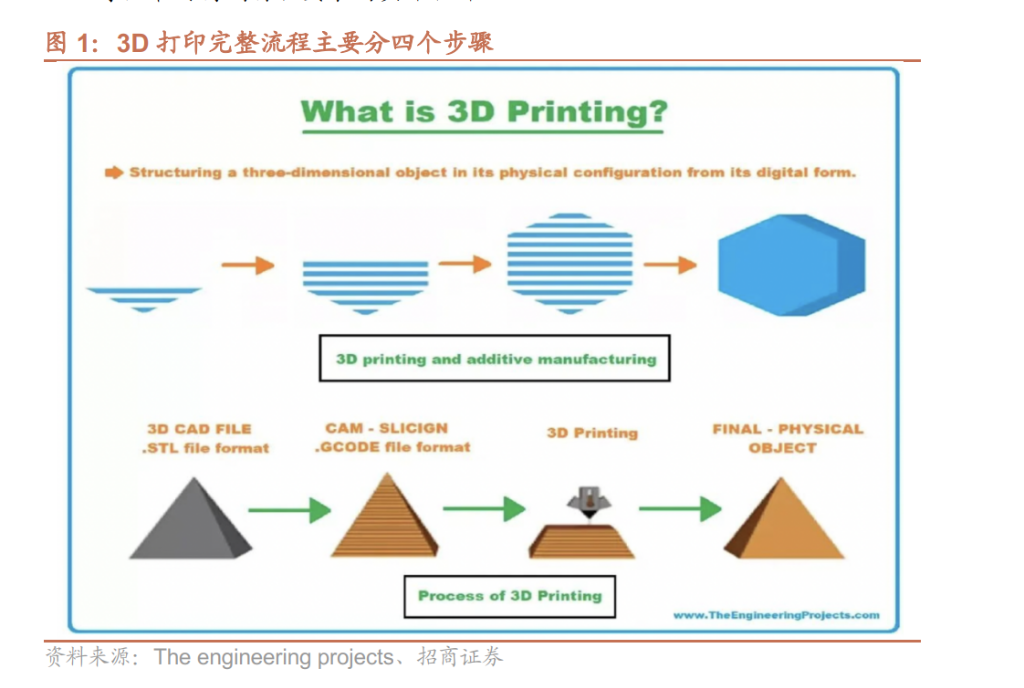
工业与消费需求共振,3D打印的“奇点”时刻到来?
Hua Er Jie Jian Wen· 2026-01-09 08:56
Core Insights - The additive manufacturing (3D printing) industry has transitioned from a technology hype cycle to a phase of technological maturity and cost reduction, marking a significant manufacturing revolution [1][3] Industry Overview - The global market size for additive manufacturing has reached $21.9 billion, with China experiencing a remarkable growth rate of 30%, projected to reach 70 billion yuan by 2025 [3] - The industry is moving from niche to mainstream, with industrial and consumer markets experiencing a rare resonance explosion [3] Technological Advantages - 3D printing offers core advantages over traditional subtractive and formative manufacturing, including "moldless" production and high material utilization rates exceeding 90%, leading to significant cost savings, especially for expensive materials like titanium alloys [4] Market Segmentation - The technology landscape is divided into two main camps: metal and non-metal. In the non-metal sector, FDM (Fused Deposition Modeling) dominates with a 61.6% global market share, while SLM (Selective Laser Melting) is the core technology in the metal sector, holding an 89.4% market share [7] Industrial Market Dynamics - The global industrial landscape is shifting towards a "Western dominance, Chinese rise" pattern, with China's market share increasing from 8.2% in 2009 to 11.5% in 2024. In the valuable metal 3D printing sector, Chinese company BLT has captured a 20% global market share, ranking second worldwide [9] Key Growth Drivers - Two core downstream sectors are driving industrial growth: 1. Commercial aerospace, where companies like SpaceX and domestic players are demonstrating significant reductions in engine component counts and manufacturing cycles [10] 2. Consumer electronics, with 2026 anticipated as a year of large-scale production for metal 3D printing, as major brands like Xiaomi and Apple enter the market [12] Consumer Market Landscape - The global consumer 3D printing market is projected to reach $4.1 billion by 2024, with the top four companies (CR4) in the market all being Chinese firms, holding a combined market share of 71.3% [13] - Companies like拓竹科技 are adopting a "3D printing farm" model, utilizing clusters of devices for flexible manufacturing, particularly in the trendy and cultural sectors [14] Technological Innovations - Innovations in algorithms and lidar technology are addressing printing speed and success rates, making devices more user-friendly. The establishment of a MakerWorld model community is creating a closed-loop ecosystem of "hardware + software + content" [16]
2025年11月中国3D打印机出口数量和出口金额分别为52万台和1.82亿美元
Chan Ye Xin Xi Wang· 2026-01-09 03:19
数据来源:中国海关,智研咨询整理 知前沿,问智研。智研咨询是中国一流产业咨询机构,十数年持续深耕产业研究领域,提供深度产业研 究报告、商业计划书、可行性研究报告及定制服务等一站式产业咨询服务。专业的角度、品质化的服 务、敏锐的市场洞察力,专注于提供完善的产业解决方案,为您的投资决策赋能。 相关报告:智研咨询发布的《2026-2032年中国消费级3D打印机行业市场专项调研及投资前景规划报 告》 根据中国海关数据显示:2025年11月中国3D打印机出口数量为52万台,同比增长89.1%,出口金额为 1.82亿美元,同比增长136.2%。 近一年中国3D打印机出口情况统计图 ...

家电轻工2026年策略报告:重点关注内需供给优化,外需新品类新市场-20260108
GOLDEN SUN SECURITIES· 2026-01-08 07:57
Group 1: Industry Overview - The home appliance and light industry in 2026 should focus on four investment themes: domestic demand supported by old-for-new policies, supply-side improvements in the power bank industry, and the rise of niche consumer products in service consumption [1] - The white goods sector is expected to benefit from the old-for-new policy, with a significant increase in consumer spending projected [44] - The overall performance of the light industry outperformed the CSI 300 index, with a cumulative increase of 24.68% from January to December 2025 [12][15] Group 2: Key Companies - Midea Group is developing a second growth curve through its B-end business, particularly in data center liquid cooling, which shows significant potential [2] - Haier Smart Home is enhancing its operational system through a data-driven approach, improving competitiveness across product, cost, and supply chain [2] - TCL Electronics and other companies in the black goods sector have shown strong performance, benefiting from the old-for-new subsidy policy [21] Group 3: Market Trends - The power bank industry is expected to see improved market conditions due to new regulations, which will raise industry standards and potentially eliminate many low-quality brands [2] - The "Guzi economy" is tapping into emotional consumption needs, with domestic IP supply increasing and consumer spending on IP expected to grow significantly [3] - The folding bicycle market is transitioning from niche to mainstream, with significant growth potential driven by urban mobility needs [3] Group 4: Export and New Markets - The export chain is gradually recovering from tariff disruptions, with a focus on companies that have strong overseas production capabilities to mitigate tariff risks [3] - New product categories, such as pool cleaning robots, have substantial growth potential, with Chinese companies expected to increase their market share [3] - Emerging markets in Africa and Latin America present new opportunities for multinational hygiene product companies [3]



华曙高科股价涨5.18%,华夏基金旗下1只基金位居十大流通股东,持有189.45万股浮盈赚取716.12万元
Xin Lang Cai Jing· 2026-01-08 07:10
Core Viewpoint - Hunan Huashu High-Tech Co., Ltd. has seen a stock price increase of 5.18%, reaching 76.81 yuan per share, with a total market capitalization of 31.812 billion yuan as of January 8 [1] Group 1: Company Overview - Hunan Huashu High-Tech Co., Ltd. was established on October 21, 2009, and went public on April 17, 2023 [1] - The company specializes in the research, production, and sales of industrial-grade additive manufacturing equipment, focusing on providing metal (SLM) and polymer (SLS) additive manufacturing equipment, as well as 3D printing materials, processes, and services [1] - The revenue composition of the company includes 74.47% from 3D printing equipment and auxiliary parts, 13.57% from after-sales services and others, 11.02% from 3D printing powder materials, and 0.94% from other sources [1] Group 2: Shareholder Information - Huaxia Fund's Huaxia Industry Prosperity Mixed A Fund (003567) is among the top ten circulating shareholders of Huashu High-Tech, holding 1.8945 million shares, unchanged from the previous period, representing 0.94% of circulating shares [2] - The fund has generated an estimated floating profit of approximately 7.1612 million yuan today [2] - The fund was established on February 4, 2017, with a current scale of 8.972 billion yuan, yielding 3.39% year-to-date and 69.07% over the past year [2] Group 3: Fund Manager Performance - The fund manager of Huaxia Industry Prosperity Mixed A is Zhong Shuai, who has been in the position for 5 years and 166 days, managing assets totaling 13.26 billion yuan [3] - During his tenure, the best fund return was 185.99%, while the worst was 0.5% [3] Group 4: Fund Holdings - Huaxia Fund's Huaxia Low-Carbon Economy One-Year Holding Mixed A Fund (015229) has reduced its holdings in Huashu High-Tech by 60,300 shares, now holding 229,100 shares, which constitutes 5.68% of the fund's net value [4] - The fund has an estimated floating profit of about 866,100 yuan today [4] - Established on June 28, 2022, the fund currently has a scale of 156 million yuan, with a year-to-date return of 5.5% and a one-year return of 53.23% [4]

国盛证券:重点关注家电内需供给优化 外需新品类新市场
智通财经网· 2026-01-08 06:45
Group 1: Home Appliance and Light Industry Investment Opportunities - The home appliance and light industry should focus on four investment themes by 2026: 1) The white goods sector, supported by trade-in policies, is expected to have good allocation value due to its dividend yield; 2) The power bank industry is anticipated to improve due to new regulations, while the domestic hardware market share is set to rise [1] - The white goods sector has strong defensive attributes and offers good value in terms of dividend yield. Midea Group's B-end business, particularly in data center liquid cooling, shows significant growth potential, with its current P/E ratio being relatively low [1] - Haier Smart Home is enhancing its competitive edge through a new operational system focused on "data-driven intelligent decision-making and closed-loop optimization" [1] - The power bank industry is expected to see improved market conditions with the upcoming release of the "Mobile Power Safety Technical Specification" in Q1 2026, which will raise industry standards and potentially eliminate many white-label brands [1] Group 2: Consumer Trends and New Market Opportunities - The "lipstick effect" and social currency attributes are driving demand for emotional consumption, with the IP-based spiritual consumption sector in China experiencing rapid growth and increasing supply of domestic IPs [2] - Companies like Pop Mart, which have strong IP operation capabilities, and Blukoo, which has significant room for channel expansion, are recommended [2] - The folding bicycle market is gaining traction due to its convenience and efficiency in urban settings, with Dahan Technology leading the industry in mainland China [2] - The consumer-grade 3D printer market is evolving from a niche tool for professionals to a widely accessible device, with Chuangxiang Sanwei expected to list on the Hong Kong Stock Exchange [2] Group 3: Export Chain Recovery and New Product Opportunities - The Chinese home appliance and light manufacturing industry remains globally competitive, with a focus on companies that have strong product and channel development capabilities and overseas factories to mitigate tariff risks [3] - New product opportunities include pool cleaning robots, which have significant room for market penetration, and companies like Wangyuan Technology are expected to list on the Hong Kong Stock Exchange [3] - There is a focus on multinational hygiene product companies like Leshushi that are targeting rapidly developing emerging markets in Africa, Latin America, and Central Asia [3]

2025全球十大风云新潮商
Sou Hu Cai Jing· 2026-01-08 06:36
Group 1 - The article highlights the emergence of a new generation of潮商 (Chao merchants) who are blending traditional business foundations with innovative and pioneering spirits, driving transformation in the business world [1] - The "2025 Global Top Ten Emerging潮商" list was released, showcasing outstanding young潮商 who have achieved remarkable success in their respective fields [1] - The rise of these潮商 is not only a personal achievement but also a vivid representation of the vitality and innovative spirit of the潮商 community [1] Group 2 - Yang Zhilin, founder of "月之暗面," has become a significant player in the AI sector, raising over 30 billion yuan in funding and achieving a valuation of 73 billion yuan, making him one of the youngest self-made billionaires in China [3] - Hong Shizhe, a 24-year-old prodigy, founded Axiom Math, which raised $64 million in its first round of funding and achieved a post-investment valuation of over $300 million [6] - Lu Mengwu, co-founder of "高彻智能," secured significant funding and launched innovative products, establishing the company as a key player in the AI industry [10] Group 3 - Databricks, co-founded by a潮商, completed over $4 billion in funding, achieving a valuation of $134 billion, making it one of the largest tech unicorns globally [12] - Cloud Whale, another潮商 company, has seen rapid growth, with a market share of 16.2% in the domestic market and expansion into over 50 countries [16] - The article discusses the strategic moves of TikTok's CEO, who is navigating complex regulatory environments while maintaining control over the company's core operations in the U.S. [18][19] Group 4 - Shenzhen-based Intelligent派科技, led by 洪英盛, transitioned from cross-border e-commerce to becoming a leading manufacturer of consumer-grade 3D printers, with projected revenues exceeding 2.5 billion yuan in 2025 [23][24] - 镁伽科技, founded by 黄瑜清, has made significant advancements in life sciences and automation, with a projected revenue growth of 50% to 930 million yuan in 2024 [25][26] - 奥比中光, led by 黄源浩, has established itself as a leader in 3D vision technology, achieving a revenue of 714 million yuan in the first three quarters of 2025 [30][31]
国信证券:看好全球3D打印市场保持快速成长 维持“优于大市”评级
智通财经网· 2026-01-08 02:25
Group 1 - The global 3D printing industry is expected to exceed 150 billion RMB in 2024, with a potential market size of 100 billion USD in the next decade, driven by the maturity of 3D printing technology and its advantages over traditional manufacturing methods [1] - The consumer-grade 3D printing market is dominated by domestic manufacturers, with a projected market value of 4.1 billion USD in 2024, growing to 16.9 billion USD by 2029, reflecting a compound annual growth rate (CAGR) of 33% [1] - Major domestic players hold over 70% of the global market share in consumer-grade 3D printers, with TuoZhu Technology and Chuangxiang Sanwei being market leaders [1] Group 2 - The industrial 3D printing sector requires breakthroughs in core components such as high-end lasers, galvanometers, and inkjet nozzles, which are currently dominated by foreign manufacturers [2] - Industrial 3D printing is transitioning from "test-type" applications to "scale" applications, demonstrating significant value in sectors like shoe molds and commercial aerospace [2] Group 3 - Domestic manufacturers are making continuous breakthroughs in various aspects of 3D printing, with Aisike achieving domestic production of piezoelectric inkjet printheads and 100% localization in 3D metal printing equipment [3] - JinChengZi is a leader in laser processing control systems and is also expanding into consumer-grade products, while SiKan Technology leads in industrial 3D scanning and is entering the consumer market [3] - Chuangxiang Sanwei is a global leader in consumer-grade 3D printing and is actively developing an AI ecosystem, while other companies like Huasu High-Tech and Bolite are expanding into new markets such as consumer electronics and commercial aerospace [3]


AI应用系列:3D打印百花齐放,国产厂商持续突破
Guoxin Securities· 2026-01-07 11:19
Investment Rating - The report maintains an "Outperform" rating for the 3D printing industry [1] Core Insights - The consumer-grade 3D printing market is dominated by domestic manufacturers, with AI facilitating a prosperous ecosystem. The global consumer-grade 3D printer market is expected to reach $4.1 billion in 2024, growing to $16.9 billion by 2029, with a compound annual growth rate (CAGR) of 33% [2][21] - The industrial-grade 3D printing sector requires breakthroughs in core components, with applications gradually moving towards scale. Key components such as high-end lasers, galvanometers, and inkjet nozzles still need to be localized [2][49] - Domestic manufacturers are making continuous breakthroughs across various segments of 3D printing, with companies like Aisike achieving localization in piezoelectric inkjet nozzles and Jin Chengzi leading in laser processing control systems [2][49] Summary by Sections 1. 3D Printing in Consumer and Industrial Markets - 3D printing is flourishing in both consumer and industrial markets, with distinct applications and technologies [12][91] 2. Rapid Development of Consumer Market, AI Enhancing Ecosystem - The consumer-grade market is rapidly growing, driven by AI advancements that lower modeling barriers and enhance user engagement [25][30] 3. Core Component Localization in Industrial 3D Printing, Diverse Applications - The localization of core components in industrial 3D printing is anticipated, with applications expanding across various sectors [2][49] 4. Rapid Development of Domestic Manufacturers, Continuous Breakthroughs - Domestic manufacturers are achieving significant advancements in 3D printing technology, with a focus on various segments and applications [2][49]