低空经济

Search documents
成都:支持发展绿色氢能、低空经济、商业航天和算力等新兴产业
news flash· 2025-07-16 12:06
Core Viewpoint - Chengdu's government has issued a plan to promote high-quality development in county-level new towns, focusing on enhancing the capacity of advanced manufacturing bases and supporting the growth of various industries [1] Group 1: Advanced Manufacturing - The plan emphasizes leveraging spatial advantages to undertake leading projects in advanced manufacturing, particularly in equipment manufacturing, advanced energy, and new materials, targeting areas like Jianyang, Pengzhou, and Jintang [1] - There is a goal to strengthen the manufacturing sector in Qionglai and Chongzhou by enhancing the capabilities of advanced manufacturing [1] Group 2: Traditional Industries Transformation - The initiative aims to utilize digital intelligence and green technology to upgrade traditional industries such as liquor and home furnishings [1] - The focus is on developing niche sectors like power batteries and smart terminals, with an aim to create national-level characteristic industrial clusters for small and medium enterprises [1] Group 3: Industrial Space Expansion - The plan supports the expansion and quality improvement of established enterprises, as well as the redevelopment of inefficient and idle land and buildings [1] - It aims to continuously expand new industrial spaces, particularly in areas like Dujiangyan, Dayi, and Pujiang, to strengthen industries such as pharmaceuticals and green food [1] Group 4: Emerging Industries - The government is promoting the development of emerging industries such as green hydrogen, low-altitude economy, commercial aerospace, and computing power [1] - There is a focus on securing key backup projects for these critical industries [1]
「中期大考」下的低碳突围:中国式绿色转型要解的三道题
36氪· 2025-07-16 10:19
Core Viewpoint - The article emphasizes that the "dual carbon" strategy is no longer just a compliance issue but a critical factor for sustainable growth and competitive advantage in various industries as China approaches its 2030 carbon peak target [2][4]. Group 1: Challenges and Opportunities in Low-Carbon Transition - The low-carbon transition is shifting from being viewed as a compliance burden to an efficiency dividend, with companies realizing that green transformation can redefine cost structures [7]. - Companies like Lanyang Technology are adapting to new demands, where liquid cooling technology is becoming essential for energy efficiency in high-performance computing environments [7][20]. - Capital perspectives indicate that true competitive advantage comes from establishing new barriers through emissions reduction rather than merely complying with regulations [8]. Group 2: Institutional and Market Support - The successful implementation of low-carbon technologies requires synchronized institutional frameworks, standards, and market readiness, as seen in the challenges faced by companies like Zero Gravity in the aviation sector [9][10]. - While local governments have begun to establish "dual carbon task forces," industry standards still lag behind emerging technologies, creating a critical window for institutional development [11]. Group 3: Urban Transformation and Low-Carbon Economy - The low-carbon economy is not just an industrial issue; it is redefining urban structures and prompting a new wave of urban operational system updates [12][15]. - Technologies like eVTOL are not merely supplementary to existing transport but are integral to reshaping urban mobility and spatial organization [13]. Group 4: Differentiated Paths in Green Transition - Different industries are adopting varied strategies for green transition, with the automotive sector focusing on cost structure reconstruction, while the energy sector emphasizes system efficiency [18]. - The transition in the automotive industry is marked by a shift from product parameters to supply chain leadership, as companies like Zhaichi Technology evolve from raw material suppliers to efficiency partners [19]. Group 5: Carbon Index Plan and Future Directions - The "Carbon Index Plan" aims to assess which companies can effectively implement green capabilities as structural advantages, moving beyond mere innovation to practical application [25][28]. - The initiative will focus on three core scenarios: future energy, future transportation, and future cities, emphasizing systemic collaboration rather than isolated technological achievements [26][27].




广东省工信厅庄乐从:加快发展具身机器人产业 将低空经济作为重点产业来抓
news flash· 2025-07-16 09:21
Core Viewpoint - Guangdong Province is focusing on accelerating the development of the embodied robotics industry and prioritizing the low-altitude economy as a key sector for growth [1] Group 1: Industry Development Strategies - The province aims to build a modern industrial system supported by advanced manufacturing [1] - There is an emphasis on using digital and green technologies to upgrade traditional industries such as petrochemicals, steel, food and beverage, textiles, and home appliances [1] - The province plans to promote innovation in the chemical new materials industry [1] Group 2: Key Industries and Focus Areas - Guangdong will consolidate and expand its advantages in the new energy vehicle industry [1] - The province is set to innovate in new energy storage and photovoltaic industries [1] - The low-altitude economy will be treated as a priority industry [1] Group 3: Future Industry Layout - The province will implement an "AI+" initiative to integrate artificial intelligence into various sectors [1] - There is a forward-looking layout for future industries such as biomanufacturing, quantum technology, embodied intelligence, and 6G [1]

石家庄鹿泉:打造文旅标杆,智绘山水新卷
Xin Jing Bao· 2025-07-16 07:54
Core Insights - The article highlights the transformation of the Luquan District in Shijiazhuang into a year-round tourism destination, emphasizing its unique climate and innovative attractions [1][2][3] Tourism Development - Luquan is positioned as a "West Garden" of Shijiazhuang, offering a unique climate with 85% vegetation coverage, making it a popular summer retreat [2] - The district features the first four-season ski resort in Hebei, attracting 180,000 ski enthusiasts in 2024 [3] - The "Little Sanya" project, featuring a constant temperature pool and tropical plants, is set to enhance the area's appeal by integrating winter sports with tropical relaxation [4] Cultural and Sports Events - Luquan has developed a vibrant sports culture, hosting over 60 events in recent years that attracted more than 20 million participants, showcasing its natural beauty and cultural heritage [7] - The district's night hiking and sports events provide dynamic experiences, contrasting with the tranquil offerings of wellness and relaxation [5][6] Industrial Growth - Luquan is the heart of Shijiazhuang's electronic information industry, achieving significant milestones with over 1,000 enterprises and a 36% annual growth rate in main business income over the past three years [8] - The district is also advancing in green energy, with 262,600 kW of installed photovoltaic capacity and a green hydrogen ecosystem under development [9] Technological Integration - The establishment of a drone testing base signifies Luquan's commitment to integrating technology into tourism, enhancing service delivery and visitor experience [10]
以实业之力助推低空产业“飞”得更稳更好
Hang Zhou Ri Bao· 2025-07-16 03:05
Core Viewpoint - Hangzhou is making significant strides in developing its low-altitude economy, with the introduction of the first manned eVTOL manufacturer and the establishment of multiple drone takeoff and landing sites, indicating a robust growth trajectory in this sector [3][4]. Group 1: Low-altitude Economy Development - Hangzhou has officially introduced its first manned eVTOL manufacturer, WoFei ChangKong, marking a key breakthrough in the city's low-altitude economic industry chain [3]. - The construction of the first hub-type drone public takeoff and landing site in northern Hangzhou has commenced, enhancing the network of drone public vertical takeoff and landing sites across the city [3]. - Hangzhou Low-altitude Industry Development Co., a subsidiary of Hangzhou Shiji Group, is leading the development of low-altitude flight service guarantees, infrastructure construction, and industry ecosystem cultivation [3][4]. Group 2: Infrastructure and Service Development - The Dream Town takeoff and landing site, operational since last September, provides various ground services for drone operation companies, including takeoff, landing, charging, and storage [4]. - Currently, Hangzhou Low-altitude Company has established four public drone takeoff sites and aims to build at least ten more this year [4][5]. - The construction of an "air network" is crucial for the low-altitude economy, involving both hardware and software components to ensure safe and orderly flights [4][5]. Group 3: Industry Collaboration and Ecosystem - The establishment of the Hangzhou Low-altitude Economic Industry Alliance marks a significant milestone, promoting closer cooperation and collaborative development within the industry [6]. - The alliance currently has over 150 member companies, covering various sectors such as drone R&D, low-altitude flight service guarantees, and training [6]. - Hangzhou Shiji Group is actively attracting leading eVTOL and drone manufacturing companies to fill gaps in the local industry [6][7]. Group 4: Investment and Future Plans - A 3 billion yuan low-altitude industry fund has been established to focus on building an integrated "air-ground-space" industry ecosystem [7]. - The fund will strategically invest in four core areas: low-altitude manufacturing, visual technology, logistics, and data [7]. - Hangzhou Shiji Group aims to provide practical solutions for the development of the low-altitude economy through investment, incubation, and empowerment [7].
四大证券报精华摘要:7月16日
Xin Hua Cai Jing· 2025-07-16 01:35
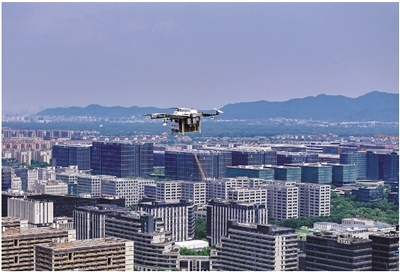
Group 1: Capital Market Developments - Several central enterprises in the renewable energy sector are accelerating their entry into the capital market, with companies like Huadian New Energy officially listed and China Resources New Energy's listing progressing steadily [1] - The restructuring and integration of state-owned enterprises in the renewable energy sector are intensifying, which is expected to enhance industry concentration and reshape the competitive landscape [1] Group 2: Solar Industry Recovery - The solar sector is experiencing a recovery, with some actively managed equity funds seeing net value increases of over 20% in the past three weeks, driven by a focus on policy and market attention [2] - Industry experts suggest that controlling the revival of outdated production capacity is crucial for improving market supply-demand dynamics and enabling price recovery in the solar industry [2] Group 3: A-Share Market Trends - The margin trading balance has reached a three-month high of 1.88539 trillion yuan, indicating increased investor confidence in the market [3] - In June, the number of new A-share accounts reached 1.65 million, a year-on-year increase of 53%, reflecting a growing interest in the market [3] Group 4: Automotive Industry Growth - China's automotive exports exceeded 3.08 million units in the first half of 2025, marking a year-on-year growth of 10.4%, indicating a positive trend in the industry [4] - The automotive sector is witnessing a shift towards self-discipline and maintaining supply chain stability, contributing to improved brand presence and technical authority in global markets [4] Group 5: Central Enterprises Performance - In the first half of the year, 79 central enterprise-controlled listed companies reported positive earnings forecasts, with 32 companies expecting a year-on-year increase in net profit [5] - Notably, 19 central enterprises anticipate a net profit increase of over 100%, with significant improvements in industries such as power equipment and rare earths [5] Group 6: Steel and Transportation Sector Recovery - Over 57% of listed companies have issued positive earnings forecasts, with steel and transportation sectors showing signs of recovery, as more than 50% of companies in these industries expect improved profitability [6] - The overall net profit forecast for these sectors indicates a significant narrowing of losses compared to the same period in 2024 [6] Group 7: Investment in Hard Technology - The introduction of a new investment framework for the STAR Market is expected to encourage long-term capital investment from professional institutions, benefiting leading securities firms [7] - The collaboration between top securities firms and venture capital institutions is anticipated to enhance investment opportunities in early-stage hard technology companies [7] Group 8: Economic Growth Indicators - China's GDP for the first half of the year reached 66.0536 trillion yuan, with a year-on-year growth of 5.3%, indicating stable economic performance [8] - The economic indicators suggest a steady progression towards high-quality development, with major metrics exceeding expectations [8] Group 9: Cash Management Products - Banks and their wealth management subsidiaries are enhancing cash management products to attract customers amid declining deposit rates and increasing market competition [9] - The adjustments aim to improve product appeal and capture a larger share of the stable wealth management market [9] Group 10: Low-altitude Economy Development - The low-altitude economy is witnessing a surge in application scenarios, with various cities implementing drone logistics routes and identifying specific opportunities for development [10] - This trend is expected to accelerate the commercialization of the low-altitude economy and contribute to industrial transformation [10] Group 11: Housing Policy Initiatives - Multiple cities are implementing "old-for-new" housing policies to enhance transaction efficiency, supported by subsidies and interest assistance for participants [11] - These initiatives are anticipated to stimulate the real estate market and improve overall market activity [11]
苏州规划净利两连降IPO项目进度仅24% 拟重组布局低空领域标的累亏6668万
Chang Jiang Shang Bao· 2025-07-15 23:17
Core Viewpoint - Suzhou Planning (301505.SZ) is undergoing a strategic transformation through a restructuring plan to acquire 100% of Beijing Dongjin Aviation Technology Co., Ltd. (Dongjin Aviation), aiming to expand into the low-altitude economy sector [1][2] Group 1: Restructuring Details - The acquisition will be financed through a combination of issuing shares and cash payments, along with raising additional funds from no more than 35 specific investors [2] - Dongjin Aviation has been experiencing continuous losses and has a high debt ratio, with a total net loss of 66.68 million yuan from 2023 to the first quarter of 2025 [1][5] - As of March 2025, Dongjin Aviation's total assets were 84.41 million yuan, with a debt ratio of 78.49% [6] Group 2: Financial Performance - Suzhou Planning has faced significant performance pressure, with net profits declining for two consecutive years since its IPO in July 2023 [7] - In 2023 and 2024, Suzhou Planning reported revenues of 391 million yuan and 308 million yuan, representing year-on-year declines of 3.35% and 21.24% respectively [7] - The company’s net profit for 2024 was 29.06 million yuan, down 62.77% from the previous year [7] Group 3: Strategic Goals - The restructuring is intended to create synergies between Suzhou Planning's traditional urban planning services and Dongjin Aviation's low-altitude airspace planning, aiming for a new paradigm in urban planning [3] - The goal is to transition from traditional technical services to an integrated information platform service that encompasses both land and air [3] - This strategic shift is seen as essential for enhancing the company's core competitiveness and addressing the challenges posed by slow project progress and declining revenues [8]
杭州低空公司: 助力杭州低空经济“一飞冲天”
Mei Ri Shang Bao· 2025-07-15 22:21
Group 1 - The core viewpoint of the articles emphasizes the strategic development of the low-altitude economy in Hangzhou, with a focus on innovation and infrastructure to support the growth of this sector [2][3][6] - Hangzhou has introduced its first manned eVTOL manufacturer, WoFei ChangKong, which fills a strategic gap in the city's low-altitude economy [3][4] - The establishment of a comprehensive management service platform and a public take-off and landing hub network aims to address the challenges faced by the low-altitude economy [4][5] Group 2 - The low-altitude economy encompasses various sectors, including drone manufacturing, general aviation operations, and air traffic management, which can stimulate growth in related industries such as semiconductors and new materials [5][6] - Hangzhou Low Altitude Company has initiated a 3 billion yuan low-altitude economic industry fund, focusing on investments in low-altitude manufacturing, logistics, and data sectors [5] - The company aims to construct at least 40 public drone take-off and landing sites by 2027, with plans to build 10 more this year [4][5]
低空经济应用场景迎“上新”潮 商业化落地进程加速推进
Zheng Quan Ri Bao· 2025-07-15 17:33
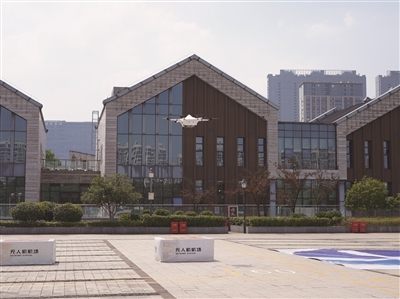
Core Viewpoint - The continuous introduction of new application scenarios is becoming a key driver for the development of the low-altitude economy across various regions in China [1] Group 1: Application Scenarios - In Shenzhen, a total of 301 drone logistics routes have been opened in commercial areas, parks, hospitals, and universities, showcasing a wide variety of items that can be transported by air [1] - Dongguan has released a list of 37 specific application scenarios for the low-altitude economy by 2025, covering 12 dimensions including security, logistics, public services, and firefighting [1] - Successful test flights for low-altitude sightseeing tourism have been conducted in Shenyang, laying a solid technical and practical foundation for local low-altitude tourism [1] Group 2: Market Potential and Development - The low-altitude economy is transitioning from niche pilot projects to mass consumption, which is expected to accelerate its commercialization and contribute to industrial transformation and upgrading [1] - The current application scenarios in the low-altitude economy are categorized into four main fields: production operations, transportation, cultural tourism experiences, and security [2] - The production operations and cultural tourism fields are seeing more mature applications of low-altitude flying, with clearer commercial models emerging in specific sub-scenarios [2] Group 3: Challenges and Recommendations - The development of low-altitude economy application scenarios faces challenges such as key technological bottlenecks, unclear profit models, and insufficient supporting infrastructure [3] - Healthy and safe development of low-altitude economy application scenarios is closely related to policy guidance, airspace management, industrial planning, and corporate innovation [3] - To overcome these challenges, collaboration among government departments, industry associations, and enterprises is essential, along with detailed policy support for airspace classification management and airworthiness certification standards [3]
中国低空经济持续“扩容”
Xin Hua She· 2025-07-15 08:49
Core Viewpoint - China's low-altitude economy is continuously expanding, with significant growth in various application scenarios and market potential projected to reach 1.5 trillion yuan by 2025 and 3.5 trillion yuan by 2035 [1][3][6] Group 1: Market Growth and Projections - The low-altitude economy has been included in government work reports for two consecutive years, indicating its importance in national economic strategy [1] - The Civil Aviation Administration of China estimates that the market size of the low-altitude economy will reach 1.5 trillion yuan by 2025 and 3.5 trillion yuan by 2035 [1][6] Group 2: Application Scenarios - The first Western Low Altitude Economy Expo showcased a variety of innovative products, including logistics drones and electric vertical takeoff and landing aircraft, covering multiple sectors such as logistics, tourism, and emergency services [3] - In Liangping, over 200,000 acres of farmland have been serviced by drones for agricultural protection, demonstrating the integration of low-altitude technology into various industries [3][4] Group 3: Technological Advancements - The development of low-altitude technology is becoming widespread across the country, with Shenzhen establishing 483 low-altitude takeoff and landing points and creating a comprehensive safety network [5] - Innovations in low-altitude applications are enhancing logistics efficiency, with drone deliveries significantly reducing transportation times and costs [4][5] Group 4: Societal Impact - The low-altitude economy is increasingly accessible to the general public, with services like drone food delivery and emergency medical transport becoming commonplace [5] - The integration of low-altitude services into daily life is reshaping consumer experiences and expectations, making advanced technology more relatable and beneficial [5][6]