农贸市场

Search documents
去年241家农贸市场总成交额达307.29亿元 宁波“菜篮子”稳稳的
Feng Huang Wang Cai Jing· 2026-01-30 05:50
农贸市场,一头连着市民的餐桌,一头牵着农户的生计,是乡村振兴、共富惠民的重要纽带。截至目 前,全市已有210家市场初步划定共富摊位5740个、自产自销"零租金"交易场地5800平方米。 宁波出台《"甬尚好市"共富惠民政策举措十条》,引导各地农贸市场进一步整合原有自产自销(免租) 摊位和场内空置摊位,打造共富摊位。 本报讯(记者赵煜 通讯员张璐)农贸市场不仅是保障"菜篮子""米袋子"供应的关键场所,更是最具烟 火气、最贴近民生的城市公共空间。昨天,记者从宁波市市场监督管理局了解到,2025年全市纳入统计 的241家农贸市场总成交额达307.29亿元;场均成交额为1.27亿元,同比增长3.25%。 其中,象山中心菜市场表现尤为突出,3年蝉联全市单体农贸市场成交额榜首,全年成交额达56.6亿 元。 近年来,宁波积极推动农贸市场功能升级,出台《宁波市"甬尚好市"邻里市场建设指引》,引导市场突 破传统"菜篮子"单一功能,融入社区生活场景、创新智慧应用、塑造文化氛围,打造兼具烟火气与人文 情怀的"邻里生活中心"。 拥有30多年历史的奉化城里厢菜市场,在焕新升级后于去年3月重新开业。除了增设自产自销专区、引 入智能管理系统 ...
公募REITs2025Q4业绩分析:关注边际改善信号,布局筑底企稳机会
Shenwan Hongyuan Securities· 2026-01-27 07:15
1. Report Industry Investment Rating The report does not provide an industry investment rating. 2. Core Viewpoints - In 25Q4, most asset performances showed marginal improvement. The revenue and EBITDA of public utilities, consumption, industrial parks, and warehousing logistics all increased, while the EBITDA decline of energy and transportation significantly narrowed year-on-year. However, the rental income and EBITDA of affordable rental housing decreased slightly, and IDC benefited from long - term contracts with major clients, maintaining stable performance [3]. - The performance of different sectors in the future will be affected by various factors. Public utilities are expected to have stable cash - flows, but performance differentiation depends on the active management ability of operators. The consumption sector is expected to have a compensatory increase in 26Q1, and its performance is expected to be stable in the long - term. Affordable rental housing will face new supply shocks in 2026, and different operators need to find a balance between volume and price. The energy sector's revenue stability depends on power trading strategies. The traffic sector's performance is related to road network planning and cost control. The warehousing sector's rent is expected to decline in the short - term, and the industrial park sector will enter a deep adjustment period [3][35][56][80][102][126][147][175]. 3. Summary by Directory 3.1 Overview - In 25Q4, the performance of most assets showed a marginal improvement trend. The revenue and EBITDA of consumption, industrial parks, and warehousing logistics increased quarter - on - quarter, and the revenue of public utilities increased year - on - year. The EBITDA decline of energy and transportation significantly narrowed, and the single - quarter distribution rate of the three major types of operating - rights assets increased significantly in 25H2 [3][6][8]. - The available distribution amount completion rate of REITs established in 2024 and 2025 was 79% and 64% respectively [11][13]. 3.2 Public Utilities - As of January 23, 2026, the expansion project of Shougang Water Service REIT was terminated. The scale and price of the four listed public - utility REITs are regulated by the government [20]. - In 25Q4, the waste treatment volume and power generation of Shougang Biomass REIT increased year - on - year. The sewage treatment volume of Shougang Water Service REIT decreased quarter - on - quarter, and the water supply volume of Shaoxing Raw Water REIT decreased quarter - on - quarter. The actual heat - stop rate of Jinan Energy Heating REIT was lower than expected, and the heating area increased [23]. - The revenue of Shougang Biomass REIT increased by more than 24% year - on - year, and Jinan Energy Heating REIT achieved significant cost - reduction. The revenue, profit, and available distribution amount of Shougang Water Service REIT decreased quarter - on - quarter, and the revenue, EBITDA, and available distribution amount of Shaoxing Raw Water REIT decreased quarter - on - quarter [27]. - In 2026, the cash - flows of public - utility REITs are expected to be stable, but the performance differentiation depends on the active management ability of operators. Attention should be paid to seasonal fluctuations, external interventions, and local new competition [35]. 3.3 Consumption - There are 12 listed consumption REITs, involving four types of sub - assets: shopping centers, outlet malls, supermarkets + community commerce, and agricultural product markets. The project management is generally carried out by high - quality commercial real - estate operating enterprises [39]. - In 25Q4, the eight consumption REITs achieved good operating performance. The rental rate and rent generally increased slightly year - on - year/quarter - on - quarter or remained basically the same, and the collection rate was close to full collection. Half of the projects' rent reached a new high in the past five periods [45]. - The fund revenue generally increased, and the performance of Bailian Consumption REIT significantly improved. The available distribution amount of most consumption REITs increased year - on - year/quarter - on - quarter or remained basically the same, but the available distribution amount of China Green Development Commercial REIT and Huagong Agricultural Market REIT decreased significantly quarter - on - quarter [49][56]. - In 26Q1, the operating performance of consumption REITs is expected to have a compensatory increase. In the long - term, with the implementation of the "national subsidy" policy and the focus on expanding domestic demand, the performance of consumption REITs is expected to be stable [56]. 3.4 Affordable Rental Housing - As of 25Q4, 8 affordable rental housing REITs were listed, and China Resources Youchao REIT completed its expansion and issuance [58]. - Government - led projects had stable volume and price, while market - oriented projects exchanged price for volume. The overall rental rate remained stable, but the rental rate of some projects decreased significantly, and the bottom - floor business recruitment progress of some projects was slow [61][64]. - The overall revenue increased, but the profit margin generally decreased quarter - on - quarter. The available distribution amount of most projects changed little or increased year - on - year, but the available distribution amount of some projects decreased significantly [65][69][74]. - In 2026, affordable rental housing REITs will face new supply shocks. First - tier cities' rents are expected to be more resilient, while second - and third - tier cities' rents may face greater pressure. Different operators need to find a sustainable balance between volume and price [80]. 3.5 Energy - As of January 23, 2026, 9 energy infrastructure REITs had been recruited. In 25Q4, China National Nuclear Power Clean Energy REIT was newly issued, and Beijing Energy Photovoltaic REIT completed its expansion [82]. - More than half of the energy REITs' power generation decreased year - on - year, and the power price generally declined year - on - year. The revenue slightly decreased, and the EBITDA stabilized, but the profit indicators were differentiated [84][88][94]. - About 67% of the REITs' available distribution amount increased year - on - year, driving the overall and unit available distribution amount to increase by 3.0% year - on - year [97]. - In 2026, the mechanism power generation will set a floor for revenue. The stability and elasticity of project revenue depend on power trading strategies and capabilities [100][102]. 3.6 Transportation - As of January 23, 2026, 13 transportation infrastructure REITs were listed, and 3 projects were queuing up [104]. - In 25Q4, most projects' daily average traffic volume decreased quarter - on - quarter/year - on - year, and the toll revenue decreased quarter - on - quarter but increased year - on - year. More than half of the projects' EBITDA profit margin was at the lowest level in the year [108][111][115]. - 40% of the REITs' available distribution amount increased year - on - year. The available distribution amount of some projects increased significantly, while that of some projects decreased due to high maintenance costs [122]. - In 2026, the traffic performance of projects affected by diversion in 2025 is expected to improve year - on - year, and the performance of projects still facing diversion pressure depends on refined cost control [126]. 3.7 Warehousing Logistics - As of January 23, 2026, 11 warehousing logistics REITs had been issued, mainly located in first - tier cities and their surrounding areas and logistics hub cities [128]. - In 25Q4, the national warehousing logistics rental market still faced rent adjustment pressure, with "regional differentiation and overall pressure". The rent of market - oriented rental projects decreased, and the overall rental rate increased slightly. The rent of whole - lease projects was relatively stable, with small fluctuations [131][135][136]. - The revenue and profit margin generally weakened, but the available distribution amount increased quarter - on - quarter on average due to the year - end centralized dividends of newly - listed REITs [138][142]. - In the short - term, the national warehousing rent is expected to continue to decline. The performance of projects will vary according to regional levels and rental operation models, and some projects with improved supply - demand conditions may recover first [147]. 3.8 Industrial Parks - As of 25Q4, 20 industrial park REITs were listed, involving 50 projects, mainly in the east of the Hu Line, with a continuous increase in R & D/office and manufacturing projects [149]. - The rental rate and collection rate of business parks increased, but the rent was still at the bottom. The rental rate and collection rate of manufacturing parks were high, but the rent still faced downward pressure [155][159]. - The marginal improvement of fund revenue began to appear, but the EBITDA was still under pressure. The change trend of the available distribution amount of individual bonds was differentiated, and some industrial park REITs' secondary - market net value dropped to a low level, with the distribution rate reaching a new high in the past five periods [163][167][171]. - In 2026, the supply of industrial parks is expected to be at a high level, and the rental downward pressure will continue. Attention should be paid to high - quality projects with a good supply - demand pattern, marginal improvement in operating fundamentals, and a stable rent trend [175]. 3.9 IDC - Two listed IDC - REITs operate under long - term agreements with major clients. In 25Q4, their operation was stable, and the financial indicators increased significantly quarter - on - quarter [177][181]. - In 2026, the basic business of the two IDC projects is expected to be stable due to long - term agreements. Attention should be paid to cost - side changes, such as the construction progress of surrounding substations and the control of energy - efficiency indicators [185].
人文经济激活消费新动能丨昆明大观篆新农贸市场:文旅融合焕新老市集
Xin Hua Wang· 2026-01-26 10:44
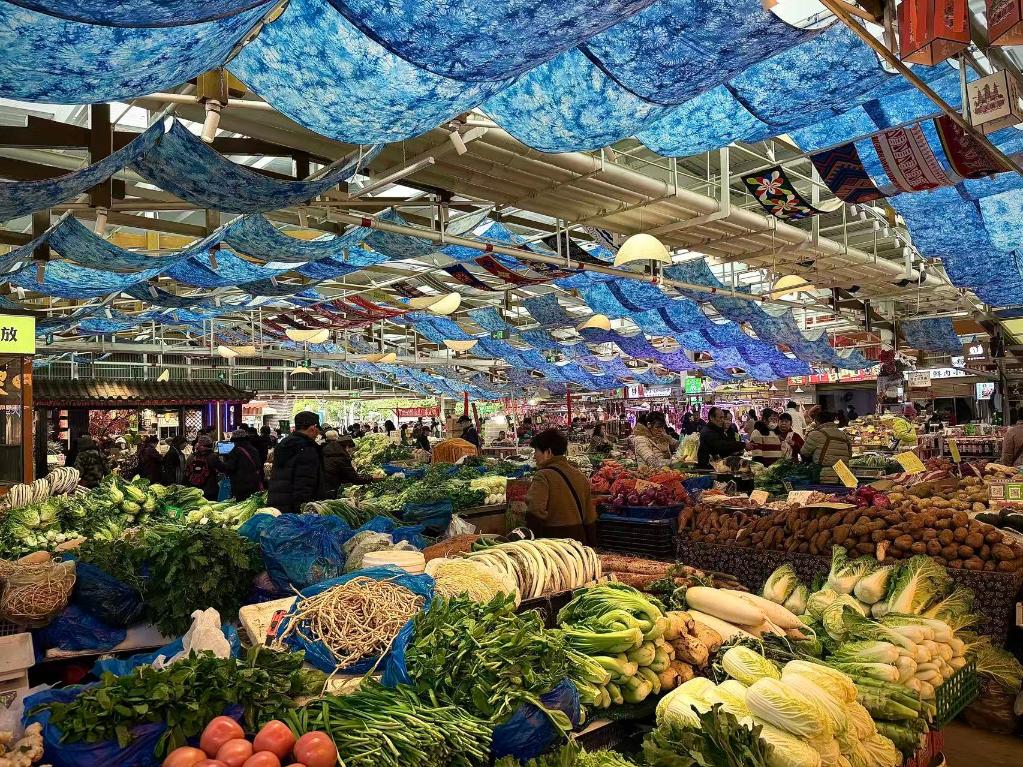
新华社昆明1月26日电 题:昆明大观篆新农贸市场:文旅融合焕新老市集 新华社记者熊轩昂 清晨,云南省昆明市大观篆新农贸市场内人流熙攘。新鲜蔬果、风味小吃琳琅满目,烤乳扇的奶香、手冲咖啡的醇香漫过街巷,摊主的吆喝 声、游客的问询声交织成曲。 大观篆新农贸市场位于昆明主城区,占地面积约20亩。"我在这里住了20多年,习惯在这里买菜。"家住附近的刘先芬说,市场里不仅能买到 当季的蔬菜水果,普洱茶、宣威火腿等云南特产也一应俱全。 2025年8月,市场二期项目完工,基础设施全面提升的同时,市场按照"品类分区+场景联动"原则优化空间布局,分类设置生鲜交易、本地特 产等区域,让经营空间更规范、业态更丰富。 在一家鲜花饼店里,店主付强将本地的玫瑰花、茉莉花等制作成各具特色的鲜花饼。"现在一天能卖四五百个,很多游客尝过就带几盒走, 线上订单也源源不断。"付强说,市场完成升级后,购物环境更整洁,客流越来越大,生意也更红火了。 大观篆新农贸市场内一景。新华社记者熊轩昂 摄 沿街巷步行,云南的水果、鲜切花、特色风味小吃等纷呈。这个浓缩了云南本土特色的综合性市集,也吸引了很多游客。"好看、好吃、好 玩!"在昆明旅居的游客张笑用六个字总 ...

【县区信息】浔阳区局:开展雪后市场检查守护民生安全
Sou Hu Cai Jing· 2026-01-20 10:44
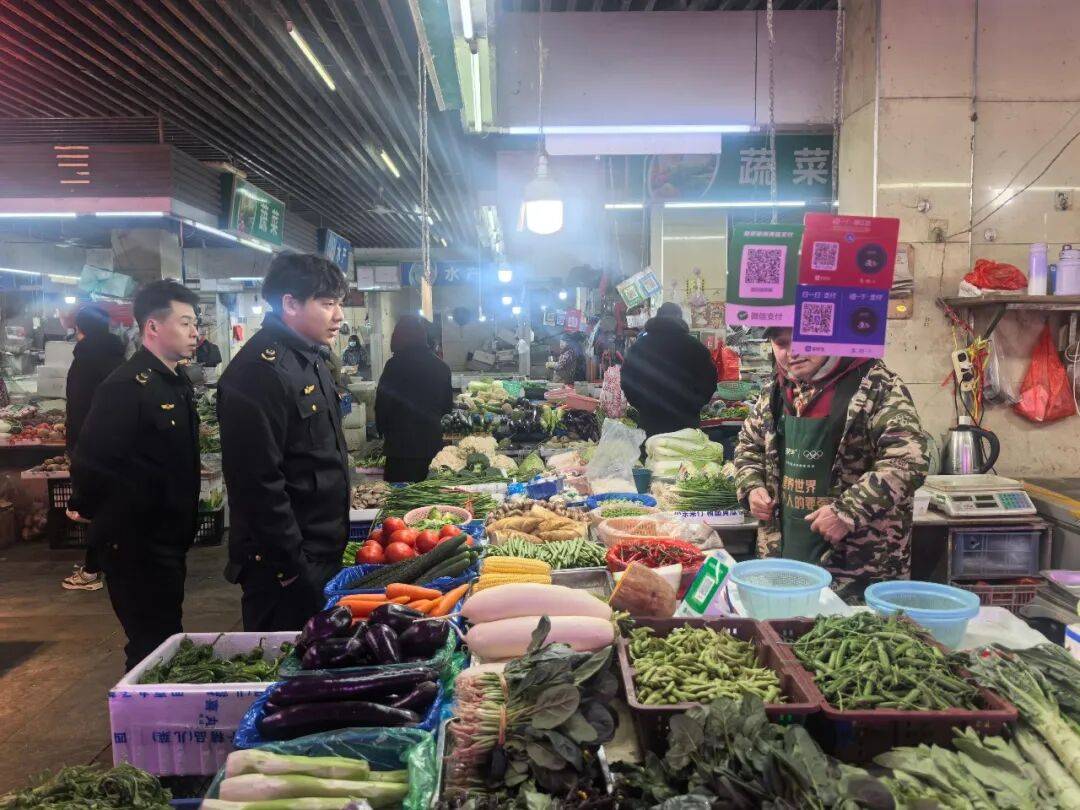
Group 1 - The core viewpoint emphasizes the importance of maintaining market order and ensuring the stability of essential goods prices during the snowy weather and upcoming Spring Festival [1][2] - The market regulatory authority in Xunyang District has initiated comprehensive inspections across various sectors to prevent price fluctuations and ensure food safety [1][4] Group 2 - Regulatory personnel conducted price checks in local markets, focusing on essential consumer goods such as vegetables, meat, and dairy products, finding only minor price increases within a reasonable range [4] - The inspections revealed no illegal price gouging, and the supply of essential goods remained sufficient [4] - Officials stressed the importance of adhering to pricing policies and preventing the spread of false price increase information [4] Group 3 - With the drop in temperatures, down jackets have become popular among consumers, prompting targeted inspections of down jacket quality in retail stores [6] - Inspections focused on verifying business qualifications, product labeling, and compliance with national safety standards, particularly for children's clothing [6] - A mechanism for ongoing supervision and a complaint channel has been established to ensure consumer safety in winter clothing purchases [6] Group 4 - Regulatory personnel conducted thorough checks on market safety, including measuring instruments, poultry sales, and the traceability of pork products [9] - Efforts included calibrating scales to prevent consumer fraud and ensuring the legality of poultry and wild animal sales [9] - The inspections aimed to educate merchants on legal regulations and ensure safe shopping conditions by addressing snow and ice hazards in market areas [9]
用民生温度留住烟火气 30年老菜场逆袭成“网红”
Mei Ri Shang Bao· 2026-01-09 02:32
Core Insights - The article highlights the transformation of Hangzhou's modern commercial circulation system, focusing on the renovation of the Gugang Market as a pilot project to enhance urban and rural circulation and improve public welfare [1] Group 1: Market Renovation - The Gugang Market, with a history of 30 years, underwent a renovation costing nearly 12 million yuan, emphasizing convenience for citizens [2] - Post-renovation, the market has seen a daily sales volume of 400,000 to 500,000 yuan, representing a 40% increase compared to before the renovation [3] Group 2: Market Transformation - The Gugang Market has evolved from a simple grocery market to a comprehensive community life complex, integrating procurement, dining, leisure, and social activities [4] - The introduction of a shared kitchen and various retail options has attracted younger consumers, enhancing the market's appeal [4][5] Group 3: Technological Integration - The market features a "digital cockpit" that displays real-time prices, transaction volumes, and product traceability, promoting transparency and efficient management [4] - The integration of technology has improved consumer experience and regulatory oversight, ensuring food safety and transparency in transactions [4] Group 4: Demographic Shift - Approximately 25% of the market's vendors are from the post-90s generation, bringing innovative practices such as online operations and creative marketing [5] - The blend of traditional and modern elements in the market has created a unique charm, appealing to a diverse customer base [6]
让“菜篮子”维权立等可取
Xin Lang Cai Jing· 2026-01-06 21:34
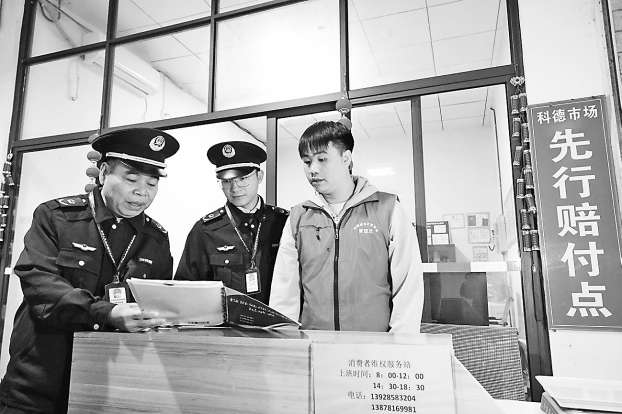
Core Viewpoint - The implementation of a proactive compensation mechanism at the Kede Agricultural Market in Nanning, Guangxi, significantly enhances consumer rights protection and promotes integrity among vendors [2][3][4] Group 1: Proactive Compensation Mechanism - The Kede Agricultural Market has introduced a proactive compensation mechanism that allows for immediate compensation to consumers for issues such as food quality problems and weight discrepancies [2][3] - A special compensation fund of 50,000 yuan has been established to cover six types of claims, with a response process that guarantees compensation within one hour of verification [3] - Since the mechanism's launch in February 2024, 27 compensation claims have been processed, totaling 5,644.9 yuan, achieving a 100% success rate in compensation [3] Group 2: Impact on Consumer Rights and Vendor Integrity - The proactive compensation mechanism not only safeguards consumer rights but also encourages vendors to operate with integrity, as compensation records are incorporated into vendor credit evaluations [3] - Vendors with three compensation records are placed on a blacklist, and serious offenders may be expelled from the market, prompting vendors to ensure quality control to maintain customer trust [3][4] - The local market regulatory authority plans to replicate the successful model of the Kede Agricultural Market across other markets, enhancing consumer confidence in their purchases [4]
要“精致范儿”也要烟火气 传统菜场上演变形记
Xin Lang Cai Jing· 2025-12-28 17:20
Core Insights - The newly upgraded "Ningjia·Quwo Market" has opened and received positive feedback from local residents, showcasing a variety of food options and a vibrant atmosphere [1][3]. Market Features - The market has become a popular destination, with a wide selection of breakfast items and long queues for popular dishes like the "shengjian" (pan-fried buns) [3][5]. - The market spans 1,200 square meters and features 55 stalls, enhancing the shopping experience while maintaining a familiar local vibe [6]. Pricing and Offerings - Competitive pricing is a key feature, with local vendors offering lower prices compared to external markets, such as 0.5 yuan per jin for white radishes and 2.5 yuan per jin for lettuce [8]. - The market includes diverse services beyond food, such as a shared kitchen for meal preparation, catering to the needs of nearby residents [12]. Community Engagement - The market aims to create a multifunctional space for shopping, dining, and socializing, reflecting a shift from traditional single-purpose markets to community hubs [14]. - The initiative is part of a broader trend in Shanghai, with 93 standardized markets undergoing upgrades to enhance consumer experience and support local businesses [16].
价格、成交量实时透明可视 北京通州农贸市场进入“智慧屏”时代
Xin Jing Bao· 2025-12-06 04:24
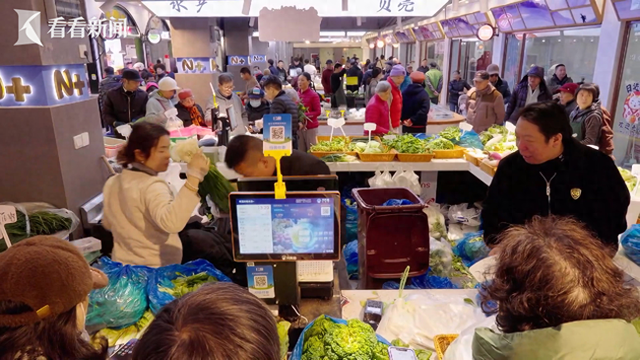
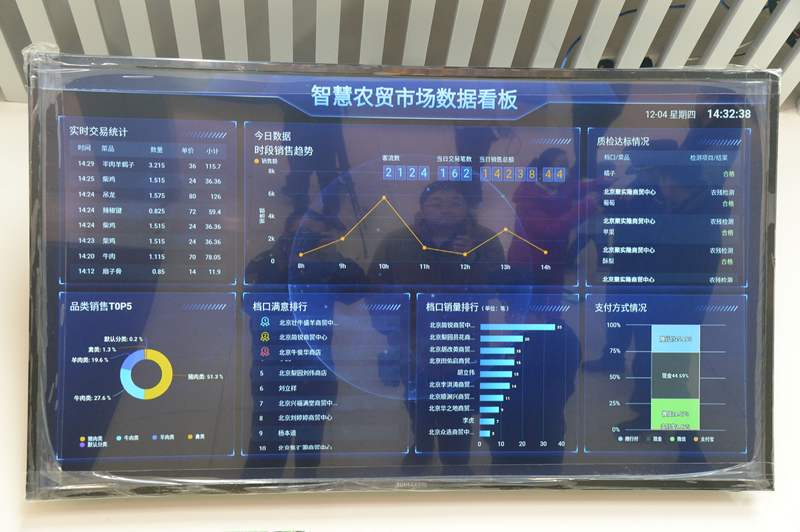
Core Points - The Beijing Liyuan Juyuanhong Agricultural Trade Market has installed an electronic display screen that shows real-time sales prices, transaction volumes, and inspection results of food products, enhancing transparency for consumers [1][3] - The modernization initiative is guided by the Tongzhou District Market Supervision Bureau and the District Commerce Bureau, aiming to create a new model for food safety management through modern information technology [3] Group 1 - The electronic display screen allows consumers to easily compare prices and make informed choices, transforming traditional transactions into a more transparent and efficient process [3] - The display also provides timely information on the results of key sampling inspections for vegetables and meat, including pesticide and veterinary drug residues, enabling social supervision of food safety [3] - The initiative is part of a broader effort to ensure food safety and protect consumers' interests, referred to as safeguarding the "safety on the tip of the tongue" [3]
昆明农贸市场的烟火日常,一个连接山野的土地共同体
Di Yi Cai Jing· 2025-10-31 03:29
Core Insights - The article highlights the unique characteristics of the Zhuangxin Agricultural Market in Kunming, which serves as a natural classroom for biodiversity and local culinary practices [3][4][5] - The author, Banxia, documents her observations and experiences in the market, culminating in the publication of her book "In the Market: The Daily Botany of Kunming's Zhuangxin Agricultural Market" [1][2] Market Overview - Zhuangxin Agricultural Market spans 20 acres with over 650 stalls, attracting vendors from various regions including Yunnan, Sichuan, and Northeast China [4][5] - The market is recognized as a representative of Yunnan's culinary diversity, often described as an edible natural museum [4][5] Cultural Significance - The market reflects the rich biodiversity and cultural diversity of the region, showcasing a variety of local ingredients that are more nutritious and interesting than mass-produced alternatives [3][5] - It serves as a social hub where local knowledge and culinary traditions are shared among vendors and customers, contributing to a sense of community [18][19] Personal Connection - Banxia's personal experiences and family history with foraging and cooking local ingredients deepen the narrative, illustrating the emotional and cultural ties to the market [10][12][16] - The market has become a source of comfort and healing for Banxia, representing a connection to nature and local culture [7][9] Changes and Challenges - Recent trends show a shift in the market's dynamics due to commercialization and an influx of tourists, raising concerns about the preservation of its traditional character [19] - The introduction of modernized stalls and the influence of younger vendors may alter the market's unique atmosphere, prompting discussions about the balance between tradition and modernization [19]

余杭升级版农贸市场圈粉无数
Hang Zhou Ri Bao· 2025-10-23 02:42
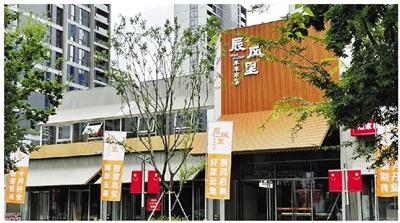
Core Insights - The opening of the "Chengfengli Future Market" represents a shift in traditional agricultural markets, targeting the needs of young professionals in the tech industry by creating a modern, aesthetically pleasing, and smart marketplace [2][3] Group 1: Market Features - Chengfengli spans approximately 3,000 square meters and houses nearly 100 shops, combining smart agriculture, diverse business formats, and public services into a new neighborhood center [2] - The market features innovative layouts, including a flower shop and light meal stalls at the entrance, replacing traditional market odors with pleasant aromas [2] - The design incorporates natural light through skylights and uses non-slip flooring, along with a cleaning mechanism to maintain a safe and clean environment [2] Group 2: Diverse Offerings - Chengfengli offers a full range of products from fresh ingredients to daily necessities, including a pharmacy and a shared kitchen, enhancing the market's community feel [3] - The "Ai Hua Shared Kitchen" exemplifies a one-stop service model, allowing customers to buy and cook food on-site, thus bridging the gap between shopping and lifestyle [3] Group 3: Smart Management - The market employs smart management systems, featuring a digital display for real-time transaction updates and product traceability, along with touch query machines for price and safety information [3] - Each stall is equipped with smart electronic scales to ensure real-time data entry into the management system, promoting effective oversight from the source [3] Group 4: Government Support and Future Plans - The local government has invested nearly 7.5 million yuan in subsidies to enhance agricultural markets, reflecting a commitment to transforming these spaces into community service hubs [3] - Future plans include using Chengfengli as a model to further develop agricultural markets, focusing on tailored operational strategies to provide convenient and warm consumer experiences [4]