
畜禽肉

Search documents
新疆乌苏市市场监管局筑牢食品安全底线在行动
Zhong Guo Shi Pin Wang· 2026-02-14 09:08
Core Viewpoint - The article emphasizes the proactive measures taken by the Urumqi Market Supervision Bureau in Xinjiang to ensure food safety during the peak of holiday consumption, highlighting a comprehensive approach involving early deployment, strict inspections, precise sampling, and public education. Group 1: Early Deployment and Responsibility - The Urumqi Market Supervision Bureau organized a special meeting on December 21, 2025, to detail specific measures for controlling key food categories and conducting risk inspections [1] - The bureau engaged 17 key food production enterprises for administrative discussions to guide compliance and highlight food safety risks, aiming to enhance preventive measures [1] Group 2: Strict Inspections and Risk Management - The bureau focused on major food categories such as bulk foods, seasonal foods, infant formula, health foods, and tofu products, targeting large supermarkets and catering services for New Year's Eve [2] - A total of 386 food production and operation entities were inspected, resulting in 11 rectification notices and 3 cases filed for violations [2] Group 3: Precise Sampling and Monitoring - The bureau conducted a "public inspection for food safety" initiative, emphasizing supervision and quick testing of popular New Year's Eve catering services, particularly for high-concern items like meat and eggs [2] - 26 batches of food were supervised and tested, with 92 batches undergoing on-site quick tests [2] Group 4: Public Education and Community Involvement - The bureau collaborated with regulatory bodies, industry, and the public to enhance food safety awareness, focusing on restaurants and catering services for New Year's Eve [3] - Two issues of a food business "red and black list" were published to expose illegal activities, alongside 7 educational events reaching 3,000 people with 1,200 informational materials distributed [3]
广东省佛山市禅城区市场监督管理局2025年第三期餐饮环节监督抽检质量通告
Zhong Guo Zhi Liang Xin Wen Wang· 2026-02-04 08:36
Group 1 - The announcement details the third phase of food safety inspections conducted by the Foshan Chancheng District Market Supervision Administration in the second half of 2025 [2] - The inspections focused on the quality of food and edible agricultural products in the catering sector [2] - The results of the inspections are intended to enhance food safety and public health standards in the region [2] Group 2 - The report includes a table listing various food samples tested, their categories, and the results of the inspections [2] - Specific food items tested include fresh eggs, vegetables, and fruits, with details on their production dates and testing locations [2][3] - The inspections are part of ongoing efforts to ensure compliance with food safety regulations and improve the overall quality of food products available to consumers [2][3]

额敏县市场监督管理局开展年货市场快检活动 筑牢春节期间食品安全防线
Zhong Guo Shi Pin Wang· 2026-02-04 07:57
Core Viewpoint - The article emphasizes the importance of food safety during the Spring Festival, highlighting a collaborative effort between the local market supervision bureau and the people's procuratorate to enhance food safety measures through rapid testing activities [1] Group 1: Food Safety Measures - The "You Point, I Test" rapid food safety testing activity was initiated to strengthen food safety during the festive season, creating a governance model that combines administrative regulation with legal supervision [1] - The rapid testing aims to efficiently screen food products for safety risks, enabling early detection, warning, and resolution of potential issues, thereby improving the effectiveness of food safety regulation [1] Group 2: Focus Areas of Testing - The testing activity specifically targets high-consumption seasonal foods such as livestock and poultry meat, soybean products, and fresh fruits and vegetables, which are frequently purchased during the holiday [1] - Key risk indicators being tested include pesticide residues, veterinary drug residues, and food additives [1] Group 3: Results and Future Actions - A total of 8 food samples were tested during the event, with all results meeting safety standards [1] - The market supervision bureau plans to continue enhancing food safety regulation during the Spring Festival by increasing the frequency of rapid tests and expanding the scope of inspections to ensure a robust safety net for consumers [1]
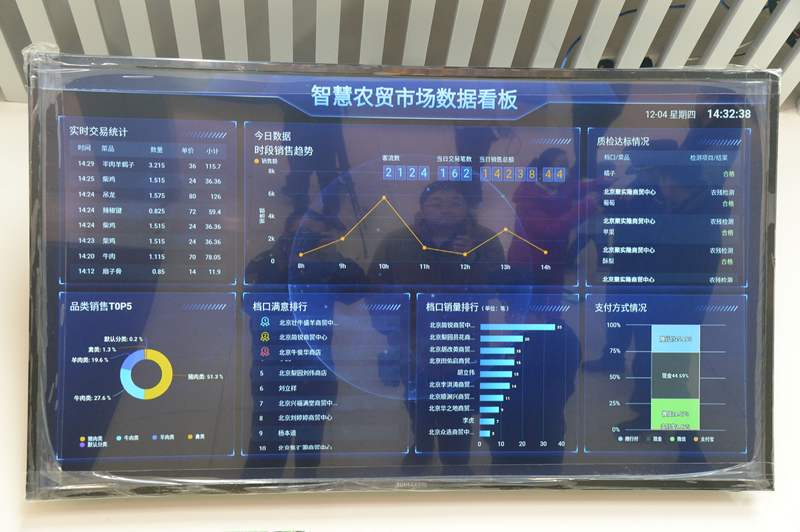
价格、成交量实时透明可视 北京通州农贸市场进入“智慧屏”时代
Xin Jing Bao· 2025-12-06 04:24
Core Points - The Beijing Liyuan Juyuanhong Agricultural Trade Market has installed an electronic display screen that shows real-time sales prices, transaction volumes, and inspection results of food products, enhancing transparency for consumers [1][3] - The modernization initiative is guided by the Tongzhou District Market Supervision Bureau and the District Commerce Bureau, aiming to create a new model for food safety management through modern information technology [3] Group 1 - The electronic display screen allows consumers to easily compare prices and make informed choices, transforming traditional transactions into a more transparent and efficient process [3] - The display also provides timely information on the results of key sampling inspections for vegetables and meat, including pesticide and veterinary drug residues, enabling social supervision of food safety [3] - The initiative is part of a broader effort to ensure food safety and protect consumers' interests, referred to as safeguarding the "safety on the tip of the tongue" [3]
截至11月中旬,完成抽检570万批次——全链条抽检守护“舌尖安全”
Xin Hua Wang· 2025-12-01 23:41
Core Insights - Food safety inspections are crucial for identifying issues and mitigating risks in the food supply chain, with a total of 5.7 million batches inspected and a non-compliance rate of 2.74% as of mid-November 2023 [1] Group 1: Inspection Coverage and Effectiveness - The food safety inspection system has expanded its reach from production to consumption, covering various sales channels and food types, resulting in a nearly 50% decrease in the number of non-compliant enterprises since 2020, with a 57.47% year-on-year decline in the first three quarters of 2023 [2] - Inspections now encompass 39 categories of food, including fruits, vegetables, and processed products, with 2,066 testing indicators to ensure accurate and reliable results [2] Group 2: Collaborative Regulatory Efforts - Multiple government departments, including the Market Regulation Administration and the Ministry of Agriculture, are collaborating to enhance inspection efforts, particularly for bulk food and school canteen products, leading to over 60,000 batches of non-compliant food identified this year [3] Group 3: Targeted Risk Focus - Inspections are strategically focused on high-risk areas, such as infant formula and school food services, with 100% coverage of production enterprises for infant formula and bi-weekly inspections of school canteens [4] - The inspection strategy also targets previously high non-compliance food categories and responds to public complaints and concerns [4] Group 4: Quality Control and Monitoring - The Ministry of Agriculture conducts quarterly risk monitoring in key regions and products, ensuring comprehensive coverage of production bases and markets, with adjustments made based on social concerns and actual production practices [5] Group 5: Technological Advancements in Inspections - The regulatory body is addressing challenges in food safety inspections by developing 106 supplementary testing methods to detect adulteration in various food categories, significantly enhancing detection capabilities [7] - A total of 1,725 national standards have been established to support the inspection process, ensuring that regulations are based on solid guidelines [7]
覆盖39大类食品、2066项指标 市场监管总局介绍食品安全抽检最新情况
Xin Hua She· 2025-11-25 13:57
Core Insights - The article discusses the recent developments in food safety inspections in China, highlighting the comprehensive measures taken by the State Administration for Market Regulation to enhance food safety oversight and inspection coverage [1][2]. Summary by Sections Food Safety Inspection Overview - As of mid-November, the national market regulation system has completed 5.7026 million food safety inspections, identifying 156,000 non-compliant samples, resulting in a non-compliance rate of 2.74%. Additionally, 234,400 risk monitoring inspections were conducted, with 10,200 problematic samples found, leading to a risk detection rate of 4.36% [1]. Coverage of Food Types and Inspection Items - The food safety inspections cover 39 categories of food, including various agricultural products like vegetables and fruits, processed foods such as rice and oil, and food from restaurants. The inspections encompass 2,066 indicators as per food safety standards, including pesticides, veterinary drugs, microorganisms, and food additives [1][2]. Focus Areas for Inspections - The inspections prioritize children's food, achieving 100% coverage for infant formula manufacturers and conducting bi-weekly inspections for school canteens. The focus also includes problematic areas such as counterfeit food products and excessive use of food additives, with increased inspection frequency for previously non-compliant food types [2][3]. Technological Advancements in Inspections - To address challenges in food safety inspections, the market regulation authority has developed 106 supplementary testing methods for detecting adulteration in food, covering nearly 1,000 substances. Additionally, 67 rapid testing methods have been released to enhance efficiency in identifying issues in key locations like farmers' markets and school canteens [3]. Enforcement and Compliance Measures - The regulatory body has intensified efforts to address non-compliant food products, completing 1.07 million cases of non-compliant food disposal during the 14th Five-Year Plan period, with fines totaling approximately 4.3 billion yuan. The number of companies with multiple non-compliance cases has significantly decreased, with a nearly 50% reduction expected in 2024 compared to 2020, and a 57.47% decrease in the first three quarters of this year [4].
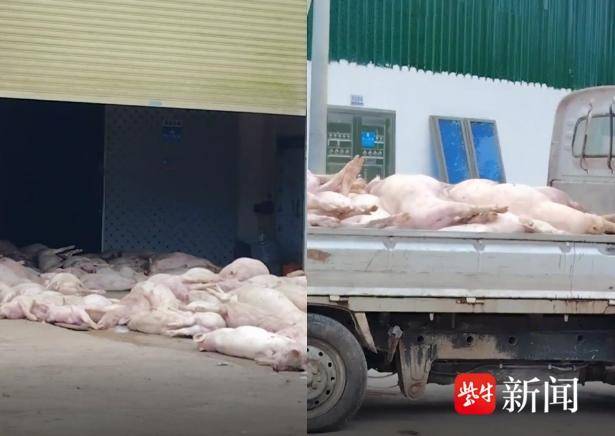
广东一肉联公司门口堆满死猪,官方通报:7名涉案嫌疑人已被控制
Yang Zi Wan Bao Wang· 2025-10-28 05:15
Core Points - A video surfaced showing a large number of dead pigs outside Guangdong Yueguang Meat Products Co., Ltd, sparking public outrage [1][3] - The company is located in Luoding City and is involved in the processing of frozen food and meat products [3] Group 1 - The local agricultural and rural affairs bureau received reports on October 26 regarding the illegal disposal of dead pigs by the company [3] - Authorities confirmed the presence of dead pigs and conducted sampling tests, disinfection, and entrusted a qualified company for harmless treatment [3] - Seven suspects related to the case have been detained by local police, and investigations are ongoing [3]
聊城|聊城打造“你点我检”监管为民服务品牌
Da Zhong Ri Bao· 2025-10-21 01:10
Core Viewpoint - The article emphasizes the importance of food safety as a foundation for public well-being and consumer confidence, highlighting the "You Point, I Test" initiative in Liaocheng aimed at enhancing food safety through community engagement and proactive regulation [2][3]. Group 1: Initiative Overview - The "You Point, I Test" initiative is designed to empower citizens by allowing them to suggest food items for inspection, thereby enhancing transparency and community involvement in food safety [2][3]. - The initiative has led to the completion of over 2,000 special inspections this year, focusing on urgent public concerns and ensuring that regulatory resources are effectively utilized [2]. Group 2: Implementation Strategies - Liaocheng's market supervision departments conduct monthly "Citizen Inspection Days," targeting high-consumption areas such as school canteens, nursing homes, and markets, ensuring continuous public engagement [2][3]. - A collaborative mechanism has been established, involving multiple departments and community members, to create a strong collective effort in food safety governance [3]. Group 3: Community Engagement - The initiative includes a "Testing Express" service that provides free food testing for citizens, with 57 convenient testing points set up across various locations to enhance accessibility [3]. - Various channels are utilized for promoting the initiative, including online platforms and physical locations, to increase public awareness and participation in food safety efforts [4].
严把食用农产品质量关,塔城市市场监督管理局专项抽检守护“舌尖安全”
Zhong Guo Shi Pin Wang· 2025-10-17 08:03
Core Viewpoint - The article highlights the proactive measures taken by the Tashkent City Market Supervision Administration to ensure food safety for consumers through rigorous testing of edible agricultural products [1] Group 1: Focus of Testing - The recent testing focused on high-consumption and high-concern products such as vegetables, fruits, and livestock meat [1] - The testing was conducted in a small agricultural market within the jurisdiction [1] Group 2: Collaboration and Process - Law enforcement personnel collaborated with professionals from third-party testing agencies to ensure compliance with legal procedures and sampling standards [1] - Samples were randomly selected, and the process was transparent and orderly, with cooperation from the responsible parties of the inspected units [1] Group 3: Future Actions - A total of 11 batches of fresh vegetables and meat were tested in this round of inspections [1] - The Tashkent City Market Supervision Administration plans to increase the frequency of food product testing and strengthen food safety supervision to ensure the safety of consumers' food supplies [1]
