护肤美妆

Search documents
具身智能备受青睐,首形科技完成过亿元A+轮融资|投融资周报
2 1 Shi Ji Jing Ji Bao Dao· 2025-10-14 13:17
Investment Trends - The investment in the robotics sector is heating up, with embodied intelligence gaining significant attention, and the autonomous driving sector showing notable highlights [1] - In the past week, Didi Autonomous Driving announced a D-round financing of 2 billion yuan, with participation from various funds and companies [1][38] - The medical health sector, particularly biomedicine, has shown stable performance in financing, with Chengdu Nureter Medical Technology completing nearly 800 million yuan in D-round financing [1][18] Financing Overview - From September 29 to October 12, there were 34 financing events in the domestic primary market, with a total disclosed amount of approximately 9.645 billion yuan [1][2] - The majority of financing was in RMB, with 30 cases totaling about 9.105 billion yuan, and one case in USD amounting to 75 million [2] Sector-Specific Financing - The technology and manufacturing sectors saw the highest number of financing events, with the robotics sector completing 4 financings totaling approximately 340 million yuan [3][4] - The artificial intelligence sector had 14 financing events, with a total disclosed amount of 510 million yuan [4] Regional Distribution - The financing activities were primarily concentrated in Zhejiang, Jiangsu, and Guangdong provinces, with 7, 6, and 4 cases respectively [5][6] Active Investment Institutions - Yinxinggu Capital was notably active, completing 2 financings primarily in the technology and manufacturing sectors [7][8] Notable Company Financing - Natural Hall Group completed 300 million yuan in strategic financing, with participation from global beauty giant L'Oréal [1][8] - Zhejiang Weiming Shiguang Biotechnology secured several million yuan in B+ round financing for AI technology platform development [1][9] - Tianjing Biotechnology completed nearly 600 million yuan in C2 round financing led by a fund under CICC [1][10] - Rui Zheng Gene completed 75 million USD in A round financing, focusing on gene editing drug development [1][11] - Shanghai Yushen Robot Technology raised millions in angel round financing to advance core technology and market expansion [1][13][14]


增速放缓,押注H股?半年53亿元营收撑得起珀莱雅的国际化野心吗?
Mei Ri Jing Ji Xin Wen· 2025-08-26 14:49
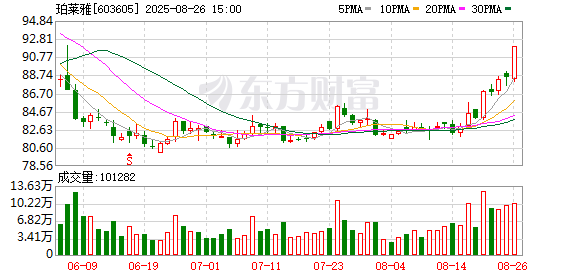
Core Viewpoint - The company Proya, a leading domestic beauty brand, is planning to issue H-shares and list on the Hong Kong Stock Exchange to boost its capital amid slowing growth rates in revenue and net profit [2][5][6]. Financial Performance - Proya's revenue for the first half of 2025 increased by 7.21% to 5.362 billion yuan, while net profit rose by 13.80% to 799 million yuan [3][5]. - The sales net profit margin improved to 15.41%, and the gross profit margin was 73.38% [3][5]. - The highest growth was seen in the hair care category, which surged by 131.25%, while the beauty makeup category grew by 25.79% [3][4]. Dividend Announcement - Proya announced a record cash dividend plan, proposing a distribution of 8 yuan per 10 shares, totaling approximately 315 million yuan [4][5]. - This dividend represents nearly 40% of Proya's net profit for the first half of 2025, bringing the total dividends since its listing in 2017 to over 2.1 billion yuan [5]. H-Share Listing Plans - The company is planning to issue H-shares to enhance its capital strength and competitiveness, aiming for international capital and brand recognition [5][6]. - The potential benefits of listing in Hong Kong include opportunities for capital internationalization, governance standardization, and global brand expansion [5][6]. Market Competition and Growth Potential - Despite being a leader in the domestic skincare market, Proya faces intense competition from international brands and emerging domestic brands [7]. - The global cosmetics market is projected to reach $446.43 billion by 2025, with a compound annual growth rate of 5.5%, indicating significant growth opportunities for Proya in overseas markets [7].

母婴生意不好做,孩子王16.5亿元押注养发赛道
Guo Ji Jin Rong Bao· 2025-08-20 14:18
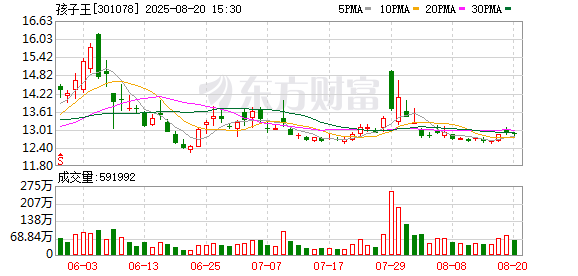
Core Viewpoint - The company, Kidswant, reported its best half-year performance in four years, with revenue of 4.911 billion yuan, a year-on-year increase of 8.64%, and a net profit of 143 million yuan, up 79.42% [2] Financial Performance - Kidswant achieved a net cash flow from operating activities of 999.8 million yuan, reflecting an 18.28% year-on-year growth [2] - The company has expanded its retail presence to nearly 1,200 stores nationwide after acquiring 100% of Leyou International [2] Store Performance - As of June 30, 2023, Kidswant operated a total of 1,058 stores, with 518 being direct-operated and 540 under Leyou [5] - The average sales revenue and sales per square meter for direct-operated stores increased, while Leyou's performance declined significantly post-acquisition [5][6] - Leyou's direct-operated stores reported a total of 424, with negative growth in sales per square meter and average revenue across various regions, particularly in Central China [6] Acquisition and Strategic Moves - Kidswant has been actively pursuing acquisitions to diversify its business, including a recent purchase of 65% of Siyu Industrial for 1.65 billion yuan [9][11] - Siyu Industrial, a leading brand in the hair care industry, reported a revenue of 723 million yuan and a net profit of 180 million yuan in 2024, indicating a higher profit margin compared to Kidswant [11] - The company aims to transition from a single-focus baby retail business to a broader family-oriented business model [11] Challenges and Future Outlook - Leyou International has performance targets set for the next three years, with the current year's net profit significantly below the target [7] - The integration of diverse business lines raises questions about operational synergy and financial pressure due to increased debt levels [11] - The high premium paid for the acquisition of Siyu Industrial, with a valuation increase of 583%, poses risks if future performance does not meet expectations [11]
「男人消费不如狗」的时代,一去不复返了?
36氪· 2025-05-14 14:26
Core Viewpoint - The article discusses the emerging male consumer market, highlighting a shift from traditional spending on relationships to self-focused consumption, termed "self-indulgent consumption" or "he economy" [4][5][18]. Group 1: Changing Consumption Patterns - In recent years, male consumers have shifted their spending focus from relationship-based purchases to self-oriented ones, indicating a new consumption mindset [5][18]. - Data from iMedia shows that in 2024, over 30% of men chose not to give gifts during traditional romantic holidays, marking a significant change in consumer behavior [18]. - The average age of first marriage for men is projected to exceed 30 by 2025, reflecting a decline in marriage intentions among younger generations [19]. Group 2: Growth of Male Consumer Market - The male consumer market is expected to surpass 6 trillion yuan by 2025, with a compound annual growth rate of nearly 10% [23]. - Men are increasingly spending on interests such as sports, gaming, and technology, becoming a significant new consumer force [20][22]. - The success of the game "Black Myth: Wukong," which sold over 29 million copies and generated 9 billion yuan in revenue, underscores the rise of male interest-driven consumption [27]. Group 3: Brand Adaptation and Market Opportunities - Brands are beginning to recognize the importance of understanding male consumer interests and lifestyles to tap into the "he economy" [42][43]. - The rise of "lonely consumption" reflects a broader trend where men prioritize personal enjoyment and self-care over traditional relationship-based spending [44][51]. - The popularity of products targeting single men, such as the "one-person meal" series by NetEase, indicates a growing market for tailored offerings [51][53]. Group 4: Implications for Future Consumption - As the market transitions from an incremental growth phase to a more mature stage, the male consumer segment presents a new blue ocean opportunity for brands [56]. - Companies must adapt their marketing strategies and product offerings to align with the evolving preferences of male consumers, focusing on self-expression and personal interests [56][57].

泡泡玛特营收首破百亿;海底捞不想只卖火锅;始祖鸟称产品中的PFAS符合标准丨品牌周报
36氪未来消费· 2025-03-30 12:06
Group 1 - The core viewpoint of the article highlights the aggressive growth targets set by Pop Mart, which has achieved a significant revenue milestone of over 10 billion yuan for the first time, with a net profit growth of nearly 200% to 3.4 billion yuan [2][3] - Pop Mart's success is attributed to the frequent emergence of blockbuster IPs and rapid growth in overseas markets, with 17 IPs generating over 1 billion yuan each, and plush toys showing remarkable growth of 12% year-on-year [3][4] - The company's overseas revenue has doubled, rising from 16.9% in 2023 to 38.9% in 2024, with a focus on expanding in Southeast Asia, North America, and Europe [4] Group 2 - Haidilao is diversifying its brand portfolio by launching multiple sub-brands, including 11 new restaurant brands, to alleviate growth pressure as its main brand faces stagnation [5][6] - The company has seen low single-digit growth in revenue and net profit for 2024, with a decline in average customer spending, prompting a search for new growth avenues beyond hot pot [6][7] - Despite internal entrepreneurial efforts, Haidilao's sub-brands currently contribute only 1% to overall revenue, raising questions about their ability to scale in a competitive market [7] Group 3 - Nongfu Spring's aggressive pricing strategy with its green bottle water has significantly impacted competitors like Yibao and Wahaha, capturing a market share of 9% shortly after launch [11][12] - The competitive landscape has intensified, with Yibao and Wahaha adjusting their strategies in response to Nongfu Spring's market entry, leading to a decline in Yibao's revenue for the first time in three years [12][13] - Despite gaining market share, Nongfu Spring's revenue from bottled water products has decreased by 21.3%, indicating a trade-off between market share and profitability [12] Group 4 - Xiangpiaopiao's attempt to upscale its product offerings has faced backlash due to a significant price increase, reflecting the challenges traditional brands face in transitioning to higher-end markets [15][16] - The pricing controversy highlights the struggle of established brands to redefine their image amidst rising competition from fresh tea beverage brands [16][17] Group 5 - TOP TOY, a brand under Miniso, has announced plans for global expansion, aiming for overseas sales to account for over 50% of its revenue within five years, supported by a budget of 10 billion yuan [25] - Bawang Tea Ji has submitted an IPO application, reporting a GMV of 29.5 billion yuan and a net profit of 2.515 billion yuan for 2024, marking a significant milestone in the new tea beverage sector [26] - China Duty Free Group reported a 36% decline in net profit for 2024, reflecting ongoing challenges in the duty-free industry [27]