
新一代电子信息

Search documents
力争GDP增5.2% 机器人产业集群超40亿
Nan Fang Du Shi Bao· 2026-02-08 23:13
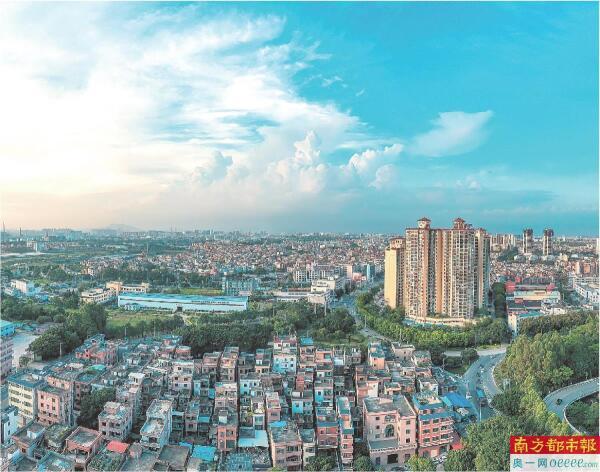
Core Viewpoint - The strategic goal for Wangniudun Town is to achieve a GDP growth of 5.2% this year while deeply integrating into the Guangdong-Hong Kong-Macao Greater Bay Area construction, ensuring a good start for the 14th Five-Year Plan [4][8]. Group 1: Strategic Goals and Economic Plans - Wangniudun Town aims to implement "six major projects" focusing on industrial upgrading, urban-rural integration, and public welfare to achieve reasonable quantitative growth and effective qualitative improvement [5][8]. - The town's development targets include a GDP growth of 5.2%, a 2% increase in total retail sales of consumer goods, and a 2% growth in total import and export volume [8]. Group 2: Implementation of Major Projects - The "Industrial Upgrade Renewal" project focuses on building a modern industrial system, emphasizing high-end equipment manufacturing, new-generation electronic information, and new energy industries [5][6]. - The "Comprehensive Quality Improvement" project aims to optimize urban-rural spatial layout and enhance living environment quality through various infrastructure projects and ecological construction [6][7]. - The "Public Welfare Enhancement" project seeks to improve public services, including education and healthcare, while promoting cultural activities and community engagement [7][8]. Group 3: Promoting Local Products and Cultural Tourism - The town plans to enhance foreign trade and investment by expanding international markets and supporting local enterprises in obtaining certifications to improve their global competitiveness [9][10]. - Efforts will be made to develop local cultural resources into unique tourism IPs, integrating traditional culture with consumer experiences to attract visitors [10]. - A platform for production and sales will be established to facilitate the distribution of local products, enhancing the overall market presence of "Guangdong goods" [10].


石家庄经济总量连续4年实现前移进位
Sou Hu Cai Jing· 2026-02-08 13:22
Economic Performance - The GDP of Shijiazhuang reached 865.17 billion yuan, with a year-on-year growth of 6.0% [1] - Over four years, the total economic increment was 204.51 billion yuan, maintaining a growth rate among the top tier of major cities in China [1] - The city's national ranking improved from 40th to 34th, marking a rise of six positions over four years [1] Industrial Development - Shijiazhuang aims to establish five industrial clusters, each worth over 100 billion yuan, focusing on leading enterprises and innovation [2] - By 2025, the biopharmaceutical and next-generation electronic information clusters are expected to generate revenues of 140 billion yuan and 150 billion yuan, respectively [2] - The advanced equipment manufacturing and modern commercial logistics sectors continue to experience double-digit growth [2] Innovation and R&D - The modern food industry generated revenues of 103.02 billion yuan, with the "Shijiazhuang Flavor" brand gaining influence [3] - By 2025, R&D expenditure intensity is projected to reach 2.7%, surpassing national and provincial averages, with the highest investment in Hebei [3] - The city leads the province with 37 products recognized as patent-intensive, and the number of high-value invention patents per ten thousand people is 9.54 [3] Project Development and Investment - Shijiazhuang emphasizes project development as a key to growth, with a focus on planning, reserving, and executing projects [4] - In 2025, the city aims to rank first in the number of key provincial projects, total investment, and annual planned investment in Hebei [4] - A total of 341 key construction projects completed investments of 74.04 billion yuan, achieving an investment completion rate of 127.3% [4] - Fixed asset investment grew by 12.4%, exceeding national and provincial averages by 16.2 and 6.3 percentage points, respectively [4] Business Environment and Competitiveness - Shijiazhuang is enhancing its business environment, achieving high efficiency in processing key matters [4] - The city has been recognized as one of the "most livable cities" for two consecutive years and has been listed as an innovative city for business environment for three years [4] - The city’s soft power is increasingly translating into competitive strength, showcasing its commitment to high-quality economic development [4]
东莞:制造业当家地位愈发牢固!AI、低空经济将是下步重点
Nan Fang Du Shi Bao· 2026-02-04 02:38
Core Viewpoint - Dongguan is solidifying its position as a manufacturing hub, with significant contributions from the industrial sector to GDP growth and a focus on advanced manufacturing and digital transformation initiatives [3][4]. Group 1: Manufacturing Sector Developments - The contribution of the industrial sector to Dongguan's GDP exceeds 80%, with advanced manufacturing value-added growth at 15.8%, accounting for 52.2% of the industrial sector [3]. - Dongguan has been selected as a pilot city for national initiatives in manufacturing technology upgrades and digital transformation, with over 50% growth in technology investment and nearly 2,000 new digital transformation projects annually [3]. - The city has established a modern industrial system categorized as "8+8+4," with over 1,800 new projects worth over 100 million yuan and nearly 200 projects worth over 1 billion yuan [3]. Group 2: Emerging Industries and Innovations - Dongguan is actively seizing opportunities in the "Artificial Intelligence +" sector, launching policies to support AI and service industry development, including the operation of the first city-level large model center in the manufacturing field [4]. - New industries such as low-altitude economy and robotics are thriving, with a focus on fashion and domestic products showcasing manufacturing aesthetics [5]. Group 3: Future Plans and Strategic Actions - In 2026, Dongguan plans to implement the "Industrial System Enhancement" action to cultivate new productive forces and modernize its industrial system, aiming to increase the proportion of strategic emerging industries [6]. - The city will focus on AI and robotics, aiming to develop capabilities in AI mobile devices, servers, and glasses, and establish training grounds for intelligent robots [6]. - Plans include constructing low-altitude economic infrastructure and semiconductor industry parks, targeting a scale of over 65 billion yuan for the semiconductor and integrated circuit industries [8]. Group 4: Service Sector and Brand Development - Dongguan aims to enhance its modern service industry, targeting an increase in the service sector's contribution to GDP to 45% [9]. - The city is focused on building a brand matrix for manufacturing, fostering local, leading, and international brands, and supporting the development of the Hongmeng ecosystem [10].
广东的“县域短板”,博罗之后如何再造“千亿县”?
Jing Ji Guan Cha Wang· 2026-02-02 09:38
Core Insights - Huizhou's Boro County is set to become Guangdong's first "trillion county" by 2025, marking a significant milestone for the province and ending its absence from the "trillion county club" [1][2] - The emergence of "trillion counties" reflects a shift in economic focus towards county-level development, which is increasingly recognized as vital for regional economic dynamics [2] Economic Landscape - As of 2024, there are 62 "trillion counties" in China, with Jiangsu's Kunshan and Jiangyin exceeding 500 billion in GDP, showcasing their role as economic engines [1] - Guangdong has historically concentrated economic growth in cities like Shenzhen and Guangzhou, lacking strong county-level economies [1][3] Administrative and Geographical Factors - Guangdong's unique administrative evolution, particularly in the Pearl River Delta, has led to a scarcity of "trillion counties" as many economically strong counties have been restructured into districts [3][4] - The economic disparity between the Pearl River Delta and other regions in Guangdong is evident, with the former accounting for over 80% of the province's economic output [4] Development Initiatives - The "Hundred Counties, Thousand Towns, and Ten Thousand Villages High-Quality Development Project" was launched to address urban-rural imbalances and promote county-level economic growth [4] - From 2023 to 2025, 57 counties in Guangdong are expected to see GDP growth rates surpassing the provincial average, indicating a positive trend in county-level economic development [4] Boro County's Economic Growth - Boro County's GDP has seen significant growth, surpassing 700 million in 2021, 800 million in 2022, and projected to exceed 1 billion by 2025 [6] - The county has shifted from a fragmented industrial approach to a more systematic layout, focusing on developing a trillion-level smart equipment industry park [6][7] Industrial Strategy - Boro County has implemented an "eight ones" industrial chain mechanism to enhance the precision of its investment strategies and has established a "four ones" park development model to improve efficiency [7] - The county has successfully developed eight hundred billion-level industrial clusters, focusing on modern industries such as electronic information and new energy [7][8] Lessons for Other Counties - Boro's experience serves as a model for other counties in Guangdong, emphasizing the importance of concentrated industrial development and collaboration within the regional economic framework [8][9] - The county's integration into the Guangdong-Hong Kong-Macao Greater Bay Area has facilitated industrial transfer and collaboration, enhancing its economic capabilities [8] Comparative Insights - The development paths of Jiangsu and Zhejiang provinces, which have the highest number of "trillion counties," offer valuable lessons for Guangdong, particularly in terms of administrative efficiency and fostering local industries [10] - The emphasis on private and small enterprises in Jiangsu and Zhejiang highlights the potential for Guangdong to enhance its economic vitality through similar support mechanisms [10]
新旧动能转换攻坚,经济第一大省广东展望新五年
第一财经· 2026-01-26 14:54
Core Viewpoint - Guangdong aims to double its economic output from 14.58 trillion yuan to approximately 29.16 trillion yuan by 2035, with a focus on high-quality development and sustainable growth during the 14th Five-Year Plan period [3][6]. Economic Goals for 2026 - The expected GDP growth for Guangdong in 2026 is set between 4.5% and 5%, with local public budget revenue projected to grow around 3% [6]. - The average annual GDP growth target for the 14th Five-Year Plan period is approximately 5%, emphasizing quality over speed in economic development [6][7]. Achievements During the 14th Five-Year Plan - Guangdong's GDP increased from 11.37 trillion yuan to 14.58 trillion yuan, and per capita GDP rose from 90,000 yuan to 110,000 yuan [9]. - In 2025, Guangdong's total import and export volume reached 9.5 trillion yuan, contributing 24.1% to the national growth [10]. - The province has seen significant growth in new energy vehicles, advanced electronics, high-end equipment, and biomedicine, enhancing its manufacturing sector [9]. Challenges and Opportunities - Guangdong faces external uncertainties, pressure on foreign trade and investment, and the need for a stable transition to new economic drivers [12][13]. - The region's advantages include its strategic position in the Greater Bay Area, a robust industrial base, and a favorable business environment, which are expected to support sustainable development [13].

新旧动能转换攻坚,经济第一大省广东展望新五年
Di Yi Cai Jing· 2026-01-26 12:25
Core Insights - Guangdong aims to double its economic output from 14.58 trillion yuan to approximately 29.16 trillion yuan by 2035, with a focus on high-quality development and modernization over the next 13 years [1][2] Economic Goals - The expected GDP growth for Guangdong in 2026 is set between 4.5% and 5%, with a target of around 3% growth in local public budget revenue and synchronization of resident income growth with economic growth [2] - During the "14th Five-Year Plan" period, Guangdong's GDP increased from 11.37 trillion yuan to 14.58 trillion yuan, with per capita GDP rising from 90,000 yuan to 110,000 yuan [3][4] Achievements and Highlights - Guangdong's total goods import and export volume is projected to reach 9.5 trillion yuan by 2025, contributing 24.1% to the national growth [4] - The province has seen significant growth in new energy vehicles, advanced electronics, high-end equipment, and biomedicine, indicating a strong manufacturing sector [3] - The construction of the Greater Bay Area has accelerated, improving transportation connectivity and industrial collaboration [3] Challenges and Opportunities - Guangdong faces challenges such as external uncertainties, pressure on foreign trade and investment, and the need for a stable transition to new economic drivers [5][6] - The province's advantages include a robust industrial base, strong innovation capabilities, and a favorable business environment, which are expected to support sustainable and high-quality growth [6]
陈小平率队赴深圳东莞佛山等地招商考察
Sou Hu Cai Jing· 2026-01-23 16:42
Core Viewpoint - The article highlights the proactive efforts of the Enping municipal government to attract investment and promote industrial development through targeted招商活动 (investment promotion activities) in key industries such as intelligent equipment manufacturing, new-generation electronic information, and advanced materials [1][4]. Group 1: Investment Promotion Activities - Enping's Deputy Mayor Chen Xiaoping led a delegation to Shenzhen, Dongguan, and Foshan to conduct chain-based招商活动 aimed at enhancing industrial development and attracting projects [1]. - The招商活动 is aligned with the directives from the Jiangmen Municipal Party Committee and aims to strengthen the industrial chain and promote the development of a modern industrial system in Enping [1][4]. Group 2: Industry Focus - Enping is focusing on developing "3+1+1" emerging industries, which include intelligent equipment manufacturing, new-generation electronic information, advanced materials, modern agriculture and food, and low-altitude economy [4]. - The local government emphasizes the importance of the实体经济 (real economy) and manufacturing, aiming to provide comprehensive project services and support for enterprises to grow and strengthen [4]. Group 3: Collaboration and Future Prospects - Business leaders expressed enthusiasm for collaboration, noting Enping's strong industrial foundation and potential for development, with plans for future visits to explore cooperation opportunities [4]. - The government encourages enterprises to invest in Enping, promoting new models of cross-administrative cooperation, such as "headquarters + base" and "R&D + manufacturing" [4].
上海发布先进制造业转型升级方案
Zhong Guo Hua Gong Bao· 2026-01-13 02:51
Core Viewpoint - The Shanghai Municipal Government has released a three-year action plan (2026-2028) to support the transformation and upgrading of advanced manufacturing, aiming to add 100 manufacturing enterprises with an annual output value exceeding 1 billion yuan by 2028, totaling over 600, and to drive the addition of 500 industrial enterprises above designated size in the industrial chain [1][2]. Group 1: Action Plans - The action plan includes four major actions: structural optimization and upgrading, innovation-driven foundational support, quality and efficiency enhancement, and resource and factor support [1][2]. Group 2: Structural Optimization and Upgrading - The first action focuses on optimizing and enhancing traditional advantageous industries, promoting the petrochemical sector to shift from oil to chemical products, and accelerating the strategic leadership of pilot industries [1]. - It supports integrated circuit companies to target equipment, advanced processes, photoresist materials, and 3D packaging to achieve breakthroughs across the entire industrial chain [1]. Group 3: Innovation-Driven Foundational Support - The second action encourages enterprises to focus on foundational research in cutting-edge technologies such as laser manufacturing, quantum, photonics, new functional materials, and new energy [2]. - It emphasizes support for key industrial chains and critical links in industries like integrated circuits, large aircraft, high-end equipment, instrumentation, and industrial software [2]. Group 4: Quality and Efficiency Enhancement - The third action supports existing chemical enterprises in chemical parks to undertake project construction without increasing environmental risks, while promoting digital transformation to achieve full coverage of smart factories by 2028 [2]. - It also encourages the development of green low-carbon products and supports energy-saving upgrades and equipment modifications [2]. Group 5: Resource and Factor Support - The fourth action aims to enhance logistics support and improve transportation infrastructure in areas like Lingang, Jinshan, and chemical zones [2]. - It includes increasing specialized logistics and warehousing resources and innovating hazardous materials storage supervision methods [2].
上海先进制造业转型文件出炉,引导企业投资五大新增长点
Di Yi Cai Jing· 2026-01-11 12:12
Core Insights - Shanghai aims to accelerate the transformation and upgrading of its advanced manufacturing industry over the next three years, targeting the establishment of 100 new manufacturing enterprises with an annual output value exceeding 1 billion yuan by 2028 [2] - The plan emphasizes the development of emerging sectors such as low-altitude economy, commercial aerospace, embodied intelligence, biomanufacturing, and smart terminals, positioning them as new growth points for the industry [2][3] Group 1: Advanced Manufacturing Transformation - The action plan outlines structural optimization and upgrading actions, including enhancing traditional industries and promoting the growth of key and emerging sectors [2] - Shanghai has established five national-level industrial clusters and four trillion-yuan industrial clusters, focusing on integrated circuits, biomedicine, new energy vehicles, large aircraft, and marine engineering equipment [2][3] Group 2: New Growth Areas - The plan identifies five new growth areas: low-altitude economy, commercial aerospace, embodied intelligence, biomanufacturing, and smart terminals, with a goal for these sectors to reach a scale of 1 trillion yuan by the end of the 14th Five-Year Plan [3] - Specific targets include achieving a scale of 100 billion yuan in the low-altitude economy and 500 billion yuan in embodied intelligence by 2027, with projections of 1 trillion yuan by 2030 for the latter [3][4] Group 3: Financial Support and Innovation - The plan includes financial incentives for companies increasing their R&D investments, with subsidies ranging from 200,000 to 1 million yuan based on the level of investment [5] - It also promotes the "AI + manufacturing" initiative, aiming for full coverage of intelligent applications in large enterprises by 2027 and increasing robot density to 600 units per 10,000 people by 2028 [5][6] Group 4: Industrial Ecosystem and Talent Development - The Shanghai Industrial Internet Association emphasizes the need for collaboration among government, industry, academia, and research to tackle challenges in the "AI + manufacturing" sector [6] - The initiative aims to build a comprehensive standard system for "AI + manufacturing" and enhance the cultivation of industrial intelligent talent [6]
上海:到2028年,新增年产值10亿元以上制造业企业100家
Xin Lang Cai Jing· 2026-01-09 10:26
Core Viewpoint - The Shanghai Municipal Government has issued a three-year action plan (2026-2028) to support the transformation and upgrading of advanced manufacturing, aiming to enhance the modern industrial system and promote collaborative development among enterprises of various sizes [1]. Group 1: Main Goals - By 2028, the plan aims to add 100 manufacturing enterprises with an annual output value exceeding 1 billion yuan, totaling over 600 such enterprises, and to drive the addition of 500 industrial enterprises above designated size in the supply chain [2]. Group 2: Implementation Actions - **Optimizing Traditional Advantage Industries**: The plan encourages traditional industries like petrochemicals and steel to innovate and expand into new materials, with financial support for qualifying projects [3]. - **Accelerating Leading Industry Strategies**: Support for integrated circuit companies to achieve breakthroughs across the entire industry chain, fostering internationally competitive leading enterprises [3]. - **Promoting Key and Emerging Industries**: Focus on developing new electronic information, smart connected vehicles, and advanced materials, while encouraging investment in emerging fields like low-altitude economy and commercial aerospace [3]. Group 3: Innovation and Technology - **Releasing Innovation Vitality**: Financial incentives for companies increasing basic research investments, with varying levels of support based on annual research expenditure [4]. - **Accelerating Core Technology Research**: Support for enterprises focusing on cutting-edge technologies such as laser manufacturing and quantum technology [4]. Group 4: Quality and Efficiency Enhancement - **Promoting Technological Transformation**: Financial support for projects aimed at upgrading production and R&D processes, with a cap on total support [4]. - **Deepening Digital Transformation**: Initiatives to enhance AI applications in manufacturing, aiming for full coverage of smart factory applications by 2028 [4]. Group 5: Resource and Support Actions - **Strengthening Talent Development**: Support for attracting high-level talent in key sectors, with financial incentives for successful candidates [5]. - **Enhancing Financial Support**: Encouragement for financial institutions to offer favorable loan products for manufacturing, with interest subsidies for key components and materials [5]. - **Expanding Logistics Support**: Development of industrial logistics facilities to integrate with manufacturing needs, enhancing transportation infrastructure [5]. Group 6: Market Development and Services - **Expanding Domestic and International Markets**: Establishing platforms for supply chain connections and promoting internet marketing for industrial enterprises [5]. - **Optimizing Enterprise Services**: Coordinating to address enterprise needs and ensuring that policies are effectively communicated and implemented [5].