
现代煤化工

Search documents
不要“一城独大”,西部大省陕西再造“一极”
Mei Ri Jing Ji Xin Wen· 2025-12-11 12:48
Core Viewpoint - The announcement of the "dual-pole" strategy in Shaanxi, focusing on Xi'an and Yulin as key growth engines, aims to enhance regional economic development and collaboration between the two cities [1][5]. Economic Growth and Performance - Yulin's GDP is projected to exceed 750 billion yuan in 2024, marking a significant increase from its previous performance and establishing it as a leading non-provincial capital city in Central and Western China [2][3]. - Yulin's GDP contribution to Shaanxi has risen from approximately 15% in 2020 to over 20% in 2024, highlighting its growing importance in driving provincial economic growth [3][4]. Industrial Strength and Resource Dependency - Yulin's rise is attributed to its rich energy resources, particularly coal, with a projected coal output of 620 million tons in 2024, accounting for 13% of the national total and 80% of Shaanxi's output [4]. - The industrial economy of Yulin has surpassed that of Xi'an, positioning it as the "industrial capital" of Shaanxi, which is crucial for the proposed "dual-pole" structure [4][5]. Strategic Planning and Development - The "14th Five-Year Plan" and the newly released "15th Five-Year Plan" emphasize the importance of Yulin as a significant growth pole alongside Xi'an, marking a historical elevation in its status within the regional economic framework [5][6]. - The dual-pole strategy aims to leverage the complementary strengths of Xi'an's advanced manufacturing and Yulin's energy resources to foster economic collaboration [7][8]. Transportation and Connectivity - The development of high-speed rail networks is essential for enhancing connectivity between Xi'an and Yulin, facilitating the flow of talent, capital, and resources, and supporting the dual-pole strategy [12]. - Proposed high-speed rail projects aim to transform Yulin into a national transportation hub, improving its integration with the broader economic landscape of Shaanxi and the Yellow River "几"字弯 urban agglomeration [11][12]. Future Challenges and Opportunities - Yulin faces challenges related to its reliance on the coal industry, necessitating diversification into high-value products and modern service sectors to sustain growth [9][10]. - The successful implementation of the dual-pole strategy will depend on both cities' ability to adapt to new economic conditions and leverage their respective strengths for mutual benefit [13].
陕西“十五五”规划建议发布 做强做优现代能源产业集群
Zhong Guo Hua Gong Bao· 2025-12-10 02:45
Core Viewpoint - The document outlines the recommendations from the Shaanxi Provincial Committee of the Communist Party of China regarding the 15th Five-Year Plan, emphasizing the focus on developing the real economy and establishing modern industrial clusters in energy, advanced manufacturing, and strategic emerging industries. Group 1: Economic Development Strategy - The focus is on strengthening and optimizing the modern energy industry cluster by maintaining stability in energy production while transitioning fossil energy usage towards chemical raw materials and increasing the share of clean energy [1] - The plan includes accelerating oil and gas resource exploration and development, with a target of constructing a 10 million tons/year refining and chemical integration project in Yan'an [1] Group 2: Strategic Emerging Industries - The recommendations highlight the need to cultivate and expand strategic emerging industries, particularly in fields such as photonics, hydrogen energy, additive manufacturing, and biomanufacturing [1] - The strategy aims to optimize regional economic layout by establishing innovation demonstration zones and modern energy economic demonstration areas [1] Group 3: Carbon Neutrality Goals - The document emphasizes the importance of achieving carbon peak and implementing a dual control system for total carbon emissions and intensity [2] - It advocates for the construction of zero-carbon factories and parks, promoting clean and efficient coal utilization and the green transformation of energy consumption [2]
鄂尔多斯市高质量发展有“势头” 转型起势 创新聚势 总量成势
Ren Min Ri Bao· 2025-12-07 22:14
Core Viewpoint - Ordos City in Inner Mongolia is committed to high-quality development, aligning with national and regional goals, and aims to contribute to China's modernization through significant achievements [1] Group 1: Urban Comprehensive Strength Enhancement - The Ordos Yijinhuoluo International Airport, the world's first truly "zero-carbon" airport, was inaugurated in March, utilizing integrated technology for 100% zero-carbon supply [2] - The city has seen a continuous increase in GDP, reaching 436.79 billion yuan in the first three quarters of 2025, with a year-on-year growth of 5.0% [2] - The first three quarters of 2025 showed growth in various sectors: primary industry by 5.5%, secondary industry by 5.9%, and tertiary industry by 3.4% [2] Group 2: Effective Industrial Transformation and Upgrading - Ordos is actively constructing four world-class industries: energy, modern coal chemical, new energy equipment manufacturing, and cashmere, while developing 18 key industrial chains [4] - The city is enhancing its coal chemical industry towards high-end materials and green fuels, with significant projects underway, including a 300,000-ton green hydrogen project [5] - The establishment of a closed-loop industrial chain for coal gangue recycling is underway with the production line for high-quality kaolin [2][4] Group 3: Strong Technological Innovation Momentum - Ordos is implementing policies to attract talent and technology, with a total funding of 1.48 billion yuan for talent development [7] - The city has established numerous research platforms, including 13 academicians' workstations and over 300 research platforms at various levels [8] - The number of high-tech enterprises is projected to reach 330 by 2025, with significant growth in innovation and technology-driven enterprises [8]

北疆工匠训练营为40名“准工匠”赋能
Nei Meng Gu Ri Bao· 2025-12-03 14:28
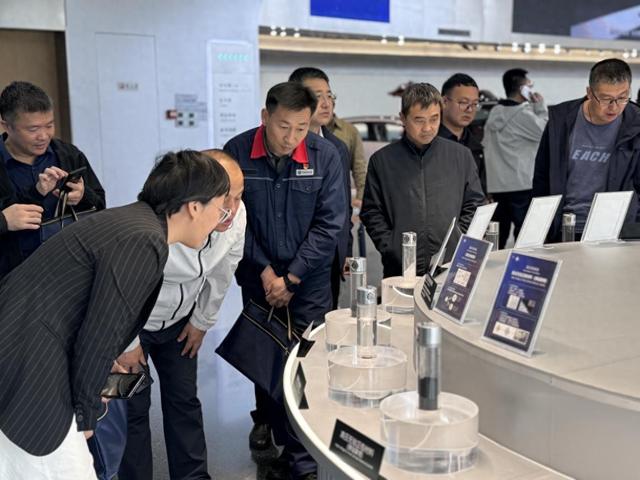
Core Insights - The North Border Craftsman Training Camp serves as both a skills enhancement program and a spiritual awakening, emphasizing the importance of craftsmanship and dedication to manufacturing [1] - The training camp aims to elevate the skills and innovative perspectives of over 40 craftsmen from key industries in Inner Mongolia through immersive learning experiences [1][3] Group 1: Training Program Structure - The training camp focuses on five core capabilities of craftsmanship: leadership, inheritance, focus, achievement, and innovation, transforming abstract concepts into practical applications through site visits and interactive exchanges [3] - Participants engage with industry leaders and technical experts from prominent companies such as Guangzhou Pharmaceutical Group and GAC Group, enhancing their understanding of advanced technologies and practices [5] Group 2: Outcomes and Future Directions - The training camp is aligned with the spirit of the 20th National Congress of the Communist Party, guiding craftsmen to contribute to high-quality development in their respective industries [7][8] - The initiative represents a new approach to talent cultivation, fostering collaboration and communication across regions, ultimately aiming to build a high-quality workforce in Inner Mongolia [8]

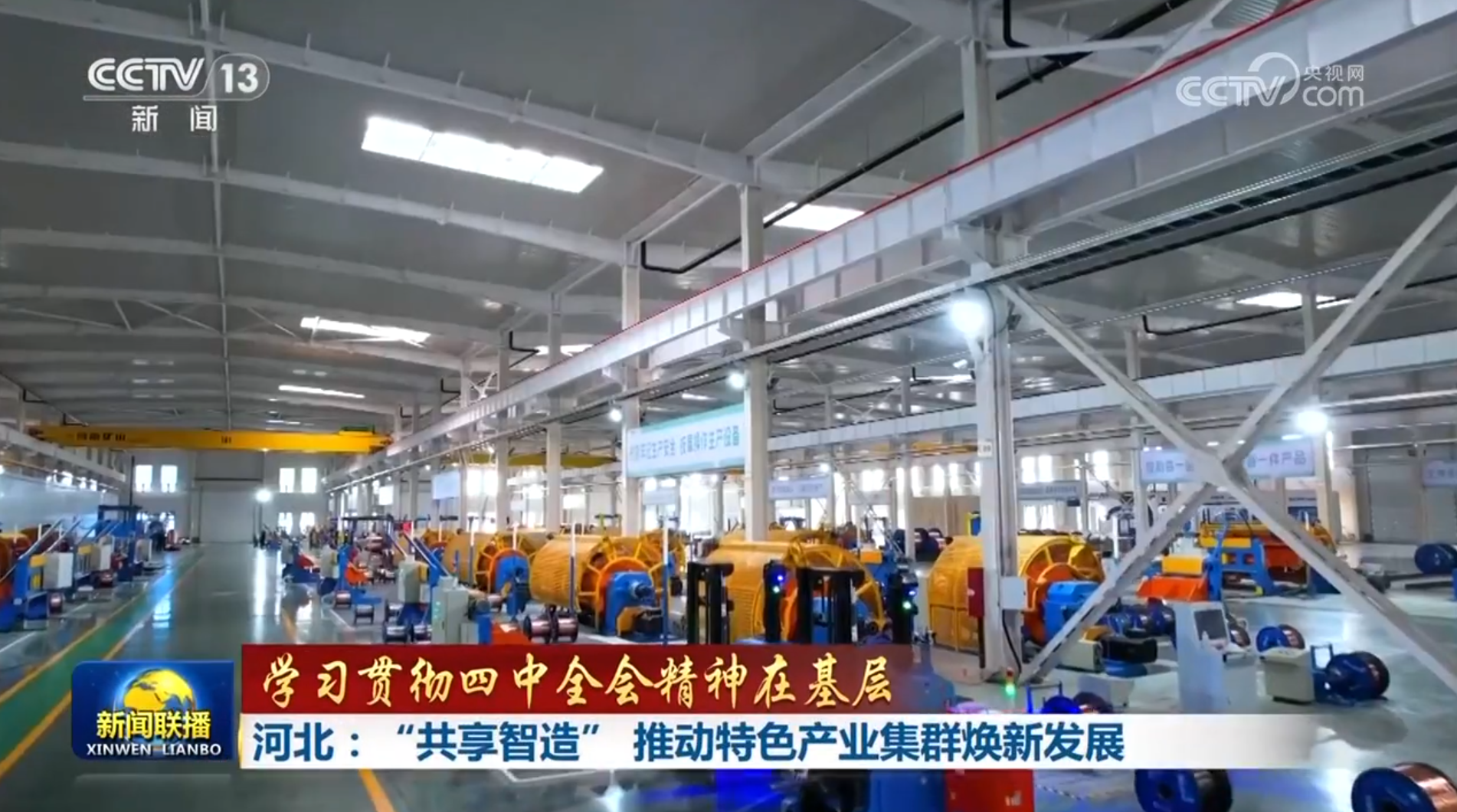
【学习贯彻四中全会精神在基层】河北:“共享智造” 推动特色产业集群焕新发展 宁夏:引导企业数字化转型 加快构建现代化产业体系
Yang Shi Wang· 2025-11-30 12:41
Core Viewpoint - The 20th Central Committee's Fourth Plenary Session emphasizes optimizing and upgrading traditional industries, focusing on the real economy, and accelerating the construction of a manufacturing powerhouse through intelligent, green, and integrated development [1] Group 1: Hebei's "Shared Intelligent Manufacturing" - Hebei is promoting "shared intelligent manufacturing" to rejuvenate its characteristic industrial clusters, enabling resource integration and innovative models [2] - In Hebei's Ningjin County, over 10 small and medium-sized enterprises (SMEs) are utilizing advanced equipment from leading companies to fulfill orders, addressing issues of production capacity and equipment underutilization [4] - Since the 14th Five-Year Plan, Hebei has developed a shared intelligent manufacturing model across 107 characteristic industrial clusters, creating 194 shared factories with over 15,000 shared devices, benefiting nearly 20,000 enterprises [6] Group 2: Ningxia's Digital Transformation - Ningxia is guiding enterprises in digital transformation to accelerate the establishment of a modern industrial system, exemplified by an AI visual inspection system that significantly enhances product quality detection [7] - During the 14th Five-Year Plan, Ningxia has positioned digital transformation as a key breakthrough for manufacturing upgrades, with over 2,000 enterprises in key industries transitioning to digital platforms [9] - Currently, 55% of large-scale industrial enterprises in Ningxia have undergone digital transformation, with a significant increase in the proportion of digital enterprises [9][10]
【省发展改革委】陕西区域发展和新型城镇化建设取得显著成效
Shan Xi Ri Bao· 2025-11-25 22:58
Core Viewpoint - The Shaanxi provincial government has made significant progress in regional development and new urbanization during the 14th Five-Year Plan period, focusing on coordinated regional strategies and urban-rural integration [1][2]. Group 1: Policy Initiatives - Shaanxi has issued several key documents, including the "Shaanxi New Urbanization Plan (2021-2035)" and policies aimed at reducing the "three major gaps" in urban-rural development [1]. - A comprehensive policy system for regional coordinated development has been established, promoting the construction of a unified national market and facilitating the flow of resources across regions [1]. Group 2: Regional Industrial Development - The Guanzhong region, centered around Xi'an, is accelerating industrial collaboration with surrounding cities, while the northern region is focusing on energy stability and transformation [2]. - The southern region is enhancing pillar industries and developing eco-friendly sectors such as specialty agriculture, green energy storage, and tourism [2]. Group 3: Infrastructure and Connectivity - Major cross-regional water conservancy projects are advancing, including the first phase of the "Yinhan Jihui" project, which has begun water supply [2]. - The construction of transportation infrastructure is improving, with the completion of the T5 terminal at Xi'an Xianyang International Airport and the opening of the third phase of Xi'an Metro Line 1 [2]. Group 4: Environmental Improvement - The ecological environment in the Qinling Mountains of Shaanxi has a high-quality area ratio of 99.4%, and the water quality in the South-to-North Water Diversion project remains stable at Class II or above [2]. - A total of 17.8656 million mu of afforestation has been completed in the Yellow River basin, indicating a shift towards a greener landscape in Shaanxi [2]. Group 5: Urban-Rural Coordination - By 2024, the total economic output of the county-level economy in Shaanxi is projected to reach 1.68 trillion yuan, with a growth rate exceeding the provincial average by 1.1 percentage points [2]. - The proportion of migrant workers' children attending public schools has reached 93%, reflecting improved urban-rural integration [2].
2989个岗位进校园 助力学子“职”通未来
Nei Meng Gu Ri Bao· 2025-11-22 13:47
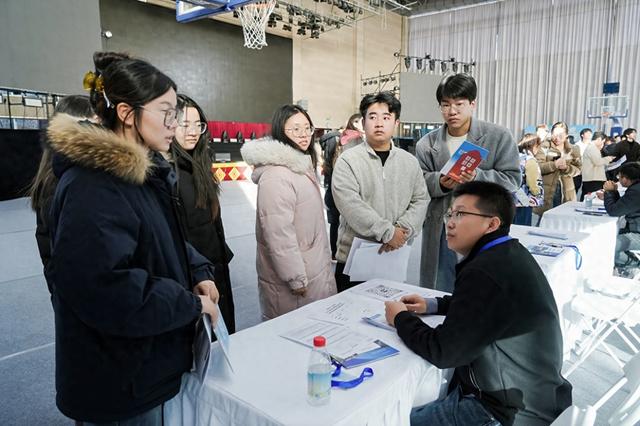
Core Points - The event "Job Opportunities in North China" was held at Ordos Applied Technology College, attracting over 780 students and offering 2,989 job positions from 111 quality enterprises [1][3][10] Group 1: Event Overview - The job fair was organized by the Inner Mongolia Human Resources and Social Security Department and Ordos Applied Technology College, aiming to facilitate high-quality employment for college graduates and youth [3] - The event focused on the high-quality development needs of Ordos, particularly in four world-class industrial clusters: energy, modern coal chemical industry, new energy equipment manufacturing, and cashmere [5] Group 2: Employment Opportunities - The job positions offered covered the entire manufacturing industry chain, including roles in technical research and development, engineering manufacturing, and procurement logistics [5] - Online recruitment was also available, allowing job seekers who could not attend in person to submit resumes efficiently [5][10] Group 3: Job Seeker Experience - Job seekers engaged with various companies, with one student expressing interest in research positions in emerging fields like new energy and materials, prioritizing future development opportunities over salary [8] - The event featured additional services such as employment policy interpretation, live job broadcasts, and AI interview simulations to enhance the job-seeking experience [10]
陕西“十四五”现代化产业体系建设成效显著
Shan Xi Ri Bao· 2025-11-22 00:28
Group 1: Modern Industrial System Development - Shaanxi has focused on building a modern industrial system as a strategic initiative during the 14th Five-Year Plan, leading to revitalization of traditional industries and rapid growth of emerging industries [1] - The province has implemented a plan for industrial structure adjustment in the Guanzhong area, promoting the transformation and upgrading of high-energy-consuming and high-polluting enterprises [1] - Strategic emerging industries and high-tech manufacturing have seen annual value-added growth rates of 8.7% and 10.3% respectively during the 14th Five-Year Plan, with new energy vehicle production growing at an annual rate of 112% [1] Group 2: Agricultural Modernization - The implementation of the rural industrial integration development demonstration park three-year action plan has resulted in the establishment of 9 national and 65 provincial demonstration parks, with a target of 3.356 billion yuan in central investment for 2025 [2] - In 2024, the total grain production is expected to reach 13.5229 million tons, with a historical high yield of 297.35 kg per mu [2] Group 3: Service Industry Development - By 2024, the service sector's value added is projected to reach 1.84 trillion yuan, accounting for 51.8% of the province's GDP, achieving the 14th Five-Year Plan target ahead of schedule [2] - The combined revenue of scientific research, technical services, and information technology services accounted for 51.3% of the profitable service industry in the first three quarters of this year [2] Group 4: Infrastructure Enhancement - The construction of the China-Europe Railway Express (Xi'an) has seen an increase in annual operations from 3,720 trains in 2020 to 4,985 in 2024, with an average annual growth of 34% [2] - The railway operating mileage has reached 6,030 kilometers, while the total road mileage has reached 190,000 kilometers, and urban rail transit operating mileage has reached 403 kilometers [2]
前8月我国能源投资保持较快增长
Zhong Guo Hua Gong Bao· 2025-11-05 02:09
Core Insights - The National Energy Administration reported a significant increase in energy investment in China, with a total investment of 1.97 trillion yuan in key energy projects in the first eight months of the year, representing an 18.2% year-on-year growth [1] Group 1: Investment Growth Characteristics - Nuclear power, power grids, new energy storage, and coal power are key drivers of investment growth in energy projects [1] - In the first eight months, key energy storage projects in Xinjiang, Guangdong, Yunnan, Shandong, and Inner Mongolia saw investment growth rates exceeding 100% [1] Group 2: Rapid Growth in Specific Sectors - Wind power, modern coal chemical industry, oil and gas reserve facilities, charging and swapping infrastructure, and hydrogen energy investments are experiencing rapid growth [1] - Ongoing projects in Xinjiang and Inner Mongolia for coal-to-oil and coal-to-olefins are progressing steadily, while the Daan green hydrogen ammonia integration demonstration project in Jilin has been completed [1] Group 3: Steady Growth in Other Energy Investments - Investments in solar power generation, integrated source-grid-load-storage systems, oil and gas exploration and development, and pumped storage are steadily increasing [1] - Several integrated source-grid-load-storage projects are being advanced in Shandong, Shanxi, Gansu, and Guangxi, while major oil fields are steadily increasing reserves and production [1]
国家能源局:前8个月我国能源重点项目完成投资1.97万亿元
Xin Hua Cai Jing· 2025-10-31 13:58
Core Insights - National energy investment in China has shown rapid growth, with key projects completing investments of 1.97 trillion yuan in the first eight months of the year, representing an 18.2% year-on-year increase [1] Group 1: Investment Growth Characteristics - Nuclear power, power grids, new energy storage, and coal power have been significant drivers of investment growth in energy projects [1] - Wind power, modern coal chemical industry, oil and gas storage facilities, charging infrastructure, and hydrogen energy investments have seen rapid increases, with wind power investment growing over 40% year-on-year [2] - Solar power generation, integrated energy systems, oil and gas exploration, and pumped storage investments have steadily increased, with solar power project investments rising by 17.5% year-on-year [3] Group 2: Regional Investment Highlights - Six provinces (Shandong, Jiangsu, Guangdong, Xinjiang, Yunnan, Inner Mongolia) each completed investments exceeding 100 billion yuan in the first eight months [1] - Significant investment in wind power projects has been noted in regions such as Xinjiang, Hebei, Guangxi, Shandong, and Hunan [2] - Major oil and gas projects are progressing in the Bohai Sea and Jianghan shale gas fields, with proven reserves of 165 billion cubic meters [3]