被动元件

Search documents
AI需求激增 MLCC接棒内存上涨
Zhong Guo Zheng Quan Bao· 2026-02-09 20:25
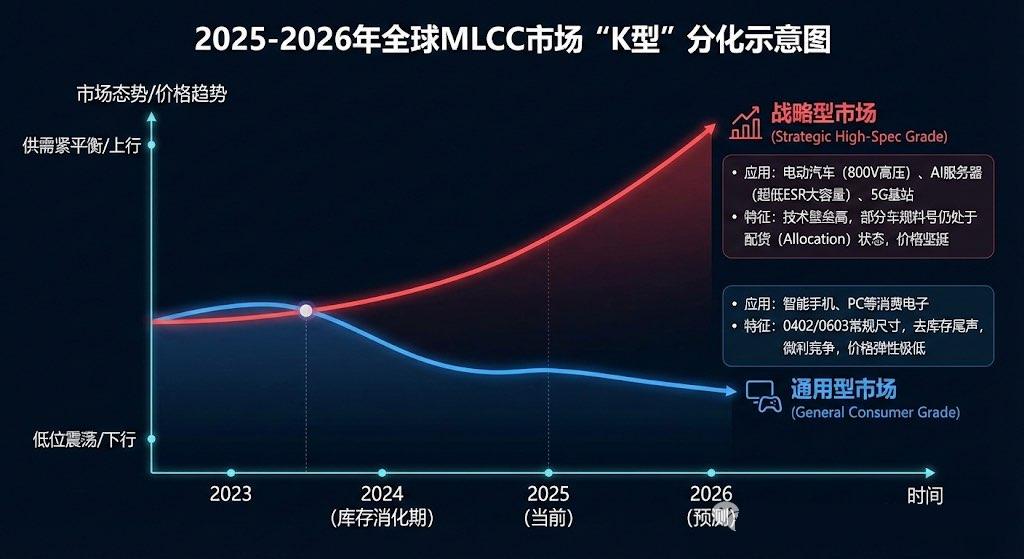
Core Viewpoint - The price surge in the component supply chain, particularly for Multi-Layer Ceramic Capacitors (MLCC), is driven by the explosive growth in AI server demand, with expectations for continued price increases in the short term [1][2]. Group 1: Price Trends and Market Response - MLCC prices in South Korea have risen nearly 20%, with expectations for further increases [1]. - Capital markets have reacted positively, with significant stock price increases for leading MLCC companies such as Samsung Electro-Mechanics, which has risen over 11% this year, and other A-share companies like Fenghua Advanced Technology and Sanhua Group [1][2]. - The MLCC industry is expected to experience a bifurcation by 2026, with high-end product demand likely to surge due to the AI boom, while mid-to-low-end products face challenges from weak demand and rising costs [1][4]. Group 2: Demand Drivers and Production Capacity - The demand for high-end MLCCs is driven by AI servers, which require three times more MLCCs than standard servers, leading to supply constraints [2]. - Major manufacturers like Murata Manufacturing, Samsung Electro-Mechanics, and Taiyo Yuden are operating at over 80% capacity, with Murata expected to see a 20% to 25% increase in high-end MLCC orders in the first quarter [2][3]. - Samsung Electro-Mechanics reported record revenue in Q4 2025, with a 22% year-on-year increase in revenue from high-voltage and high-capacity MLCCs [2]. Group 3: Competitive Landscape and Domestic Market Position - The global MLCC market is dominated by major players, with the top five manufacturers, including Murata, Samsung, and Taiyo Yuden, holding over 80% market share [3]. - Chinese manufacturers have established a relative advantage in the mid-to-low-end MLCC market but are accelerating efforts to penetrate the high-end market [3]. - Companies like Sanhua Group and Fenghua Advanced Technology are focusing on high-end applications such as 5G communication, AI servers, and automotive electronics, with successful integration into supply chains of major manufacturers like BYD [3]. Group 4: Industry Outlook and Cyclical Trends - The MLCC industry is currently in an upward cycle, with a typical cycle lasting about 4 to 5 years, supported by demand from automotive electronics and AI servers [3][4]. - The industry is expected to experience significant differentiation, with high-end MLCC demand surging due to AI applications, while traditional consumer electronics face declining demand [4]. - The market for AI servers is projected to grow at an annual rate of 30%, with the MLCC market for AI servers expected to reach 3.3 times its 2025 size by 2030 [4][5].


被动元件,涨涨涨
3 6 Ke· 2026-02-09 01:13
Core Viewpoint - The recent price hikes in passive components, led by major players like Yageo and Walsin, indicate a significant shift in the market driven by supply-demand imbalances and rising raw material costs, particularly in high-end sectors like AI and electric vehicles [1][4][19]. Group 1: Price Adjustments - Yageo announced a price increase of 15%-20% for certain resistor products starting February 1, marking its third price adjustment in a short period [1]. - Walsin and Panasonic also announced price hikes of around 20% and 15%-30% respectively for various passive components, reflecting a broader trend among major manufacturers [1][2]. - Smaller manufacturers in China, such as Fenghua Advanced Technology and Shunluo Electronics, have also followed suit with price adjustments ranging from 5%-30% across multiple product categories [2][3]. Group 2: Supply Chain Dynamics - The passive component market is experiencing supply tightness, with lead times extending and some distributors pausing quotes due to uncertainty in price adjustments [3][4]. - Rising costs of raw materials, particularly precious metals like silver and palladium, have significantly increased production costs for passive components, with estimates suggesting a 20%-30% rise in production costs [5][6]. - Capacity constraints are exacerbated by major manufacturers shifting focus to high-end products, leading to a structural shortage in the mid-range market [7][8]. Group 3: Demand Drivers - The demand for passive components is being driven by the rapid growth of AI and electric vehicles, with AI servers requiring significantly more MLCCs than traditional servers [10][11]. - The automotive sector is also a major growth area, with electric vehicles using up to three times more passive components compared to traditional vehicles, creating a favorable environment for price increases [11][12]. - The overall market for passive components in China is projected to grow from 1237.65 billion yuan in 2023 to 2583.59 billion yuan by 2030, with a compound annual growth rate of 11.09% [13]. Group 4: Market Structure Changes - The current price hikes reflect a structural change in the passive components market, with high-end products experiencing significant demand while traditional consumer electronics face challenges [15][19]. - Domestic manufacturers in China are beginning to capture more market share, particularly in high-end segments, as they improve their technology and production capabilities [19][20]. - The geopolitical landscape and supply chain diversification are providing opportunities for Chinese manufacturers to enter high-end markets, as global players face capacity and delivery challenges [19][24]. Group 5: Future Outlook - The passive components market is expected to continue evolving, with AI and automotive electronics driving demand for high-value products [25][26]. - Companies need to focus on high-capacity, miniaturized, and reliable products to meet the changing market demands and maintain competitiveness [25][26]. - Collaboration across the supply chain will be crucial for manufacturers to overcome technical challenges and align with market needs [25][26].

被动元件,涨涨涨!
半导体行业观察· 2026-02-08 03:29
Core Viewpoint - The recent price hikes in passive components, driven by supply-demand imbalances and rising raw material costs, indicate a significant transformation in the market dynamics of the passive components industry [6][9][12]. Price Adjustments - Yageo announced a price increase of 15%-20% for certain resistor products starting February 1, reflecting its position as a market leader with an 18% global market share [2]. - Other companies, including Walsin Technology and Panasonic, have also announced price hikes for various passive components, with increases ranging from 15% to 30% [2][3]. - The price adjustments are widespread, with many small and medium-sized manufacturers in China also raising prices by 5%-20% across multiple product categories [3]. Supply Chain Dynamics - The price increases are primarily driven by rising costs of raw materials such as silver, copper, and aluminum, which have seen significant price surges, with silver prices increasing over 140% in 2025 [7][9]. - The production costs for passive components have risen by 20%-30% due to these raw material price increases, prompting manufacturers to pass on costs to customers [7][9]. - Capacity constraints are exacerbating the situation, as many Japanese manufacturers have shifted focus to high-end products, reducing supply in the mid-to-low-end market [8][9]. Demand Drivers - The demand for passive components is being driven by the rapid growth of AI and electric vehicle markets, with AI server motherboards requiring significantly more MLCCs than traditional servers [10][11]. - The demand for passive components in electric vehicles is also increasing, with the number of MLCCs used per vehicle rising dramatically compared to traditional vehicles [10][11]. - The overall market for passive components in China is projected to grow from 1237.65 billion yuan in 2023 to 2583.59 billion yuan by 2030, with a compound annual growth rate of 11.09% [12]. Market Structure Changes - The current price hikes reflect a structural change in the passive components market, with high-end products for AI servers and electric vehicles experiencing significant demand while traditional consumer electronics face challenges [14][17]. - Domestic manufacturers are beginning to capture more market share, with companies like Walsin Technology and Sunlord Electronics seeing increased orders and expanding their production capabilities [18][19]. - The shift towards high-end products presents opportunities for domestic manufacturers to enter the supply chains of larger companies, especially as global manufacturers face capacity and delivery challenges [22][23].
又是暴击的一天!
Xin Lang Cai Jing· 2026-02-05 16:05
Market Overview - The Shanghai Composite Index closed with a small increase, but overall market volume decreased significantly, with over 3700 stocks declining, indicating a persistent money-losing effect [1] - There is a notable shift in risk appetite, with funds moving from high-risk sectors to safer ones, resulting in a lack of effective profit-making opportunities across most sectors [1] Space Photovoltaics - The sector experienced a short-term surge due to news related to Elon Musk, but quickly weakened after companies like Double Good Energy and JinkoSolar denied collaboration announcements, showcasing a typical one-day trading pattern [2] - The Economic Reference reported that space photovoltaics is entering a commercial phase, potentially becoming a trillion-dollar market, but faces multiple technical challenges [2] AI Applications - AI applications showed a mixed performance with a slight recovery in some areas, but overall, the sector is experiencing structural differentiation and a lack of sustained funding [3] - Alibaba's Qianwen project is set to launch a 3 billion yuan Spring Festival initiative, and the company is testing an AI video creation tool, which may drive interest in AI applications related to consumer scenarios [4] Commercial Aerospace - The commercial aerospace sector remains weak, lacking sustained buying support and clear leading stocks to drive market sentiment [5] - SpaceX has submitted an application to launch a million satellites, and the U.S. FCC is processing this application, indicating ongoing developments in the commercial space sector [6] Technology Sector - The technology sector is under pressure due to declines in U.S. tech stocks, with hardware experiencing further drops, although some segments like power semiconductors showed recovery [8] - Alphabet's Q4 2025 revenue exceeded expectations, with a significant increase in cloud business revenue, indicating strong performance in AI infrastructure investments [9] Consumer Sector - The consumer sector has become a core area for risk-averse funds, successfully attracting mainstream investment and demonstrating strong resilience in a volatile market [10] - Upcoming government briefings and new tax policies in Hainan are expected to stimulate consumer spending and support the sector [11] Cross-Strait Relations - The mainland is set to resume travel for Shanghai residents to Kinmen and Matsu, aiming to normalize exchanges and benefit both sides [12] Humanoid Robots - FF has launched a new robotics company and introduced several series of humanoid robots, with plans for initial deliveries by the end of February [13]
博迁新材:MLCC行业需求正受到AI服务器和汽车电子两大领域的驱动
Zheng Quan Ri Bao Zhi Sheng· 2026-02-05 12:38
Core Insights - The MLCC industry is experiencing strong growth driven by demand from AI servers and automotive electronics [1] - The trend towards miniaturization, high capacitance, and high voltage MLCCs is being propelled by the increasing penetration of advanced driver assistance systems in the automotive sector [1] - In the AI server sector, the rising demand for computing power is leading to higher requirements for power and energy consumption metrics, resulting in increased usage of high-capacitance, high-temperature MLCCs [1] Industry Trends - The demand for MLCCs in electric vehicles is estimated to be around 20,000 to 30,000 units per vehicle, while AI servers require more than ten times the amount of MLCCs compared to standard servers [1] - According to statistics from Taiwan's largest passive component distributor, the NVL36 cabinet requires approximately 234,000 high-end MLCCs, and the NVL72 cabinet requires about 441,000 MLCCs [1] - This trend is reshaping the supply-demand dynamics of the MLCC industry and is driving strong demand for small particle size high-end powder materials [1]

集邦咨询:2026年第一季度MLCC市场呈两极分化 实体AI引爆高端需求 消费电子则陷成本寒冬
智通财经网· 2026-02-05 05:40
Core Insights - The global MLCC industry is experiencing significant differentiation as of Q1 2026, driven by the rise of "Embodied AI" applications, leading to a surge in high-end MLCC demand while mid-to-low-end MLCCs face operational pressures due to seasonal effects and rising raw material costs [1][2] Group 1: High-End MLCC Demand - High-end MLCC orders are robust, supported by AI infrastructure needs from major companies like NVIDIA and cloud service providers such as AWS and Google, resulting in full capacity utilization for leading manufacturers like Murata, SEMCO, and Taiyo Yuden [1] - Murata anticipates a 20% to 25% increase in high-end MLCC orders for Q1 2026, maintaining production lines at full capacity [1] Group 2: Mid-to-Low-End MLCC Challenges - The demand for mid-to-low-end MLCCs is declining, particularly in consumer electronics, with ODM manufacturers like Compal and Pegatron reducing their MLCC orders by an average of 5% to 6% in January [2] - Capacity utilization for MLCC manufacturers focusing on consumer specifications is between 60% to 70%, with inventory adjustment days maintained at 60 to 75 days [2] Group 3: Cost Pressures and Market Dynamics - Rising international metal prices have increased costs for passive components, with magnetic beads and resistors seeing price hikes of 15% to 20%, although MLCC costs remain stable due to lower copper content [3] - The supply chain is expected to reflect a "hot AI, cold consumer" dynamic in Q1 2026, necessitating suppliers to strategically manage high-end AI product inventories while controlling costs and risks associated with traditional products [3]
MLCC 现货价飙升 20%
是说芯语· 2026-02-05 01:09
Core Viewpoint - The passive components industry is experiencing a price increase, particularly in multilayer ceramic capacitors (MLCC), with some distributors in mainland China raising spot prices by up to 20% [2][3]. Group 1: Price Trends - The price increase trend includes tantalum capacitors, chip resistors, magnetic beads, and MLCC, with industry expectations for improved performance from related manufacturers [3]. - Tantalum capacitors have seen price hikes of 20% to 30% due to high demand from AI server applications, leading to a supply-demand imbalance [3]. - MLCC is expected to follow suit in price increases, supported by a significant rise in demand as system designs adapt to include more MLCCs [4]. Group 2: Market Dynamics - The dependency on tantalum capacitors in AI devices has led to a design shift towards using a combination of tantalum capacitors and MLCCs to mitigate supply risks and control costs [4]. - The demand for MLCC is no longer just a reactive response to price increases but is now driven by structural demand expansion, particularly in AI applications [4]. - For the company Yageo, tantalum capacitors account for approximately 18% to 22% of revenue, while MLCC contributes about 18% to 20% [4].
第一创业晨会纪要-20260204
First Capital Securities· 2026-02-04 02:59
Group 1: Passive Components Industry - The largest passive component manufacturer, Murata Manufacturing, reported a 12.2% increase in capacitor revenue to 239.1 billion JPY for Q3 2025, and a 9.5% increase in inductor/EMI filter revenue to 56.4 billion JPY. Capacitor orders reached 268.1 billion JPY, a year-on-year increase of 29.4% [2] - The company noted that meeting the demand for electronic components, particularly MLCCs in the AI server sector, will be a significant challenge in 2026. While there are no discussions on price increases, the company will consider market conditions carefully [2] - The demand for passive components globally has accelerated, and domestic companies in this sector have a PE valuation of 30-40 times, which is relatively low compared to other segments of the electronics supply chain, indicating strong investment potential in the passive components industry [2] Group 2: Advanced Manufacturing - Tesla has achieved large-scale production of dry electrode technology, marking a transition from concept validation to practical manufacturing feasibility. The advantages of dry electrodes include reduced energy consumption and lower complexity in equipment and facilities [6] - The core of the dry electrode process is the roll-to-roll film forming equipment, with a value of approximately 50,000 USD per GWh, significantly higher than traditional wet processes. This development is expected to enhance the willingness of leading domestic battery manufacturers and equipment suppliers to invest in dry processes [6] - Long-term, this technology could become a fundamental process for the engineering of solid-state batteries, lowering the barriers to industrialization in this field [6] Group 3: Consumer Sector - Longping High-Tech forecasts a net profit of 130 to 190 million CNY for 2025, representing a year-on-year increase of 14% to 67%, marking a significant turnaround from previous losses. The improvement is largely attributed to the Brazilian operations transitioning from a drag to a contributor to profit [8] - The company has improved its gross margin by approximately 8 percentage points through optimized marketing and cost reduction strategies, while financial expenses have decreased by over 90% due to better management of local loans [8] - Looking ahead, management expects the Brazilian business to maintain its improvements, aiming for a complete turnaround in 2026, while domestic operations are expected to see stable revenue and profit growth amid industry adjustments [8] Group 4: Alcohol Industry - The management of Jinshiyuan indicated that despite a 9-day holiday boost, the market remains cautious, with sales expected to decline compared to the previous year. The overall trend is characterized by "weak volume and stable prices" [9] - Inventory levels are manageable, but pressure is concentrated among distributors, with low willingness to stock and a decrease in consumption intensity. The recovery in consumption is cautious and pragmatic, with fewer banquet tables and lower spending per table [9] - For 2026, management anticipates a negative year-on-year growth in industry sales volume for Q1, indicating a gradual recovery rather than a rapid rebound. The outlook suggests a "weak recovery with increasing differentiation" within the industry, favoring leading companies [9]
未知机构:国信电子被动元件继续推荐村田MLCC需求爆发会根据市场情况考虑涨价-20260204
未知机构· 2026-02-04 02:00
Summary of Company and Industry Insights Company: Murata Manufacturing Co., Ltd. Key Financial Performance - Net sales increased by 4.3% year-on-year, reaching 467.5 billion JPY [1] - Operating profit decreased by 50.2% to 37.9 billion JPY, primarily due to goodwill impairment losses related to the acquisition of the SAW Filter subsidiary, Resonant [1][2] Product Demand and Market Trends - Strong demand for multi-layer ceramic capacitors (MLCC) in the artificial intelligence server sector [1][2] - Orders for 4Q25 amounted to 500.7 billion JPY, showing a quarter-on-quarter increase and a year-on-year surge of 11.5% [2] - Capacitor orders skyrocketed by 29.4% to 268.1 billion JPY [2] Pricing Strategy - The company has not yet discussed price increases but acknowledges the need to consider market conditions carefully [2] Order and Sales Metrics - Book-to-bill ratio (BB) stands at 1.07, indicating that orders slightly exceed sales, maintaining a ratio above "1" for five consecutive quarters [2]
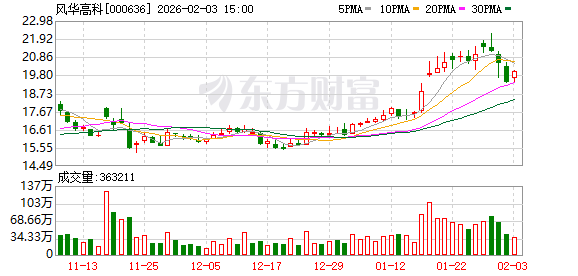
风华高科:MLCC产品广泛应用于汽车等下游终端应用领域
Zheng Quan Ri Bao· 2026-02-03 11:11
证券日报网讯 2月3日,风华高科在互动平台回答投资者提问时表示,公司MLCC产品广泛应用于汽 车、工业控制、新能源、通讯、家电、医疗、服务器、无人机等下游终端应用领域,并荣获"国家级制 造业单项冠军产品"称号,未来,公司将紧抓国产替代的趋势,持续提升核心竞争力与经营业绩。 (文章来源:证券日报) ...