
金融衍生品

Search documents
节前或偏震荡
Zhong Xin Qi Huo· 2026-02-12 02:09
投资咨询业务资格:证监许可【2012】669号 中信期货研究|⾦融衍⽣品策略⽇报 2026-02-12 节前或偏震荡 股指期货:节前缩量,涨价链领涨 股指期权:续持买权防御为主 国债期货:货币宽松预期⽀撑债市 股指期货方面,节前缩量,涨价链领涨。周三权益市场缩量震荡,建 材、有色金属为代表的涨价链领涨,传媒、硬件等方向弱势,市场风格出 现一定程度上的切换。个股方面,涨停家数较周二有所回落,结合量能跌 至2万亿附近,资金节前降低交易频率,预计节前维持震荡格局。另外, 针对是否持仓过节的问题,目前倾向中性仓位持有,从尾部风险角度来 看,前期风险主要来自于两个维度,一是商品波动而带来的连锁调整,二 是海外软件股回撤拖累科技股。而近期两大风险因素均有所缓和,其中贵 金属、有色金属波动率整体下移,同时美国散户开始关注超跌的软件股, 目前判断出现流动性尾部风险的概率相对不大。 股指期权方面,续持买权防御为主。昨日权益指数震荡整理。期权方 面,各个品种市场成交额再度回落。相较于前两周市场波动下的流动性升 温,本周期权交投量能相对平稳。隐含波动率日内走势有所反弹,考虑到 节假日和行权日的临近,期权端的主体观点保持不变,仍建议 ...
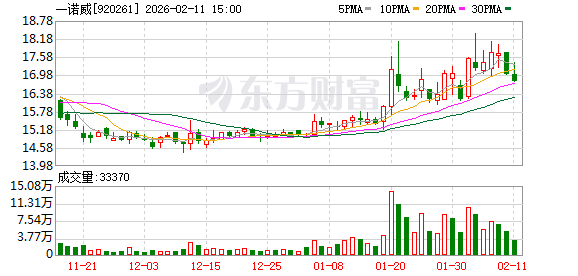
一诺威:关于开展外汇套期保值业务的公告
Zheng Quan Ri Bao· 2026-02-11 14:12
证券日报网讯 2月11日,一诺威发布公告称,公司拟在不超过6000万美元或等值外币额度内与银行等金 融机构开展外汇套期保值业务,额度可循环滚动使用,任一时点业务金额不超过已审议额度,预计占用 金融机构授信额度不超过2000万元人民币。资金来源为自有或自筹资金,不涉及募集资金,授权期限自 董事会审议通过之日起12个月内有效。 (文章来源:证券日报) ...

白话期权系列之二:如何通过期权在高波动市场中捕捉非对称收益?
Shenwan Hongyuan Securities· 2026-02-11 11:07
2026 年 02 月 11 日 如何通过期权在高波动市场中捕捉 非对称收益? ——白话期权系列之二 跨式策略(Straddle): 同时买入平值认购和认沽期权,收益曲线呈"V 型",对波动最敏感,但成本较高; 宽跨式策略(Strangle): 同时买入虚值认购和认沽期权,收益曲线呈"U 型",构建成本较低,但需要标的资产发 生更剧烈的波动才能触及盈利区间。。 相关研究 - 证券分析师 沈思逸 A0230521070001 shensy@swsresearch.com 邓虎 A0230520070003 denghu@swsresearch.com 联系人 沈思逸 A0230521070001 shensy@swsresearch.com 请务必仔细阅读正文之后的各项信息披露与声明 本研究报告仅通过邮件提供给 博时基金 博时基金管理有限公司(researchreport@bosera.com) 使用。1 衍 生 品 研 究 期 权 权 证 证 券 研 究 报 告 ⚫ 波动率收益的来源:与传统资产必须精准预判"方向"不同,期权工具允许投资者构建 "Delta 中性"组合,使收益与方向脱钩,仅与价格变动的"幅度" ...
情绪偏暖,?势偏震荡
Zhong Xin Qi Huo· 2026-02-11 01:32
股指期货:盘⾯平淡 股指期权:买权防御为主 国债期货:窄幅震荡 投资咨询业务资格:证监许可【2012】669号 股指期货方面,盘面平淡。周二权益市场走势平淡,全A指数微涨, 传媒表现一枝独秀,食品、地产相对弱势。同时节前开始显现出交投情绪 下降的信号,其一,A股量能略超2万亿,近期换手水平在低位,第二,股 指期货持仓量连续第二日下降超万手,为规避假日波动,部分资金选择进 行降仓处理。同时观察到美元指数下跌及贵金属反弹趋势有所放缓,节前 A股大概率偏震荡状态,上方下方空间均有限。展望后市,两会之前的走 势值得关注,在流动性等负面因素缓和之后有望重回温和反弹走势,而在 两会节点之后,需关注潜在风险,近年两会之后A股表现相对一般。 中信期货研究|⾦融衍⽣品策略⽇报 2026-02-11 情绪偏暖,⾛势偏震荡 股指期权方面,买权防御为主。昨日权益指数震荡整理。期权方面, 各个品种市场成交额再度回落。相较于前两周市场波动下的流动性升温, 本周期权交投量能相对平稳。结合隐含波动率的回落,推测目前市场情绪 偏暖。但考虑到节假日和行权日的临近,期权端建议买权防御为主。需要 说明的是,此时建议买权对冲并不意味着看空,而是对整体 ...
2月衍生品月报(2026/2):衍生品信号反转,股指升水、波动预期升温-20260210
Huafu Securities· 2026-02-10 08:35
华福证券 2026 年 02 月 10 日 金 融 工 程 金 融 工 程 定 期 报 衍生品信号反转,股指升水、波动预期升温——2 月衍生品月报(2026/2) 投资要点: 股指期货 主要股指(沪深 300、上证 50、中证 500 和中证 1000)市场活跃 度 12 月份止住跌势,2026 年 1 月份成交额出现反弹。 告 从贴水比例来看,IF 和 IM 合约由贴水转为升水,显示市场最近 空头力量持续较弱,情绪中性偏乐观。 国债期货 1 月份国债期货小幅震荡, 10 年期国债期货对应隐含收益率为 1.69%,低于现货对应的 1.8%。 从升贴水结构来看,近远月合约价差在 0 附近波动,整体投资者 对于未来债券市场情绪中性偏乐观。 期权市场 1 月份主要指数 VIX 中枢向上提升,市场波动率预期相比之前有 所上升。 期权市场 PCR,上证 50 和沪深 300 指数的 PCR 在 1 月有所下降, PCR 指标显示市场情绪中性偏谨慎。 风险提示 本报告所有分析均基于公开信息,不构成任何投资建议;若市场 环境或政策因素发生不利变化将可能造成行业发展表现不及预期;报 告采用的样本数据有限,存在样本不足以代表整 ...
掘金2026-量化策略年度展望
2026-02-10 03:24
Summary of Conference Call Records Industry Overview - The focus is on the derivatives market in China, particularly options and their strategies, as well as the refinancing market for listed companies [1][2][3][4]. Key Points and Arguments Derivatives Market - A timing system based on implied volatility has shown accurate performance, especially in extreme market conditions, providing valuable insights for investment decisions [1][2]. - Various options risk management strategies, such as selling put options, have yielded positive excess returns on broad indices, improving the Sharpe ratio of portfolios, although they may struggle to outperform indices in long-term bullish environments [1][3]. - The average daily trading volume of stock index futures has reached 600 to 700 billion yuan, accounting for about one-third of the spot trading level, indicating a growing but still underdeveloped derivatives market compared to mature markets [3][4]. - As of the end of 2025, the proportion of public funds and insurance capital using stock index options is less than 6%, reflecting a cautious approach towards derivatives [6]. Refinancing Market - The average discount rate for competitive financing projects in 2025 was 12.7%, with expectations for 2026's refinancing market size to be around 165 billion yuan, and average discount returns projected at 13.8% [2][19]. - There is a notable difference in financing demand across industries, with high-tech sectors like electronics and pharmaceuticals showing stronger demand compared to traditional sectors like banking and coal [11]. - The average review cycle for financing projects has extended significantly, reaching approximately 364 days by 2025, but is expected to decrease to around 300 days in 2026 [12]. Investment Strategies - A rotation-based investment strategy has outperformed single-style strategies by analyzing the relationship between quarterly and annual trends to determine the relative advantages of growth and value styles [2][18]. - The use of quantitative strategies is highlighted as having advantages over active investment, particularly in concentrated market conditions, where fundamental alpha factors perform well [20]. Market Trends and Predictions - The derivatives market is still in its early stages of development, with significant potential for growth as trading volumes increase [4]. - The trend of declining sizes in structured products like snowball products and DCNs has reversed slightly since late 2025, indicating changing investor preferences [5]. - The U.S. market's experience with options strategy ETFs and mutual funds serves as a reference for potential domestic market developments [7]. Other Important Insights - The performance of ETFs using options strategies, such as those from JPMorgan, shows lower volatility and down-side risk compared to the S&P 500 index, making them attractive in the current environment [8][9]. - The participation of foreign capital in the refinancing market has decreased, while state-owned and industrial investment funds have increased their involvement [15]. - Public funds are categorized into regular open-end funds and periodic open-end products, with the latter investing more heavily in refinancing projects [16]. This summary encapsulates the key insights from the conference call records, focusing on the derivatives and refinancing markets, investment strategies, and market trends.
市场情绪偏暖
Zhong Xin Qi Huo· 2026-02-10 01:43
Group 1: Report's Industry Investment Ratings - The investment ratings for stock index futures are expected to be volatile and moderately strong; for stock index options, the rating is volatile; for treasury bond futures, the rating indicates a moderately strong trend in the medium - term and a need for short - term caution [5][6] Group 2: Report's Core Views - Stock index futures followed the external market rebound. The A - share market's rise was related to the global risk - asset sentiment repair on Friday. Before the holiday, the probability of a rapid rebound is low. After the holiday, it is expected to rise moderately but with a slower slope than in January [5] - Stock index options have a warm market sentiment. The trading volume was relatively stable after the market's rise. Considering the approaching holiday and exercise date, it is recommended to use call options for defense [5] - Treasury bond futures saw an increasing bullish sentiment. Supply decreased, the central bank continued net injections, and the market's expectation of loose money increased. The bond market is expected to be moderately strong in the medium - term, but short - term caution is needed [6] Group 3: Summary by Related Catalogs Stock Index Futures - On Monday, the equity market opened high and fluctuated at a high level, with the All - A index rising nearly 2%. Communication, media, and electronics were strong. The A - share rebound was related to the global risk - asset sentiment repair on Friday. Before the holiday, the low participation rate and risk - averse capital preference limit a rapid rebound. The weakening dollar index is a favorable factor. After the holiday, during the important meeting window period, the market is expected to rise moderately [5] - The operation suggestion is to hold IM long positions [5] Stock Index Options - The trading volume of each option variety declined significantly. After the market's rise, the trading volume was relatively stable. The strengthening of the option sentiment indicator (position PCR) and the decline in implied volatility suggest a warm market sentiment. It is recommended to use call options for defense to protect the overall portfolio's systematic risk [5] Treasury Bond Futures - Although the equity market was strong, the stock - bond seesaw effect did not occur. The bullish sentiment in the bond market increased due to the decline in supply and the central bank's net injection. The market's expectation of loose money also rose. In the first quarter, the bond - market allocation power may increase, supporting the bullish sentiment. In the medium - term, the bond market may be moderately strong, but short - term factors may cause disruptions [6] - Operation suggestions include a volatile trend strategy, paying attention to short - hedging at low basis levels, a basis - volatile basis strategy, appropriately paying attention to the convergence of the 30Y - 10Y spread, and being aware of the downward momentum of the inter - period spread and the change in the inter - period transfer window due to the Spring Festival [6]
上行周期下的企业痛点与期权运用
Qi Huo Ri Bao Wang· 2026-02-09 01:10
在全球经济回暖与产业升级的双重驱动下,许多行业步入新一轮上行周期。原材料价格攀升、产能扩张 加速、市场竞争加剧成为这一阶段的典型特征。然而,上行周期并非坦途,企业在这一阶段面临的痛点 往往比下行周期更为隐蔽和复杂。传统风险管理工具难以完全覆盖这些新型挑战,而金融衍生品特别是 期权,正以其独特的非线性风险管理特性,为企业提供精准的周期应对方案。 上行周期的痛点:成本与竞争 成本快速调整是上行周期企业面临的首要挑战。随着需求回暖,原材料采购成本跟随上行。下游需求回 暖速度往往偏慢,上游原料商、贸易商却能快速推涨价格。这种上游先于下游响应的上涨使得企业面 临"增量不增利"的困境。企业既不愿因成本上涨而放弃市场份额,又难以将全部成本转嫁给下游。 期权解决方案:非线性风险管理 市场竞争在上行周期中呈现出新特点。随着行业景气度提升,新进入者不断增加,市场竞争从单纯的成 本竞争升级为"融资能力+市场份额"的复合竞争。 传统工具的局限性:线性思维的困境 面对这些痛点,企业传统上采用期货套期保值、长期协议等线性工具进行风险管理。然而,在上行周期 中,这些工具存在一定的局限性。 期货套期保值虽然能锁定成本,但也封死了企业从原材料 ...
穿越汇率波动周期,上市公司外汇套期保值热渐起
Sou Hu Cai Jing· 2026-02-08 23:59
Core Viewpoint - The recent strengthening of the RMB has led to an increase in foreign exchange hedging activities among listed companies, with over 40 companies announcing plans to engage in foreign exchange hedging or related derivative businesses since the beginning of the year [1] Group 1: Foreign Exchange Hedging Activities - More than 40 listed companies have announced their intention to conduct foreign exchange hedging or related derivative activities to mitigate risks associated with currency fluctuations [1] - Companies are increasingly using foreign exchange hedging as a tool to enhance financial stability and resilience against external volatility [1] Group 2: Impact of Currency Fluctuations - The international environment has been volatile over the past year, causing significant fluctuations in the foreign exchange market [1] - Companies that do not hedge their foreign exchange exposure risk substantial losses in operating profits due to currency volatility, as illustrated by a company that reported a potential loss of approximately RMB 1.099 billion due to an unexpected appreciation of the RMB by 2025 [1]
穿越汇率波动周期 上市公司外汇套期保值热渐起
Shang Hai Zheng Quan Bao· 2026-02-08 17:31
Core Viewpoint - The recent strengthening of the RMB has led to a surge in foreign exchange hedging activities among listed companies, with over 40 companies announcing plans to engage in foreign exchange hedging or related derivative businesses to mitigate risks from currency fluctuations [1][2]. Group 1: Importance of Foreign Exchange Hedging - Foreign exchange hedging is increasingly recognized as a crucial tool for companies to navigate currency volatility, with many firms using it to enhance financial stability and resilience against external shocks [1][2]. - The fluctuation of exchange rates has become a significant variable affecting profit margins, cash flow, and competitive positioning, prompting companies to adopt hedging strategies [2][3]. - The scale of companies utilizing foreign exchange derivatives to manage currency risk exceeded $1.9 trillion in 2025, nearly doubling since 2020, with the hedging ratio increasing by 8 percentage points to 30% [2]. Group 2: Globalization and Foreign Exchange Exposure - The rise in foreign exchange hedging reflects the ongoing globalization of companies, with increasing proportions of revenue coming from overseas, thereby expanding their foreign exchange exposure [3][4]. - Companies like Sanqi Interactive Entertainment have noted significant impacts on their financial performance due to exchange rate fluctuations, leading them to implement hedging strategies [3]. Group 3: Evolving Nature of Foreign Exchange Risks - The nature of foreign exchange risks is evolving, particularly as companies expand into emerging markets with less mature financial systems, increasing the urgency for effective risk management [4]. - Companies face heightened uncertainty in these markets due to limited hedging tools and liquidity, necessitating proactive risk management strategies [4]. Group 4: Strategies for Effective Hedging - Different industries exhibit varying levels of hedging practices influenced by factors such as profit margins, duration of international trade, and ability to transfer exchange rate risks [5]. - The National Foreign Exchange Administration recommends starting with simple hedging strategies and gradually moving to dynamic hedging as companies gain experience [5]. Group 5: Policy Support for Hedging - The National Foreign Exchange Administration is promoting a risk-neutral mindset among companies, encouraging them to engage in hedging [6]. - Efforts include providing case studies for risk identification and strategy formulation, enhancing the availability of hedging products, and simplifying processes for compliant companies to engage in foreign exchange derivative transactions [6].