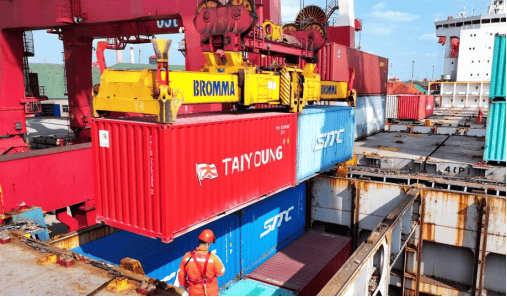
集成电路制造业

Search documents
电子信息制造业投资增速现反弹 大企业对芯片领域投资加大出手
Mei Ri Jing Ji Xin Wen· 2025-11-24 04:09
Group 1 - ZTE has resumed operations after the lifting of restrictions, with all 5G field tests initiated with the three major domestic operators and international tests fully restored, accumulating over 500 million yuan in orders from domestic operators [1] - The Ministry of Industry and Information Technology reported a 14.6% year-on-year increase in fixed asset investment in the electronic information manufacturing industry from January to May, with semiconductor discrete device manufacturing seeing a notable growth of 33.1% [1][5] - The investment growth in the electronic information manufacturing sector has been driven by emerging applications such as automotive electronics, artificial intelligence, and 5G, with communication system equipment and integrated circuit manufacturing also showing strong investment momentum [5][6] Group 2 - The overall investment growth in the electronic information manufacturing industry has declined compared to last year, with a drop from 21% in early 2018 to 14.2% by April, although there was a slight recovery in May [2][4] - The significant increase in investment in the first half of 2017 was attributed to the approval of many large-scale projects, including infrastructure developments, which directly boosted the electronic information manufacturing sector [4] - The decline in investment growth in 2018 is seen as a normal process as the industry transitions towards high-quality development, with traditional manufacturing investment cooling while new information technology sectors are still in their infancy [4][6]



川土微的收购,黄了
半导体行业观察· 2025-11-19 01:35
Core Viewpoint - The company, Mengtian Home, has announced the termination of its plans to acquire assets through the issuance of shares and cash payments, as well as the cessation of control transfer plans by its actual controller [2][4]. Summary by Sections Securities Suspension and Resumption - Mengtian Home's stock will resume trading on November 19, 2025, following the termination of its asset acquisition plans and control transfer [4]. Acquisition Plans - The company was previously planning to acquire control of ChuanTu Microelectronics through share issuance and cash payments, along with raising matching funds [4][5]. ChuanTu Microelectronics Overview - ChuanTu Microelectronics, established in 2016, specializes in high-end analog chip research, design, and sales. The company has undergone multiple financing rounds, with significant revenue growth reported in 2022, including a 251% year-on-year increase in revenue and a 641% increase in net profit [6].


招商研究 | 招闻天下1113
Sou Hu Cai Jing· 2025-11-13 00:01
Core Viewpoints - The report highlights the sectors with sufficient supply clearance and potential investment opportunities, focusing on resource products, consumer goods, traditional manufacturing, electronics, pharmaceuticals, and the new energy industry [4][5][6]. Supply Clearance - Sectors with significant supply clearance include: 1) Resource products benefiting from anti-involution: chemicals (coal chemicals, polyurethane, non-metallic materials), building materials (cement products, waterproof materials), non-ferrous metals (copper, lithium), coke, and iron ore [4]. 2) Small consumer goods in the consumption sector: dairy products, pet food, pig farming, snacks, and branded cosmetics, as well as the real estate chain (home textiles, home furnishings, personal care small appliances, lighting equipment) and medical beauty consumables [4]. 3) Traditional equipment manufacturing: motorcycles, distribution equipment, inverters, commercial vehicles, printing and packaging machinery, instruments, and power transmission and transformation equipment [4]. 4) Certain electronic hardware: integrated circuit manufacturing, analog chip design, optical components, semiconductor materials, and LEDs [4]. 5) Pharmaceuticals: vaccines, traditional Chinese medicine, and raw materials [4]. 6) New energy industry chain: silicon materials, batteries, photovoltaic processing equipment, wind power generation, as well as gold, gas, and dyeing [4]. Inventory Decrease - Industries experiencing accelerated inventory reduction and marginal improvement in gross margins are expected to see high performance elasticity and certainty, including: chlor-alkali, fluorochemical, special steel, modified plastics, membrane materials, and various consumer goods [5]. - Industries with continued supply clearance and declining inventory are likely to witness a profit turning point, such as chemicals (soda ash, organic silicon, polyurethane), coking coal, thermal coal, and glass manufacturing [5]. Investment Strategy - The report recommends focusing on sectors with accelerated supply clearance and low inventory, such as polyurethane, vaccines, dairy products, residential development, non-metallic materials, and various manufacturing sectors [6]. - It also suggests sectors with continued contraction and improving gross margins, including branded cosmetics, plastic packaging, pre-processed foods, and various resource products [6]. Hong Kong Stock Market Insights - The report indicates that the Hong Kong stock market is experiencing fluctuations, but this presents investment opportunities due to expected recognition of various positive factors [7]. - Key catalysts include continuous innovation in China's technology sector, easing US-China relations, and the gradual implementation of the 14th Five-Year Plan [7][8]. Liquidity and Valuation - Continuous net inflow of foreign and southbound funds is noted, with the Federal Reserve expected to continue lowering interest rates, which may further boost liquidity in the Hong Kong stock market [8][9]. - The report emphasizes that the combination of fundamentals, policies, and liquidity will support a rebound in the Hong Kong stock market, which is currently undervalued [8][9]. Configuration Strategy - The report advocates a "barbell strategy" focusing on offensive sectors (technology and non-ferrous metals) and defensive sectors (turnaround and dividend stocks) [9][10]. - The offensive focus includes the AI industry chain and non-ferrous metals, while the defensive focus targets essential consumer goods and high-dividend strategies [9][10].

CPI同比转正 PPI环比年内首涨
Jin Rong Shi Bao· 2025-11-10 01:37
Group 1: CPI Analysis - In October, the Consumer Price Index (CPI) increased by 0.2% month-on-month and year-on-year, driven by policies to expand domestic demand and the impact of the National Day and Mid-Autumn Festival holidays [1][2] - The core CPI, excluding food and energy prices, rose by 1.2% year-on-year, marking the sixth consecutive month of growth [1][2] - Significant rainfall and increased holiday demand led to a 4.3% month-on-month rise in vegetable prices, contributing to a narrowing of the year-on-year decline in food prices to -2.9% [2][3] Group 2: PPI Analysis - The Producer Price Index (PPI) saw a month-on-month increase of 0.1%, marking the first rise of the year, despite a year-on-year decline of 2.1% [1][4] - The improvement in supply-demand dynamics in various industries, particularly due to anti-involution policies, has supported price increases in sectors like coal and black metals [4][5] - Prices in the coal mining and washing industry rose by 1.6%, while prices for photovoltaic equipment and components increased by 0.6%, indicating a positive trend in certain high-tech manufacturing sectors [4][5] Group 3: Future Outlook - Analysts expect a gradual recovery in PPI year-on-year by 2026, while CPI is anticipated to remain at low levels, indicating a moderate inflationary trend [6]
专访北京大学光华管理学院院长刘俏: “十五五”规划建议核心路径明晰 全要素生产率提升成经济增长关键引擎
Zheng Quan Shi Bao Wang· 2025-11-10 00:20
Core Insights - The "15th Five-Year Plan" emphasizes seven key goals, with a focus on maintaining economic growth within a reasonable range and improving total factor productivity [2][4] - The plan aims for China to achieve basic socialist modernization by 2035, with stable economic growth as a core requirement [4] Economic Growth and Total Factor Productivity - The plan outlines that economic growth must remain within a reasonable range to meet the GDP doubling target by 2035 [4] - Total factor productivity is identified as a crucial driver for sustainable economic growth, moving away from traditional scale expansion [5][6] - The emphasis on total factor productivity in the "15th Five-Year Plan" is significantly higher than in the previous plan, indicating its importance in addressing current economic challenges [6] Manufacturing and New Quality Productivity - The development of new quality productivity, marked by significant improvements in total factor productivity, is a strategic task in the "15th Five-Year Plan" [7] - Maintaining a reasonable proportion of manufacturing is essential for supporting high-quality development and total factor productivity [8] - The manufacturing sector's share in China is approximately 26%, which is crucial for enhancing total factor productivity despite facing challenges like overcapacity [8] Technology and Industry Innovation - The integration of technological innovation and industrial innovation is highlighted as necessary for future industrial upgrades [9] - The plan addresses issues such as insufficient basic research funding and a shortage of talent in the technology sector [9][10] - Recommendations include active fiscal policies to support basic research and encourage enterprises to invest in technology [10]
专访北京大学光华管理学院院长刘俏: “十五五”规划建议核心路径明晰全要素生产率提升成经济增长关键引擎
Zheng Quan Shi Bao· 2025-11-09 22:56
Core Insights - The "15th Five-Year Plan" emphasizes the importance of maintaining economic growth within a reasonable range to achieve the goal of doubling GDP by 2035 compared to 2020 levels [3][4] - The plan outlines seven key objectives, with a focus on high-quality development and the continuous improvement of total factor productivity (TFP) as a critical driver for sustainable growth [2][4] Economic Growth and Objectives - The "15th Five-Year Plan" proposes seven goals, prioritizing "significant achievements in high-quality development," which includes maintaining economic growth within a reasonable range and improving the total factor productivity [2][4] - The reasonable growth range is crucial for meeting the 2035 modernization targets, with a projected annual growth rate necessary to ensure GDP doubles by 2035 [3][4] Total Factor Productivity - Total factor productivity is identified as a structural engine for economic growth, moving away from traditional scale expansion towards productivity enhancement [4][5] - The emphasis on TFP in the "15th Five-Year Plan" is significantly higher than in the previous plan, indicating its critical role in addressing current economic challenges [4][5] New Quality Productivity - The development of new quality productivity is a strategic task in the "15th Five-Year Plan," requiring substantial investment and a robust manufacturing base [5][6] - Maintaining a reasonable proportion of manufacturing is essential for enhancing TFP, with China's manufacturing sector currently accounting for about 26% of the economy [5][6] Industry Upgrading and Innovation - The integration of technological and industrial innovation is highlighted as necessary for future industrial upgrades, addressing issues such as insufficient basic research funding and talent shortages [7][8] - The plan calls for collaborative efforts across policy, technology, and finance to enhance the synergy between technological innovation and industry [7][8]
中国10月PPI环比由平转涨,为年内首次上涨
Ge Long Hui A P P· 2025-11-09 02:11
Core Viewpoint - The Producer Price Index (PPI) has increased by 0.1% month-on-month for the first time in 2023, indicating an improvement in supply-demand relationships across various industries [1] Group 1: PPI Trends - The month-on-month PPI has shifted from flat to an increase of 0.1%, marking the first rise this year [1] - Key industries experiencing price increases include coal mining and washing (up 1.6%), coal processing (up 0.8%), and photovoltaic equipment manufacturing (up 0.6), all of which have seen continuous price rises for over two months [1] - Other sectors such as cement manufacturing, computer assembly, lithium-ion battery manufacturing, and integrated circuit manufacturing have also transitioned from price declines to increases, with respective rises of 1.6%, 0.5%, 0.2%, and 0.2% [1] Group 2: Impact of External Factors - Domestic prices in the non-ferrous metals and petroleum-related industries have shown a divergence due to external factors [1] - The rise in international non-ferrous metal prices has led to a 5.3% increase in domestic non-ferrous metal mining prices and a 2.4% increase in non-ferrous metal smelting and rolling prices, with gold and copper smelting prices rising by 8.7% and 4.3%, respectively [1] - Conversely, the decline in international oil prices has resulted in a 2.3% decrease in domestic oil and natural gas extraction prices and a 0.8% decrease in refined petroleum product manufacturing prices [1]
中国经济顶住压力稳中有进
Xin Hua Wang· 2025-11-03 23:47
Core Viewpoint - China's economy has shown resilience and progress amidst pressures, with solid foundations laid for achieving annual economic and social development goals [1] Economic Performance Characteristics - The GDP grew by 5.2% year-on-year in the first three quarters, maintaining a leading position among major global economies. Retail sales of consumer goods increased by 4.5%, accelerating by 1.2 percentage points compared to the same period last year. The industrial added value for large-scale enterprises rose by 6.2%, marking the highest growth since 2022 [2] - Strong momentum is evident, with the added value of equipment manufacturing and high-tech manufacturing increasing by 9.7% and 9.6%, respectively. Their shares in large-scale industrial output rose by 2.1 and 0.8 percentage points year-on-year. The integrated circuit and smart device manufacturing sectors saw increases of 22.4% and 12.2% [2] - Quality and efficiency have improved, with a 3.2% year-on-year increase in profits for large-scale industrial enterprises, and a significant 21.6% increase in September alone. Prices for key products like polysilicon and lithium carbonate have rebounded [2] - The economy demonstrated resilience with a 7.1% growth in goods exports, alongside an optimized export product structure. High-tech and electromechanical product exports grew by 11.9% and 9.6%, respectively, with exports to Belt and Road countries increasing by 12.4% [2] - There is significant potential for growth, with retail service sales rising by 5.2%. The production of civilian drones and industrial robots surged by 43.2% and 29.8%, while the output of new energy vehicles and lithium-ion batteries for vehicles increased by 29.7% and 46.9% [3] Social Welfare and Supply Security - The government has effectively ensured social welfare, particularly in grain production and energy supply. Measures have been taken to stabilize grain markets and minimize the impact of disasters on production and farmers' incomes. The summer grain harvest was successful, and the autumn harvest is expected to be strong [4] - Energy supply for the winter heating season is on track, with coal reserves at 220 million tons, sufficient for over 35 days. The underground gas storage has met its annual injection target, ensuring full capacity for winter [4][5] Investment Expansion - Expanding effective investment is crucial for stabilizing growth. The government has allocated 500 billion yuan for local government debt to enhance financial capacity and support investment projects, with 2300 projects supported and a total investment of approximately 7 trillion yuan [6] - The focus of investments includes digital economy, artificial intelligence, consumer infrastructure, and urban renewal projects in transportation, energy, and underground pipeline construction [6] - Recent forecasts from international economic organizations have raised China's economic growth expectations for 2025 by 0.8 percentage points compared to earlier predictions [6]
中国经济顶住压力稳中有进(锐财经)
Ren Min Ri Bao· 2025-11-03 20:35
Core Viewpoint - China's economy has shown resilience and progress in the first three quarters of the year, with effective investment and strong social welfare measures laying a solid foundation for achieving annual economic and social development goals [1][6]. Economic Performance - GDP growth reached 5.2% year-on-year, maintaining a leading position among major global economies [2] - Retail sales of consumer goods increased by 4.5%, accelerating by 1.2 percentage points compared to the same period last year [2] - Industrial added value grew by 6.2%, marking the highest growth for the same period since 2022 [2] Industrial Dynamics - The added value of equipment manufacturing and high-tech manufacturing increased by 9.7% and 9.6%, respectively, with their shares in large-scale industry rising by 2.1 and 0.8 percentage points year-on-year [2] - The integrated circuit manufacturing and smart device manufacturing sectors saw significant growth, with increases of 22.4% and 12.2% [2] Quality and Efficiency - Improvements in product prices and corporate profits were noted, with industrial enterprise profits rising by 3.2% year-on-year, and a notable 21.6% increase in September alone [2] - Prices for key products such as polysilicon, silicon wafers, and lithium carbonate have rebounded significantly [2] Resilience and Export Growth - Despite external challenges, merchandise exports maintained a growth rate of 7.1%, with high-tech and electromechanical product exports growing by 11.9% and 9.6%, respectively [2] - Exports to countries involved in the Belt and Road Initiative increased by 12.4% [2] Consumption and Potential - The service retail sector grew by 5.2%, driven by popular events such as sports and concerts [3] - The production of consumer drones and industrial robots surged by 43.2% and 29.8%, respectively, while new energy vehicles and lithium-ion batteries for vehicles saw increases of 29.7% and 46.9% [3] Social Welfare and Food Security - The government has effectively ensured food security and energy supply, with measures in place to stabilize grain markets and enhance disaster response capabilities [4] - As of October 27, coal reserves in national power plants reached 220 million tons, sufficient for over 35 days of use [4][5] Investment Expansion - The government has allocated 500 billion yuan for local government debt to support effective investment, with 2300 projects supported and a total investment of approximately 7 trillion yuan [6] - Key investment areas include digital economy, artificial intelligence, consumer infrastructure, and urban renewal projects [6] Future Outlook - International economic organizations have raised their forecasts for China's economic growth, indicating confidence in achieving annual development goals [6][7]
前三季度消费需求和重点产业结构升级呈现新的亮点
Sou Hu Cai Jing· 2025-11-03 10:40
Economic Performance - China's GDP grew by 5.2% year-on-year in the first three quarters, maintaining a leading position among major global economies [1][4] - Retail sales of consumer goods increased by 4.5%, accelerating by 1.2 percentage points compared to the same period last year [4] - Industrial added value for large-scale enterprises rose by 6.2%, marking the highest growth for the same period since 2022 [4] Economic Resilience - Despite external pressures, China's goods exports maintained a growth rate of 7.1% [5] - The export structure has improved, with high-tech and high-value-added products seeing growth rates of 11.9% and 9.6%, respectively [5] - Exports to countries involved in the Belt and Road Initiative increased by 12.4%, and exports to ASEAN countries have seen an upward trend for eight consecutive months [5] Innovation and Industry Growth - China's innovation index has entered the global top ten, supporting the development of emerging industries [4] - The added value of equipment manufacturing and high-tech manufacturing increased by 9.7% and 9.6%, respectively, with their shares in large-scale industry rising [4] - Production of civilian drones and industrial robots surged by 43.2% and 29.8%, while production of new energy vehicles and lithium-ion batteries for vehicles grew by 29.7% and 46.9% [5] Financial Support and Investment - Over 5 trillion yuan has been allocated to support more than 2,300 projects, with total project investments around 7 trillion yuan, focusing on digital economy, AI, and urban infrastructure [7] - The National Development and Reform Commission will continue to promote project construction to expand effective investment and drive high-quality development [7] Logistics and Cost Efficiency - The total logistics cost in China for the first three quarters was 14.2 trillion yuan, with a GDP ratio of 14.0%, a decrease of 0.1 percentage points from the previous year [10] - The logistics infrastructure network is being optimized, with significant advancements in digitalization and automation, leading to improved operational efficiency [10] - The implementation of the "Action Plan" aims to further reduce logistics costs and enhance service quality across the logistics sector [10]