Smart Home

Search documents
X-Sense eröffnet deutsche Niederlassung zur Stärkung des Brandschutzes in Europa
Prnewswire· 2026-01-19 04:24
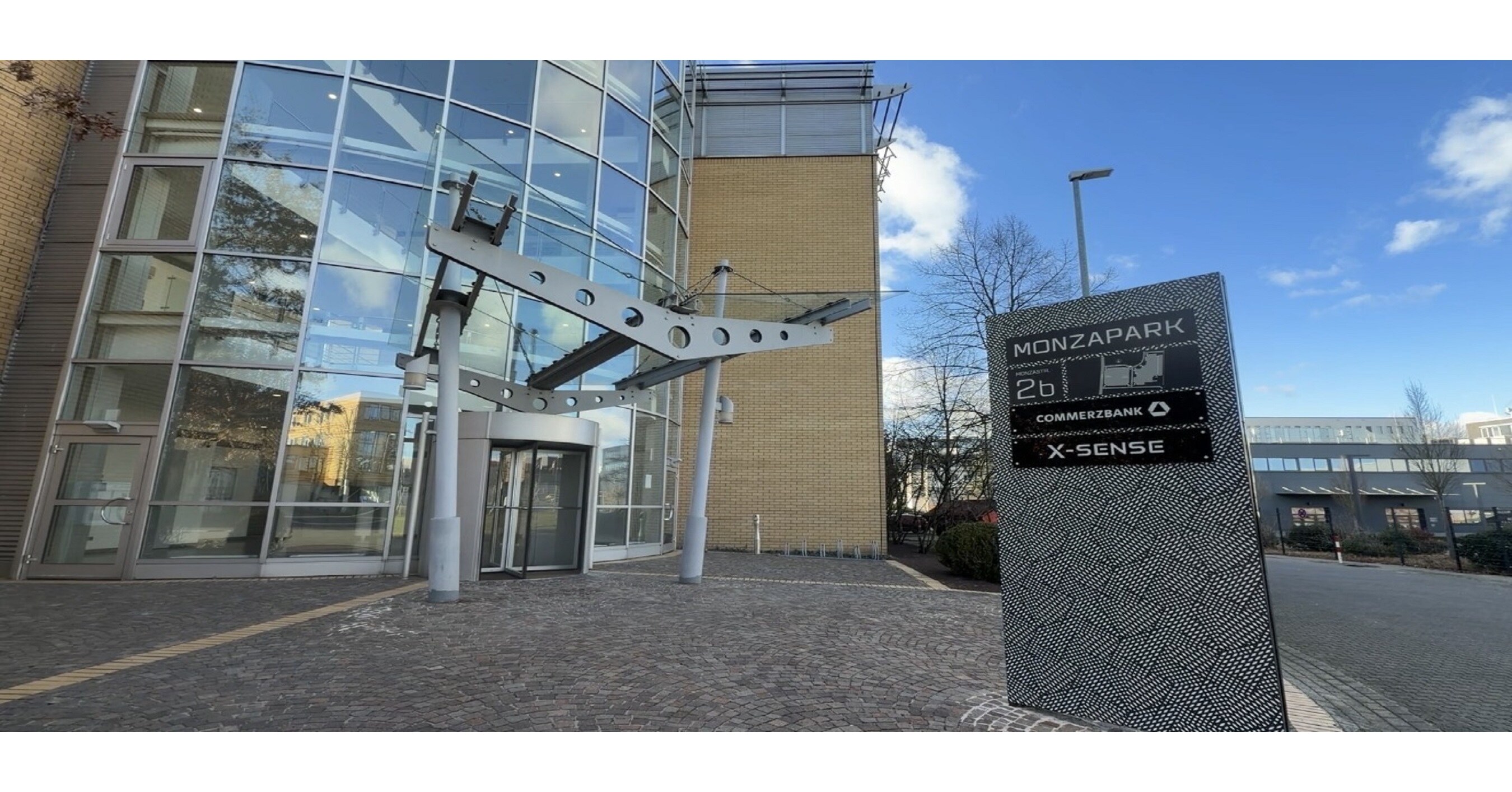
Core Insights - X-Sense has opened its German branch, X-Sense DACH GmbH, in Langen, Hessen, strategically located near Frankfurt Airport and the main train station, marking a significant milestone in its commitment to the European security market [1] Group 1: Market Opportunity - Germany's strict fire safety regulations and mandatory smoke detector installations have created a technology-driven market, yet many devices remain unconnected. X-Sense aims to bridge this gap with modern, connected smoke alarms that offer remote monitoring, device connectivity, and smartphone control [2] - The presence of X-Sense in Germany emphasizes its commitment to local requirements, certified and sustainable protection, and the establishment of long-term partnerships with professionals and consumers [3] Group 2: Product Localization and Compliance - X-Sense smoke alarms are certified by TÜV and BSI, with selected models recommended by fire services in Germany, indicating trust and compliance. The new office will accelerate product adaptation and customer support in line with EU requirements [4] - The company collaborates with leading retailers such as Conrad and Reichelt, continuously expanding its regional partnerships [4] Group 3: Sustainability and Scalability - X-Sense offers EU-compliant security solutions at competitive prices, supported by a robust supply chain. The new office allows for closer alignment with market demands [5] - Sustainability is a core company value, with all products designed for energy efficiency, safe materials, and long lifespan, in accordance with European environmental and safety standards [5] Group 4: Company Overview - Founded in 2013, X-Sense is a leading international provider of smart home security, protecting over 5 million households worldwide with a range of smoke detectors, carbon monoxide detectors, and security sensors, all tested by TÜV and BSI [6]

厦门睿云联申请香港上市!北美及欧洲最大智能对讲解决方案提供商
Sou Hu Cai Jing· 2026-01-18 06:35
Core Viewpoint - Xiamen Ruiyun Lian Innovation Technology Co., Ltd. (referred to as "Ruiyun Lian") has submitted an application for an initial public offering (IPO) to list its H-shares on the Hong Kong Stock Exchange, with StarNet RuiJie (002396) holding a 37.91% stake in the company [1][3]. Company Overview - Ruiyun Lian is a leading global provider of smart intercom solutions, focusing on AI-driven products that cover multiple scenarios, including smart intercoms, access control systems, smart home devices, and cloud services [3]. - The company targets the global mid-to-high-end market and specializes in four key areas: residential, elderly care, commercial office, and community management [3]. Market Position - Ruiyun Lian is the largest provider of smart intercom solutions in North America and Europe by shipment volume as of 2024, according to Frost & Sullivan [5]. - As of September 30, 2025, Ruiyun Lian's cumulative sales of smart community solutions are close to 2 million units, and its cloud services cover over 530,000 households, ranking second globally in household coverage [5]. Financial Performance - For the nine months ending September 30 in 2023, 2024, and 2025, the company's revenues were approximately 274 million, 347 million, and 278 million RMB, respectively [7]. - The net profits for the same periods were approximately 38.18 million, 53.44 million, and 44.57 million RMB, respectively [7].

星网锐捷:参股公司睿云联向香港联交所递交上市申请
Xin Lang Cai Jing· 2026-01-16 12:40
Core Viewpoint - The company has announced that its associate, Xiamen Ruiyun Lianxin Technology Co., Ltd., has submitted an application for an initial public offering (IPO) to list overseas shares on the Hong Kong Stock Exchange on January 16, 2026 [1] Group 1 - Xiamen Ruiyun Lianxin is a provider of intelligent intercom solutions, specializing in the development, manufacturing, and sales of smart intercom, access control, and smart home products, as well as offering cloud services to global customers [1] - As of the date of the announcement, the company holds a 37.9147% stake in Ruiyun Lian [1]

追觅CEO俞浩称将推对标携程的产品,“让携程不再垄断”
Sou Hu Cai Jing· 2026-01-15 04:10
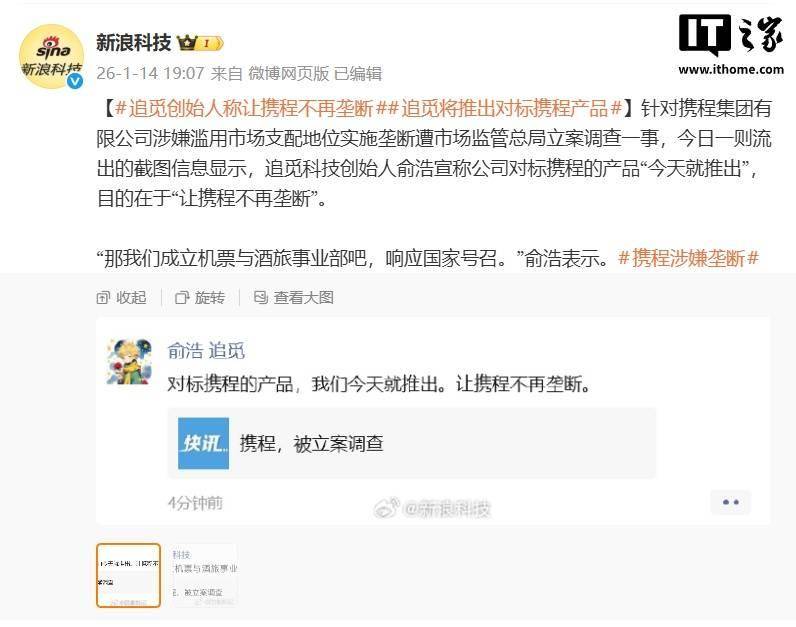
Group 1 - The State Administration for Market Regulation announced an investigation into Ctrip for suspected monopolistic behavior due to abuse of market dominance [1] - The CEO of Chasing Technology, Yu Hao, publicly stated that the company will launch products to compete with Ctrip, aiming to end its monopoly [1] - Yu Hao proposed the establishment of a ticket and hotel travel division in response to the national call [1] Group 2 - Yu Hao claimed that Chasing's ecosystem will become the first company ecosystem in human history to reach a valuation of one hundred trillion US dollars [3] - Chasing Technology has rapidly expanded into various sectors, announcing entry into markets such as power banks, toothbrushes, monitors, cars, washing machines, refrigerators, mobile phones, air conditioners, shavers, smart TVs, speakers, smart rings, routers, smart glasses, and action cameras within a few months [3] - There are reports that Chasing Technology plans to enter the drone and asteroid exploration/mining sectors [3]

智能家居2026:停止“概念竞赛”,应用场景向户外延伸
2 1 Shi Ji Jing Ji Bao Dao· 2026-01-13 10:22
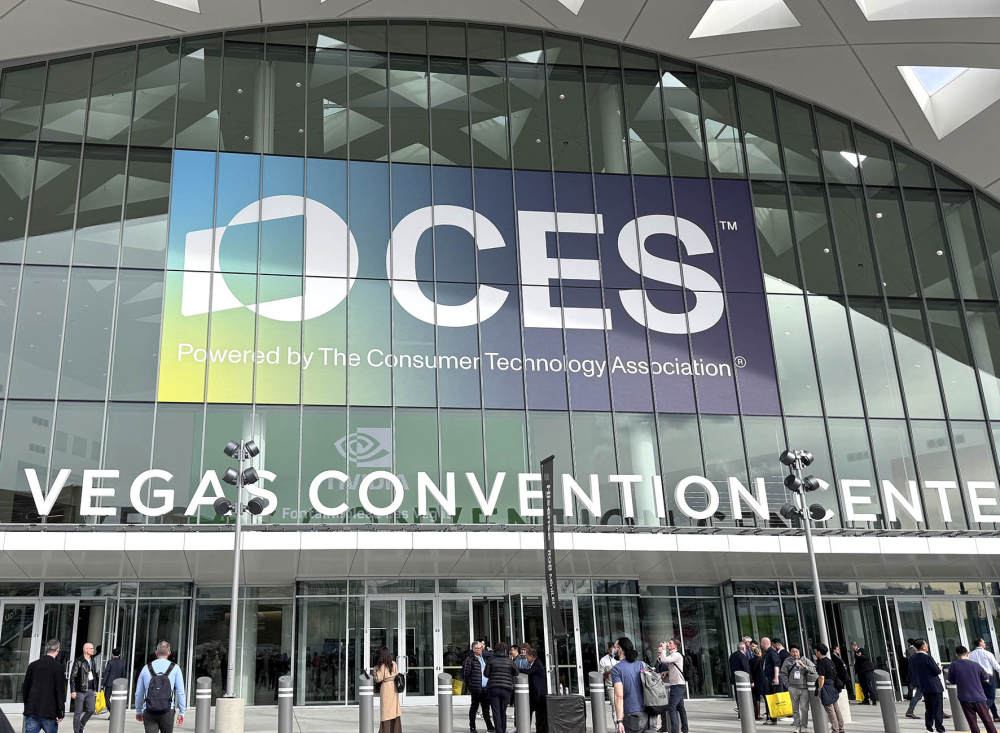
Core Viewpoint - In 2026, the Chinese smart home industry is transitioning to high-quality development, focusing on pragmatic innovation and ecological collaboration, moving away from mere concept hype to real-world problem-solving and full-scene applications [1][4]. Industry Trends - The global smart home industry has entered a mature development phase characterized by "pragmatic innovation + ecological collaboration," with a shift from product price competition to technology standard authority and local ecological integration [1]. - At CES, over a thousand Chinese companies showcased products that extend beyond traditional core areas like living rooms and kitchens to include outdoor spaces such as courtyards and swimming pools, emphasizing "pragmatic innovation, ecological collaboration, and green low-carbon" features [2]. Full-Scene Innovation - The industry has shifted from a "concept competition" mindset to a focus on real user needs, with Chinese companies prioritizing practical solutions in their product designs [4]. - Innovations in core living room products, such as Hisense's 110-inch Mini LED TV and TCL's 115-inch giant screen TV, address installation challenges and enhance user experience through optimized designs [4]. Globalization and Market Strategy - Chinese smart home companies are moving beyond simple product exports to compete in high-end technology sectors, leveraging core technological breakthroughs to capture market share [6]. - Hisense has solidified its global leadership in the 100-inch and above TV market, showcasing advanced technologies that outperform competitors in brightness and color accuracy [6]. Policy and Compliance - The high-quality development of the smart home industry is supported by domestic policies that stimulate demand and promote technological innovation, while international regulations push for sustainable practices [9]. - Policies such as the equipment update and trade-in programs are crucial for activating domestic demand and driving industry upgrades, with smart home products included in subsidy programs [9]. Standardization and Interoperability - The establishment of a unified standard system is a key focus of policy efforts, facilitating Chinese companies' participation in global competition and enhancing product compatibility [9][10]. - At CES, products from companies like Hisense, TCL, and Ugreen demonstrated support for major protocols like Matter and OLA, improving user experience and reducing development costs [10].
CES2026揭示的AI三场变革:从眼镜到机器人、从家庭到工业丨36氪直击CES
36氪· 2026-01-12 09:30
Core Insights - The article emphasizes that AI is transitioning from being merely a tool to becoming the "underlying operating system" of human life, as highlighted by NVIDIA CEO Jensen Huang at CES 2026 [3][4] - The event showcased a clear trend of AI embedding itself into physical reality and daily life, with significant advancements in AI chip performance expected in the coming years [4][6] Group 1: AI in Daily Life - AI is becoming ubiquitous, with a notable shift in information interaction methods, particularly through the rise of smart glasses, which are predicted to replace smartphones as the primary information access point [5][10] - Over 50 companies showcased AI and AR glasses, indicating a strong market growth, with predictions of a significant increase in the global smart glasses market by 2025 [10][11] - Chinese companies are leading the charge in the smart glasses market, with products like Rokid's AI glasses and INMO's offerings demonstrating advanced features and lightweight designs [12][15] Group 2: AI in Home and Industrial Applications - AI is increasingly integrated into home cleaning and organization, with advancements in robotic vacuum cleaners and other smart home devices that enhance user experience [18][21] - Companies like Ecovacs and Yunzhijia are pushing the boundaries of home cleaning technology, evolving from simple cleaning tools to comprehensive home management systems [18][21] - In industrial applications, AI is transforming operations, with companies like Black Sesame Technology showcasing advanced driver assistance systems and smart robotics that enhance automation and efficiency [38][41] Group 3: AI in Health and Work - AI is also making strides in health and wellness, with products like LumiMind's LumiSleep aimed at addressing sleep disorders through innovative brainwave monitoring technology [25][28] - The introduction of personal assistant robots, such as LOONA DeskMate, highlights the growing demand for AI in workplace settings, focusing on enhancing productivity and emotional well-being [29][31] - The CES 2026 event illustrates a shift towards AI systems that not only assist but also understand and adapt to human needs in various contexts [31][32] Group 4: Future Outlook - The article suggests that the next decade will see a significant transformation in consumer electronics due to AI, impacting various sectors including automotive, home appliances, and industrial systems [7][36] - The integration of AI into everyday life is expected to redefine how humans interact with technology, moving towards a more seamless and intuitive experience [43][48] - The participation of Chinese tech companies at CES indicates a collaborative future in technology development, moving beyond national narratives to a more global perspective [48][49]


预见2025:《2025年中国全屋智能行业全景图谱》(附市场现状和发展趋势等)
Qian Zhan Wang· 2026-01-12 01:35
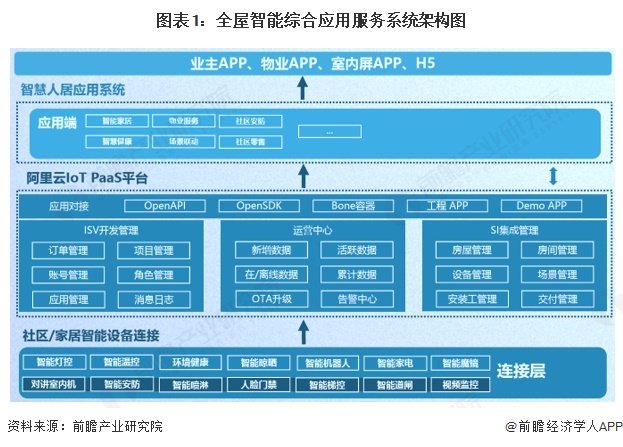
Industry Overview - The concept of "whole-house intelligence" refers to an integrated smart home system that combines smart lighting, security, audio-visual, and appliance control into a comprehensive home solution. This system allows for automated operations based on environmental and personal needs, enabling connectivity between individual smart products for a more personalized home experience [1][2] - The whole-house intelligent system relies on cloud platform capabilities and channel resources to create mature smart home applications, smart community applications, and market solutions, forming an IoT ecosystem that includes home device connectivity, automated control, data analysis, health care, community services, and new retail [1] Industry Chain Analysis - The whole-house intelligent field has developed a complete industrial chain, with upstream consisting of component suppliers, middleware suppliers, and software technology providers. The midstream includes whole-house smart home brand manufacturers that sell products directly to consumers and provide solutions to real estate and home decoration companies [2][5] Industry Development Status - The global whole-house intelligent industry is in a rapid development phase, supported by the maturity and integration of IoT, AI, and 5G technologies. This has facilitated easier interconnectivity between devices and enhanced system intelligence and interactivity. Market demand for convenient, healthy, and safe home environments is driving the transition from niche to mass markets [13][15] - In China, the whole-house intelligent industry is experiencing rapid growth driven by both policy and market forces, with a projected market size of approximately 222.4 billion yuan in 2024 [15][25] Competitive Landscape - The competitive landscape of China's whole-house intelligent industry can be categorized into three factions: traditional home appliance companies (e.g., Haier, Midea, Gree), internet companies (e.g., Xiaomi, Huawei), and other specialized firms. Traditional companies leverage supply chain and brand advantages, while internet firms possess strong technological and financial capabilities [17][19] Industry Development Trends - The Chinese whole-house intelligent industry is moving towards standardization in technology, market scenario development, and ecological competition. The combined push from policies, technology, and consumer demand is expected to facilitate a transition from rapid expansion to high-quality development, gradually building a more complete smart living ecosystem [23][25] - The market is expected to see a compound annual growth rate of 9.8%, with the market size projected to reach approximately 390 billion yuan by 2030 [25]
智能家居控制系统全解析
Xin Lang Cai Jing· 2026-01-12 01:23
Core Insights - The article emphasizes the increasing acceptance of smart home technology among young people, highlighting features such as fingerprint unlocking, remote control of lighting via mobile devices, and voice control of appliances as standard practices in smart home systems [1][7]. Group 1: Smart Home Control and Management - The smart home control system integrates various subsystems, including security, lighting, and environmental regulation, to create an efficient and intelligent home experience [1][7]. - The core of the smart home control system is the management platform, which coordinates all subsystems through a central smart home hub [1][8]. - The smart home hub is responsible for data collection and transmission, processing user commands and device data to enable inter-device communication, enhancing automation and user experience [1][8]. Group 2: Smart Lighting Control - The lighting control system is an essential component of smart homes, managing various types of lighting in areas such as living rooms, bedrooms, corridors, kitchens, and bathrooms [1][9]. - Smart switches allow for centralized or independent control of lighting, catering to different scenarios and improving convenience and comfort in living spaces [1][9]. Group 3: Home Security Systems - Home security systems are crucial for enhancing residential safety, equipped with devices like smart cameras, door/window sensors, infrared detectors, and gas detectors [2][10]. - These devices work in conjunction with the smart hub to provide coordinated alarms and control, significantly improving home security capabilities [2][10]. Group 4: Smart Appliance Control - The appliance control system differs from smart appliances, as it upgrades traditional appliances to smart products using dedicated devices [2][11]. - Common appliance control devices include infrared controllers that are compatible with 99% of market appliances, allowing users to remotely operate traditional appliances [2][11]. Group 5: Home Entertainment Systems - Home entertainment systems are divided into background music and home theater systems, enhancing the living experience and creating a rich home environment [2][12]. - The home theater system aims to replicate a professional cinema experience at home, offering surround sound playback and high-fidelity music, while also supporting karaoke functions for diverse entertainment needs [2][12]. Group 6: Smart Curtain Control Systems - Electric curtains can be categorized by operation methods and decorative styles, including various types such as roller blinds, Roman shades, and honeycomb shades, meeting different space and functional requirements [2][13]. Group 7: Smart Comfort Systems - Smart comfort systems typically include integrated home environment regulation and energy utilization systems, such as central air conditioning, heating, fresh air systems, dust removal, water treatment, hot water supply, and renewable energy sources like solar and air energy [2][15].
RainPoint Unveils First All-in-One Irrigation System at CES, Revolutionizing Home Gardening with Smart Home Tech
Globenewswire· 2026-01-08 18:58
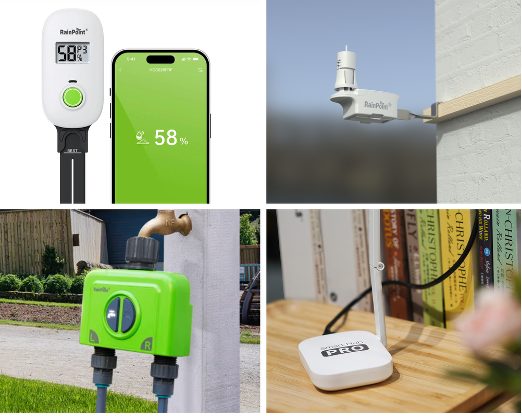
Core Insights - RainPoint has launched a fully integrated, data-driven irrigation system designed to optimize plant care, reduce water waste, and provide complete control through its app [1][3] Product Overview - The new all-in-one smart home irrigation system was introduced at CES 2026, combining precision sensors, smart automation, and robust hardware into a comprehensive Ecosystem bundle [3][4] - The Ecosystem includes a dual-controller, long-range gateway, precision soil moisture meters, and a rain sensor, creating a professional-grade water management system for homes and gardens [4] System Features - The antenna gateway connects up to 39 RainPoint devices and transmits signals up to 250 meters, ensuring stable control with a 2.4GHz WiFi connection [4] - The dual-zone water timer allows for customizable watering with up to six different plans per zone, featuring three intelligent watering modes: normal irrigation, cycle/soak, and misting [4] - The smart digital plant moisture meter provides real-time soil moisture readings every three minutes and supports intelligent irrigation planning [4] - The rain sensor halts irrigation when rain is detected, features freeze protection, and has a two-year battery life [4] App Integration - The RainPoint Home app allows users to control the entire Ecosystem remotely and is compatible with Amazon Alexa and Google Assistant for hands-free operation [5] - The app monitors local weather data, soil moisture levels, and temperature readings to adjust watering schedules in real-time, providing individualized watering based on specific location and environmental factors [5] Market Positioning - RainPoint aims to fill a gap in the smart-home technology market by offering a comprehensive irrigation solution that leverages modern technology to optimize watering and reduce water waste by up to 50% [5][7] - The Ecosystem is priced at $111.99 and will be available through various retailers, including Walmart, Amazon, Lowe's, and Home Depot starting January 10 [5]
科技赋能消费升级
Xin Lang Cai Jing· 2026-01-07 21:21
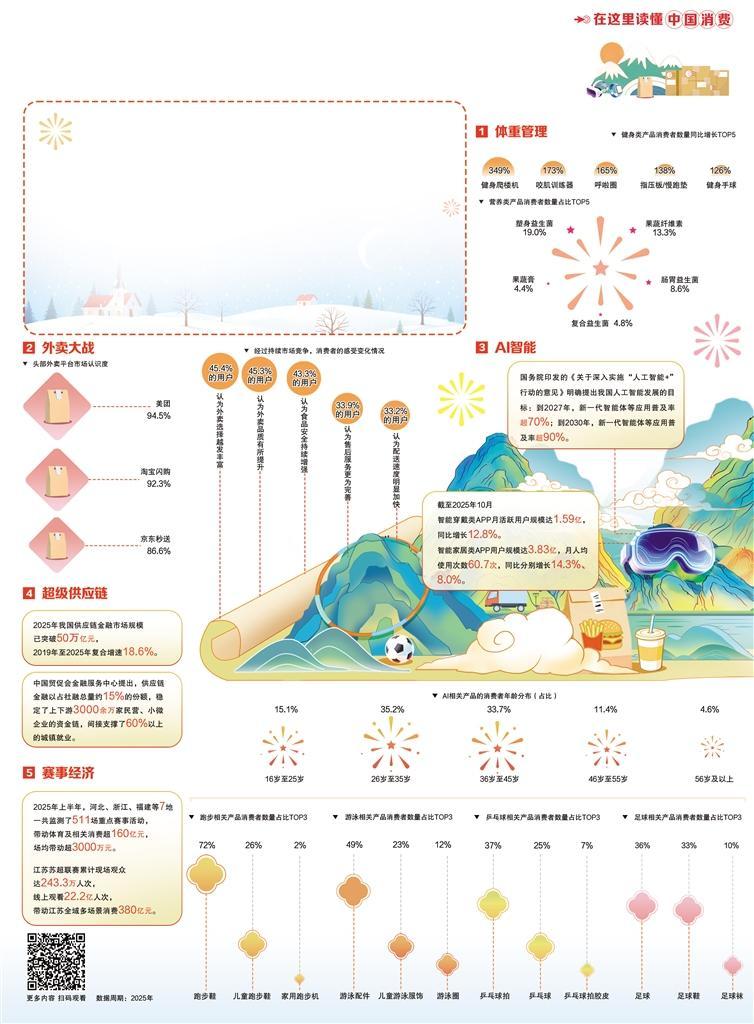
Group 1 - The core viewpoint of the article emphasizes how technology is reshaping consumer ecosystems through various innovative applications and government policies [3][4][5] - Government policies, such as the State Council's "Artificial Intelligence+" initiative, are paving the way for technological consumption by setting clear development goals for 2027, 2030, and 2035 [3][4] - The introduction of policies like trade-in programs for consumer goods has stimulated market innovation, creating a positive cycle of "policy guidance, enterprise innovation, and consumption upgrade" [3][4] Group 2 - More companies are embracing technological changes, transitioning from concepts to practical applications in daily life, such as using unmanned delivery vehicles and smart home appliances [4][5] - The user base for smart home applications is projected to reach 383 million by October 2025, with individuals aged 26 to 45 accounting for nearly 70% of smart product consumption [4] - The supply chain's efficiency is crucial for the growth of technological consumption, with the supply chain finance market expected to exceed 50 trillion yuan by 2025, supporting over 30 million small and micro enterprises [4] Group 3 - Technology is fundamentally altering the relationship between consumers and services/products, making consumption more inclusive across different age groups and scenarios [5] - The ongoing evolution of AI and big data technologies is expected to further penetrate all aspects of consumption, leading to the emergence of new products and services, and driving consumption models towards personalization and refinement [5]