
航天科技

Search documents
杭州宅地土拍收官!全年吸金1425.3亿,暂居全国第一
Xin Lang Cai Jing· 2025-12-23 10:48
Group 1: Real Estate Market in Hangzhou - The 2025 residential land auction in Hangzhou concluded with a total of 92 plots sold for a total amount of 1420.8 billion yuan, marking a year-on-year increase of 21.5% [2] - Including the three counties (Tonglu, Jiande), the total transaction amount for residential land in Hangzhou for 2025 reached 1425.3 billion yuan, ranking first in the country [2] - The specific plot sold in the Yinhai area was acquired by Zhejiang Longda Real Estate for a floor price of 6201 yuan per square meter, with a premium rate of 1.7% [2] Group 2: Blue Arrow Aerospace - Blue Arrow Aerospace has completed its IPO counseling process, with the report submitted to the Beijing Securities Regulatory Bureau [3] - The company received an investment of 10.1 billion yuan from the Wuxi Industrial Development Group, acquiring approximately 5.1% of the shares [4] - The investment will support the establishment of a manufacturing base in Wuxi, aligning with the city's focus on commercial aerospace and future industries [4][5]


宁波银行:向“新”发力,金融“活水”浇灌科技创新沃土
Mei Ri Jing Ji Xin Wen· 2025-12-23 07:03
Core Viewpoint - Technological innovation is the core engine driving development and requires precise financial support to flourish [1] Group 1: Development of Technology Finance - Ningbo Bank has established a dedicated Technology Finance Department to provide comprehensive financial services for technology enterprises throughout their lifecycle [1] - The bank integrates various sectors such as investment banking and credit to create a collaborative service model for high-quality development of technology companies [1] Group 2: Innovative Financing Solutions - Ningbo Bank has shifted its credit evaluation from traditional financial metrics to assessing "soft strengths" like patents, R&D capabilities, and market potential [2] - The bank provided a 2.25% financing rate through a patent pledge loan to Zhejiang Globor Electronics, demonstrating its new financing approach [2] Group 3: Risk Sharing Mechanisms - The bank collaborates with government and guarantee companies to create risk-sharing mechanisms like "Intelligent Innovation Guarantee" and "Specialized Protection" for financing support [3] Group 4: Building an Ecosystem - Ningbo Bank promotes a collaborative ecosystem involving government, financial institutions, and capital markets to support technology enterprises [4] - The bank facilitated a successful investment of 45 million yuan for a commercial aerospace company, showcasing its role in connecting businesses with capital [4] Group 5: Government and Industry Fund Collaboration - The bank assists local governments in establishing industry funds to attract technology projects and optimize industrial upgrades [5] - The total scale of the investment fund supported by Ningbo Bank in Jiaxing has reached 500 million yuan, focusing on advanced manufacturing and robotics [5] Group 6: Enhancing Operational Efficiency - Ningbo Bank offers digital tools and customized services to help technology enterprises improve operational efficiency [6] - The "Bobo Zhiliao" platform provides over 20 functions, including equity design and tax planning, to support enterprise growth [6] Group 7: Continuous Innovation Support - Ningbo Bank aims to be not just a provider of funds but also a companion in innovation and ecosystem building for technology enterprises [7]


美国星链卫星异常或威胁其他卫星
Ge Long Hui· 2025-12-22 06:58
格隆汇12月22日丨据CCTV国际时讯,美国太空探索技术公司旗下"星链"计划的一颗卫星日前在太空中 发生异常,轨道高度迅速下降4000米。据称目前卫星"大致保持完整,正在翻滚",预计将在几周内重新 进入地球大气层并完全烧毁。现已发现"数十块"疑似碎片,可能还会发现更多,碎片可能对其他在轨运 行的卫星构成威胁。 ...
美国能在2028年前重返月球吗
Xin Lang Cai Jing· 2025-12-21 23:49
Core Viewpoint - The article discusses the challenges and uncertainties surrounding the Artemis program, which aims to return humans to the Moon by 2028, highlighting political, managerial, and technical issues that may hinder progress [1][4]. Group 1: Political and Managerial Challenges - The appointment of Jared Isaacman, a private astronaut with no prior federal experience, as the head of NASA raises concerns about potential conflicts of interest, particularly due to his close ties with Elon Musk and SpaceX [2][3]. - The Artemis program requires stable political support and funding, but the current polarized political climate in the U.S. poses risks to long-term projects, as evidenced by a recent 43-day government shutdown that halted most NASA operations [4]. - Historical comparisons show that NASA's budget has significantly decreased from over 4% of federal spending during the Apollo era to just 0.2% today, indicating a lack of broad national consensus and support for ambitious space missions [4]. Group 2: Technical and Progress Issues - The Artemis program is significantly behind schedule, with at least 8 out of 13 critical tasks reported to be severely delayed, primarily due to reliance on multiple contractors and technical design flaws [5][6]. - Specific issues include the Orion spacecraft's design defects and delays in the Space Launch System, which have raised concerns about the feasibility of meeting the 2028 deadline for a crewed lunar landing [5][6]. - NASA has indicated plans to reopen contracts for the Artemis 3 lunar lander due to delays from SpaceX, suggesting a shift towards involving more companies in the project to mitigate risks [5].
热点问答丨美国能在2028年前重返月球吗
Xin Lang Cai Jing· 2025-12-21 16:36
Group 1: Core Insights - The U.S. government aims to return astronauts to the Moon by 2028 through the Artemis program, as outlined in an executive order signed by President Trump [1] - The Artemis program has faced significant delays and challenges, raising doubts about the feasibility of meeting the 2028 deadline [1] Group 2: Leadership and Conflicts - Jared Isaacman, a private astronaut and entrepreneur, was appointed as the head of NASA, raising concerns due to his lack of federal experience and close ties with Elon Musk [2][3] - Isaacman's relationship with Musk could potentially influence NASA's priorities, possibly diverting resources from the lunar mission to Mars exploration [3] Group 3: Political and Financial Challenges - The Artemis program requires stable political support and funding, which is uncertain in the current polarized political climate in the U.S. [4] - The U.S. government experienced a record 43-day shutdown this year, halting most NASA operations and highlighting the risks associated with long-term projects [4] Group 4: Project Progress and Technical Issues - The Artemis program is significantly behind schedule, with at least 8 out of 13 critical tasks lagging [5] - Technical design flaws have been identified in key components, such as the Orion spacecraft and the Space Launch System, contributing to delays and increased costs [5] - NASA plans to reopen contracts for the Artemis 3 lunar lander due to delays from SpaceX, indicating a shift in strategy to involve more companies [5] Group 5: Future Projections - The Artemis 3 lunar mission may face delays of several years due to issues with the lander [6]
热点问答|美国能在2028年前重返月球吗
Xin Hua She· 2025-12-21 14:13
Core Viewpoint - The U.S. aims to return to the Moon by 2028 through the Artemis program, but significant challenges and delays raise doubts about this timeline [1][2]. Group 1: Political and Administrative Concerns - The appointment of Jared Isaacman, a private astronaut with no prior federal experience, as NASA Administrator has raised concerns about potential conflicts of interest, particularly due to his close ties with Elon Musk [1][2]. - The Artemis program requires substantial political support and funding, which is uncertain in the current polarized political climate, as evidenced by a record 43-day government shutdown this year [2]. - The budget for NASA has drastically decreased from over 4% of federal spending during the Apollo program to only 0.2% today, indicating a lack of broad national consensus and long-term political backing for complex space missions [2]. Group 2: Project Progress and Technical Challenges - The Artemis program is significantly behind schedule, with at least 8 out of 13 critical tasks lagging behind the planned timeline due to technical design issues and reliance on multiple contractors [3]. - Key components such as the Orion spacecraft and the Space Launch System are facing delays and cost overruns, which have been criticized [3]. - NASA has indicated plans to reopen contracts for the Artemis 3 lunar lander due to delays from SpaceX, suggesting that the mission may be postponed by several years [3].
全球富豪榜揭晓:美首富造火箭,俄首富搞天然气,中国首富在干啥
Sou Hu Cai Jing· 2025-12-20 10:46
Group 1: Wealth Overview - In 2025, the number of billionaires worldwide surpassed 3000 for the first time, reaching 3028 individuals, with a total wealth of $16.1 trillion, exceeding the GDP of any country outside the US and China [3][9] - The wealth of the top 15 billionaires exceeds $2.4 trillion, which is greater than the combined wealth of the bottom 1500 billionaires [3] - The number of billionaires in Russia reached 140, with a total wealth of $580 billion, primarily concentrated in the energy sector [18][20] Group 2: Key Billionaires - Elon Musk, CEO of Tesla, has a net worth of $483 billion, with significant contributions from Tesla, SpaceX, and xAI [7] - Larry Page and Sergey Brin, co-founders of Google, have net worths of $262 billion and $242 billion respectively, reflecting the dominance of tech giants in wealth accumulation [7][8] - Jeff Bezos, founder of Amazon, has a net worth of $245 billion, while Mark Zuckerberg of Meta has $222 billion [8][15] Group 3: Regional Wealth Dynamics - The US leads with 902 billionaires, followed by China with 823, and India with 205 [9] - Singapore is emerging as a haven for new billionaires, attracting global capital [9] - The wealth growth in China is driven by consumer-oriented businesses, with a notable increase in self-made billionaires [20][24] Group 4: Industry Insights - Musk's business empire spans electric vehicles, aerospace, social media, and artificial intelligence, with SpaceX valued over $200 billion [12][15] - The energy sector remains central to Russian wealth, with companies like Lukoil producing over 80 million tons of oil annually [16][18] - The beverage industry in China, led by Zhong Shanshan of Nongfu Spring, highlights the success of consumer-focused businesses, with his wealth reaching $771 billion [20][22] Group 5: Future Trends - The Asia-Pacific region is becoming a new engine for wealth growth, with a significant increase in billionaires and total wealth [31] - The transfer of wealth is expected to reshape the business landscape, with an estimated $6.9 trillion to be inherited globally by 2040 [31][33] - The technology sector is projected to continue leading wealth creation, with increasing interest in Chinese tech developments [33]



“星链”搞危险动作,差200米与中国卫星相撞,马斯克副手倒打一耙
Sou Hu Cai Jing· 2025-12-19 05:50
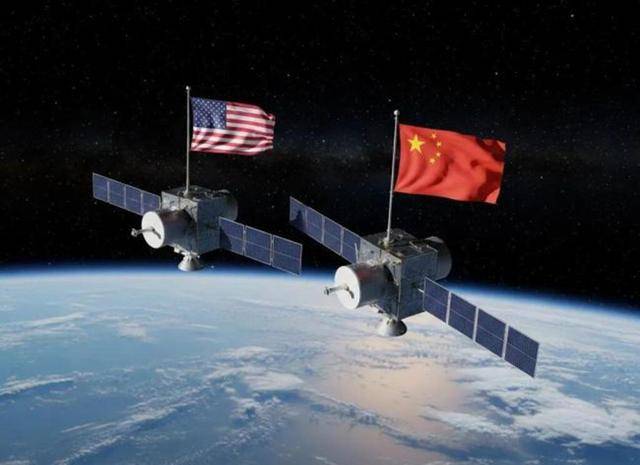
Core Viewpoint - The recent incident involving Chinese and American satellites in space highlights the growing tensions and complexities in space operations, particularly with SpaceX's Starlink program being criticized for its operational practices and lack of accountability [1][4][8] Group 1: Incident Overview - SpaceX's Starlink Vice President Michael Nichols claimed that Chinese satellites came dangerously close to American satellites, with a minimum distance of 200 meters, attributing the incident to a lack of prior coordination from the Chinese side [1][3] - Chinese aerospace company China Aerospace Science and Technology Corporation (CASC) clarified that their launch of nine satellites occurred well before the alleged close encounter, indicating that the situation was beyond their control [3][4] Group 2: SpaceX's Operational Practices - SpaceX operates over 9,300 Starlink satellites, accounting for nearly two-thirds of the active satellites in low Earth orbit, contributing to significant congestion in space [4][5] - The operational method of Starlink satellites involves frequent maneuvers for orbit adjustments, which increases the risk of close encounters with other satellites [5][7] Group 3: Communication and Accountability - The U.S. has restricted NASA and related agencies from engaging in substantial cooperation with China in space, which complicates communication channels and leads to accusations of insufficient coordination from SpaceX [7][8] - The narrative constructed by SpaceX appears to focus on establishing itself as a guardian of space order while deflecting responsibility for the risks associated with its extensive satellite deployment [8]

辽宁人的骄傲! “戚发轫星”闪耀星河
Liao Ning Ri Bao· 2025-12-19 01:09
Core Viewpoint - The naming of the asteroid "Qi Faren Star" honors the significant contributions of Academician Qi Faren to China's aerospace industry, marking a permanent recognition of his achievements in space exploration and technology development [1]. Group 1: Event Details - The naming ceremony for "Qi Faren Star" took place on December 17 in Beijing, organized by the He Liang He Li Foundation and the Zijinshan Observatory of the Chinese Academy of Sciences [1]. - The asteroid, discovered by the Zijinshan Observatory and internationally numbered 336877, received its name following approval from the International Astronomical Union [1]. Group 2: Contributions of Qi Faren - Qi Faren, born in Dalian, Liaoning Province, has played a pivotal role in various significant projects, including the "Dongfeng" missile, "Long March" rocket, and the "Two Bombs, One Satellite" program [1]. - He served as the chief designer for the "Dongfanghong" series of satellites and was the first chief designer of the Shenzhou spacecraft, successfully leading the missions from Shenzhou 1 to Shenzhou 5 [1]. - His work has laid a solid foundation for China's space laboratory and space station missions [1]. Group 3: Local Government Response - The Dalian Municipal Government expressed pride in the naming of "Qi Faren Star" and conveyed their willingness to strengthen collaboration with the China Academy of Space Technology [1]. - The government aims to enhance cooperation in innovation and contribute to the development of China's aerospace industry and the construction of a technologically strong nation [1].
尤洛卡:长春继珩作为师凯科技的子公司,其主要业务是为师凯科技的产品提供相关配套和服务
Zheng Quan Ri Bao Wang· 2025-12-18 14:12
Core Viewpoint - Youloka (300099) is focusing on market and industrialization opportunities in the commercial aerospace sector, despite its subsidiary Changchun Jiheng not generating business revenue from its involvement in the "Jilin-1" satellite lens project [1] Group 1 - Changchun Jiheng is a subsidiary of Shikai Technology, primarily providing related support and services for Shikai Technology's products [1] - The company participated in the research and production of a complete set of "Jilin-1" satellite lenses, but this did not lead to any business revenue [1] - There are no current plans for industrialization from Changchun Jiheng regarding the satellite lens project [1]
