新能源

Search documents
中信证券:中东局势从短期激烈冲突转向持续的小规模混乱,涨价为矛,增加低估值敞口,高估值板块情绪降温
Xin Lang Cai Jing· 2026-03-08 09:34
Group 1 - The core viewpoint is that the market sentiment for high valuation sectors may continue to cool, while the relative advantage of low valuation factors will gradually manifest [1][3][4] - The ongoing situation in the Middle East is shifting from short-term intense conflict to sustained small-scale chaos, which may impact global energy prices and economic concerns [2][15] - The policy design aimed at enhancing corporate quality and efficiency is expected to be the main theme for the next five years, reflecting a shift from traditional production scale expansion to improving profitability [9][22] Group 2 - The emotional sentiment in high valuation sectors has shown signs of decline, with significant fluctuations in investor sentiment indices observed during the spring market [3][16] - There is a potential shift in market styles between large and small caps, as well as between high and low valuation stocks, which may be accelerated by the Middle East conflict [4][17] - The revaluation space for Chinese resources and traditional manufacturing industries remains substantial, especially if return on equity (ROE) returns to reasonable levels [6][19] Group 3 - The current market configuration suggests a focus on sectors with competitive advantages and high barriers to overseas capacity reset, such as chemicals, non-ferrous metals, and renewable energy [11][22] - The report emphasizes the importance of profit margin recovery in various industries, as many sectors are still below historical profit margin levels [8][21] - The recommendation includes increasing exposure to low valuation factors, particularly in industries like insurance and brokerage, which are currently rare [11][22]

全国政协委员李书福:以甲醇为载体破解风光电消纳难题,助力绿色交通转型
中国能源报· 2026-03-08 08:53
Core Viewpoint - The article emphasizes the importance of methanol as a key carrier for absorbing surplus wind and solar energy, addressing the bottleneck of overcapacity and insufficient consumption in the renewable energy sector, while also providing a new pathway for green transformation in transportation to support China's "dual carbon" goals [2][4]. Group 1: Wind and Solar Energy Development - Wind and solar energy are identified as China's core advantages in the energy sector, with cumulative installed capacity expected to reach 1.84 billion kilowatts by the end of 2025, accounting for 47.3% of the total installed power capacity, surpassing thermal power for the first time [2]. - Despite the significant growth, overcapacity and insufficient consumption of wind and solar energy are major challenges hindering high-quality development in the industry [2]. Group 2: Methanol in Transportation - The proposal for promoting methanol electric trucks is aimed at addressing the green transformation needs in the transportation sector, where road freight accounts for nearly 73% of the market, and traditional diesel vehicles pose significant emissions challenges [3]. - Methanol electric trucks offer advantages such as economic efficiency, environmental benefits, and suitability for low-temperature environments, with fuel costs 32% to 52% lower than diesel and a range exceeding 1,500 kilometers [3]. Group 3: Infrastructure and Policy Recommendations - To facilitate the adoption of methanol electric trucks, it is recommended that transportation departments prioritize their promotion and increase their application ratio, while also establishing methanol refueling facilities along key logistics corridors [3]. - Currently, over 900 methanol refueling stations have been established in key regions, with expectations to reach 4,000 by the end of 2027 [3]. - The establishment of national standards for green methanol and supportive industrial policies for CO2 and hydrogen capture for methanol production is crucial for the industry's scalable development [4].


北交所定期报告:两会聚焦未来产业与标准建设,重视北交所“硬科技”属性
Guotou Securities· 2026-03-08 08:45
Market Overview - The Shanghai Composite Index decreased by 0.44%, while the North Exchange A-share Index fell by 3.95%, underperforming the Shanghai Composite by 3.52 percentage points[12] - The North Exchange 50 Index dropped by 6.57%, lagging behind the Shanghai Composite by 6.13 percentage points[12] - The average daily trading volume for North Exchange A-shares was 236.87 billion CNY, up 31.9% compared to the previous period[14] Liquidity and Valuation - The total trading volume for North Exchange A-shares was 1184.36 billion CNY, with the North Exchange 50 accounting for 30.29% of this total[14] - As of March 6, 2026, the median price-to-earnings (PE) ratio for North Exchange A-shares was 45.03X, compared to 37.34X for the Sci-Tech Innovation Board and 37.39X for the ChiNext Board[14] Individual Stock Performance - As of March 6, 2026, there were 297 companies listed on the North Exchange, with notable gainers including Teris, Keli Co., and Changjiang Energy Technology[18] - The top two newly listed companies this week, Tongling Technology and Haifiman, saw first-day gains of 41.42% and 170.42%, respectively[20] Industry Dynamics - The government work report emphasized the development of emerging industries such as aerospace, artificial intelligence, and quantum technology, marking a significant policy shift[3] - The Ministry of Industry and Information Technology announced plans to promote AI and manufacturing integration, targeting advancements in AI products and technologies[3] Investment Recommendations - Investors are advised to focus on companies with core technological advantages and stable performance, particularly in robotics, new energy, and commercial aerospace sectors[8] - The North Exchange is expected to attract more capital as its index system improves, making it a favorable environment for investment in fundamentally sound companies[8] Risk Factors - Potential risks include lower-than-expected market demand, intensified industry competition, geopolitical risks, and delays in policy implementation and R&D progress[9]
内蒙古开放团组会议:内蒙古能源发展面向“未来”
中国能源报· 2026-03-08 04:13
Core Viewpoint - Inner Mongolia is confident in its economic development, particularly in the energy sector, emphasizing the transition from fossil fuels to renewable energy and the growth of high-value industries such as biomanufacturing and computing power [1]. Group 1: Energy Sector - Inner Mongolia is a major coal-producing region, with a projected coal output of nearly 1.3 billion tons by 2025, maintaining its position as a top supplier in China [1]. - The region has provided 350 million tons of coal to 29 provinces during the 14th Five-Year Plan, ranking first in the country for coal supply [1]. - The development of renewable energy is significant, with Inner Mongolia's installed capacity for new energy exceeding fossil energy, reaching over 170 million kilowatts [3]. Group 2: Mineral Resources - Inner Mongolia holds over 83% of China's rare earth reserves, with low extraction costs due to the presence of rare earths as by-products of iron ore mining [2]. - The region's thorium resources are sufficient to support national usage for 20,000 years, marking a potential for future nuclear energy development [2]. Group 3: Computing Power Industry - Inner Mongolia is a key hub in China's "East Data West Computing" project, with its data centers benefiting from abundant and low-cost electricity, particularly from renewable sources [4]. - The green electricity ratio in Inner Mongolia's data centers exceeds 82%, and the region has the highest green computing power index in the country [4]. - The transition from coal and electricity sales to computing power sales represents a significant opportunity for economic growth in Inner Mongolia [4].
内蒙古开放团组会议:内蒙古能源发展面向“未来”
Zhong Guo Neng Yuan Wang· 2026-03-08 03:51
Group 1: Economic Confidence and Energy Development - Inner Mongolia has strong confidence in its economic development, particularly in the energy sector, with a focus on renewable energy and high-value-added industries like computing power [1] - The coal production in Inner Mongolia is projected to reach nearly 1.3 billion tons by 2025, maintaining its position as a leading coal producer in China [1] - During the 14th Five-Year Plan, Inner Mongolia supplied 3.5 billion tons of coal to 29 provinces, ranking first in the country [1] Group 2: Resource Utilization and Technological Advancements - The abundant coal resources in Inner Mongolia are driving the development of electricity and coal chemical industries, as well as upgrading equipment manufacturing [2] - Inner Mongolia holds over 83% of China's rare earth reserves, with low extraction costs due to the association with iron ore [2] - The region's wind energy accounts for 57% of the national total, and solar energy accounts for 21%, with renewable energy installations exceeding fossil fuel capacity at over 170 million kilowatts [3] Group 3: Computing Power and Data Centers - Inner Mongolia is a key hub for the national "East Data West Computing" project, with significant advancements in the computing power industry [3] - The region's electricity supply, particularly from renewable sources, is abundant, stable, and cost-effective, with green electricity accounting for over 82% of data center energy consumption [3] - Recent developments in large models in China highlight the importance of Inner Mongolia's computing power support, transitioning from coal and electricity sales to computing power [4]
2022vs2026:油价“定乾坤”
Soochow Securities· 2026-03-08 03:41
Group 1 - The report highlights that geopolitical events typically cause short-term disturbances in major asset classes, which are usually absorbed by the market within weeks. However, the 2022 Russia-Ukraine conflict deviated from this norm, leading to a sustained rise in oil prices and a new transmission path affecting the A-share market [1][11]. - The report indicates that the technology sector in 2026 faces similar pressures as in 2022, with growth momentum and capital expenditure mismatched. The AI sector is experiencing rapid penetration, but the lack of large-scale application in the real economy raises concerns about the sustainability of high capital expenditures in upstream hardware [2][12]. - The report outlines three phases of the A-share market in 2022, suggesting that rising oil prices could lead to a reassessment of technology growth stocks, potentially putting them under pressure. It also notes that the impact of rising oil prices on inflation and interest rate expectations may not be immediate, leading to potential trading fluctuations [3][27]. Group 2 - The current market environment is compared to 2022, emphasizing the need to be cautious of the long-term effects of prolonged conflicts. The complexity of the current geopolitical situation may exceed previous expectations, necessitating a proactive approach to risk assessment and response strategies [4][30]. - Oil prices are identified as a core pricing contradiction for the market moving forward. If oil prices continue to rise, it could disrupt the weak dollar environment and force a return to tightening policies, similar to the dynamics observed in 2022 [4][31]. - The report suggests three strategic paths in response to oil price movements: a neutral strategy combining technology and energy, a defensive strategy reducing technology exposure in case of prolonged conflict, and an aggressive strategy maintaining technology positions if oil prices spike and are expected to decline [5][32].
宁夏开放团组会议:塞上江南“风光”正好
中国能源报· 2026-03-07 13:30
Group 1 - The core viewpoint of the article emphasizes the significant achievements in Ningxia's economic and social development during the 14th Five-Year Plan period, particularly highlighting the optimization of industrial structure and the emergence of renewable energy as a key advantage [2] - Ningxia has established a complete renewable energy industry chain, from silicon materials to photovoltaic component generation and new energy storage, leveraging its abundant wind and solar resources [2] - The installed capacity of renewable energy in Ningxia has exceeded 57.32 million kilowatts, accounting for 63% of the total power generation capacity, with a utilization rate of 94.5% [2] Group 2 - Ningxia is actively integrating into the Belt and Road Initiative, enhancing economic cooperation with Arab countries, and building a digital trade platform to facilitate the export of Chinese products and services [2] - The region has become a hub for digital economy development, hosting 22 large and super-large data centers, supported by stable and cost-effective green electricity [3] - Ningxia aims to achieve over 80% green electricity configuration in its data centers, with a future goal of reaching 100% [3] Group 3 - Ningxia is the first province in China to achieve green electricity self-sufficiency, with a green hydrogen production capacity of 28,000 tons, ranking third in the country [4] - The region has established the largest CCUS project in the country, with a capacity of 300 million tons per year, producing green alcohol from carbon dioxide and green hydrogen [4]
走向精算收益时代,“沙戈荒”如何重塑“十五五”能源投资版图
第一财经· 2026-03-07 08:37
Core Viewpoint - The "Shago Desert" renewable energy base is becoming a crucial lever for promoting green low-carbon transformation and driving domestic energy investment and industrial upgrades [3]. Group 1: Development of "Shago Desert" Renewable Energy Base - The National Development and Reform Commission (NDRC) has proposed 109 major projects in the 14th Five-Year Plan, including the "Shago Desert" renewable energy base, which is expected to involve investments exceeding one trillion yuan [3]. - The first batch of "Shago Desert" renewable energy bases has been constructed and put into operation, with expectations for the second and third batches to achieve over 50 million kilowatts of installed capacity during the 14th Five-Year Plan [3][5]. - By the end of 2024, the first batch of large bases is expected to have an installed capacity of 91.99 million kilowatts, accounting for approximately 95%, with 90.79 million kilowatts already in operation [5]. Group 2: Challenges and Solutions - The "Shago Desert" renewable energy base faces challenges in green electricity generation and transmission, leading to a shift towards a profitability-focused era during the 14th Five-Year Plan [3][7]. - The utilization rates of photovoltaic and wind power in regions like Qinghai, Tibet, Xinjiang, and Gansu have dropped below 90%, indicating significant issues with power transmission and consumption [7]. - To address these challenges, investments in ultra-high voltage transmission channels and advancements in key technologies for wind and solar storage are deemed essential for the continued development of the "Shago Desert" renewable energy base [7][9]. Group 3: Future Layout and Integration - The rapid expansion of the "Shago Desert" renewable energy base is accompanied by a need for integrated development of new energy sources, with a focus on enhancing the power system's regulation capabilities [8]. - The industry anticipates a shift towards large-scale and market-oriented new energy storage solutions, with projects in Xinjiang focusing on long-duration storage systems that can significantly improve renewable energy utilization rates [9]. - The National Grid plans to increase its fixed asset investment to 4 trillion yuan during the 14th Five-Year Plan, aiming to create a smarter and greener grid system to support energy transmission from the "Shago Desert" and other large clean energy bases [7].

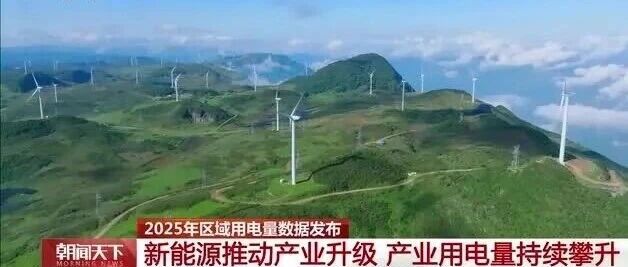
媒体报道︱2025年区域用电量数据 新能源发展推动产业升级
国家能源局· 2026-03-07 07:34
Key Points - The National Energy Administration released the regional electricity consumption data for 2025, indicating a significant impact of energy on industrial productivity layout due to deepening regional division of labor [2] - The rapid development of the new energy industry is driving profound adjustments in industrial regional layout, with accelerated construction of new energy projects in the western region [2] - By 2025, the electricity consumption of the electrical manufacturing, non-metallic, and non-ferrous industries in the western region will account for 21.9%, 39%, and 69.7% of their respective industry totals, representing increases of 13.6, 6, and 6.7 percentage points from 2020 [2] - The high-end equipment manufacturing industry in the central and western regions is developing rapidly, with electricity consumption expected to grow by 120% and 56% respectively by 2025, accounting for 17.9% and 14.3% of their industry totals, which is an increase of 2.4 and 4.2 percentage points from 2020 [2] - The central region is accelerating the development of the information industry and instrumentation sector, with electricity consumption projected to grow by 101.8% and 124.4% respectively by 2025, exceeding the national average by 32.4 and 94.6 percentage points, and accounting for 16.6% and 14.7% of their industry totals, which is an increase of 2.7 and 5.8 percentage points from 2020 [2]
全国人大代表,山东能源集团党委书记、董事长李伟署名文章
中国能源报· 2026-03-07 05:38
Core Viewpoint - High-quality development is the primary task for building a modern socialist country, with the development of new quality productivity being an essential requirement and focus for promoting high-quality growth [2] Group 1: Industry Upgrade and Comprehensive Energy System - The transition from mechanization to electrification, and then to information and intelligence, signifies the application of new technologies that drive the iterative upgrade of leading and pillar industries [4] - Shandong Energy Group aims to transform traditional industries into modern intelligent ones, integrating AI and other new technologies into coal mining, achieving a 91% share of intelligent mining production since the 14th Five-Year Plan [4] - The company emphasizes clean and efficient utilization of energy, promoting the transformation of primary energy into high-end low-carbon energy, leveraging its research platforms for coal chemical industry development [5][6] Group 2: Technological Innovation as Core Driver - Technological innovation is the primary driver for energy enterprises, with Shandong Energy Group focusing on integrating talent, education, industry, and innovation chains to achieve high-level technological self-reliance [8] - The company has established a comprehensive innovation system, with an annual R&D investment growth rate of 25%, and has formed partnerships with research institutions to foster high-tech enterprises [8] - Key technological breakthroughs are being pursued in areas such as intelligent coal mining and high-end chemical materials, with significant achievements in national R&D projects and awards [9] Group 3: Reform and Mechanism Innovation - To develop new quality productivity, Shandong Energy Group is reforming its governance structure, embedding party leadership into corporate governance, and optimizing decision-making mechanisms [12] - The company is transforming its management model to enhance resource integration and operational efficiency, implementing a collaborative approach across various sectors [13] - Market mechanism reforms are being introduced to improve employee value creation capabilities and establish a dynamic management environment [13] Group 4: New Development Model and Quality Improvement - The focus on developing new quality productivity aims to enhance resource utilization efficiency and address sustainable development challenges [14] - Shandong Energy Group is optimizing its investment structure to ensure that current investments lead to future strategic industries, with significant new capacities added in coal, chemicals, and renewable energy [15] - The company is enhancing capital operations to support innovation and industry upgrades, achieving an asset securitization rate of 80% [16] Group 5: Commitment to High-Quality Development - Developing new quality productivity is a significant mission for energy enterprises, with Shandong Energy Group committed to exploring effective paths for nurturing this productivity [17] - The company aims to accelerate original and disruptive innovation capabilities, contributing to national energy security and promoting green, low-carbon high-quality development [17]