无人驾驶

Search documents
从三元里旧改看广州产业型城中村改造应该怎么做
Nan Fang Du Shi Bao· 2025-11-27 09:27
Core Insights - The urban renewal project in Sanyuanli Village, initiated in late August, has progressed rapidly, with over 9.1 billion yuan in compensation paid and more than 250,000 square meters of buildings demolished by mid-November, achieving over 90% signing rate for residential agreements [2][4][5] Group 1: Project Progress - As of mid-November, the project has seen over 9.1 billion yuan in compensation paid and over 250,000 square meters of buildings demolished [2] - The residential signing rate has exceeded 90%, and construction of the resettlement housing is fully underway, with a planned completion date in 2027 [2][4] Group 2: Unique Characteristics of Sanyuanli - Sanyuanli is a significant industrial urban village, hosting major wholesale markets for cosmetics, leather goods, and audio products, making it a unique case in urban renewal [5][7] - The area is recognized for its focus on trade rather than production, which allows for a more streamlined approach to urban renewal without the safety risks associated with small production workshops [7][9] Group 3: Merchant Retention Strategies - The local government has implemented policies to ensure all merchants remain in the area, including rental subsidies and transitional arrangements, achieving a 100% retention rate for merchants during the relocation process [5][8] - The approach taken in Sanyuanli is being adopted in other urban renewal projects in the Baiyun District, emphasizing the importance of merchant retention [8][9] Group 4: Future Development Plans - The renovation aims to create nearly 480,000 square meters of new industrial space, focusing on high-end industries such as beauty and fashion, transforming Sanyuanli into a global trade hub [11][12] - A promotional event for the new Sanyuanli project has already led to the signing of contracts with 11 key enterprises, indicating strong interest in the area’s future development [11][13]

小马智行20251126
2025-11-26 14:15
Summary of Xiaoma Zhixing Conference Call Company Overview - **Company**: Xiaoma Zhixing (小马智行) - **Industry**: Autonomous Ride-Hailing (Robotaxi) Key Points Financial Performance and Business Model - Xiaoma Zhixing achieved breakeven for its Robotaxi, with an average daily revenue of 299 RMB per vehicle, completing 23 rides per day, each approximately 5.2 kilometers long, indicating a preliminary success in its business model and government recognition [2][3][5] - The company plans to deploy 1,000 Robotaxis in 2025 and at least 3,000 in 2026, leveraging a light-asset model in collaboration with taxi and leasing companies to increase vehicle numbers and reduce wait times [2][6] - In November 2025, Xiaoma Zhixing raised $993 million on the Hong Kong Stock Exchange, netting over $800 million, which, combined with a cash reserve of $600 million, totals over $1.4 billion, the highest fundraising for a RoboTaxi company this year [2][7] Cost Management and Efficiency - The company aims to reduce the cost of its autonomous driving kit (ADK) by 20% by 2026 through increased procurement volume and engineering optimizations (VAVE) [2][8] - The cost of Advanced Driver Assistance Systems (ADAS) has decreased from 150,000 RMB to 120,000 RMB, lowering the total cost of a Robotaxi to 270,000 RMB, which enhances profitability by reducing depreciation costs [2][9] Market Strategy and Expansion - Xiaoma Zhixing's strategy in second-tier cities involves gradual entry with small fleets and collaboration with local taxi companies to facilitate traditional company upgrades [4][12] - The company is focusing on building a robust operational system that includes vehicle maintenance, charging, and cleaning, which is crucial for the success of autonomous ride-hailing [11] Competitive Landscape - The commercial viability of autonomous ride-hailing relies on a combination of technology, policy, production, and logistics, requiring long-term partnerships with manufacturers and a comprehensive operational framework [11] User Engagement and Market Potential - The average daily order volume in Guangzhou has increased from 15 to 23, indicating significant room for growth as more vehicles are deployed [6][13] - User retention rate is approximately 70%, suggesting a solid customer base that can be expanded as vehicle availability increases [17] Challenges and Future Outlook - The company faces challenges in second-tier cities, including the need for education and collaboration with local taxi firms, which may slow down expansion [12] - The operational cycle for new vehicles is currently around three months but is expected to shorten to one or two months as processes become more streamlined [18][22] Transparency and Information Disclosure - Xiaoma Zhixing plans to enhance transparency and provide more detailed updates to investors, aiming for quicker and more comprehensive reporting in the future [19] Conclusion - Xiaoma Zhixing is positioned for growth in the autonomous ride-hailing market, with a clear strategy for cost reduction, market expansion, and operational efficiency, while also addressing challenges in user engagement and competitive dynamics [2][6][11]
荆州设立20亿元母基金吸引全国70余家投资机构
Sou Hu Cai Jing· 2025-11-26 12:52
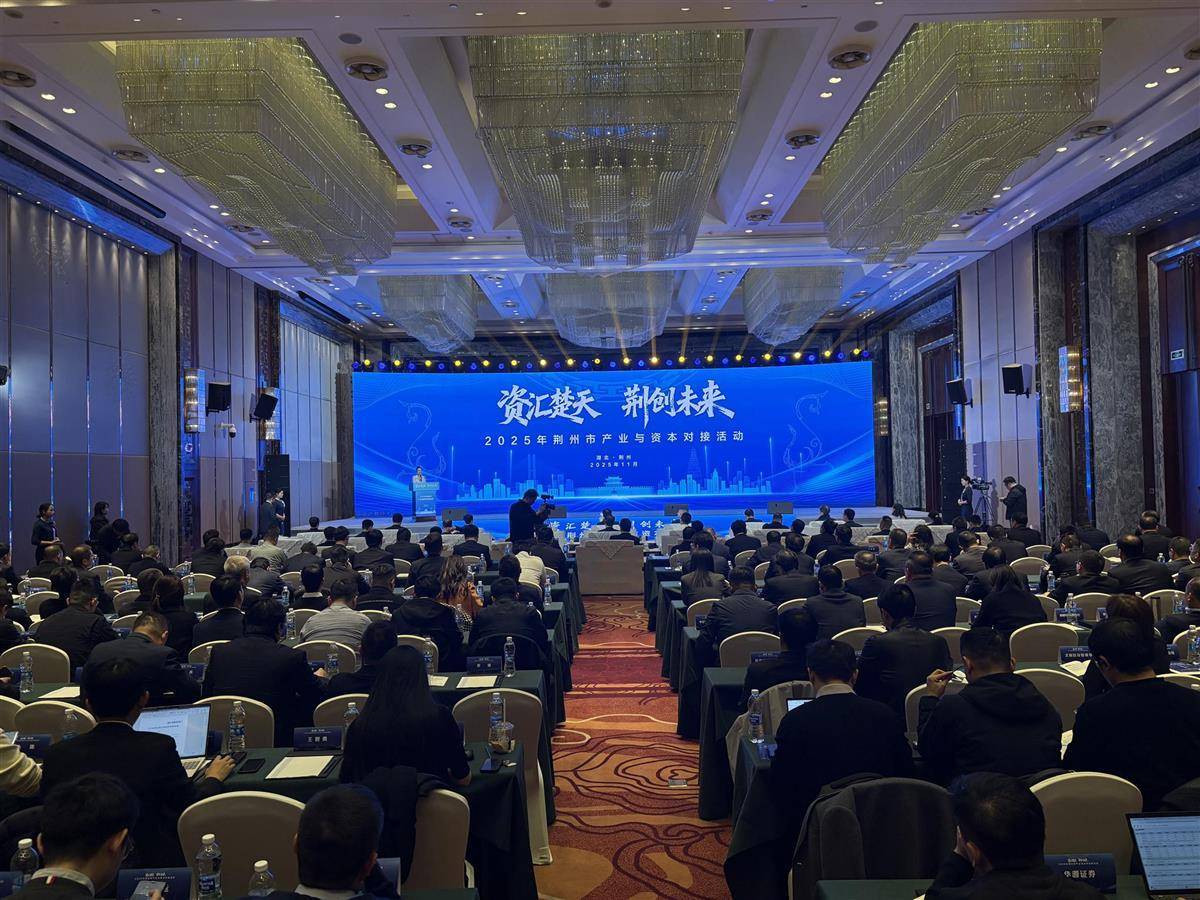
Core Insights - The event "Capital Empowering Industry Innovation" in Jingzhou focused on integrating capital with industry, resulting in the signing of seven key projects in advanced fields such as intelligent manufacturing and new materials [1][3] - Jingzhou is leveraging a 2 billion yuan mother fund to create a comprehensive fund matrix, aiming to inject new momentum into the province's development [3] Group 1 - Jingzhou's fund scale has exceeded 10.6 billion yuan, with investments in 111 projects and an exit project return rate of 67% [3] - The city has introduced six major reform measures to balance industrial cultivation and market-oriented funds, including the establishment of a 2 billion yuan mother fund and a target to leverage social capital to form a 20 billion yuan fund cluster within three years [3] - The event attracted over 70 investment institutions and 40 technology companies, exploring new cooperation models [3][4] Group 2 - Companies such as 4D Intelligent Connection and City Light Autonomous Driving showcased innovations in intelligent networking and new materials during the event [4] - Jingzhou aims to achieve a total investment attraction scale of 100 billion yuan by 2027, focusing on sectors like intelligent manufacturing and low-altitude economy [4]
国泰海通:物流无人车从快递起步 未来重点在渠道运营能力
智通财经网· 2025-11-25 09:00
Core Insights - The logistics unmanned vehicle market is transitioning from early-stage applications in express delivery to a broader urban delivery market, including fast-moving consumer goods, cross-regional e-commerce, and local fresh produce, successfully overcoming the scale delivery threshold [1][3] - The commercial model for single vehicles has been validated, leading the industry into a phase of scale expansion, with a focus on channel operation capabilities to develop customer and scenario outreach, as well as market capacity and road rights [1][5] Group 1 - Unmanned delivery vehicles are expected to achieve commercial viability first in cargo and low-speed scenarios, with Robovan logistics unmanned vehicles being one of the fastest progressing applications in the unmanned driving sector [2] - The urban delivery market has a vehicle ownership of 14.59 million units, indicating that logistics unmanned vehicles can replace existing vehicles such as vans and light trucks, suggesting a market size significantly larger than just express delivery [3][4] - The characteristics of urban delivery scenarios, such as fixed routes, low-speed driving, and short-haul transport, enhance the feasibility of unmanned driving, with the market for logistics unmanned vehicles projected to reach 65.75 billion yuan by 2030 [4] Group 2 - The cost of logistics unmanned vehicles has decreased significantly from over one million yuan to below 100,000 yuan due to technological optimization and reduced prices of key components, laying the foundation for large-scale deployment [4] - The replacement of micro vans with logistics unmanned vehicles can reduce costs per delivery by over 50%, with profitability expected when cumulative sales reach 40,000 units [5] - The competitive landscape includes three types of participants: specialized unmanned driving companies, logistics platform companies with ecological advantages, and traditional passenger vehicle manufacturers entering the logistics unmanned vehicle market by 2025 [5]

一周要闻·阿联酋&卡塔尔|亿航智能在多哈完成中东首例城市内无人驾驶载人飞行/阿联酋启动“全球贸易中心计划” 加速非石油贸易增长
3 6 Ke· 2025-11-24 04:02
Group 1: UAE-China Financial Cooperation - The People's Bank of China and the Central Bank of the UAE signed a memorandum of understanding to enhance cross-border payment connectivity [2] - The agreement aims to establish a regulatory framework for cross-border payment cooperation, improving the efficiency of remittances between businesses and individuals [2] Group 2: UAE Global Trade Center Initiative - The UAE launched the "Global Trade Center Plan" to strengthen its position as a global hub for goods and services [3] - Non-oil trade in the UAE reached 2.67 trillion dirhams (approximately 726 billion USD) in the first nine months of 2025, a 24.6% year-on-year increase [3] - The plan aims to attract 1,000 international trade companies to establish headquarters in the UAE [3] Group 3: UAE National Investment Fund - The UAE Cabinet approved the establishment of a national investment fund with an initial capital of 367 billion dirhams (approximately 100 billion USD) [3] - The fund aims to increase annual foreign direct investment from 115 billion dirhams to 240 billion dirhams by 2031 [3] Group 4: UAE AI Development - The UAE ranks ninth globally in AI enterprise density, with 49.5 AI companies per million people [4] - The UAE is also ranked 11th in global AI startup financing, indicating strong capital investment in AI-driven enterprises [4] Group 5: Dubai International Airport Performance - Dubai International Airport recorded 24.2 million passengers in Q3 2025, a 1.9% year-on-year increase [4] - The total passenger volume for the first nine months of the year reached 70.1 million, marking a 2.1% increase [4] Group 6: Qatar Real Estate Market - Qatar's residential real estate market sales reached 59 billion riyals (approximately 16.2 billion USD) in Q3 2025, a 43% year-on-year increase [6] - The total transaction volume for the year reached 197.4 billion riyals, indicating strong market momentum [6]


人民日报:乘势而上 接续推进中国式现代化建设
Xin Lang Cai Jing· 2025-11-23 23:34
Group 1 - The forum emphasized the coexistence of strategic opportunities and risks, highlighting the need for proactive measures in the face of increasing uncertainties [1] - The 20th Central Committee's fourth plenary session outlined strategies for building a strong domestic market and accelerating the establishment of a high-level socialist market economy [1] - The focus on expanding international circulation and enhancing high-level openness aims to create a new landscape of win-win cooperation, ensuring that development initiatives remain under national control [1] Group 2 - China Enterprises are encouraged to adopt a market-oriented approach, integrating into a unified national market while prioritizing long-term value over short-term gains [1] - The emphasis on developing new productive forces highlights the importance of integrating technological and industrial innovation to build a modern industrial system [1] - Companies are urged to strengthen their role in technological innovation and optimize supply chains [1] Group 3 - The global market presents vast development opportunities, making international expansion a necessary strategy for Chinese enterprises [1] - The establishment of a comprehensive service platform for mainland enterprises going abroad is a key focus for companies like Huoyingdong Group [1] - There is a strong emphasis on innovation and collaboration between different sectors, particularly in the Guangdong-Hong Kong region [1] Group 4 - Gree Electric Appliances has made significant advancements in mastering key core technologies across various product categories, emphasizing the importance of sustained focus on independent innovation [1] - The autonomous driving industry in China is in a critical phase, requiring collaboration between government and enterprises across multiple dimensions, including standards, infrastructure, and data security [1] - The need for a cohesive approach to build a globally competitive ecosystem in the autonomous driving sector is highlighted [1]
乘势而上 接续推进中国式现代化建设
Ren Min Ri Bao· 2025-11-23 22:20
Group 1 - The 20th China Economic Forum was held in Guangzhou, focusing on "Chinese-style modernization and the 14th Five-Year Plan economic outlook" [2] - High-quality development is emphasized as the primary task during the 14th Five-Year Plan period, with discussions on how to achieve this goal [3][4] - Guangdong is highlighted as a leader in reform and opening up, with expectations for it to drive high-quality development [3][4] Group 2 - The forum discussed the need for a new quality of productivity, emphasizing the importance of strategic emerging industries and the integration of digitalization and green transformation [5][6] - Participants stressed the importance of developing a modern industrial system and enhancing self-reliance in technology during the 14th Five-Year Plan [6][7] - The need for a favorable institutional environment for high-quality development was highlighted, including aligning with international trade rules [7][8] Group 3 - The forum underscored the importance of maintaining control over development and enhancing international cooperation and competition [8][9] - Chinese enterprises are encouraged to adopt a market-oriented approach and focus on long-term value rather than short-term gains [9][10] - The significance of mastering core technologies and promoting innovation was emphasized, with examples from various companies showcasing their advancements [9][10]

全面深化改革开放,推动高质量发展
Ren Min Ri Bao· 2025-11-23 22:20
Group 1 - China's manufacturing sector is showing three new development characteristics: achieving breakthroughs in the entire chain of technological innovation, transitioning from processing trade to a domestic and international integrated industrial chain, and forming a higher level of openness under the domestic circulation framework [1] - The added value of China's manufacturing industry accounts for nearly 30% of the global total, with significant advancements in ten key manufacturing sectors, achieving "five leading and five parallel" positions [1] - There are three identified shortcomings in China's manufacturing: high resource consumption, low profit margins, and lower total factor productivity compared to developed countries [1] Group 2 - The "14th Five-Year Plan" emphasizes the development of new quality productivity, focusing on strategic emerging industries and future industries, which is expected to drive over one trillion yuan in investment [3] - The plan also highlights the importance of digitalization, intelligence, and green transformation in traditional industries, as well as the rapid development of the productive service sector as a foundation for high-quality manufacturing [3] Group 3 - The Guangdong-Hong Kong-Macao Greater Bay Area is positioned as a crucial driver for China's modernization and deep participation in global governance [10] - The economic scale of the Greater Bay Area has surpassed that of New York and San Francisco Bay Areas, and it is expected to become a leading global economic and innovation center by 2035 [10] - Key initiatives include building a collaborative innovation system, promoting efficient application of technological achievements, and enhancing the international competitiveness of the service sector [11] Group 4 - The development of the autonomous driving industry requires collaboration between government and enterprises, focusing on standards, infrastructure, and data security [9] - The autonomous driving sector has achieved over 10 million kilometers of public road driving during the "14th Five-Year Plan" period, enhancing consumer willingness to engage in offline activities [9] Group 5 - The deep-sea technology sector in China has made significant advancements, transitioning from merely entering the deep sea to possessing important detection capabilities [17] - The development of long-term observation systems is essential to address challenges in deep-sea exploration, with projects like the cold spring ecosystem research facility underway [18]
推动更多应用场景转变为“科创胜景”
Zhong Guo Jing Ji Wang· 2025-11-22 00:34
Core Insights - The Chinese government has issued an implementation opinion to accelerate the cultivation and large-scale application of new scenarios, leveraging the country's vast market and rich application scenarios to transform them into "scientific and technological innovation landscapes" [1][2] Group 1: Market and Technological Landscape - China's market, with over 1.4 billion people, and its leading number of R&D personnel are key drivers for innovation, enabling applications like autonomous vehicles, drone deliveries, and medical robots [1] - Despite existing advantages in AI, 5G, and quantum computing, many innovations remain in the "laboratory" stage and need effective market transformation [1][2] Group 2: Innovation and Industry Upgrading - Scenario innovation addresses real challenges in manufacturing costs and logistics efficiency, acting as a lever for industrial upgrades, exemplified by the "smart mine" scenario that can drive innovation across the entire supply chain [1] - Successful scenarios represent a systemic reconstruction of technology, industry, and production factors, creating a bidirectional cycle of demand and supply [2] Group 3: Collaborative Ecosystem - The collaboration between large enterprises and small to medium-sized enterprises fosters a synergistic ecosystem that enhances the coupling of innovation chains, industry chains, capital chains, and talent chains [2] - A smart connected vehicle scenario exemplifies the integration of multiple technologies, promoting cross-fusion and integrated innovation [2] Group 4: Implementation Strategies - Realizing the vision requires coordinated efforts from government, market, and society, including driving independent innovation in critical areas like chips and industrial software through demand [2] - Establishing foundational systems for data rights, circulation, and governance is essential for maximizing the potential of data as a production factor [2] - Promoting inclusive regulatory models like "sandbox regulation" will provide space for new developments and accelerate the establishment of corresponding standards and norms [2][3]
中国劳动和社会保障科学研究院:无人驾驶就业创造效应显著?
Huan Qiu Wang· 2025-11-20 02:05
Group 1 - The article emphasizes that the impact of artificial intelligence (AI) on employment is limited in terms of job replacement but significantly alters the employment structure, creating new types of jobs [1][2] - AI applications in areas like autonomous driving are expected to foster new industries in research, manufacturing, and application, leading to new employment growth points [1][2] - The Chinese government's "Artificial Intelligence+" initiative highlights the importance of integrating AI into various sectors, encouraging the exploration of new service models that combine autonomous and human services [1][2] Group 2 - The integration of autonomous driving with AI, 5G, and big data is seen as a key technological force driving the transformation of traditional industries, leading to high-quality digital industry clusters and more job opportunities [2] - There has been a significant increase in demand for AI-related positions, with job postings for roles such as algorithm engineers and data analysts showing over 100% year-on-year growth [2] - The recruitment demand in the autonomous driving sector is rising, with specific roles like intelligent driving R&D engineers and safety officers becoming highly sought after, often prioritizing candidates with experience in traditional driving roles [2] Group 3 - Systematic training of high-quality talent that meets the new productivity requirements is crucial for the healthy development of the industry, with companies like Luobo Kuaiyun integrating education and research to support the autonomous driving sector [4] - Luobo Kuaiyun is collaborating with universities to establish a talent cultivation system for autonomous driving and AI, providing essential support for the industry [4]