智能穿戴设备

Search documents
小度AI眼镜将开启预售;高通推出人工智能芯片|数智早参
Mei Ri Jing Ji Xin Wen· 2025-10-28 23:17
Group 1 - Baidu's "XiaoDu AI Glasses" will start pre-sale on November 1, with official release on November 10, featuring functions like AI translation, AI object recognition, AI reminders, and AI recording [1] - The initial release will include the Boston sunglasses model, with other styles to follow [1] - The product aims to meet the growing consumer expectations for smart wearable devices, necessitating continuous updates and upgrades [1] Group 2 - Qualcomm has launched AI chips, the AI200 and AI250, expected to be commercially available in 2026 and 2027, respectively [2] - This move represents Qualcomm's strategic shift from mobile to data center markets, intensifying competition in the AI chip sector [2] - Nvidia currently holds about 70% of the AI inference market, and Qualcomm's entry may challenge Nvidia's dominance [2] Group 3 - IDC reported that China's MaaS market experienced explosive growth in the first half of 2025, reaching 1.29 billion RMB, a year-on-year increase of 421.2% [3] - The AI large model solutions market also saw significant growth, with a market size of 3.07 billion RMB, up 122.1% year-on-year [3] - The rapid growth is attributed to continuous breakthroughs in AI technology, making it easier for businesses to adopt AI solutions [3]


没屏幕却值百亿美元,从王室到NBA球星都在戴
虎嗅APP· 2025-10-27 09:50
Core Insights - The article discusses the rapid growth and valuation of the smart ring industry, particularly focusing on the success of the Oura Ring, which has seen its valuation soar from $5.2 billion to $11 billion in less than a year due to increased demand and innovative features [5][27]. Market Growth - The global smart ring market is projected to grow from $2.67 billion in 2023 to $4.46 billion in 2024, reaching $34.87 billion by 2032 [5][7]. - The U.S. smart ring market revenue is expected to reach $9.04 million by 2029 [5]. Company Performance - Oura Ring's sales have surged, with cumulative sales surpassing 5.5 million units by September 2025, with significant growth occurring in 2025 alone [8][19]. - The company achieved $500 million in revenue in 2024, with projections to double this figure to over $1 billion in 2025 [19][26]. Leadership and Strategy - The appointment of Tom Hale, a former president of SurveyMonkey, marked a pivotal moment for Oura, leading to a strategic shift towards AI-driven health management [9][18]. - Hale's strategy focuses on transforming Oura from a sleep tracking device to a proactive health management platform, integrating personal health data with healthcare providers [18]. Product Features - Oura Ring utilizes advanced sensors to monitor various health metrics, providing users with scores for readiness, sleep quality, and activity levels [22][23]. - The introduction of the "Health Panels" feature allows users to schedule lab tests and receive results directly through the app, enhancing the platform's functionality [24]. Business Model - Oura has shifted from a one-time hardware sales model to a dual revenue stream of hardware sales and subscription services, with a monthly fee of $5.99 for full access to data analysis [26]. - The revenue structure is healthy, with approximately 80% coming from hardware sales and 20% from high-margin subscription services, leading to an annual recurring revenue (ARR) of $144 million by 2024 [26]. Competitive Landscape - The smart ring market is becoming increasingly competitive, with major tech companies like Samsung entering the space with products like the Galaxy Ring, which integrates more ecosystem features [30][31]. - Emerging brands such as Ultrahuman Ring and RingConn are also targeting similar markets, indicating a growing interest in smart health monitoring devices [33].


突发特讯!美财长向全球通告:中美已达成实质性协议,不再考虑对华加征100%关税
Sou Hu Cai Jing· 2025-10-27 08:00
Group 1 - The U.S. Treasury Secretary's use of the term "substantive framework agreement" indicates a shift in the U.S. stance, as they will no longer consider imposing a 100% tariff on China [1][3] - The timing of the negotiations is significant, coinciding with the Federal Reserve's decision to pause interest rate hikes and declining consumer confidence in the U.S. retail sector [3][5] - The negotiations are not merely about tariffs but involve deeper economic strategic adjustments, with both sides achieving temporary political gains [5][9] Group 2 - The trade friction has led to a transformation in global supply chains, with companies in China and the U.S. adapting to new market realities [6][7] - U.S. farmers are diversifying their markets due to the trade tensions, indicating a shift in agricultural strategies [6][9] - The framework agreement does not resolve fundamental differences, particularly in key technology sectors like semiconductors and artificial intelligence [9][11] Group 3 - The trade ceasefire has implications beyond bilateral relations, with the EU and Southeast Asian countries closely monitoring the developments [11][13] - The global trade landscape is shifting from a "unipolar dominance" to a "multipolar governance" model, making unilateral tariff policies less effective [11][14] - The agreement provides a reason for continued dialogue but does not eliminate competition between the two nations [13][14]

这种眼镜我建议外卖快递小哥人手一个
量子位· 2025-10-27 03:31
Core Viewpoint - Amazon has introduced a smart glasses prototype named "Amelia" for its delivery personnel, aimed at enhancing logistics efficiency and safety through AI and computer vision technology [5][19]. Group 1: Product Features and Functionality - The smart glasses allow delivery personnel to scan packages, receive walking directions, and obtain delivery confirmations without needing to look down at a device [6][20]. - The glasses are equipped with a display screen, two cameras, and a flashlight for low-light conditions, and they can be customized for users with vision impairments [8][10]. - The system includes a vest that houses the control system, providing 8-10 hours of battery life to meet the demands of a full workday [11][10]. - Future versions of the glasses are expected to include features like real-time defect detection and alerts for potential hazards, such as pets at delivery locations [14][20]. Group 2: Market Context and Competition - Amazon plans to mass-produce the smart glasses by mid-2026, with an initial production run of approximately 100,000 units [18]. - The introduction of "Amelia" is seen as a strategic move to compete with Meta in the smart glasses market, as Amazon is also developing a consumer-grade model called "Jayhawk" [22][23]. - The smart glasses market is experiencing significant growth, with Meta's second-generation smart glasses projected to sell 1.42 million units in 2024, potentially exceeding 4 million units in 2025 [24]. Group 3: Industry Trends and Future Outlook - Major tech companies, including Apple and Google, are intensifying their efforts in the smart glasses sector, indicating a competitive landscape [25][26]. - The domestic market is also witnessing a surge in interest, with companies like Xiaomi and Huawei entering the AI glasses space [28]. - The price point for smart glasses is crucial for mass adoption, with estimates suggesting that a price below 2000 yuan could facilitate entry into the mainstream market [30][32].


3C设备周观点:三星Galaxy XR头显正式发布,阿里夸克AI眼镜开启预售-20251026
Huafu Securities· 2025-10-26 06:03
Investment Rating - The industry rating is "Outperform the Market" [6][13] Core Insights - Samsung has officially launched its first native AI headset, the Galaxy XR, marking its entry into the extended reality (XR) field. This product is the first in the Android XR ecosystem and signifies a long-term collaboration between Samsung, Google, and Qualcomm, aiming to deeply integrate AI technology into immersive computing [1] - Alibaba's Quark AI glasses have begun pre-sales, featuring a sleek black design and integration with various applications such as Amap, Alipay, Taobao, and Fliggy. Future plans include opening API interfaces to attract more developers [2] - Meta's smart glasses, Ray-Ban Display, have seen strong market demand, with nearly all retail locations sold out and trial appointments fully booked before November [3] - Apple is reportedly prioritizing the development of AI glasses to compete with Meta, with plans to preview the first model in 2025 and release it in 2027, while an originally planned display version has been accelerated [3] Summary by Sections - **Smart Glasses Market**: The report highlights the active participation of major players like Samsung, Alibaba, Meta, and Apple in the smart glasses market, indicating a growing trend and competition in this sector [1][2][3] - **Product Launches**: New products such as Samsung's Galaxy XR and Alibaba's Quark AI glasses are set to enhance the XR ecosystem and attract consumer interest [1][2] - **Market Dynamics**: The report suggests a robust demand for smart glasses, with significant sales and pre-orders indicating a positive market outlook [3] - **Investment Opportunities**: The report recommends focusing on companies involved in smart glasses, silicon-based OLED screens, panel equipment, automation assembly, and 3D printing applications, suggesting potential investment opportunities in these areas [4]
AI眼镜“看上去很美”
Jing Ji Ri Bao· 2025-10-24 22:06
Core Insights - The recent surge in the stock price of EssilorLuxottica, exceeding 10% and reaching a historic high, is attributed to the new wave of smart glasses, with a market capitalization increase of nearly $20 billion [1] - The collaboration between Meta and EssilorLuxottica to launch the new AI-powered "Meta Ray-Ban Smart Glasses" has led to record sales and revenue for EssilorLuxottica in Q3, prompting plans for accelerated production capacity in the smart glasses segment [1] - Major tech companies, including Meta, Google, Apple, and Samsung, are significantly investing in smart glasses, driven by advancements in AI technology and the potential for market expansion [2] Industry Overview - The smart glasses market is projected to grow substantially, with IDC reporting a shipment volume of 4.065 million units globally by mid-2025, representing a year-on-year growth of 64.2% [2] - Chinese smart glasses manufacturers have shipped over 1 million units, capturing 24.6% of the global market share, indicating strong demand and growth potential in this region [2] - Analysts predict that smart glasses could become one of the most disruptive innovations since the advent of smartphones, with global sales expected to reach 60 million units by 2035 [2] Current Challenges - Despite the growth potential, smart glasses are not yet considered consumer-ready, with current models offering basic functionalities that do not significantly replace smartphones [3] - The "impossible triangle" challenge of balancing performance, weight, and battery life remains a significant hurdle for the development of smart glasses, impacting their practicality and consumer acceptance [3] - Future advancements in technology and market maturation are necessary for smart glasses to gain broader consumer recognition and adoption [3]
一枚智能戒指,撬动780亿估值
3 6 Ke· 2025-10-24 12:27
Core Insights - The smart ring market is experiencing significant growth, highlighted by Oura's recent $900 million funding round, raising its valuation to $11 billion, more than doubling from the previous year [1][15] - Oura has sold 5.5 million rings since 2015, with 3 million sold last year alone, generating $500 million in revenue, projected to reach $1 billion by 2025 [1][15] - Major brands like Reebok and Chasing have entered the smart ring market, indicating a shift towards health technology [1][2] Market Dynamics - Smart rings offer advantages over traditional fitness bands, such as smaller size, convenience, and more reliable data from finger-based sensors [2] - The market is evolving with various companies adopting unique strategies to differentiate their products [3][12] Company Strategies - Oura focuses on health, particularly sleep monitoring, integrating various health metrics into a single platform, and emphasizing data accuracy [3][4][6] - Reebok positions its smart ring as a training aid, emphasizing real-time feedback on training and recovery rather than just health metrics [8][10] - Chasing emphasizes user interaction, offering features like gentle wake-up vibrations and health monitoring without the need for constant app checking [12][14] Business Model Evolution - The smart ring industry is transitioning from hardware sales to a data-centric business model, with companies like Oura implementing subscription services for ongoing health insights [15][16] - Oura's model includes a one-time device purchase and a monthly subscription for app access, with 20% of its revenue coming from subscriptions [16] - Reebok's smart ring includes a year of fitness app membership, promoting a "hardware + content + service" approach [16] B2B Opportunities - Companies are exploring enterprise-level health collaborations, with Oura and Reebok forming partnerships to integrate their products into corporate wellness programs [17][18] - The shift towards B2B services enhances customer lifetime value and allows for data accumulation, positioning smart rings as essential tools for health management [18] Future Outlook - The smart ring industry is moving towards a model that emphasizes insights over mere data collection, with advancements in AI and sensor technology enhancing their capabilities [19]
智能穿戴融入生活
Ren Min Ri Bao Hai Wai Ban· 2025-10-24 06:54
Core Insights - The smart wearable device market is rapidly evolving from a "durable good" to a "consumable necessity," becoming an integral part of consumers' daily lives [1][2] Market Growth - As of Q3 2023, the total number of registered smart wearable products in China reached 181,000, involving 6,000 companies, marking a 91.4% increase since September 2020, with an average annual growth rate of 13.9% [1] - The number of smart watch varieties has reached 29,000, with an annual growth rate of 46.8%, while smart glasses and smart earphones have seen annual growth rates of 23.5% and 14.0%, respectively [3] Consumer Behavior - Health monitoring is the primary reason for purchasing smart watches, accounting for 45.48% of consumer preferences, followed closely by product design and exercise tracking [2] - A significant portion of the smart watch market is dominated by elderly smart watches at 56.82%, indicating a strong demand for health and fitness functionalities among adults [2] Regional Distribution - The top five provinces with the highest number of registered smart wearable products are Guangdong (158,400), Beijing (6,500), Zhejiang (3,200), Shanghai (3,100), and Fujian (2,800) [3] Trends in Audio Devices - The demand for specialized earphones has surged, with 67.71% of users owning more than two pairs, reflecting a trend towards categorizing earphones for specific activities such as sleep, exercise, and work [4] - The evolution of smart glasses is gaining traction, with major brands like Xiaomi and Huawei launching new products, suggesting a potential shift towards integrating smart glasses into daily life [4] Technological Influence - The growth of the smart wearable market is driven by both technological advancements and a shift in consumer demand, with AI integration becoming a key factor in the development of these devices [4]
“百镜大战”再升温,3699元起售的阿里首款AI眼镜今日开卖
Xin Lang Cai Jing· 2025-10-24 02:58
Group 1 - Alibaba's first self-developed AI glasses, Quark AI glasses, are now available for pre-sale at a price of 3,999 yuan for regular consumers and 3,699 yuan for 88VIP members, contributing to the ongoing "battle of glasses" in the market [1] - The glasses integrate the Tongyi Qianwen large model and Quark AI technology, supporting various functions such as calls, music playback, real-time translation, and meeting notes, while also connecting to Alibaba's services like Alipay and Amap [1] - The glasses feature dual flagship chips, Qualcomm AR1 and Hengxuan BES2800, with adjustable display distances and a battery design that allows for hot-swapping, ensuring continuous power supply during battery replacement [1] Group 2 - The AI glasses market is experiencing intense competition, with projections indicating that global and Chinese AI glasses sales will reach 5.1 million and 1.37 million units respectively by 2025, both showing growth rates exceeding 200% [2] - The domestic consumer-grade AI/AR device market is becoming increasingly polarized, with Thunderbird holding a 39% market share and experiencing a year-on-year sales increase of 113%, while new entrant Xiaomi sold 31,000 units of its first AI glasses in the first week, capturing 12% of the market [5] - Quark's advantage lies in integrating multiple Alibaba business capabilities into its AI glasses, but the brand's recognition may hinder conversion of active users into hardware buyers, and the reliance on Alibaba applications may limit the diversity of application scenarios [5][6] Group 3 - The pricing of Quark AI glasses at 3,999 yuan is significantly higher than competitors like Xiaomi, whose AI glasses start at 1,999 yuan, raising questions about consumer willingness to pay for Quark's premium pricing [6]

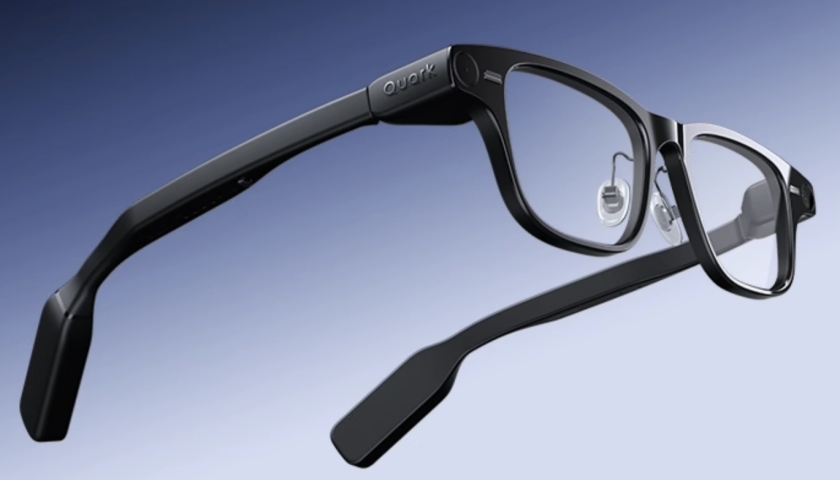
坐绿皮火车冲上热搜后 王自如以评测专家身份站台AI眼镜
Di Yi Cai Jing· 2025-10-23 17:41
Group 1 - Thunder Innovation launched its new AI glasses, Thunder Air4, on October 23, featuring HDR10 support and a peak brightness of 1200 nits [2] - The glasses are priced at 1599 yuan for the standard version and 1699 yuan for the Pro version [2] - The CEO of Thunder Innovation, Li Hongwei, believes the AI glasses market is on the verge of explosion, with over 100 players but few truly invested [2] Group 2 - Research firm RUNTO predicts that global and Chinese AI glasses sales will reach 5.1 million and 1.37 million units respectively by 2025, with growth rates exceeding 200% [2] - The recent trend in the industry includes companies releasing new products and adopting pricing strategies to attract new users [2][3]