矿产

Search documents
2025年前7个月蒙古外贸总额达142亿美元
Shang Wu Bu Wang Zhan· 2025-08-13 10:21
Core Insights - Mongolia's total foreign trade volume reached $14.2 billion in the first seven months of 2025, representing a year-on-year decline of 9.0% [1] Trade Performance - Export trade amounted to $7.8 billion, down 16.1% year-on-year [1] - Import trade reached $6.5 billion, showing a growth of 10.7% year-on-year [1] - The trade surplus was $1.3 billion, which is a decrease of 55.2% compared to the previous year [1] Commodity Exports - Coal exports fell by $2.4 billion year-on-year [1] - Cashmere exports decreased by $200 million year-on-year [1] - Crude oil exports declined by $40 million year-on-year [1] - Iron ore exports dropped by $20 million year-on-year [1] - Copper concentrate exports increased by $1.1 billion year-on-year [1] - Zinc ore exports rose by $30 million year-on-year [1] Trade Partners - The top five export destinations for Mongolia were China (91.9%), Switzerland (5.0%), the United States (1.2%), Russia (0.4%), and Italy (0.2%) [1] - The top five sources of imports were China (38.7%), Russia (23.6%), Japan (12.3%), South Korea (4.4%), and the United States (4.0%) [1]
美绕开中国禁令狂购锑,泰墨成“中转站”,出口管制漏洞何在?
Sou Hu Cai Jing· 2025-08-11 06:06
Core Insights - The U.S. has imported 3,834 tons of antimony oxide through Thailand and Mexico in just five months, nearly matching the total amount imported over the past three years, coinciding with China's planned export control policy for minerals by the end of 2024 [1][3] - The surge in imports raises questions about the effectiveness of China's export bans and whether Thailand and Mexico are acting as "bridges" for the U.S. to circumvent these restrictions [1][3] Group 1: Import Dynamics - Thailand and Mexico are not major producers of antimony, yet there has been an unusual increase in antimony product exports from China to these countries, indicating a strategy of "washing" the origin of products [3][4] - The increase in imports from Thailand and Mexico aligns with China's announcement of export controls on critical minerals, suggesting that the U.S. is using these countries as transit points to bypass direct purchases from China [4][6] Group 2: Supply Chain Complexity - The global supply chain is intricate and interconnected, making it challenging to enforce export bans effectively, especially when products are exported to third countries for minimal processing before reaching the U.S. [4][6] - The presence of Chinese capital in many of the new mineral transshipment companies in Mexico raises concerns about the effectiveness of the export controls [4][6] Group 3: Strategic Materials Concerns - Gallium procurement is also problematic, with U.S. companies managing to acquire it from China through undisclosed channels, highlighting the secretive nature of these transactions [6] - The situation underscores the need for China to enhance its regulatory mechanisms to close supply chain loopholes and strengthen its strategic deterrence against attempts to circumvent export bans [6]



广西与巴西企业拓能源旅游合作
Zhong Guo Xin Wen Wang· 2025-08-07 16:42
Group 1 - The "Guizhou-Tong Wuzhou (South America Station)" economic and trade investment cooperation conference was held in Nanning, focusing on strengthening economic ties between Guangxi and Brazil [1][2] - Guangxi's trade with BRICS countries reached a total import and export value of 41.333 billion yuan from January to May, with Brazil accounting for 8.9 billion yuan [1] - The cooperation between Guangxi and Brazil spans various sectors including agriculture, energy, mining, infrastructure, and aerospace, indicating a deepening partnership [1][2] Group 2 - The conference facilitated precise matching between participating enterprises across industries such as mining, construction, new energy, machinery, agriculture, and cultural tourism [2] - Brazilian companies are increasingly focused on the Chinese market, particularly in the mining sector, with significant investments from Chinese enterprises in Brazil [2] - The "Guizhou-Tong Wuzhou" initiative promotes international cooperation under the Belt and Road Initiative, having previously hosted events with various countries to enhance practical cooperation between Chinese and foreign businesses [2]
卢拉改变对巴西关键矿产和稀土开发态度
Xin Hua Cai Jing· 2025-08-07 06:34
Core Viewpoint - The U.S. has imposed a 40% tariff on Brazil, prompting Brazilian President Lula to shift his stance on the development of key minerals and rare earths, emphasizing national sovereignty and the need for value-added processing within Brazil [1] Group 1: Tariff Impact - The 40% tariff imposed by the U.S. on Brazil officially took effect on August 6 [1] - This tariff is expected to influence Brazil's approach to its mineral resources and trade negotiations with other countries [1] Group 2: Lula's Policy Shift - President Lula stated that key minerals should be treated as matters of national sovereignty, indicating a desire to retain value-added processes within Brazil rather than exporting raw materials [1] - Lula emphasized the importance of developing a national policy to ensure that mineral exploration benefits the Brazilian people, contrasting with past practices of allowing foreign extraction [1]
7月大宗商品价格指数环比上涨0.5% 连续三个月实现正增长
Zhong Guo Zheng Quan Bao· 2025-08-05 23:59
Group 1 - The core viewpoint is that the China Commodity Price Index has shown a month-on-month increase for three consecutive months, indicating optimistic expectations among enterprises and a stable recovery in the market [2] - In July, the overall Commodity Price Index reached 111.4 points, with a month-on-month increase of 0.5% [1] - The black commodity price index rebounded to 77.9 points, up 1.7% month-on-month, while the non-ferrous price index rose to 130.1 points, up 1.1% month-on-month [1] Group 2 - The agricultural price index fell to 97.9 points, down 0.2% month-on-month, and the energy price index decreased to 96.7 points, down 0.6% month-on-month [1] - The chemical price index experienced a decline to 102.9 points, down 1.4% month-on-month, and the mineral price index continued to drop to 71.7 points, down 2.7% month-on-month [1] - Among the 50 monitored commodities, 32 saw price increases while 18 experienced price declines in July [1] Group 3 - The overall outlook for the commodity market is expected to remain stable and positive, supported by government policies aimed at economic recovery and growth [2] - There are still external uncertainties and instabilities affecting global commodity prices, and some industries face challenges such as insufficient effective demand and increased operational pressures [2] - The commodity circulation industry plays a crucial role in stimulating domestic demand, stabilizing growth, and promoting development [2]
7月大宗商品价格指数环比上涨0.5%
Zhong Guo Zheng Quan Bao· 2025-08-05 21:07
Group 1 - The China Logistics and Purchasing Federation reported that the commodity price index for July was 111.4 points, reflecting a month-on-month increase of 0.5% [1] - In July, the black commodity price index rebounded to 77.9 points, up 1.7% month-on-month, while the non-ferrous price index continued to rise to 130.1 points, up 1.1% [1] - The agricultural price index fell to 97.9 points, down 0.2% month-on-month, and the energy price index decreased slightly to 96.7 points, down 0.6% [1] - The chemical price index peaked and then fell to 102.9 points, down 1.4% month-on-month, and the mineral price index continued to decline to 71.7 points, down 2.7% [1] - Among the 50 monitored commodities, 32 saw price increases while 18 experienced price declines in July [1] Group 2 - The continuous month-on-month positive growth of the commodity price index for three consecutive months indicates optimistic expectations among enterprises and a stable recovery in the market [2] - The implementation of the "anti-involution" policy and macroeconomic counter-cyclical adjustment policies is expected to support a stable and positive outlook for the commodity market [2] - Despite the overall positive trend, challenges such as insufficient effective demand and increased operational pressures in certain industries remain [2] - The importance of the commodity circulation industry in stimulating domestic demand, stabilizing growth, and promoting development is emphasized for further economic recovery [2]
7月中国大宗商品价格指数环比上涨0.5%
Zhong Guo Xin Wen Wang· 2025-08-05 09:21
Core Insights - In July, China's bulk commodity price index reached 111.4 points, reflecting a month-on-month increase of 0.5%, indicating optimistic enterprise expectations and a stable market recovery [1] Industry Analysis - The black metal price index rebounded, while the non-ferrous price index continued to rise. Conversely, the agricultural product price index declined, energy prices slightly decreased, chemical prices experienced a pullback, and mineral prices continued to fall [1] Commodity Performance - Among the 50 monitored bulk commodities, 32 saw price increases while 18 experienced declines. The top three commodities with the highest price increases were lithium carbonate (up 10.2%), industrial silicon (up 9.8%), and coking coal (up 9.6%). The largest declines were observed in methanol (down 5%), cement (down 4.8%), and PTA (down 3.9%) [1] Market Outlook - The overall bulk commodity market is expected to continue its stable improvement due to the implementation of national policies aimed at reducing competition and enhancing macroeconomic counter-cyclical adjustments. However, global price volatility and external uncertainties remain significant challenges [1]
全球7大国家高纯石英矿区如何分布?
中国有色金属工业协会硅业分会· 2025-08-05 06:45
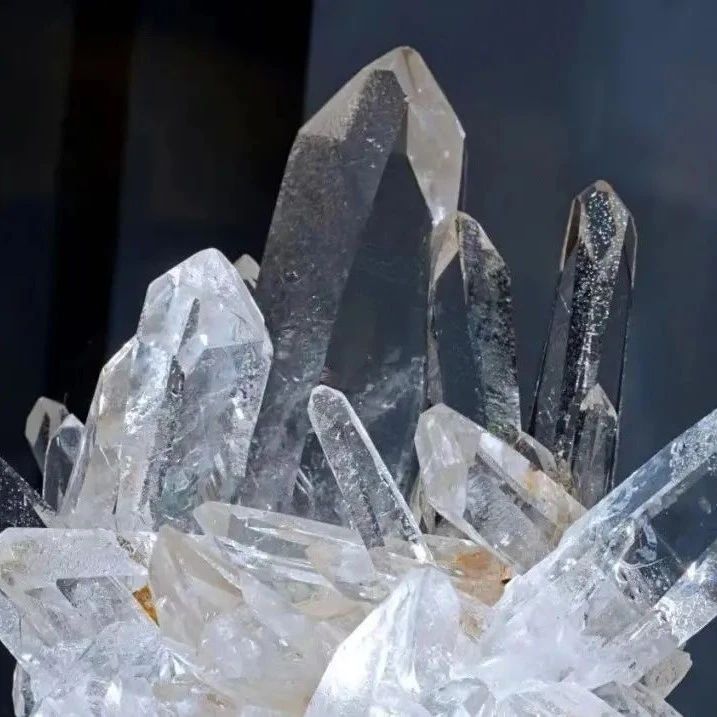
Core Viewpoint - High-purity quartz is a critical material for various high-tech industries, including semiconductors, photovoltaics, and advanced optical applications, and its supply is essential for national security and economic stability [1][40]. Group 1: Overview of High-Purity Quartz - High-purity quartz refers to quartz with extremely high SiO₂ purity and very low impurity content, widely used in semiconductor, photovoltaic, optical, and advanced lighting industries [4][5]. - The higher the purity of quartz, the better its properties such as high-temperature resistance, corrosion resistance, low thermal expansion, high insulation, and light transmission [5][7]. - Different industries have varying quality requirements for quartz, leading to a lack of universal quality evaluation standards [5][7]. Group 2: Global Distribution of High-Purity Quartz Resources - China is the largest consumer and importer of high-purity quartz globally, but there is a significant gap in processing technology compared to international standards [3][9]. - Major high-purity quartz deposits are found in the USA, Norway, Australia, Russia, Mauritania, and Canada, with the largest resource in the Spruce Pine mine in the USA, exceeding 10 million tons [9][11][15][22][26][31][33]. - The purity of quartz from these deposits often exceeds 99.9%, making them suitable for high-tech applications [11][15][20][22][31]. Group 3: Applications of High-Purity Quartz - High-purity quartz is essential for manufacturing transistors, memory chips, integrated circuits, optical fibers, and various components in the electronics and telecommunications sectors [41][45]. - In the renewable energy sector, it is used to produce polysilicon for solar cells and components for nuclear fusion laser ignition devices [42][43]. - The material is also critical in advanced manufacturing, including aerospace applications and military technology [46]. Group 4: Strategic Importance and Future Development - High-purity quartz is recognized as a strategic mineral resource, with countries like Japan and the EU categorizing it as critical [40]. - There is a pressing need for China to enhance its evaluation of high-purity quartz resources, protect quality deposits, and develop advanced purification technologies to ensure a stable supply [40][46].
【财经分析】7月中国大宗商品价格指数(CBPI)连续三个月环比回升 市场总体保持扩张态势
Zhong Guo Jin Rong Xin Xi Wang· 2025-08-05 00:36
Core Insights - The China Commodity Price Index (CBPI) rose by 0.5% month-on-month in July 2025, marking three consecutive months of positive growth, indicating optimistic business expectations and overall market expansion [1][5] - The overall stability in the commodity market is supported by the implementation of "anti-involution" policies and increased macroeconomic counter-cyclical adjustment measures [5][7] - Despite the positive trends, global commodity price volatility and external uncertainties remain significant challenges for certain industries [1][5] Commodity Price Index Summary - The CBPI for July 2025 is reported at 111.4 points, with a month-on-month increase of 0.5% and a year-on-year decrease of 2.7% [3][6] - The black metal price index rebounded to 77.9 points, up 1.7% month-on-month, while the non-ferrous price index rose to 130.1 points, up 1.1% month-on-month [3][7] - The energy price index decreased to 96.7 points, down 0.6% month-on-month, and the chemical price index fell to 102.9 points, down 1.4% month-on-month [3][8] Sector-Specific Insights - In July, 32 out of 50 monitored commodities saw price increases, with lithium carbonate, industrial silicon, and coking coal rising by 10.2%, 9.8%, and 9.6% respectively [5][6] - The chemical sector experienced a decline, with methanol and cement prices dropping by 5% and 4.8% respectively, attributed to supply-demand imbalances and increased inventories [8][9] - The agricultural price index slightly decreased to 97.9 points, down 0.2% month-on-month, influenced by high temperatures and lower-than-expected summer consumption [8][9] Market Dynamics - The rebound in black metal prices is driven by improved market confidence and rising prices of raw materials like coking coal and coke [6][7] - The energy sector's decline is linked to seasonal production slowdowns and weaker downstream demand [7][8] - The mineral price index fell to 71.7 points, down 2.7% month-on-month, due to weak downstream demand and increased inventory pressures [9]

歌尔微电子二次递表港交所,折叠车龙头大行科工重启港股IPO
Sou Hu Cai Jing· 2025-07-30 08:07
Group 1: New Listings - Shanghai Stock Exchange had 1 company listed from July 21 to July 27 [2] - Shenzhen Stock Exchange's ChiNext had 1 company listed during the same period [2] Group 2: Performance of Newly Listed Companies - Jiyuan Group, engaged in dietary nutrition supplements, saw its stock price rise over 274.54% on the first day, closing at 35.20 CNY per share, a 223.53% increase from the issue price of 10.88 CNY, with a total market capitalization of approximately 14.1 billion CNY [3] - Shanda Electric Power, focused on smart products for power systems, experienced a first-day stock price increase of over 356.00%, closing at 53.05 CNY per share, a 261.87% rise from the issue price of 14.66 CNY, with a total market capitalization of around 8.6 billion CNY [4] Group 3: Listing Committee Reviews - No companies passed the listing committee review on either the Shanghai or Shenzhen stock exchanges from July 21 to July 27 [5] Group 4: Companies with Deferred Listing Reviews - Hengkun New Materials, specializing in key materials for integrated circuits, had its listing review deferred, with inquiries focusing on potential intellectual property disputes and revenue recognition methods [6][7] Group 5: Hong Kong Stock Exchange Listings - Hong Kong Stock Exchange had 1 new company listed during the period, Nanjing Weili Zhibo-B, a clinical-stage biotech company, which saw a first-day increase of 91.71%, closing at 73.30 HKD per share, a 109.43% rise from the issue price of 35.00 HKD, with a total market capitalization of approximately 14.2 billion HKD [12] Group 6: Companies Submitting Listing Applications - Eight companies submitted listing applications to the Hong Kong Stock Exchange, including: - Goer Microelectronics, a provider of smart sensing solutions, with a market share of 2.2% in the global smart sensing market [18] - Tianyu Semiconductor, a leading supplier of silicon carbide epitaxial wafers in China, with a market share of 30.6% in revenue [23] - Daxing Technology, a well-known folding bicycle company, holding a 26.3% market share in retail volume [28] - Juzi Technology, a manufacturer of baby electronic products, with projected revenues of 1.90 billion CNY to 4.62 billion CNY from 2022 to 2024 [31] - LeMo IoT, a provider of massage services through machines, with a market share of 33.9% in 2022 [37] - Jinyan High-tech, a major producer of kaolin materials, with a market share of 19.1% in 2024 [41] - Shengruan Technology, a provider of intelligent solutions for the oil and gas industry, ranked second in the independent smart energy solutions market [44] - AIWB, a one-stop smart property building solutions provider in the U.S. [49]