无人驾驶

Search documents
十五运会赛场内外上演“科技秀”
Ke Ji Ri Bao· 2025-11-20 01:01
Group 1 - The core theme of the news is the integration of advanced technology in the 15th National Games, showcasing numerous first-of-their-kind technological achievements in various fields, particularly in sports [1][2][4] - The Guangdong Provincial Science and Technology Department has selected over 130 high-tech products for application during the event, emphasizing the "technology empowers sports" model [1][2] - The event features a range of innovative products, including the world's first humanoid robot torchbearer and an L4 autonomous vehicle based on automotive-grade chips, highlighting the region's technological advancements [1][2] Group 2 - The event emphasizes the coexistence of "smart" and "green" technologies, with energy-saving and environmentally friendly products being a major highlight [2] - The "Horse Face Intelligent Recognition" system developed by Guangzhou Customs allows for quick and accurate identification of racehorses, reducing labor costs by 30% and enhancing safety [2] - The Guangdong Olympic Sports Center's track, made from nano-modified rubber, is designed for durability and 100% recyclability, showcasing sustainable practices in sports infrastructure [2][3] Group 3 - The integration of 5G-A, AI, and cloud rendering technologies has created a virtual space that supports thousands of concurrent users, enhancing the spectator experience [3] - The event has seen over 5 million visits to its virtual platform, allowing audiences to interact with digital avatars of athletes and access real-time event information [3] - Various high-tech products, such as ultra-high-definition displays and AI glasses, have been introduced to enhance the viewing experience, making the event a high-tech spectacle [3] Group 4 - The event is positioned as a new engine for urban development and collaboration in the Guangdong-Hong Kong-Macao Greater Bay Area, highlighting the synergy between technology and sports [4]
RoboTaxi双雄港股遇冷 生态整合决定终局
Zheng Quan Shi Bao· 2025-11-19 17:56
Core Insights - The recent IPOs of Xiaoma Zhixing and Wenyuan Zhixing in Hong Kong have raised over 10 billion HKD, but their stock prices have declined significantly, raising concerns about the future of the autonomous driving sector [1][2] - The low stock performance is attributed to the high cash burn nature of the autonomous driving industry, with investors adopting a cautious stance due to the current unfavorable market environment for tech companies [1][2] Company Analysis - Xiaoma Zhixing focuses on providing autonomous driving technology and solutions for global mobility and logistics, while Wenyuan Zhixing has a broader service portfolio covering RoboTaxi, autonomous minibuses, freight vehicles, and sanitation vehicles [2] - Both companies are in the early stages of technology validation and commercialization, with profitability dependent on multiple factors including technological maturity, policy openness, cost control, and market demand [2][3] Market Dynamics - The RoboTaxi industry is facing intense competition, with major players like XPeng Motors and Baidu entering the market, which increases the pressure on existing companies [4][5] - The entry of large corporations is leading to a market reshuffle, with smaller players like AutoX suspending operations due to the competitive landscape [5] Future Outlook - The global RoboTaxi market is projected to grow from 4.4 billion USD in 2025 to 88.9 billion USD by 2034, with a CAGR exceeding 50%, and China expected to become the largest single market [6] - Policy support is crucial for the development of the RoboTaxi industry, with new regulations in China set to facilitate commercial operations [6] Strategic Considerations - Differentiated strategies are essential for companies to navigate the competitive landscape, with Xiaoma Zhixing focusing on major domestic cities and Wenyuan Zhixing pursuing global expansion [6][7] - The ability to integrate technology, establish stable traffic sources, and produce low-cost vehicles will be key to achieving sustainable profitability in the long term [7]
无人驾驶创造新质就业 武大等高校构建无人驾驶与人工智能专业人才培养体系
Shang Hai Zheng Quan Bao· 2025-11-19 10:37
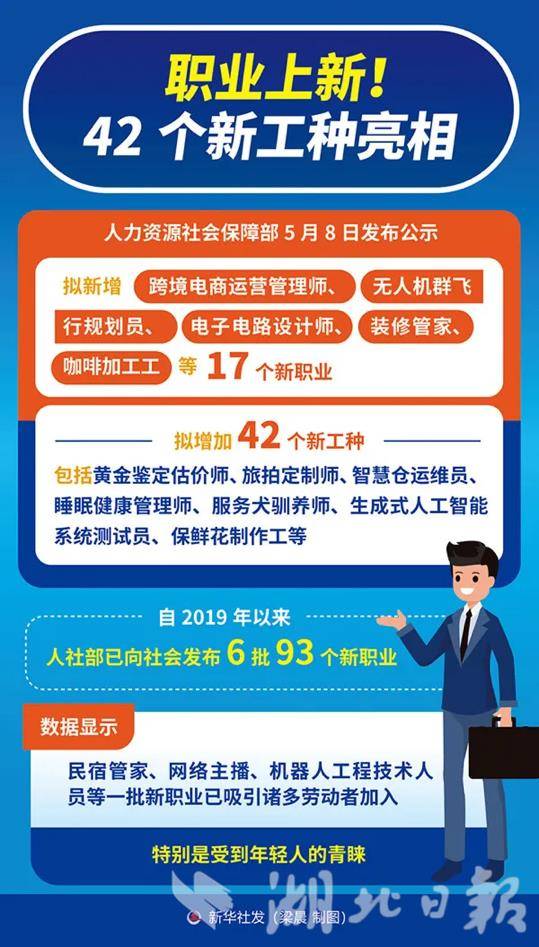
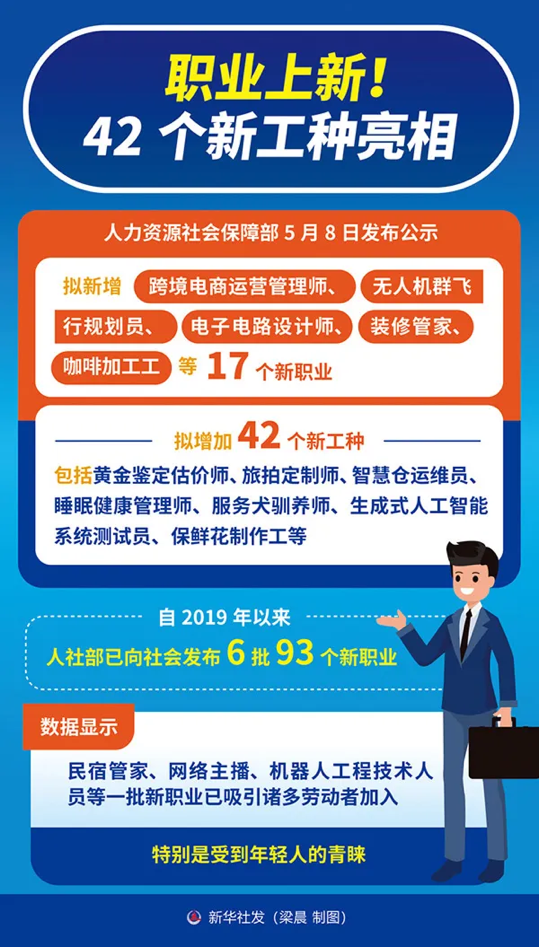
Core Insights - The integration of autonomous driving vehicles into educational institutions aims to cultivate talent in the fields of autonomous driving and artificial intelligence, addressing the industry's demand for skilled professionals [1] - The article by Mo Rong emphasizes that artificial intelligence's impact on employment is limited in terms of job replacement but significantly alters job structures, creating new employment opportunities in emerging industries [1] - Autonomous driving technology is not merely replacing traditional driving jobs but is redefining work paradigms, leading to the emergence of new roles such as intelligent networked vehicle safety officers and data engineers [1] Industry Developments - Autonomous driving is deeply integrated with core technologies such as artificial intelligence, 5G, and big data, serving as a driving force for the transformation and upgrading of traditional industries [3] - The demand for new professions related to artificial intelligence is increasing, with 17 new job categories directly linked to AI, including intelligent networked vehicle testers and maintenance personnel [3] - Job demand in the autonomous driving sector is rising, with positions like intelligent driving R&D engineers and safety officers becoming highly sought after, and traditional drivers are being prioritized for recruitment to facilitate skill transitions [3]


《求是》杂志刊文:人工智能在无人驾驶领域渗透应用,形成就业新增长点
Yang Zi Wan Bao Wang· 2025-11-19 07:21
Core Insights - The article emphasizes that the impact of artificial intelligence (AI) on employment is limited in terms of job replacement but significantly alters the employment structure, creating a large number of "new quality jobs" [1] - The integration of AI in areas like autonomous driving is expected to generate new industries and job opportunities, such as roles in research, manufacturing, and application [1] - The Chinese government's policy support for AI, particularly in enhancing livelihoods through the "AI+" initiative, aims to foster new employment forms that combine automated and human services [1] Group 1: Employment Impact of AI - AI technology is not merely replacing traditional jobs but is redefining production tools, leading to new work paradigms such as human-machine collaboration [1][2] - The demand for AI-related positions, such as algorithm engineers and data analysts, is projected to grow significantly, with a year-on-year increase exceeding 100% for certain roles [3] - The autonomous driving sector is seeing a rise in recruitment for positions like intelligent driving engineers and safety personnel, with a preference for candidates with traditional driving experience to facilitate skill transformation [3] Group 2: Industry Development and Talent Cultivation - The autonomous driving industry integrates multiple core technologies, including AI, 5G, and big data, driving the transformation of traditional industries and creating high-quality digital industry clusters [2] - Companies like "Luobo Kuaipao" are actively engaging in deep collaboration with educational institutions to develop a talent pipeline for the autonomous driving sector, establishing practical education programs [3][4] - The "government-enterprise collaboration and industry-academia integration" model is expected to create a development loop that supports the emergence of high-quality employment opportunities [4]
港股午评|恒生指数早盘跌0.45% 氢能概念股逆市走高。
智通财经网· 2025-11-19 04:08
Group 1: Market Overview - The Hang Seng Index fell by 0.45%, down 117 points, closing at 25,812 points, while the Hang Seng Tech Index dropped by 0.98% [1] - The trading volume in the Hong Kong stock market reached HKD 112.6 billion in the morning session [1] Group 2: Hydrogen Energy Sector - Hydrogen energy stocks experienced a significant rise, driven by the continuous rollout of green hydrogen ammonia industry policies, indicating a maturing industry [1] - Reshaping Energy (02570) surged by 24.29%, while Guofu Hydrogen Energy (02582) increased by over 4.64% [1] Group 3: Oil Sector - Oil stocks continued their recent upward trend, with institutions noting the resilience of the three major oil companies during the oil price downturn [1] - Sinopec (00386) rose by 3.6%, PetroChina (00857) increased by 2.49%, and CNOOC (00883) gained 2.11% [1] Group 4: Telecommunications and Technology - Changfei Optical Fiber and Cable (06869) saw an increase of over 4% after China Telecom completed the world's first ultra-long-distance hollow core fiber transmission experiment [1] - Boleton (01333) surged by over 10% as the company is set to globally launch its autonomous driving specialized mining truck this Friday [1] Group 5: Gold and Consumer Products - Shangshan Gold (01939) rose nearly 2% following a profit warning, which is expected to boost its global layout of intelligent gold terminals [1] - H&H International Holdings (01112) increased by over 2%, with a strong growth momentum in its infant-related products, particularly in infant formula sales exceeding industry averages [1] Group 6: Medical and Defense Sectors - Yimai Sunshine (02522) rose by over 4% as the company plans to further invest in Yinghe Medical, validating its commercial path for medical data assetization [1] - China Shipbuilding Defense (00317) increased by over 4%, with institutions noting that second-hand ship prices have surpassed new ship prices, indicating an upcoming positive trend in the shipbuilding sector [1] Group 7: Declining Stocks - Jacobson Pharmaceutical (02633) fell by over 8% due to a 5.36% year-on-year decrease in mid-term earnings, despite a 20% increase in dividends [2] - Yuejiang (02432) dropped by over 4%, accumulating a decline of over 40% in the past two months, having completed two rounds of equity financing in four months [2]


11月18日沪深两市涨停分析
Xin Lang Cai Jing· 2025-11-18 07:33
Group 1: AI and Digital Marketing - Company is developing OrangeGPT, an AI training and big data analysis platform that integrates RAG technology and industry marketing knowledge, capable of multimodal generation including text and image [2] - FastMai Xiaozhi, a subsidiary, has integrated and supports DeepSeek; the company has also opened public testing for its intelligent agent [2] - Company has established strong partnerships in digital marketing with platforms like Douyin, Xiaohongshu, and Bilibili, accumulating a large number of quality clients [2] Group 2: Semiconductor and Storage - Company focuses on semiconductor storage products, primarily NAND and DRAM, with a subsidiary that has products applicable in data centers [2] - Company is involved in the lithium resource extraction and recycling business, with projects in Tibet and Argentina, and has completed a lithium carbonate production line with an annual capacity of 2,000 tons [3] Group 3: Consumer Goods and Retail - Company is a leading domestic men's pants brand located in Xiamen, Fujian, and has seen significant stock performance with five consecutive trading limits [3] - Company operates in the daily ceramic products sector and has also experienced a strong stock performance with three consecutive trading limits [3] Group 4: Strategic Acquisitions and Investments - Company plans to acquire Tianyi Chemical, a leader in brominated flame retardants [4] - Company intends to invest up to 540 million in acquiring Kuixin Technology, expanding into the semiconductor sector [4] - Company is involved in the natural gas business and plans to purchase related assets from its controlling shareholder [4] Group 5: Free Trade and Economic Development - High-standard construction of Hainan Free Trade Port is underway, with a closure set to start on December 18 [5] - Company has significant land holdings in Hainan for industrial use, focusing on non-woven fabric products [5] Group 6: Robotics and Automation - Company specializes in intelligent control valves, essential for industrial internet and IoT applications [4] - Company is developing intelligent cockpit and assisted driving products, with several features already implemented [5]

计算机行业“一周解码”:阿里千问APP上线,全面对标ChatGPT
Bank of China Securities· 2025-11-17 06:30
Investment Rating - The industry investment rating is "Outperform the Market" [40] Core Insights - Alibaba has launched the "Qianwen" app, entering the C-end AI assistant market, aiming to create a comprehensive AI agent platform and expand globally, enhancing the integration of technology and commercialization [11][12] - The autonomous driving sector is accelerating, with "LuoBo Kuaipao" leading the global Robotaxi commercialization process, achieving over 250,000 fully autonomous orders weekly and expanding its services to 22 cities worldwide [13][14] - Rokid has partnered with BOLON to introduce AI smart glasses, which feature advanced functionalities such as AI object recognition and voice navigation, marking a significant step in wearable technology [17][19] - The release of GPT-5.1 signifies a new era in AI, enhancing ChatGPT's intelligence and conversational experience, with features like adaptive reasoning and personalized dialogue styles [20][21][23] Summary by Sections 1. Alibaba's Qianwen App Launch - Alibaba is developing the "Qianwen" app based on the Qwen model, directly competing with ChatGPT, and plans to enhance its AI capabilities over the coming months [11][12] - The international version of the app is also in development, targeting overseas users [11][12] 2. Autonomous Driving and Robotaxi - "LuoBo Kuaipao" has become the world's largest fully autonomous ride-hailing platform, with significant growth in service volume and geographical expansion [13][14] - The company has established partnerships in cities like Dubai and Abu Dhabi, facilitating its global expansion [14][15] 3. AI Smart Glasses by Rokid and BOLON - The new BOLON AI smart glasses are designed for comfort and functionality, featuring a 12-megapixel camera and various AI capabilities [17][19] - Rokid aims to innovate further in the AI glasses market, focusing on lightweight designs and enhanced user experience [18][19] 4. GPT-5.1 Model Release - OpenAI's GPT-5.1 introduces significant improvements in conversational AI, focusing on user experience and adaptability [20][21][23] - The model includes features for personalized dialogue and enhanced emotional intelligence, marking a shift towards more human-like interactions [21][23]
大国交通,科技自强!萝卜快跑周全无人订单达25万,累计服务超1700万次
Zhong Guo Qi Che Bao Wang· 2025-11-14 01:40
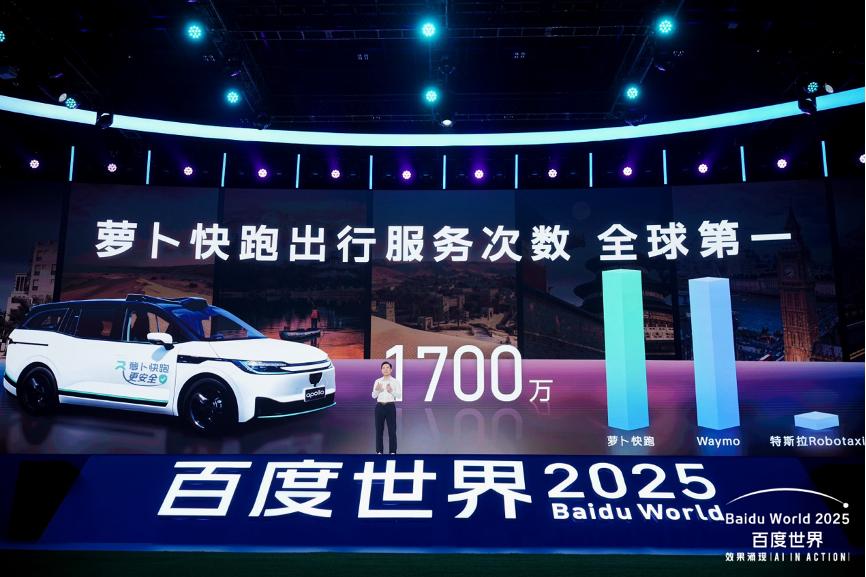
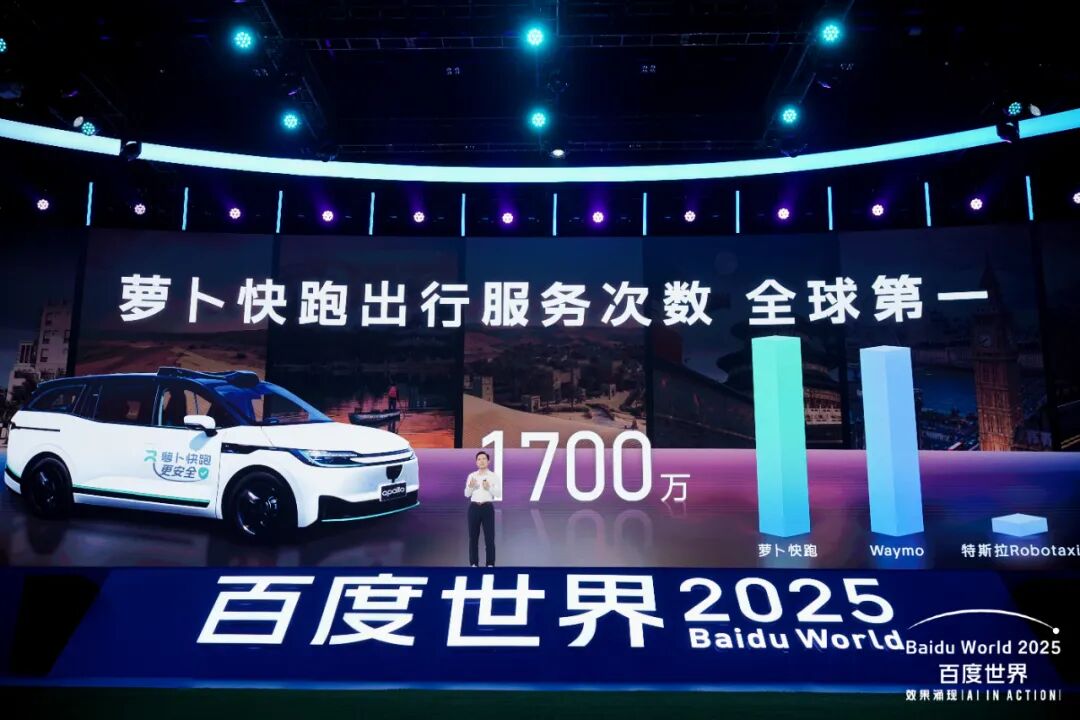
"萝卜快跑周全无人订单达25万,全球的出行服务次数超1700万次,超越谷歌Waymo成为全球第一。"11月13日,百度创始人李彦宏在百度世界 2025大会上表示,得益于行业领先的无人驾驶技术、丰富的运营经验和卓越的安全记录,萝卜快跑在2025年迎来高速发展的一年。 今年以来,萝卜快跑已在北京、上海、武汉、深圳、香港、迪拜、阿布扎比等22座城市落地,全球自动驾驶总里程突破2.4亿公里,相当于绕地球6000 圈。其中,全无人驾驶里程达1.4亿公里。11月10日,萝卜快跑还获得阿布扎比首批全无人驾驶商业化运营许可,并与阿联酋无人驾驶出行公司AutoGo扩大 合作,建成当地最大规模的全无人商业化运营车队。这些进展共同推动了订单量的迅猛攀升。 萝卜快跑在全球市场的领先,得益于国家在人工智能赋能实体经济、加速产业升级转型的一系列政策引导。早在2017年,科技部便前瞻布局,支持百度 成为国家科技重大专项"自动驾驶国家新一代人工智能开放创新平台";工信部则明确"单车智能+网联赋能"的战略路线,加速推进人工智能与传统汽车产业 深度融合、双向赋能。 萝卜快跑订单量的持续突破与海外市场的快速拓展,不仅是企业商业成功的体现,更是国家 ...

黄仁勋刚说AI竞赛中国会赢,萝卜快跑就超越谷歌Waymo
3 6 Ke· 2025-11-13 11:48
Core Insights - Baidu has made significant advancements in artificial intelligence, including the launch of the "real-time interactive digital human" and the upgrade of its no-code application platform "Miao Da" to version 2.0, enabling full-stack application development and distribution [1][3] - The company’s autonomous driving service, "Luo Bo Kua Pao," has surpassed Google’s Waymo, becoming the largest autonomous ride-hailing service globally, with over 250,000 orders per week and a total of over 17 million services provided [1][4] - Baidu's CEO, Li Yanhong, emphasized the importance of internalizing AI capabilities within businesses to transform AI from a cost into a productivity tool, enhancing travel efficiency and safety through autonomous driving technology [3][12] AI Technology Developments - Baidu has opened its digital human technology to the global market and introduced a universal intelligent model, GenFlow 3.0, which allows for comprehensive content input, processing, and output [1] - The company’s AI capabilities are being integrated into various sectors, with a focus on enhancing operational efficiency and safety in transportation [3][12] Global Expansion of Autonomous Driving - "Luo Bo Kua Pao" has expanded its operations to 22 cities and is actively entering international markets, including partnerships with Uber and Lyft in the Middle East and Europe [4][11] - The service has received commercial operation licenses in Abu Dhabi and is collaborating with local companies to establish a large fleet of fully autonomous vehicles [4][11] Learning and Adaptation Capabilities - The autonomous driving technology has demonstrated rapid adaptability to different urban environments, learning from complex domestic scenarios to efficiently operate in international markets [6][11] - The system's learning ability allows it to adjust to unique driving conditions and regulations, such as adapting to right-hand driving in Hong Kong within five months [11] Impact on Urban Ecosystems - Autonomous driving is expected to revolutionize urban living, affecting land value, residential demand, and overall city planning [12][14] - The technology could significantly reduce traffic accidents, with L4 autonomous driving potentially lowering accident rates to one-tenth of human driving [12] Future Market Projections - The global autonomous vehicle market is projected to reach $10 trillion by 2030, with the number of autonomous vehicles expected to hit approximately 50 million [13] - The cost of operating autonomous vehicles is anticipated to decrease significantly, making them accessible to average households [13] Industry Transformation - The integration of AI in autonomous driving is reshaping the entire industry ecosystem, from core components to vehicle manufacturing and operational services [16][17] - The shift towards collaborative development among chip manufacturers, algorithm companies, and vehicle manufacturers is fostering innovation and reducing costs [16][17] Conclusion - Baidu's advancements in AI and autonomous driving position it as a leader in the global market, showcasing China's capabilities in technology development and innovation [17][18]
万亿美元赛道浮现,萝卜快跑稳居全球Robotaxi榜首
3 6 Ke· 2025-11-13 11:36
Core Insights - The integration of AI large models with the real world is exemplified by the emergence of Robotaxi services, which are reshaping urban transportation [1][2] - Baidu's Robotaxi service, "LuoBo Kuaipao," has become a global leader in commercializing Robotaxi, achieving over 250,000 weekly orders and a cumulative total of 17 million orders by the end of October [1][3] Group 1: Robotaxi Market Position - LuoBo Kuaipao leads the global Robotaxi order rankings, with a significant presence in 22 cities including Beijing, Shanghai, and Dubai, and all orders being fully autonomous [3][5] - The service has accumulated over 17 million orders, surpassing Google's Waymo, which has 10 million orders, establishing itself as the world's foremost Robotaxi service [3][5] Group 2: Technological and Societal Impact - The acceleration of Robotaxi adoption signifies the feasibility of autonomous driving technology, which is expected to profoundly influence urban planning and transportation systems [2][6] - Baidu's founder, Li Yanhong, emphasizes the transition of AI from "intelligent emergence" to "effect emergence," highlighting the potential of AI large models when integrated with real-world applications [2][6] Group 3: Economic Potential - The global market for autonomous vehicles is projected to reach $10 trillion by 2030, with the number of autonomous vehicles expected to reach approximately 50 million [10][12] - The average cost of autonomous rides is anticipated to decrease from $1.1 per mile to $0.25, potentially increasing ride-hailing demand by 5 to 7 times [10][11] Group 4: Urban Transformation - The introduction of Robotaxi services is expected to reduce the need for parking spaces in densely populated areas, thereby freeing up space for commercial and residential development [7][8] - As commuting time becomes more productive through the use of Robotaxis, the traditional urban structure may shift from a single-center model to a multi-center model, enhancing land value in suburban areas [8][10] Group 5: Global Recognition and Expansion - LuoBo Kuaipao is recognized as a significant player in the global autonomous driving landscape, competing primarily with U.S. companies like Waymo [12][13] - The service has expanded internationally, with recent launches in Dubai and Abu Dhabi, and partnerships with local transportation operators to enhance its service offerings [13][14]