母婴

Search documents
普惠育儿补贴落地 母婴概念股集体爆发
Shen Zhen Shang Bao· 2025-07-29 17:15
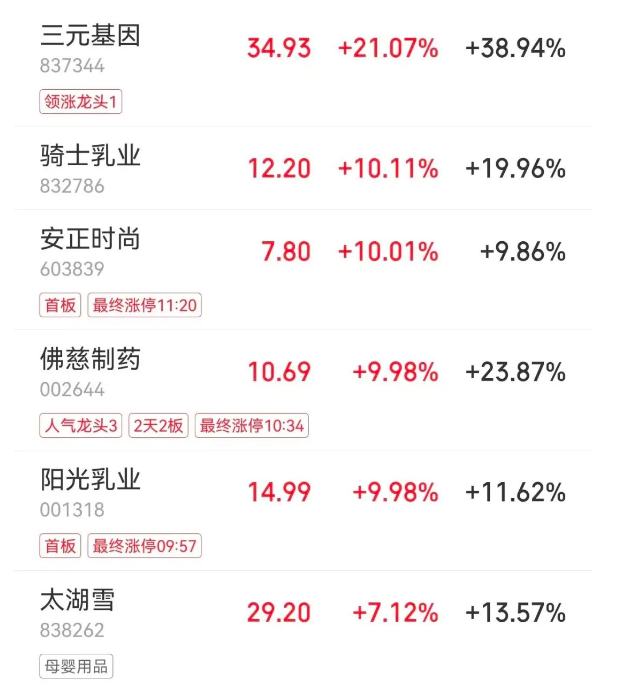
消息面上,7月28日,《育儿补贴制度实施方案》公布。业内人士认为,"按2024年出生人口954万人测 算,年补贴规模约343亿元,预计60%将转化为母婴消费增量,育儿补贴将增加婴幼儿家庭的可支配收 入,直接利好婴童用品、奶粉、玩具、服装等消费品行业。" 【深圳商报讯】(记者周良成)7月29日,母婴概念股集体爆发。截至收盘,三元基因上涨20.76%,安 正时尚、佛慈制药、阳光乳业等涨停,太湖雪、方盛制药、骑士乳业等涨超5%,葵花药业、珠江股 份、贝因美、华大基因、爱婴室、孩子王等涨幅居前。 国融证券认为:"中国婴童市场正处量质齐升黄金期,2024年规模已达4.2万亿元,预计2025年突破5万 亿元,2030年有望达10万亿元。在政策驱动下,行业将迎来新商机。" (文章来源:深圳商报) 根据数据,A股母婴股已经历了连续4年的调整期,近4年来,康希诺股价累计下跌86.61%,贝泰妮、康 泰医学股价下跌超七成,良品铺子、华大基因、孩子王等跌超三成。在港股市场,母婴股之前同样表现 低迷,近4年来,港股贝康医疗-B股价累计下跌84.6%,锦欣生殖下跌78.6%,中国飞鹤下跌65.61%。市 场人士指出,随着支持政策的相继 ...
3600元育儿补贴引爆母婴消费链:奶粉、托育、辅助生殖等核心赛道谁主沉浮?
智通财经网· 2025-07-29 13:39
国家育儿补贴政策出台,母婴概念股迎来爆发式增长。 政策利好下,市场机构纷纷上调对母婴行业的发展预期。 7月28日,中共中央办公厅、国务院办公厅近日印发的《育儿补贴制度实施方案》明确,从2025年1月1 日起,对符合法律法规规定生育的3周岁以下婴幼儿发放补贴,至其年满3周岁。育儿补贴按年发放,现 阶段国家基础标准为每孩每年3600元。这一重大利好消息立即在资本市场引发强烈反响。 7月29日,港股、A股开盘后,母婴概念股集体爆发,形成了一道亮丽的"红色风景线"。其中,A股贝因 美(002570.SZ)、爱婴室(603214.SH)等个股强势涨停,孩子王(301078.SZ)、骑士乳业 (832786.BJ)等涨幅超过10%。港股婴童概念股亦多数高开,锦欣生殖 (01951) 涨 8.93%;H&H 国际控股 (01112) 涨 7.33%;中国飞鹤 (06186) 涨 5.12%;圣贝拉 (02508) 涨 3.13%,报 7.9 港元。简言之,母婴板 块成为当日市场最耀眼的明星板块。 | 一元县大 | 34.93 +21.07% +38.94% | | --- | --- | | 837344 | | | 领涨 ...


育儿补贴落地,婴童概念股“几家欢喜几家愁”
Guan Cha Zhe Wang· 2025-07-29 10:46
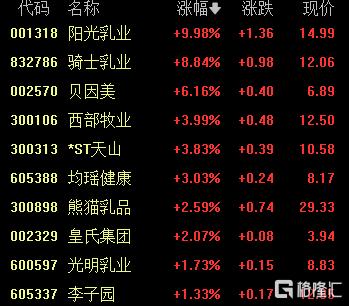
(文/解红娟 编辑/张广凯) 7月29日,即育儿补贴政策落地的第一个工作日,A股及港股婴童概念股整体上涨。 截至当日收盘,婴童概念股中,乳制品板块表现亮眼,阳光乳业股价大幅上扬9.98%、骑士乳业股价攀 升5.05%、贝因美股价上浮3.54%、西部牧业股价抬升1.41%、中国飞鹤股价微涨0.43%;母婴连锁与用 品板块中,爱婴室股价上浮2.62%、孩子王股价上涨2.24%。 值得一提的是,今日盘中不少婴童概念股大幅走高,但收盘时涨幅显著收窄。 以骑士乳业为例,早间开盘股价大幅上涨至13.88元/股,涨幅高达25.27%,但随着大笔买进卖出,股价 迅速下跌,截至收盘报11.64元/股,涨幅仅5.05%。 贝因美亦是如此,早间开盘即涨停,涨幅达10.02%,但不久后股价出现回调,截至收盘报6.72元/股, 涨幅仅3.54%。 当然也有例外。阳光乳业也是开盘即涨停,虽然股价在早间经历了一段短时间的下滑,但很快回升至涨 停板,并维持至收盘。截至收盘报14.99元/股,涨幅达9.98%。 不过,也不是所有婴童概念股能抓住这波红利,比如好孩子国际。 在育儿补贴政策的加持下,好孩子国际股价低开低走,开盘报1.16元/股,跌 ...

一图看懂 | 育儿补贴新政概念股
市值风云· 2025-07-29 10:08
Core Viewpoint - The national childcare subsidy policy will provide an annual subsidy of 3600 yuan per child until the age of three, benefiting over 20 million families each year starting from January 1, 2025 [4][5]. Subsidy Standard - Each child will receive a subsidy of 3600 yuan per year until they turn three years old. For children born before January 1, 2025, who are under three years old, the subsidy will be calculated based on the remaining months [8]. Coverage - The policy applies to all families with children under three years old, regardless of whether they have one, two, or three children, and is uniformly implemented across the country [9]. Application Process - Parents or guardians can apply for the subsidy online through the childcare subsidy information management system or offline, providing necessary documents such as birth certificates and household registration books [10]. Funding Source - The central government will establish a "childcare subsidy fund," providing financial support to eastern, central, and western regions proportionally, with any additional local funding being the responsibility of local governments [11]. Market Impact Analysis - The infant food market is expected to exceed 72 billion yuan, directly benefiting the maternal and infant consumption industry chain [12]. - The childcare industry is projected to reach a scale of 162.1 billion yuan by 2025, with an average annual growth rate of 7.5%, accelerated by the policy [13]. - Demand for children's medical and nutritional health products is anticipated to rise, with the pediatric medication market expected to grow at a rate exceeding 10% annually [14]. Beneficiary Companies - Leading maternal and infant retail companies are expected to benefit directly from increased customer spending and frequency of purchases [15]. - Companies such as Kidswant and Huaiying Room are positioned to gain from the subsidy implementation due to their extensive retail networks and service offerings [16]. - Major players in the infant formula market, like China Feihe and Yili, are likely to see increased demand driven by the subsidy [17][18].




母婴概念集体大爆发
盐财经· 2025-07-29 09:04
Market Overview - As of July 29, A-shares opened mixed, with the Shanghai Composite Index down 0.09% and the Shenzhen Component Index down 0.27%, while the ChiNext Index rose by 0.55% [2][3] - Over 4,000 stocks in the market experienced declines, with a total trading volume of 832.4 billion, and a predicted trading volume of 1.82 trillion, an increase of 54.1 billion [3] Baby and Maternal Industry Insights - The newly announced national childcare subsidy policy will start on January 1, 2025, providing annual subsidies of 3,600 yuan per child for children under three years old [4] - The Chinese baby and toddler market is in a "golden period of quantity and quality," projected to reach 4.2 trillion yuan in 2024 and exceed 5 trillion yuan by 2025, with a potential of 10 trillion yuan by 2030 [5] - The policy is expected to benefit four major areas: - Dairy products, with increased demand for infant formula and related products due to rising birth rates [6] - Mother and baby chain stores, showing improvement in same-store revenue growth [6] - Baby products, including personal care and infant formula additives, with anticipated demand growth [6] - Postpartum care services, which have low penetration rates and significant growth potential [6] Stock Performance - Stocks related to the maternal and infant sector saw significant gains, with companies like Beiyinmei and Aiyingshi hitting the daily limit, and others like Qishi Dairy and Xibu Muye rising over 10% [3] - Some film and cinema stocks also performed well, with Happiness Blue Sea rising over 15% and China Film increasing over 6%, driven by the anticipated box office success of the film "Nanjing Photo Studio" [7] Robotics Sector Activity - The robotics sector showed resilience, with Haichang New Materials hitting a 20% limit up, and other companies like Youde Precision and Xiangxin Technology also experiencing gains [8] - Tesla's CEO Elon Musk announced plans to launch the third version of the humanoid robot Optimus by the end of this year, with mass production expected to start in 2026, targeting an annual production of 1 million units within five years [10]

育儿补贴落地,母婴概念股沸腾!贵阳国资委控股乳企冲击IPO
格隆汇APP· 2025-07-29 08:52
Core Viewpoint - The article discusses the recent implementation of childcare subsidies in China, which has led to a surge in the stock prices of maternal and infant-related companies, particularly highlighting the IPO ambitions of a state-owned dairy enterprise in Guiyang [1] Group 1: Childcare Subsidies Impact - The introduction of childcare subsidies is expected to stimulate demand in the maternal and infant product sector, positively affecting related companies' revenues and stock performance [1] - Maternal and infant concept stocks have seen significant price increases following the announcement of these subsidies, indicating strong market sentiment and investor interest [1] Group 2: IPO Developments - Guiyang's state-owned assets management committee is backing a dairy company that is preparing for an IPO, reflecting the government's support for the maternal and infant industry [1] - The potential IPO is seen as a strategic move to capitalize on the growing market for maternal and infant products, driven by the new subsidy policies [1]

育儿补贴 “炸场”!母婴链全沸腾,个股狂飙136%
Ge Long Hui· 2025-07-29 03:55
Group 1 - The implementation of the childcare subsidy policy has led to a significant rise in the mother and baby industry, particularly in the dairy sector, with companies like Sunshine Dairy reaching the daily limit increase [1][11] - The national childcare subsidy is set at 3600 yuan per child per year, which, while not fully covering the average annual cost of raising a child (approximately 25,000 yuan), sends a strong policy signal and is expected to expand the maternal and infant consumption market by 5%-8% [7][10] - Local governments have already initiated their own subsidy programs, with notable examples including Hohhot and Hangzhou, which have implemented substantial financial support for families based on the number of children [10][12] Group 2 - The dairy industry is anticipated to be one of the first beneficiaries of the subsidy, particularly in the consumption of milk powder, which could enhance the sector's overall performance [11][13] - Analysts believe that the subsidy will not only reduce the cost of childbirth for families but also boost birth rates, especially benefiting the lower-tier markets and various maternal and infant consumer goods [14] - Companies such as Kidswant, Saint Bella, and Aiyingshi are expected to benefit from the ongoing changes in the childcare subsidy landscape, with potential growth in early education and training institutions as well [14]


超4000股下跌,母婴概念集体大爆发
21世纪经济报道· 2025-07-29 02:54
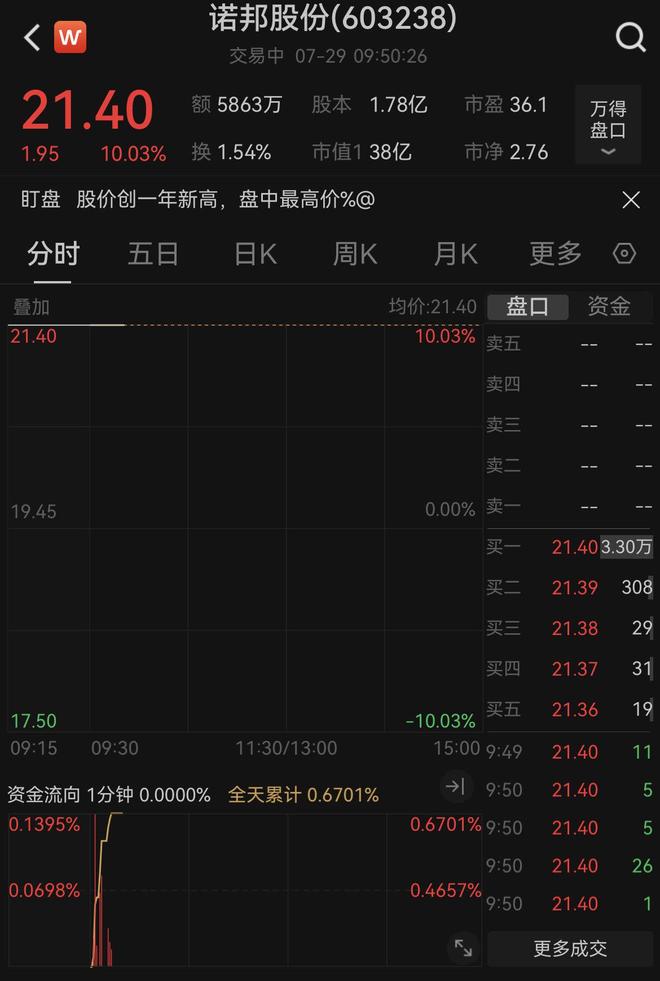
Core Viewpoint - The article highlights the significant impact of the newly announced national childcare subsidy policy on the baby and maternal market in China, indicating a potential growth opportunity for related sectors [4][5][6]. Market Performance - As of July 29, the A-share market showed mixed results, with the Shanghai Composite Index down 0.09% and the Shenzhen Component Index down 0.27%, while the ChiNext Index rose by 0.55% [1]. - Over 4,000 stocks in the market experienced declines [1]. Sector Highlights - The maternal and infant sector saw a collective surge, with stocks like Beimei, Aiyingshi, and Nuobang shares hitting the daily limit, while others like Qishi Dairy and Xibu Muye rose over 10% [3]. - The newly implemented childcare subsidy, effective from January 1, 2025, will provide annual subsidies of 3,600 yuan per child for those under three years old, which is expected to stimulate the market [4]. Industry Growth Projections - According to Guorong Securities, the Chinese baby and toddler market is in a "golden period" of growth, projected to reach 4.2 trillion yuan in 2024 and exceed 5 trillion yuan by 2025, with a potential of 10 trillion yuan by 2030 [5]. - The policy is expected to benefit four main areas: dairy products, maternal and infant retail chains, baby products, and postpartum care services [5][6]. Additional Market Movements - Some cinema stocks continued to rise, with Happiness Blue Sea up over 15% and China Film up over 6%, driven by the anticipated box office success of the summer film "Nanjing Photo Studio," projected to exceed 3.2 billion yuan [7]. - The robotics sector also showed resilience, with Haichang New Materials hitting a 20% limit up, alongside other companies in the field [8]. - Tesla's CEO announced plans for the third version of the humanoid robot Optimus, with mass production expected to start in 2026, aiming for an annual output of 1 million units within five years [9].

育儿补贴落地,母婴股大涨,机构点出四大受益方向
2 1 Shi Ji Jing Ji Bao Dao· 2025-07-29 02:39
Group 1 - The A-share market saw a collective surge in maternal and infant concept stocks on July 29, with companies like Beiyinmei, Aiyingshi, and Nuobang shares hitting the daily limit, while others like Qishi Dairy and Xibu Muye rose over 10% [1] - The newly announced national childcare subsidy policy, effective from January 1, 2025, will provide annual subsidies of 3,600 yuan per child for families with children under three years old [2] Group 2 - The Chinese baby and child market is in a "golden period" of simultaneous quantity and quality growth, projected to reach 4.2 trillion yuan in 2024 and exceed 5 trillion yuan by 2025, with a potential of 10 trillion yuan by 2030 [3] - The policy environment is expected to benefit four key areas: dairy products, maternal and infant chain sectors, baby products, and postpartum care services, with a notable increase in demand for infant formula and related products [3] - Local childcare subsidy policies are anticipated to continue emerging under national guidance, which will lower family costs and boost birth rates, particularly benefiting the maternal and infant consumer goods sector [3]

母婴、乳业,集体大涨!
第一财经· 2025-07-29 02:11
Core Viewpoint - The newly implemented national childcare subsidy policy is expected to significantly boost the mother and baby industry, particularly benefiting companies in the maternal and infant product sectors as well as the dairy industry [1][4]. Group 1: National Childcare Subsidy Policy - The national childcare subsidy will provide eligible families with a cash subsidy of up to 10,800 yuan over three years for children under three years old, regardless of whether they have one, two, or three children [1]. - Following the announcement, stocks in the mother and baby sector, including companies like Beiyinmei and Sunshine Dairy, experienced significant price increases, indicating strong market optimism [1]. Group 2: Market Response and Industry Impact - The subsidy is expected to have a multi-round stimulating effect, particularly in lower-tier markets where birth rates are higher, thus increasing purchasing power for maternal and infant products [1]. - The mother and baby market, which has been in a deep adjustment period after four consecutive years of decline, is showing signs of recovery, with a projected increase in newborns in 2024 [2]. Group 3: Company Performance and Projections - Companies in the maternal and infant sector are reporting positive financial results, with Kid King expecting a net profit increase of 50% to 100% year-on-year for the first half of the year [3]. - Friesland's professional nutrition business reported a revenue of 7.2 billion euros (approximately 60.4 billion yuan) for the first half of 2025, marking an 18.1% year-on-year growth driven by the Chinese market [3]. Group 4: Industry Outlook - Despite the positive short-term effects of the subsidy, industry experts remain cautious about long-term recovery, citing a potential decline in marriage registration rates and newborn numbers in 2024 [4]. - The national childcare subsidy is projected to increase retail sales of consumer goods by approximately 0.2 percentage points, particularly benefiting essential consumer goods in the mother and baby category [4].