
汽车金融

Search documents
汽车行业迎重大利好:汽车金融降准释放千亿元资金
news flash· 2025-05-16 07:15
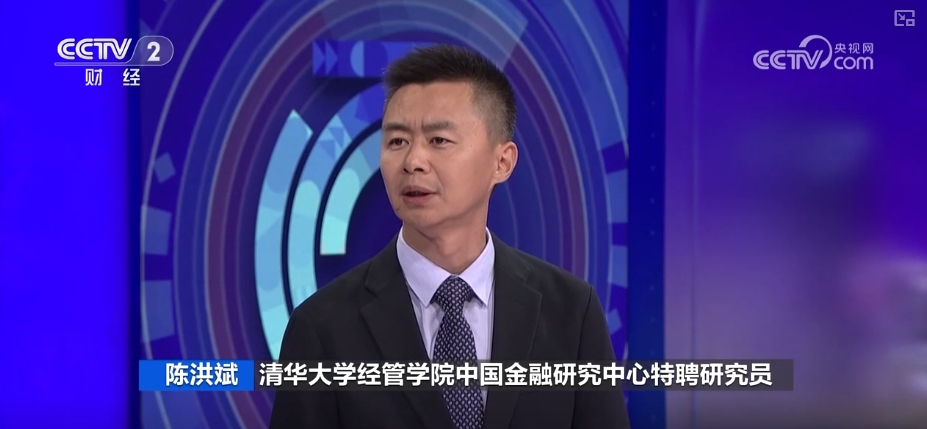
根据中国人民银行安排,15日,年内首次降准落地。清华大学经管学院中国金融研究中心特聘研究员陈 洪斌表示,我国汽车租赁公司在去年的资金总规模已经超过1万亿元,如果存款准备金率从目前的5%调 降至0%,算下来释放的资金总量超过500亿元,此次政策的释放效应大概在1000亿元的规模。这些资金 如果集中在汽车行业,对该行业刺激应会非常显著。同时千亿元级别的资金释放,对于我国宏观经济也 会起到很好的刺激作用。(央视财经) ...
年内首次降准落地 千亿资金释放汽车行业迎利好
Yang Shi Wang· 2025-05-16 02:10
Group 1 - The People's Bank of China has implemented a reserve requirement ratio (RRR) cut of 0.5 percentage points for financial institutions, effective from May 15, which is expected to release approximately 1 trillion yuan in long-term liquidity into the market [1] - The reserve requirement ratio for auto finance companies and financial leasing companies has been reduced from 5% to 0%, significantly enhancing their credit supply capabilities in specific sectors [1][3] - The total asset scale of financial leasing companies in China exceeds 4 trillion yuan, and the reduction in reserve requirement is estimated to release around 200 billion yuan, while the auto leasing companies' total funding scale is projected to exceed 1 trillion yuan, releasing over 500 billion yuan [3] Group 2 - The RRR cut is expected to stimulate the automotive industry significantly, with the potential to support the purchase of tens of thousands of vehicles, thereby positively impacting the macro economy [3] - Following the policy implementation, auto finance companies are expected to enhance liquidity, leading to competitive loan offerings such as zero down payment and long-term interest-free plans, which may increase consumer willingness to finance vehicle purchases [3][5] - The reduction of the reserve requirement to zero for auto finance companies allows for faster capital turnover, enabling them to provide more flexible and lower down payment loan options, thus promoting the establishment of more auto finance companies and enhancing the diversity of automotive credit solutions [5]

央行首降0.5个百分点!1万亿流动性井喷,6家机构存款准备金率直降至0%!
Sou Hu Cai Jing· 2025-05-16 00:14
Core Viewpoint - The People's Bank of China (PBOC) has implemented a 0.5 percentage point reduction in the reserve requirement ratio (RRR) for financial institutions, releasing approximately 1 trillion yuan in long-term liquidity to the market, which is expected to stabilize the financial environment and support economic recovery [1][2]. Group 1: Monetary Policy Impact - The RRR cut effectively countered the funding disruptions caused by government debt payments and the maturity of medium-term lending facilities, maintaining a stable and loose liquidity environment [1]. - The average RRR level decreased from 6.6% to 6.2%, providing banks with long-term low-cost funding [1]. - The special arrangement for auto finance and financial leasing companies, reducing their RRR from 5% to 0%, enhances their ability to support automotive consumption and equipment investment [1]. Group 2: Market Reactions - Following the RRR cut, trading strategies in the bond market shifted, with increased focus on "rolling overnight" trading strategies and a significant rise in the volume of pledged repos in the interbank market, reaching 7.4 trillion yuan and 7.5 trillion yuan on May 14 and 15, respectively [1]. - The weighted average price of DR007 only increased by 0.74 basis points to 1.5245% on May 15, indicating that the liquidity released by the RRR cut effectively alleviated short-term funding pressures [2]. - Despite a high net government debt payment of 645.3 billion yuan, the long-term liquidity injection from the RRR cut stabilized market funding conditions [2]. Group 3: Future Outlook - Analysts anticipate further RRR cuts in the year, with some expecting a total reduction of 1 percentage point, similar to the 2024 reduction, while others suggest there is still a potential space for a 2-2.5 percentage point cut [2]. - The RRR cut reflects a moderately accommodative monetary policy stance, injecting long-term liquidity to stabilize the financial environment and provide banks with sufficient funding to support the real economy, thereby promoting domestic demand recovery and economic improvement [2].
降准落地!释放长期流动性约1万亿元
21世纪经济报道· 2025-05-15 02:18
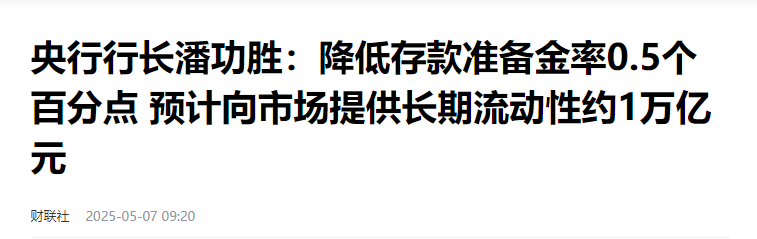
中国人民银行近日宣布,自5月1 5日起,下调金融机构存款准备金率0 . 5个百分点(不含已执 行5%存款准备金率的金融机构),下调汽车金融公司和金融租赁公司存款准备金率5个百分 点。 本期编辑 黎雨桐 央行超预期"双降",下半年降准降息仍有空间 不一样的降准降息!央行"十箭齐发",重磅解读→ SFC 21君荐读 来源丨央视新闻、2 1财料 降低存款准备金率0 . 5个百分点,预计将向市场提供长期流动性约1万亿元。汽车金融公司、 金融租赁公司的存款准备金率从原来的5%调降为0%,将增强这两类机构面向特定领域的信贷 供给能力。 ...

两行业迎利好 政策精准滴灌助企惠民
Jin Rong Shi Bao· 2025-05-14 03:08
Core Viewpoint - The People's Bank of China has decided to lower the reserve requirement ratio (RRR) for auto finance companies and financial leasing companies by 5 percentage points, effective May 15, indicating a strong and targeted financial policy to support key industries and stimulate domestic demand [1][2]. Group 1: Policy Impact - The targeted RRR cut for auto finance and financial leasing companies reflects the central bank's commitment to support critical sectors, particularly in promoting equipment upgrades and stimulating consumer demand in the automotive industry [2][4]. - The RRR for these non-bank financial institutions has been reduced from 5% to 0%, which is expected to enhance their credit supply capabilities and boost confidence in the industry [4][5]. - This policy is seen as a significant step in improving the precision and effectiveness of monetary policy, allowing for flexible adjustments based on current economic conditions [3][4]. Group 2: Industry Benefits - The reduction in reserve requirements is anticipated to release long-term, low-cost funding for auto finance and leasing companies, enabling them to better support consumer spending and equipment investment [4][5]. - Lower funding costs for auto finance companies will lead to more favorable loan rates and flexible financing options for consumers, which is expected to stimulate car sales and benefit the entire automotive supply chain [5][6]. - Financial leasing companies will be able to channel released funds into smart manufacturing and logistics, aiding small and medium-sized enterprises in upgrading their production capabilities without increasing debt [5][6]. Group 3: Future Outlook - The new policy is viewed as a starting point for industry transformation, encouraging companies to optimize their business models and develop more personalized financial products and services [6][7]. - Increased liquidity is likely to allow these companies to expand their business scale and innovate, potentially leading to heightened competition and greater market concentration in the industry [6][7]. - The policy is expected to indirectly benefit automotive manufacturers by providing them with more financial support for production scale, R&D, and industry upgrades [7].
一揽子金融政策 稳车市更稳信心
Zhong Guo Qi Che Bao Wang· 2025-05-13 01:14
Core Viewpoint - The introduction of a new round of "comprehensive financial policies" aims to alleviate financial pressure on the automotive industry and stimulate economic growth through enhanced liquidity and reduced financing costs [1][2]. Financial Policy Measures - The new policy includes ten measures, notably a significant reduction in the reserve requirement ratio (RRR) for automotive finance companies and financial leasing companies from 5% to 0%, which is expected to ease funding pressures in the automotive sector [1][2]. - The People's Bank of China emphasizes the need for flexible monetary policy tools to maintain liquidity and support economic stability amid global financial market fluctuations [2]. Impact on Automotive Industry - The policy is seen as a much-needed relief for automotive manufacturers, supply chain companies, and dealers, helping to stabilize development across various segments of the industry [2][3]. - The reduction in RRR is anticipated to make financing easier for companies, accelerate cash flow, and lower consumer loan costs, thereby stimulating automotive consumption [2][3]. Financial Product Innovation - The easing of financial conditions is expected to lead to a broader range of financial products and lower interest rates, making financing options more attractive compared to full cash purchases [3][11]. - Automotive finance companies are likely to explore new business opportunities and innovate financial products and services due to increased available funds [2][11]. Market Dynamics - The automotive finance penetration rate in China has shown fluctuations, with a drop in 2023 followed by a projected increase in 2024, indicating the growing importance of financial tools in automotive consumption [8]. - The financial services provided by automotive finance companies are becoming increasingly vital for both consumers and dealers, as evidenced by the rising share of financial and insurance business income among dealers [8]. Structural Changes in the Market - The automotive market is undergoing structural changes, with a significant rise in new energy vehicle sales, while traditional automotive finance companies face challenges due to competition from commercial banks [10][12]. - The current financial environment aims to improve the asset-liability structure of automotive finance companies, which have been experiencing declining profits and increasing non-performing loan rates [10][12]. Future Outlook - The policy reflects a commitment from regulatory authorities to support the automotive industry and enhance consumer demand through improved financing options [12]. - The effectiveness of the policy will depend on how automotive finance companies and financial leasing firms implement their strategies to benefit consumers and expand their business [11][12].
人民币抢跑!为啥降准降息?
Sou Hu Cai Jing· 2025-05-12 05:48
五一刚过!中国抢先出手降准降息,只有一个原因,为美元自由落体,为人民币国际化以及未来的大放水激活经济做提前准备! (图源央广网) 重点三:阶段性下调汽车金融公司、金融租赁公司存款准备金率,从5%降至0%,打通消费和新能源产业! 5月7日,国新办发布会,央行一口气官宣了3类10大项政策工具。 重点一:全面下调存款准备金率0.5个百分点,释放长期流动性1万亿; (图源智通财经) 重点二:公积金贷款利率下调至史无前例的2.6%,30年贷款算下来每百万贷款能省近5万利息; 乍一看幅度不大,但关键在于,全面和主动。 答案很简单——这次不只是"稳内需,保民生,保就业",还有更关键的是"抢先手",所以要同声传译,告诉全世界什么才叫真正的"择机降息"。 大家好,这里是小遥说商业,5月7号的降准降息出乎很多人意料,但确实是一次箭在弦上当机立断的提前卡位。 过去,中国每次降息都得看美联储脸色,去年我们刀都架脖子上了还在憋气,就是等美联储9月18日降息后,才在9月24日赶紧跟上放水。 但这次不同,我们抢跑了,从公积金利率调整来看,这次降息明显是准备了很久,推出时机显得非常特别,不等美联储的动作,短短几天里,东盟和日韩发 表贸易宣言 ...
宏观策略周报:一揽子金融支持政策出台,政策加码提振市场信心
Yuan Da Xin Xi· 2025-05-09 08:23
Monetary Policy Measures - The People's Bank of China announced a package of ten monetary policy measures to support market stability, including a 0.5% reduction in the reserve requirement ratio, expected to release approximately 1 trillion yuan in long-term liquidity[9] - The policy interest rate was lowered by 0.1%, with the 7-day reverse repurchase rate decreasing from 1.596% to 1.4%, which is anticipated to lead to a similar decline in the Loan Prime Rate (LPR) by about 0.1%[9] - A total of 300 billion yuan was added to the re-lending quota for technological innovation and transformation, increasing the total to 800 billion yuan, aimed at supporting the "two new" policies[10] Economic Indicators - In the first four months of 2025, China's total goods trade value reached 14.14 trillion yuan, reflecting a year-on-year growth of 2.4%, with exports increasing by 7.5% to 8.39 trillion yuan and imports decreasing by 4.2% to 5.75 trillion yuan[19] - The trade value with ASEAN countries grew by 9.2%, making ASEAN China's largest trading partner, while trade with the EU increased by 1.1%[21] Market Performance - Major domestic indices showed varied performance, with the Shenzhen Component Index rising by 2.3% and the ChiNext Index increasing by 3.3% over the past week[30] - The Shanghai Composite Index recorded a weekly increase of 1.9%, while the CSI 300 Index rose by 2.0%[30] Sector Analysis - The machinery and equipment sector saw a notable increase, while sectors such as real estate and transportation faced declines, indicating a mixed performance across industries[33] - The electronics sector accounted for over 60% of exports, with significant growth in exports of integrated circuits by 14.7% to 405.15 billion yuan[22] Investment Recommendations - The report suggests a positive outlook for A-shares in the medium to long term, supported by the recent monetary policy measures and relatively low valuations in the market[25] - The financial regulatory authority emphasized the importance of stabilizing the capital market and enhancing support for small and micro enterprises[28]
国新办发布会点评:二季度经济运行不确定性加大,政策对冲恰逢其时
AVIC Securities· 2025-05-09 04:25
Economic Overview - In Q1 2025, China's GDP grew by 5.4%, exceeding market expectations despite a high base from the previous year[2] - The trade war initiated in April 2025 has increased economic uncertainty, leading to downward revisions in GDP growth forecasts by international institutions[3] Monetary Policy Response - The People's Bank of China (PBOC) has implemented a comprehensive financial policy package, including a 0.5 percentage point reduction in the reserve requirement ratio, releasing approximately 1 trillion yuan in liquidity[4] - The PBOC also lowered the benchmark interest rate for 7-day reverse repos from 1.5% to 1.4%, potentially reducing the Loan Prime Rate (LPR) by about 0.1 percentage points[10] Sector-Specific Measures - The reserve requirement ratio for auto finance and financial leasing companies has been reduced from 5% to 0%, aimed at stimulating auto consumption and reducing manufacturing costs[10] - The interest rate for personal housing provident fund loans has been cut by 0.25 percentage points, with the first home rate now at 2.6%[10] Consumer Behavior and Market Trends - In March 2025, retail sales grew by 5.9% year-on-year, indicating improved consumer sentiment[17] - The consumer spending propensity reached 63.1% in Q1 2025, the highest for the first quarter since 2020, reflecting a positive trend in consumer confidence[17] Trade War Impact - The trade war could potentially reduce China's GDP growth by approximately 2 percentage points if high tariffs lead to a complete halt in trade with the U.S.[18] - However, the actual impact is expected to be less severe, with the IMF estimating a drag of only 0.6% on GDP growth due to the ability to reroute exports to non-U.S. markets[18] Future Outlook - The PBOC is expected to maintain a moderately loose monetary policy, with significant room for further easing if economic conditions worsen due to the trade war[12] - The combination of monetary and fiscal policies is anticipated to support domestic demand, countering external uncertainties[16]
以增量政策下好先手棋以自身韧性应对外部风高浪急
Shang Hai Zheng Quan Bao· 2025-05-08 18:46
以增量政策下好先手棋 以自身韧性应对外部风高浪急 ■记者观察 稳企业。全球最大银行市场、第二大资本市场和第二大债券市场,将为科技型企业发展提供资金"后 盾"。债券市场"科技板"横空出世,为科技创新提供高效、便捷、低成本的增量资金;深化科创板、创 业板改革政策措施出台在即;信贷支持科技创新的专项机制蓄势待发,金融资产投资公司批设"开闸", 将加大对科创企业的投资力度…… 面对关税冲击,外贸企业在危机中觅新机,以"广交世界"抵御外围"海啸",金融政策将助力外贸行业筑 起"堤坝"。银行业保险业护航外贸发展系列政策措施将制定实施,对外贸企业将应贷尽贷、应续尽续; 受关税政策影响较大的上市公司,将在股权质押、再融资、募集资金使用等方面获得更高的监管包容 度。 稳预期。超常规政策"如约而至",社会信心"如期充值"。作为重要的宏观调控工具,货币政策超预期、 力度大、工具多、落地快:降准方面,既针对大中型银行,也阶段性调降汽车金融公司、金融租赁公司 存款准备金率;降息方面,下调了政策利率和住房公积金贷款利率,并首次全面下调结构性货币政策工 具利率;结构性工具既有新工具创设,也有额度增加,还有价格优惠。超常规的政策组合,迎来了 ...