航天科技

Search documents
迪迩五号·中国科技城号发射成功 率先实现小型货运飞船商业化运营
Mei Ri Jing Ji Xin Wen· 2025-12-13 04:29
Core Viewpoint - The successful launch of the B300-L02 space experiment vehicle by AZSPACE marks a significant advancement for China's private space sector, paving the way for broader space scientific research and technology applications [1]. Group 1 - AZSPACE's B300-L02 was launched aboard the Kuaizhou-11 rocket from the Jiuquan Satellite Launch Center [1]. - The mission achieved its objective by successfully entering the designated orbital altitude [1]. - This launch signifies a new phase for China's private space vehicles, establishing a foundation for future space research, technology validation, and cargo transportation [1].
上海交通大学与国星宇航签约 共建国内首个太空计算联合实验室
Xin Lang Cai Jing· 2025-12-12 09:55
Core Viewpoint - Shanghai Jiao Tong University and Guoxing Aerospace have signed an agreement to establish the first domestic Space Computing Joint Laboratory, focusing on the development of space computing chips, robotic satellites, and in-orbit additive manufacturing [1] Group 1: Collaboration and Research Focus - The joint laboratory will address the demand for space-based computing networks and will conduct research in cutting-edge areas [1] - The signing ceremony also marked the establishment of Dongfang Tiancan Technology Co., Ltd. as an industrialization platform for the Space Computing Joint Laboratory [1] Group 2: Industrialization and Innovation - The initiative aims to explore new models for the integration and transformation of industry, academia, and research, accelerating the industrialization process of space-based computing networks [1]
马斯克证实:即将上市
Sou Hu Cai Jing· 2025-12-12 09:27
Group 1 - Elon Musk confirmed that SpaceX is planning to go public, aiming to raise over $25 billion with a valuation exceeding $1 trillion, potentially as early as June next year [1] - SpaceX's IPO could become the largest in history, surpassing Saudi Aramco's record of $29 billion set in 2019, with analysts noting strong demand from retail investors despite the high-risk nature of the business [1] - The company is expected to generate approximately $15 billion in revenue by 2025, increasing to between $22 billion and $24 billion by 2026, primarily driven by its Starlink business [2] Group 2 - SpaceX was founded in June 2002 with the goal of reducing space transportation costs and enabling human colonization of Mars, pioneering the private space era with its Falcon 1 and Falcon 9 rockets and Dragon spacecraft [2] - Musk holds about 42% of SpaceX shares, and if the company successfully lists at a $1.5 trillion valuation, his net worth could more than double, further widening the gap with other billionaires [2]
马斯克引全球关注,史上最大IPO将至?目标估值1.5万亿美元!
Xin Lang Cai Jing· 2025-12-12 09:19
Core Insights - SpaceX is preparing for an IPO with a fundraising target exceeding $30 billion and a valuation goal of approximately $1.5 trillion, which would make it the largest IPO in history [2][3] Group 1: IPO Details - The IPO is driven by the strong growth of the Starlink satellite internet service and advancements in the development of the Starship rocket for lunar and Mars missions [3] - Part of the funds raised from the IPO is expected to be used for developing space data centers, including the purchase of necessary chips [3] Group 2: Market Impact - Following the news of SpaceX's IPO plans, stock prices of other aerospace companies increased, with EchoStar rising by 12% before closing up 6%, and Rocket Lab gaining 3.6% [4] Group 3: Valuation and Financial Performance - SpaceX's valuation has seen rapid growth, reaching approximately $800 billion, and is competing with OpenAI for the title of the most valuable private company [5] - The company's valuation has doubled from $180 billion at the end of 2023 to $400 billion in July 2023, and again to $800 billion in a short span [5] - Despite a high valuation, SpaceX's expected revenue for this year is $15 billion, which is less than a quarter of Tesla's nearly $98 billion revenue last year [6]

SpaceX即将上市,“七巨头”变“八巨头”!纳指基金是否要布局?
Sou Hu Cai Jing· 2025-12-12 09:13
Group 1 - The "Nasdaq Seven Giants" refers to the seven largest tech growth companies in the US stock market, including Apple, Google, Amazon, and Nvidia, which collectively account for over 40% of the Nasdaq 100 index weight, making them core assets of Nasdaq [1] - Elon Musk confirmed that SpaceX plans to raise hundreds of billions through an IPO in 2026, with a target valuation of $1.5 trillion, potentially making it the largest IPO in history, surpassing Saudi Aramco's record [1][3] - If SpaceX successfully goes public, it is expected to drive the Nasdaq 100 index to unprecedented heights, especially with the recent interest rate cuts by the Federal Reserve, indicating continued favorable market liquidity [4] Group 2 - Current market capitalizations of the Nasdaq Seven Giants include Nvidia at approximately 4.396 trillion, Apple at 4.108 trillion, Google Class C at 3.785 trillion, and Microsoft at 3.593 trillion, among others [4] - Historical performance of the Nasdaq 100 index shows resilience, having recovered from significant downturns during the dot-com bubble, the 2008 financial crisis, and the COVID-19 pandemic, indicating the enduring value of the tech sector [5] - Various Nasdaq 100 index funds have been analyzed, with the top performers over the past year being E Fund Nasdaq 100 ETF (159696) with a return of 14.57% and China Merchants Nasdaq 100 ETF (159659) with a return of 14.54% [9][10] Group 3 - The analysis of Nasdaq 100 index funds highlights that E Fund Nasdaq 100 ETF has the best performance among peers, while China Merchants Nasdaq 100 ETF shows good tracking error control, making them suitable for investors seeking high returns with moderate risk [9][10] - The report emphasizes the importance of considering fund liquidity and management fees when selecting Nasdaq 100 index funds, with several funds having over 40 billion in assets [8] - Investors are advised to be cautious of potential premiums and restrictions on daily subscription amounts for certain Nasdaq ETFs due to foreign exchange quota limitations, suggesting a strategic approach to investment [12]

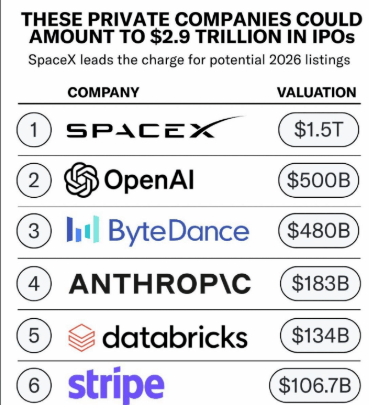
马斯克官宣!SpaceX将于明年上市,估值目标高达1.5万亿美元
Sou Hu Cai Jing· 2025-12-12 05:36
Core Insights - SpaceX is planning to go public with a target valuation of $1.5 trillion, aiming to break the record for the largest IPO in history, surpassing Saudi Aramco's $29 billion raised in 2019 [1][3] - The IPO is expected to occur in mid to late 2026, with a fundraising goal exceeding $30 billion [1][3] - The valuation exceeds Tesla's current market cap of approximately $1.48 trillion, despite SpaceX's projected revenue of $15 billion in 2025, which is less than one-sixth of Tesla's expected revenue for 2024 [1][3] Business Model and Revenue Streams - SpaceX's valuation is supported by two main components: the profitable Starlink satellite internet service and the ambitious Starship project [3][6] - Starlink has become a significant revenue source, contributing over 80% of the company's total revenue, with an expected revenue of $15 billion in 2025 and projected growth to $22-24 billion in 2026 [3][6] - The Starship project aims to facilitate large-scale satellite deployment and transport to the Moon and Mars, although recent structural issues have delayed its development [4][6] Strategic Considerations - The decision to pursue an overall IPO rather than splitting off the more profitable Starlink business reflects a strategic choice by Elon Musk to maintain synergies between the two projects [6][7] - The interdependence of Starlink's cash flow and Starship's development is seen as a critical factor in the company's growth narrative [7] Future Investments and Market Reactions - The funds raised from the IPO are expected to be directed towards developing space data centers, which could leverage solar energy and advanced cooling technologies [9] - The market has reacted positively to the news, with stocks of companies involved in the space industry experiencing significant increases following the announcement [9][11] - Early investors in SpaceX are anticipated to see substantial returns from the IPO, with Musk's personal wealth potentially increasing dramatically if the company achieves its valuation goals [11]
蓝箭航天新专利公布 可提升可复用火箭着陆的可靠性、精准度
Zheng Quan Shi Bao Wang· 2025-12-12 03:32
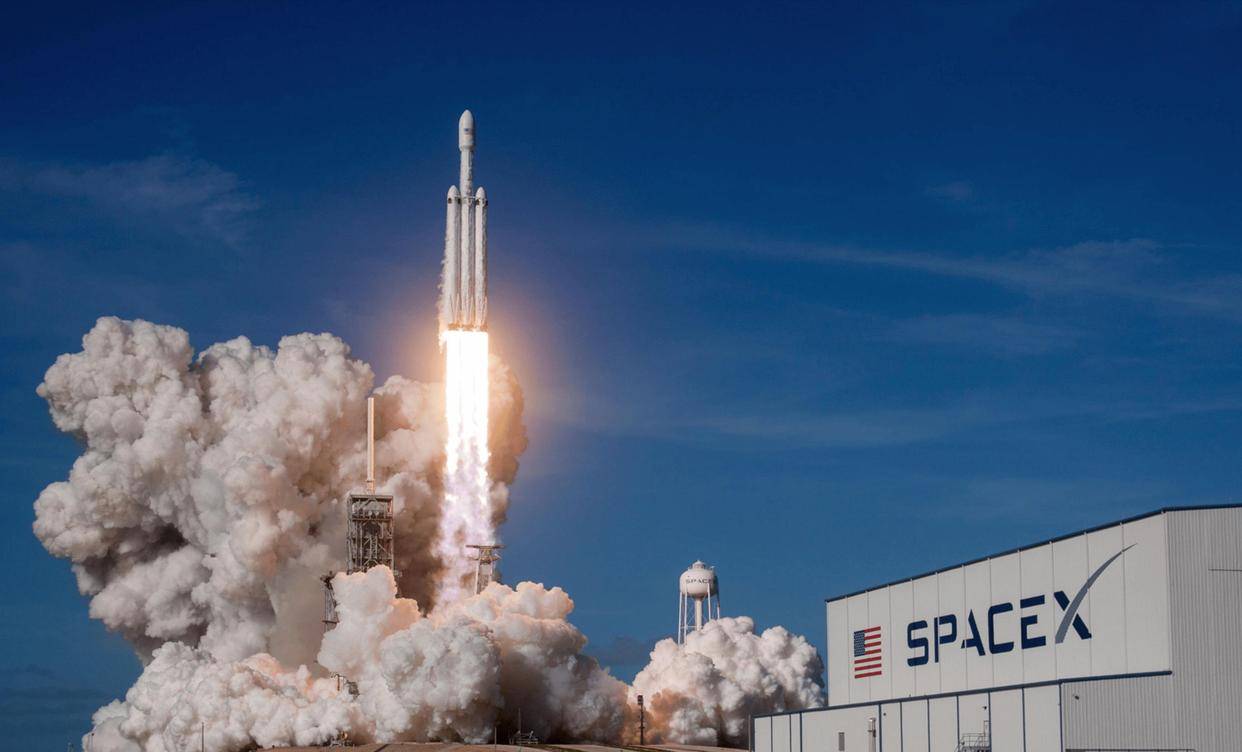
Core Viewpoint - Blue Arrow Aerospace Technology Co., Ltd. has applied for a patent for a method, guidance system, and processor for predicting the ignition height of reusable rocket landing stages, which aims to enhance the reliability, accuracy, and cost-effectiveness of reusable rocket landings [1] Group 1: Patent Details - The patent involves a real-time online ignition height prediction model based on the principle of energy conservation [1] - It incorporates multiple safety thresholds, including an upper limit for allowable ignition height and a lower limit for backup ignition height [1] - The invention addresses issues of insufficient prediction accuracy and robustness in existing technologies, as well as inadequate safety margin considerations [1] Group 2: Benefits of the Invention - The method significantly improves the safety and fuel optimization during the ignition timing determination within the entire flight envelope [1] - It eliminates potential safety risks associated with the uncertainties of complex flight environments [1] - The technology aims to enhance the overall reliability and precision of reusable rocket landings [1]
马斯克暗示 SpaceX明年IPO?
Bei Jing Shang Bao· 2025-12-11 14:41
Core Viewpoint - SpaceX is reportedly accelerating its plans for an IPO, potentially achieving a valuation of $1.5 trillion, which could significantly increase Elon Musk's wealth and trigger a wave of "super unicorn" IPOs in the U.S. capital markets [1][5][6]. Company Overview - SpaceX, founded in 2002, aims to enable human colonization of Mars and has made significant advancements in private space exploration, including the successful launch of the Falcon 1 and the Dragon spacecraft [5]. - The company operates primarily in two segments: rocket launches and satellite internet, with its Starlink division deploying approximately 9,000 satellites and serving over 8 million active users globally [5][6]. IPO Details - The IPO is expected to raise over $30 billion, surpassing Saudi Aramco's previous record of $29 billion, making it the largest IPO in history [5][6]. - Musk holds about 42% of SpaceX, and the IPO could increase his net worth from $1.36 trillion to over $6.25 trillion, adding approximately $491 billion to his current wealth [6]. Market Impact - The potential IPO could reshape the U.S. capital market landscape, as many high-valuation private companies have avoided going public, leading to a stagnation in IPO activity since 2021 [8][9]. - If successful, SpaceX's IPO could attract significant institutional and retail investor interest, given its scale and growth potential [9]. Valuation Considerations - There are concerns regarding the valuation's sustainability, with experts questioning whether SpaceX can justify a trillion-dollar valuation based on its revenue and operational capacity [9]. - ARK Investment has projected that SpaceX's enterprise value could reach $2.5 trillion by 2030, driven by its satellite deployment and revenue generation capabilities [6][8].
SpaceX最新估值1,500,000,000,000 美元
美股研究社· 2025-12-11 12:03
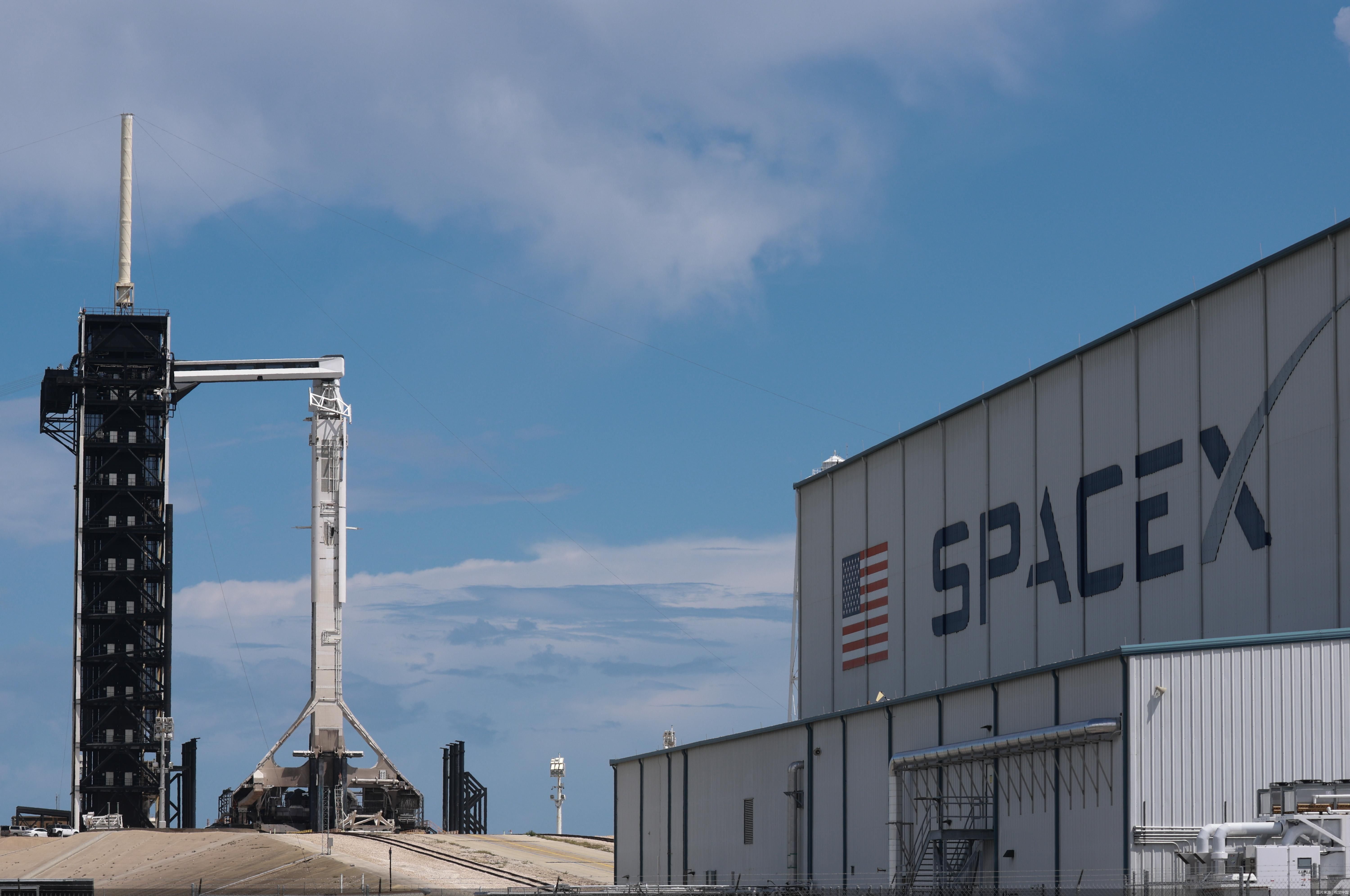
Core Viewpoint - SpaceX is accelerating its IPO plans, aiming to raise significantly over $30 billion, with a target valuation of approximately $1.5 trillion, potentially making it the largest IPO in history [4]. Group 1: IPO Plans and Valuation - SpaceX is pushing for an IPO as early as mid to late 2026, although this timeline may shift due to market conditions [4]. - The company is expected to generate around $15 billion in revenue in 2025, increasing to $22-24 billion in 2026, primarily driven by its Starlink business [9]. - In the latest secondary market transaction, SpaceX's share price was set at approximately $420, leading to a valuation exceeding $800 billion [9]. Group 2: Market Impact and Related Companies - Following the news of SpaceX's IPO plans, other space-related stocks saw significant increases, with EchoStar rising by 12% and Rocket Lab by 4.3% [6][7]. - SpaceX's management is preparing for the IPO by hiring key personnel and planning the use of raised funds, including building space-based data centers [9]. Group 3: Business Growth Drivers - The main driver for SpaceX's move to the capital market is the rapid growth of its Starlink satellite internet service, which includes future direct-to-mobile service prospects [8]. - Elon Musk has indicated that the valuation increase is largely dependent on the progress of Starship and Starlink, as well as the acquisition of global direct-to-cell spectrum [10].
估值10万亿,史上最大IPO要来了!SpaceX公布上市计划
混沌学园· 2025-12-11 11:58
Core Viewpoint - SpaceX is planning an IPO with an estimated valuation of approximately $1.5 trillion, aiming to raise over $30 billion, which would make it the largest IPO in history [1][2]. Group 1: SpaceX's Valuation and Market Potential - The valuation of SpaceX is supported not only by its rocket technology but also by its role in building infrastructure for human access to low Earth orbit [3]. - Musk emphasizes that the growth in valuation depends on the progress of the Starship and Starlink projects, as well as the ability to acquire global cellular network spectrum, which will significantly expand the target market [4]. Group 2: Musk's Business Philosophy and Innovation - Musk's approach combines grand dreams with pragmatic business strategies, allowing for successful commercialization of ambitious visions [8]. - The concept of "innovation three stages" is introduced, highlighting the importance of action, cognition, and ideology in driving progress [9][10]. Group 3: Value Modeling and Cost Reduction - SpaceX's value modeling focuses on transforming the perception of rockets from disposable to reusable, which fundamentally changes their utility [12][14]. - Musk's goal is to reduce rocket costs by a factor of ten, utilizing the "idiot index" to identify optimization opportunities in manufacturing processes [27][39]. Group 4: SpaceX's Business Strategy and Client Relationships - SpaceX's initial strategy involved securing contracts with NASA, which provided a stable revenue stream while aligning with its long-term goals [21][23]. - The company adopted a fixed-price contract model with NASA, incentivizing cost reduction and efficiency [25]. Group 5: SpaceX's Growth Curves - The first growth curve involves rocket launches and space transportation, with significant milestones achieved in collaboration with NASA [53]. - The second growth curve is represented by the Starlink internet project, which has the potential for substantial revenue generation, further supporting Musk's vision for Mars colonization [55][60]. - The third growth curve is the development of the Starship fleet, aimed at facilitating human travel to Mars and beyond, with ambitious plans for regular interplanetary flights [62][65]. Group 6: Musk's Vision for Humanity - Musk's ultimate goal is to make humanity a multi-planetary species, with plans to establish a self-sustaining community on Mars [65]. - He believes that the journey to Mars is not just a commercial venture but a critical step for the survival of human civilization [48][50].